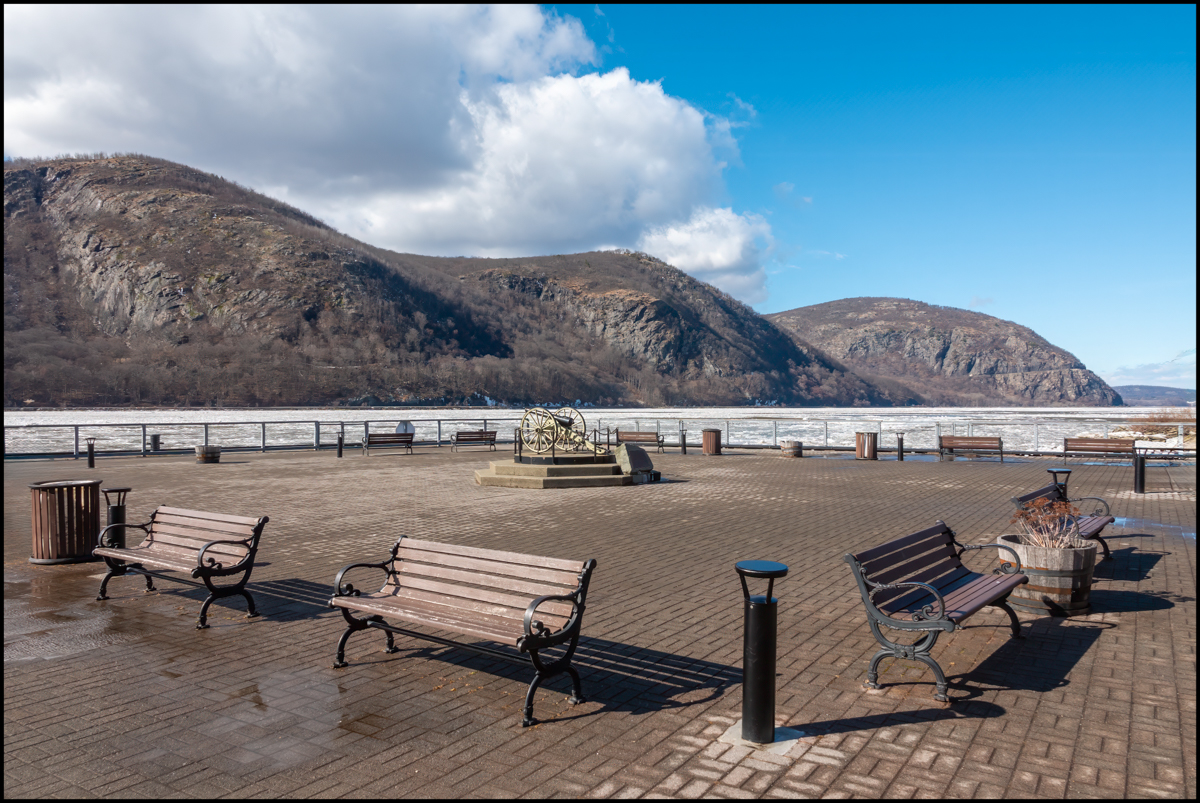
A Visit to Cold Spring, NY – A Replica Parrott Rifle

According to Civilwaracademy.com

The Civil War Parrott Rifle was a groundbreaking artillery innovation that significantly influenced the tactics and outcomes of the American Civil War. Renowned for its enhanced accuracy and extended range, this rifled cannon transformed battlefield engagements and siege warfare.

The Inception of the Parrott Rifle

The Civil War Parrott Rifle emerged from the innovative mind of Robert Parker Parrott, a West Point graduate and former U.S. Army officer. After resigning from the military, Parrott became the superintendent of the West Point Foundry in 1836. His exposure to artillery manufacturing and engineering expertise led him to address the limitations of existing cannon designs.

In 1860, Parrott patented his rifled cannon design, which ingeniously combined affordability with advanced technology. His invention arrived at a crucial moment, just before the outbreak of the Civil War, positioning the Parrott Rifle as a significant asset in the impending conflict.

Design and Technological Advancements

The Parrott Rifle was distinguished by several key innovations that set it apart from traditional Civil War artillery.

Rifled Barrel Innovation

The introduction of rifling—a series of spiral grooves inside the barrel—allowed the Parrott Rifle to impart a stabilizing spin to its projectiles. This spin greatly enhanced accuracy and range compared to smoothbore cannons, enabling gunners to hit targets with unprecedented precision.

Reinforced Breech Mechanism

Parrott addressed the issue of barrel strength by reinforcing the breech—the rear part of the cannon where the explosion occurs—with a wrought iron band. This reinforcement allowed the cannon to withstand higher internal pressures, reducing the risk of catastrophic failures that were common with cast iron cannons of the era.

Specialized Projectiles

Parrott designed projectiles specifically for his rifle. These shells featured expanding brass rings or sabots that engaged the rifling grooves upon firing. This engagement ensured a tight seal (known as obturation), maximizing the propellant’s force and improving both range and accuracy.

Many Parrott rifles were made at the West Point Armory in Cold Spring, the ruins of which can still be seen (See: West Point Foundry).

For more information see the Wikipedia article on the Parrott Rifle.

Taken with a Sony RX10 IV.

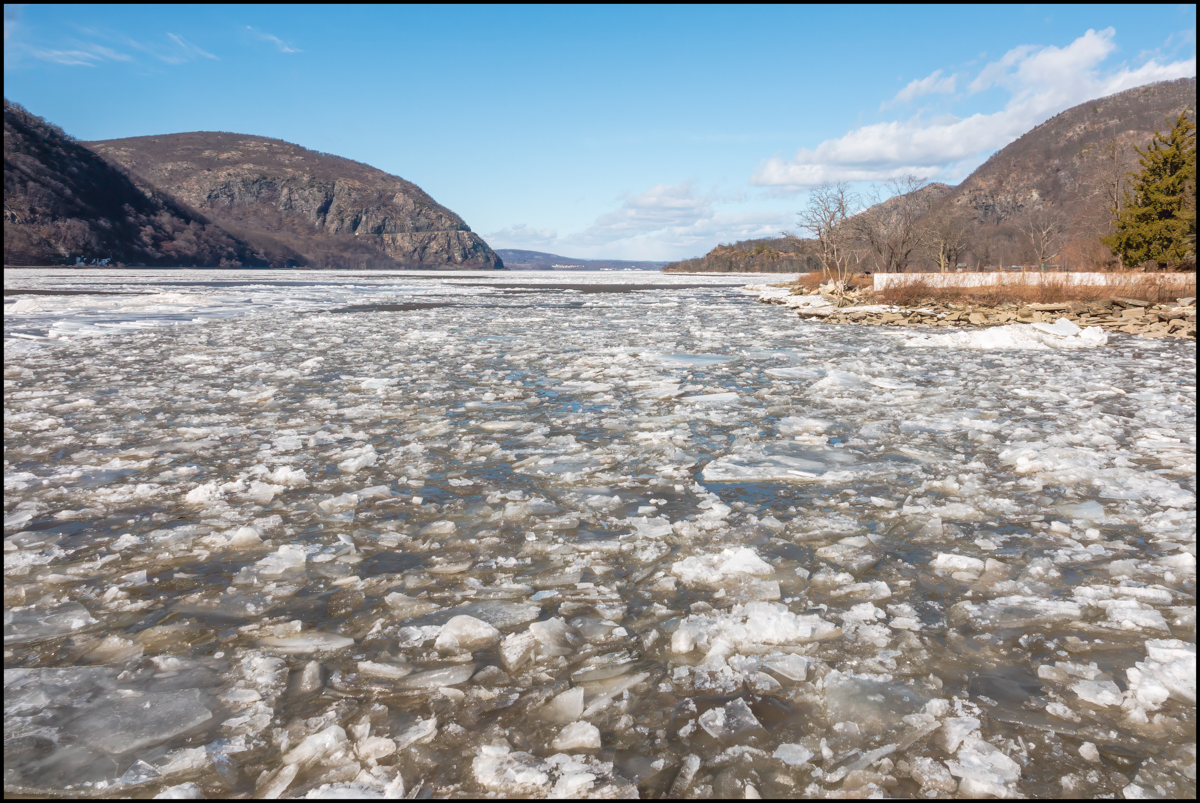
A Visit to Cold Spring, NY – Views of the Hudson Highlands

Cold Spring is at the southern end of the Hudson Highlands, mountains on both sides of the Hudson River in New York state lying primarily in Putnam County on its east bank and Orange County on its west. They continue somewhat to the south in Westchester County and Rockland County, respectively. The highlands are a subrange of the Appalachian Mountains.

North to south they fall between Newburgh Bay and Haverstraw Bay, the latter forming the northern region of the New York – New Jersey Highlands.

The Hudson River enters this region in the south at Dunderberg Mountain near Stony Point, and from the north in the vicinity of Breakneck Ridge and Storm King Mountain near Cornwall, New York. These highlands have played a significant role in America’s environmental, cultural, and military history.

Prior to European exploration, the Hudson Highlands were inhabited by Native American Lenape people. Henry Hudson and his crew on the Half Moon were the first Europeans known to see the Highlands when they explored the river in 1609.

The mountains became strategically important during the American Revolutionary War, when it was important for the Continental Army to hold the river valley and prevent the British from cutting New England off from the rest of the colonies. During the Revolutionary War, to prevent British shipping from using the river, the Hudson River Chain was forged at the Sterling Iron Works in Warwick, New York, a town in Orange County. From 1778 to 1782, the chain was stretched across the river from the Fort Clinton at West Point. The site of the fort is today the easternmost point of the grounds of the United States Military Academy. The only surviving piece of the boom and chain is currently on display at Washington’s Headquarters State Historic Site in Newburgh, New York.

Several decades after independence, Thomas Cole started an artistic movement by painting America’s wild and rugged landscapes— especially, at first, the Highlands— with the stark contrasts and shadows they offered, in a way that suggested raw nature, a world reborn. After the movement had faded, a critic derisively referred to the movement as the Hudson River School; the name stuck as the label for the new nation’s first homegrown artistic movement.

In the early 20th century, in response to damage caused by quarrymen and loggers in the Highlands, local conservationists began to press for public ownership of the area’s woods and mountains. Their efforts paid off in the first of several state parks that now blanket the chain.

Later that century, an ambitious power-generating plan that would have dug into Storm King Mountain led to a landmark lawsuit by environmental groups that made history when the judge ruled that aesthetic impacts of such large projects could be considered and that a coalition of citizen groups had legal standing. This landmark lawsuit formed the basis for a large body of case law concerning environmentalism. (Adapted from Wikipedia)

Taken with a Sony RX10 IV.

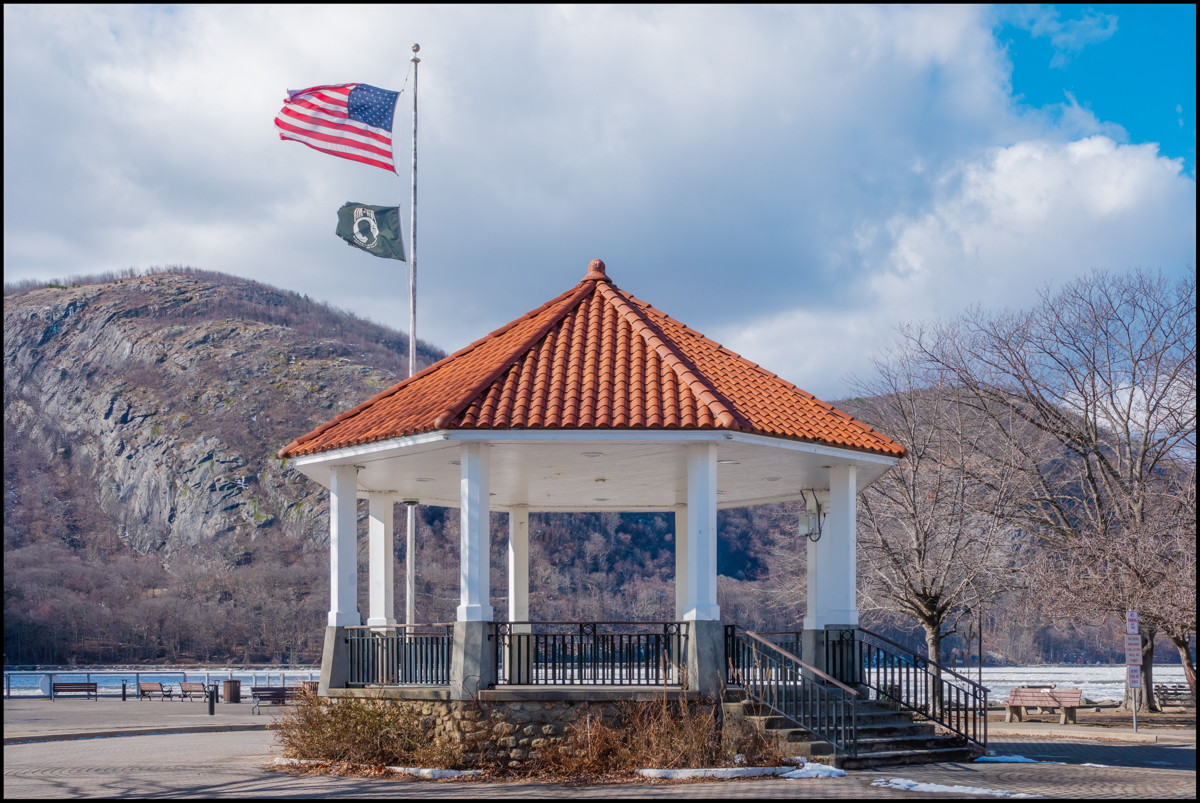
A Visit to Cold Spring, NY – A Bandstand

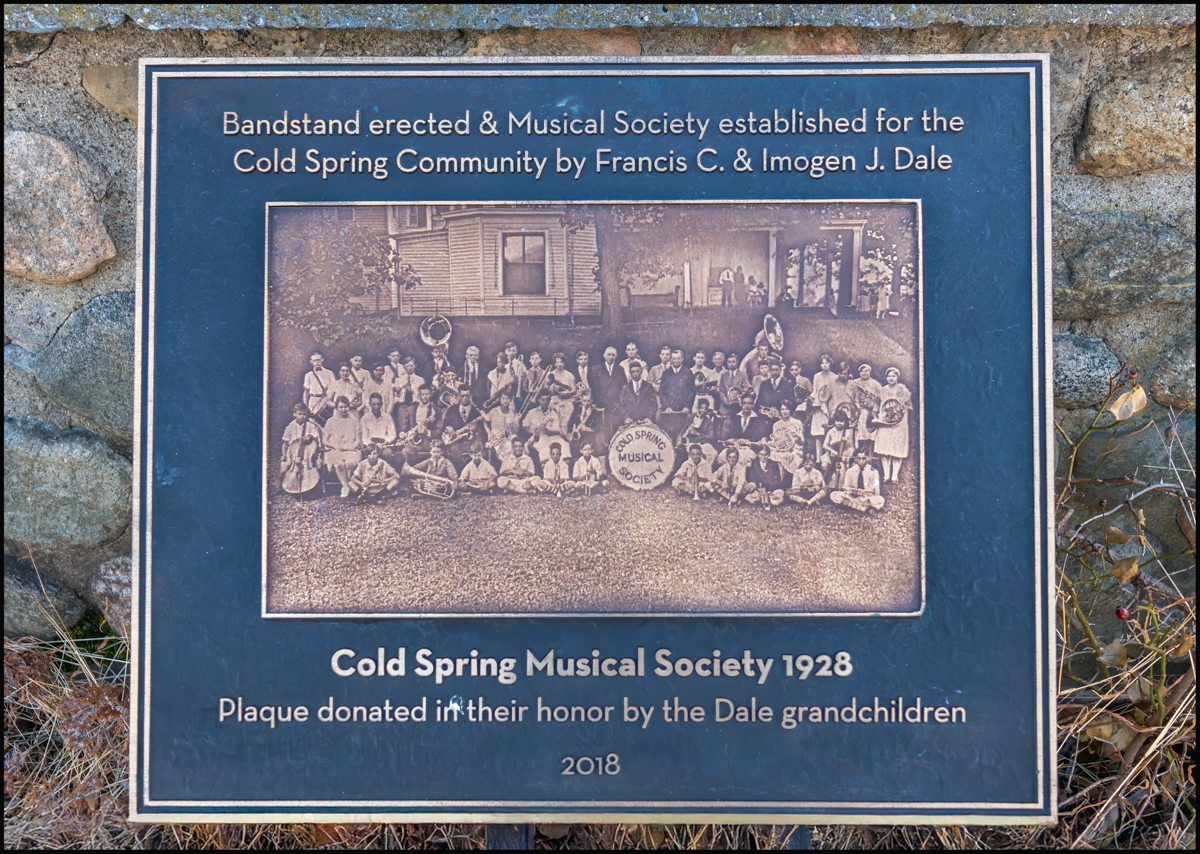
Bandstand down by the river. I’ve never actually seen a concert there, but I imagine they must have them. I’m sure it’s a pleasant place to sit and listen to music during warm weather.

I’ve included the plaque, partly because it says something about the history of the bandstand, but also because may name is Dale and, once upon a time in my youth I, too had a band connection.

Taken with a Sony RX10 IV.

A Visit to Cold Spring, NY – More Houses West of the Train Tracks and The Cold Spring Historic District

Some more pictures of houses west of the train tracks (there are a lot more east of the tracks, but I didn’t have the time to tackle those). They form part of the Cold Spring Historic District. Indeed, the plaque on the wall of the building in the picture above reads:

This Property has been
placed on the
NATIONAL REGISTER OF HISTORIC PLACES
by the United States
Department of the Interior
Circa 1820

According to Living Places USA Neighborhoods & Towns

The Cold Spring Historic District is concentrated along the long east-west axis of Main Street, a commercial street with scattered municipal, ecclesiastical and residential structures. All of Main Street from the Hudson River east to the village limits is contained within the district. Portions of residential streets intersecting Main Street are also included in the district and include the distinctive examples of the full range of styles, buildings types and construction methods spanning over a century of growth in the community.
As an eighteenth century Hudson River landing, the village was initially focused around the shoreline. The area between the river and the railroad on Market, Main and West Streets represent the earliest configuration of the village. Today this area is distinguished by nineteenth century structures, however the character of the landing is maintained.

In the early nineteenth century, with the completion of a turnpike travelling to the interior, a plan was established for the development of the village by Frederick Phillipse. The orderly arrangement of commercial structures on Main Street, the flanking residential streets, and large estate houses higher up on the hillside are indicative of this early building plan. The thorough mix of early, middle and late nineteenth century structures throughout the district document the phases of the village’s growth within the established pattern of streets. Many of the buildings have had alterations made to their storefronts, window sash or siding material yet to historic character, scale and setting of the district survives substantially intact.
The commercial district of Main Street is an eight block section that stretches from the river to New York Route 9D (Morris Avenue/Chestnut Street). The construction of the railroad in the 1850’s severed Main Street and traffic must detour to a bridge south of the commercial district to reach the landing. Two and three story buildings front on Main Street on narrow lots. Architecturally, it is an extremely eclectic streetscape with early nineteenth century frame buildings and later brick structures of various scales juxtaposed along its lengths. Details from the many building periods are intact: bracketed cornices, cast-iron window lintels, mansard roofs, storefronts, porches, etc.

Morris Avenue and Chestnut Street (Route 9D) intersects Main Street about midway along its length. This major intersection is distinguished by Cold Spring’s most notable church, St. Mary’s Episcopal Church, a hotel, and a modern gas station. Opposite the church on Chestnut Street, a group of substantial town houses suggest the prestige of the location. Impressive Second Empire homes face Morris Avenue north of the intersection. Capitalizing on the view of the river and the highlands available at higher elevations, the wealthier members of the community built on Paulding Avenue, named for one of Cold Spring’s prominent families. Below these estates on Chestnut Street, Academy Street and Cherry Street is more modest middle-class housing, and a small, yet distinguished, Presbyterian Church. This character of housing, though earlier, continues east on Main from Route 9D to the village limits. A brick Methodist Church and the Philipstown Town Hall are buildings of particular architectural interest in this section of the district.
Two other residential areas adjacent to Main Street are included in the historic district. Kemble Avenue, south of Main Street, contains a significant surviving row of duplex workers’ houses built for laborers at the West Point Foundry which was immediately to the south. The archeological remains of the foundry site were listed on the National Register, April 11, 1973.

North of Main Street, adjacent to the railroad tacks is a residential neighborhood reflecting the railroad’s role in village life. The passenger station survives intact and re-used as a restaurant. Railroad Avenue and Stone Street contain small neat houses from the railroad era. Fair Street contains more substantial homes and a church and parsonage in exceptionally good condition. The streets not included in the district contain larger numbers of substantially altered buildings or were developed since the 1930’s.
The Cold Spring Historic District contains approximately 225 structures of varying types periods and methods of construction.

Significance

The first mention of ‘Cold Spring’ appears in the minutes of a meeting in Philipse’s Precinct in April of 1772. Philipse Precinct later became the town of Philipstown, in which Cold Spring is a village. It had been patented by a grant, to Adolph Philipse, in June 1677. Frederick Philipse, a descendent, was the first male member of the family to reside in the precinct and he laid out most of the streets, sold lots and regulated the growth of the area until it was incorporated in 1846.
By the beginning of the nineteenth century, only a few houses formed a hamlet down by the shore of the Hudson. In 1815 the first road was built from Cold Spring to Patterson (Main Street – Route 301) on the east side of the county, with toll houses at various intervals. It was constructed by the Philipstown Turnpike Company. In 1816 it was rumored that a foundry was to open and the waterfront area became the nucleus of the later, important industrial community of Cold Spring which centered around the West Point Foundry. The foundry was chartered in 1818. Two years later the first gun contract was signed and great prosperity occurred in the village. Homes for foundry operators sprang up, built by the West Point Foundry on its own land.
In 1837 the decision to consolidate some foundry departments of operation at New York in Cold Spring again increased the size of the population and community. Cold Spring became a commercial and manufacturing center in the Hudson Highlands. The Gouveneur family, owners of large tracts of land, began to sell small lots in 1839. More streets were built, churches established and stores multiplied.

During the Civil War, the West Point Foundry reached its peak with the invention of the Parrott rifle gun and projectile by Robert Parker Parrott, a West Point graduate, former assistant professor of Mathematics at the Academy, and supervisor of the Foundry. Parrott used his fortune from the Parrott rifle to beautify the village and build homes for his employees. In 1868 he donated the property and contributed toward the building of the Church of St. Mary’s in the Highlands.

Many of the structures within the historic district survived the fires of 1862 and 1875. Several stores and buildings on the south side of Main Street were destroyed in 1862, though most were rebuilt. It was again the south side of Main street, but above the tracks, that suffered severe damage and loss in 1875. The railroad (N.Y.C. & Hudson River Railroad) had been built during the 1850’s dividing Main Street, east of Market Street. By 1868 it was determined that a town building was necessary for public meetings and the present Philipstown town hall was built at the district’s eastern-most boundary. A few random properties were built between the late 19th century to the turn of the 20th century, as the community attained its present size.

Taken with a Sony RX10 IV.

A Visit to Cold Spring, NY – The Hudson House

I had a bit of time to kill before heading to Le Bouchon, so I took a few pictures along the waterfront, starting with the Hudson House, another wonderful place to eat. It’s located right next to the river in an historic building. It’s one of a number of historic houses west of the train tracks.

According to its website:

Hospitality has been the hallmark of the Hudson House for over 175 years. With an eye toward preserving its unique historic character, we are setting standards for comfort and convenience. The 2 large guest suites and 11 rooms — many with balconies and views of the Hudson River — features luxurious linens, period furnishings, private baths and modern amenities. Everything is designed to assure a tranquil, restful atmosphere.

Built in 1827 and operated as a hotel since 1832, the Hudson House River Inn is truly a part of Hudson River history.

Originally named the Pacific Hotel and later the Hudson View Inn, the building is located on the serene waterfront in the village of Cold Spring, where the famed Civil War Parrot guns were produced. One of the largest inns on the river, the Hudson House has undergone several transformations, though many original details remain.

The building in it current form was placed on the National Register of Historic Places in 1982. It has the distinction of being the second-oldest continuously operated inn in the state of New York.

Our two main dining areas — the River Room and the Half Moon Tavern — redefine the term “inn.” Lunch or dinner in the River Room may include fresh seafood, New Zealand rack of lamb, veal and regional specialties, accompanied by our award winning wine list. The casual Half Moon Tavern, complete with fireplace and period dècor, serves cocktails and informal fare. Both dining rooms are open to the public year-round.

We welcome you to our quaint village of Cold Spring and hope you and your guests enjoy your visit.

I’ve eaten there many times over the 25 years I’ve been back in this area and it’s always been excellent.

Taken with a Sony RX10 IV