Do you collect classic cameras? Would you like to?

If so, then I recently came across some resources that you might appreciate.

They’re to be found on an interesting YouTube channel called: Amateur Photographer TV. The channel contains videos from Amateur Photographer, a UK based journal that claims to be the world’s longest running consumer photography magazine. ‘AP’ has been published weekly in the UK since 1884 and has been the bible for both amateur and professional photo-enthusiasts around the world for generations, helping millions of photographers to improve their skills. AP features the latest news, in-depth and unbiased equipment reviews, interviews with the world’s leading photographers, and tutorials on everything from analogue photography to the latest digital photography techniques.

Some of the recent videos on classic cameras include:

The channel has quite a few more videos on classic cameras, and even more on other aspects of photography.

Lichen and Fungi

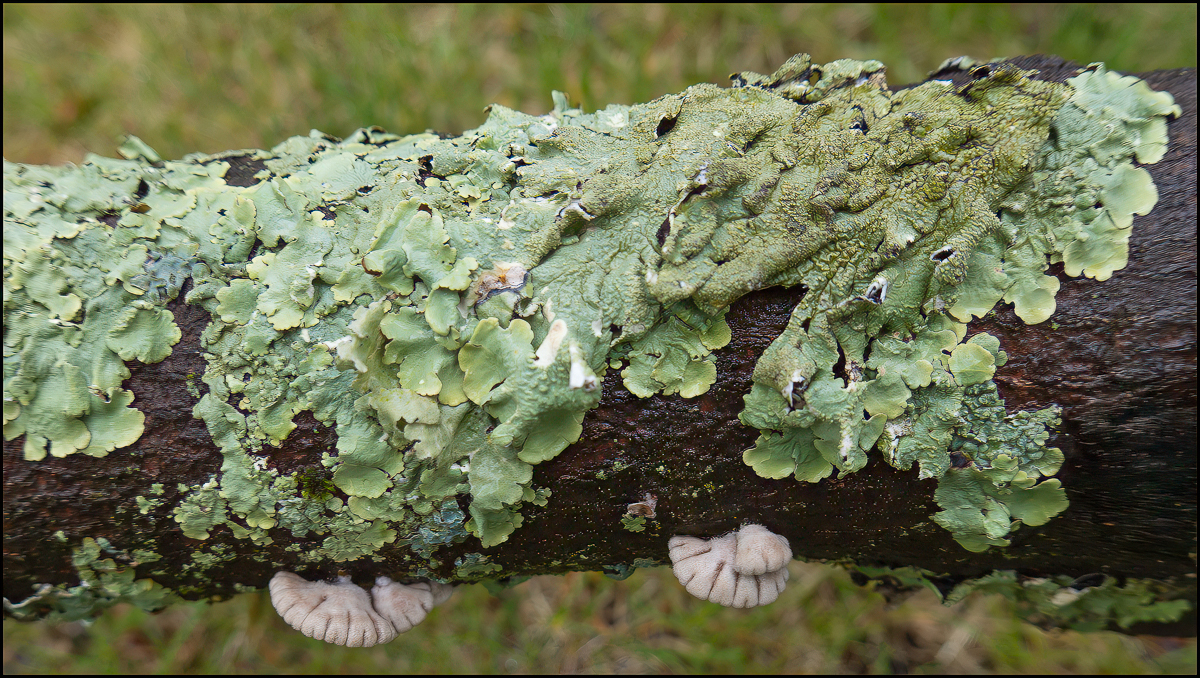
I came across a downed branch in a friend’s driveway. On it was this bright green lichen and some fungi.

Lichens are unique organisms formed from a symbiotic relationship between fungi and photosynthetic partners, such as algae or cyanobacteria. They are found worldwide and consist of about 15,000 species that thrive in various environmental conditions. Lichens are not classified as plants or animals; instead, they represent a complex life form that can survive in extreme environments, including exposure to space. They play essential roles in ecosystems, such as contributing to soil formation and serving as indicators of environmental health (Wikipedia).

Fungi are a kingdom of organisms that include yeasts, molds, and mushrooms. They are heterotrophic, meaning they cannot produce their own food, and play a crucial role in decomposing organic matter, which helps recycle nutrients in ecosystems. Fungi can reproduce both sexually and asexually and often form symbiotic relationships with plants and bacteria, contributing significantly to nutrient cycling and environmental health. (Brittanica)

I just thought it looked ‘cool’ so of course I took a photograph.

Taken with a Sony RX10 IV.

A curious looking building

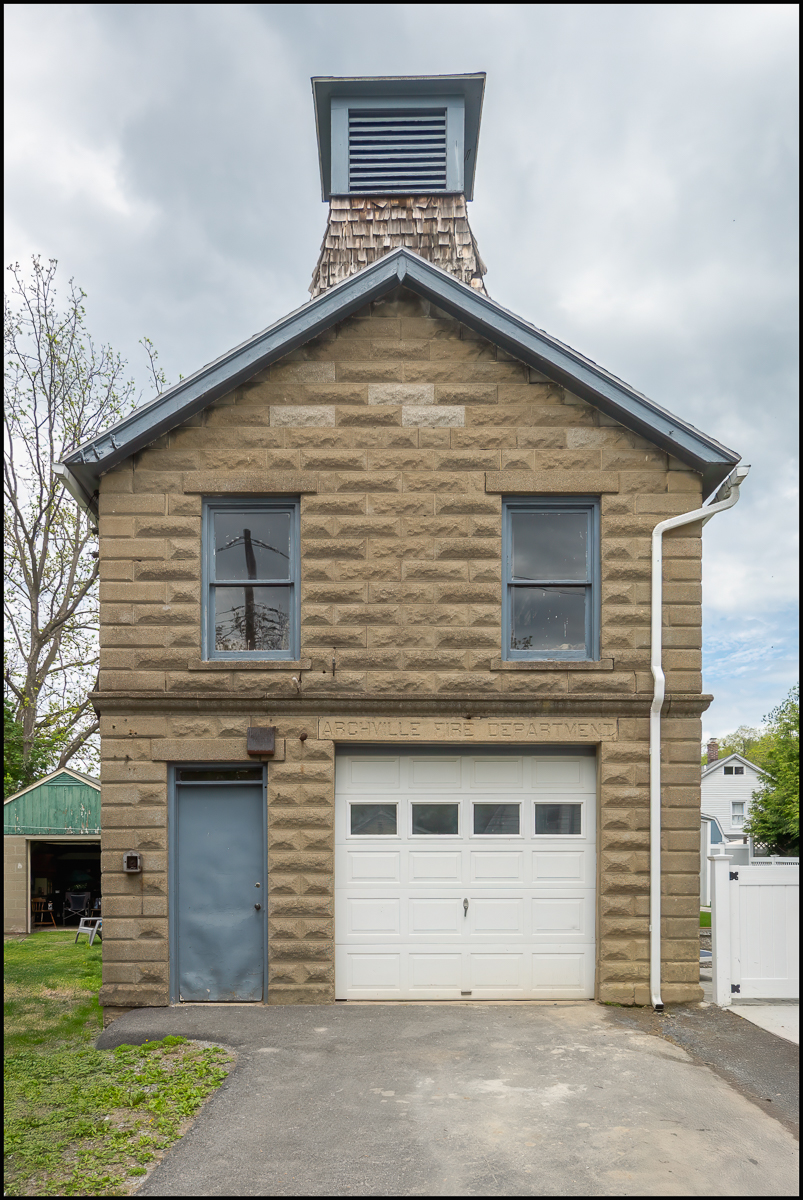
I recently came across this building in Archville, NY. It’s an odd-looking building. What’s that tower like structure sticking out on top? At first glance it looks like someone’s garage, but as you look closely you see the words “Archville Fire Department”

Well, I say I came across it, but I was actually looking for it. I volunteer at the Briarcliff Manor-Scarborough Historical Society (BMSHS) and I’m preparing a piece on the history of the Archville and Scarborough Fire Departments. The text has been entirely prepared by a long-time member of the various (and sometimes confusing) Briarcliff Manor Fire Departments, and I was looking for some photographs to illustrate it. This is, indeed the original Archville Fire Station.

The website of the Archville Fire Department has this to say about its history:

The volunteer Archville Fire Department serves the hamlet and surrounding area, from the Hudson River to Pocantico Lake and from the edge of Briarcliff Manor to the edge of Sleepy Hollow.

Archville was named after an arched bridge over what is now U.S. Route 9. It carried the Old Croton Aqueduct over the highway. In 1924, the bridge was deemed to be a traffic hazard and it was demolished. In November 1998, long after the aqueduct was shut down, the bridge was replaced as a crossing for aqueduct walkers, bikers, and equestrians over the particularly dangerous section of the highway.

The Archville Fire Company was chartered in 1909. Its initial equipment consisted of thirty 3½ gallon galvanized buckets, and later a 50-gallon horse-drawn pumper purchased from the Valhalla Fire Department.

Archville Fire Department has three chief’s cars, two fire engines, and a horse drawn hand pumper from 1890, which serves as a department antique

Engine 236 / 2010
Engine 235 / 1992
Chief’s car 2631
1st Asst Chief’s car 2632
2nd Asst Chief’s car 2633

Hubert W. Mannerly was the first chief when the company chartered in 1909. Its first headquarters was a shed on the corner of Union Street and Albany Post Road (current Route 9).

The old Fire Station above is tucked away down a side street. You could easily miss it if you weren’t looking for it.

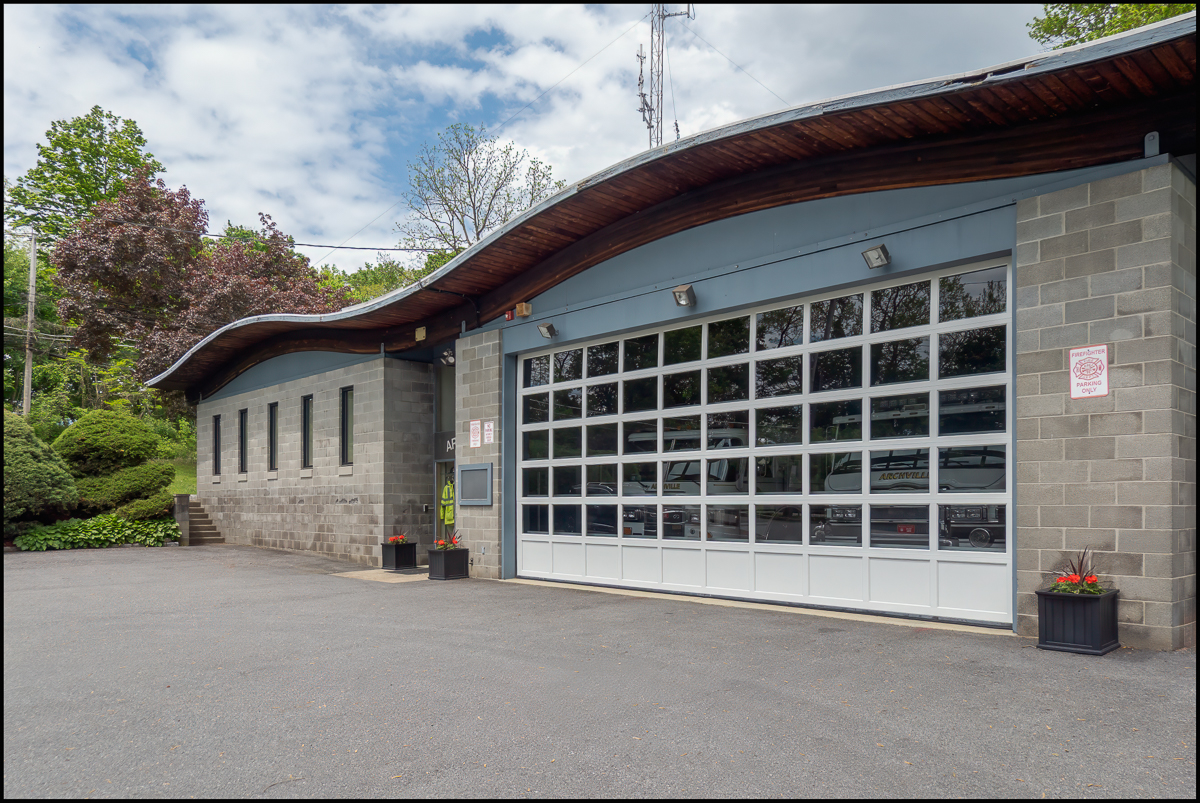
The new Fire Station (see below) is quite visible from a major road (Route 9). It’s right next to the Guadalajara Restaurant.

When the piece for the BMSHS is finished I’ll update this post with a link to it.

Taken with a Sony RX10 IV.

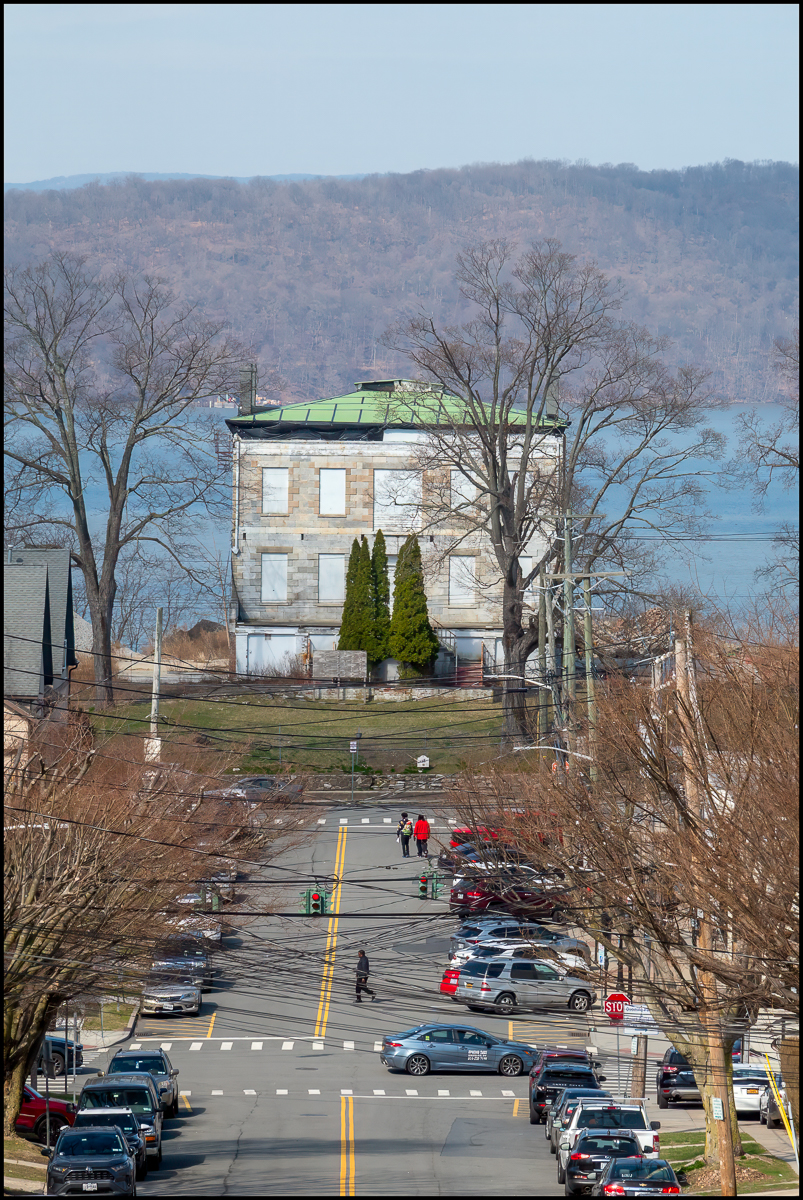
Looking down Broad Ave., Ossining towards the Hudson River

The building at the center of the photograph near the river is the Smith-Robinson house. The Village of Ossining Significant Sites and Structures Guide, Page 108 has this to say about it:

Property Name: Smith-Robinson House
Other Name(s): Printex Building
Street Address: 34 State Street
Section, Block, and Lot: Section 97.07, Block 2, Lot 17
Architect/Builder: Unknown
Date of Construction: circa 1840
Architectural Style: Greek Revival (1825-1860)

Greek Revival architecture came to prominence in America during the early 1800s as part of a renewed phase of interest in the architecture and culture of the ancient Mediterranean following a series of archaeological discoveries in the late 18th century. Greek Revival structures are often identifiable by the use of a temple front façade configuration, with a large triangular pediment and columns dominating the main façade. Some examples of the style may utilize the columns without the pediment, while others may have an appearance consisting of a blend of Greek temple features with other early 19th century styles.

The Smith-Robinson House is two stories in height, five bays wide, and five bays deep. A veranda with six one story Doric columns extends along the length of the main façade, along with a second story balustrade and balcony above. A raised basement story is visible below the
veranda, and the original windows on this story of the structure were enclosed at an unknown date. The window configuration on the main façade consists of six over six wood sash double hung windows with stone sills and lintels. The main entryway has a transom window over the door and is flanked by side lights. The house is also architecturally notable for one of the most complete and well-preserved Greek Revival interiors in Westchester County. The building has a flat roof and is built from Sing Sing Marble.

Significance: Architectural and Cultural

The Smith-Robinson House is architecturally significant as one of three remaining Greek Revival structures in the Village of Ossining. The others are neighboring James Robinson House (see entry) and the Charles Snowden House, (see entry). It is also culturally significant for its association with James Robinson and James Smith, two wealthy mid 19th century Sing Sing Village landowners.

Narrative:

The Smith Robinson House, located at 34 State Street and built in the 1840’s, was constructed by a local businessman named James Smith as his residence. The original estate on which the house was built once extended east all the way to Highland Avenue and contained several acres worth of orchards. The property was later purchased by James Robinson, another wealthy local landowner who built the residence that bears his name in 1860. The house was used as a wallpaper factory for a time in the 1940s, in 1948 the house served as offices for the Printex Corporation, a now-defunct textile manufacturer. An expansion wing built in a utilitarian style was constructed in 1955, and a dedicated factory facility was built on the south side of the house in 1967. The house has had a series of owners and tenants since then and was used as a meeting space for the Catholic Community Club, Knights of Columbus and other nonprofit organizations for a time. Currently, it is vacant and unused but retains much of its original condition.

I took this photograph from Highland Ave., so everything you see would once have been part of the estate. A friend who’s quite knowledgeable about the history of Ossining (he’s even written a book about it) informs me that Broad Ave. was once the road to the main entrance of the Smith-Robinson House.

As mentioned above the Guide, which was published in April 2010, states “Currently, it is vacant and unused but retains most of its original condition”. This photograph was taken March 29, 2025, and you can see that much still needs to be done.

Taken with a Sony RX100 IV.