Street Art

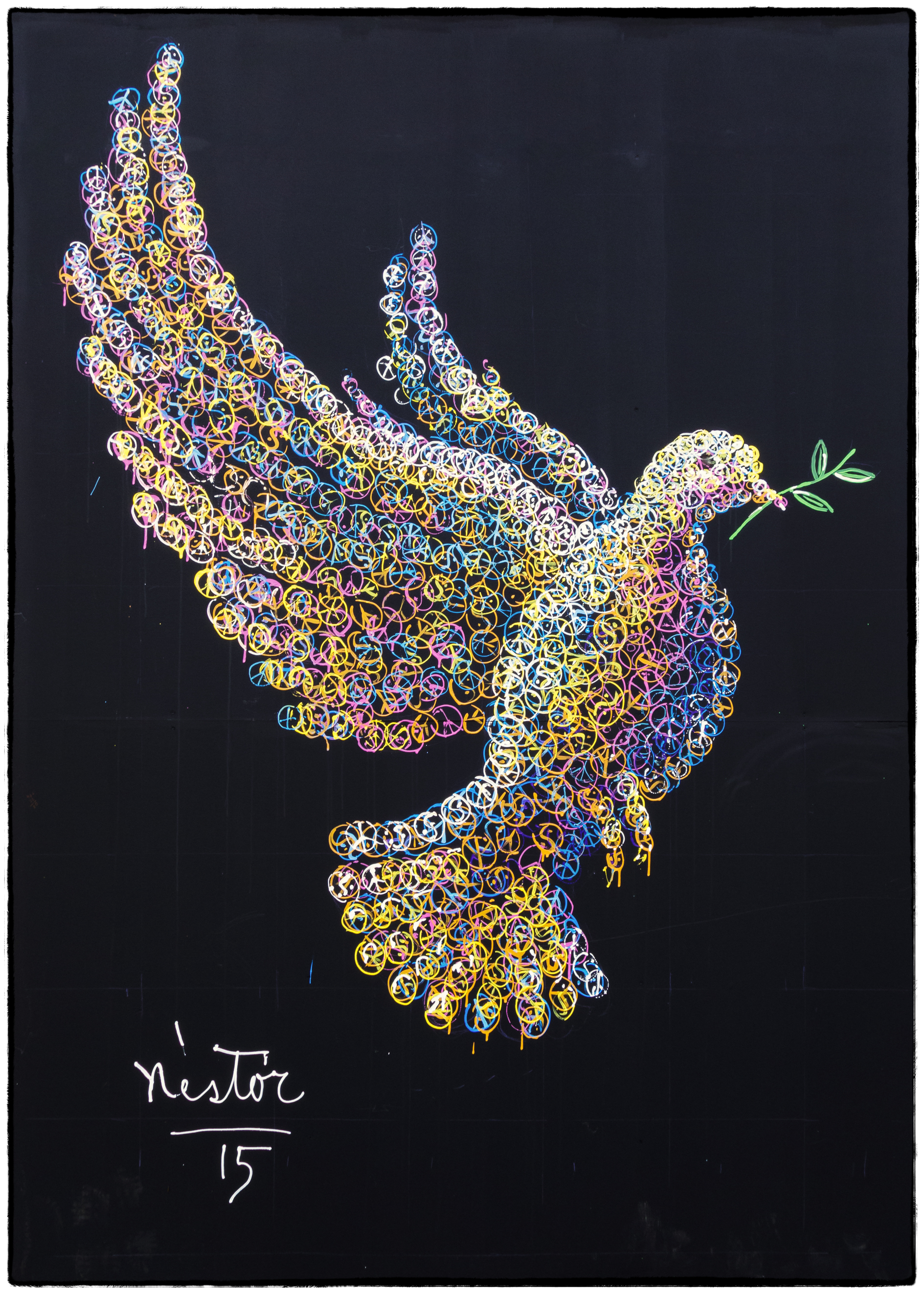
Street Art – one of a number of panels along a wall in Poughkeepsie, NY. It’s obviously a peace dove and after a little research I believe the Nèstor who created it is Nèstor Madalengoitia. According to his website:

Born in 1959 in Lima Peru, Nestor is a portrait and mural artist. He was educated at the Catholic University of Lima-Peru, and SUNY New Paltz NY. He currently lives and works in Poughkeesie NY.

Nestor’s work is inspired by the work of the pre-Columbian Peruvian Paracas tapestry with a modern understanding which define his own visual and conceptual vocabulary that emerged through his focus on the point on intersection between visual effect and the meaning of the subject. Nestor’s paintings have been seen in numerous exhibitions and collections in New York City, the Hudson Valley and Lima Peru. 

Nestor is now working in a body of work about portraits of citizens of Poughkeepsie NY . His murals can be appreciated in public spaces in Poughkeepsie and other localities such as Washington DC, Sussex Canada, the Florida Keys, Lima Peru and Cajabamba Peru.

His Peace Dove appears to be part of an Exhibit of Work by Latino-American Artists.

Ansel Adams’ Pictures of an American Concentration Camp During WWII

Manzanar from Guard Tower, view west (Sierra Nevada in background).

More than 30 pictures in this article.

Ansel Adams is best known for his breathtaking landscape photos, but he photographed much more than nature during his decades-long career. In 1943, already

Source: Ansel Adams’ Pictures of an American Concentration Camp During WWII

Bearing in mind Donald Trump‘s recent comments regarding Muslims I wonder how close we are to this again.

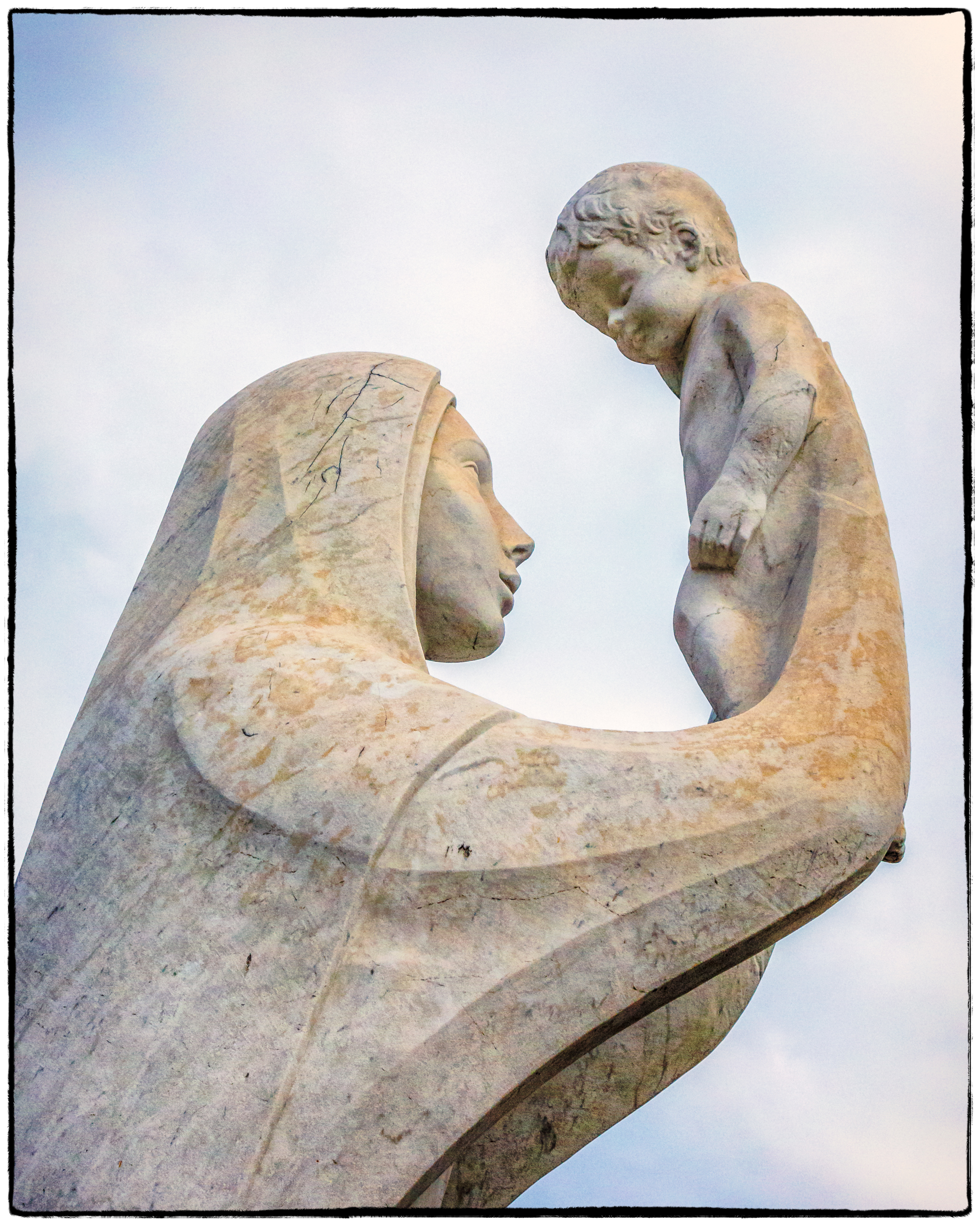
Madonna and Child Statue

I came across this statue outside St. Mary’s Church (Poughkeepsie, New York). According to Wikipedia:

The congregation was organized in 1873 when the Rev. Patrick McSweeney, D.D., pastor of St. Peter’s, Poughkeepsie purchased a former Universalist church building on Cannon St. The church was dedicated on July 20, 1873 by Cardinal McCloskey. On May 18, 1886, Rev. Terence J. Earley was appointed pastor of St. Mary’s. During his pastorate, John McCann, a feed and grain dealer and a founding member of the parish, deeded his property on South Hamilton Street to St. Mary’s, and a Gothic-style church built there was dedicated in 1893. A stone which had been removed from Poughkeepsie Bridge, Pier No.2 served as cornerstone, presented by The Bridge Committee. The new church was built and dedicated on October 22, 1893.

The church was destroyed by fire in 1968. Msgr. Matthew J. Cox, pastor of St. Mary’s from 1970 to 1982, guided the parish through the four-and-a-half-year process of rebuilding. James McCann, whose father had given the land for the church, died a year after the fire. Before his death, the younger McCann, who had been successful in the stock market, set up a philanthropic foundation. One of its first donations was $330,000 for the new church, which was more than matched by parish donations.

John J. Gartland, an attorney and president of the foundation, salvaged the baptismal font, the only item from the old church still in use. He and his wife also donated a 34-foot-high mosaic of Christ Triumphant that serves as a backdrop to the altar. Incorporated into the mosaic design are the original church and the Mid-Hudson Bridge, which parishioners see as a symbol of their call to build bridges with others and spread the faith. The work was designed by American artist Lumen Martin Winter, who also sculpted the marble statue in front of the church depicting Mary holding the Christ Child above her head.

In November 2014, the Archdiocese announced that St. Joseph’s Church on Lafayette Place would merge with St. Mary’s. Although remaining a church which may be used on special occasions, Masses and the sacraments will no longer be celebrated on a regular weekly basis at St. Joseph’s as of August 2015.

For more information see the website of the combined parish of St. Mary’s-St. Joseph’s

Unfortunately I haven’t been able to find any more information about the statue itself.

Urban Decay

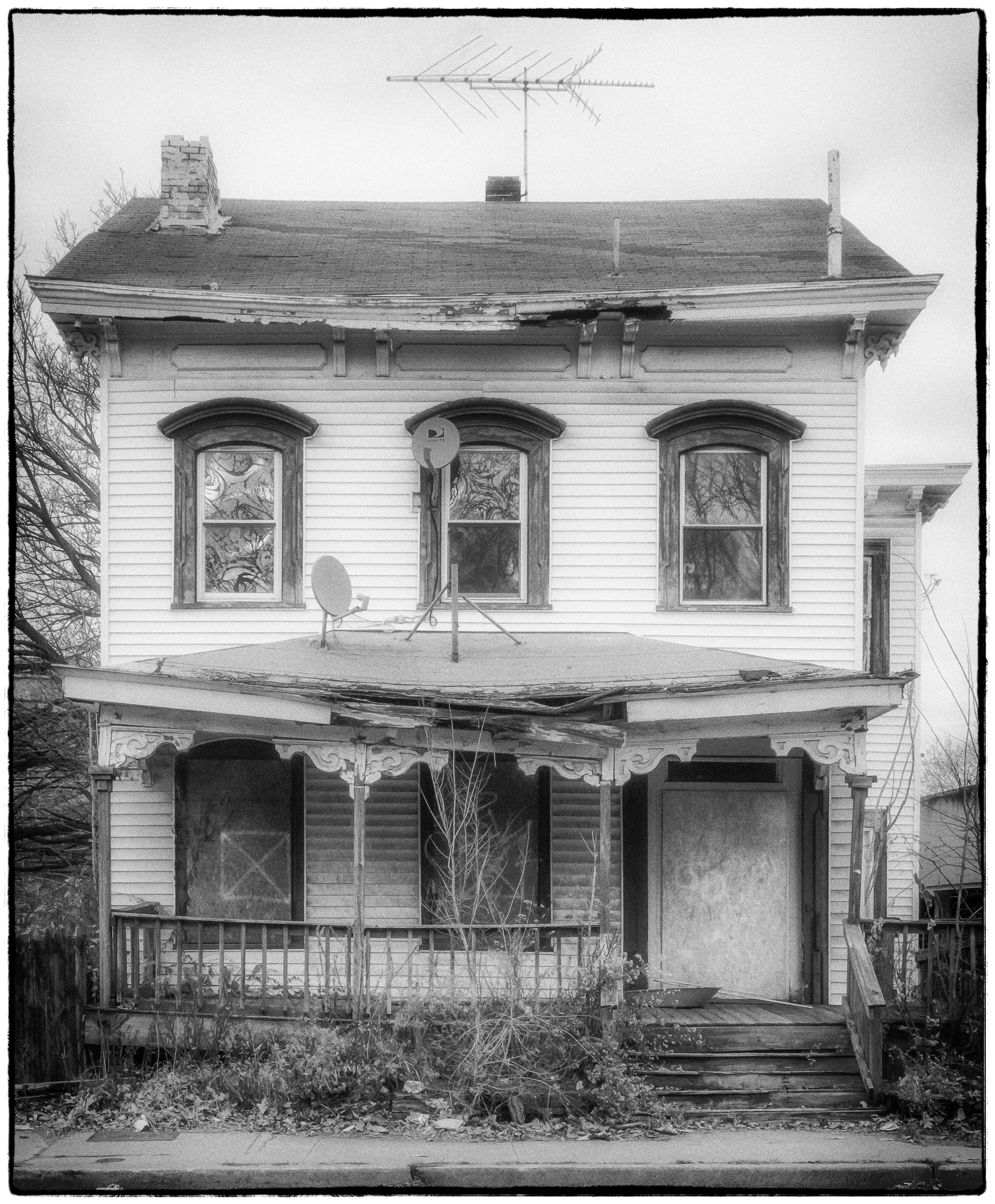
In the previous post (A Couple of Buildings on Main Mall Row, Poughkeepsie, NY) I mentioned that there were a lot of lovely buildings in Poughkeepsie. While that’s certainly true there are also a lot of boarded up shop fronts and abandoned houses. This seems to be typical of many of the larger Hudson Valley river towns. It’s been a long transition from the largely industrial days of the past to re-inventing themselves according to a different model. I suppose Cold Spring is a good example of a successful transition. Without any real knowledge I get the feeling that Poughkeepsie is on the way back.

This house was on a street parallel to Main Street. I couldn’t help wondering which came first: had the house fallen into disrepair and then been abandoned? Or was it abandoned first and then felt into disrepair afterwards? I suppose it doesn’t really manner as the likely root cause for both is financial.

A Couple of Buildings on Main Mall Row, Poughkeepsie, NY

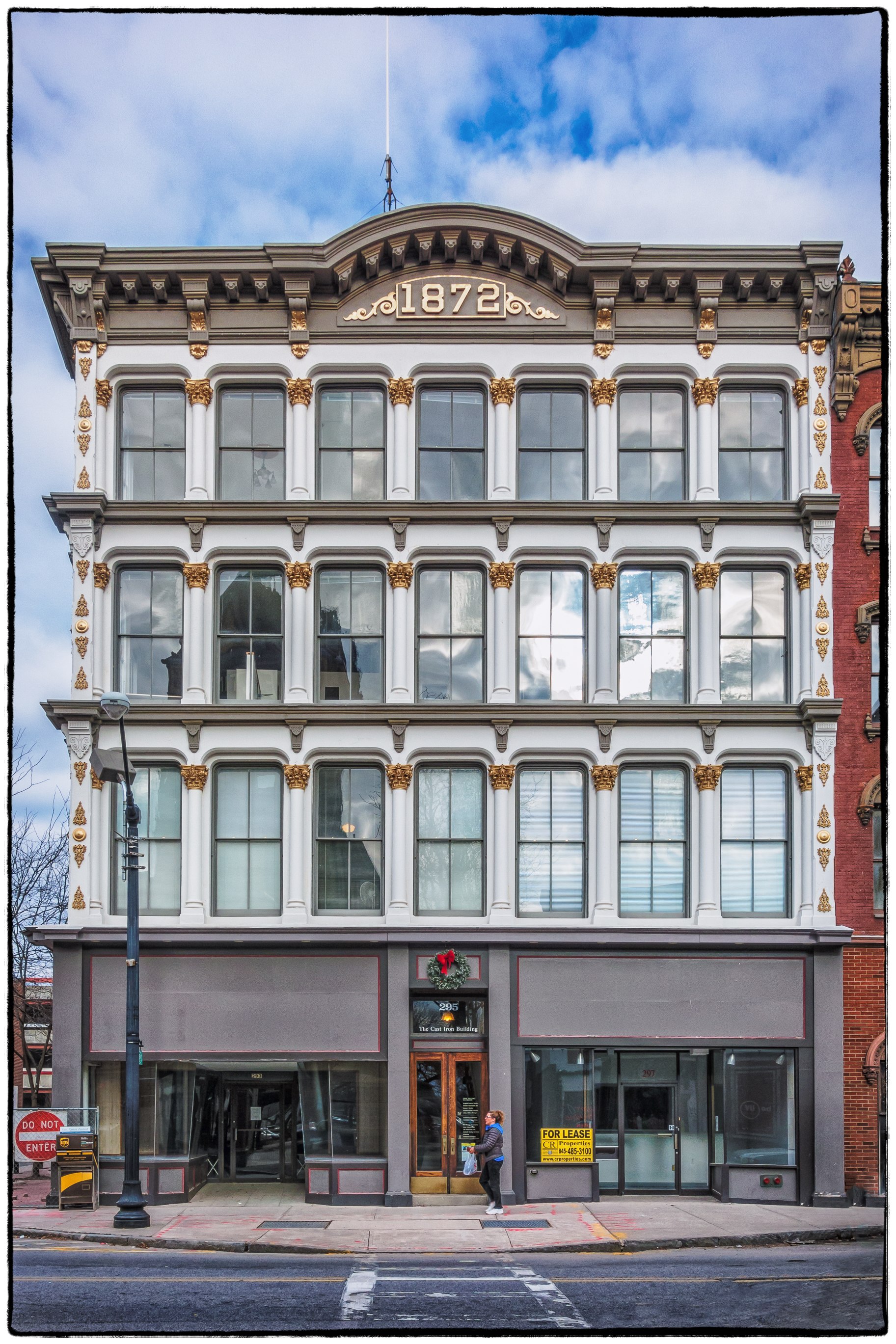
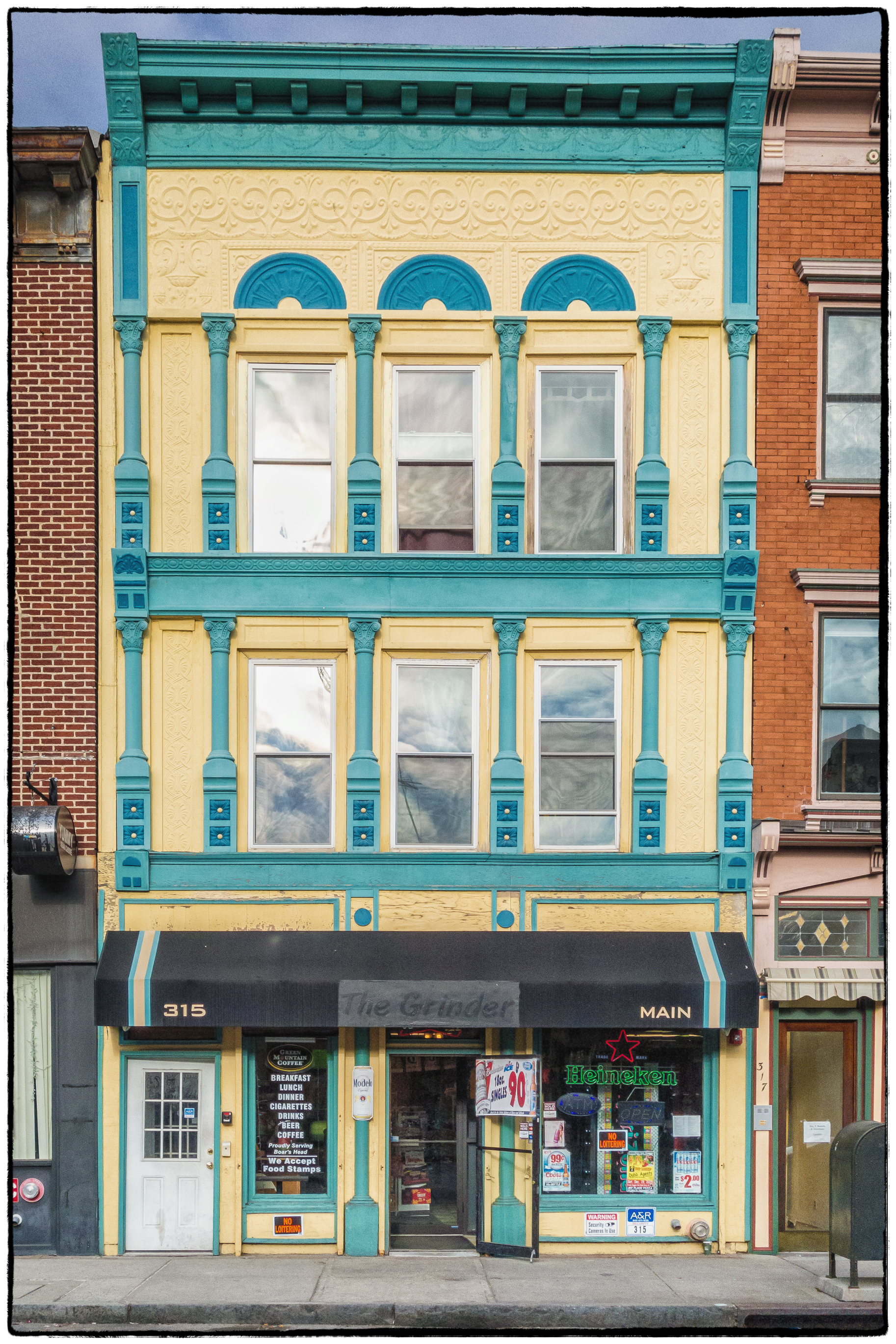
The Cast Iron Building, 1872.

We’ve been to Poughkeepsie a few times, but we’ve always been going somewhere specific so this was the first time I’ve been able to walk around a bit (for about an hour – less than I would have liked, but I can always go back.) down Main Street and around. There were a few decent looking restaurants and some lovely old buildings – like the two facades in the pictures, once part of what was referred to as “Main Mall Row”.

According to Wikipedia:

Main Mall Row is an adjoining group of nine commercial buildings along the northeast corner of the intersection of Main and Garden streets in downtown Poughkeepsie, New York, United States. They were mostly built after a fire in 1870 destroyed the previous buildings on the site. The new structures were three-to-four story buildings in the Renaissance Revival style, many with ornamental touches such as bracketed cornices, paneled friezes, arcaded facades and molded lintels. 315 Main Mall, at the east end, has an ornate cast iron facade. They are considered among the most architecturally significant commercial buildings in the city, and are still in use as stores today. The building at 3-9 Garden Street retains its original storefronts. The row, as with many of the other buildings in downtown Poughkeepsie, was added to the National Register of Historic Places in 1982.

Their current name comes from the city’s attempt to establish a pedestrian mall in the area, the two blocks of Main between Market and Academy streets, during the 1970s. With the nearby Luckey, Platt & Company Department Store, a commercial mainstay of the city, losing customers to suburban shopping malls, city planners thought they could sustain downtown by offering shoppers a similar experience. In 1973 the two blocks were closed to vehicle traffic. However, the decline of the downtown continued as most shoppers continued to choose the malls, especially after Luckey Platt closed in 1980. The city reopened the street and ended Main Mall in 2001, helping to revive commercial and residential development in the area.

The Grinder