Hot Dogs Anyone?

As I was walking the short distance from the cemetery back to the car I noticed that in the small gap between the two was a house – and in the driveway of the house was this odd-looking vehicle. The bright reds of the door and the lettering contrasting with the darker greens first caught my attention. I also liked the hand painted lettering, particularly on the front where the word “Dogs” changes in the middle – the lettering getting thinner as if the painter was giving up the battle. I also liked the name on the bottom right hand corner of the left side: “Franks Franks” – so small that you almost don’t notice it. I loved the air conditioning unit on the front too. It looked as if it had been bolted on as an after thought.

Another Cemetery

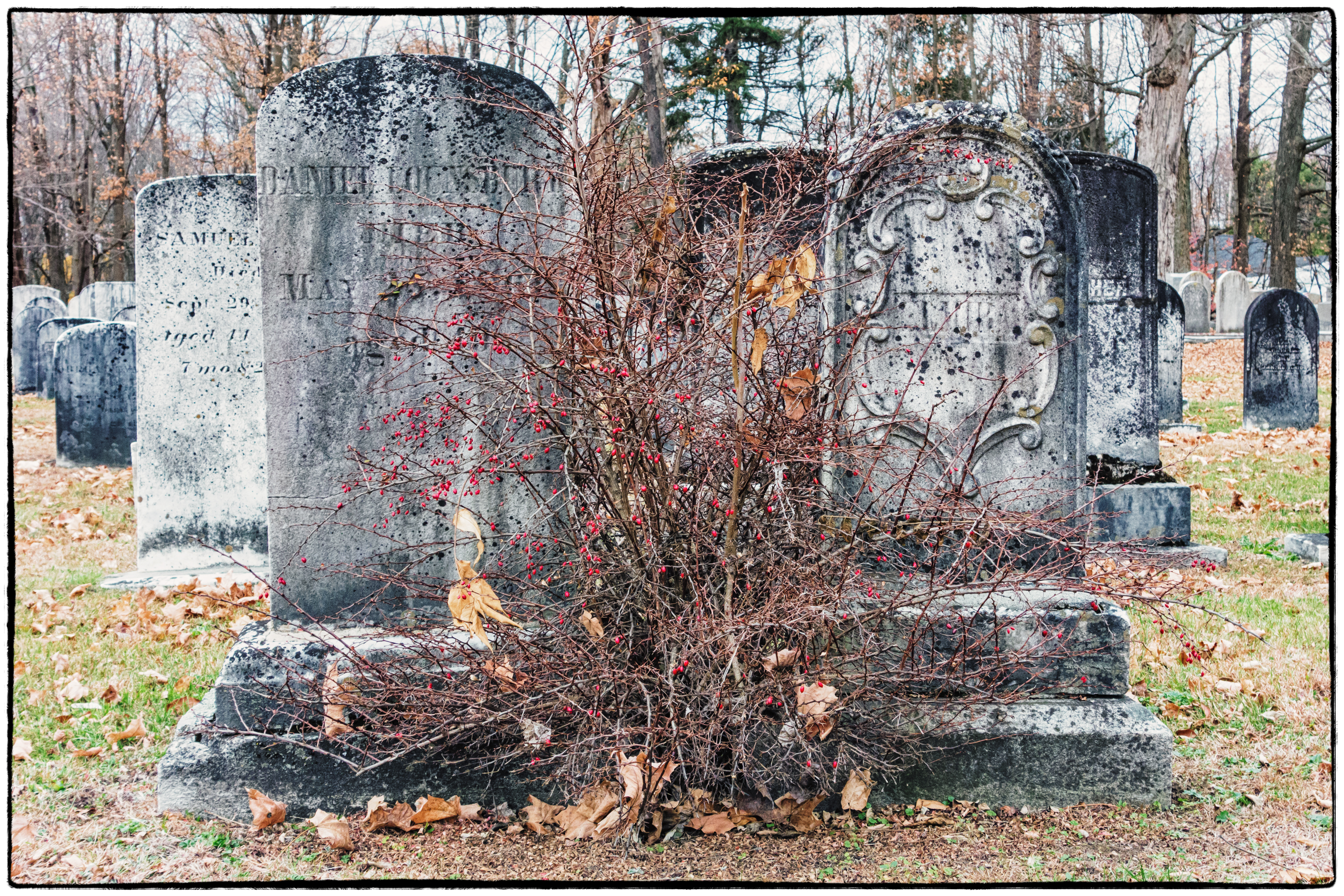
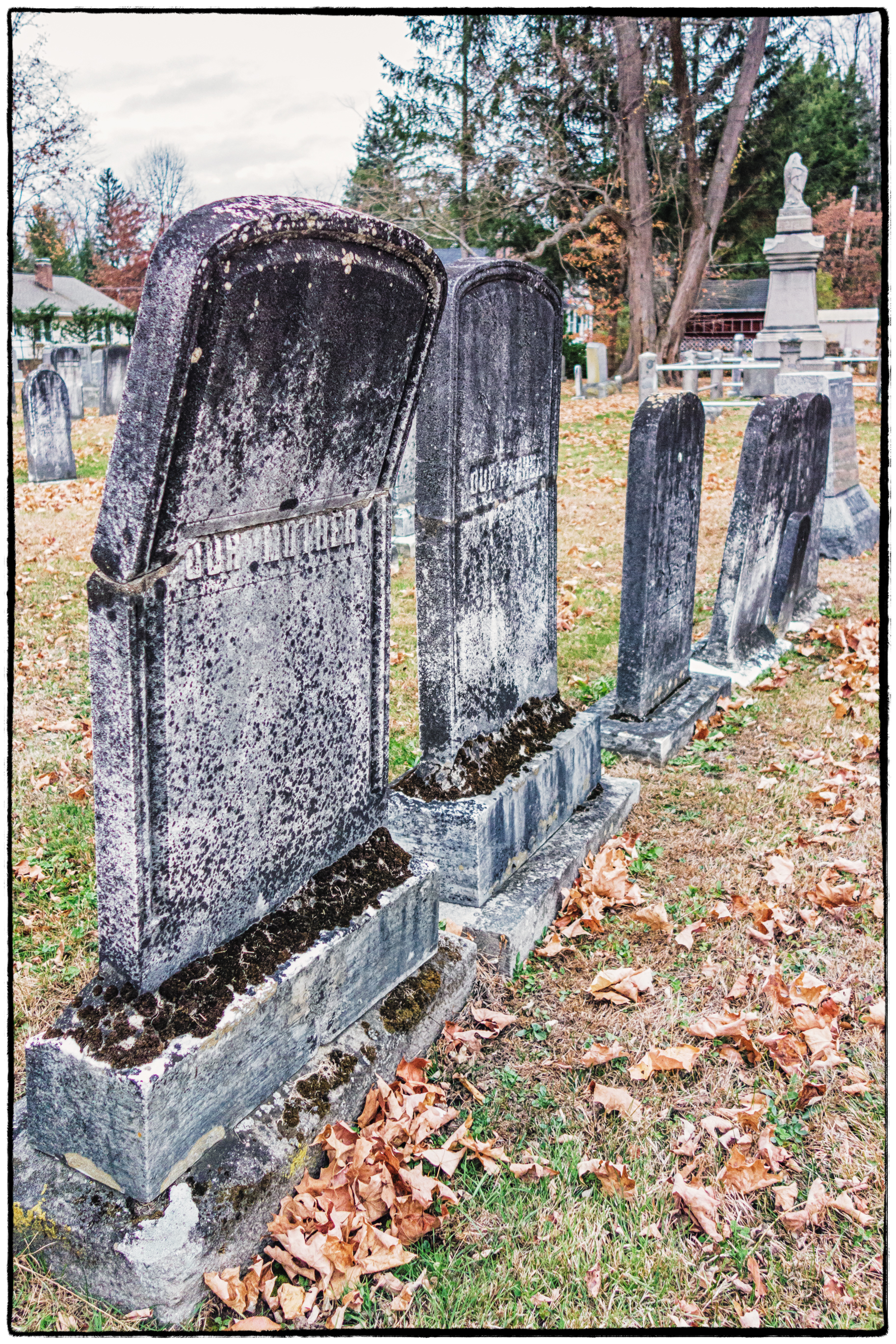
I think I’ve done about 16 posts featuring cemeteries, but I haven’t done one for several months (May 2015). This one is opposite the Shrub Oak United Methodist Church. We’d been for great lunch to a Thai restaurant virtually adjoining the cemetery. While my wife was finishing her dessert (sticky rice with mango) I decided to poke around in the cemetery. It’s not a particularly interesting cemetery. It’s small, flat and has a few nice designs on some of the gravestones (see the rightmost gravestone in the first picture). No interesting statuary though. In fact I don’t recall seeing any statuary at all, interesting or otherwise – maybe this is typical of Methodist cemeteries. I know that non-conformist churches don’t much go for decorative elements.

Somehow this reminded me of an authority figure (e.g. a teacher, or a politician) speaking to a group of acolytes.

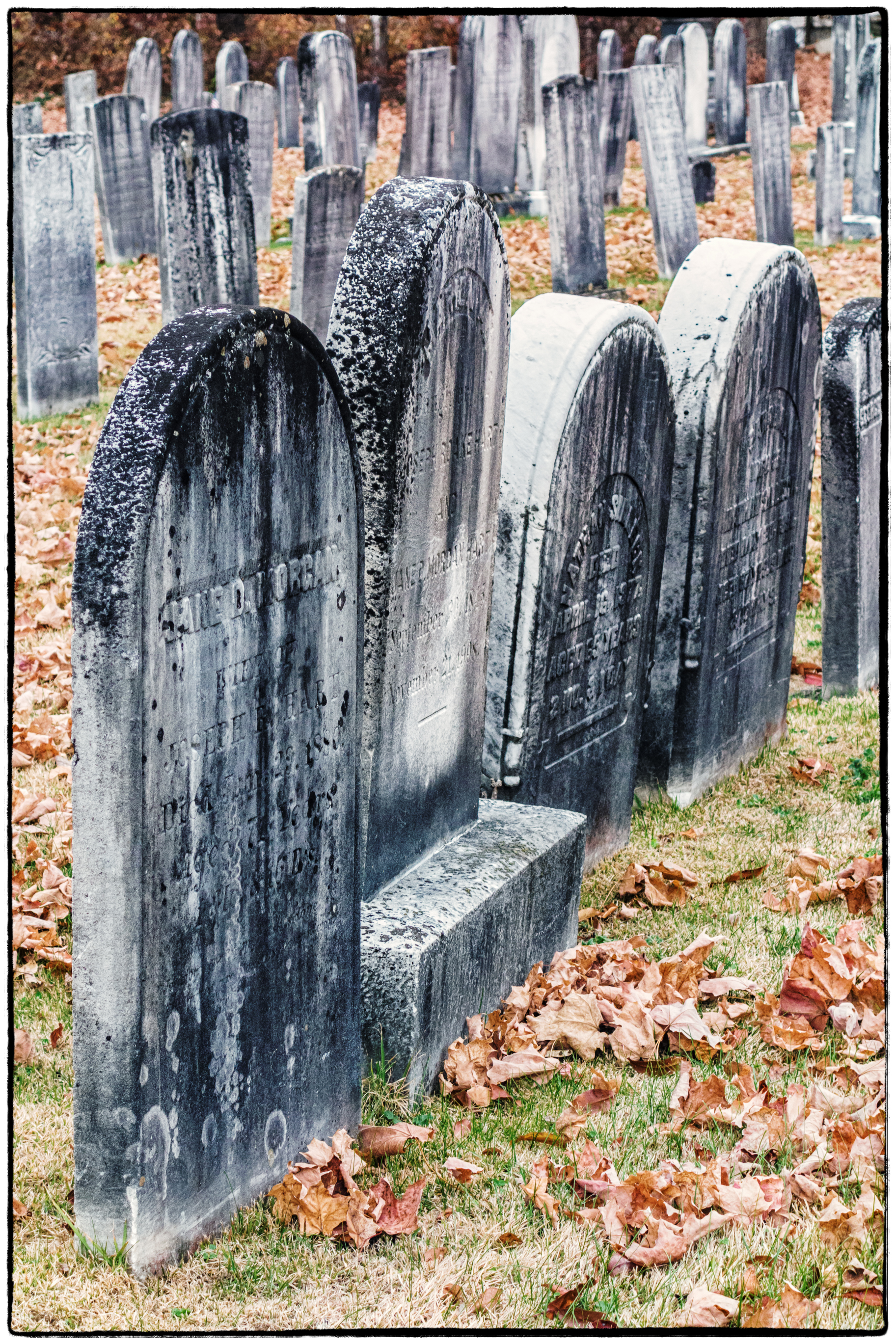
A mass of gravestones.

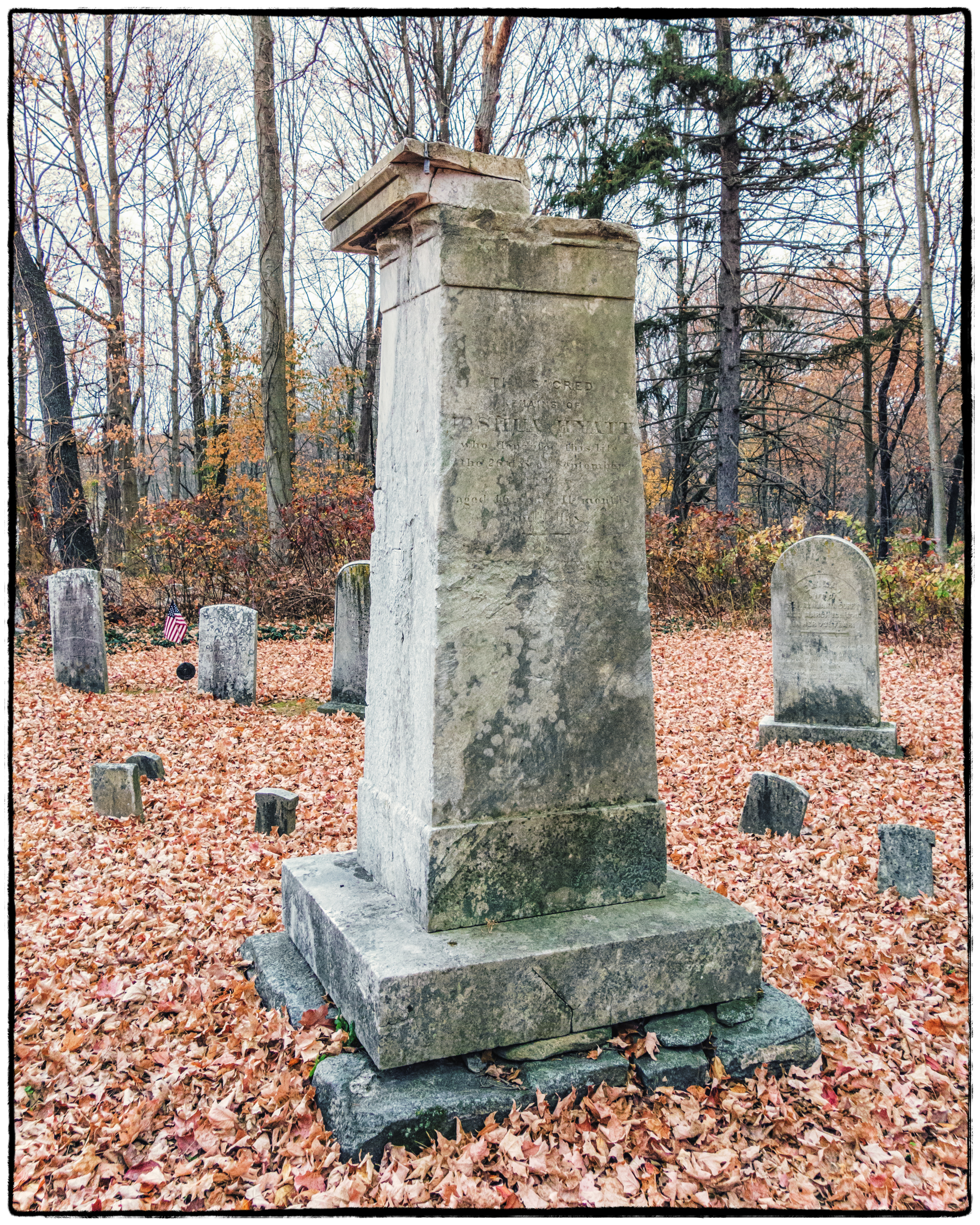
This is what time can do to a gravestone. The inscription was pretty much unreadable.

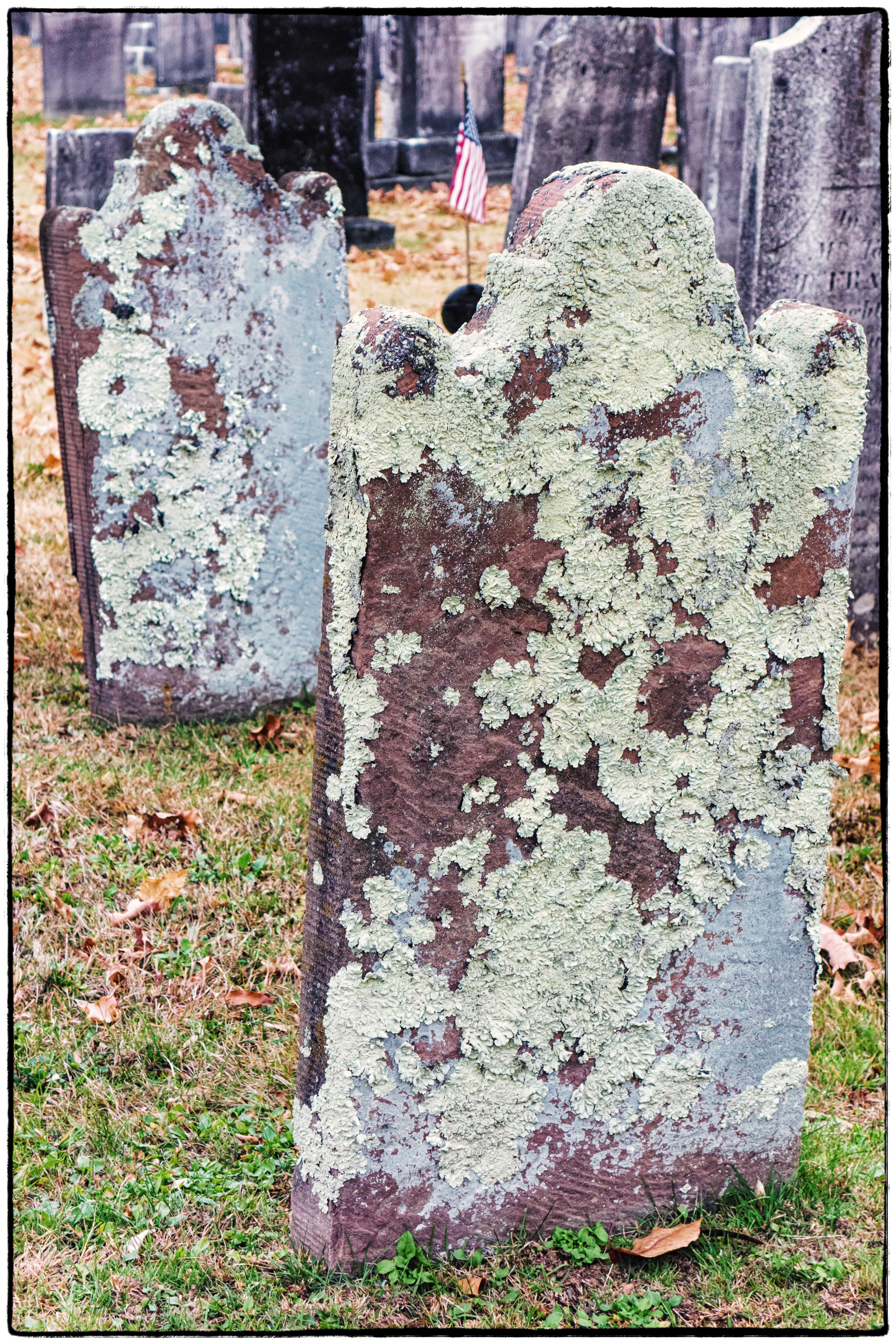
Although most of the gravestones were still standing, a few had broken and/or fallen over. The one in the foreground looks as if it won’t last much longer.

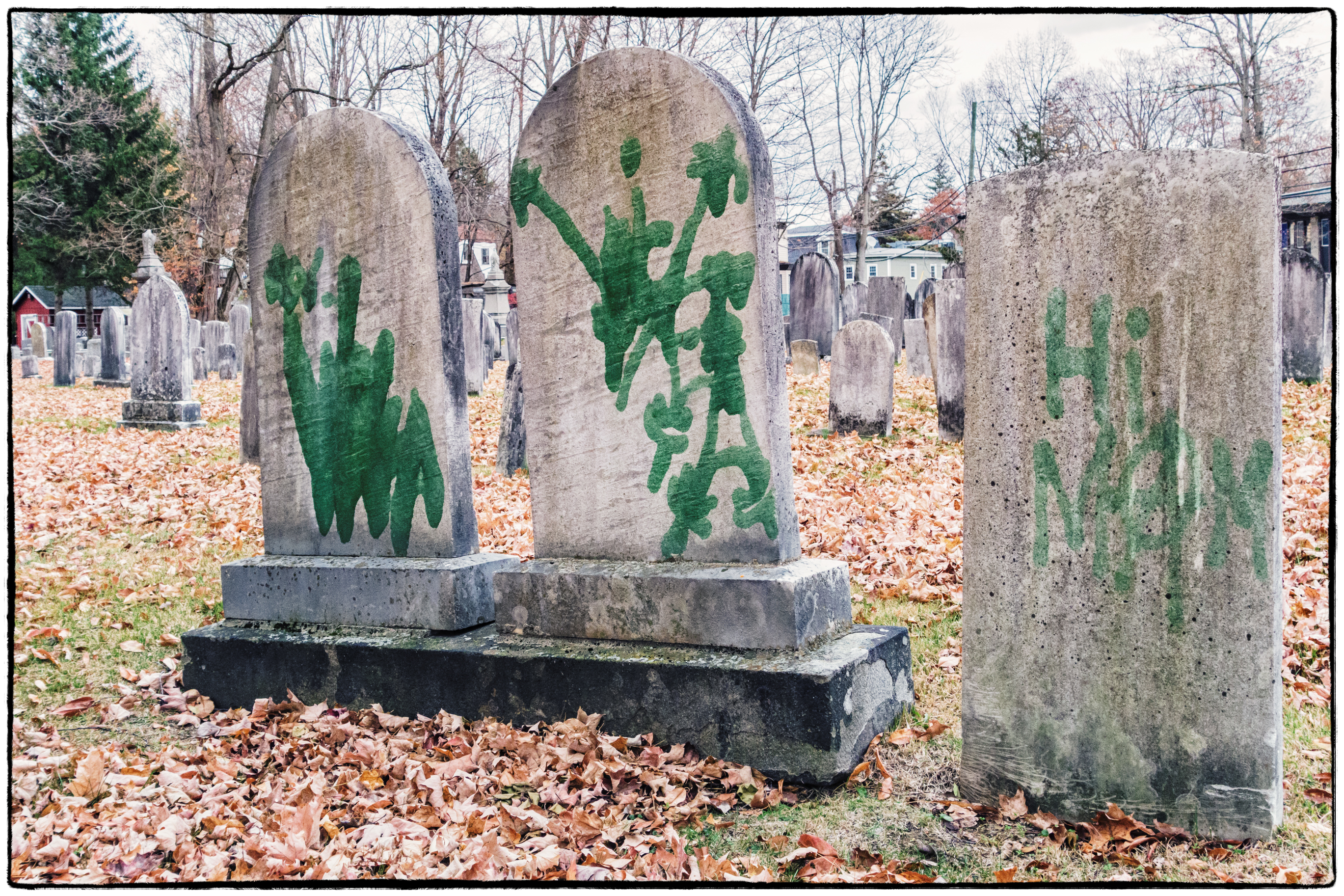
I didn’t include this one because I liked the picture. Rather I was appalled that someone had done this – desecrating a grave in this manner. The street is on the other side of these gravestones, which are about as far away from it as you can get. Whoever did this must have hidden behind the gravestones to do it. So cowards in additional to vandals.

Red Wall With Windows

Taken at the Pallisades Center, a mall in Rockland County, NY. I was attracted to the colors: the bright red of the wall with the neutral grey above it; the darker grey at the bottom and the small orange line that cuts across the frame. The repeating, different sized windows added some interest with the hint of something going on behind them. I think there’s an overall abstract look to the picture.

Morning Visitor

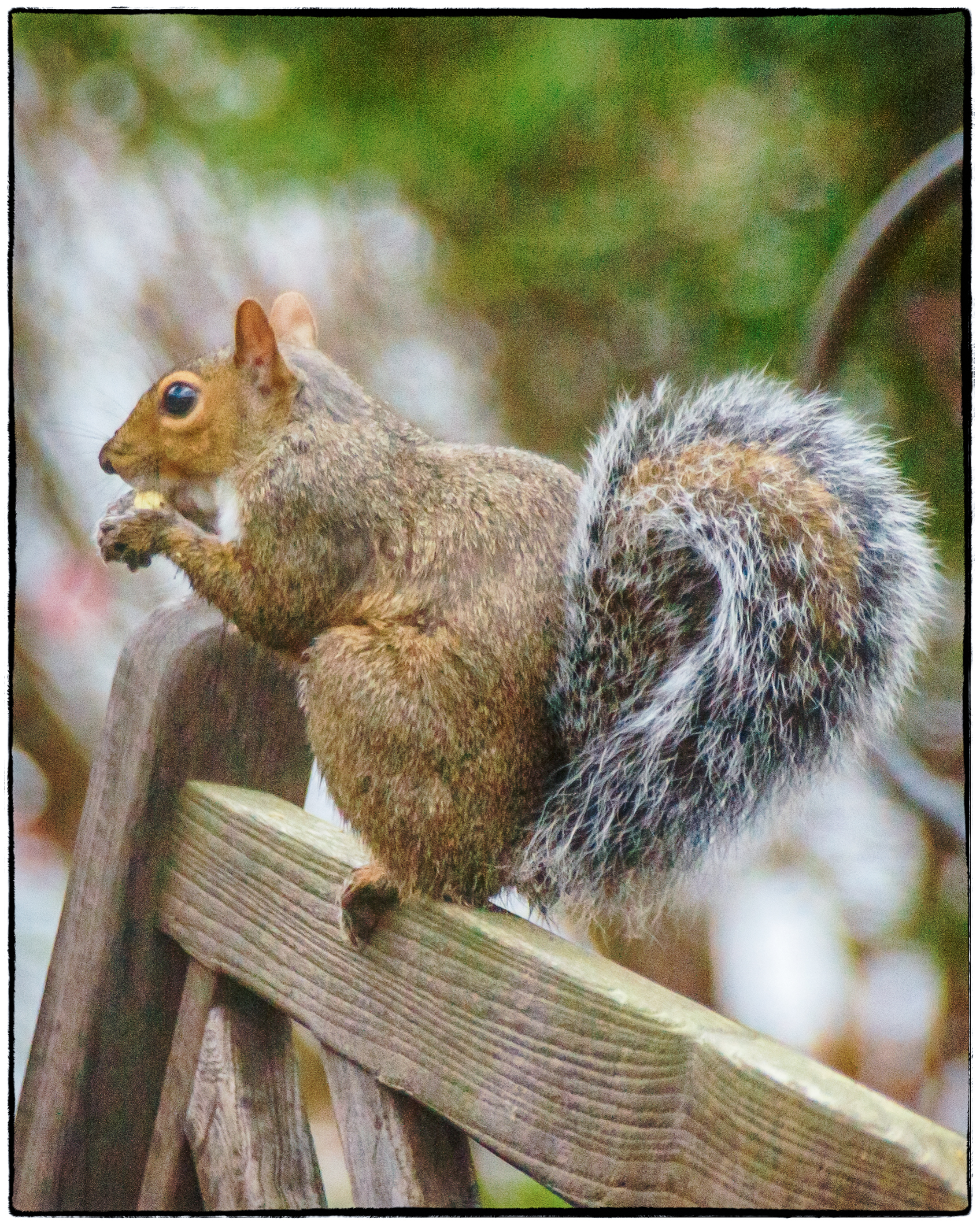
We have lots of acorns this year: it seems to having been “raining” them for months. There are hundreds, maybe even thousands, of them scattered around in piles in our garden. Needless to say this attracts chipmunks and squirrels. I caught this one munching away on our patio yesterday morning. I’m not usually quick enough to get them, but on this occasion I had a suitable camera/lens right next to me on the table. I had to take the picture through our living room window, which caused some problem with the focus. Also I suspect that the glass degraded the picture a bit. And as I was rushing there’s probably some camera shake too. Still at least I got something this time.

Poet’s Walk Park, Dutchess County, NY

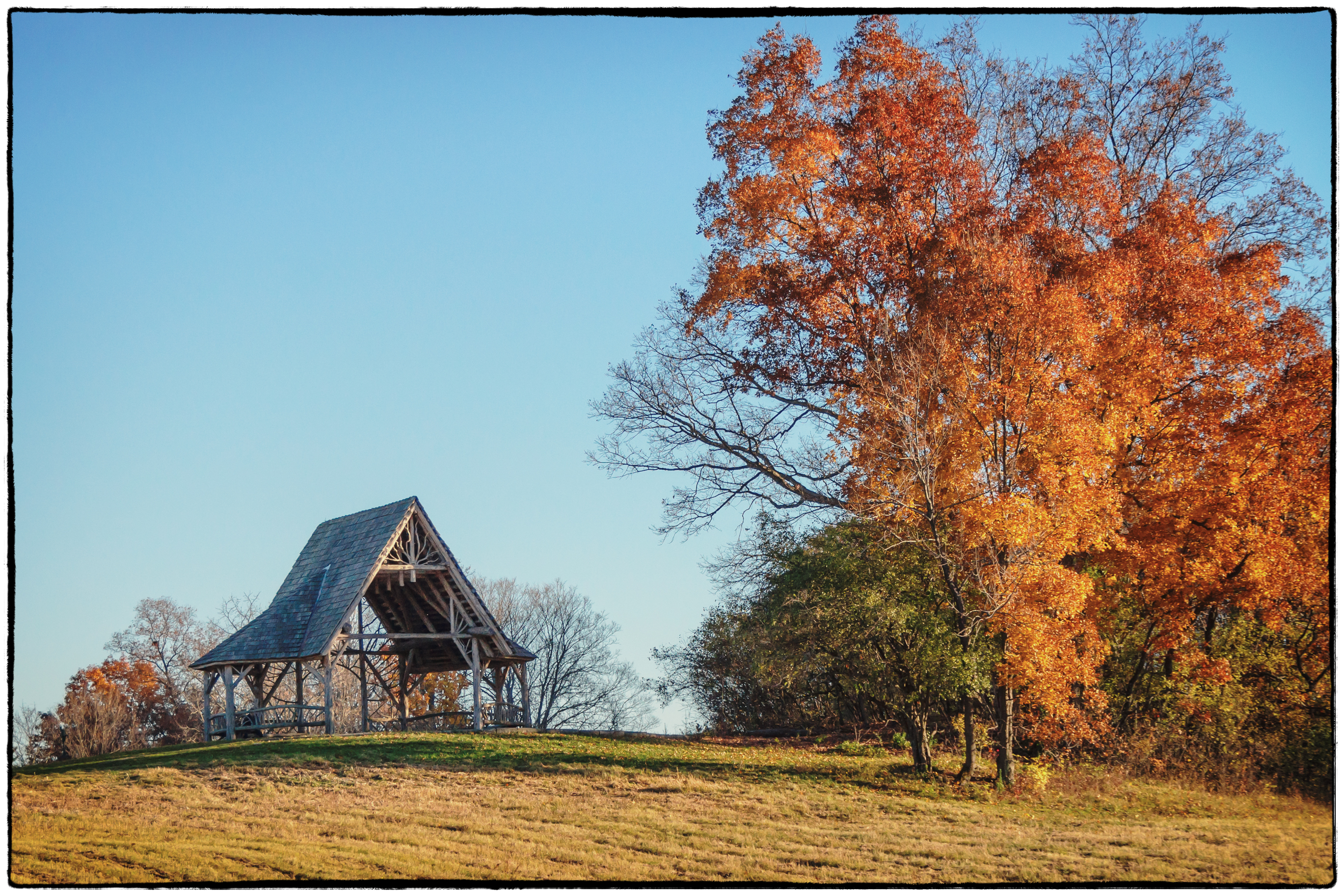
Overlook and tree.

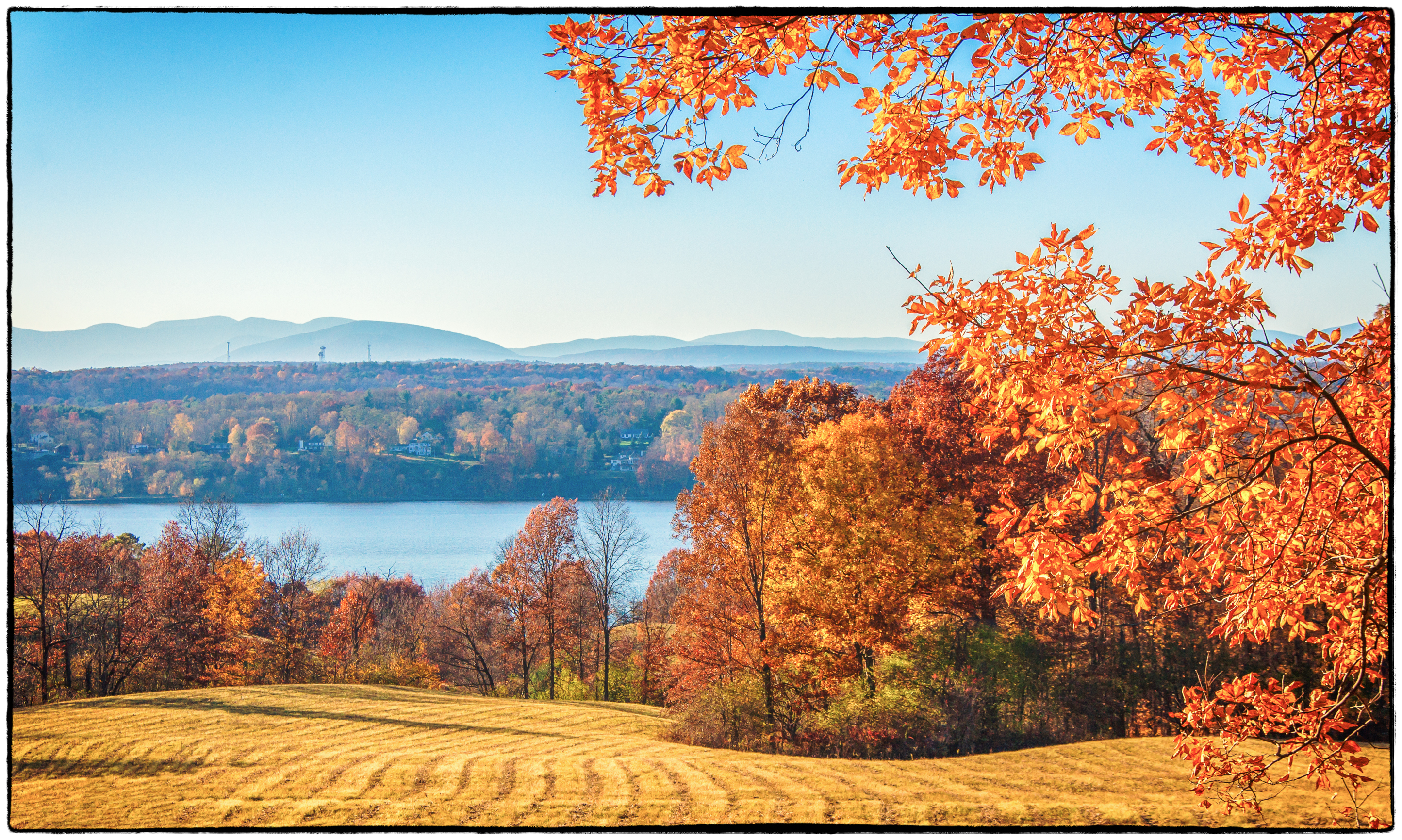
It was a gorgeous warm, sunny fall day with not a cloud in sight so we decided to venture north and take the dog for a walk at Poets’ Walk Park near Red Hook in Dutchess County, NY. I hadn’t been there before and found it most enjoyable – full of rolling meadows, interesting wooden structures and spectacular views out over the Hudson to the Catskill Mountains. There are only about two miles of trails divided into two parts. The first part takes you through meadows to The Overlook, a large rustic wooden structure. The second part is a bit more rugged, descending down through woods to the river and then ascending back again to near The Overlook. All told we walked for about two hours, a bit more than my wife (who isn’t much for walking in the woods) would have liked. We went towards the end of the day and the light was great.

View from the Overlook – Hudson River and the Catskill Mountains.

An information board near the entrance describes the park as follows:

The forests around Poets’ Walk were first cleared almost 300 years ago for farms. But the landscape we see today began to take shape in 1849, when owners Franklin H. Delano and Laura Astor replaced the old farms with a landscape garden. Designer Hans Jacob Ehlers laid out a series of grassy clearings linked by winding paths culminating in a dramatic view of the river and distant Catskill Mountains.

They named the estate Steen Valetje – Little Stony Falls – in honor of the region’s Dutch heritage. But this was no traditional garden. Old-fashioned gardens had straight pathways lined with neatly trimmed hedges and flower beds. Steen Valetje’s meadows were designed to enhance the nataural contours of the land – to look as if they had not been designed.

Once coveted for its rich agricultural land, by the mid-19th century the Hudson Valley attracted poets and painters for its beauty. Two famous writers particularly loved walking here. In honor of Washington Irving and Fitz-Greene Halleck, in 1996 Scenic Hudson renamed the estate Poets’ Walk Park.
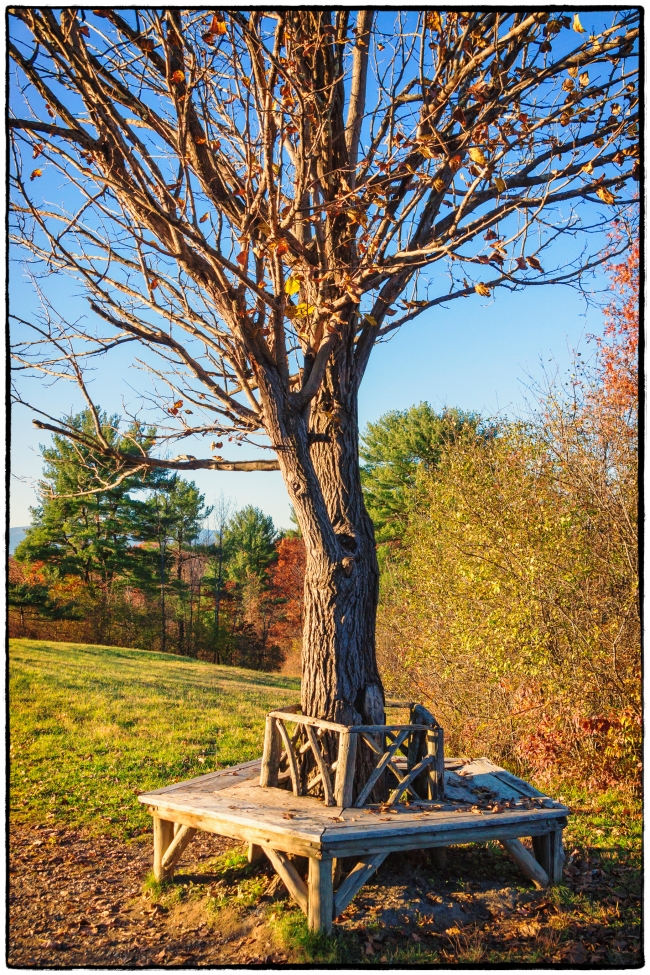
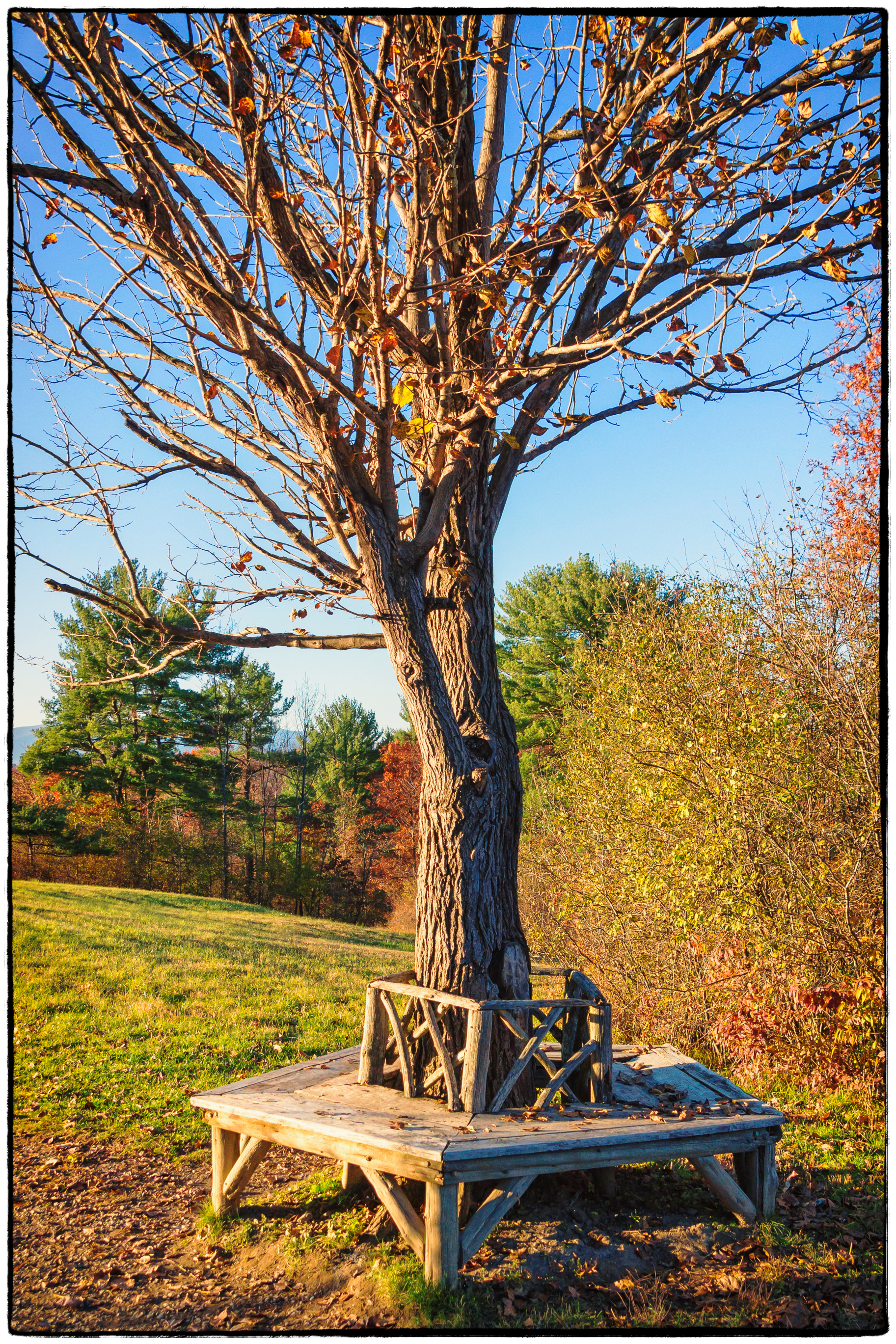
Tree and Bench

It’s an idyllic spot, but apparently there it has a dark history. According to the information board.

Behind the sunny meadows of Poet’s Walk lies a story of intrigue and betrayal. It begins in 1710, when a band of German refugees arrived in the Hudson Valley, lured by promises of jobs and land for farms. The scheme fell through. Some historians dispute the accuracy of this story.

As the refugees starved, wealthy landowner Robert Livingston refused to give them the land he had promised. Taking advantage of their distress, his brother-in-law, Colonel Henry Beekman, offered to rent them some of his land. This was a poor substitute for owning their own farms, but the refugees had few options. Some accepted his offer. They cleared the forest and created the first agricultural landscape of Poets’ Walk. Finally in 1839, farmers throughout the region went into open revolt. They marched, demonstrated and petitioned the politicians. Within a few years the Anti-Rent War had ended the worst abuses and curbed the landlords’ power

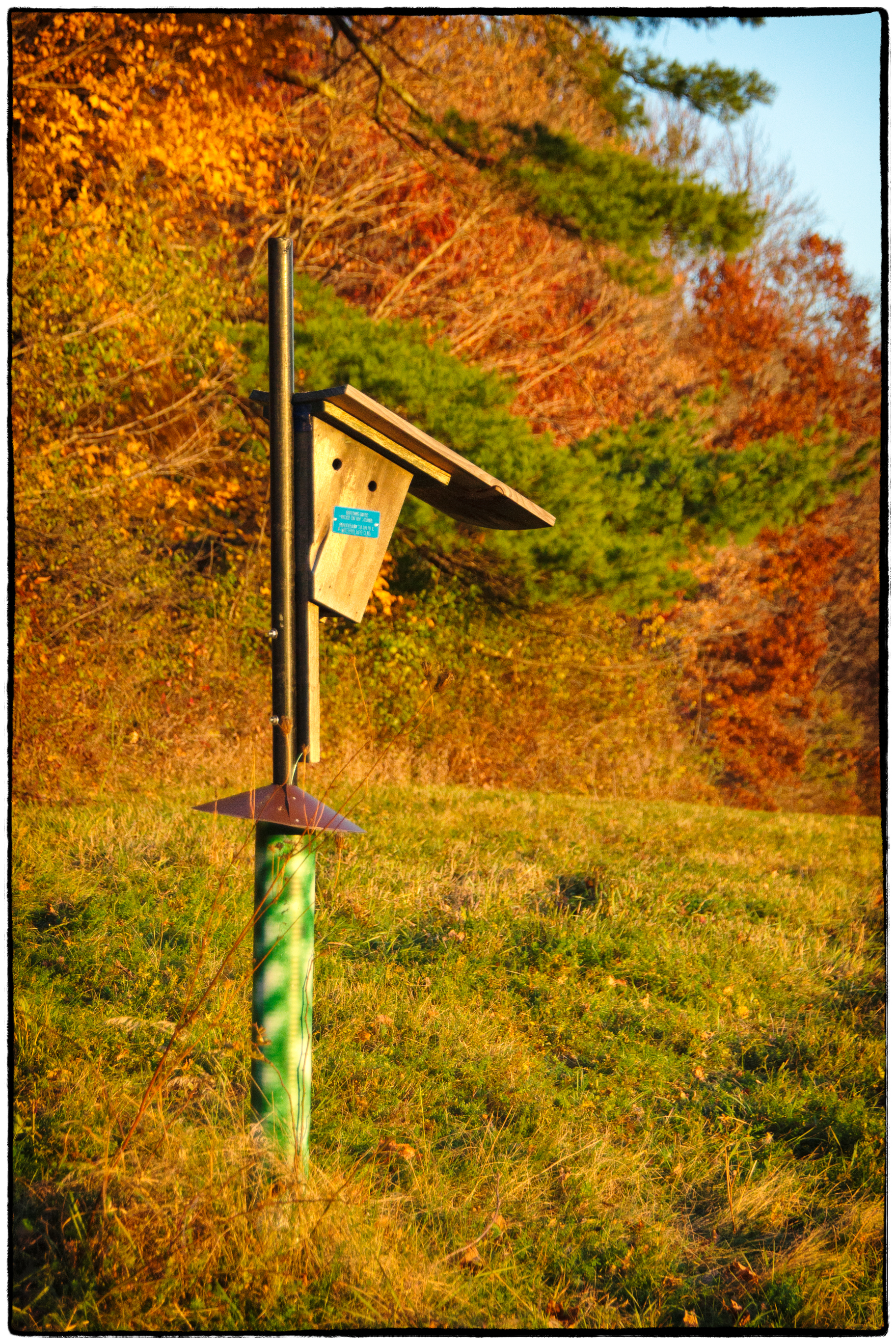
Bird House Face.

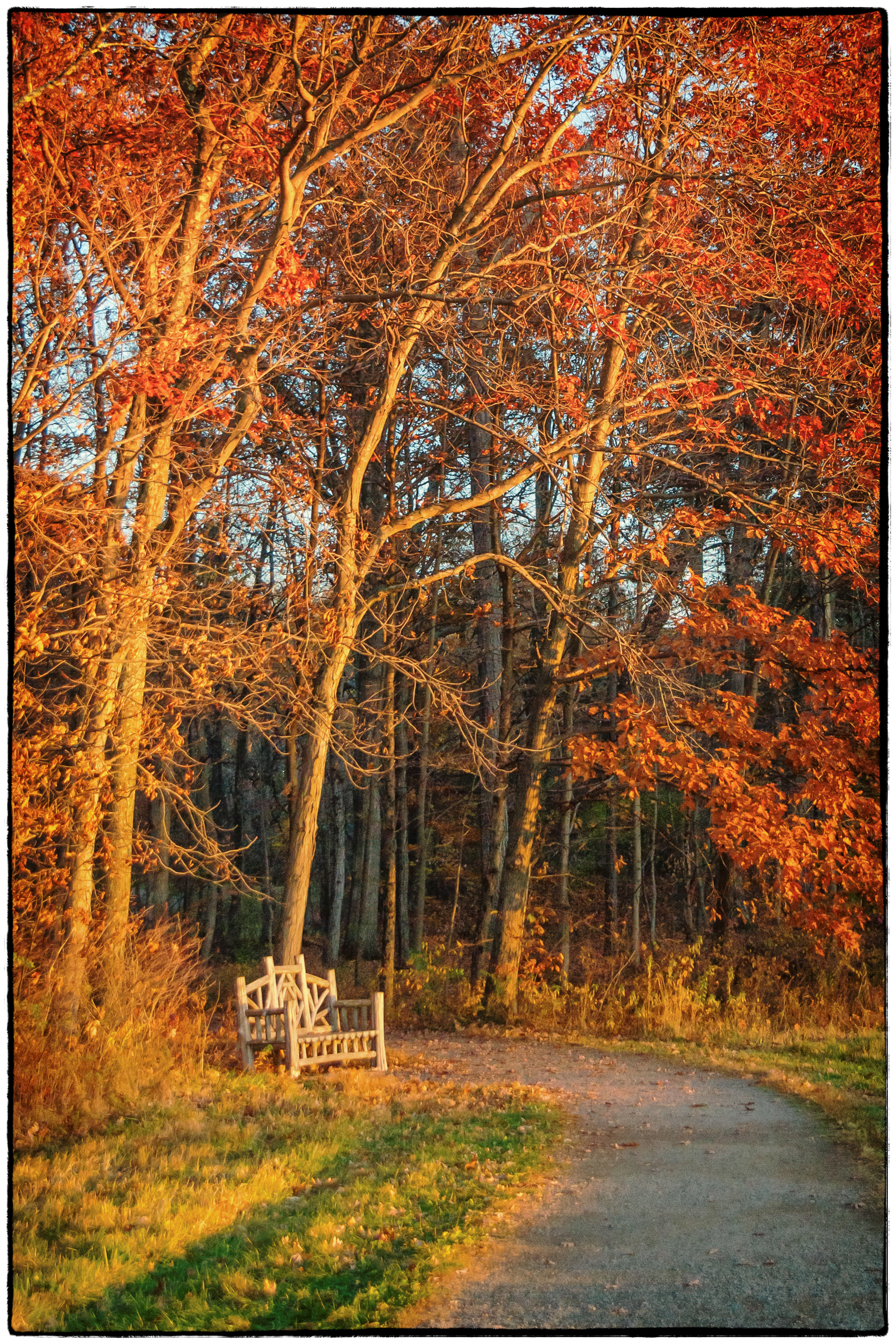
On the way back.