Why It Does Not Have to be In Focus: Modern Photography Explained

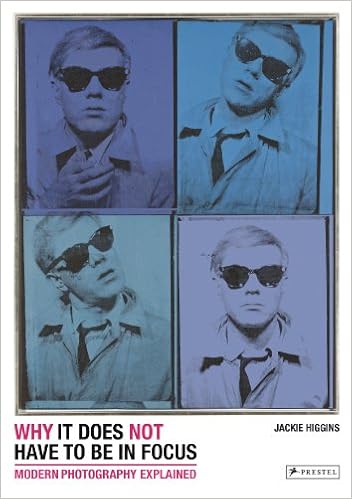
Why it does not have to be in focus. Source: Amazon.com

I suppose this book’s subtitle should really be “Modern art using a camera as a tool”. I’m strangely fascinated by this book. I bought it some time ago and I find that I often pick it up and browse throught it. If you’re looking for a book on photographic technique then this book isn’t for you. It doesn’t talk about ISO, shutter speeds, f-stops, rule of thirds or any of the other things commonly found it photography “how to” books. Instead about 100 images are organized according to the following categories: portraits/smile; document/snap; still lifes/frieze; narrative/action; landscapes/look; and abstracts/dissolve. Each picture is from a different photographer and for each one the author: “Describes the artist’s approach, process and technique; Locates the image in its historic and artistic context;…provides additional incremental information; and lists examples of similar images by the same photographer. Quotations (both attributed and unattributed) are also scattered throughout the book.

To give a flavor of what the book’s about I’ll provide a few examples of the photographs provided:

Second Beauty Composite by Nancy Burson, 1982. A single face which is actually a composite of five famous female movie stars: Jane Fonda; Jacqueline Bisset, Diane Keaton, Brook Shields and Meryl Streep. As the book says “This face belongs to non one; it has never existed”.

Untitled [Cowboy] by Richard Price, 1989. Re-photographed ‘Marlborough Man’ photograph blown up to gallery size. Has become known as “appropriation art”. This was the first photograph to sell for more than $1 million.

Poll by John Demand, 2001. Looks like a real office, but is actually an elaborately constructed set made of card, which is then photographed subsequently destroyed.

Strip by Jemima Stehli, 1999. A series of pictures of a woman (the photographer I think) with her back to the camera. She takes off her clothing in front of a man (a different man in each picture) who sits on a chair holding a remote shutter release and who presumably decides when to take the picture.

99 Cent by Andreas Gursky, 1999. A huge 81 1/2 by 132 1/4 inch picture of the shelves in .99 store.

Damage/Drown/Canal, 168 hours, June 2003 by Catherine Yass, 2005. According to the book “Yass photographed the canal on her large-format(4×5 inch) camera. Returning to where she exposed the image, she tied a large print to the edge of the canal and floated it in water for one week”.

I think I like this book so much because it encourages you to break rules and explore boundaries – something which I find very hard to do, and probably the reason why my photographs are so conventional. It would never have occurred to me to even try to do any of these things. I guess I keep hoping that if I go back to the book often enough something will rub off. It hasn’t so far, but who knows…

This book certainly won’t teach you photographic technique, but it will hopefully give you lots of ideas.
A comment on one of my pictures

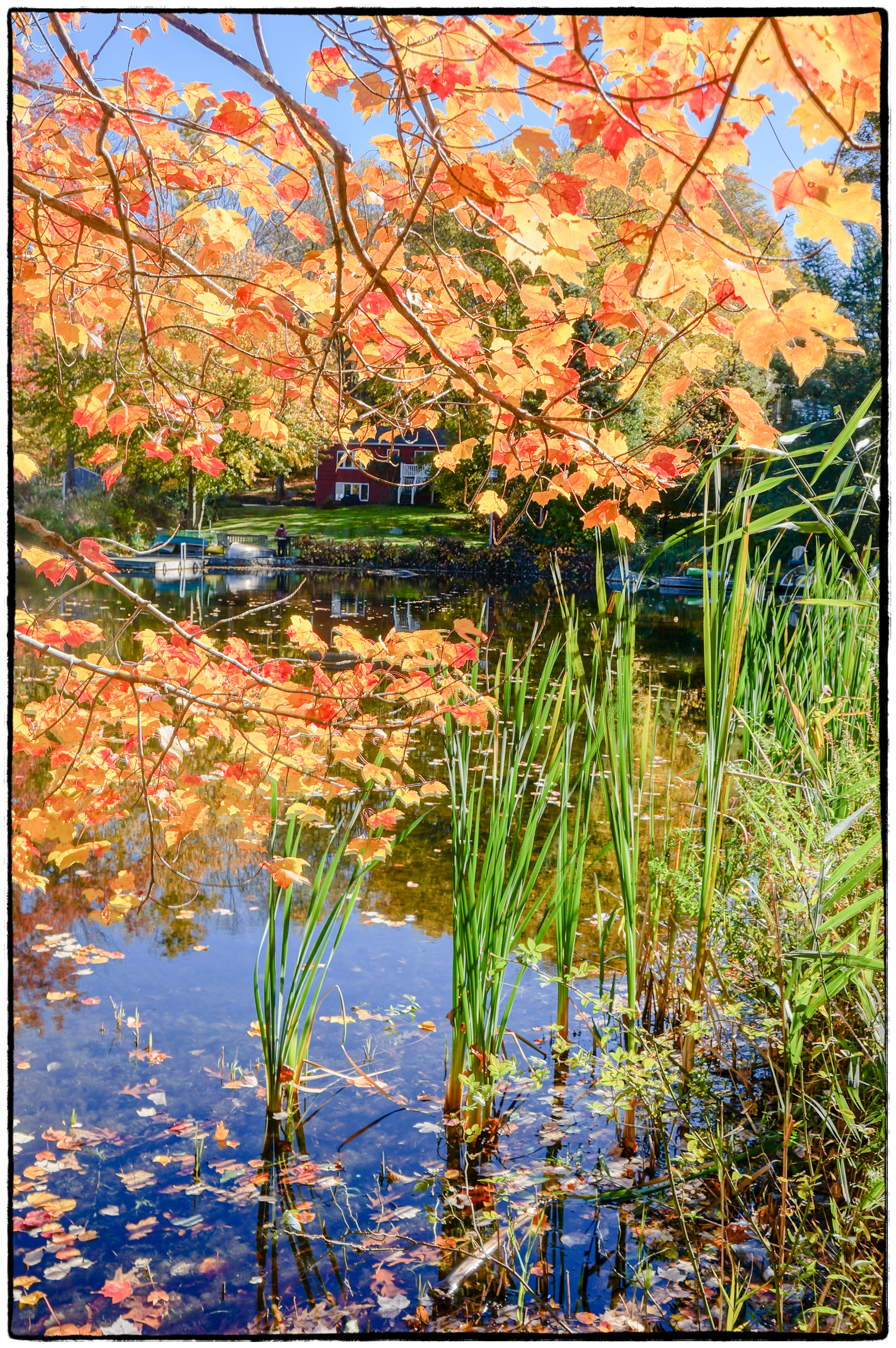
My wife recently posted one of my pictures (the one above) to Facebook. One of her friend’s commented: “Beautiful!! … Eirah, tell Howard that when he gets tired of his camera or makes an upgrade I’ll be happy to take it off his hands.” I know that she meant well, but I have a couple of problems with this comment.

First, I don’t really think that this picture is all that “beautiful”. I’ve never displayed it anywhere as I don’t really like it that much. It’s mostly just a large splash of color. Many would say that a picture should say something. I’m not sure that I agree with this. After all Monet’s ‘Water Lilies’ doesn’t say much, but it’s a beautiful creation. Yes, it has color – but it also has more: lines, focal points, space, etc. This photograph doesn’t have a clear focus. The grass leads off into nowhere. The brightly colored leaves obscure what might have been a focal point (i.e. the house). If I’d gotten down lower I might have made the house more visible. Even if I had chosen the house as a focal point I shouldn’t have placed it so much in the center. The exposure around the house is also off – way too dark. So if it’s so bad, why did I take the picture? Well, “it seemed like a good idea at the time your honour”. I suspect I may seen something (I don’t know what), but then failed totally in realizing it. If I had it to do again I think I could do better, but as it is I’m just left with a splash of color.

Second, if the picture did have merit I’d like to think that the photographer would have had something to do with it. I learned a long time ago that the camera doesn’t make the picture. Yes, an expensive camera can make some photographic tasks easier, faster etc. but the overall vision has to come from the photographer. That’s where I mostly failed with this picture: I didn’t think enough about what I was trying to achieve. I’ve seen many, many mediocre to lousy pictures taken with flashy equipment. Many of mine fall into this category. I’ve also seen great pictures (not so many) taken with inexpensive gear. To me a truly great photographer (and I certainly don’t put myself in that category) can take a great picture with virtually any camera.

So much as I appreciate the kind words in the comment I can’t take them all that seriously.

NY Air Show – US Navy F/A-18 Super Hornet

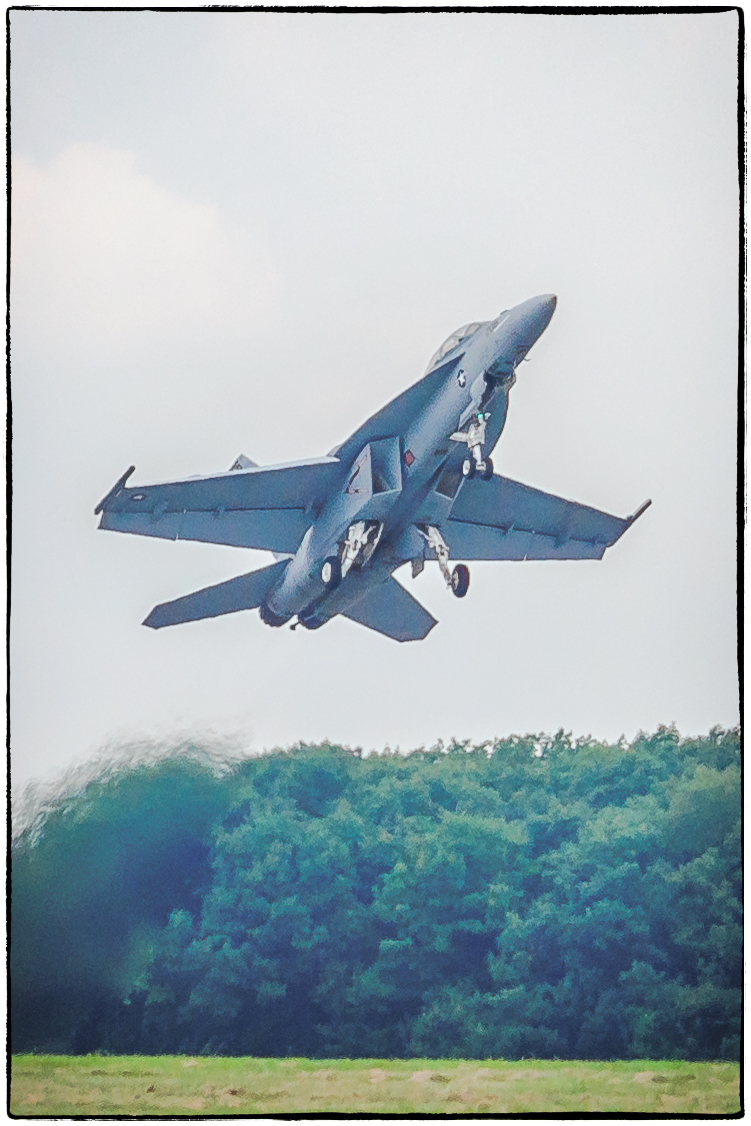
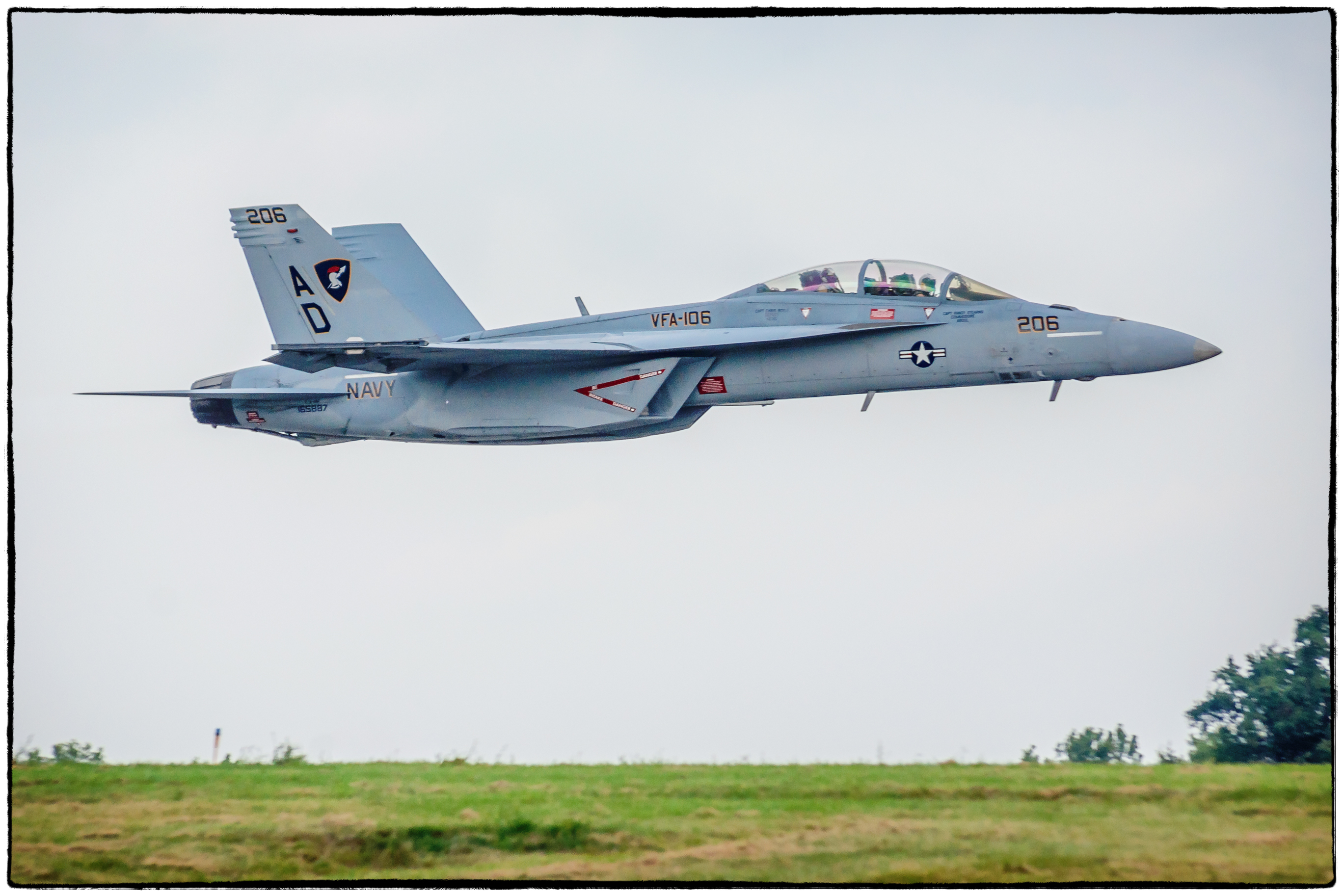
So far the airshow had been interesting but not really ‘awe-inspiring’. That was now about the change as the US Navy F/A-18 started to roll down the runway. The NY Air Show website describes the F/A-18 as follows:

The Boeing F/A-18F Super Hornet is a twin-engine fighter aircraft based on the original McDonnell Douglas F-18 Hornet also known as the “Legacy Hornet.” The Super Hornet is a larger and more advanced version of the legacy hornet. The Super Hornet has an internal 20 mm rotary cannon and can carry air-to-air missiles and air-to-surface weapons. The Super Hornet entered service with the United States Navy in 1999, replacing the Grumman F-14 Tomcat, which was retired in 2006.

The Super Hornet is largely a new aircraft and is about 20% larger in size than the legacy Hornet. The Super Hornet carries 33% more internal fuel, increasing mission range by 41% and endurance by 50% over the Legacy Hornet. The Super Hornet’s radar cross-section was reduced greatly making it harder to detect by enemy radar. The design of the engine inlets reduces the aircraft’s frontal radar cross-section. The alignment of the leading edges of the engine inlets is designed to scatter radiation to the sides. Fixed fanlike reflecting structures in the inlet tunnel divert radar energy away from the rotating fan blades.

As I mentioned in an earlier post I hadn’t been to an airshow since I was a child and I’d never seen such fast and powerful aircraft “in the flesh” as it were. It was really something.

Taking Off.

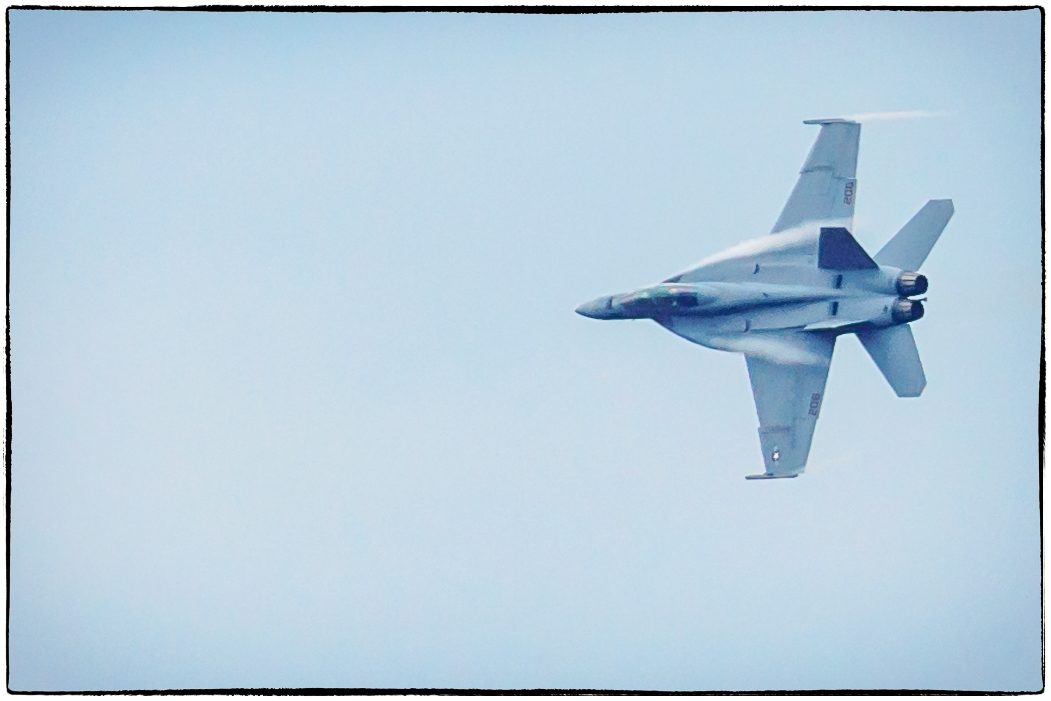
High Speed Turn.

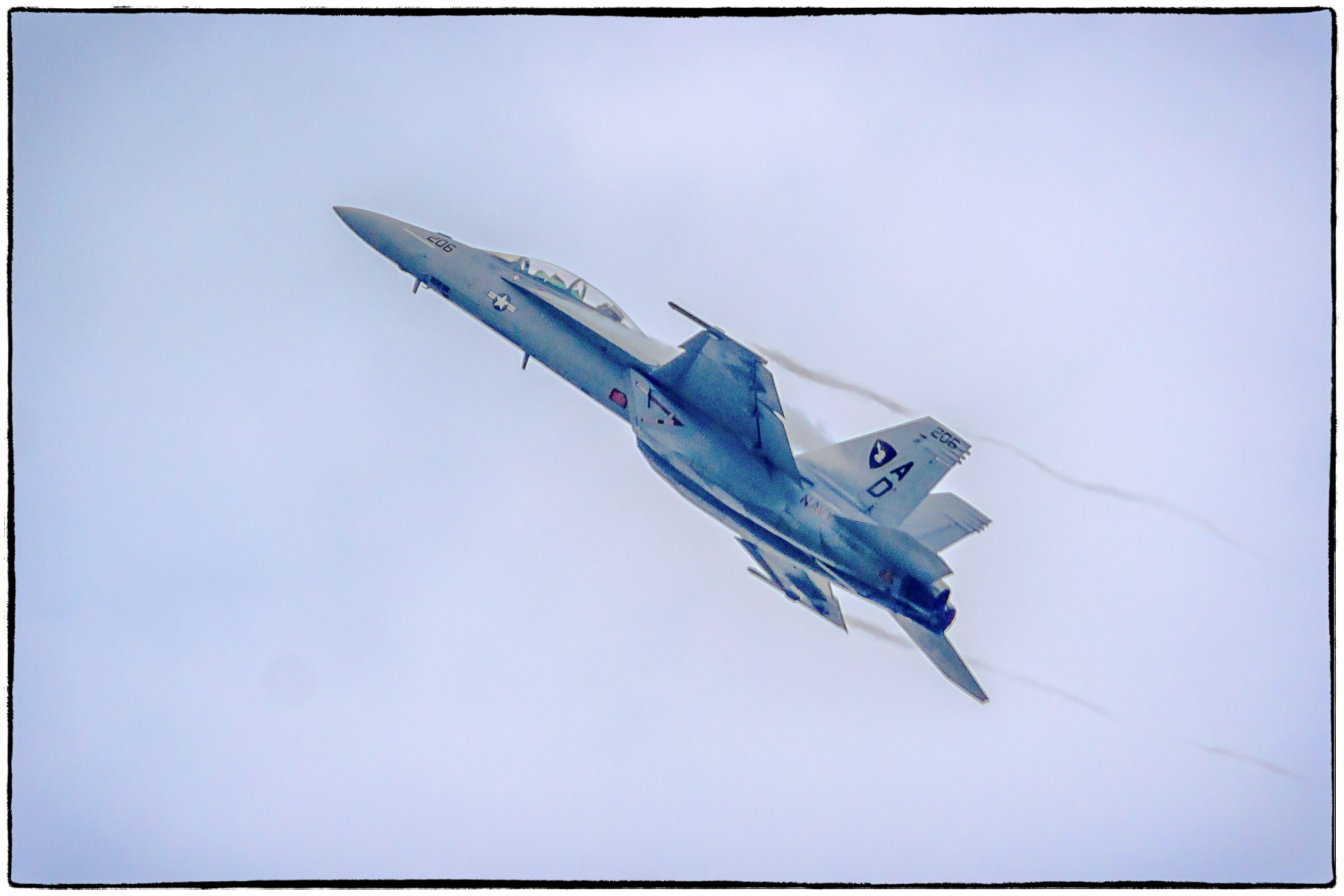
Climbing.

Harley finds a new friend

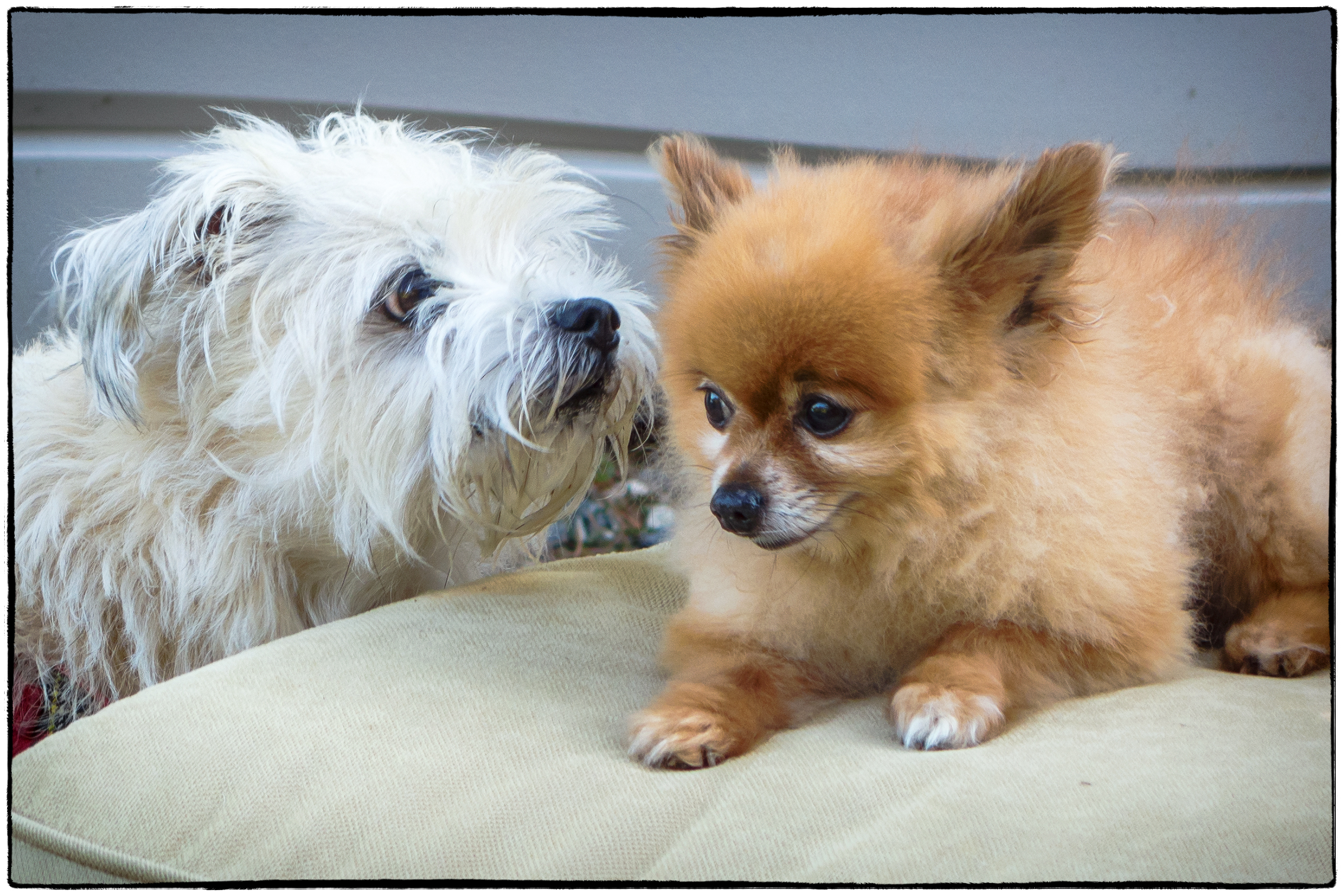
Every year our friend Roxana has a birthday party for her dog, Buster (see Buster’s birthday party) and this year’s party just took place. This was the first time that our dog, Harley had been to this event and he had a great time. His amorous advances having been rebuffed by one female dog he turned his attention to this one. I’m not sure whether this one is male or female, but Harley followed him/her around for most of the afternoon prompting the owners to say (in a friendly way) that he was “herding” their dog.

Lunar Eclipse

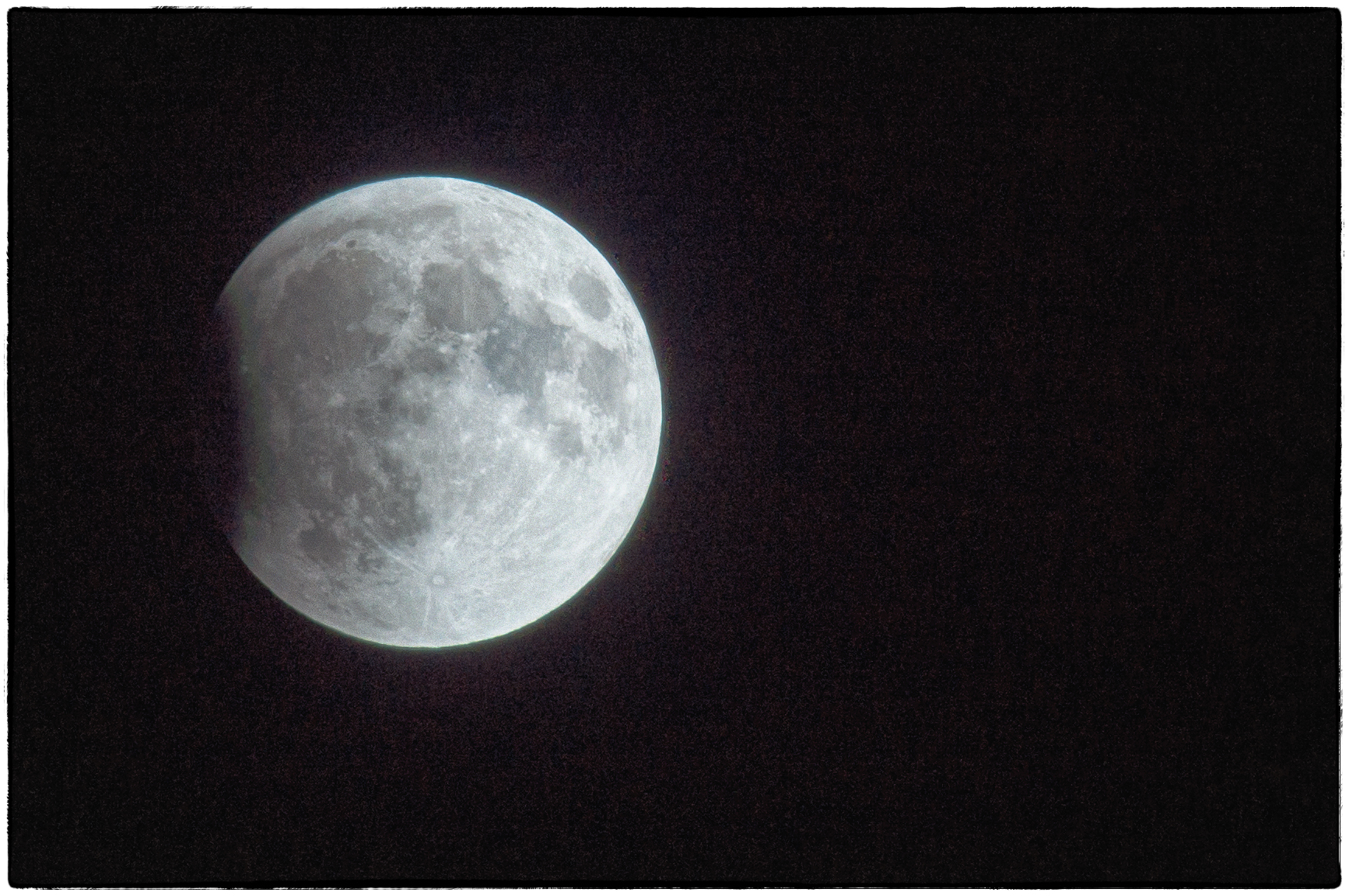
The eclipse is just beginning.

I’d heard about this event and thought to try to get some pictures. Unfortunately it had been a busy day: I’d been updating my blog, cooked lunch, cooked dinner and baked some bread. My eyes were hurting and I was feeling very tired. My natural laziness kicked in and I decided to skip it. Then it occurred to me that this event only happens every 20 years or so. Since the likelihood is that I won’t be around in 20 years I won’t have anther chance to get these pictures. A sobering thought: enough to make me get out an old Canon 300mm (450mm equivalent) FD lens that I’d never actually used; dig out the Canon FD-Sony Nex adapter; grab my tripod and give it a go.

USA Today describes the event as follows:

What’s actually happening is a confluence of three things. The moon will be full and in its closest point in its orbit around the Earth, making it a so-called supermoon, according to Dr. David Wolf, a former NASA astronaut and “extraordinary scientist in residence” for The Children’s Museum. Supermoons appear 14% larger and 33% brighter than other full moons.

In addition to this, a lunar eclipse will occur. In other words, the Earth will line up directly with the sun and moon, directly between the two, Wolf said. So the “moon will completely fall in the shadow of the Earth,” he said.

Because a lot of light scatters off the Earth’s atmosphere, the moon will not look completely dark but have a coppery red color — hence the blood moon moniker.

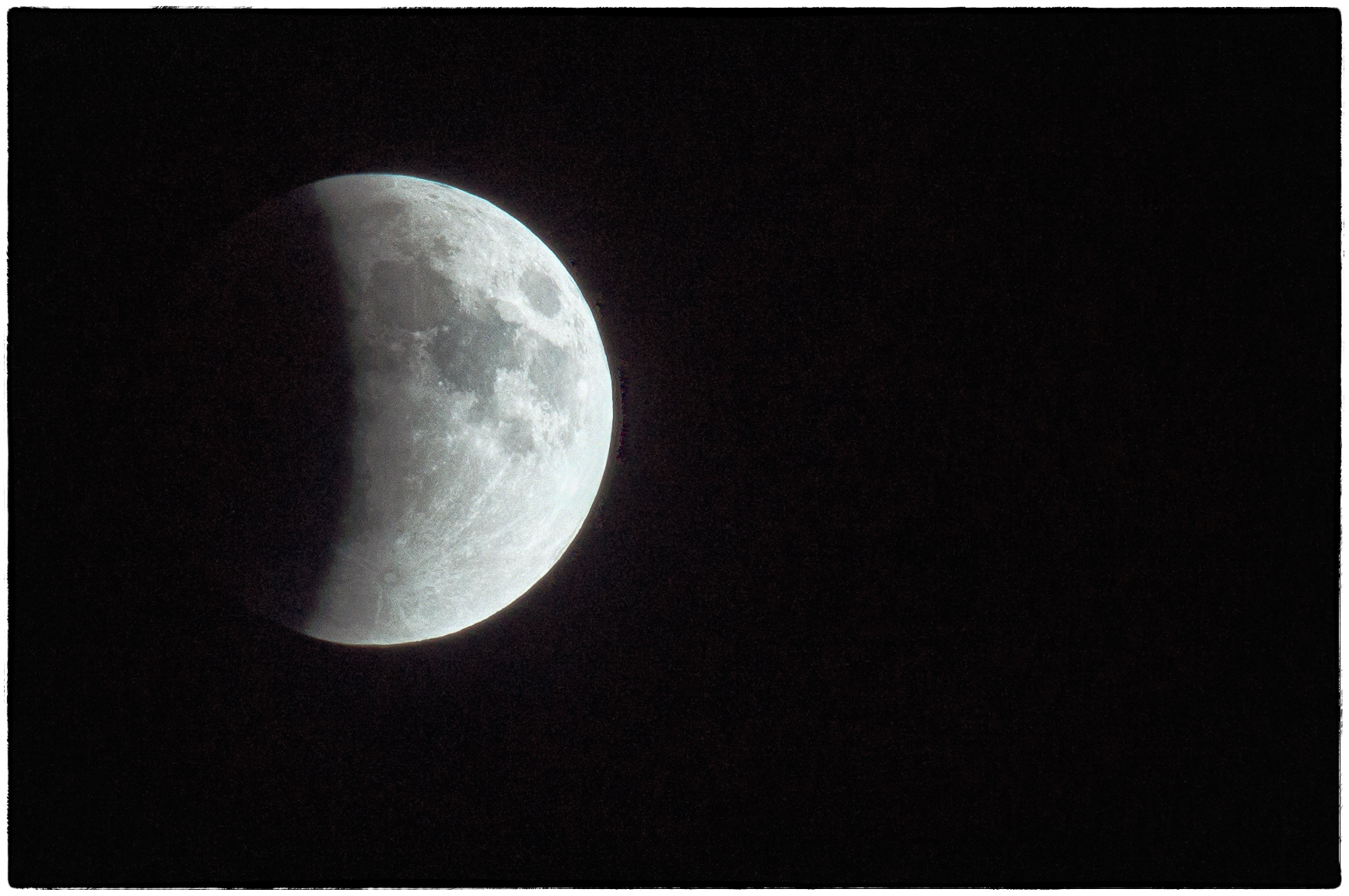
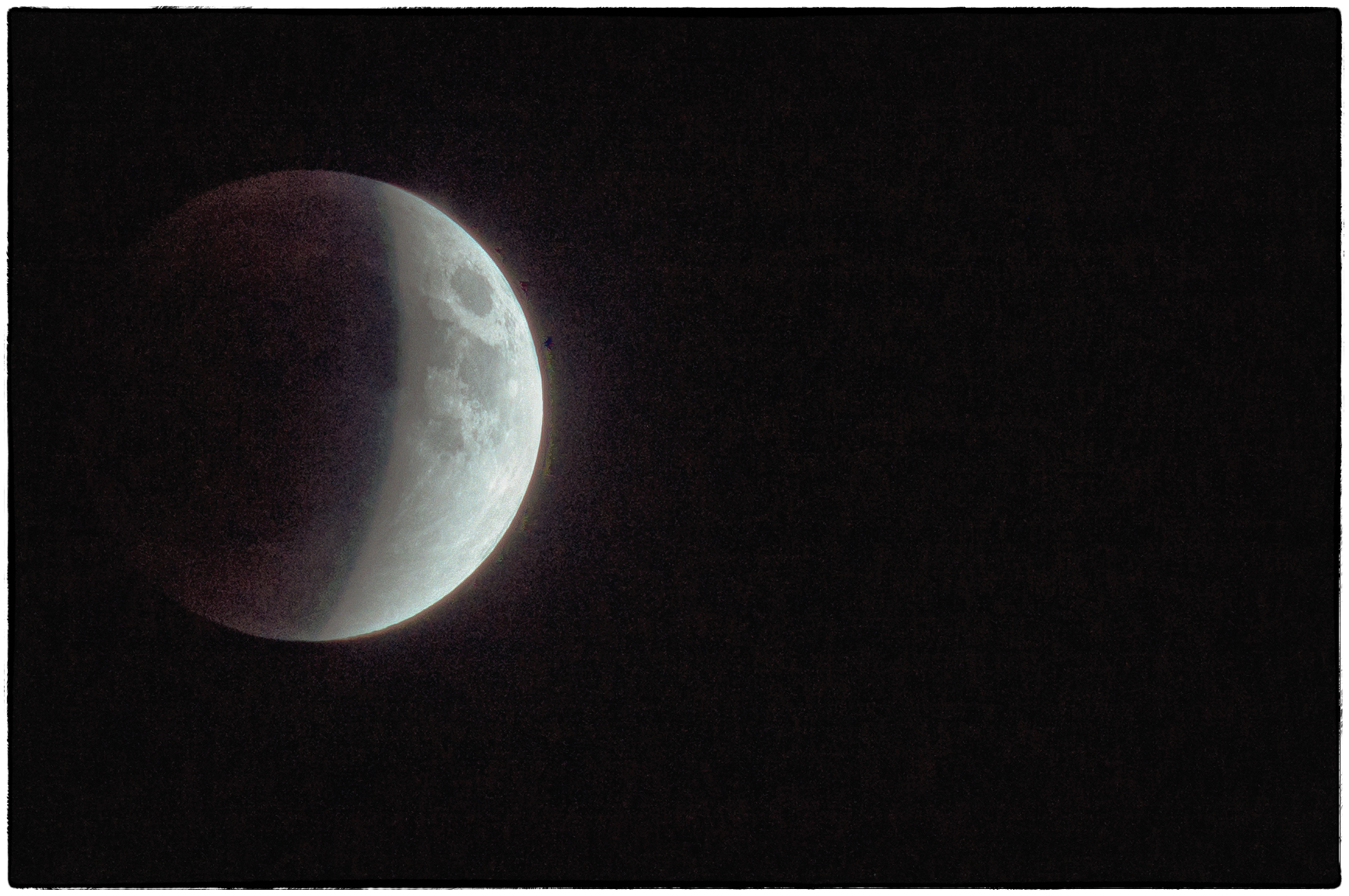
Going…

…Going…And then just as we were about to get to “Gone!”, where the red-tinged “blood moon” would be visible, the clouds rolled in and obscured everything. I hung around for a while to see if the clouds would break. And there were occasional very brief gaps in the clouds – enough for me to see the blood moon (very spectacular), but not long enough for me to get a picture. The exposure times were too long and the clouds moved back before the exposure could finish.

I was satisfied. I’d overcome my laziness, seen the ‘blood moon’ and got a few pictures of the eclipse. A decent night’s work.