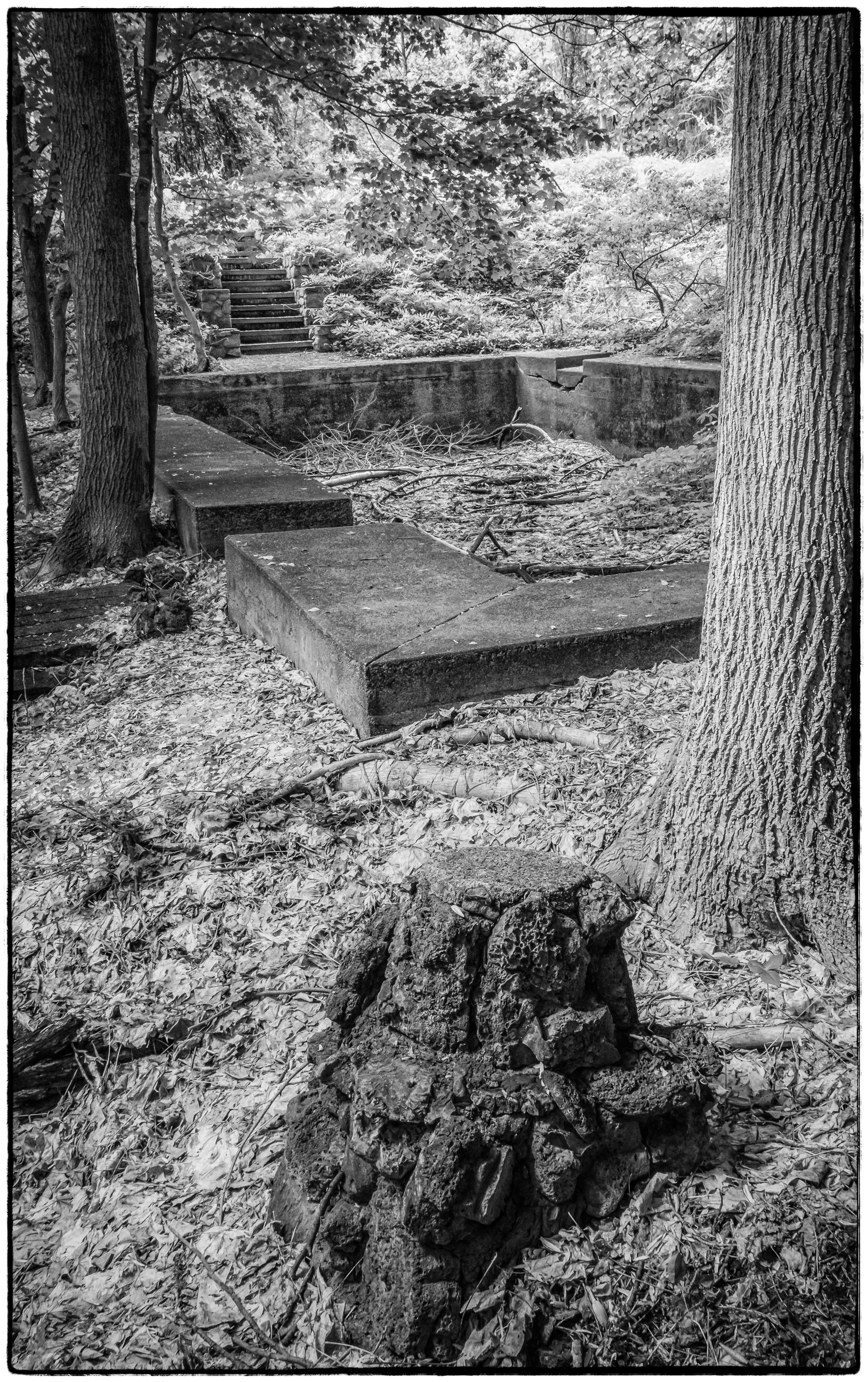
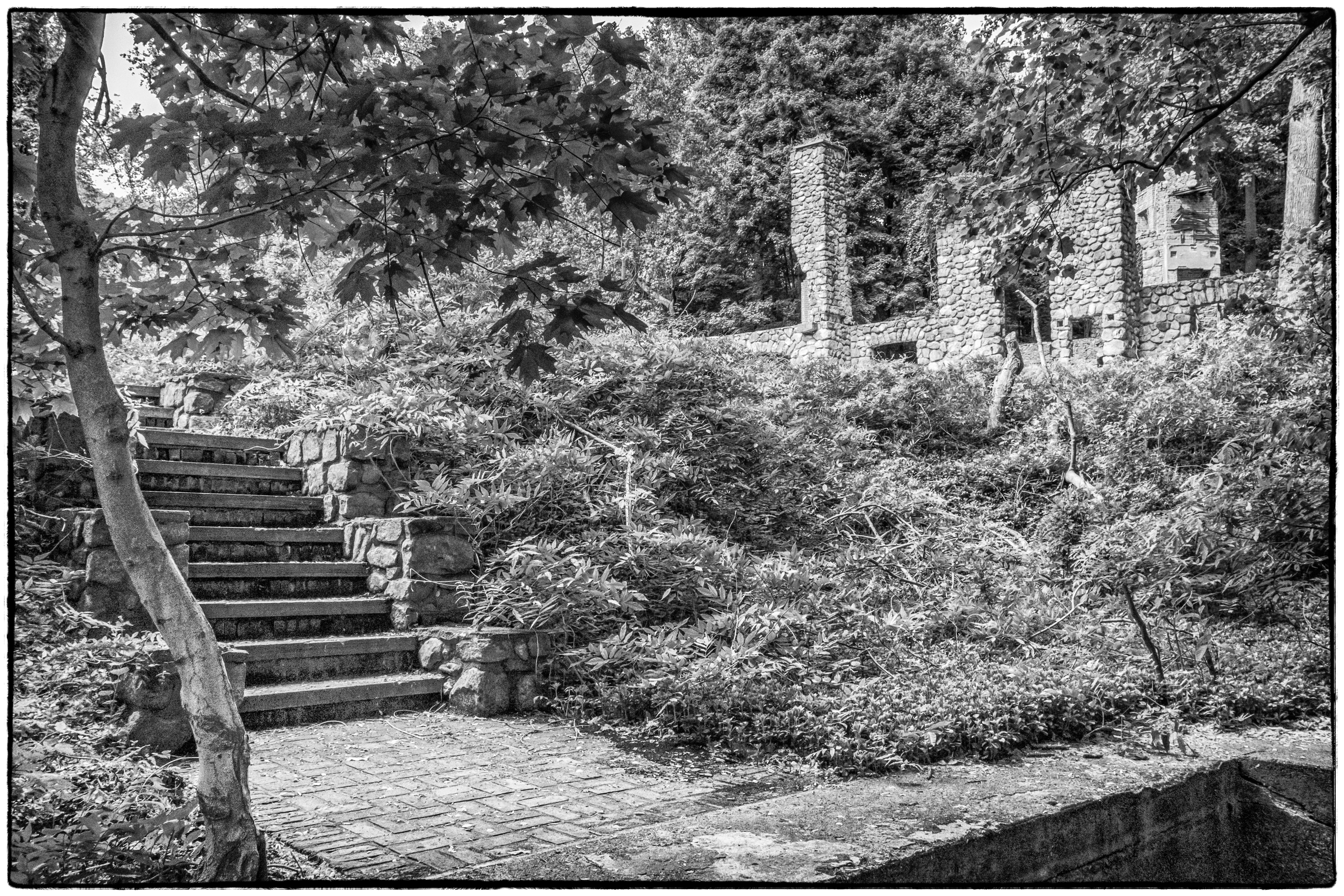
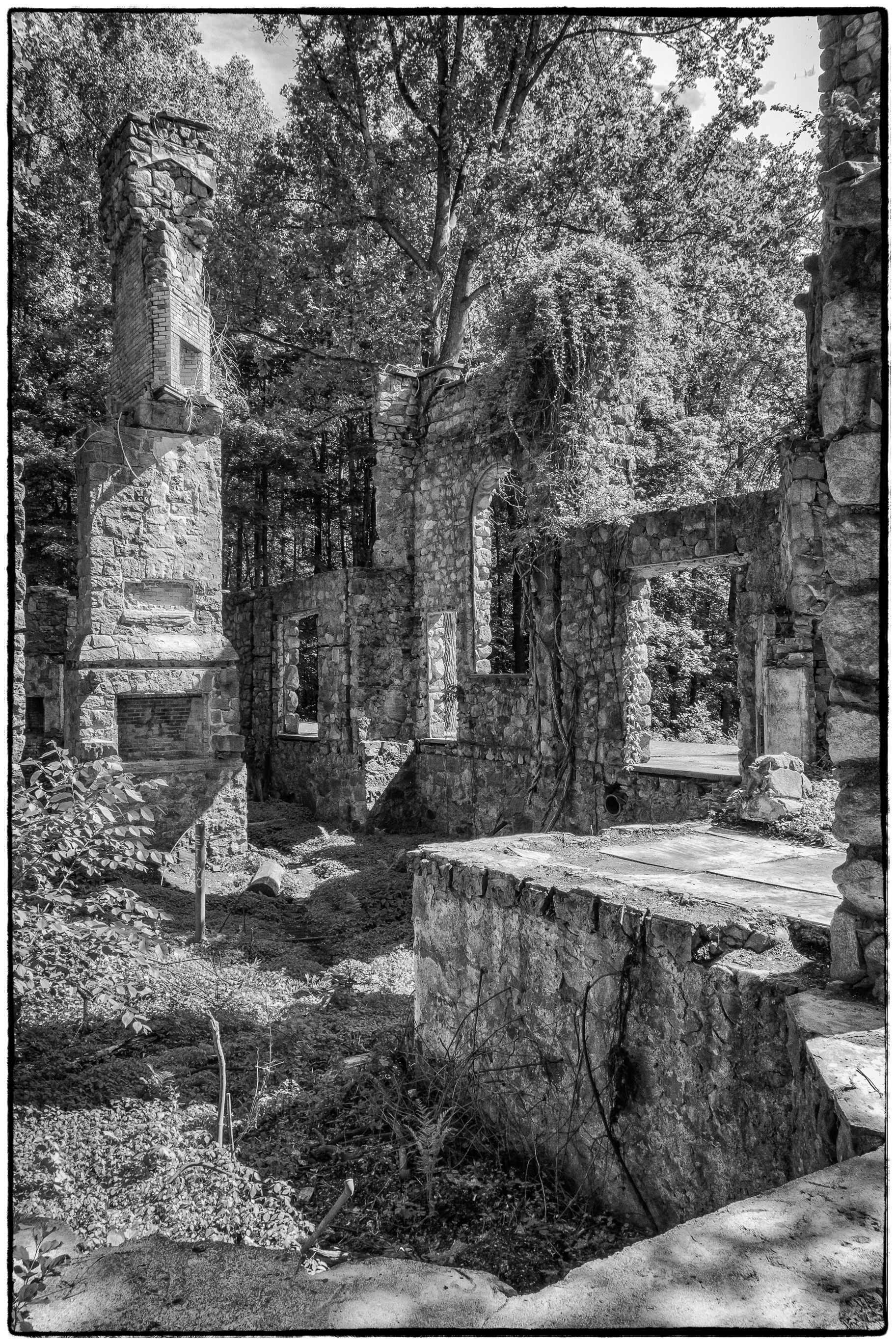
I’ve taken pictures of Bannerman’s Island from afar – from both the west shore and the east shore of the Hudson. I finally decided to see it up close and took the tour – the island is about a 25 minute boat ride from Beacon, NY and the tour leaves from right next to the Beacon Metro-North station. Although there’s not a lot to see on the island, what there is is interesting and you won’t find anything like it anywhere else in the lower hudson valley. So to me the tour was worth it. The guides give lengthy descriptions of the history of the island, of Francis Bannerman and over the castle like buildings (actually they are arsenals). I’m sure I would have been more interested in the descriptions had I not recently attended a presentation on Bannerman’s Island at the Briarcliff Manor Historical Society
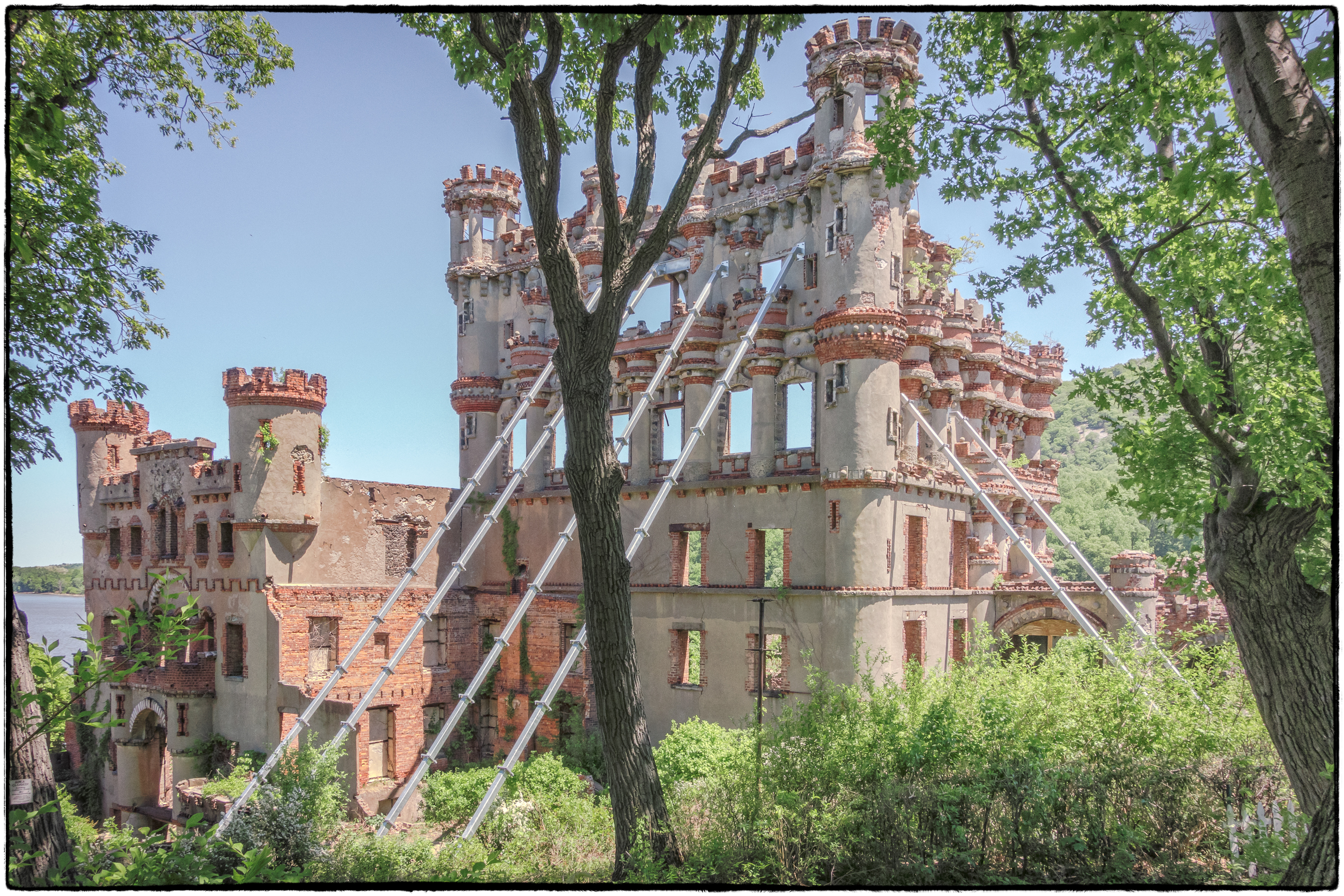
Crumbling arsenal buildings. Note the metal buttresses. About 40-50 percent of the arsenal buildings have collapsed in recent years.
According to “Scots and Scots Descendant in America. D. MacDougall. New York, April 10, 1917. Part V – Biographies“:
FRANCIS BANNERMAN, the noted merchant and authority on war weapons, is the sixth Frank from the first Frank Bannerman, standard-bearer of the Glencoe MacDonalds, who escaped the massacre of 1692 by sailing to the Irish coast. His descendants remained in Antrim for 150 years, intermarrying with Scottish settlers. In 1845, Mr. Bannerman’s father removed to Dundee, Scotland, where Francis VI was born, March 24, 1851. He came with his parents to the United States in 1854 and has resided in Brooklyn since 1856. The eldest son in each generation is always named Frank. The surname originated at Bannockburn, where an ancestor rescued the clan pennant, whereupon Bruce cut off the streamer from the Royal ensign and conferred upon him the honour of “bannerman.”
Young Francis left school at ten, when in 1861 his father went to the war. He secured employment in a lawyer’s office at two dollars a week, each morning, before going to the law-office, supplying with newspapers the officers of the warships anchored off the Brooklyn Navy Yard, near his home. Summer evenings, after work hours, he dragged the river with a grapple for bits of chain and rope, which he sold to junkmen. When his father returned disabled, he became a dealer in the material the boy collected, with a storehouse at 18 Little Street, also attending the Navy auctions, and later established a ship-chandlery business at 14 Atlantic Avenue. Frank went back to school for a time and won the scholarship for Cornell University, but could not accept owing to his father’s war disability requiring his assistance in carrying on the business.
Read More