What makes a boring photograph – according to Eric Kim

I can’t say exactly what makes a great photograph, but I can share what makes a boring photograph:

Poor composition (cluttered background, awkward framing, lack of focus on primary subject)

Boring subject matter

Lack of emotion, gesture, or facial expression

Cliche (Eiffel Tower and puddles)

Easy to photograph (flowers, tourist attractions)

Ugly or cheesy aesthetic (HDR, selective color)

So to simply make a great photograph, do the opposite of the list above.

via Please Tell Me My Photos Suck (And How I Can Improve).

I regularly read Eric Kim’s blog and enjoy his thoughts on photography. However, I had to take exception to this one. It’s just so subjective and dismissive of any type of photography other than the street photography he inclines to. Let’s take a look at some of his points:

Poor composition (cluttered background, awkward framing, lack of focus on primary subject). OK this one I can go along with.
Boring subject matter. Very subjective statement. What’s interesting to one person might be extremely boring to another.
Lack of emotion, gesture, or facial expression. If you like taking pictures of landscapes, or still lifes you don’t generally get a lot of emotions, gestures or facial expression. His statement show a bias towards a particular type of photography.
Cliche (Eiffel Tower and puddles). I’d tend to agree with this, but nowadays almost everything has been photographed millions of times, so almost everything is a cliche. The trick would seem to be to try to approach a cliche’d subject in a new way – without of course making it too obvious (e.g. using obviously crazy camera angles just for the sake of being different.
Easy to photograph (flowers, tourist attractions). What can I say? Again this statement shows a bias against certain types of photography. I really don’t see why just because something is easy to photograph it is inherently boring. I imagine that Edward Weston’s peppers where not that hard to photograph, but that doesn’t make them boring.
Ugly or cheesy aesthetic (HDR, selective color). I’m not particularly fond of HDR or selective color myself and these techniques can certainly be over used – and often are. However, I’m sure that there are many interesting photos taken using them. The mere use of a technique doesn’t of necessity make a picture boring.

This statement from later on in the post says it all: “I rarely trust the feedback of another photographer if I don’t like their work.” Surely this leads to a kind of “group think”. Just because you don’t like another persons work doesn’t mean that they don’t have anything useful to say. I don’t particularly incline to street photography, but I would certainly listen to anything accomplished photographers like Lee Friedlander, Bruce Gilden, Garry Winogrand (if he were still alive) had to say.

Maybe Mr. Kim should move away from street photography for a while and try something different. Take some pictures of flowers and see if he can come up with something different. From the relatively few pictures he shows he seems to be a talented photographer (much better than I am for example) so he should be able to come up with something. Many, probably most of my pictures are boring, but that’s not because of any of the reasons Mr. Kim lists. It’s because I lack the talent to make them more interesting. My hope is that through study and practice I can improve. We’ll see.

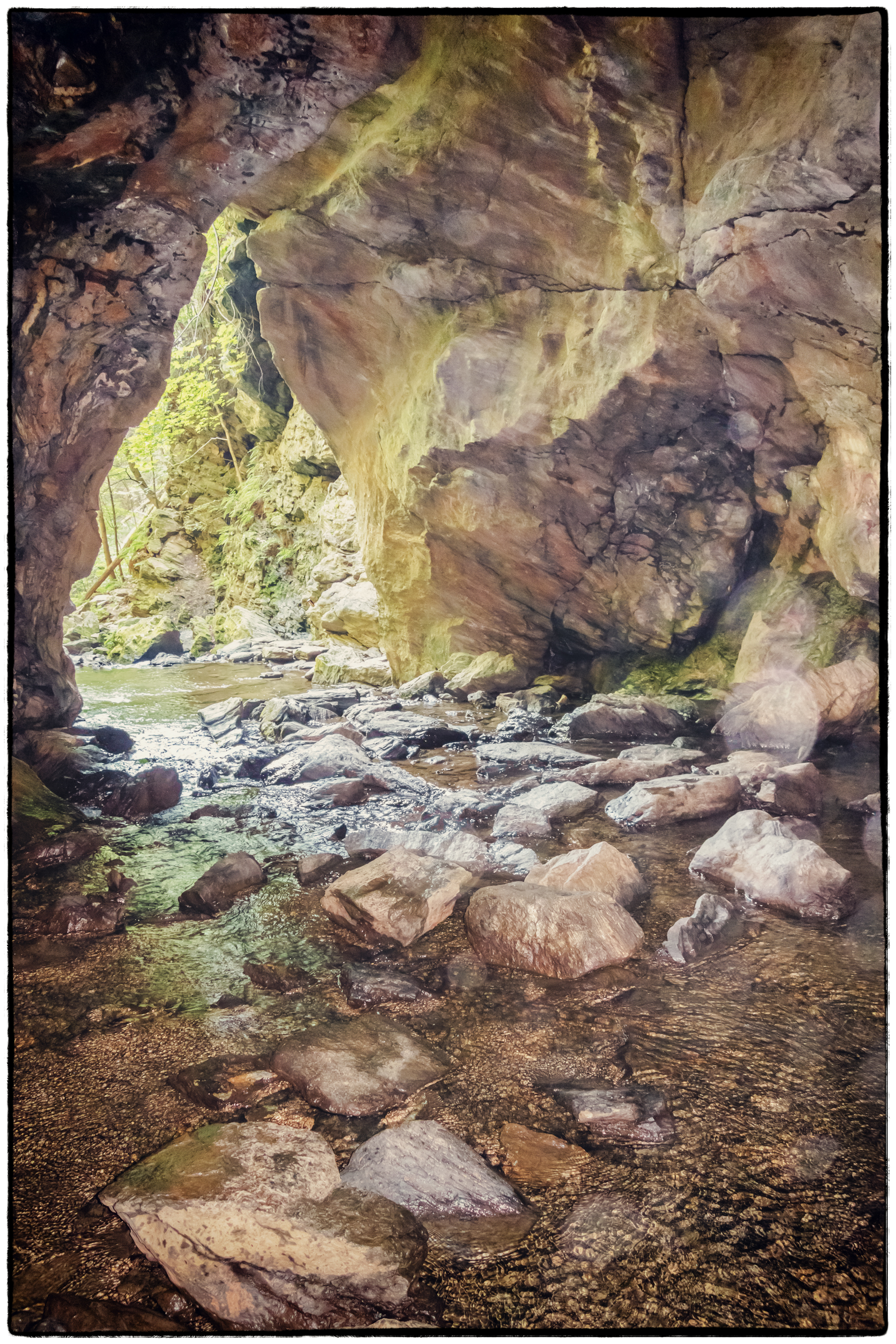
Dover Stone Church, Dover Plains, NY

Entrance to the site.

The Dover Stone Church Visitor’s Guide provides the following description:

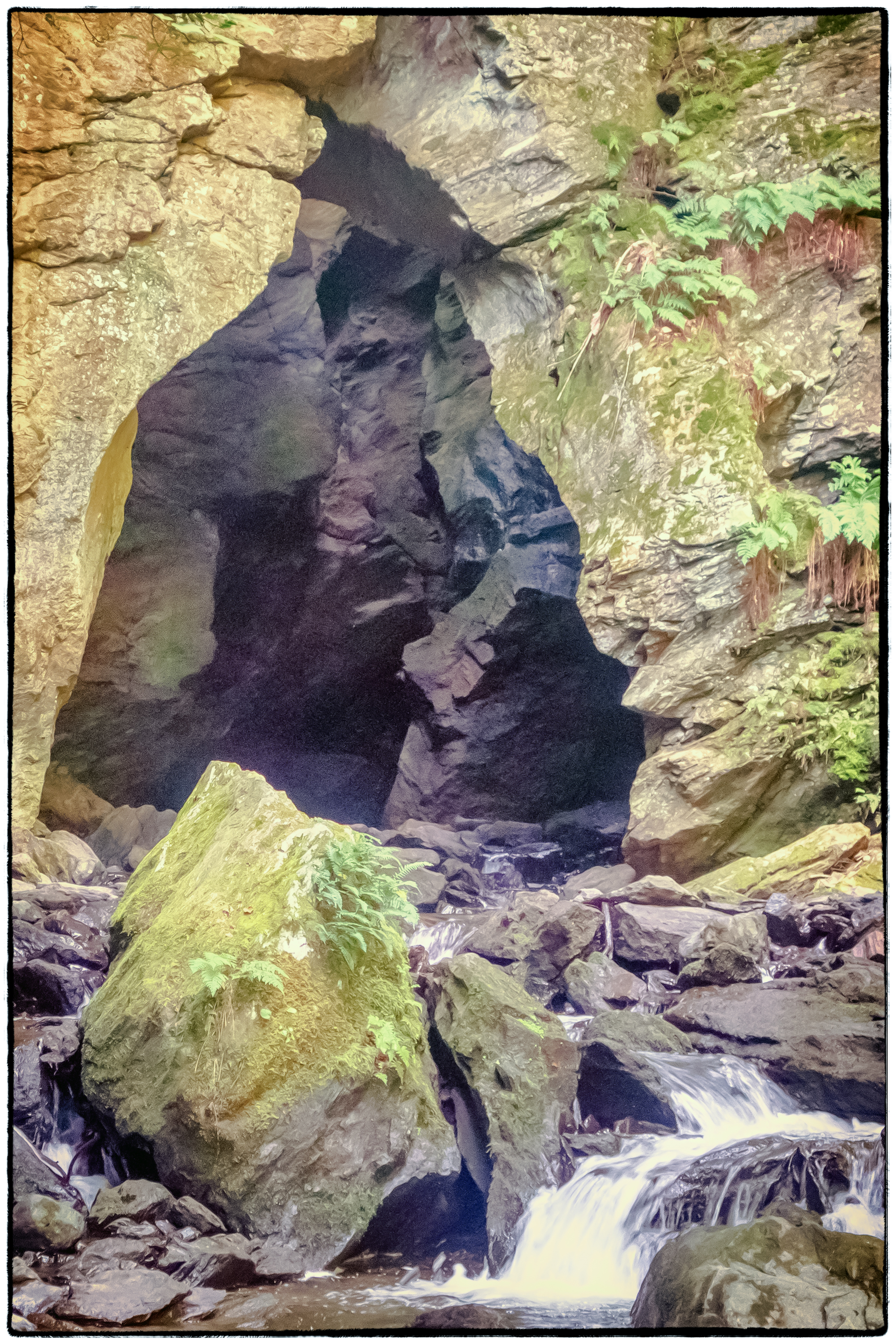
Entrance: Large metamorphic rocks converge to form the entrance in the shape of a church’s cathedral window. The gothic appearance of the entrance gave rise to the name “Stone Church”.

“The Pulpit”: Inside the cavern is a rock ledge, affectionately given this name by Richard Maher, a Dover resident who wrote the book, “Historic Dover” in 1908.

Stone Church Brook: This brook which flows through the Stone Church cavern is a tributary of the Ten Mile River. The Ten Mile River flows southeast and is a branch of the Housatonic River in Connecticut.

Waterfall: Inside the cavern, there is a 30-foot waterfall cascading into a pool of waterthat flows through and out of the cavern entrance

An historic marker sign at the entrance to the park reads: “A cavern, with a waterfall, refuge of Sassacus, Pequot chief, fleeing from rout of his tribe at New Loudon, Conn. Afterward killed by Mohawks.”

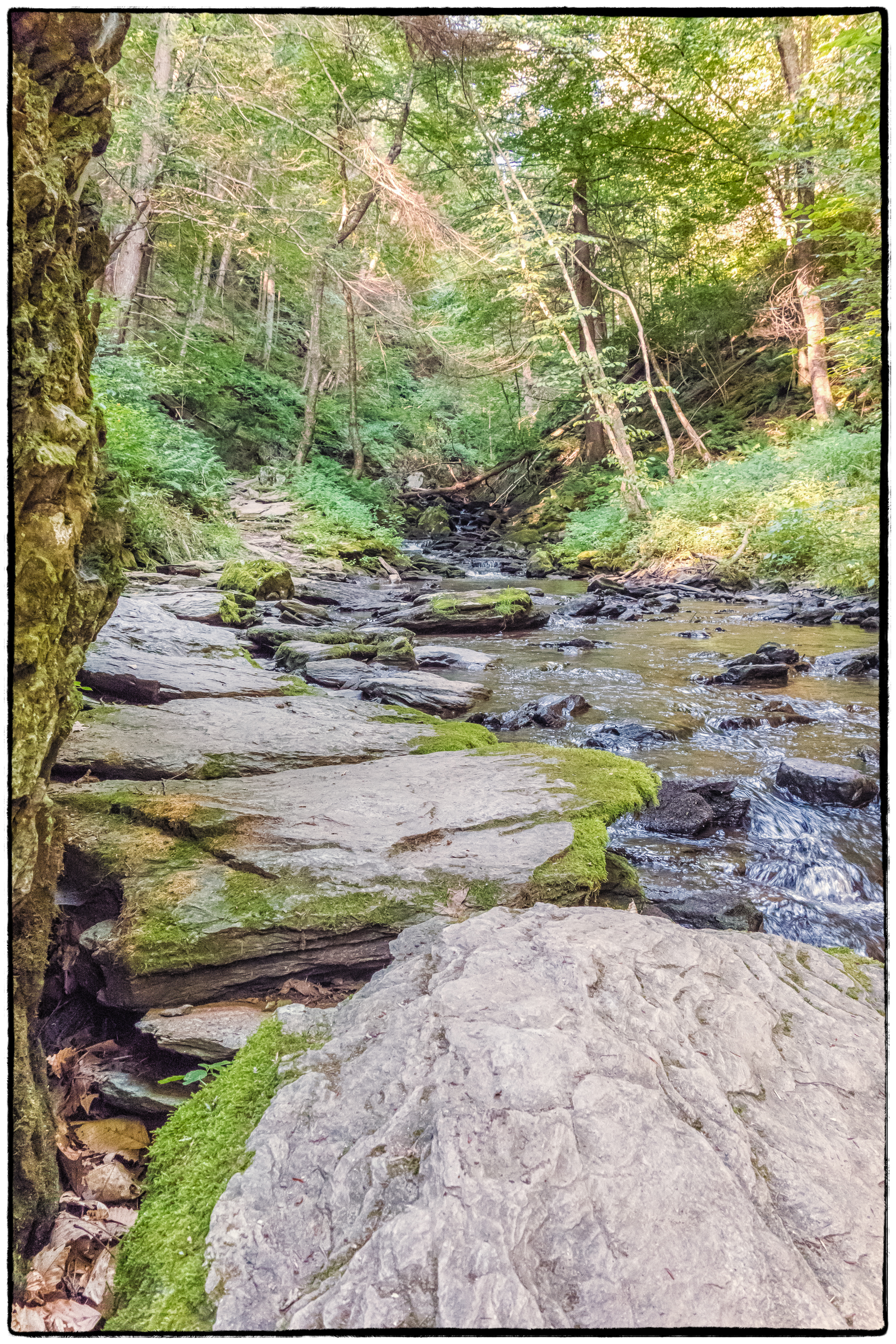
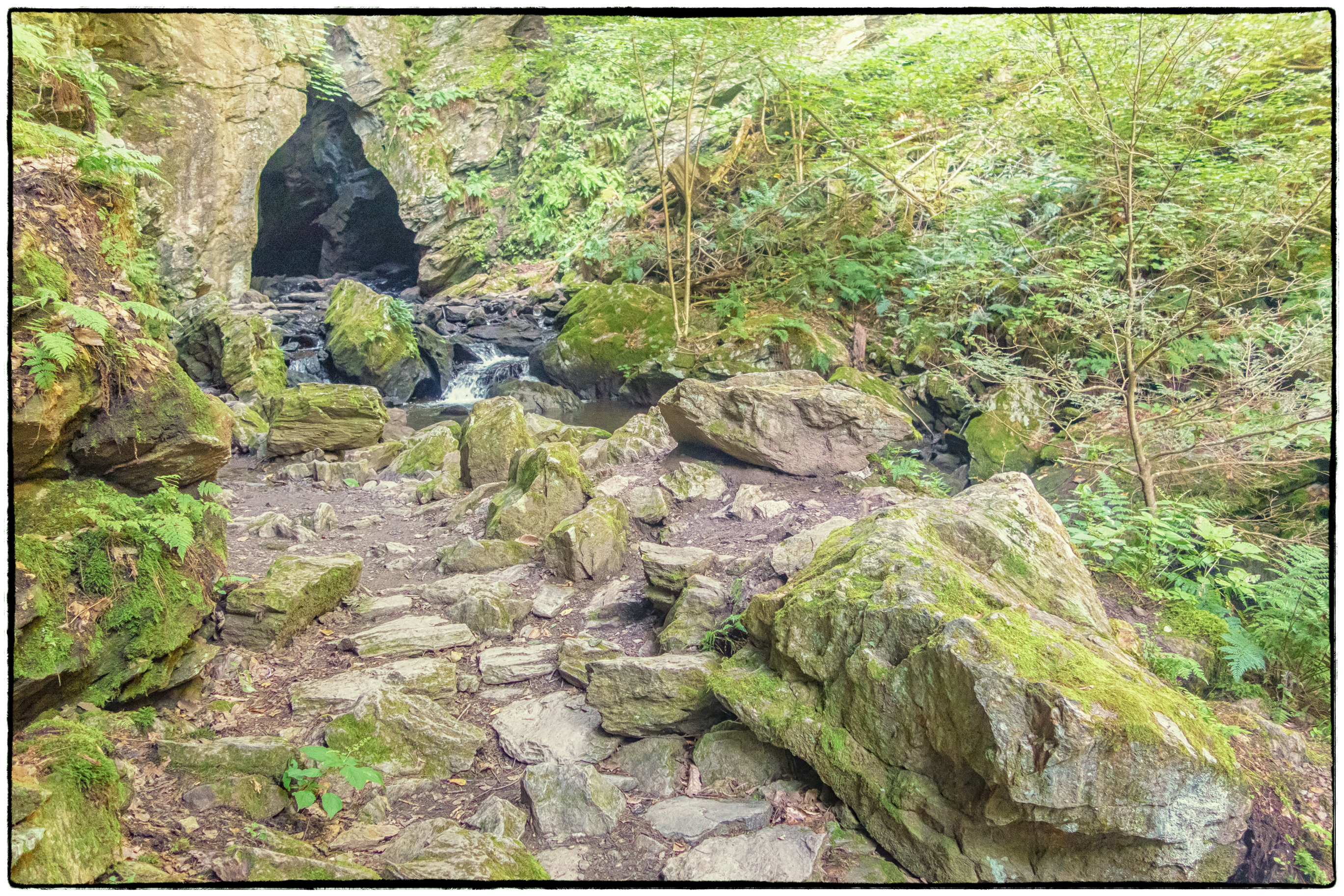
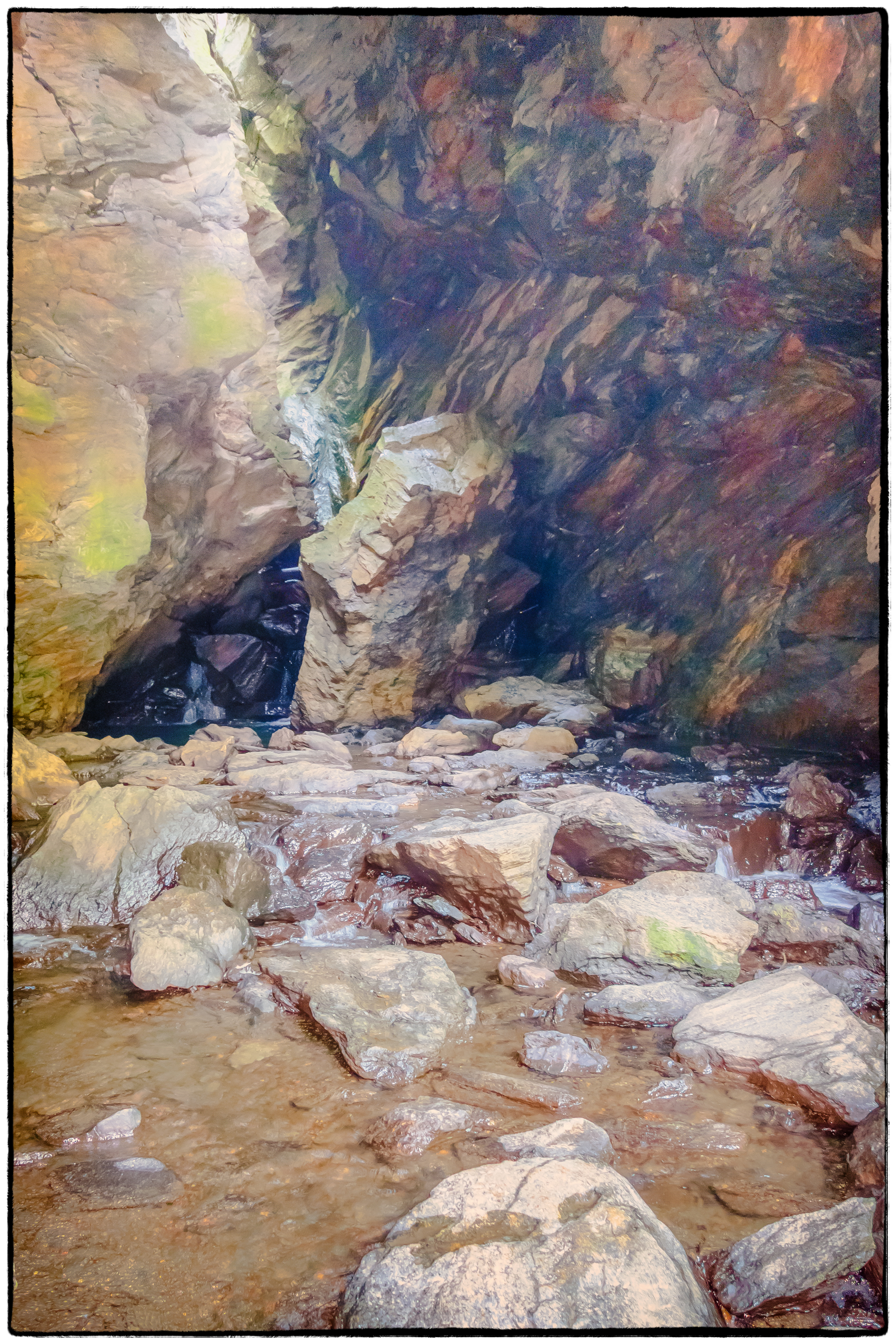
From the road in Dover Plains it’s a short walk to the cave. Both the cave and the approaches to it are quite dark and it was difficult to take pictures. I’m not very good with flash photography and I don’t like to carry a tripod, but both of them would be have been useful here, particularly the tripod. The interior of the cave is very dark. Also the “30 foot waterfall” seemed to be AWOL – probably because we haven’t had much rain lately. It’s not too far away so maybe I’ll go back with a tripod after a particularly rainy day.

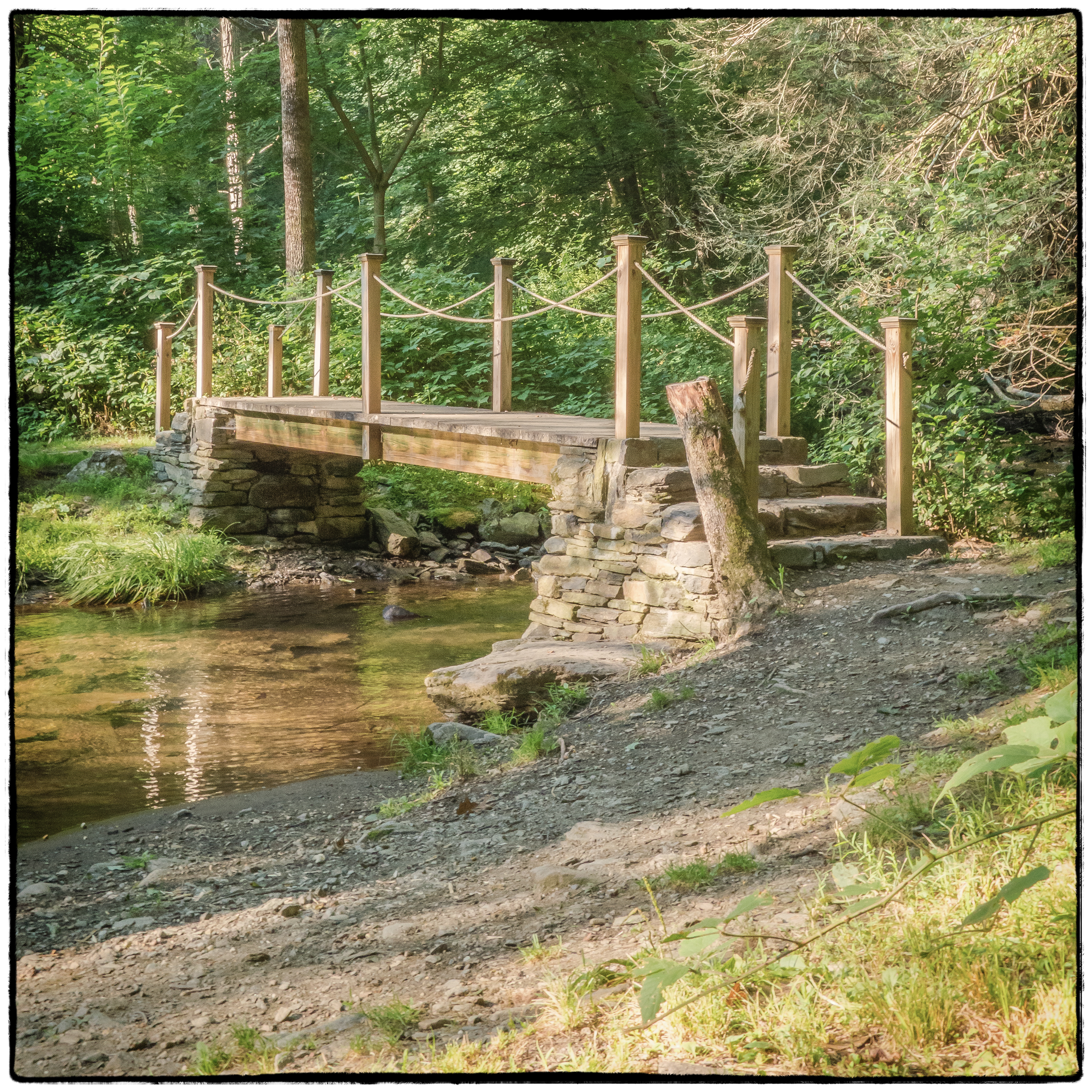
Rustic Bridge.

Cascading Water.

Approach to the cave.

The cave comes into view.

Cave Entrance and cascade.

Looking into the cave.

Inside the cave looking out.

From Charlie Kirk – 102 things I have learnt about street photography – a slightly flippant and deliberately controversial guide.

Hilarious – at least if you’re into photography. I particularly liked the following:

38. I’d love to put Bruce Gilden in a room with Joerg Colberg.
42. If you shoot film you’re a photographer, if you shoot digital you’re an editor.
54. A badly composed picture of a beautiful woman is always a good photo.
65. Using the high contrast black and white mode on the Ricoh GRD doesn’t make you artistic.
66. Nor does shooting wistful portraits on a Mamiya 7 and desaturating the colours.
67. Using a Leica does.
70. And the Japanese have the highest number of great photographers that no-one has heard of.
73. Are there cliques, sycophants, politics and divisions in landscape photography? Or is it just in relation to street photography?
87. I’ve never understood why “serious photographers” take pictures of dogs but not cats, and horses rather than cows.

102 things I have learnt about street photography – a slightly flippant and deliberately controversial guide.

via – 102 things I have learnt about street photography – a slightly flippant and deliberately controversial guide..

Ruins on Dennings Point, Beacon, NY

According to Thomas E. Rinaldi on the site: Hudson Valley Ruins:

NOT MANY PEOPLE alive today can remember the time when the Hudson Valley was arguably the most important center of brick making in the world. In 1910, more than 130 brickyards operated on the river between New York and Albany. The number declined steadily thereafter, until the last Hudson River brickyard (the Powell and Minnock plant near Albany) shut down in 2002. Remarkably there is very little left of the yards themselves, and the ruins of the Dennings Point Brick Works at Beacon are among just a small handful of Hudson River brickyard structures that survive in the 21st century.

DENNINGS POINT hooks out into the river just below the city of Beacon. Its unusually complex history has been chronicled in a great book by Jim Heron entitled “Dennings Point: A Hudson River History.” Archeological evidence suggests that the point was inhabited as early as 4000 B.C. More recently, Washington traversed it during the American Revolultion. Alexander Hamilton penned the first of the Federalist Papers while visiting an estate that existed here through much of the 19th century.

More detailed information on the history of Dennings Point can be found on a site focusing primarily on brick collecting in the Hudson Valley and New England: brickcollecting.com.

The only manufacturing building remaining from the Brickyard.

Inside a structure added by Durisol (who manufactured construction panels) and was later used by Noesting who made pins.

Graffiti

Open Space with Tree

In 2003 Dennings Point was chosen for the site of the $27 million dollar Beacon Institute for Rivers and Estuaries. One of the old buildings has already been converted and is now the Center for Environmental Innovation & Education. Reconstruction of the old Noesting/Durisol factory) was supposed to have begun soon afterwards, but so far little seems to have happened.

A different building. I don’t know what it is/was, but it’s right alongside the Hudson.