Through the door of the slave house

Dakar is situated on a peninsular and is the western most part of Africa. Consequently it’s a touch closer to The Americas than anywhere else in Africa. Perhaps this is why it was the main jumping off point for the slave trade. The slave trade was centered on Gorée Island, which is now on the list of World Heritage Sites, where it is described as follows:

The island of Gorée lies off the coast of Senegal, opposite Dakar. From the 15th to the 19th century, it was the largest slave-trading centre on the African coast. Ruled in succession by the Portuguese, Dutch, English and French, its architecture is characterized by the contrast between the grim slave-quarters and the elegant houses of the slave traders. Today it continues to serve as a reminder of human exploitation and as a sanctuary for reconciliation.

The Island of Gorée testifies to an unprecedented human experience in the history of humanity. Indeed, for the universal conscience, this “memory island” is the symbol of the slave trade with its cortege of suffering, tears and death.

The painful memories of the Atlantic slave trade are crystallized in this small island of 28 hectares lying 3.5 km off the coast from Dakar. Gorée owes its singular destiny to the extreme centrality of its geographical position between the North and the South, and to its excellent strategic position offering a safe haven for anchoring ships, hence the name “Good Rade”. Thus, since the 15th century it has been prized by various European nations that have successively used it as a stopover or slave market. First terminus of the “homeoducs” who drained the slaves from the hinterland, Gorée was at the centre of the rivalry between European nations for control of the slave trade. Until the abolition of the trade in the French colonies, the Island was a warehouse consisting of over a dozen slave houses. Amongst the tangible elements that reflect Gorée’s universal value are, notably, the Castle, a rocky plateau covered with fortifications which dominate the Island; the Relais de l’Espadon, former residence of the French governor; etc…

The Island of Gorée is now a pilgrimage destination for the African diaspora, a foyer for contact between the West and Africa, and a space for exchange and dialogue between cultures through the confrontation of ideals of reconciliation and forgiveness.

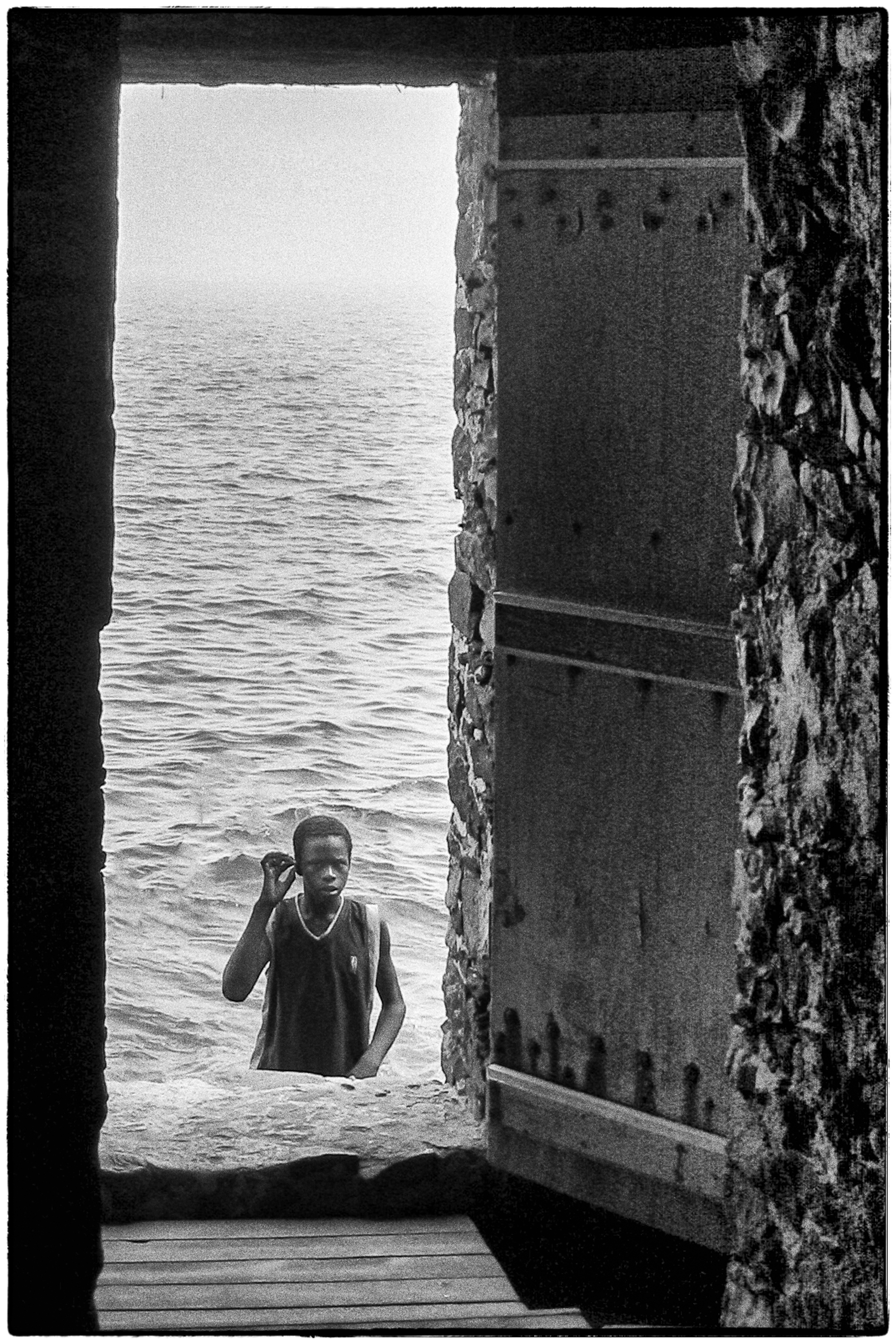
As mentioned above the slave house is indeed “grim”. So disturbing in fact that my colleague could not stand being inside and had to leave. This picture is taken looking through the door – possibly the last thing the slaves saw before boarding a ship for The Americas.

The child standing outside the door was one of a number of children diving for coins thrown by tourists – a different kind of slavery.

Taken with a Canon Powershot S-50.
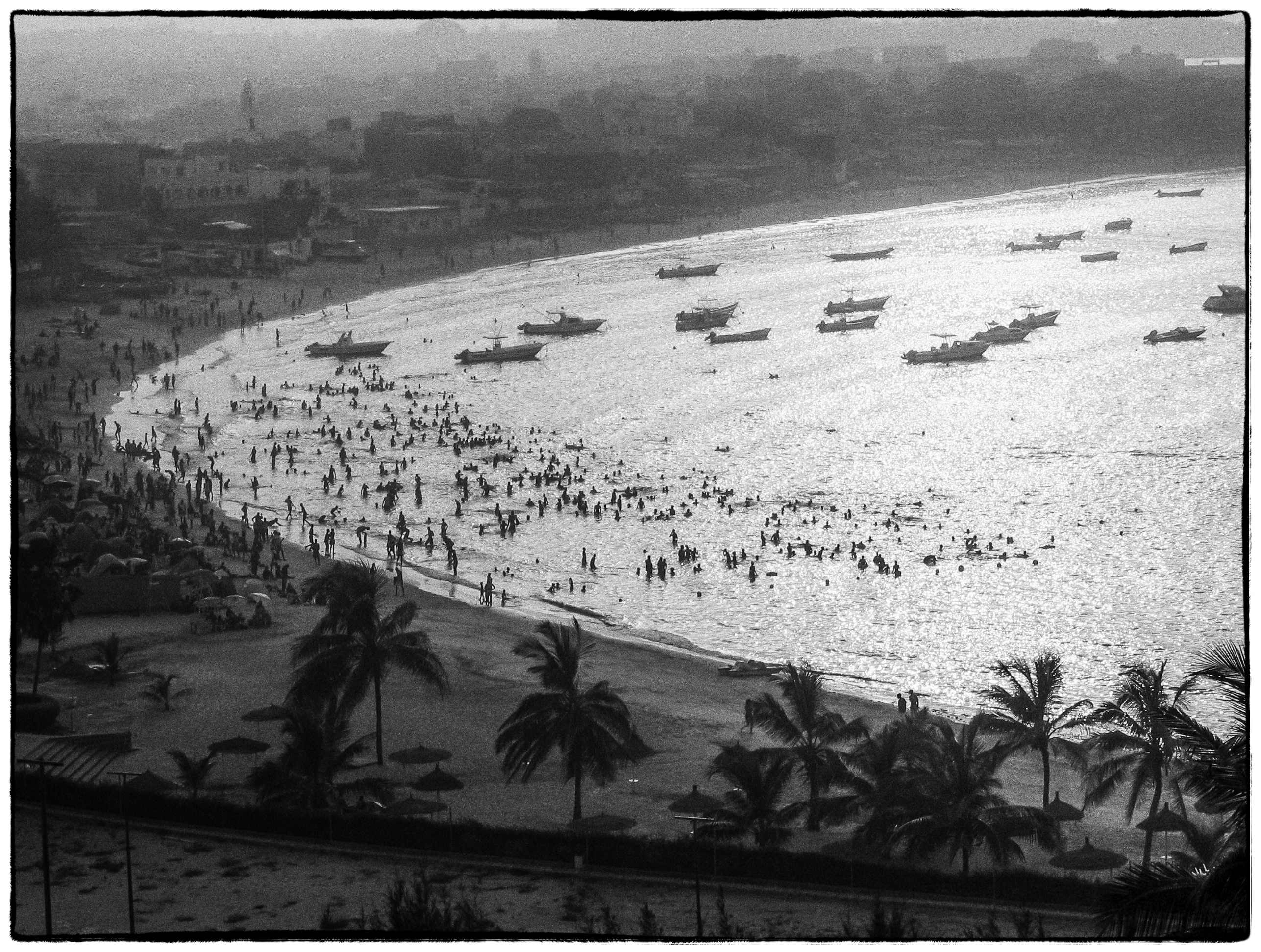
A view over the bay

In October, 2003 I found myself in Dakar, Senegal (See Dakar, Senegal 2003). I was staying in the Hotel N’Gor Diorama out by the airport and this is the view from my room – looking out over the N’gor bay. I liked the stark silhouettes and the multitudes of people in the water. It looks like tourists having a good time, but many of them actually lived on the beach. It was hot and they were trying to cool down.

Taken with a Canon Powershot S-50.

Croton Gorge – Things lost

In an earlier post I mentioned that one of the great things about photography is that there’s always something new: e.g. a new viewpoint; different light; things you just missed. In this case what was new was that a couple of things that were previous there, have now gone.

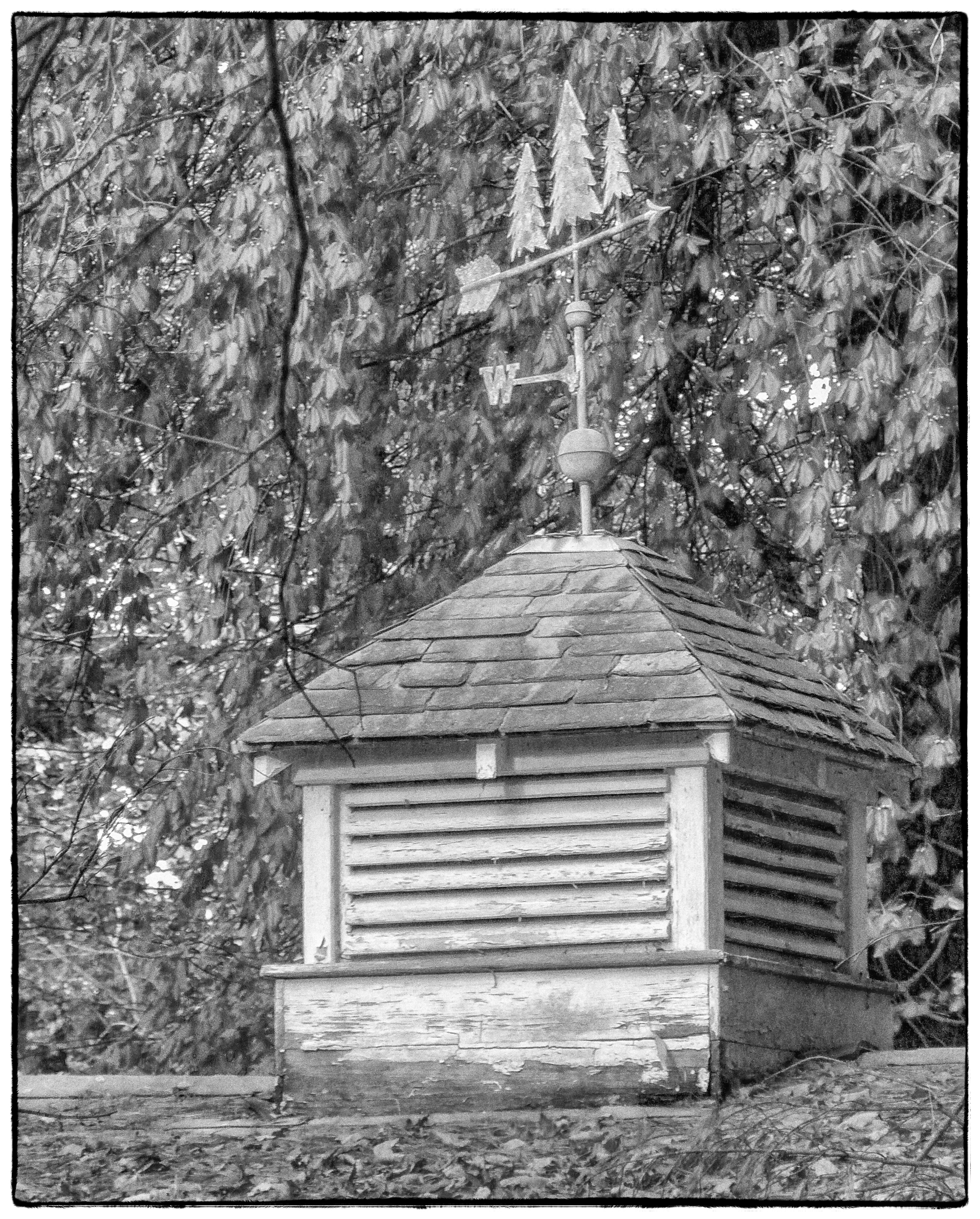
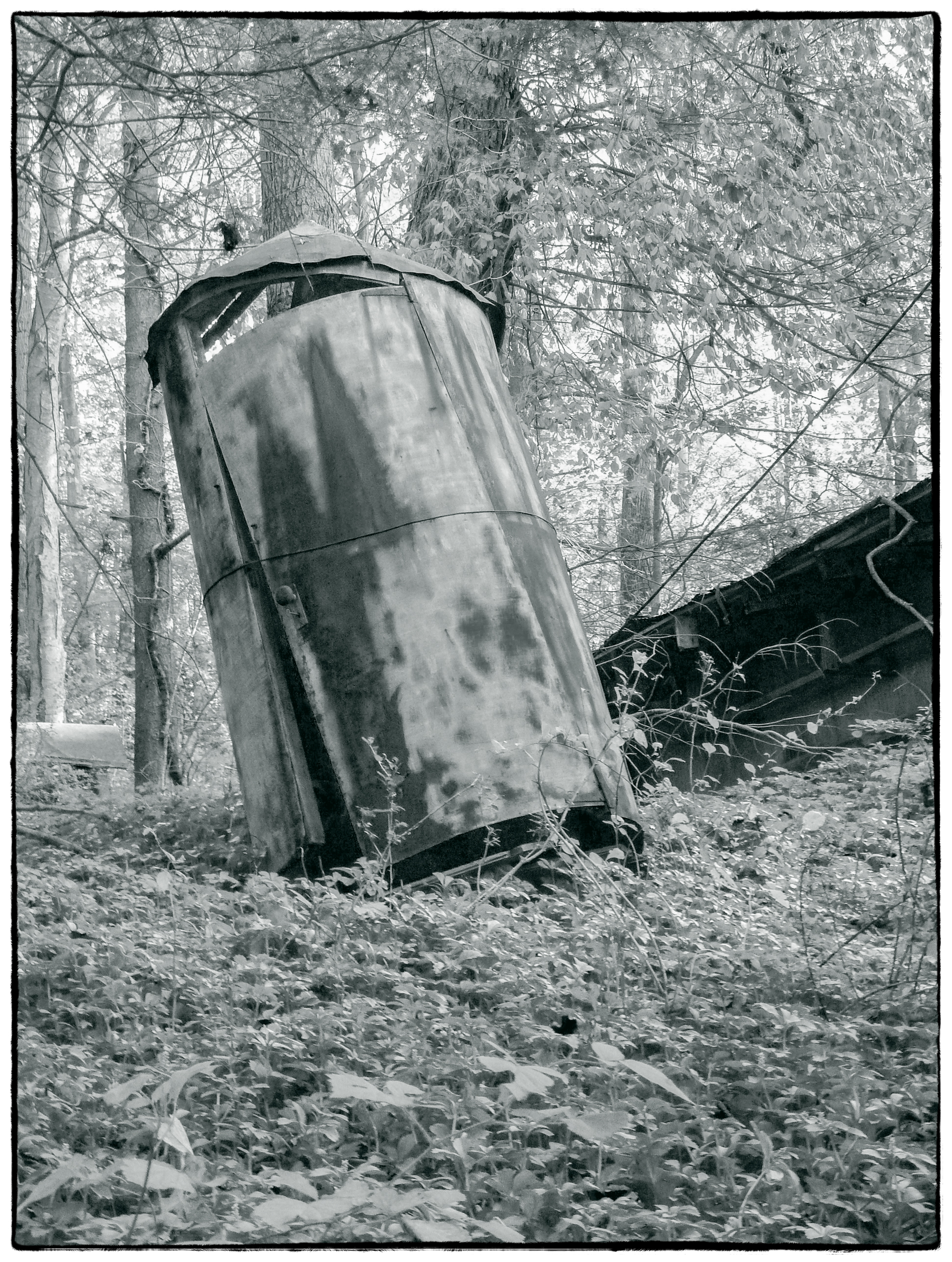
These pictures were taken with a Panasonic Lumix ZS-7 back in 2011 at the same location as the gravestone, the red door and the old hearth. Where the barn like structure with the weathervane (above) had stood is now just a concrete slab. Where the old, rusting tank (below) had been is now just undergrowth.

Croton Gorge – Old Stone Hearth

I came across the stone structure near the house overlooking the Croton River. It’s right next to the solitary gravestone (see: Croton Gorge – Serendipity and Croton Gorge – Red Door).

From the chimney like structure on top and the fireplace looking area at the bottom, I’d guess it’s some kind of hearth i.e. for outdoor cooking. Doesn’t look as if it has been used for a while. I’m not entirely sure why I took this picture. Maybe because I liked the stone and the overall dilapidated, and abandoned look. Or maybe it was because it seemed a little incongruous standing right next to the Old Croton Aqueduct trail (to be honest there was a house nearby so it shouldn’t have seemed out of place).

Croton Gorge – A river runs through it

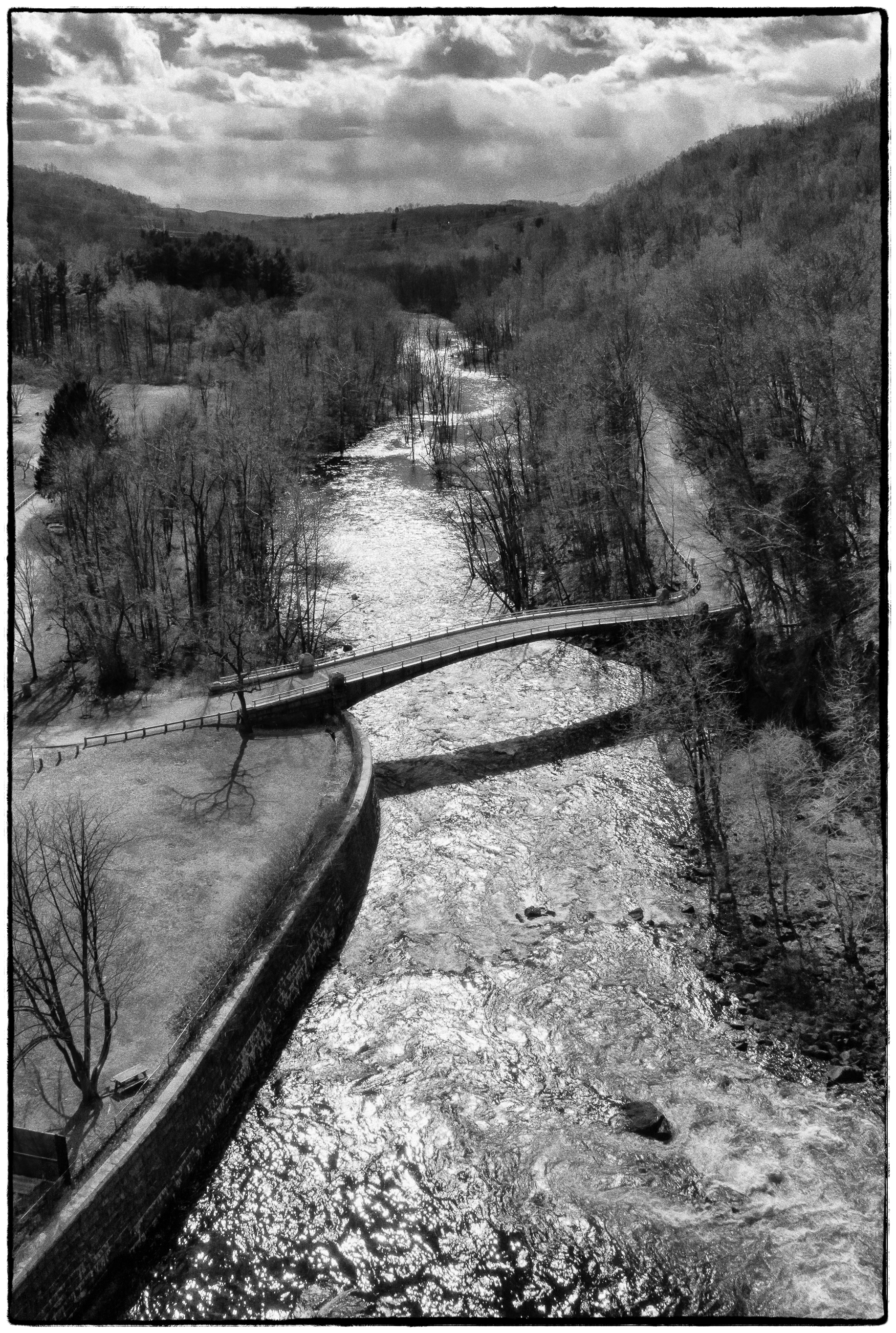
Taken from on top of the New Croton Dam, the Croton River flows from there for about four miles until it enters the Hudson near Van Cortlandt Manor

According to Wikipedia the Croton River:

…is a river in southern New York that begins where its eastern and western tributaries join downstream from the Croton Falls Reservoir. Shortly downstream, the Croton River, along with its tributary, the Muscoot River, flows into the Muscoot Reservoir, after which it empties into the New Croton Reservoir, which feeds the New Croton Aqueduct supplying water to New York City. Excess water leaves the spillway at the New Croton Dam, and finally empties into the Hudson River at Croton-on-Hudson, New York at Croton Point, about 30 miles (50 km) north of New York City.[1] The river has a watershed area of 361 square miles (930 km2).

I’ve taken pictures from this viewpoint before, but never produced one I was happy with. I rather like this one though: the way it’s mostly dark except for the silvery ribbon of water, intersected by bridge, which carries the road to the dam plaza.