I came across this statue of a Native American Chief in my friend’s garden and thought it might make a nice black and white photograph.
Taken in mid April 2023 with an iPhone SE II.
Photographs and thoughts on photography and camera collecting

I came across this statue of a Native American Chief in my friend’s garden and thought it might make a nice black and white photograph.
Taken in mid April 2023 with an iPhone SE II.
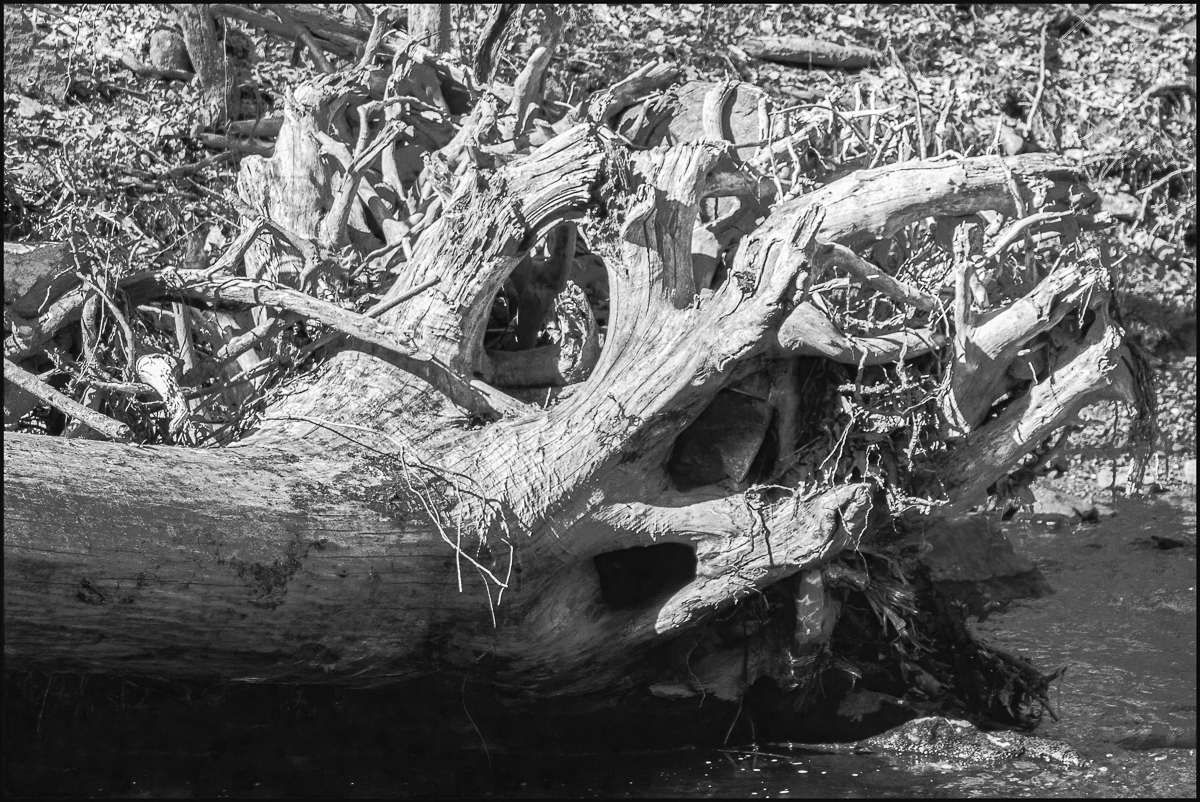
I liked the textures and gnarly roots and thought it would make an interesting black and white image.
Taken in early April 2023 with a Sony R1 and fixed Sony 24-120 f2.8-4.8
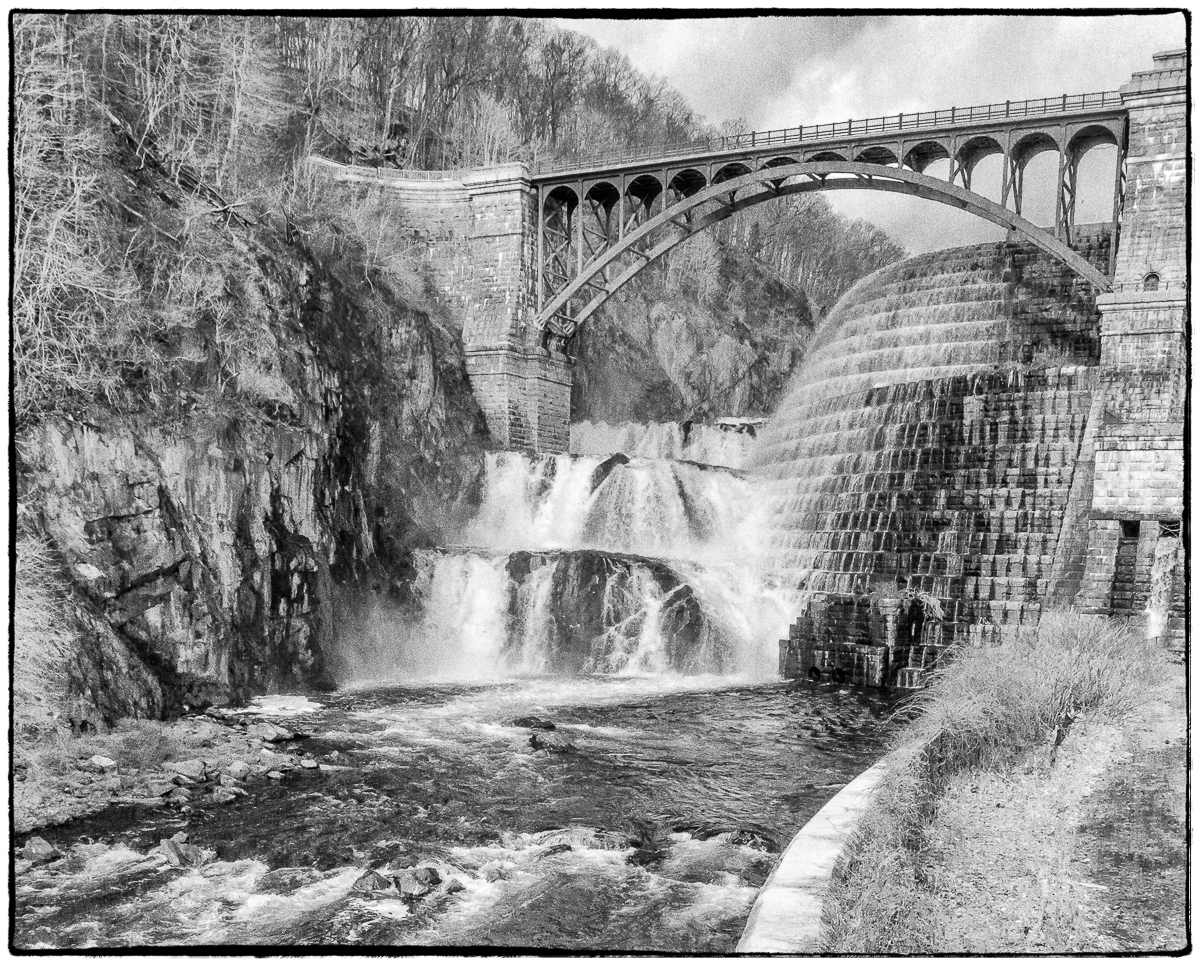
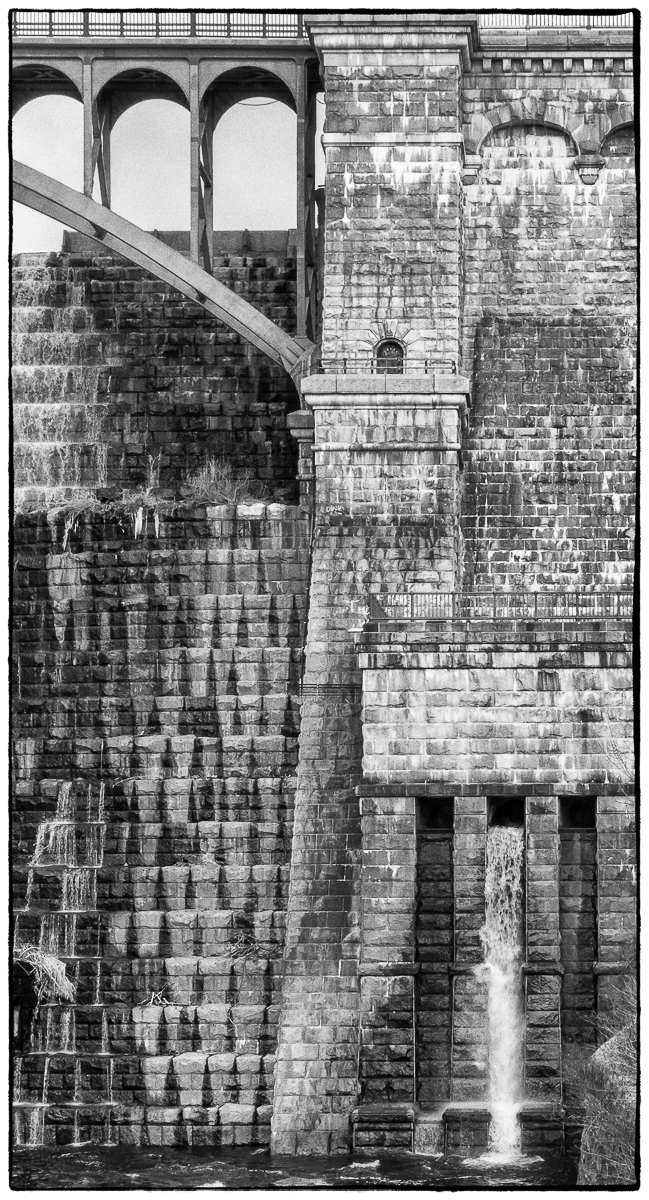
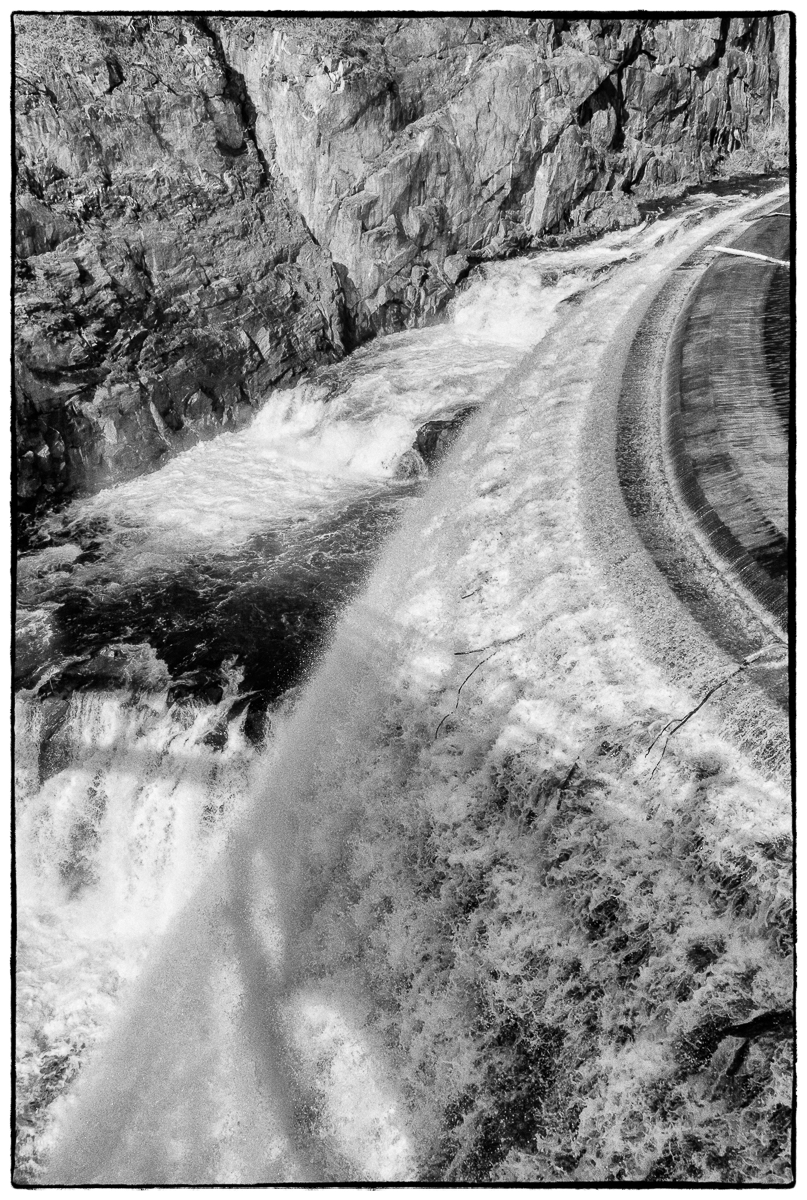
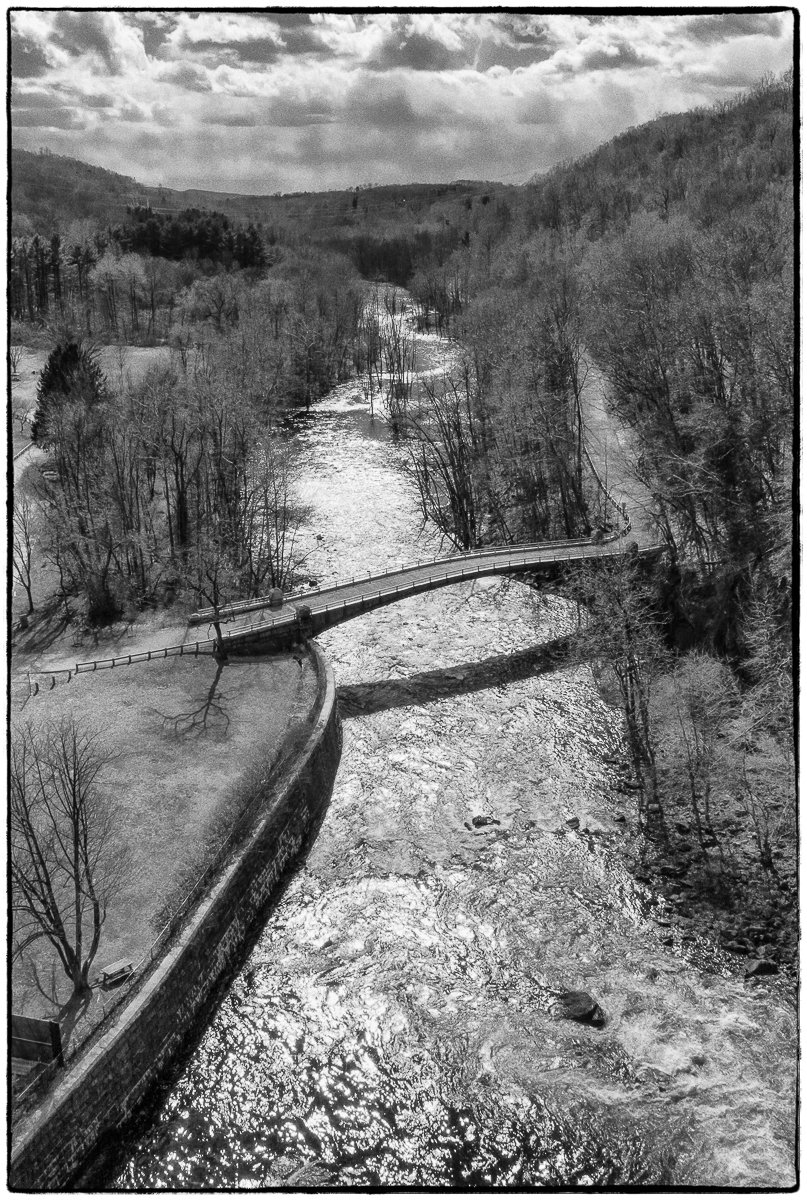
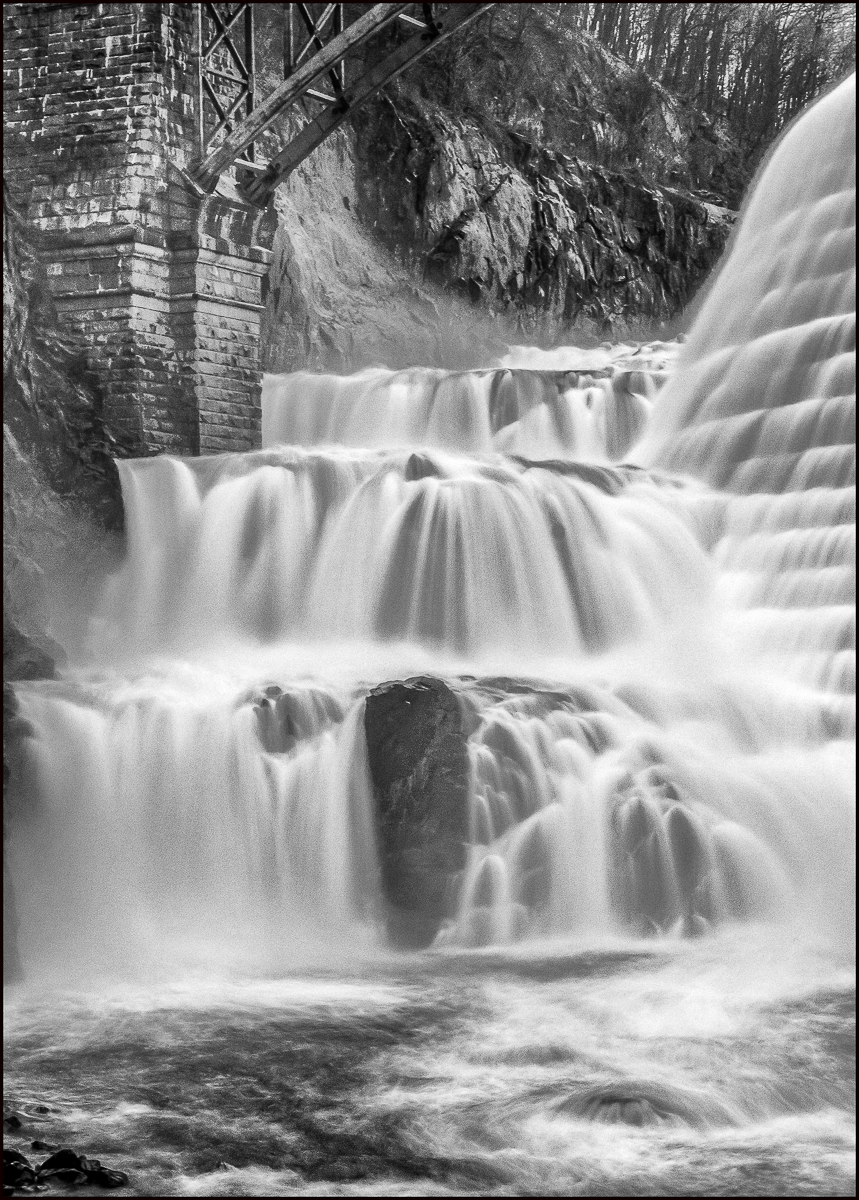
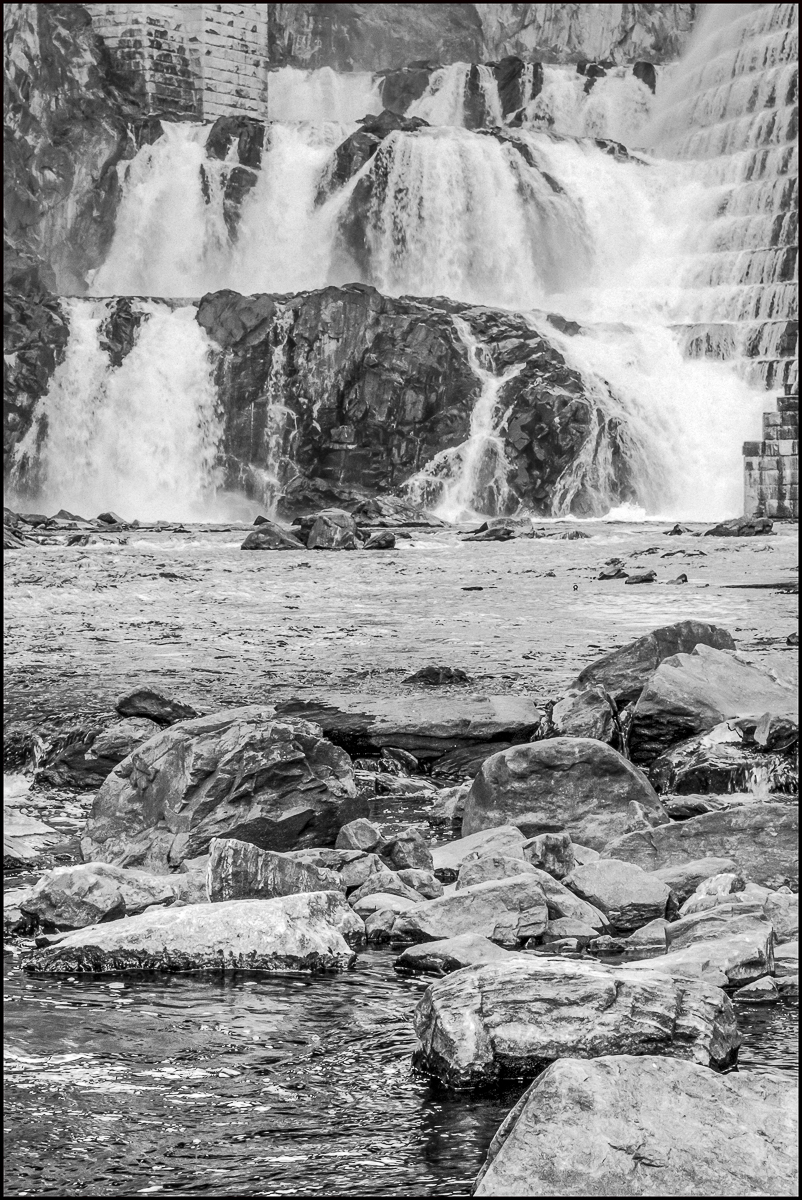
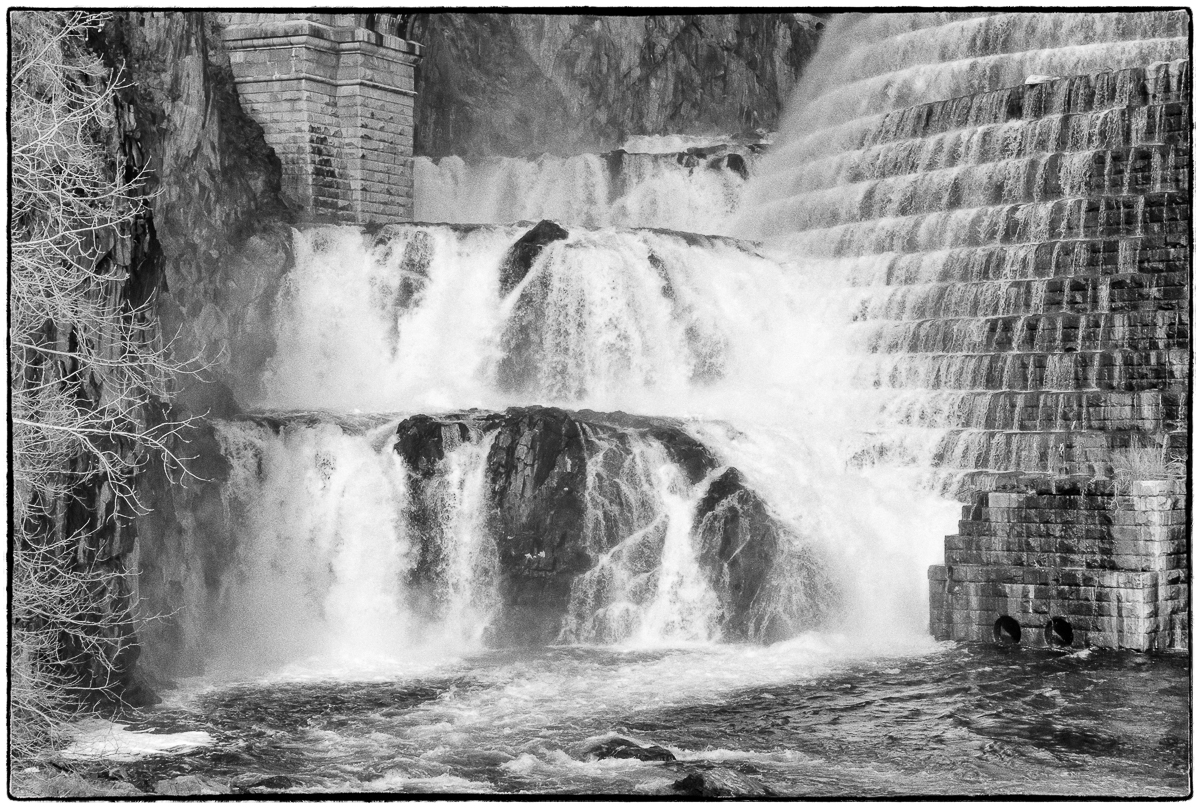
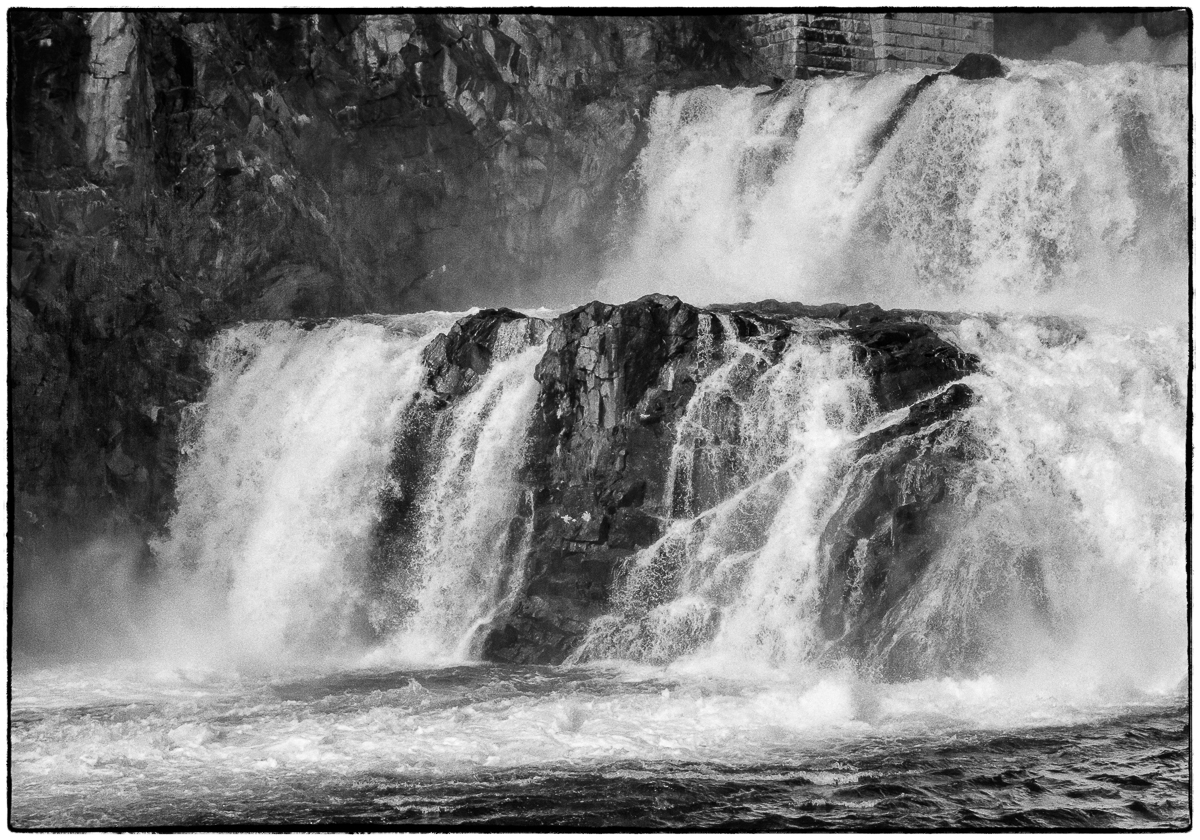
If you don’t know about the origins and history of the New Croton Dam see here.
I may have already posted some of these in individual posts, but I don’t think I’ve ever posted all of them together.
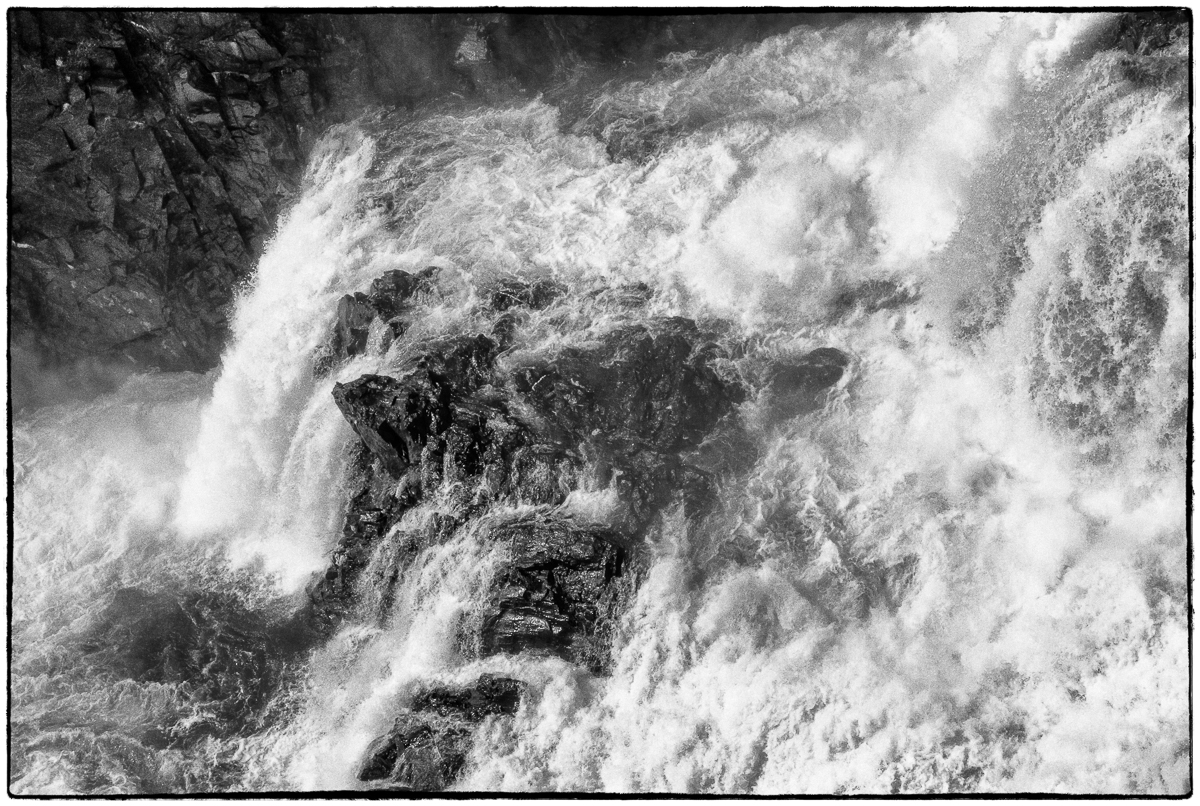
It’s a very impressive piece of engineering, which looks particularly good when it’s rained a lot and the water is rushing through.


I recently posted about Cornelia Cotton and her wonderful used book store/gallery in Croton-on-Hudson (See: Cornelia). While there I bought an Ansel Adams Yosemite National Park Postcard Folio Book.
It consists of 25 postcards (23 photographs, a title page, and an introduction). I think there were supposed to be more. The title page mentions “Front Cover Photograph: Clearing Winter Storm, Yosemite National Park, California, 1944″ and “Back Cover Photograph: Ansel Adams by Mimi Jacobs” (Mimi Jacobs took a number of photographs of Adams. Since I don’t know which one was included in this collection I can’t provide a link), both of which seem to be missing. I’ve included five images here to give you a feel for what they’re like. Of course my low resolution scans from my cheap, poor quality scanner don’t come close to doing justice to the the postcards themselves.
My interest in photography started around 1978 when my wife gave me a brand new Minolta Hi-Matic 7sII. Maybe I mentioned that I would like a camera? Maybe she just thought it would be a good idea? Little did she know what a monster she was unleashing. Not long before, an Ansel Adams print (Moonrise, Hernandez, New Mexico) had sold for what then seemed to be the astonishing amount of $71,500 (the same print sold for $609,600 in 2006 and the current most expensive photograph is Le Violon d’Ingres (1924) by Man Ray, which sold in 2022 for $12,400,000). Around that time a friend lent me one of Adams’s books (I believe it was “The Camera“). With my new found enthusiasm for photography I wanted to be Ansel Adams, to make those lovely black and white photographs. Over the years my interest for landscape photography has waned a bit. I live in the rather picturesque Hudson Valley so I still take plenty of landscape pictures, but my photographic interests have broadened to include street photography, macro photography, nature photography etc. I still like black and white photography though and to me he’s still the master of that.
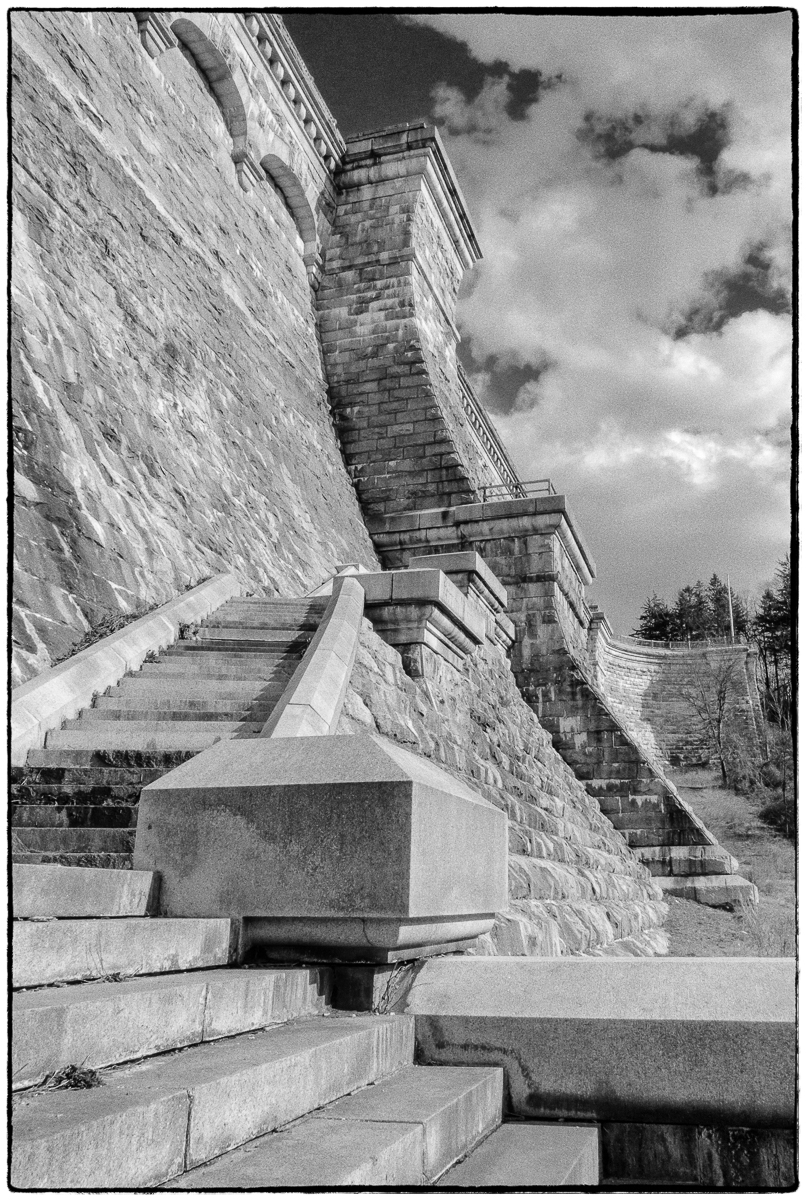
Curiously, while I was working on these images ended up temporarily in a folder, which also contained ten black and white pictures I’d taken of the New Croton Dam. Of course they weren’t anywhere near as good as the Adams photographs. But I was pleased to see that they didn’t look that bad either – at least as seen in low resolution on screen. I’m sure that Adams prints would blow anything I could produce out of the water.
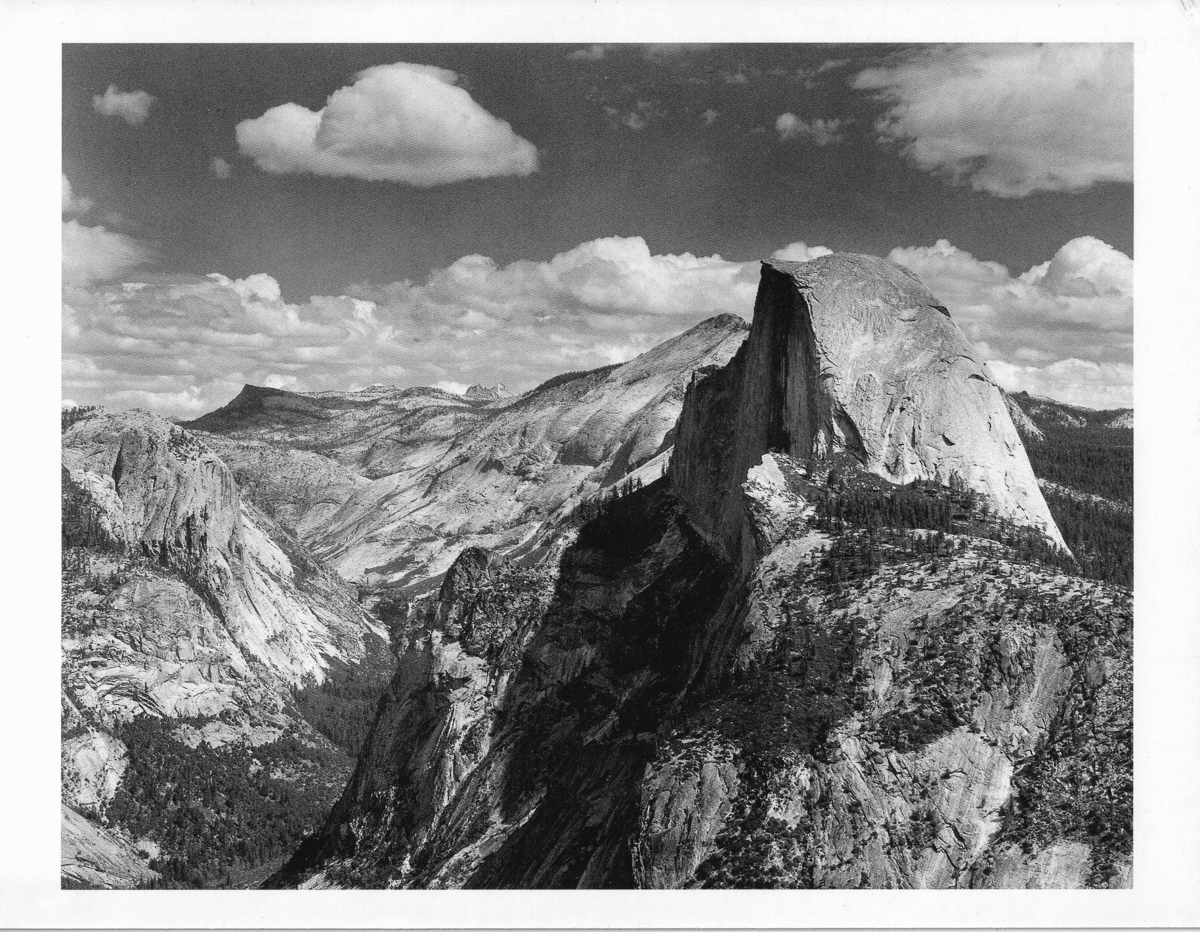


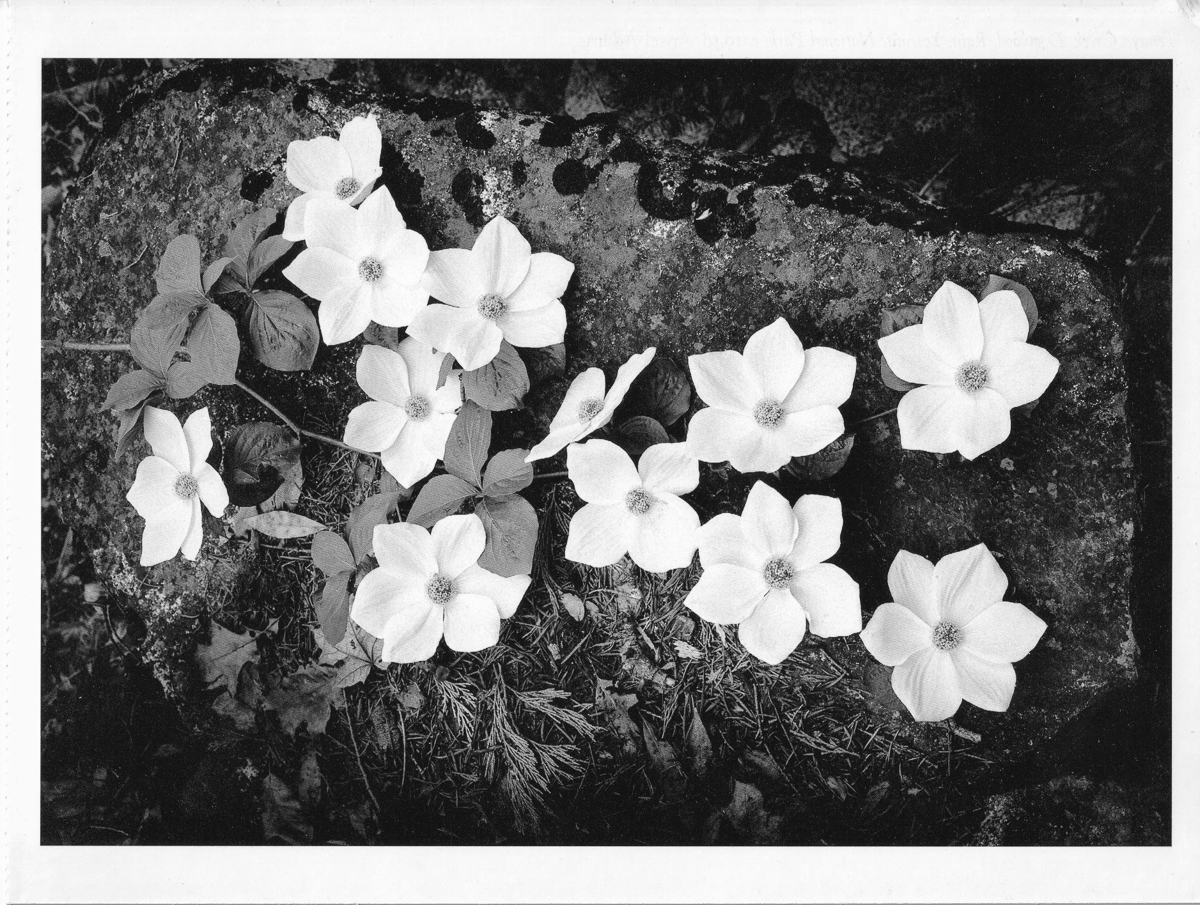
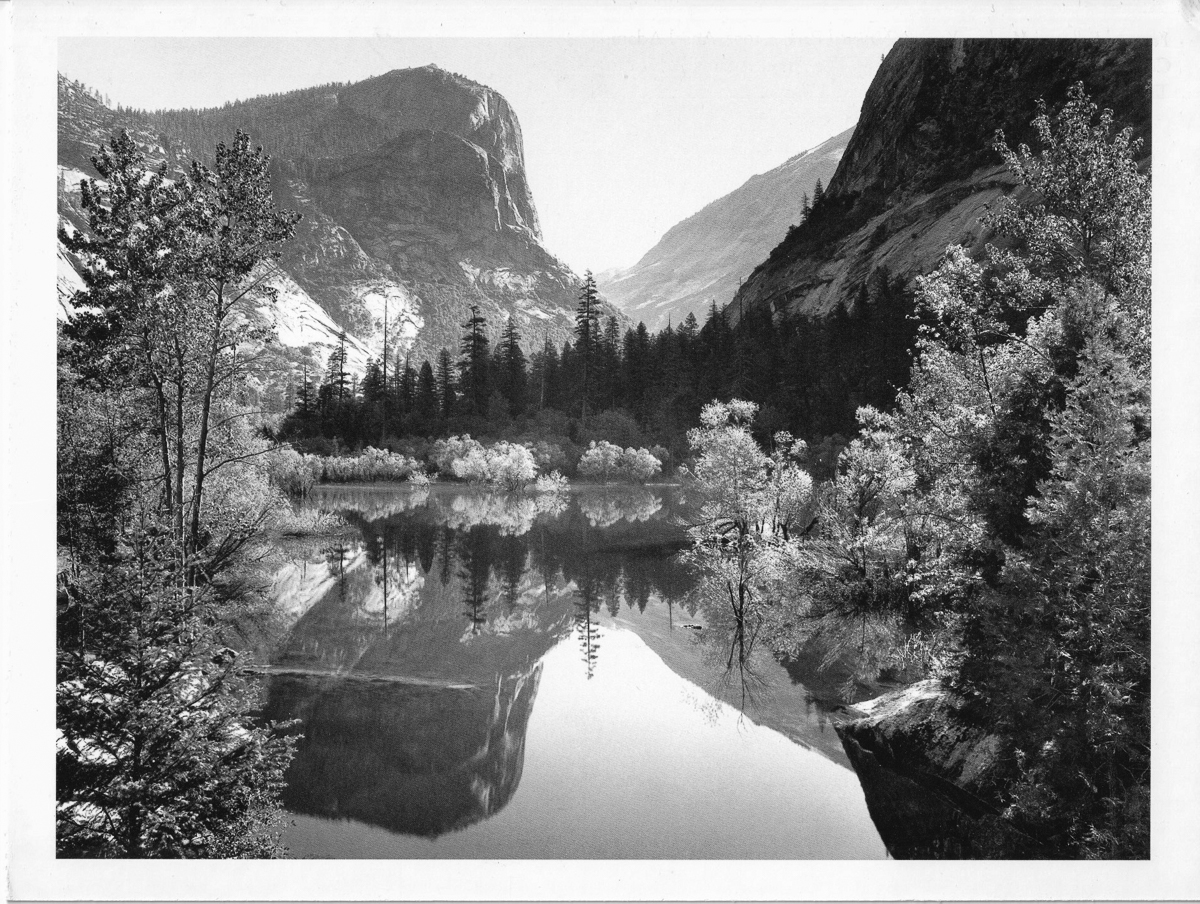
The complete set Copyright 1996 by the Trustees of the Ansel Adams Publishing Rights Trust. Published by Little, Brown and Company.
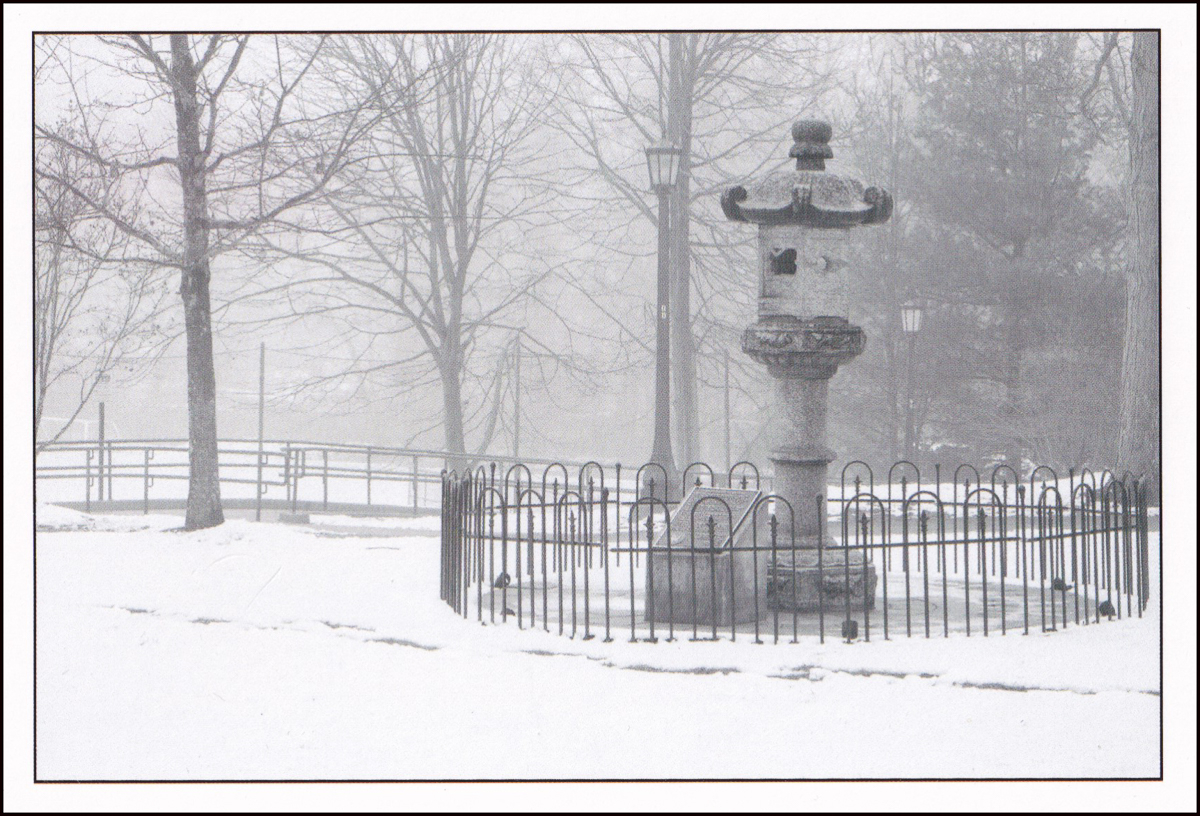
A while ago a friend of mine gave me a set up cards, each one with a different example of his wildlife photography. I was impressed by this and for some time have wanted to try something similar myself.
I came up with the idea of a collection of postcards, each one showing something related to my village. These could be either a number of postcards all with the same picture, or each with a different picture.
This is my first attempt. Generally I’m quite pleased with it – except for the dotted lines on the rear. If I were to do it again I’d go with solid lines instead.
After I’d finished with this I asked myself: “Does anyone actually send postcards anymore”? I raised this with another friend and he suggested notecards rather than postcards. He may be right. I’ll give it a try.