RIP Ivor Matanle

I was sad to hear (from this post on Rangefinder Forum) of the passing of Ivor Matanle. As the post says:

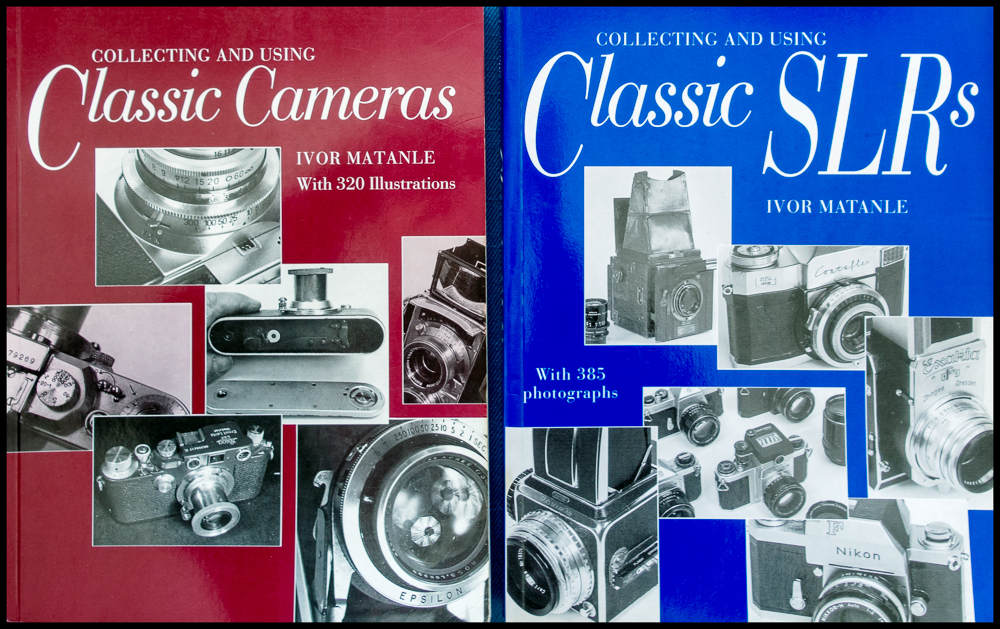
Whilst I’m still awaiting advice from his family, I’m sad to advise that it has been reported on Amateur Photographer forum, and also Facebook, that Ivor Matanle, author of Collecting and Using Classic Cameras, and follow up title Collecting and Using Classic SLRs has recently passed away.

Ivor and I corresponded from time to time, always about photographica, and he was invariably kind and helpful—I always enjoyed our communications. Personally I loved his enthusiasm for using classic or collectible cameras so evident in his books, something I could always relate to. But he authored other non photographic titles too, notably on the history of WWII and related subjects, as well as works about Australia illustrated by him.

Ivor had been fairly quiet over the last couple of years following a stroke that slowed him down a bit. He was still working on his first novel last year, though whether this was completed I don’t know. When last we contacted each other a few months back he sounded quite chirpy, and had been up and about for short walks near home with a lightweight 35mm SLR occasionally since his stroke, so he was still shooting, if not to the last, then, at least, until quite late in life.

I can’t say that he was the first person to stimulate my interest in old cameras. That would be Jason Schneider and his articles in Modern Photography (which I found interesting even if I didn’t at the time start collecting). When I actually started to collect cameras around 2011 one of the first purchases I made were Schneider’s books on camera collecting. Then I looked for other resources and came across the two books above, which I quickly acquired and very much much enjoyed. Around the same time I also started reading the UK magazine: Amateur Photographer, which often featured articles by Matanle on vintage cameras (which reminds me that I cut out a number of these articles. I still have them somewhere. Maybe I should scan them).

RIP Ivor.
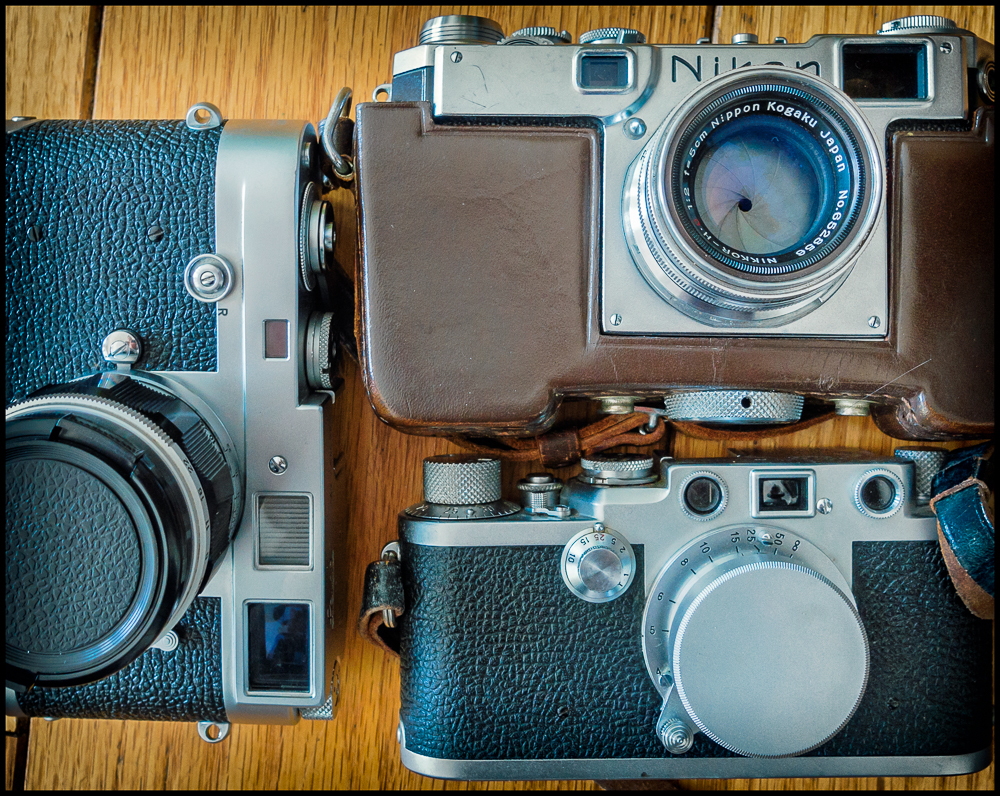
An irrational liking for rangefinders?

I recently came across this useful post on 35mmc: What is a rangefinder camera, and is one right for you?. It does a terrific job of explaining the advantages and disadvantages of rangefinder cameras.

I have an emotional attachment to rangefinder cameras. My first serious camera was a rangefinder. It was given to me by my wife early in our relationship and I used it for many years. When I started to collect cameras it was an easy decision to start with rangefinders. I’m also a big fan of Henri Cartier-Bresson and perhaps subconsciously could see myself as the almost invisible photographer flitting around taking pictures of all and sundry (if you haven’t seen Cartier-Bresson at work see: Henri Cartier-Bresson Documentary: Pen, Brush and Camera).

The problem is that I just don’t take that kind of picture. I rarely take pictures of people and my usual subjects (buildings, objects, still life, landscapes etc.) are pretty static. So the usual benefits of rangefinders (small, discrete, reduced camera noise, reduced camera shake etc.) don’t seem to be too much of an advantage to my kind of photography. Also I find that as I get older it becomes more and more difficult to make out the rangefinder patch – especially with the compact non-interchangeable lens rangefinders that I favor.

But then In another post (The Viewfinder effect – and why I choose to cripple myself with an offset viewfinder) Hamish notes:

During a chat on the phone with a friend a few days later I happen to mention this difference in framing and he explains how he once had a similar realisation, by coincidence, also through shooting with a Leica. We concluded that the difference in framing comes from a completely different way that the camera is used. With an SLR the tendency is to frame with the camera to the eye; with the viewfinder. The camera shows the photographer depth of field and perfect framing. What results is a reliance on the camera, the camera almost finds the shot for the photographer by giving him or her the extra levels of information about the end result before the photo is taken

It seems to me that he has a point here. The rangefinder experience is different, but until reading this post I’ve never been able to figure out exactly how. But, at least in my case, Hamish is spot on. When I use an SLR I tend to look through the viewfinder a lot more. With a rangefinder I tend to look around with the camera down and only raise it to frame when I want to take the picture.

Hamish concludes with:

The problem is, there’s more to what makes rangefinder cameras attractive or otherwise than the more obvious pros and cons. As I talked about in the couple of paragraphs about frame lines, and indeed the couple of posts I link to, shooting a rangefinder is very different experience to shooting an SLR. For me – and actually I suspect most rangefinder camera photographers – this mostly comes down to the experience of using a camera with an offset viewfinder and frame lines. The experience of being able to see what’s just about to come into the frame verses the more accurate framing an SLR brings might seem like something quite small, but in practice there’s so much more to how this difference impacts on the process of taking a photo.

Chains

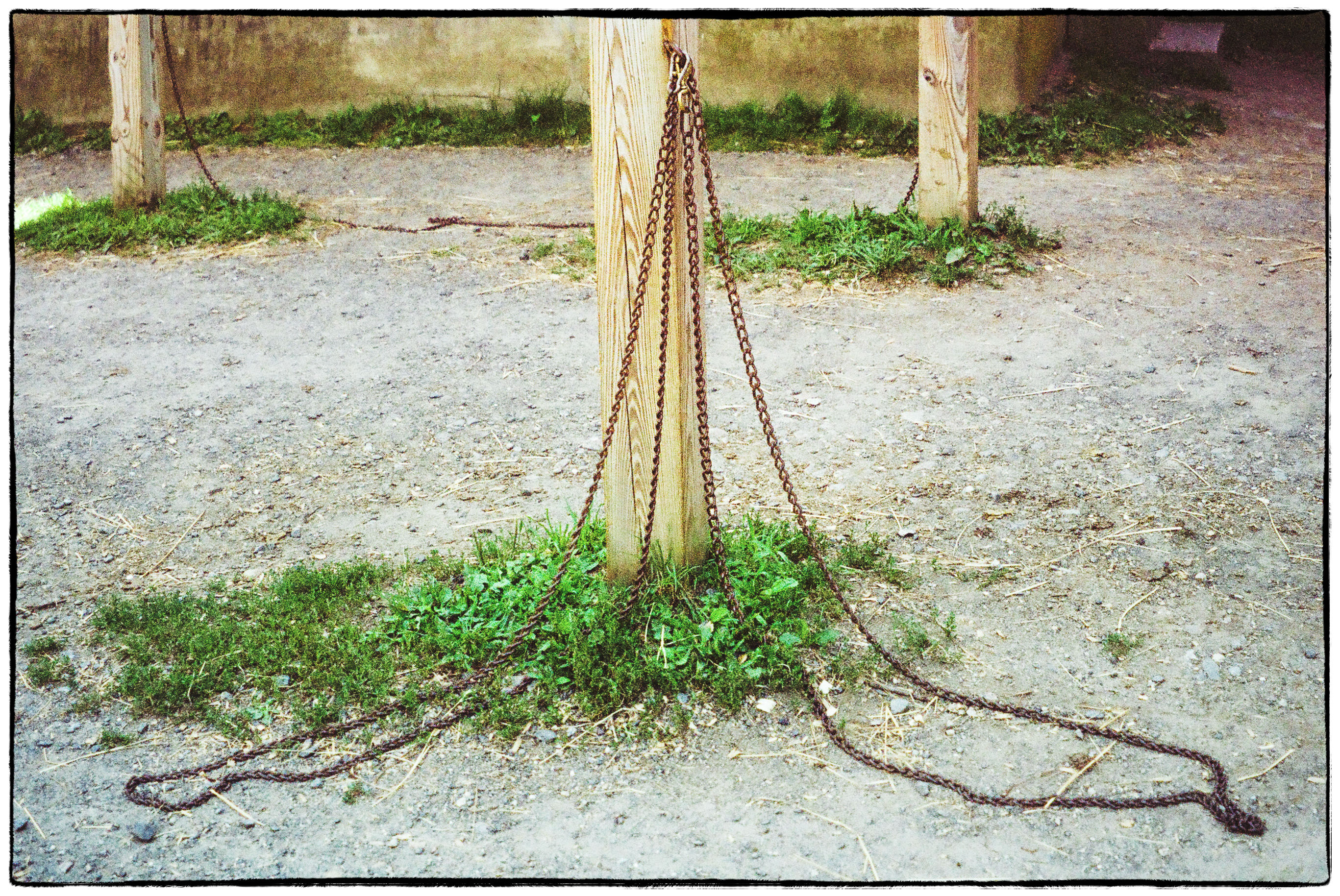
Taken at Muscoot Farm with an Olympus Infinity Stylus Epic Zoom 80.

I’m not entirely sure why I find this so appealing. Maybe something to do with the three upright posts with the chains hanging from them. It asks the question: what are the chains for? I also found it interesting that each of the posts has a small patch of greenery below it, while the rest of the ground is largely dirt. Why does this patch of green remain under each of the posts? There’s also something about the elegant, curved lines of the the chains themselves that I found attractive.

Sunset Drinks at 3 Westerley part II

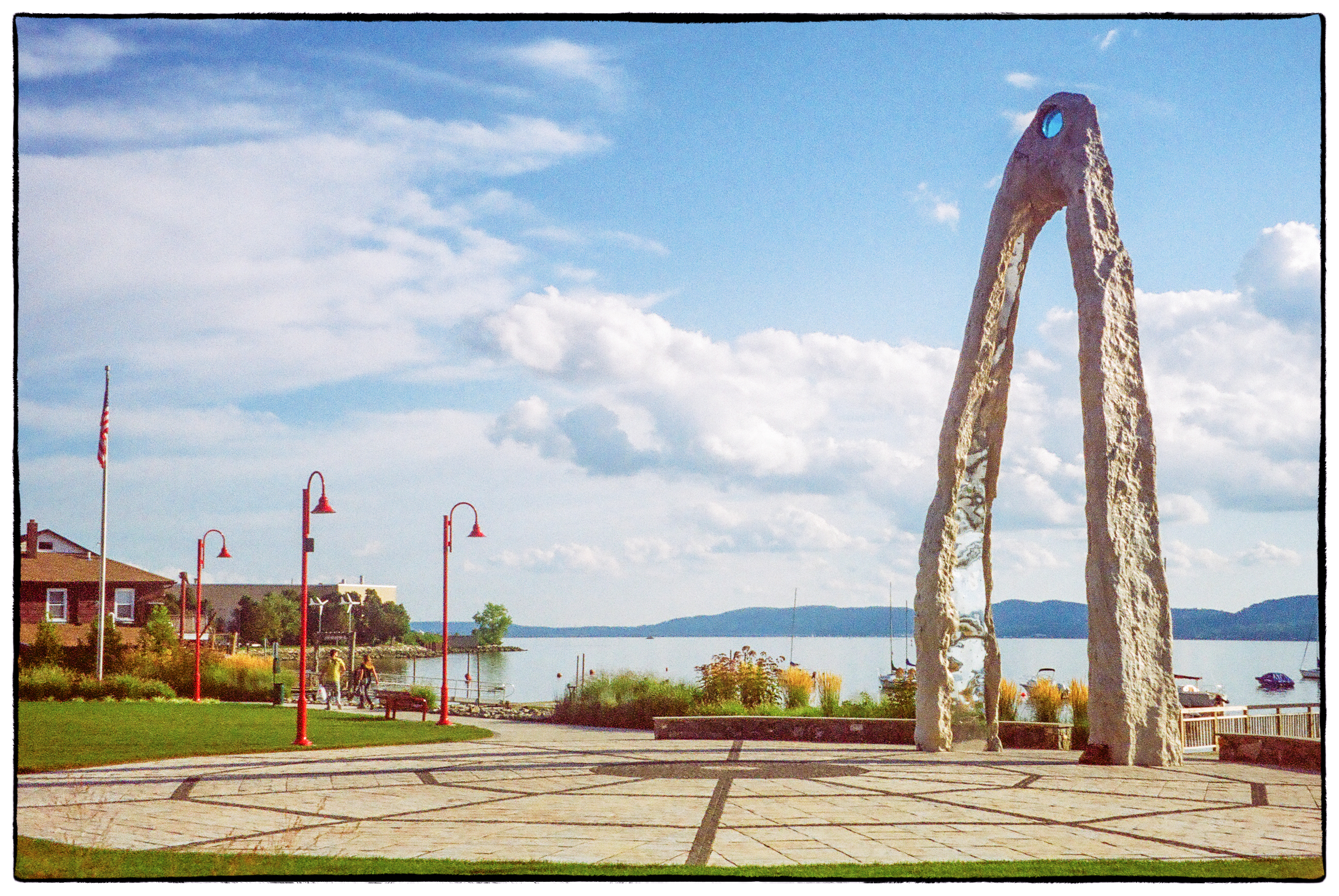
It’s interesting to compare this with a similar shot posted earlier: Sunset Drinks at 3 Westerley. Where this picture was taken with a film camera, the earlier one was taken with a digital Sony RX-100. The earlier shot was also taken about an hour later, when the light was much more interesting.

Taken with an Olympus Infinity Stylus Epic Zoom 80.