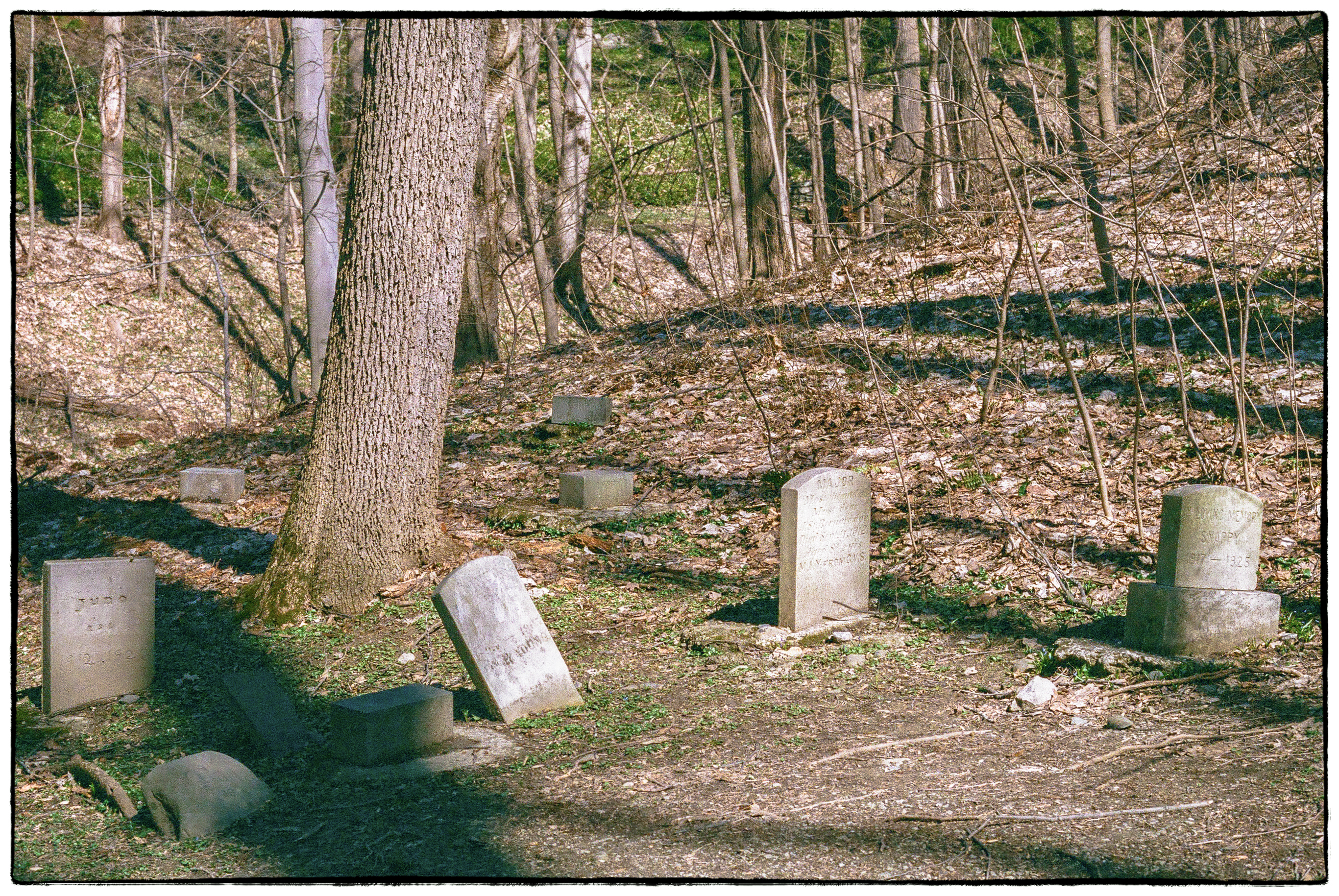
A Walk to Doodletown – June Cemetery

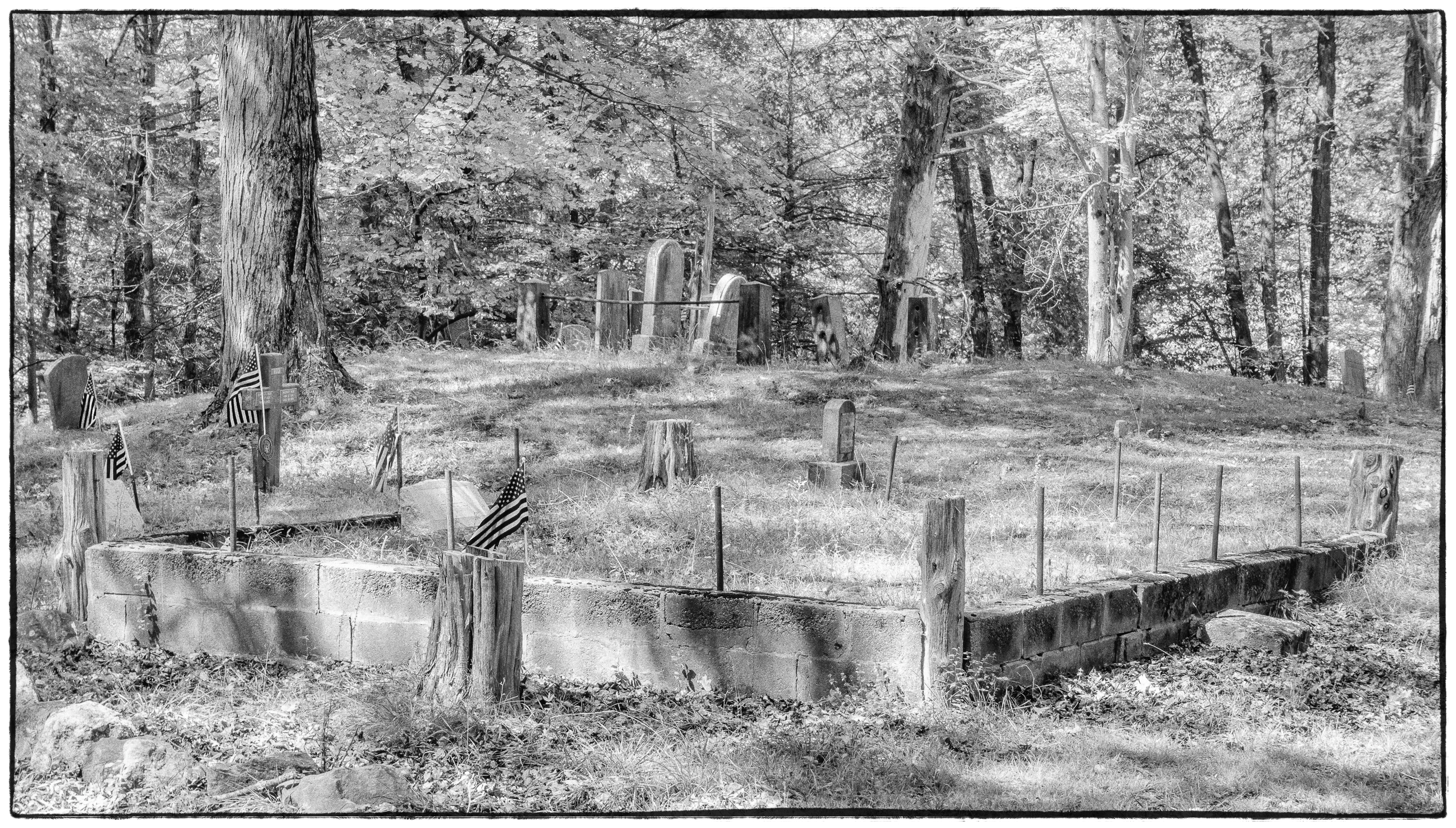
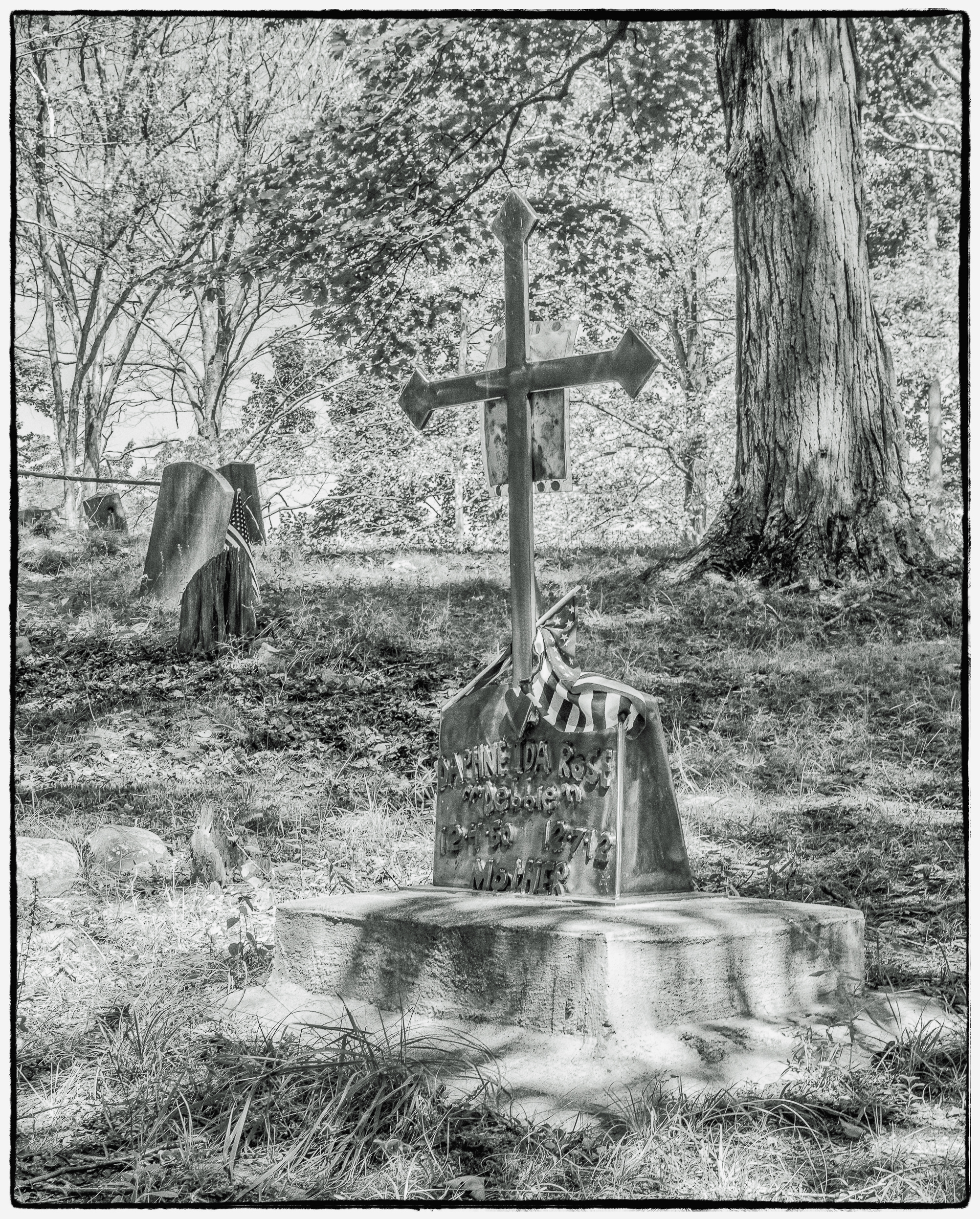
Ironically the only thing that’s “alive” about Doodletown is its cemeteries. I say that they are “alive”, because former Doodletown inhabitants can still be interred here, should they so choose. I believe that there are two cemeteries (as well as the site of the first June cemetery), one of which is still active, but in the short time I had available I was only able to find this one. According to a nearby marker: “Second June Cemetery. Caleb June (1802-1879) willed this property to his heirs in 1871 for a burying ground. Many of the later generations of the founding June families are interred here. It is still in use.”.

Taken with a Sony RX100 M3.

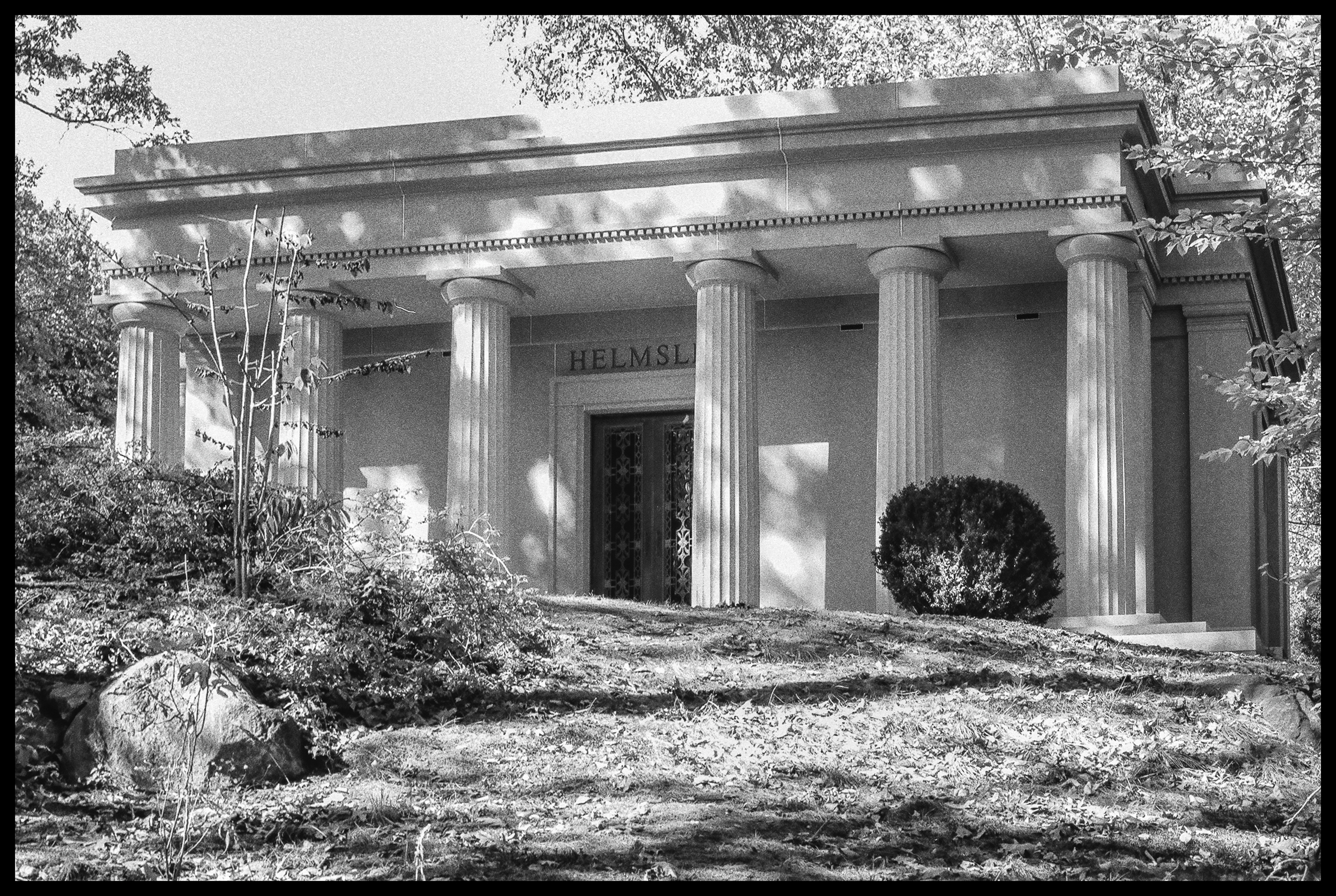
Helmsley Mausoleum, Sleepy Hollow Cemetery

According to Waymarking.com:

Harry and Leona Helmsley were two of America’s and wealthiest (sic) property owner. They made billions in real estate, owning many of the country’s most prestigious properties including the Empire State Building. Their lavish lifestyle and questionable business practices drew the attention of federal investigators which lead to charges of tax evasion. Harry who was in poor health was too frail to plead died in 1997. However, Leona who had reportedly utter the now famous words, “Only little people pay taxes,” was fined and sentenced to 16-years in prison but served only 19-months. Harry died in 1997 and was originally entombed at Woodlawn Cemetery in New York City. Leona disliked the setting so much that she built the mausoleum here and had Harry re-interred in 2004. Leona died in 2007 and is entombed beside Harry.

The Helmsley Mausoleum is the final resting place of billionaire real estate moguls Harry and Leona Helmsley. The private mausoleum complete with stained glass was built in 2004 at a cost of more than $1.4-million dollars. It sits on a wooded hillside in the northern most section of the cemetery, near such notable figures as Walter Chrysler and William Rockefeller.

Leona also specified that her dog Trouble (to whom she bequeathed $12 million – later whittled down to $2 million) also be buried in the Mausoleum. Unfortunately NY State law does not allow this. Trouble passed away in 2011 (see: NY Times. Cosseted Life and Secret End of a Millionaire Maltese). What happened to the remains? According to the NY Times article:

Trouble was cremated and her remains were “privately retained,” said a spokeswoman for the Helmsley Trust. In her will, Mrs. Helmsley asked that Trouble’s remains be buried alongside her own, in the Helmsley mausoleum at the Sleepy Hollow Cemetery in Westchester County. But Jim Logan, a member of the cemetery’s board, said Mrs. Helmsley’s lawyers knew the cemetery would abide by regulations that forbid the interring of nonhuman remains at human cemeteries. That said, mausoleums are considered private property and the Helmsley family had its own key.

Might Trouble be buried alongside her mistress? “In all honesty,” Mr. Logan said, “we don’t know.”

Taken with an Olympus OM2-n MD and 50mm f1.8 F-Zuiko auto-s.

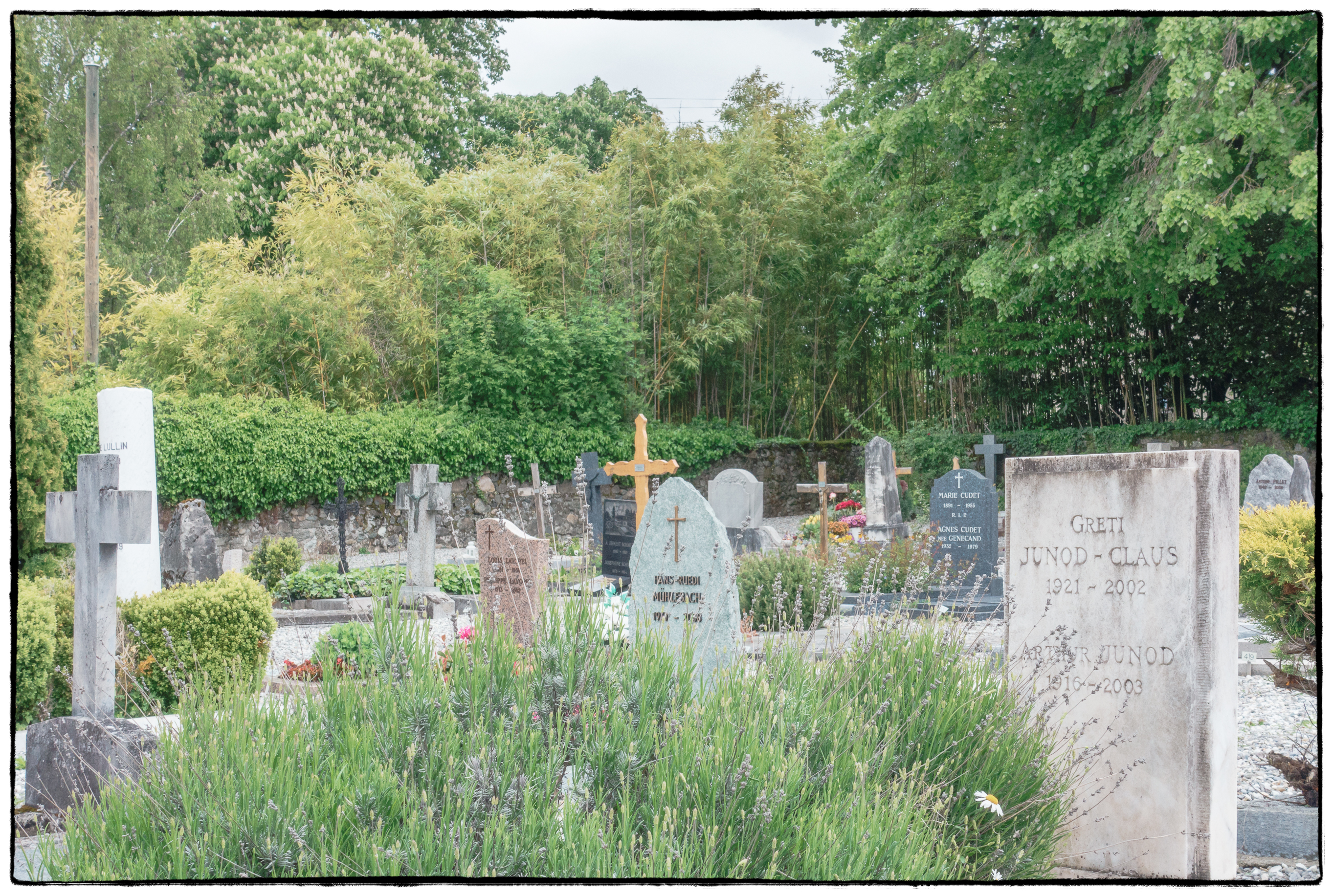
Geneva – Troinex, Cemetery

By this point I was tired and my legs/feet hurt. I was starting to develop blisters and I still had a long walk ahead for me. I should just call it a day and turn back. But then I saw a sign that read “Cimetière” and with my fascination with cemeteries I just couldn’t pass it up. As it turned out it wasn’t too far away.

As I approached I noticed a sign strongly stating that dogs (actually all animals) were forbidden. After living/working in Switzerland I know that the Swiss are very big on rules so since I had the dog with me I didn’t go inside. From the outside it didn’t look all that interesting: small and somewhat modern looking. I suppose it could have gone back further than I could see, but I couldn’t go in to find out.

I kept meaning to return without the dog, but somehow never got around to it.

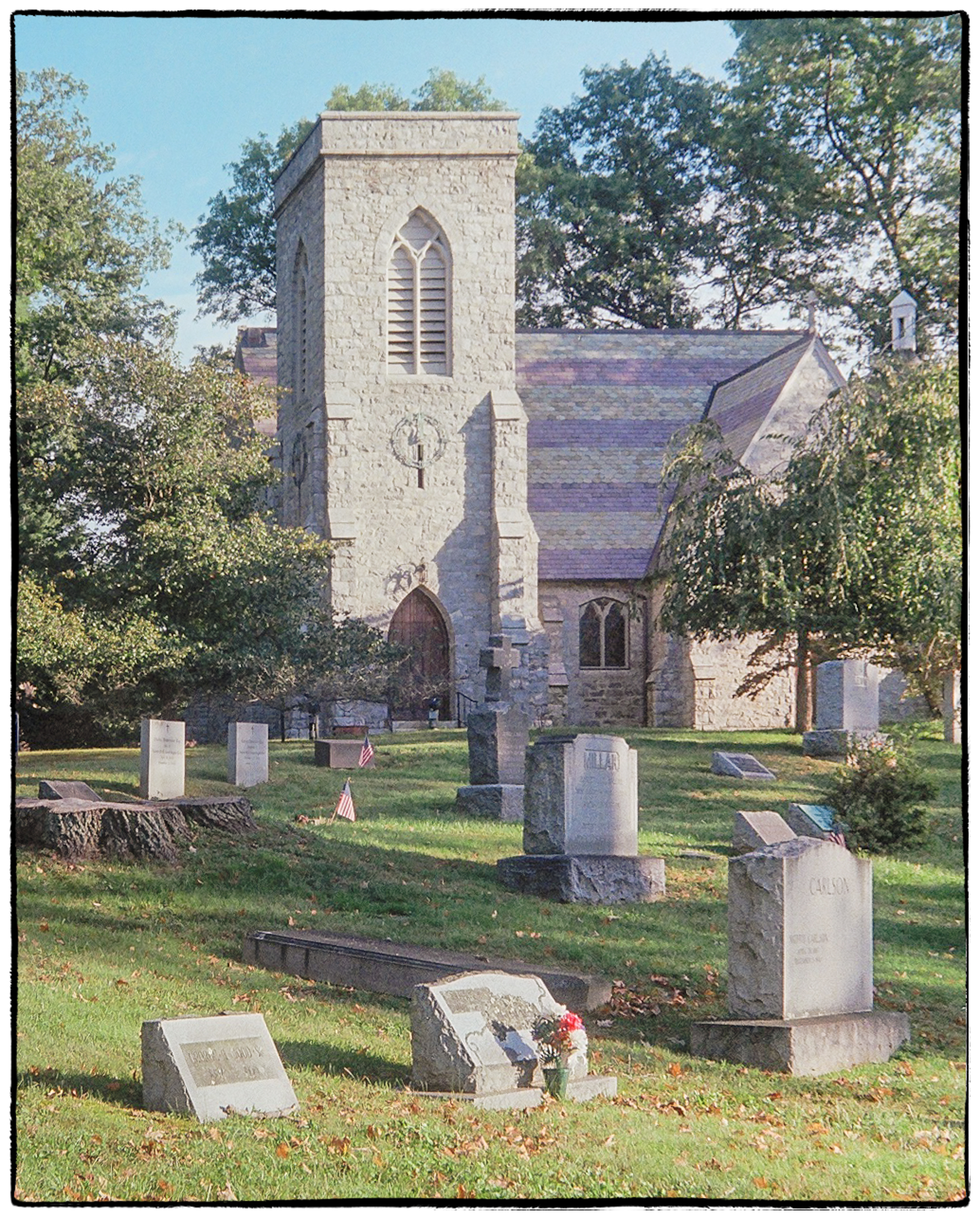
St. Philip’s Church in the Highlands, Garrison

Yet another film photograph. I’ve always loved this church – largely because it doesn’t really seem to belong in the US. I’ve seen so many like it in my own country (the UK) that seeing this one really makes me feel at home, and a little nostalgic. In fact the church resembles, to a certain extent, St. Mary’s church in Sandbach, where I grew up.

This one has a rich history. According to Wikipedia:

The church was originally established ca. 1770 when St. Peter’s Church in Peekskill was granted charter by King George III. The wardens, Beverley Robinson and Charles Moore, decided to establish a parish to the north, in the area known as Four Corners, to serve families in that area. After a short period in another church and a parishioner’s home, a small wooden chapel was built where the present church stands. The current graveyard was also started at the same time. The new complex was possibly named St. Philip’s in honor of the Philipse family, original patentees of the area and Robinson’s in-laws.

The Rev. John Doty, the first rector of both churches, left for Nova Scotia after a few years as he was a staunch Loyalist in an area increasingly divided over revolutionary politics. Robinson, too, declined an invitation from his friend John Jay to swear allegiance to the newly created United States, and actively worked to support the British by organizing the Loyal American Legion and coordinating intelligence-gathering efforts. His lands and home were eventually confiscated by the new government of New York, and he left for England after the war, never to return.

A similar fate would befall half of St. Philip’s families, and the church was so despised locally for its Tory associations that legend has it a mob came together to burn it down at one point during the later years. They were supposedly dissuaded from doing so by George Washington himself, who stood at the door and said “That, sir, is my church!” In gratitude the stained glass window in the church’s vestibule depicts him.

A new pastor, the Rev. Charles Frederick Hoffman, arrived in May 1860. The completion of the Hudson River Railroad through nearby Garrison Landing had made the community more accessible to New York City and a desirable place to live for some of the most socially prominent families of the day, many of whom were congregants. Hoffman saw that the growing church needed a new building.

His congregation responded. Henry Belcher donated three acres (1.2 ha) for the building and grounds, and others raised $10,000 for its construction. The design came from another worshipper at St. Philip’s, Richard Upjohn, already famous for Manhattan’s Trinity Church. The new structure, a one-story Gothic Revival building of gray granite, was finished in 1861 and consecrated the next year.

In the decades afterwards, a carriage house and shed were built near the church. At the turn of the century, a parish house was built.

The picture was taken with a Fed 2 rangefinder camera and Fed 50mm f3.5 collapsible lens (based on the Leitz Elmar). I believe the film was Kodak Gold 400.

For a more complete history of St. Philips Church see (in a variety of different formats) History of St. Philip’s church in the Highlands, Garrison, New York, including, up to 1840, St. Peter’s church on the manor of Cortlandt by Chorley, E. Clowes (Edward Clowes), 1865-1949

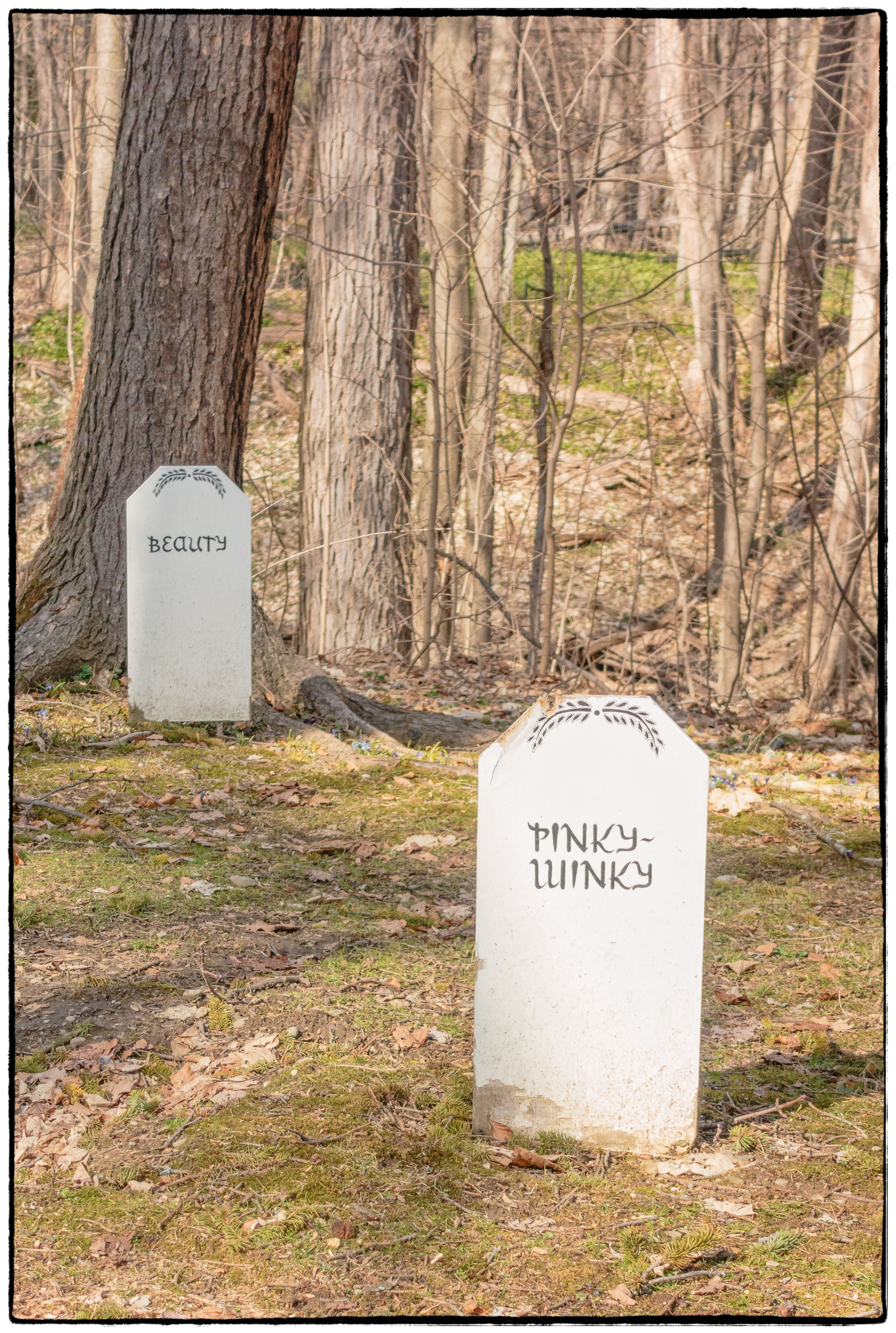
Locust Grove – RIP Pinky Winky

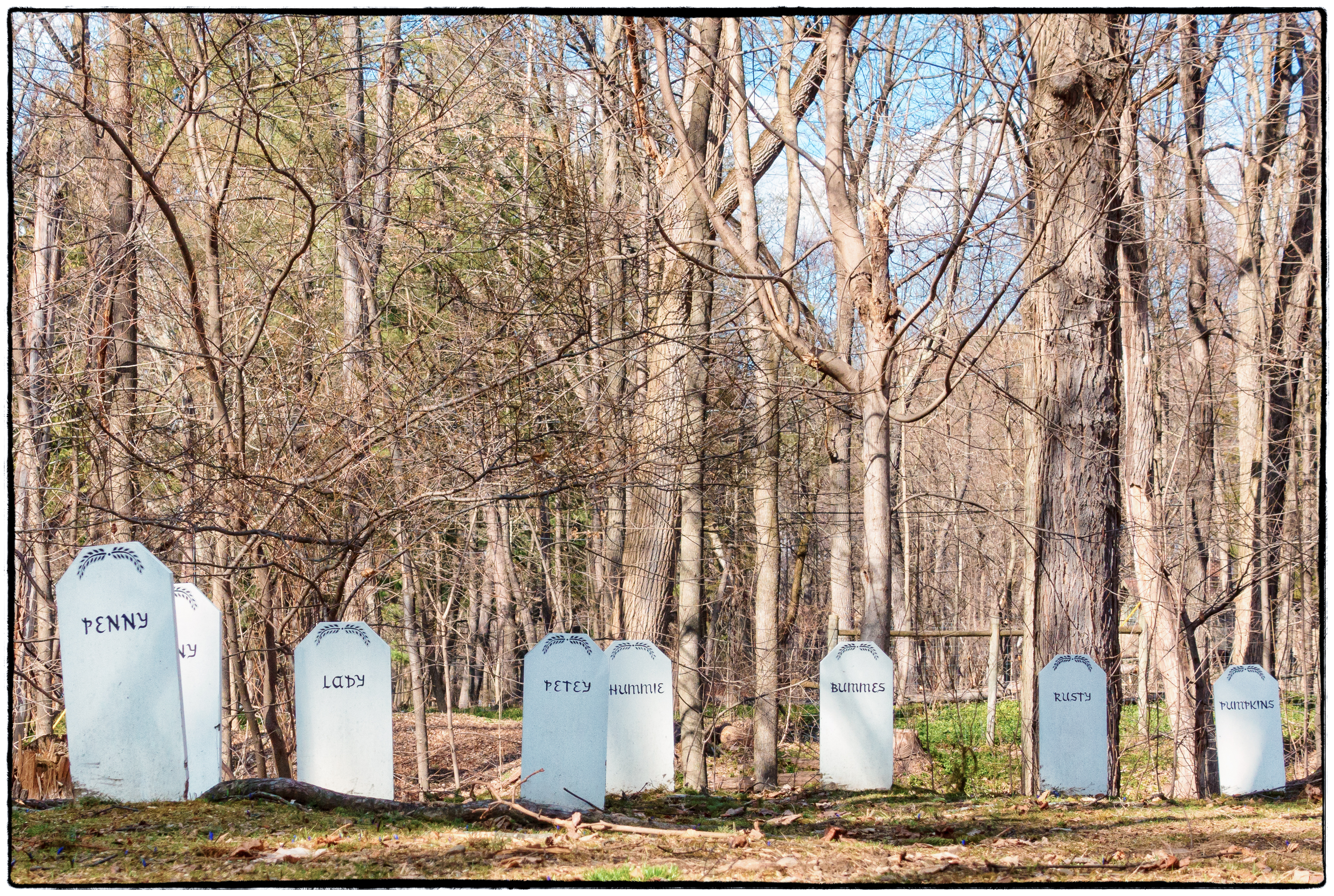
By the entrance to the trails at Locust Grove are not one, but two pet cemeteries. The first one (see picture above and first picture below) consists of what appear to be recently painted simple (i.e. just the pet’s name) wooden markers. The second one (see second picture below) looks older – with stone markers and more extensive inscriptions. My wife did the house tour and told me that there are all kinds of animals in the two cemeteries – including horses. The owners must really have loved their pets. I have no idea what kind of pet Pinky Winky was.

First two pictures were taken with a Sony RX-100 M3 and the final one with a Canon EOS 650.