A Walk Around Pleasantville – Farmers Market

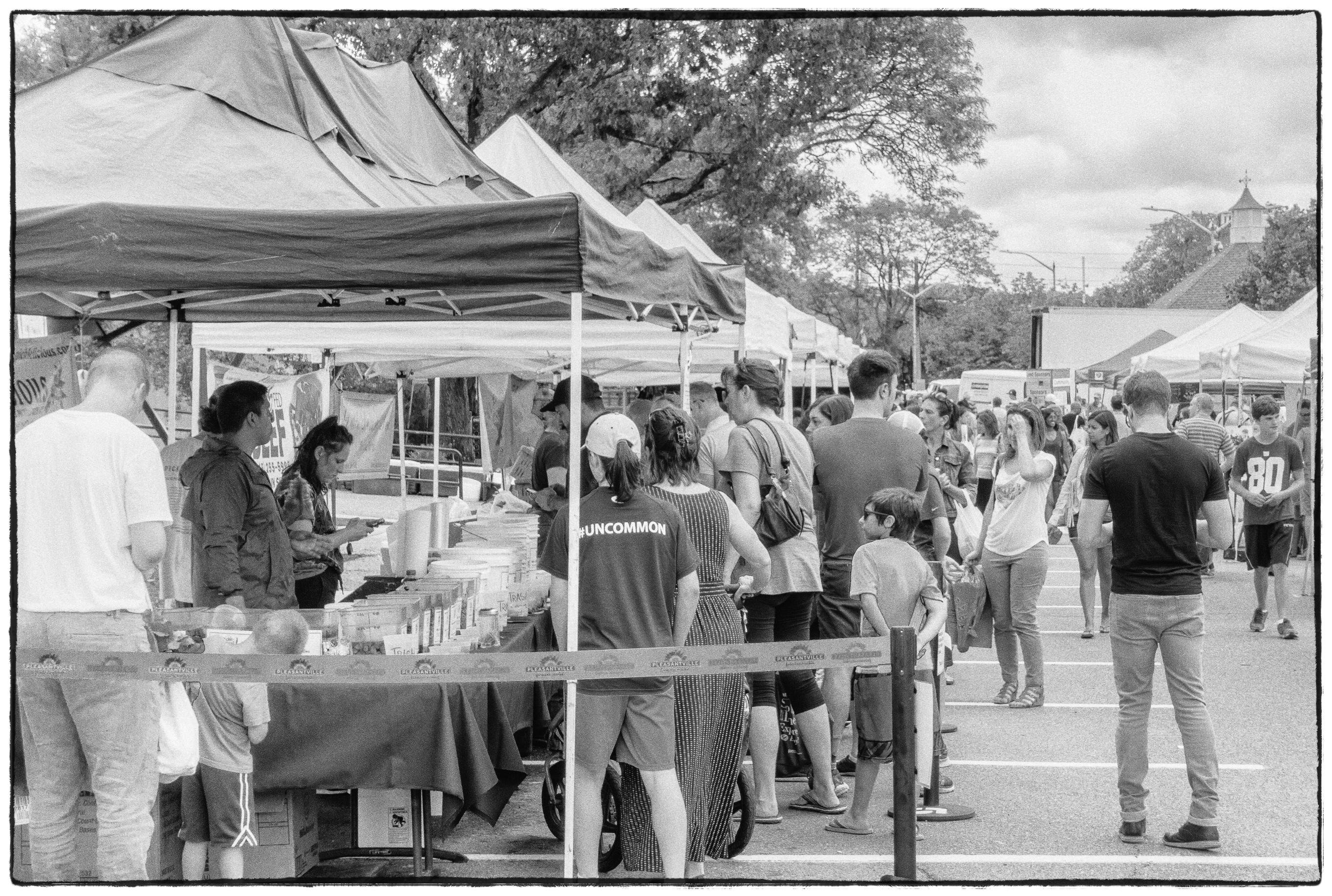
Pleasantville is the home of the PleasantVille Farmer’s Market. According to the About Us>Our Story section of the Farmer’s Market website:

IT STARTED WITH A MISSION

In 1998, the Village of Pleasantville commissioned a small, 4-stand farmers market in a tiny lot right in the middle of town, with a few simple goals:

Encourage a healthy community by promoting a sustainable food system with wholesome, locally grown and produced food
Foster a culture of community and pride in our village
Support Pleasantville’s economic development by bringing more visitors and activity to the retail shopping districts, and encouraging visitors to explore the Village’s historical and cultural offerings
Over the years, our downtown grew stronger, and our market grew with it, moving to a long, narrow patch of land next to the Metro-North train station, where people could drive up, grab their favorite goods from the dozen-or-so stands and be on their way.

But we saw even more potential.

Inspired by community events like Pleasantville Day, and taking cues from some of the most successful markets in the country, we moved our Market into the Memorial Plaza lot, creating a walking plaza, closed to cars, doubling the number of stands, adding weekly live music, weekly kids’ events, more chef demos, and a large, shaded seating area.

Today, our Market is run by a small but enthusiastic group of volunteers who love our Village, believe in supporting local farmers and local business, enjoy enhancing people’s understanding of health and sustainability, and take pride in creating a sense of community that you’d be hard-pressed to find anywhere else.

The Pleasantville Farmers Market attracts thousands of people each Saturday, making it one of the biggest, most vibrant markets in Westchester County. About half of our patrons come from outside our village, so it’s where Pleasantville—and much of the county—starts its weekend. Mission accomplished.

The Pleasantville Farmer’s Market has been voted, for the fourth year in a row (2014, 2015, 2016, 2017) BEST OF WESTCHESTER by the readers of Westchester Magazine.

Impressive thought it may be, the market did not allow dogs so I was unable to take a look around. Too bad!

Taken with a Sony RX100 M3

Peekskill Blues

A while back we went with some friends to a kind of street festival in Peekskill, NY. North Division Street, with a number of restaurants had been closed to traffic. We went to one of these eateries: the 12 Grapes. Restaurant for a meal, making sure that we got a table outside so that while eating we could listen to the blues band that was performing on the street: Joshua2 Street Band. They were pretty good – in my opinion much better than the band, which performed in our restaurant later on. The man at the keyboard is married to one of my wife’s friends.

Taken with a Sony RX100 M3.

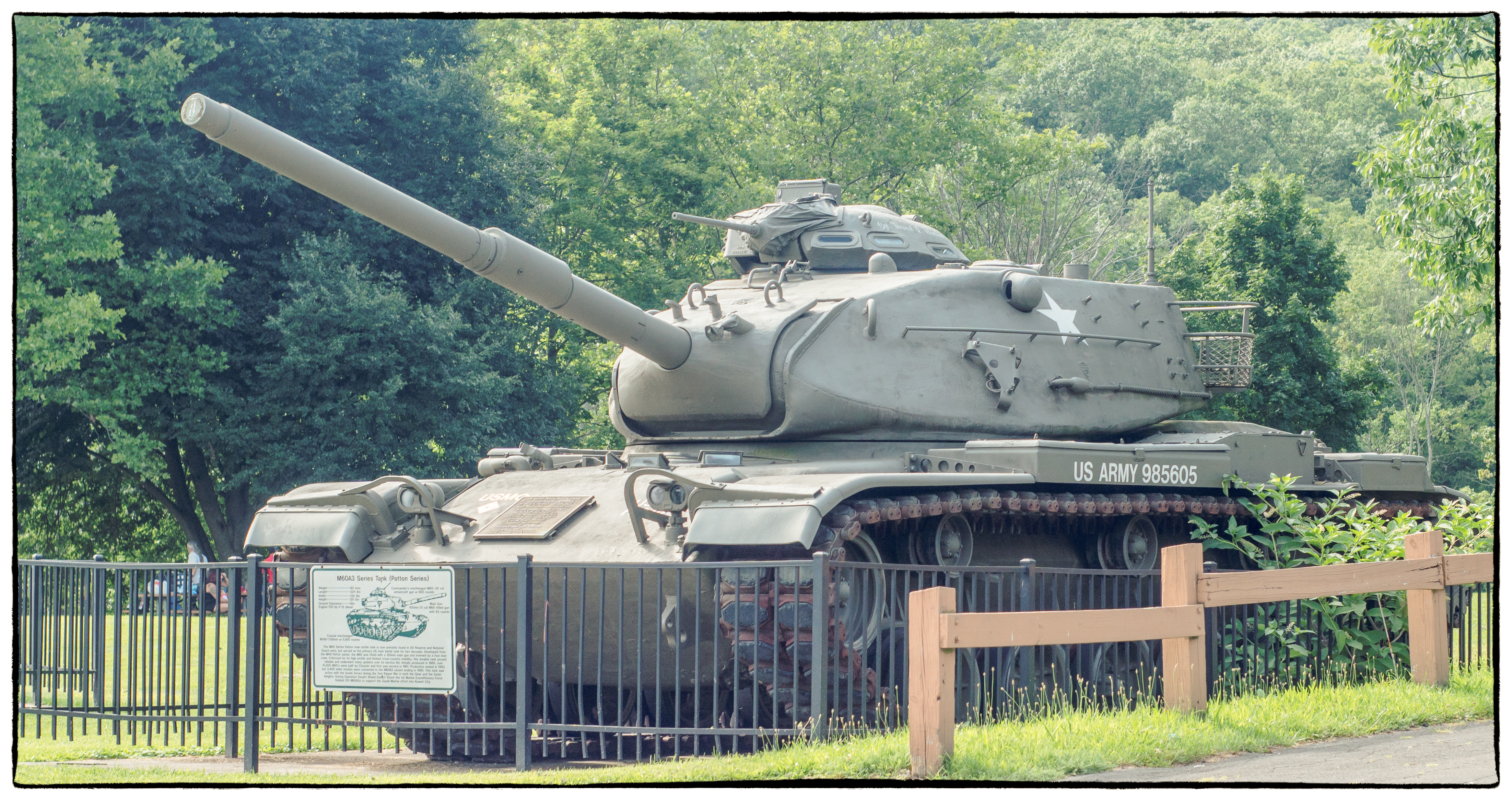
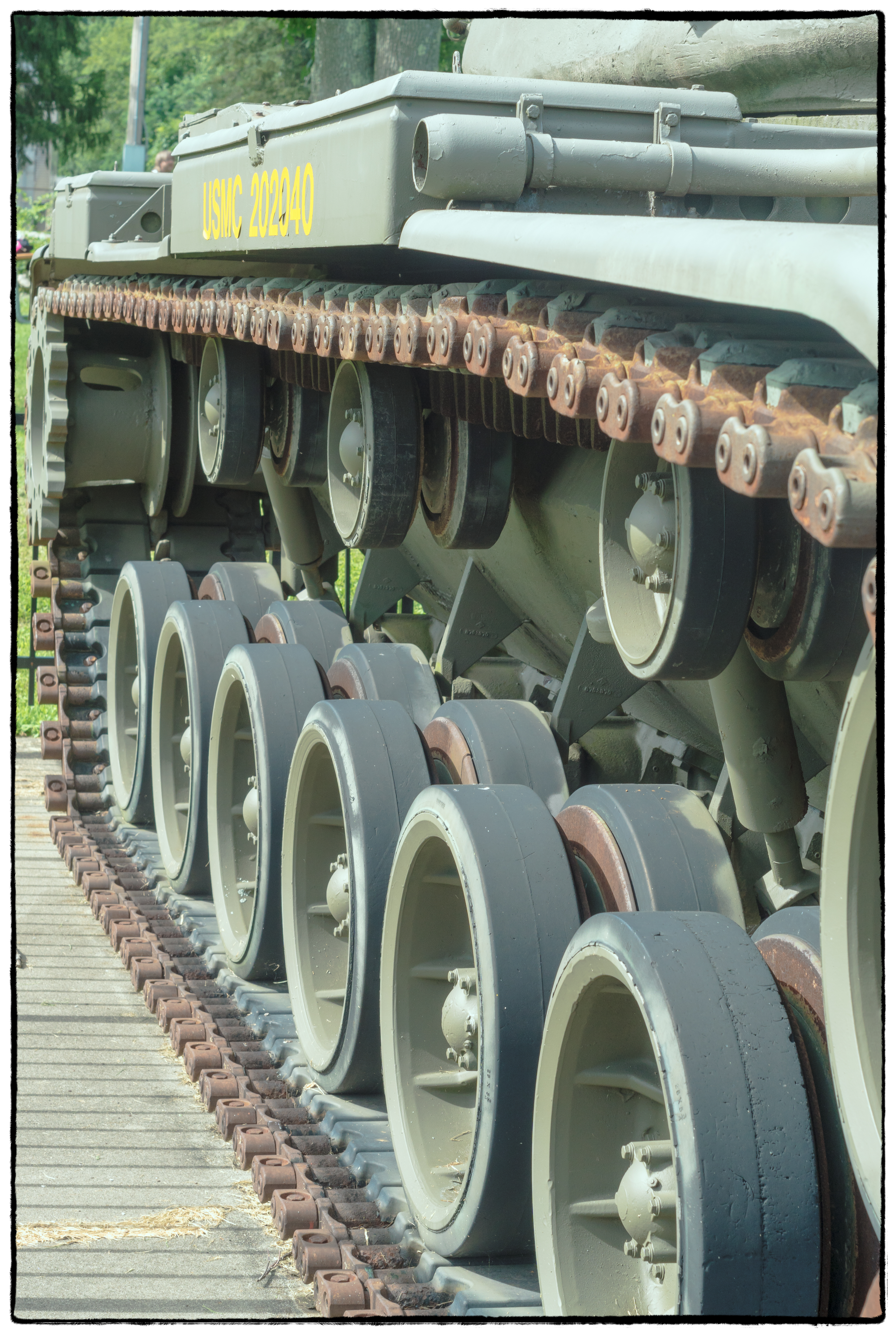
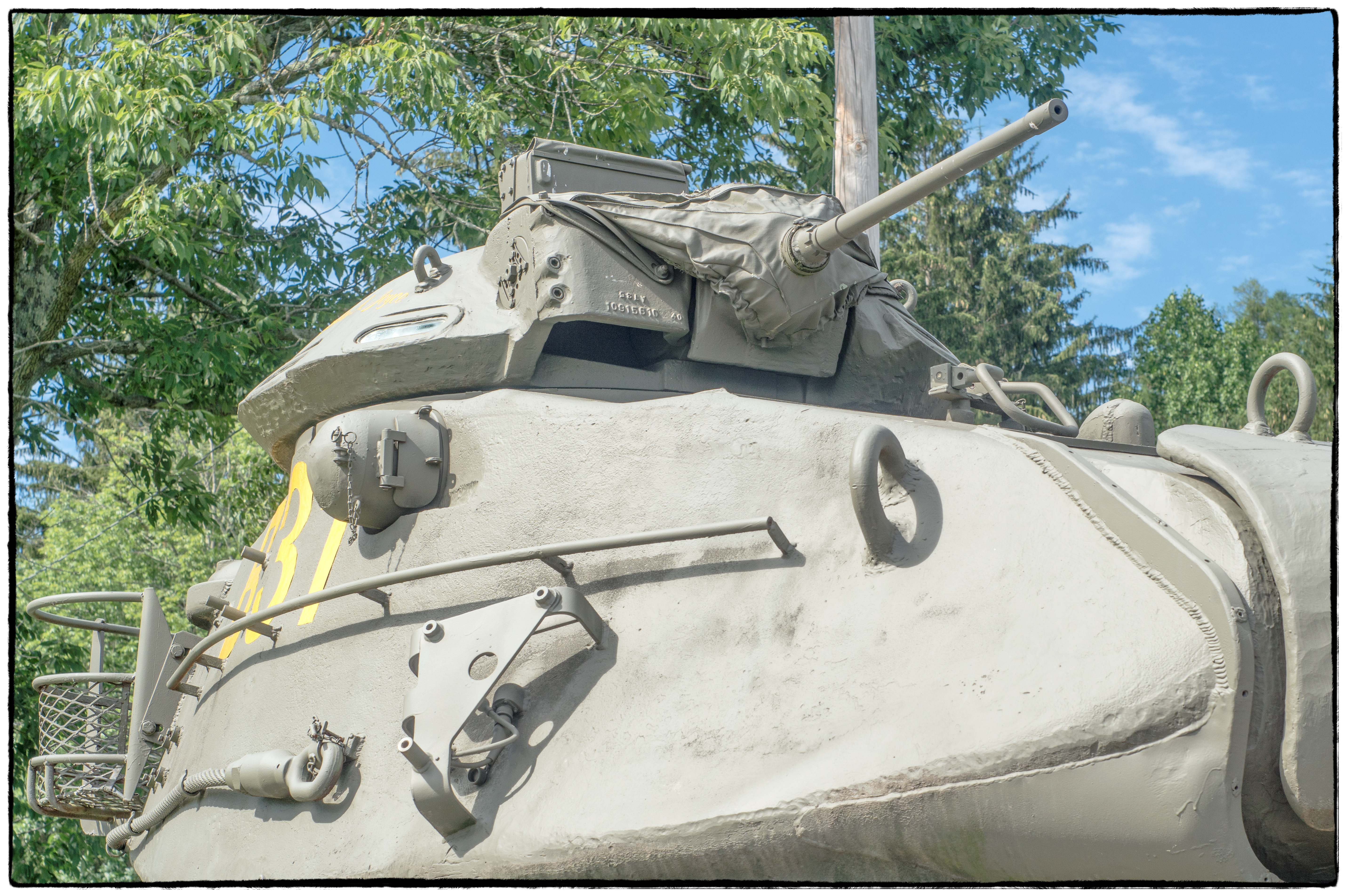
Putnam County Veterans Memorial Park – M60A3 Series Tank (Patton)

According to army-technology.com

The M60 is one of the world’s most successful main battle tanks with 15,000 having been produced and serving in the armies of 22 countries. The tank has provided proven battlefield performance over four decades and has been continuously advanced and upgraded with advanced weapon control, ammunition, applique armour and increasingly powerful engines. The M60 series main battle tanks of Egypt, Saudi Arabia and the USA were deployed in Operation Desert Storm in 1991 during the Gulf Crisis.

M60 tanks entered service with the US Army in 1960. The M60A1 with a new turret, thicker armour and a new ammunition stowage system, was manufactured from 1962 to 1980. The development of the M60A2 with a new turret fitted with a 152mm gun and missile launcher was halted and effort was directed to the development and production of the highly successful M60A3, which incorporated improvements to the gun fire control and entered service in 1978.

The manufacturer, General Dynamics Land Systems Division, has ceased production of the tank but continues to provide fleet management support to the US Army Tank Automotive Command and to user countries worldwide.

The US Army phased M60A3 out of service in 1997 and it was superseded by M1 Abrams, a third generation main battle tank.

As of 2010, Egypt is operating around 1,700 upgraded M60A3s while Turkey and Israel are operating 900 and 700 units respectively.

Putnam County Veterans Memorial Park – Bell AH-1 Cobra

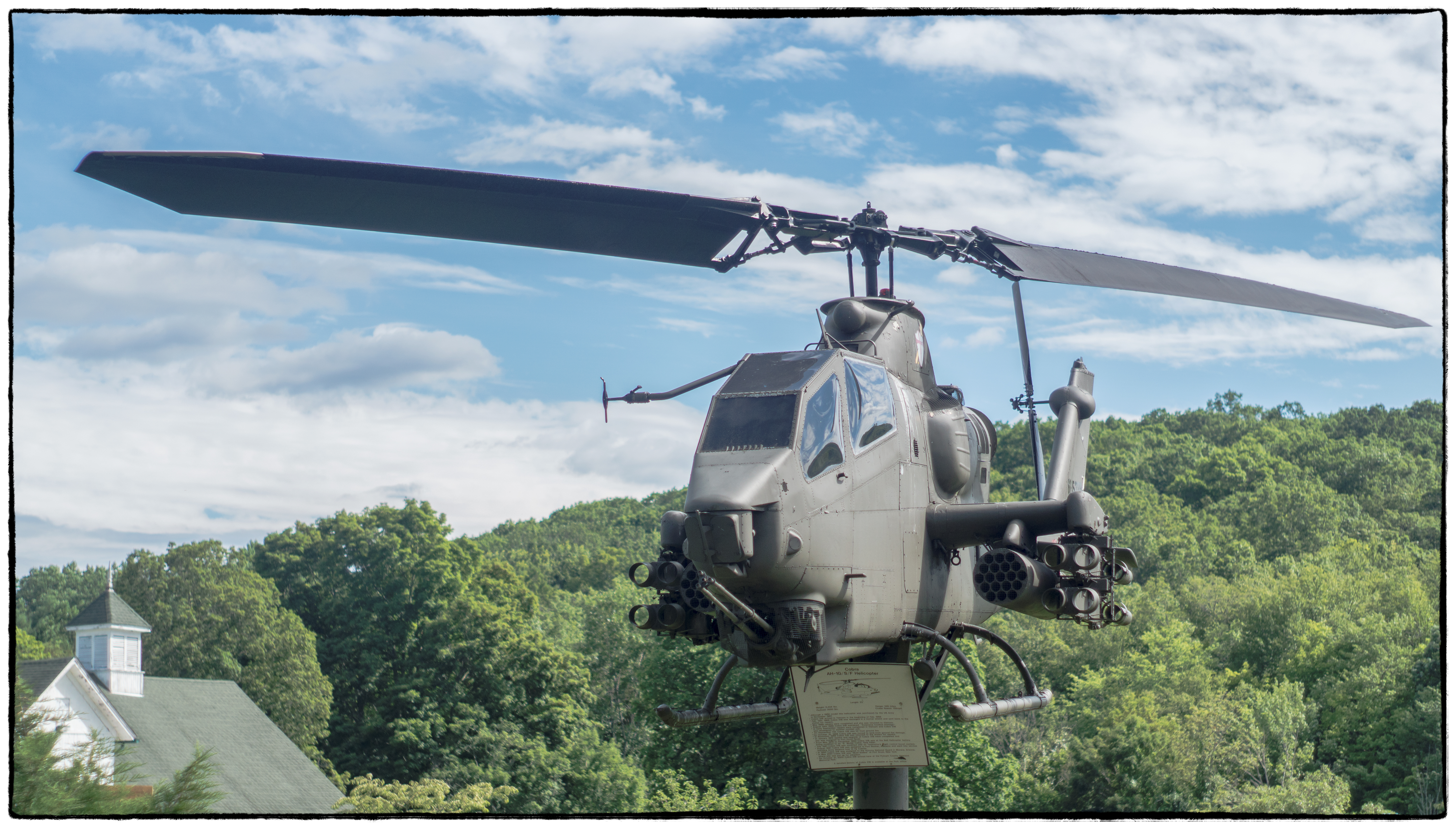
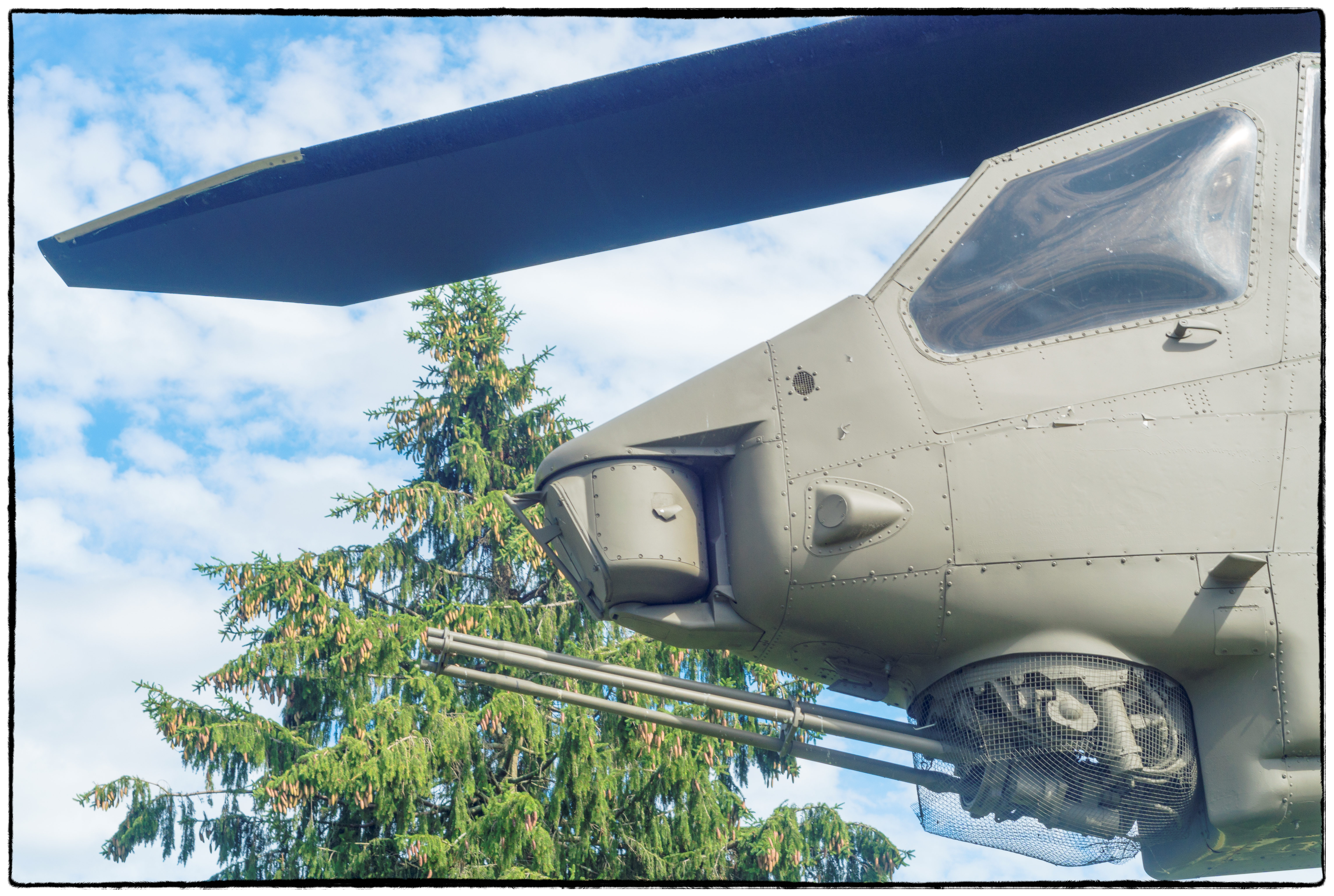
After the 4-H Fair we went down to adjoining Veterans Memorial Park, where they have a number of exhibits, memorials, an outdoor gymnasium and a small museum. Above, one of the exhibits: a Bell AH-1 Cobra.

Military-Today.com the has this to say about the Bell AH-1 Cobra.

In 1965 Bell flew the prototype of the world’s first dedicated attack helicopter. This machine was specially designed as an escort for troop carrying helicopters to meet a US Army requirement. The whole development was completed in very short terms. Eventually this machine was a turning point in the development of helicopter technology and its application. This armored gunship was a step forward from the previous transport helicopters, that carried only defensive weapons. It opened a new era in warfare.

Based on the Bell Model 204 (UH-1D) utility helicopter, the Model 209 introduced a new slim fuselage with a fighter-type cockpit. The pilot sits high in the rear with a co-pilot/gunner lower in the front directing the fire of a wide range of weapons mounted on lateral stub wings or under the nose. The US Army liked this machine and the first order was placed in 1966. The new helicopter was designated as the AH-1G. Production commenced during the same year. The Cobra first saw service in 1968. Over 1 000 AH-1Gs were delivered in the first four years. This helicopter is often called the Huey Cobra. It saw extensive service in Vietnam. Furthermore it was one of the most valuable US weapons during that war.

Even though the AH-1 is based on the UH-1 Iroquis, little in the appearance of the Cobra shows off its roots. Engine and transmission were borrowed from UH-1. The original version of the Cobra was powered by a single Lycoming T-53-L-11 turboshaft engine, developing 1 100 shp. This helicopter has a narrow fuselage and was specially designed to be as small target as possible to enemy ground fire. Due to the streamline shape and lighter weight, the original version had a top speed of nearly double that of the transport helicopters that it escorted. Also this gunship was extremely maneuverable. This helicopter had simple but tough landing skids, rather than complex retractable undercarriage.

Under the nose there was a turret, that could mount miniguns, cannons, or grenade launchers. The turret could pivot to both sides of the helicopter, as well as up and down. The turret was controlled by the gunner, seated at the front. Also the pilot in the rear could fire the turret, if it was locked in the forward position. Early Vietnam models were armed with single or twin 40-mm automatic grenade launchers, or twin 7.62-mm miniguns. On second-generation models it was replaced by a harder-hitting 3-barrel rotary cannon.
The Cobra could carry 998 – 1 360 kg of weapons on its stub wings. Early production helicopters were fitted with up to four pods with 70-mm unguided rockets. These were effective against unarmored targets and light vehicles. The helicopter could also carry BGM-71A TOW anti-tank guided missiles, as well as other weapons. During the Vietnam War, the AH-1 took over the role of assault helicopter and tank killer from the UH-1D. It was flying anti-armor mission and was often used to ambush enemy columns.

The pilot sits in the rear seat, which is slightly elevated above the front seat of the co-pilot/gunner. The front seat also has a full set of flight controls. The cockpit is surrounded by a light armor protection.
Soldiers on the ground contact the pilots via radio and coordinate the enemy positions.

Initially in the mid and late 1960s the US Army planned to obtain a proposed Lockheed AH-56 Cheyenne attack helicopter. So only a relatively small number of the Huey Cobras was obtained. But when the Cheyenne program was cancelled Bell started work on improved models of the Cobra. Improved models were fitted with two engines. The US Army eventually retired its AH-1 helicopters in favor of the Boeing AH-64 Apache.

Overall Bell produced more than 1 600 first generation, single-engined Cobras, including variants. Later models were progressively improved in the key areas of engine power, performance and armament. In the 1970s twin-engined versions replaced the first generation, single-engined Cobras. Both single- and twin-engined Bell Model 209s have been widely exported. This helicopter was license-produced in Japan by Fuji-Bell.