By the roadside 10: Lythrum salicaria

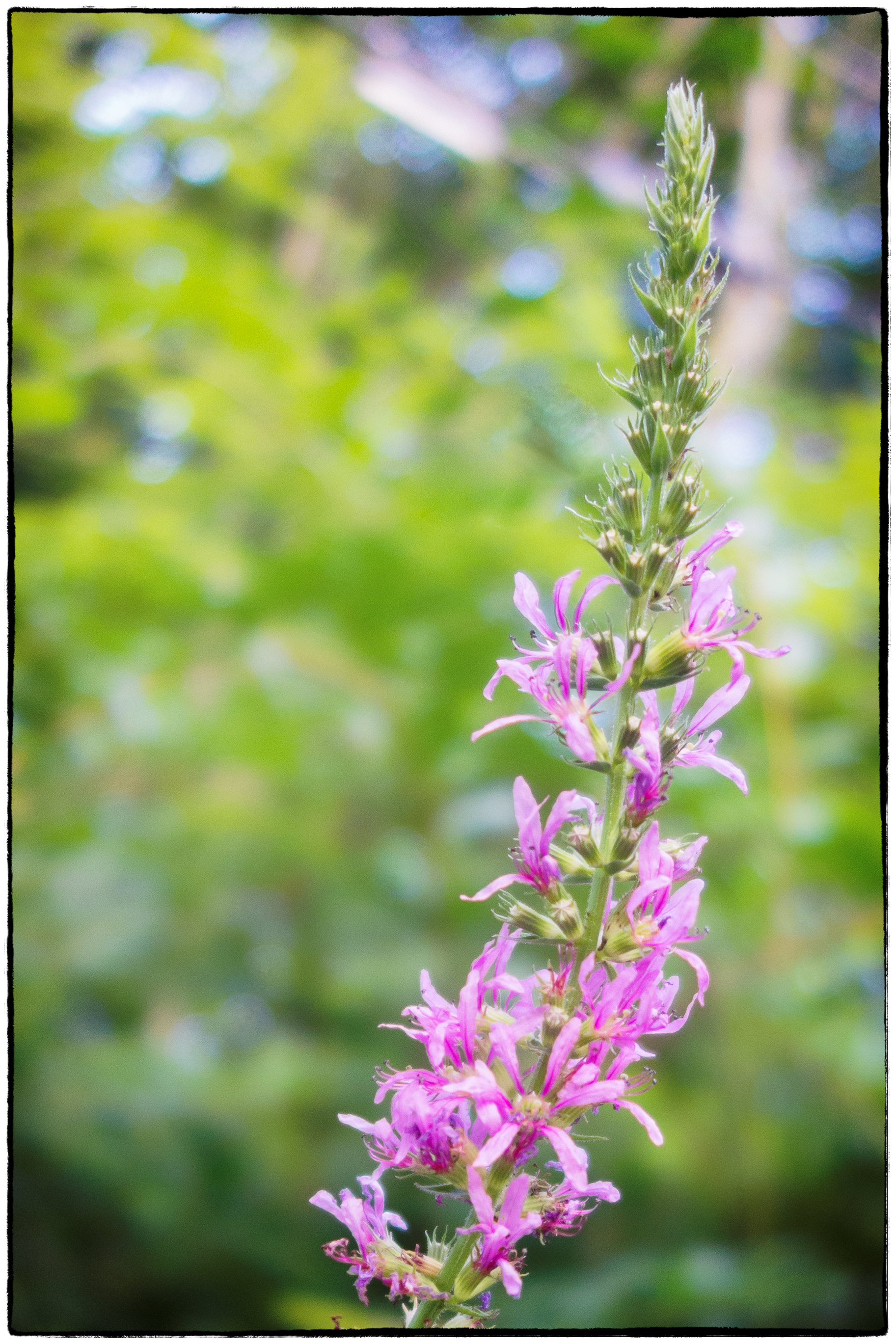
Otherwise known as Purple Loosestrife. It’s quite pretty to look at, but is considered an invasive species. Unfortunately it’s growing all around our lake.

According to Wikipedia:

The purple loosestrife has been introduced into temperate New Zealand and North America where it is now widely naturalised and officially listed in some controlling agents. Infestations result in dramatic disruption in water flow in rivers and canals, and a sharp decline in biological diversity as native food and cover plant species, notably cattails, are completely crowded out, and the life cycles of organisms from waterfowl to amphibians to algae are affected. A single plant may produce up to 2.7 million tiny seeds annually. Easily carried by wind and water, the seeds germinate in moist soils after overwintering. The plant can also sprout anew from pieces of root left in the soil or water. Once established, loosestrife stands are difficult and costly to remove by mechanical and chemical means.

Plants marketed under the name “European wand loosestrife” (L. virgatum) are the same species despite the different name. In some cases the plants sold are sterile, which is preferable.

In North America, purple loosestrife may be distinguished from similar native plants (e.g. fireweed Chamerion angustifolium, blue vervain Verbena hastata, Liatris Liatris spp., and spiraea (Spiraea douglasii) by its angular stalks which are square in outline, as well by its leaves, which are in pairs that alternate at right angle and are not serrated.
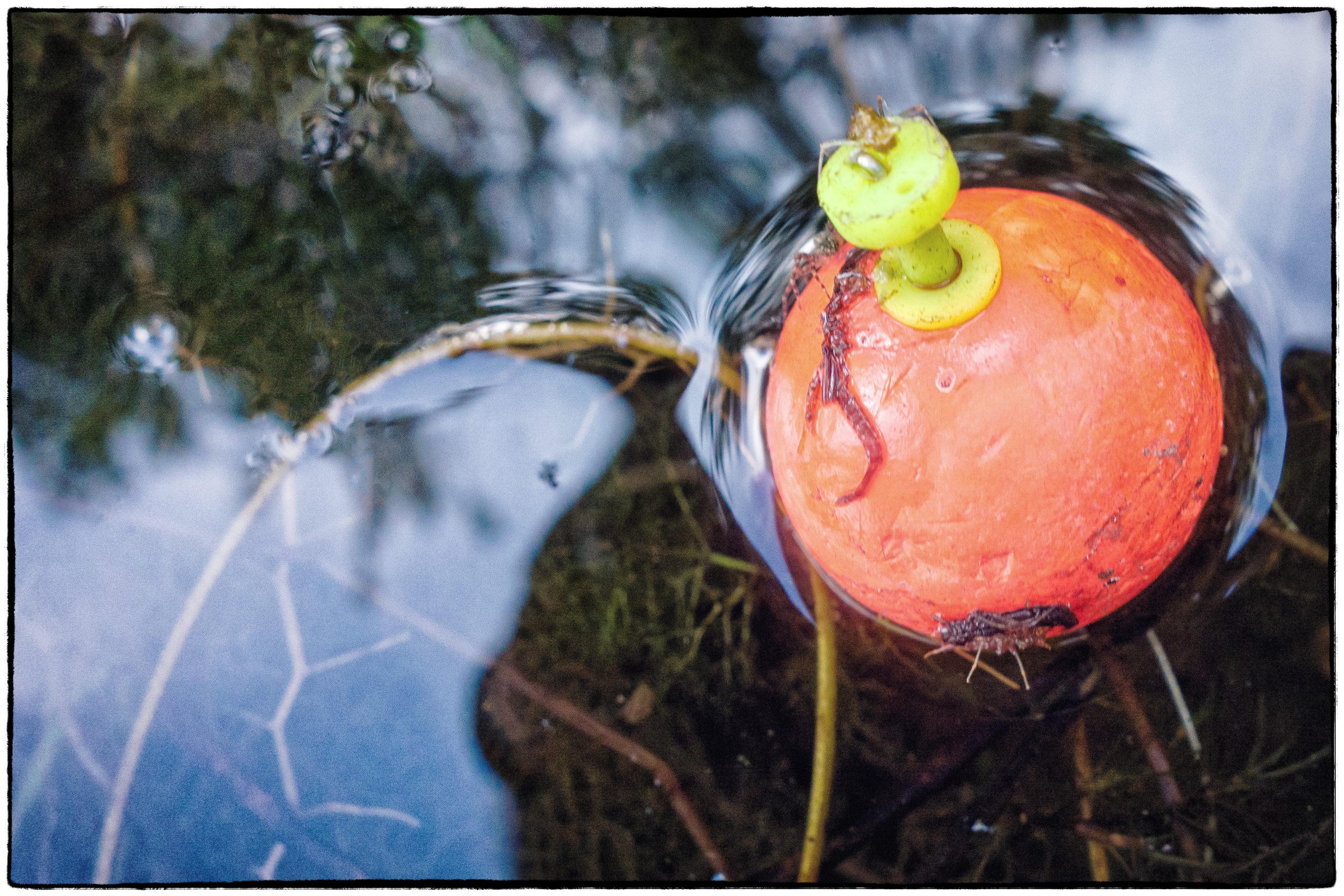
A float

I came across this lonely float near a dock on one of our beaches. I liked the way the light area in the bottom left balances a similar area in to top right. And the way the darker area to the top left balances a similar area to the bottom right. Also the way the the curved twig seems to lead the eye to the float, which doesn’t really need this because of the extreme contrast between the bright colors of the float and the comparatively less saturated areas of the rest of the picture. It seemed to me that it would make an attractive almost abstract composition.

By the roadside 9: Yellow flower

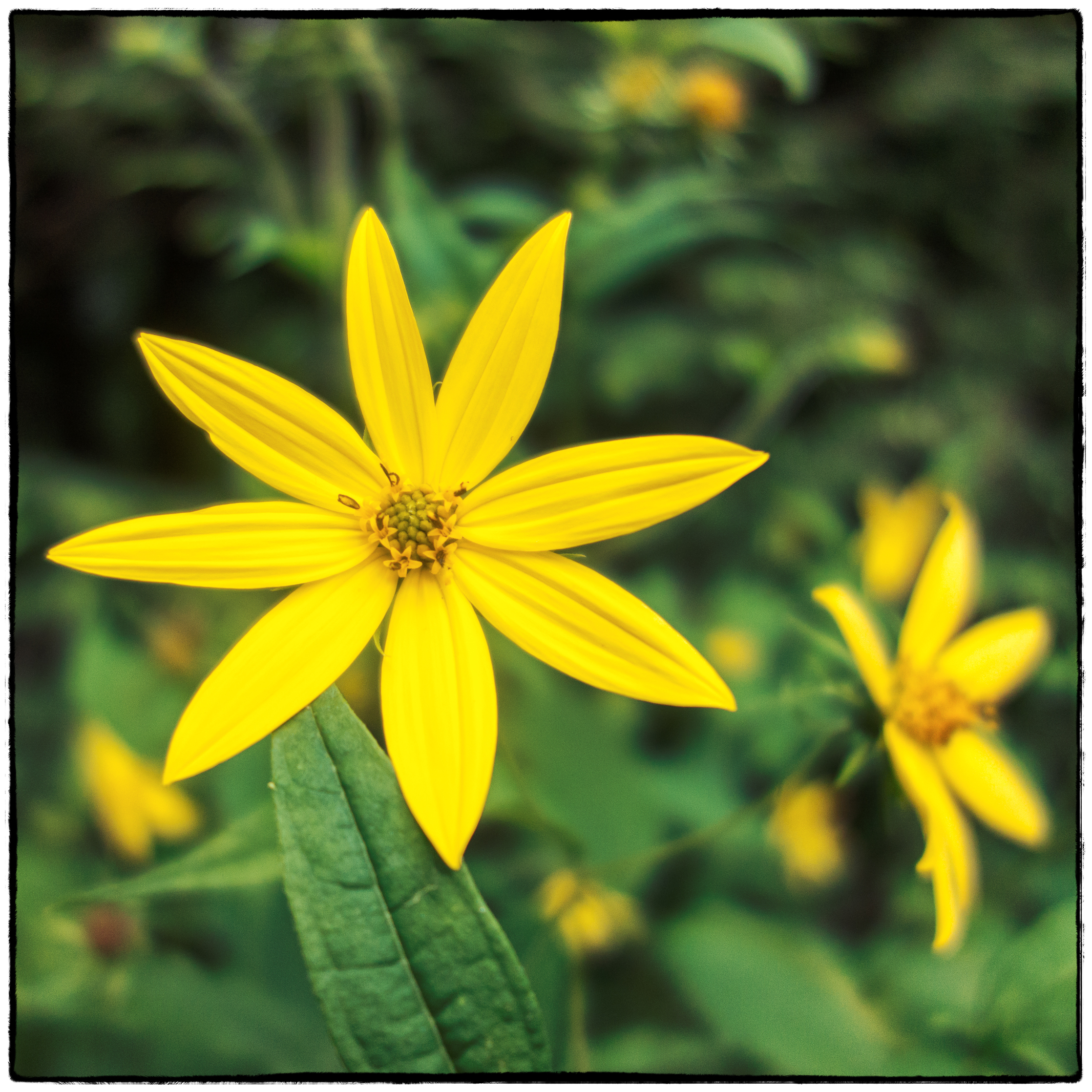
I don’t really know what I was feeling when I took this picture. Probably something along the lines of: “Great! Another one for the ‘By the roadside series’ – one I hadn’t seen before”. I guess it’s just an ordinary picture of a pleasant looking bright yellow flower. Even less interesting than some of my other pictures. Still, if I’m going to document plants growing by the road around our lake I suppose I have to try to get as many as I can. Or maybe not… It’s also marred by the leaf just below the flower. It was a breezy day and the flowers were moving around a lot and I imagine I was so focused on the flower that I didn’t even see the leaf. Another example of how important it is to really look around the frame for distracting elements.

I have no idea what this plant is, but I find it quite attractive.

Contrast

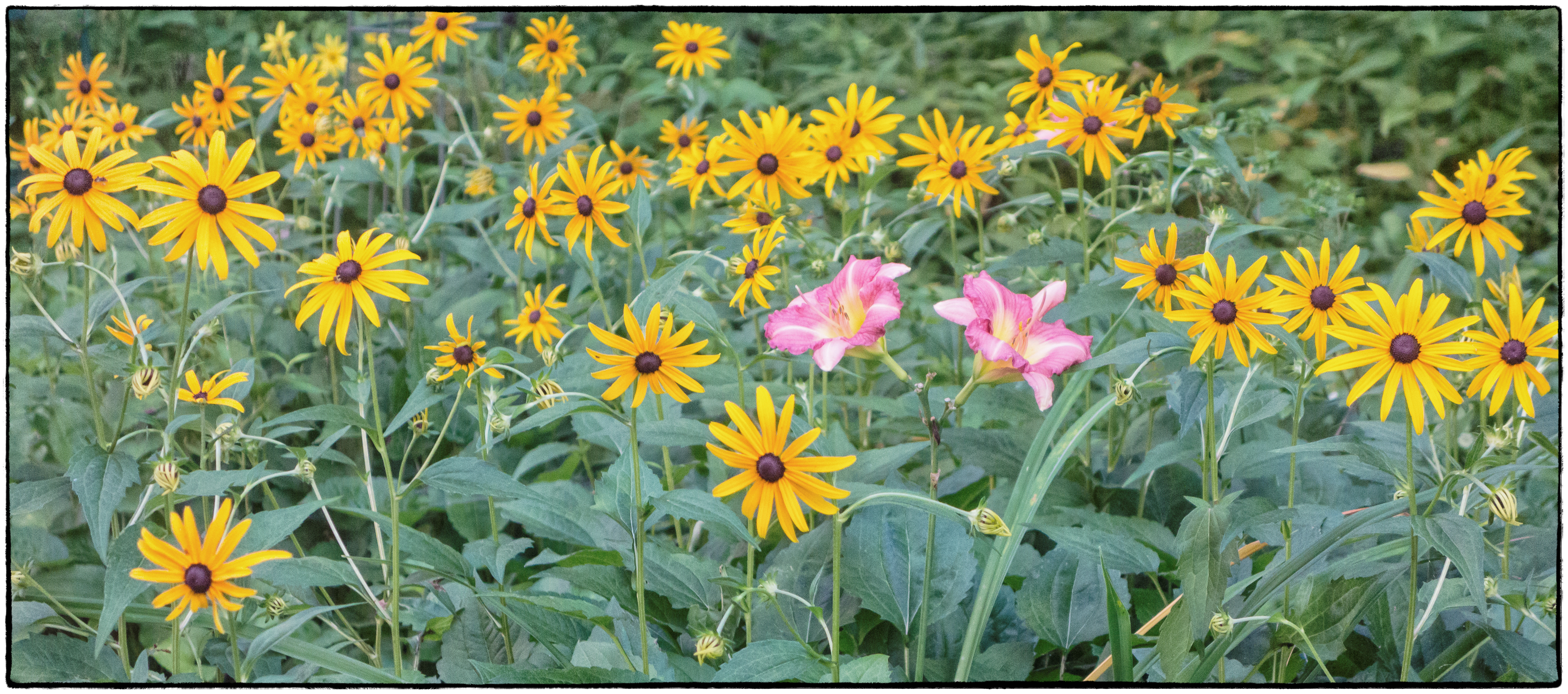
I thought about including this in the “By the roadside” series, but then it occurred to me that all of the pictures in that series were of flowers/plants growing wild by the side of the road. This is a actually a picture of someones garden.

I was taken by the mass of Rudbeckia (otherwise known as coneflower or black-eyed susan) surrounding the solitary Asiatic Lily .