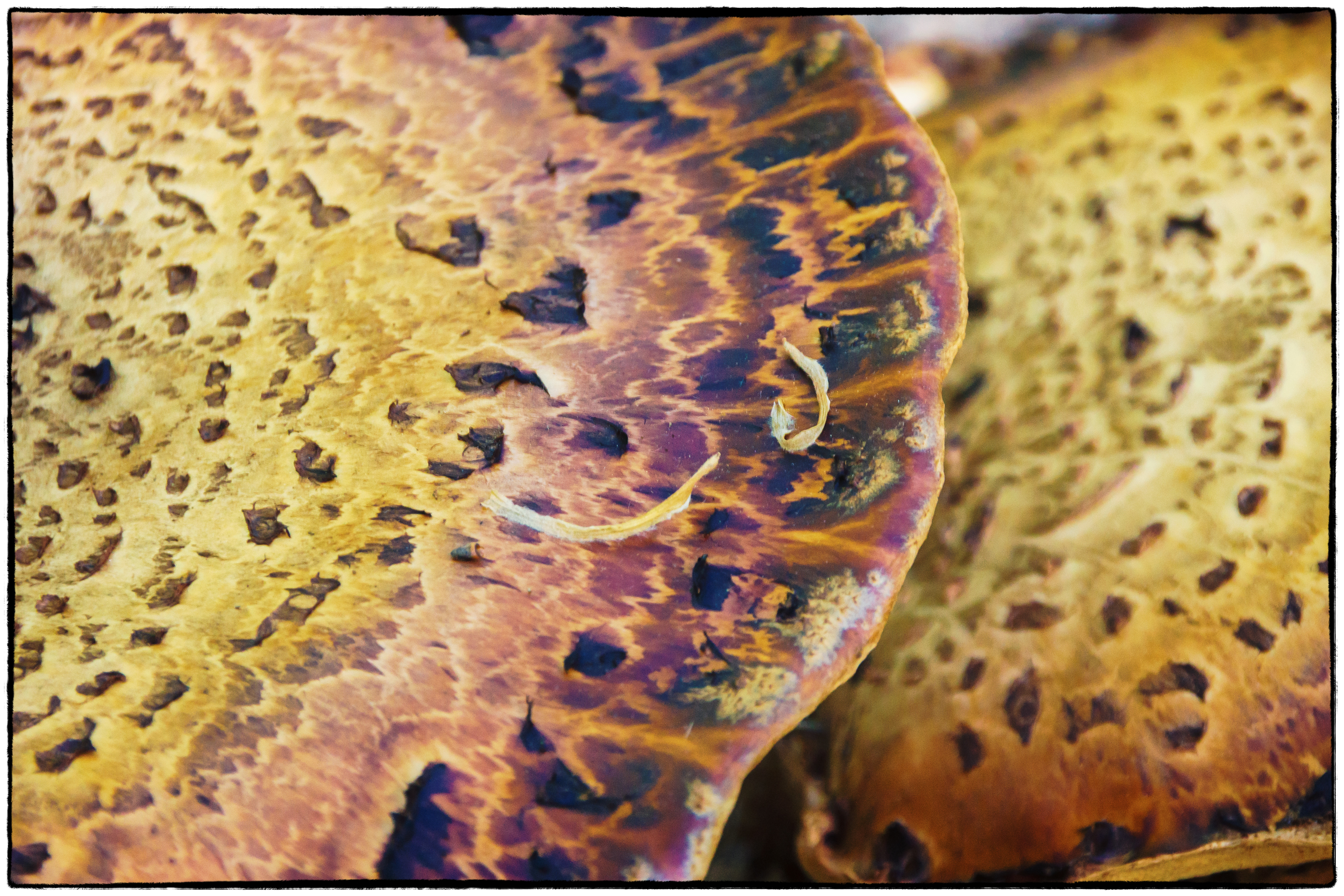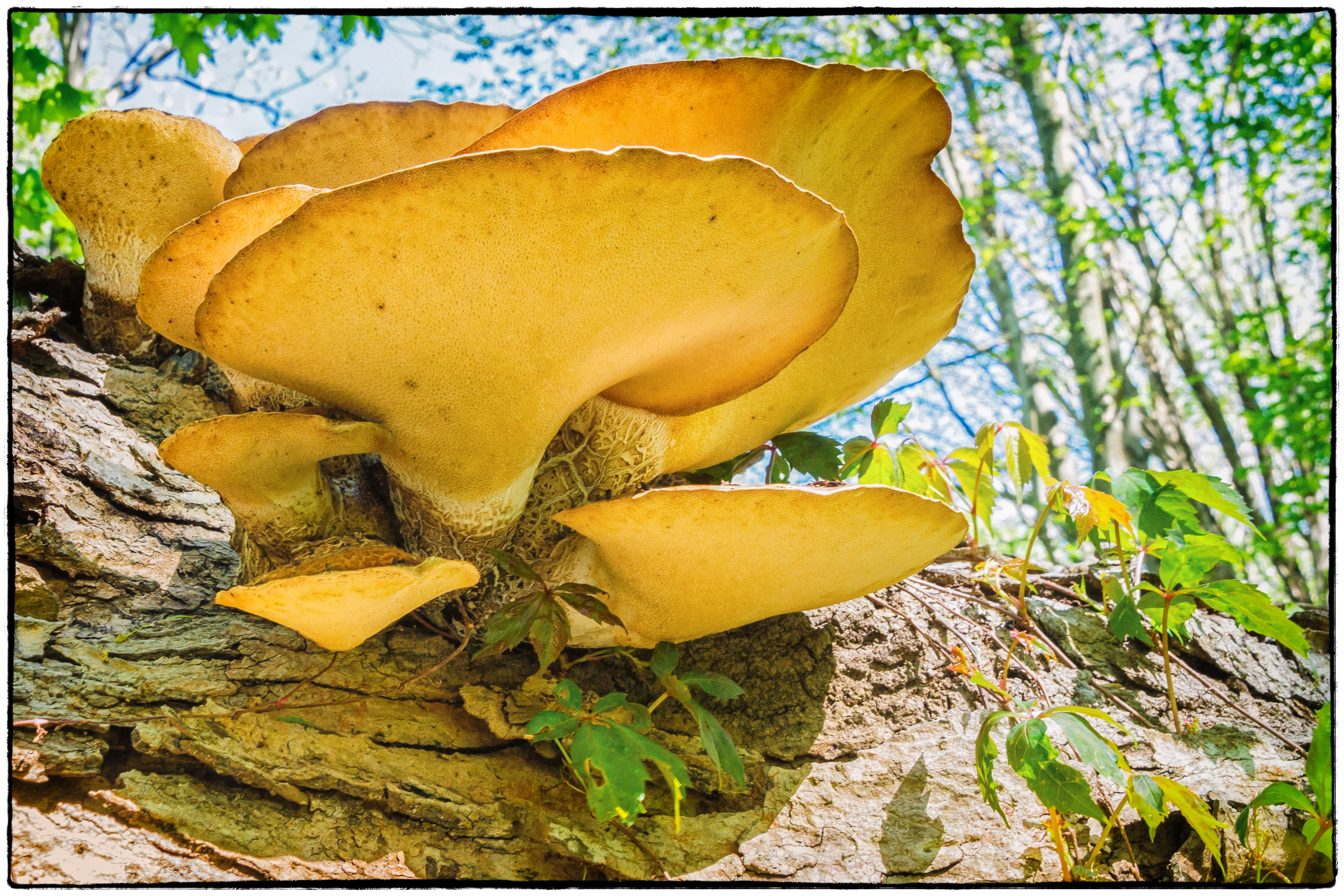
I came across this huge fungus while walking up to Drewsclift Cemetery. While I’m no great expert on funghi I believe this is a dryad’s saddle or pheasant’s back mushroom (Polyporus squamosus). The University of Wisconsin Plant Teaching Collection sheds some light on the origins of the name:
So, what about the common names for this mushroom? The “pheasant’s back mushroom” is quite obvious from the above pictures. Many a hunter has been startled in the woods or has stalked one of these mushrooms thinking it was a pheasant seen from the back.
Dryad’s Saddle is a little more complicated. You’re thinking “what the heck is a dryad?” Well in Greek mythology a dryad is a tree-dwelling nymph, also known as a tree sprite. Someone with an overactive imagination decided that Polyporus squamosus looked like a saddle that one of these tree-dwelling nymphs would sit on.
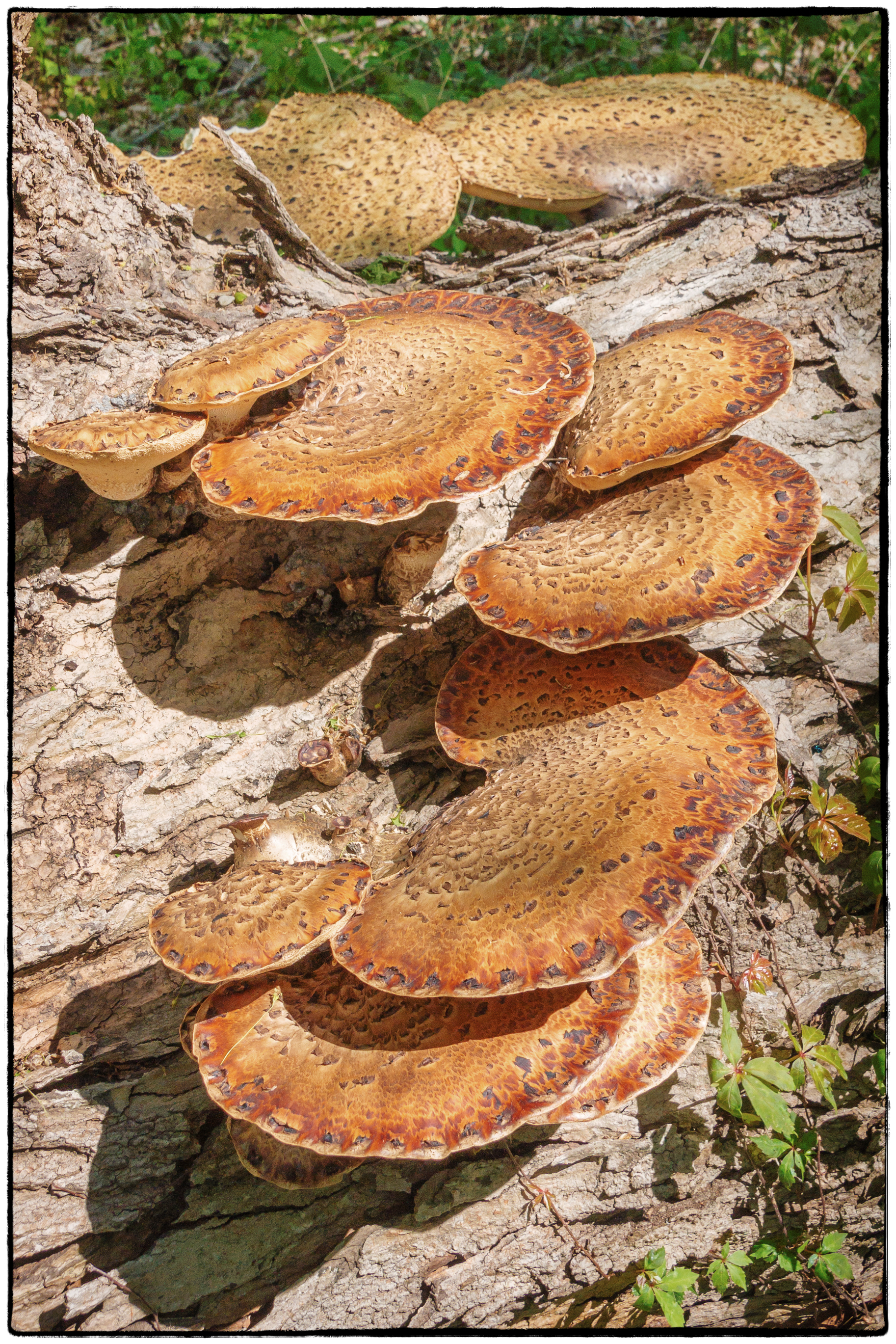
While it’s certainly not toxic opinions vary as to how edible it is. The consensus seems to be that when it’s young and small it’s certainly edible, but when it grows old and large it becomes very tough. The Forager|Chef . Hunting mushrooms, wild and obscure food site has this to say (In a post on the Dryad’s Saddle):
Some people say Dryad Saddles smell and taste of fresh cucumber, and I agree, along with some watermelon rind-a bit like comparing chanterelles to apricots.
…
I’ve heard of people eating it and not liking it, and saying it is inedible. I have also heard people praise it for being delicious. The confusing part is that both could be right, It just depends on what age you find the mushroom. You wouldn’t want to eat the stem of asparagus when it’s old and woody, although you could make soup with them. The dryad saddle is the same way.
When they’re young and soft, these are succulent little nuggets. When they get older, they are tough and inedible, similar to chicken of the woods, but unlike chickens, are absolutely, positively, un-chewable, no matter the age.
Preparation wise, the first thing I do with dryad saddles is cut off the black stem, and then trim and scrape away the pores on the bottom side of the cap. The pores on the underside of the cap are a bit textural for me, so I remove them by scraping with the side of a paring knife. You don’t have to remove the pores from the dryad sadldle, but I do when I serve it.
Another thing I suggest is to slice these very thin, as in near transparent. Don’t worry about them breaking up or disintegrating into a sauce, their firm texture makes them resilient, like shiitakes.
You really want to keep this moist while cooking, browning a little bit is ok, and will make them taste better, but heavy browning or sauteing can make them toughen and dry out. I like to cook thin slices in a covered pan with a bit of water, butter and salt added until the liquid evaporates, and the mushrooms brown, just a little.