PIC – Photographers’ Identities Catalog

The New York Public Library has come up with an interesting new tool:

Photographers’ Identities Catalog (PIC) is an experimental interface to a collection of biographical data describing photographers, studios, manufacturers, and others involved in the production of photographic images. Consisting of names, nationalities, dates, locations and more, PIC is a vast and growing resource for the historian, student, genealogist, or any lover of photography’s history. The information has been culled from trusted biographical dictionaries, catalogs and databases, and from extensive original research by NYPL Photography Collection staff.

The interface allows you to filter according to a number a criteria: Name or ID; Date Range (year); Location (Type e.g. birth; Country or Geographical Area; In Map Area); Nationality; Gender; Process (e.g. Autochrome); Role (e.g. Collector or Dealer); Format (e.g. Panoramic Photographs); Source; Collections.

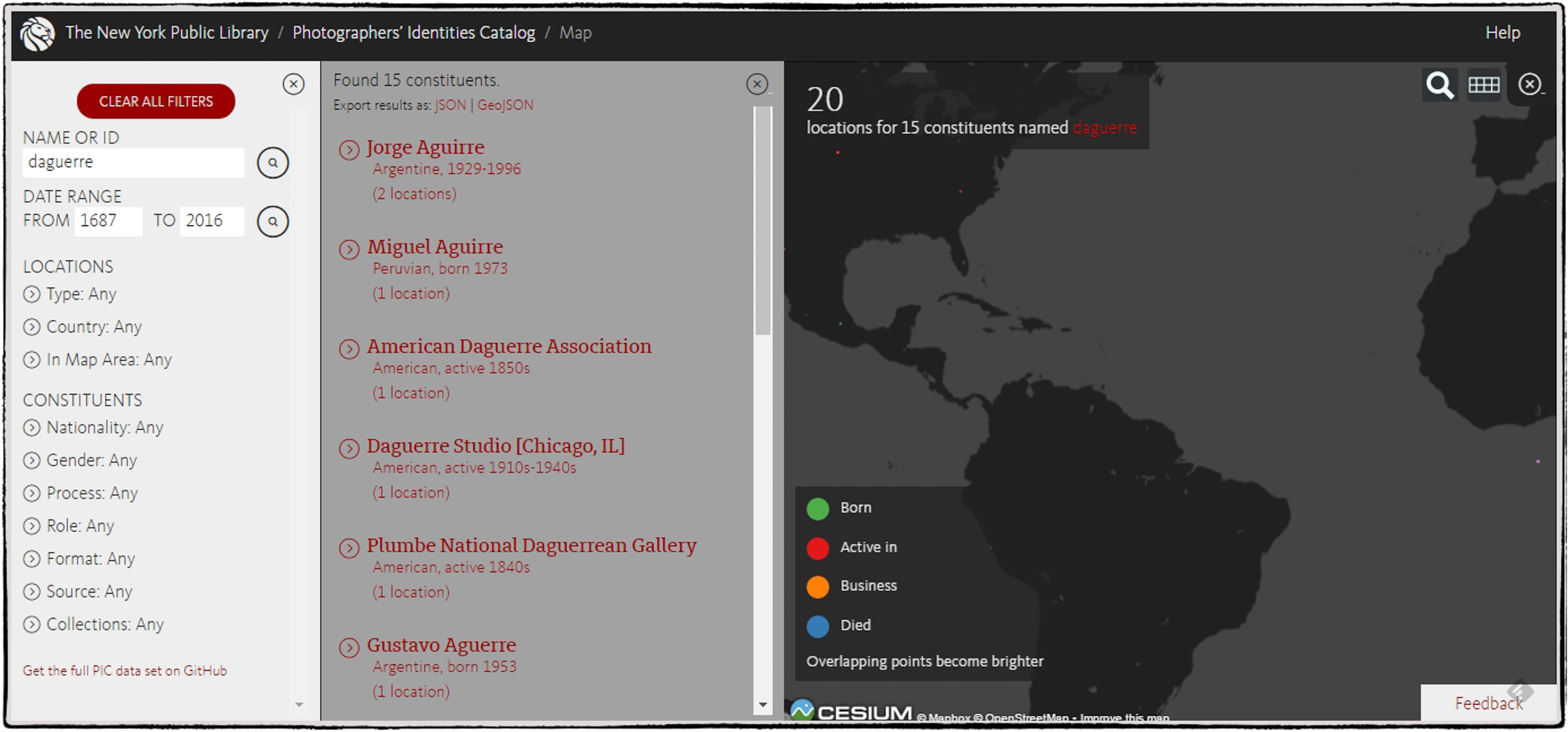
Once you’ve applied your filters you then get a list of results (since the system uses a “fuzzy search” algorithm you usually get more than you really want. For example, setting the name filter to ‘Daguerre’ produces ‘Aguirre’, ‘Aguerre’, and Ministere de la Guerre’ as well. The ‘Daguerre’ I was looking for was 9th in the list.

I’m a fan of Joseph Sudek so I thought I’d see if I could find him with some general criteria and not using his name. I imagined that I only knew that he was male; from somewhere in Eastern Europe; and was known for panoramic photographs (among other things). So I set up the filters: Gender – Male; Country – There was no Eastern Europe so I had to select Europe instead; Format – Panoramic Photographs. Unfortunately my attempt was not successful. His name did not appear on the results list.

The map takes up a lot of screen space and I’m not entirely sure how useful it is. This may well be because of my ignorance of how it’s supposed to work however.
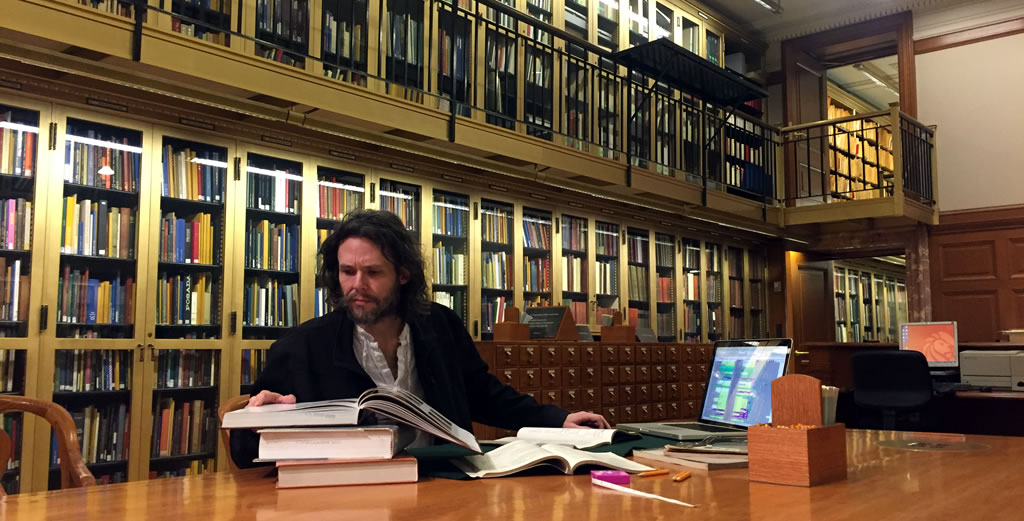
David Lowe, Photography Specialist at the New York Public Library, and the primary editor of PIC, in the Photography Room.

So many thanks to the New York Public Library for such a useful tool. Over time I’m sure it will become even more useful in terms of additional content and system improvements. One of the FAQs is: “I have information PIC lacks, or I’ve spotted an error. How do I contribute or request a correction?” The answer is “Please let us know! Use the feedback link in the bottom right of the map. It is helpful if you include the Record ID number to identify the photographer in question. That ID can be found after the Name, Nationality and Dates of the constituent.”
Source: PIC – Photographers’ Identities Catalog

John Cohen at L. Parker Stephenson Photographs in New York

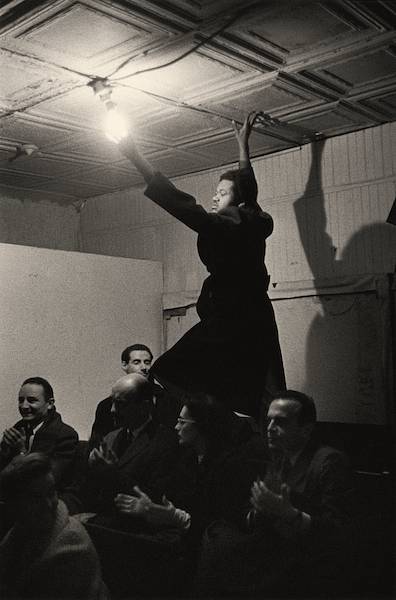
Bob Thompson, The Burning Building, 1959, Tanager Gallery, 1959 by John Cohen, courtesy of L. Parker Stephenson Photographs

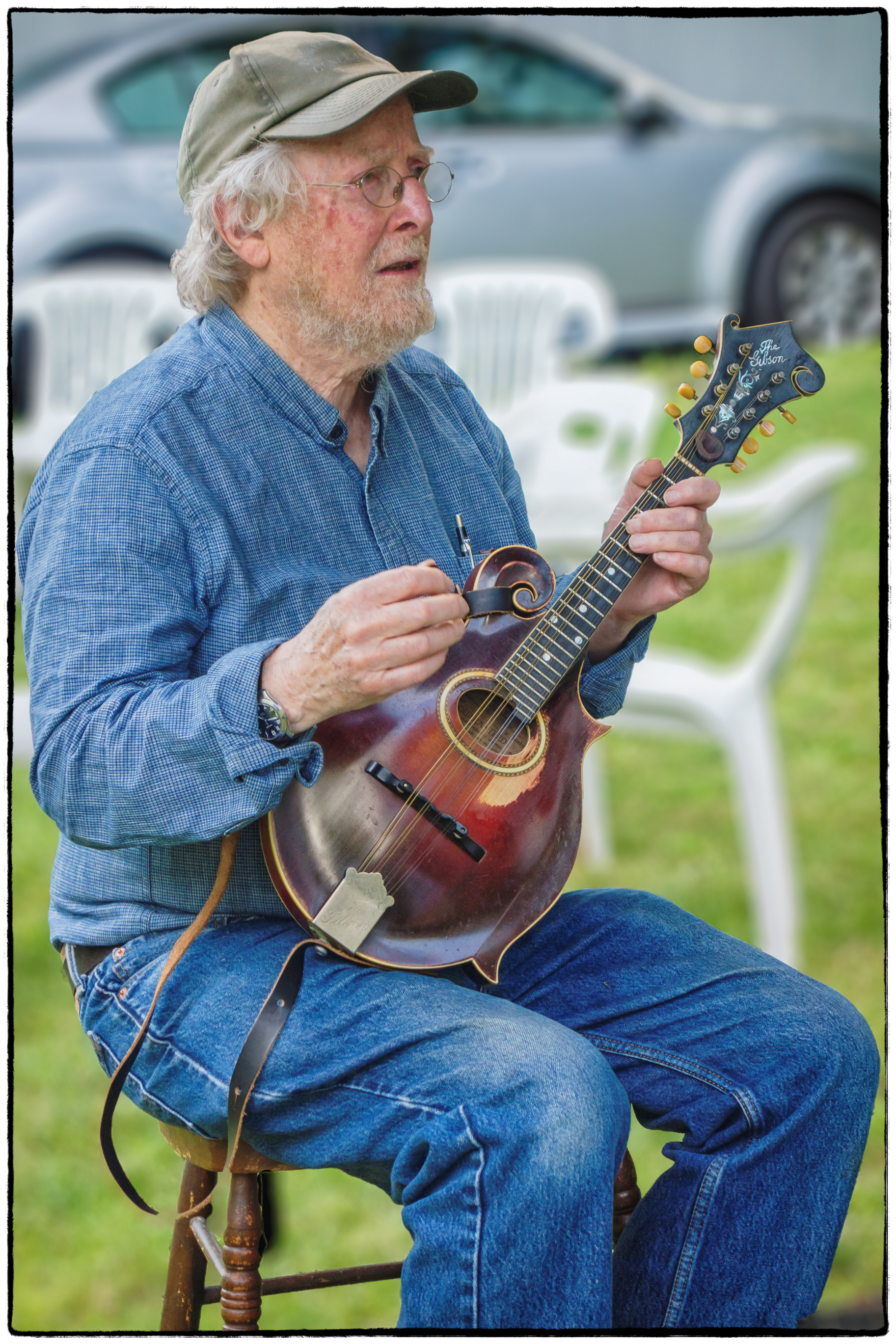
John Cohen lives near us and often performs at the Tompkins Corners Cultural Center, which opened not too long ago in the Tompkins Corners Cultural Center (formerly the Tompkins Corners Baptist Church). Here’s a picture of him performing:

The late 1950’s and early 60’s was the booming period of artistic freedom — and freedom will only get better from that era.Photographer John Cohen witnessed the shift of the New York social landscape — normal society was becoming a community of artists, writers and musicians whom cohabit along New York’s East 10th Street. The birth of Abstract Expressionism owes its creation through the works of Philip Guston and Frank Kline. The Beat Movement was also in its early days. John Cohen was both an observer and participant of such a divided time.

Catch the on-going show John Cohen: The 10th Street Art at the L. Parker Stephenson Photographs in New York.

Source: The Early Photographs of John Cohen · Lomography

Amawalk Hill Cemetery – The big surprise

In the overview post to this series of pictures on Amawalk Hill Cemetery I mentioned that I had a big surprise in store. As I was walking around I noticed what looked like a large glass display case. It seemed such a strange thing to come across beside the gravestones in the woods that I went over to look. Inside were a number of photographs and as I continued looking it gradually dawned on me that I was familiar with them: they were the work of Robert Capa. Why were they here. Obviously my brain wasn’t working too well. Then it hit me: they were there because it was here that Capa was buried. Sure enough there was his gravestone.

I’m passionate about photography and here was the last resting place of one of the all time greats. Time magazine recently published its list of the 100 most influential photographers of all time and Capa is one of only three photographers to have more than one picture included (the other two are Eddie Adams and Margaret Bourke-White).

Many of his photographs are well-known, but the one below is possibly the most famous. He was killed in 1954 at the age of 40 in Thai Binh, Vietnam after he stepped on a landmine while photographing the France/Vietnam war.

FRANCE. Normandy. June 6th, 1944. US troops assault Omaha Beach during the D-Day landings (first assault). Source: © Robert Capa © International Center of Photography/Magnum Photos via OmegaPhotoBlog

So here we have a Jewish photographer of Hungarian origins buried in a quaker cemetery. I wondered why? According to the Wikipedia entry on the Amawalk Friends Meeting House:

In 1954 war photographer Robert Capa, whose gritty “Magnificent Eleven”, taken under heavy German fire, are considered iconic images of the Normandy landings during World War II, died after he stepped on a land mine in Vietnam while covering the First Indochina War. John Morris (as I’m writing this post Mr. Morris just celebrated his 100th birthday a week ago), Capa’s editor at Life magazine in London during the Normandy landings and at Magnum Photos at the time of his death, felt that a Quaker funeral would be a fitting tribute to Capa, a nonobservant Jew who had immigrated from Hungary. Morris’ reasoning was that, even though Capa had not been a Quaker, he sought to promote peace through his depictions of the horrors of war. As a member of the Purchase Quarterly Meeting, which oversaw Amawalk, he arranged for a Quaker service there. At the service, Capa’s brother Cornell said Kaddish. A young Dirck Halstead was among the attendees.

The few remaining members of the Amawalk meeting allowed Capa to be buried in their cemetery. Later his mother and sister-law were buried in the same plot, and Capa’s biographer Richard Whelan joined them when he died. In 2008 Cornell, who had founded the International Center for Photography during the intervening years, was laid to rest alongside his brother. None of them were Quakers.

Happy Birthday, M. Daguerre

Louis-Jacques-Mandé Daguerre was born on 18 November 1787 in Cormeilles-en-Parisis, Val-d’Oise, France. Best known as one of the first pioneers of photography he was also an accomplished painter, businessman and advocate of the diorama.

His positive daguerrotype process for a while dominated photography until ultimately supplanted by William Henry Fox Talbot‘s, negative calotype process.

William Eggleston exhibition in New York City

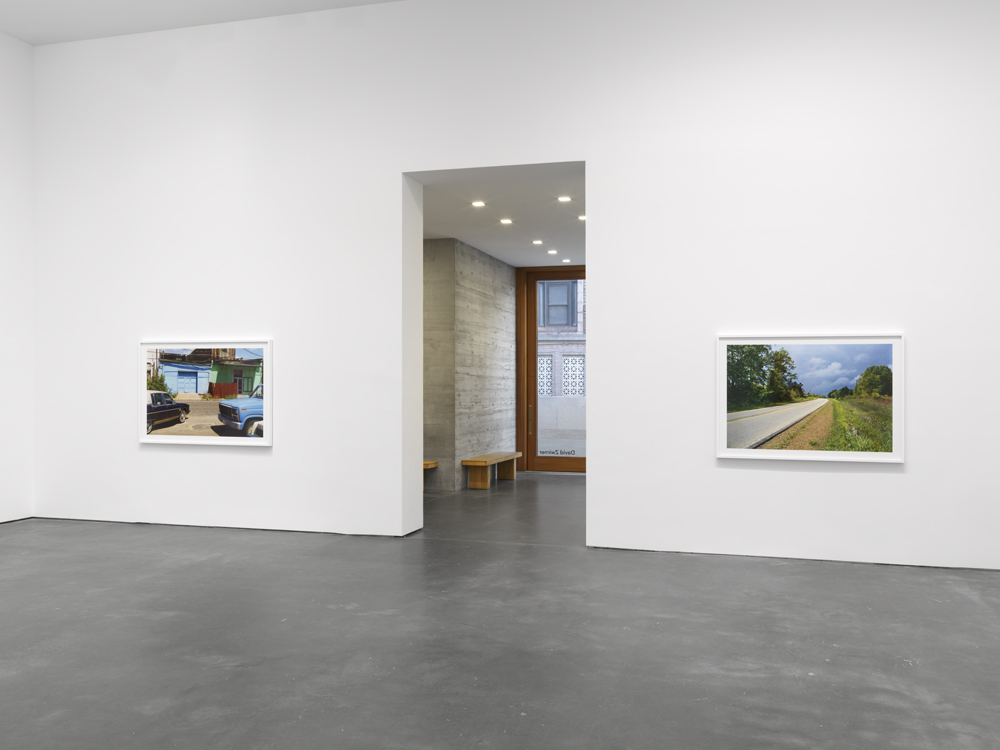
Above: Untitled from The Democratic Forest, c. 1983-1986. Pigment print, 44 x 60 inches (111.8 x 152.4 cm)

At the David Zwirner gallery:

Over the course of nearly six decades, William Eggleston—often referred to as the “father of color photography”—has established a singular pictorial style that deftly combines vernacular subject matter with an innate and sophisticated understanding of color, form, and composition.

Eggleston has said, “I am at war with the obvious.” His photographs transform the ordinary into distinctive, poetic images that eschew fixed meaning. Though criticized at the time, his now legendary 1976 solo exhibition, organized by the visionary curator John Szarkowski at The Museum of Modern Art, New York—the first presentation of color photography at the museum—heralded an important moment in the medium’s acceptance within the art-historical canon and solidified Eggleston’s position in the pantheon of the greats alongside Henri Cartier-Bresson, Robert Frank, and Walker Evans.

Published on the occasion of David Zwirner’s New York exhibition of selections from The Democratic Forest in the fall of 2016, this new catalogue highlights over sixty exceptional images from Eggleston’s epic project. His photography is “democratic” in its resistance to hierarchy where, as noted by the artist, “no particular subject is more or less important than another.”

Featuring original scholarship by Alexander Nemerov, this notable presentation of The Democratic Forest provides historical context for a monumental body of work, while offering newcomers a foothold in Eggleston’s photographic practice.

Source: The Democratic Forest » David Zwirner

There’s also an accompanying book: William Eggleston: The Democratic Forest, Selected Works.