Rediscovering Roger and Frances

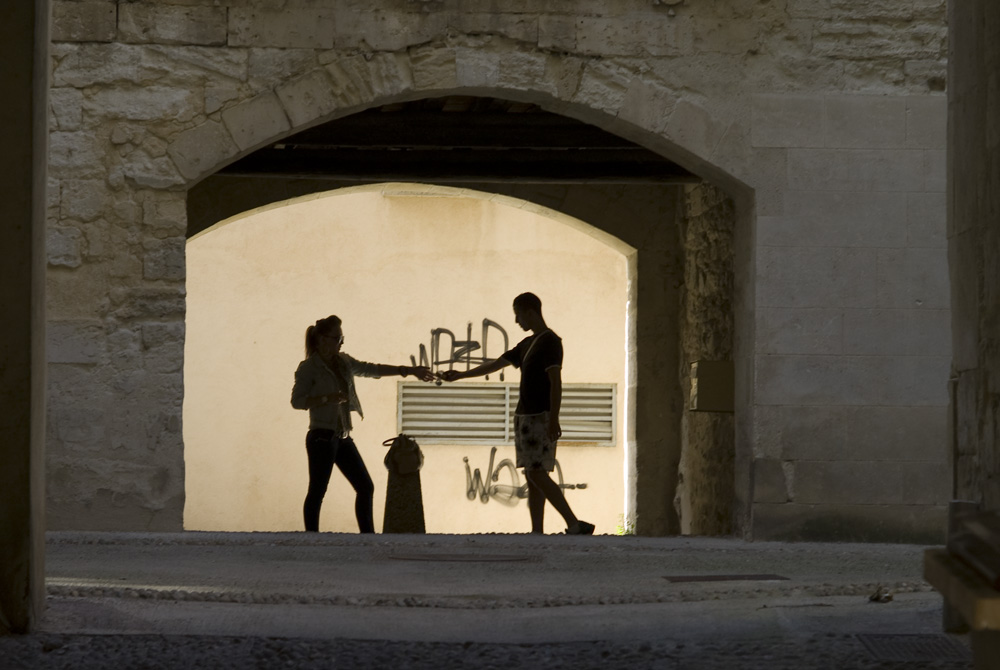
Couple, Arles. Source: Photographs from the Home Page

Whenever I get interested in a subject I tend to read a lot about it. I started collecting cameras a few years ago and my first move was to start browsing web sites; reading articles and buying books about camera collecting. My first interest was rangefinder cameras and one of the first books I got was “Rangefinder: Equipment, History, Techniques” by Roger Hicks and Frances Schultz. Subsequently I discovered the Roger was a regular contributor to one of the online fora I frequent (Rangefinderforum.com) and eventually I came across Roger and Frances’ own site, which I used to read regularly. And then somehow I stopped…

I realize now that I have become so dependent on my RSS feeds that if a site doesn’t have one (and I’ve never been able to find one on Roger’s site) I lose track of it.

I was with great pleasure then that I recently re-discovered Roger and Frances’ site – now with an all new look. I was a bit like reconnecting with an old friend.

I think I like the site so much because Roger and myself have a few things in common: we’re both British; we’ve both lived in France (he still lives there while I’ve moved to the USA); and from what he says we’re almost exact contemporaries. I love his thoughtful style of writing, always with that typically English touch of humour (in his honour I’ll spell both “humour” and “honour” the English rather than American way). Here’s a short extract from one of his articles. It pretty much sums up my own thoughts about why I take photographs.

…If you pursue the argument, I will say that because photography is an art (I regard with contempt anyone who still pretends it isn’t), then if I am a photographer, I am necessarily an artist. I do not however see any need to press the point, or to shout in your ear.

For me, though, ‘fine art’ comes down to something very simple. It is not something that artists do. Rather, it is an essential part of what they are. They do it because they can’t really imagine doing anything else. It’s not a hobby, a fad, a passing interest. Source: Fine Art Photography

Source: Rogerandfrances.eu Home Page

Unfortunately somewhere along the line the old site seems to have gotten lost. The new site has plenty of links to it, but whenever I follow one I get an otherwise blank screen with the cryptic message: “Could not determine user from environment”. I suppose it will get sorted out eventually. In the meantime there’s plenty to read and enjoy on the new site.

Now I just have to remember to keep looking for new articles.
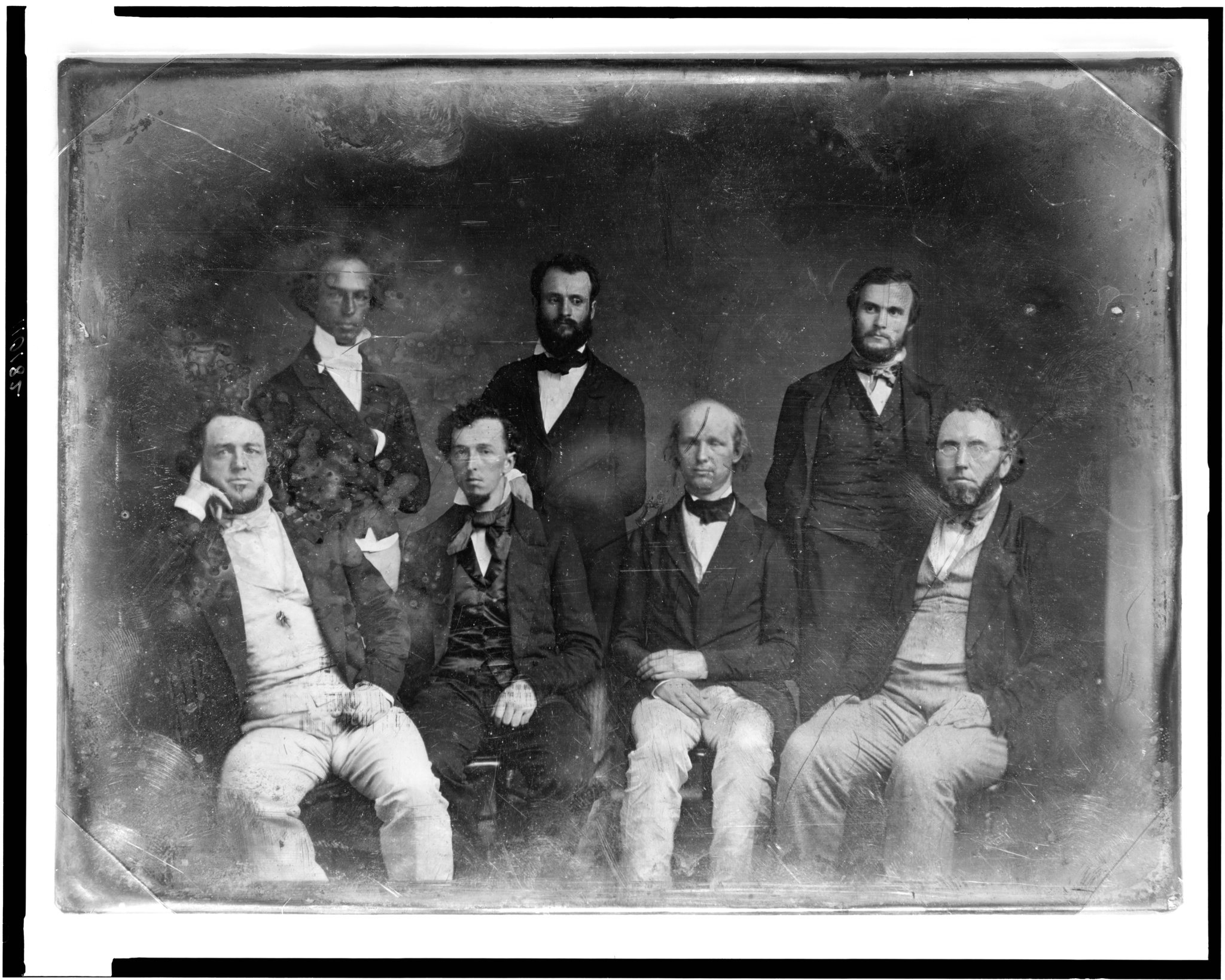
New York’s place in the history of photography

Although I’m interested in many different things, I suppose my two main interests are photography and history so I was pleased to find this informative article. I was not familiar with much of the information in it e.g. Samuel Morse’s role in introducing photography into the US.

Morse’s early introduction to the daguerreotype was just the first of many firsts that New Yorkers claim in the medium’s nascent history. New York City was not only the birthplace of American photography, but also the setting for some of its most substantial early commercial and technological developments.

Source: The Hidden History of Photography and New York – The New York Times

2017 World Press Awards Photo of the Year

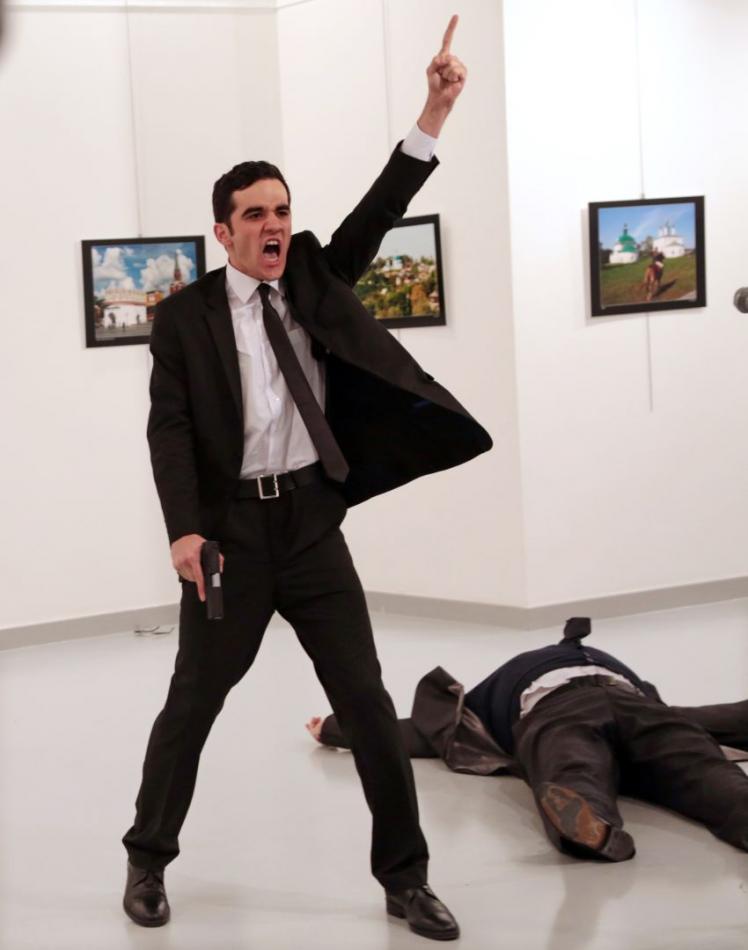
The photgraph below has just been named the Photo of the Year by the 2017 World Press Awards.

World Press Photo of the Year: Burhan. Source: 2017 Photo Contest | World Press Photo

For the NY Times’s take see: The World’s Best Photo?

While it’s certainly a very powerful picture and the photographer deserves considerable credit for maintaining his cool in an extremely dangerous situation, I not convinced that this deserves to take first prize. Certainly it deserves an award, but perhaps not first prize.

The photographer was already there, with his camera presumably at the ready. Yes, he could certainly have ‘done a runner’ (which is what I probably would have done), but he didn’t, remaining to get the shot. However, the story the picture tells is all too common: crazy person with gun kills someone. OK, in this case the victim was someone of significance, but the message remains. Unfortunately, it happens all the time (particularly in the US).

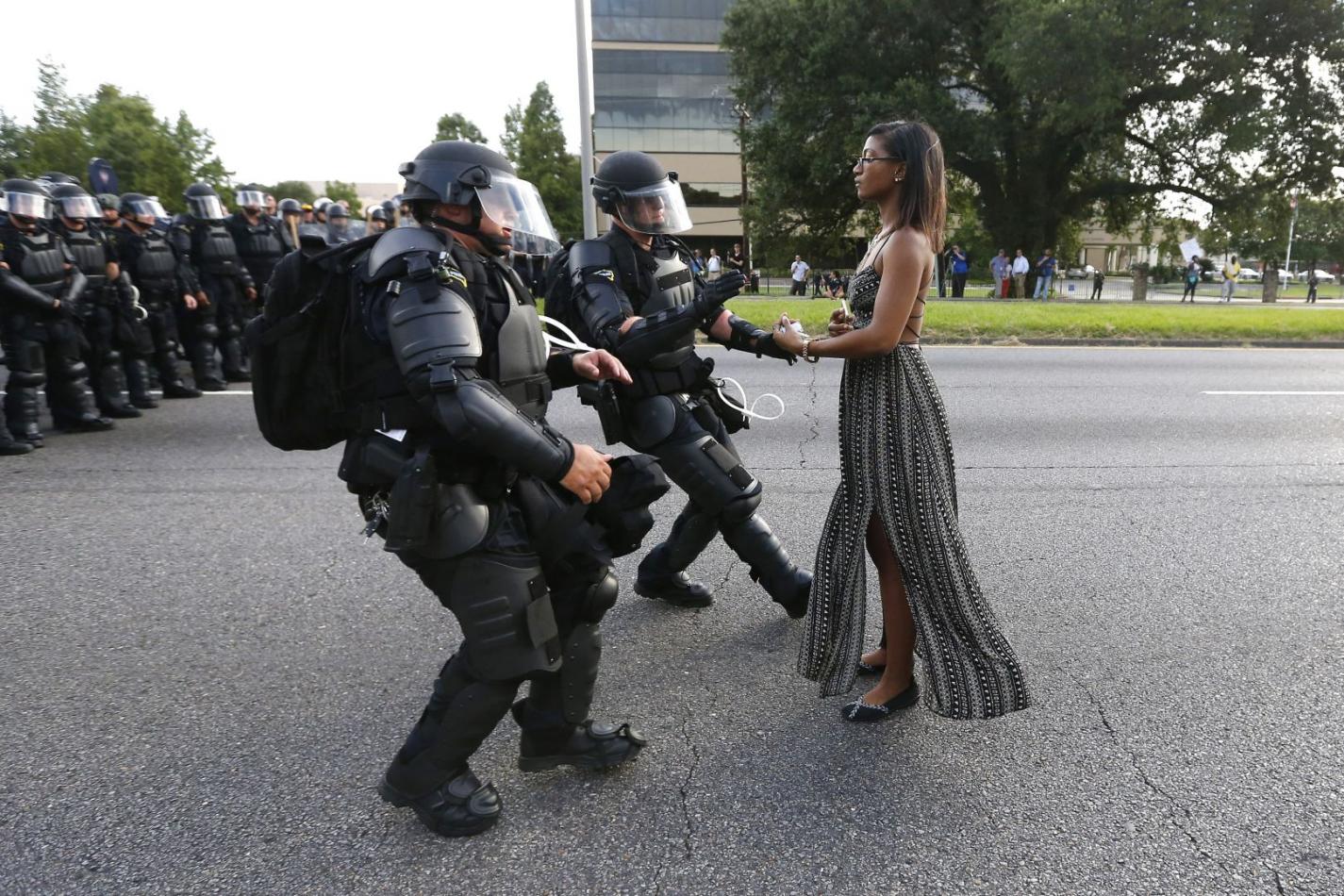
I much prefer the picture below, which to me tells a much more complex story of downtrodden people; over militarized police; remaining calm in the face of pressure etc. Although we don’t know the end of the story here I like to think that it’s a positive one, whereas in the picture above it’s overwhelmingly negative.

Taking a Stand in Baton Rouge by Jonathan Bachmann. Source: 2017 Photo Contest | World Press Photo

To conclude I find that I must take exception to the New York Times headline: “The World’s Best Photo?” World’s best NEWS photo – maybe? There are, however, lots of genres other than news: landscape; wildlife; portrait; documentary; street etc. etc. I don’t think you can declare a photograph as ‘World’s Best’ unless you take them all into consideration, which the Times certainly does not attempt to do in this article.

Greatest photobooks of all time

“Trolly – New Orleans”, 1955. The photo, part of Frank’s groundbreaking volume “The Americans”, was taken our days after an encounter with the police in Arkansas that darkened this artistic viewpoint. From the New York Times, July 5 2015

Interesting take on lists in general and lists of photobooks specifically from Blake Andrews on ‘B‘. I have four of the top fifteen (including the No.1, ‘The Americans’). I’d never heard of many of them (including the No. 2, ‘Evidence’). Many of them now cost more than I would be willing to pay for them so I’ll have to content myself with looking at the images online.

Source: 17 Greatest Photobooks of All time.

Richard Pousette-Dart

Richard Pousette-dart by Saul Leiter

Source: Richard Pousette-Dart | The Art of Photography

I had never heard of Pousette-Dart until I came across the video below on Ted Forbes fascinating “Art of Photography” website (I’ve already posted about his site in The Art of Photography). He also has a fairly long article on Pousette-Dart on the same site.

Pousette-Dart seems to be better known as a painter, a member of the famous “New York School” of Abstract Expressionism, which included Jasper Johns and Robert Rauschenberg. However, he was also a well-known photographer (and close friend of Saul Leiter).

I quite like some of his photographs, particularly the portraits, which remind me a little of Julia Margaret Cameron and the multiple exposures are also interesting. I surprised to find that, with the exception of the multiple exposures, his photographs are quite representational where his paintings certainly aren’t.

I noticed a brief statement in the Wikipedia article: “He attended the Scarborough School“, which is just down the road from our house in Briarcliff Manor.