Film Camera 2024 -3: Fujifilm Instax Square SQ-6 – Results

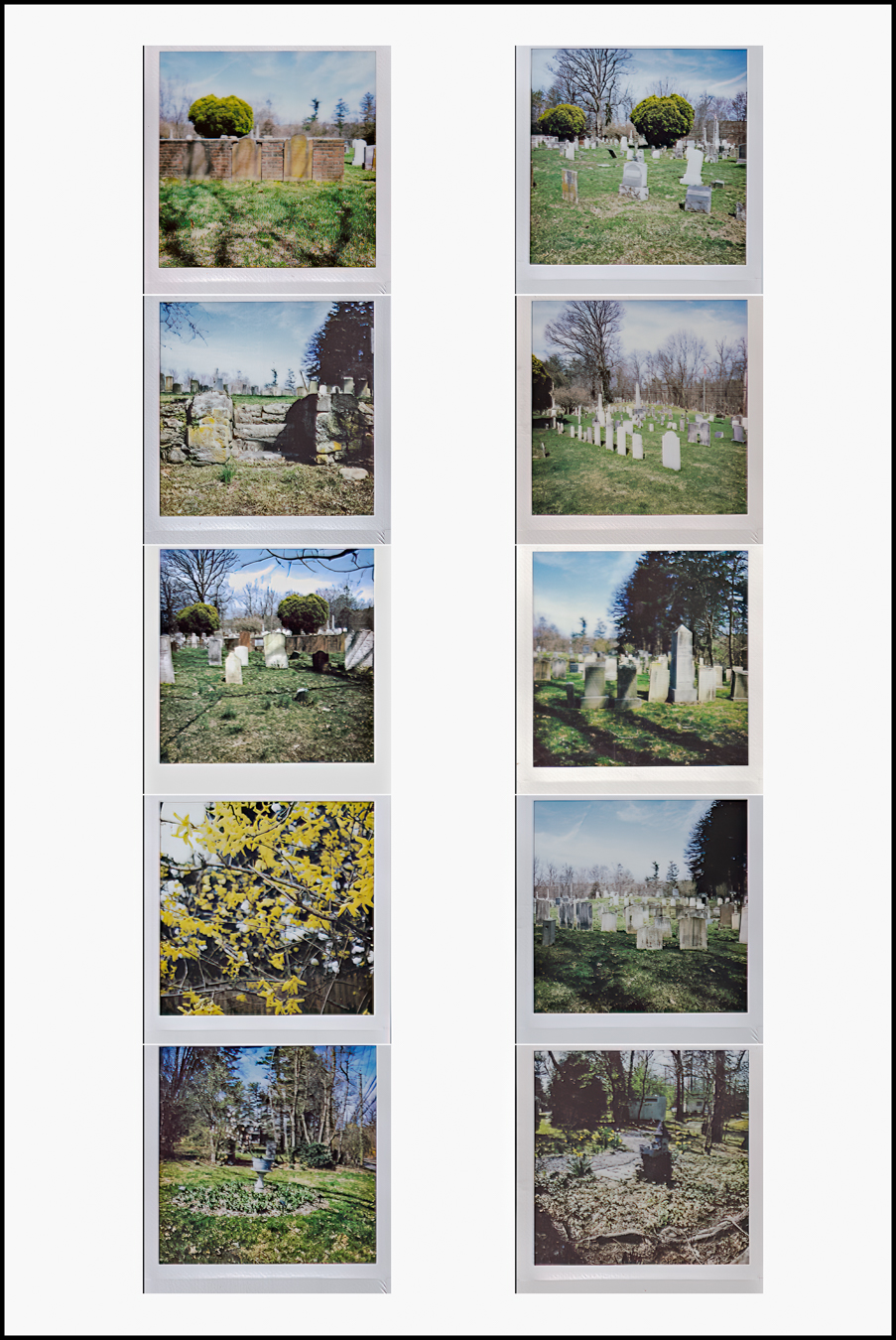
So, after finding the results from the SX-70 and the I2 somewhat disappointing, how did I like what I got from the SQ-6?

It’s an easy camera to use, largely point and shoot with relatively few additional functions that you might use. The learning curve with this camera is certainly much shorter than, for example, the I2.

At first glance the prints looked better, with more vibrant colors if a little underexposed. However, after scanning I realized that pretty much all of the prints were out of focus. Now I’m new to instant photography and mostly likely a problem with the photographer (i.e. me) rather than the camera.

I also found that the prints were a lot smaller than I had anticipated. Mea Culpa again. I was somehow thinking that they would be the same size as the Polaroid prints of yesteryear. Moreover, I’m also not entirely comfortable composing with a square format.

Of course, the film is expensive, but that’s true of all instant film nowadays.

So far, my attempts at instant photography have not been particularly successful and it seems to me that I now have two options:

  1. Decide that instant photography is not for me and give up.
  2. Don’t blame the cameras and accept that there’s always a learning curve and try harder until I get to a point where I’m satisfied.

I prefer the second option. There were reasons why my first few attempts didn’t succeed. The SX-70 was an old camera bought second hand. It clearly wasn’t working as originally intended. I might get it checked out, if possible fixed and try it again. The problem with the I2 was known (the autoexposure didn’t work correctly) and I chose to use it anyway. This has now been fixed in the recent firmware up, which I’ve now applied. I’m keen to try again and this will be my next attempt. The SQ6 was, I suspect, just plain lack of knowledge and familiarity with the camera.

Clearly, I have to use the cameras much more frequently. As the saying goes “if at first you don’t succeed try, try again”. It’s not rocket science.
Lee Friedlander

Once upon a time I didn’t care for street photography. But I’m an avid consumer of photobooks and after acquiring books by/about such luminaries as Joel Meyerowitz, Gary Winogrand, Robert Frank etc. I began to understand it better and even tried to do street photography of my own. One of the photographers I came across was Lee Friedlander. I saw some of his photographs online and liked them a lot and so decided to find out more. As is the norm for me I decided to get my hands on a book. This turned out to be harder than I thought. He’s a prolific creator of photobooks. See below for a partial list:

  • The American Monument. New York: Eakins Press Foundation, 1976. ISBN 0-87130-043-5.
  • Lee Friedlander Photographs. New City, NY: Self-published / Haywire Press, 1978.
  • Factory Valleys: Ohio & Pennsylvania. New York: Callaway Editions, 1982. ISBN 0-935112-04-9.
  • Lee Friedlander Portraits. Boston: Little, Brown, 1985. ISBN 0-8212-1602-3.
  • Like a One-Eyed Cat: Photographs by Lee Friedlander, 1956–1987. New York: Harry N. Abrams in association with the Seattle Art Museum, 1989. ISBN 0-8109-1274-0.
  • Nudes. New York: Pantheon, 1991. ISBN 0-679-40484-8.
  • The Jazz People of New Orleans. New York: Pantheon, 1992. ISBN 0-679-41638-2.
  • Maria. Washington: Smithsonian, 1992. ISBN 1-56098-207-1.
  • London: Jonathan Cape, 1993. ISBN 9780224032957.
  • Bellocq: Photographs from Storyville, the Red-Light District of New Orleans. New York: Random House, 1996. ISBN 0-679-44975-2.
  • The Desert Seen. New York: Distributed Art Publishers, 1996. ISBN 1-881616-75-4.
  • American Musicians: Photographs by Lee Friedlander. New York: Distributed Art Publishers, 1998. ISBN 1-56466-056-7. By Friedlander, Steve Lacy, and Ruth Brown.
  • Lee Friedlander. San Francisco: Fraenkel Gallery, 2000. ISBN 1-881337-09-X.
  • Stems. New York: Distributed Art Publishers, 2003. ISBN 1-891024-75-2.
  • Lee Friedlander: Sticks and Stones: Architectural America. San Francisco: Fraenkel Gallery, 2004. ISBN 1-891024-97-3. By Friedlander and James Enyeart.
  • Cherry Blossom Time in Japan: The Complete Works. San Francisco: Fraenkel Gallery, 2006. ISBN 1-881337-20-0.
  • Lee Friedlander: New Mexico. Santa Fe, NM: Radius Books, 2008. ISBN 978-1-934435-11-3. By Friedlander, Andrew Smith, and Emily Ballew Neff.
  • Photographs: Frederick Law Olmsted Landscapes. New York: Distributed Art Publishers, 2008. ISBN 978-1933045733.
  • America by Car. San Francisco: Fraenkel Gallery, 2010. ISBN 978-1-935202-08-0.
  • Portraits: The Human Clay: Volume 1. New Haven, CT: Yale University, 2015. ISBN 978-0-300-21520-5.
  • Children: The Human Clay: Volume 2. New Haven, CT: Yale University, 2015. ISBN 978-0-300-21519-9.
  • Street: The Human Clay: Volume 3. New Haven, CT: Yale University, 2016. ISBN 978-0-300-22177-0.
  • Lee Friedlander: Western Landscapes. New Haven, CT: Yale University Art Gallery, 2016. ISBN 978-0-300-22301-9.

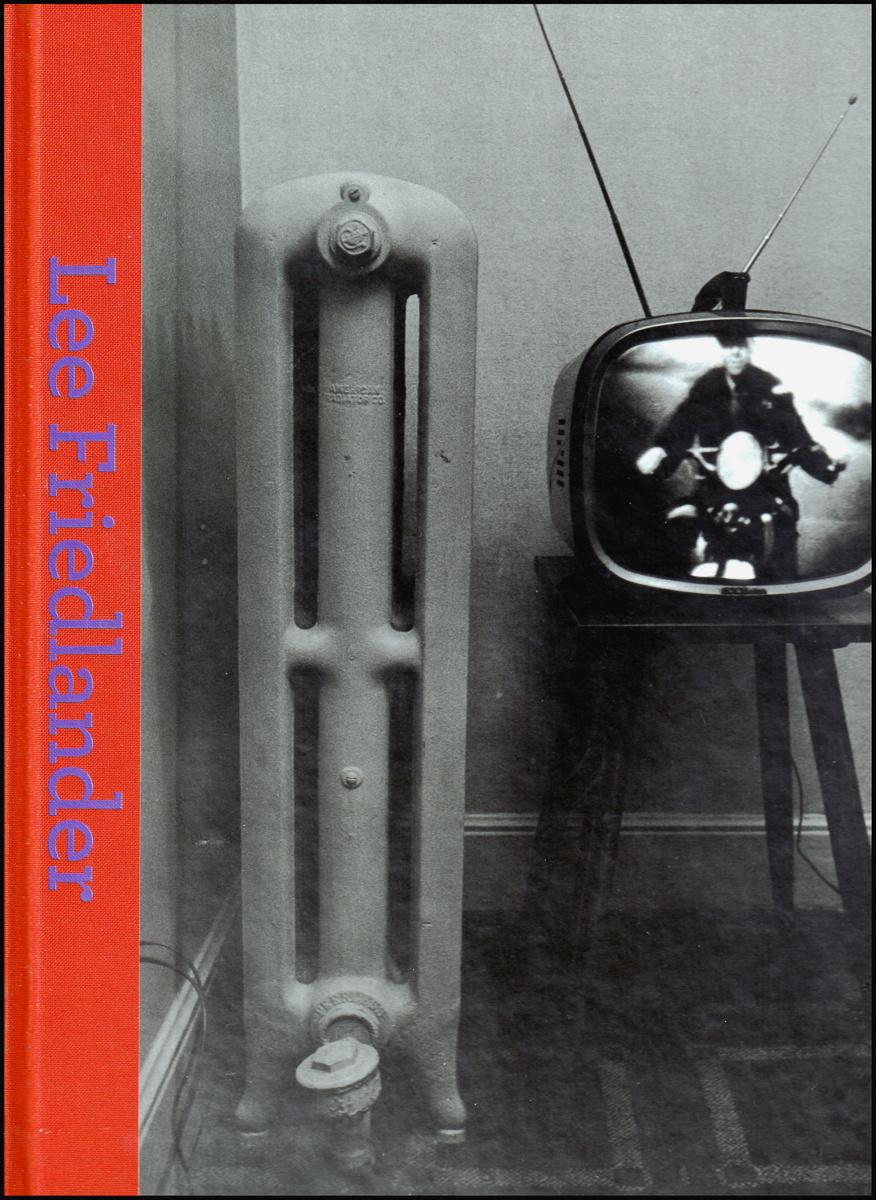
All you’ll have seen his books cover a multitude of topics. Unfortunately, that wasn’t what I wanted. I was looking for a fairly recent retrospective covering his work in general. At that time the type of book I was looking for was either out of print, extremely expensive or both. This situation now seems to have changed so when I spotted this book, I immediately acquired it.

It’s quite a large (10″ x 12″) book, which explains why the right side is cut off in the picture. It just wouldn’t fit on my admittedly small scanner.

The book is in four parts. The first is an essay by Carlos Gollonet entitled “The World According to Lee Friedlander”. I found this most informative and refreshingly free of the “critic speak” you often find in such pieces. Instead, it was rather easy to read. I found the second part, “My life with Lee. An Interview with Maria Friedlander” to be absolutely fascinating. Since Mr. Friedlander is known for his reluctance to give interviews, this might be the close as we’re going to get. The third part: “How he sees” by Nichols Nixon is short and left very little impression on me. I guess it’s a personal reflection by someone who knows Friedlander well. The third part, which takes up most of the book is called “Catalog” and contains over 300 photographs, mostly black and white, but a few in color. The book concludes with a chronology of the artist’s life by his grandson Giancarlo T. Roma.

I really enjoyed it.

More infrared

Almost a year ago (doesn’t time fly!) I documented my attempts at Infrared photography. See:

The above focused on black and white infrared photography and I was quite pleased with the results.

I also tried so-called false color infrared photography (See: First attempts at false color infrared photography). Frankly the results were terrible. I didn’t get it; didn’t understand properly how to do it; and didn’t like it much.

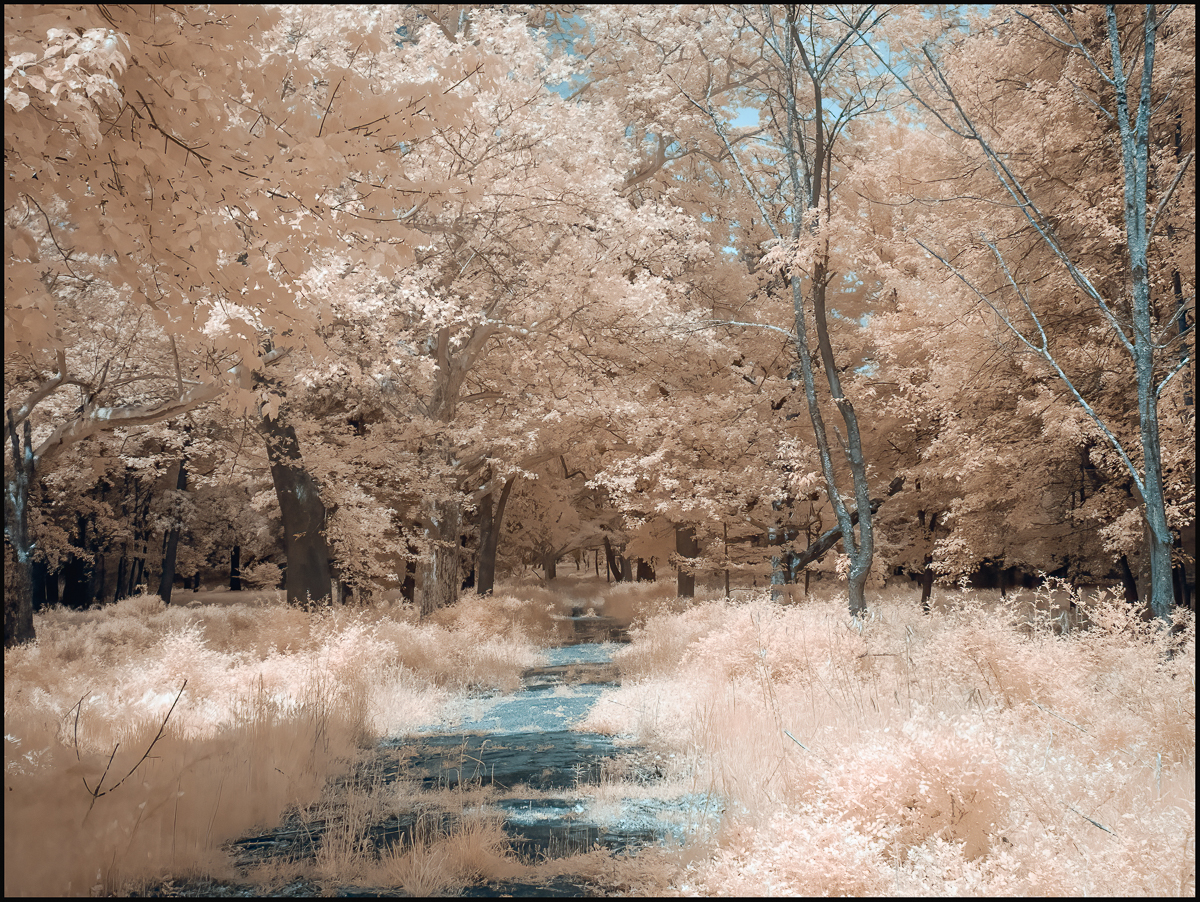
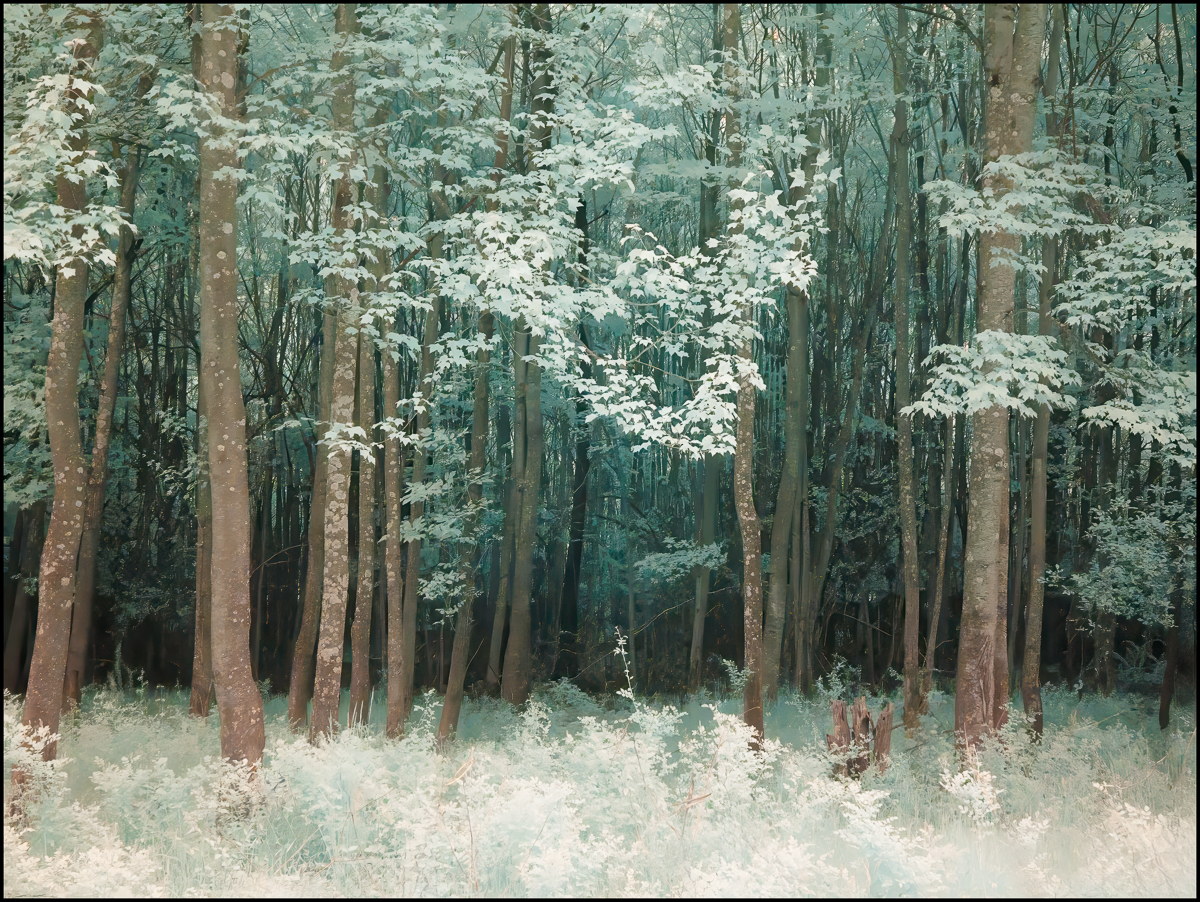
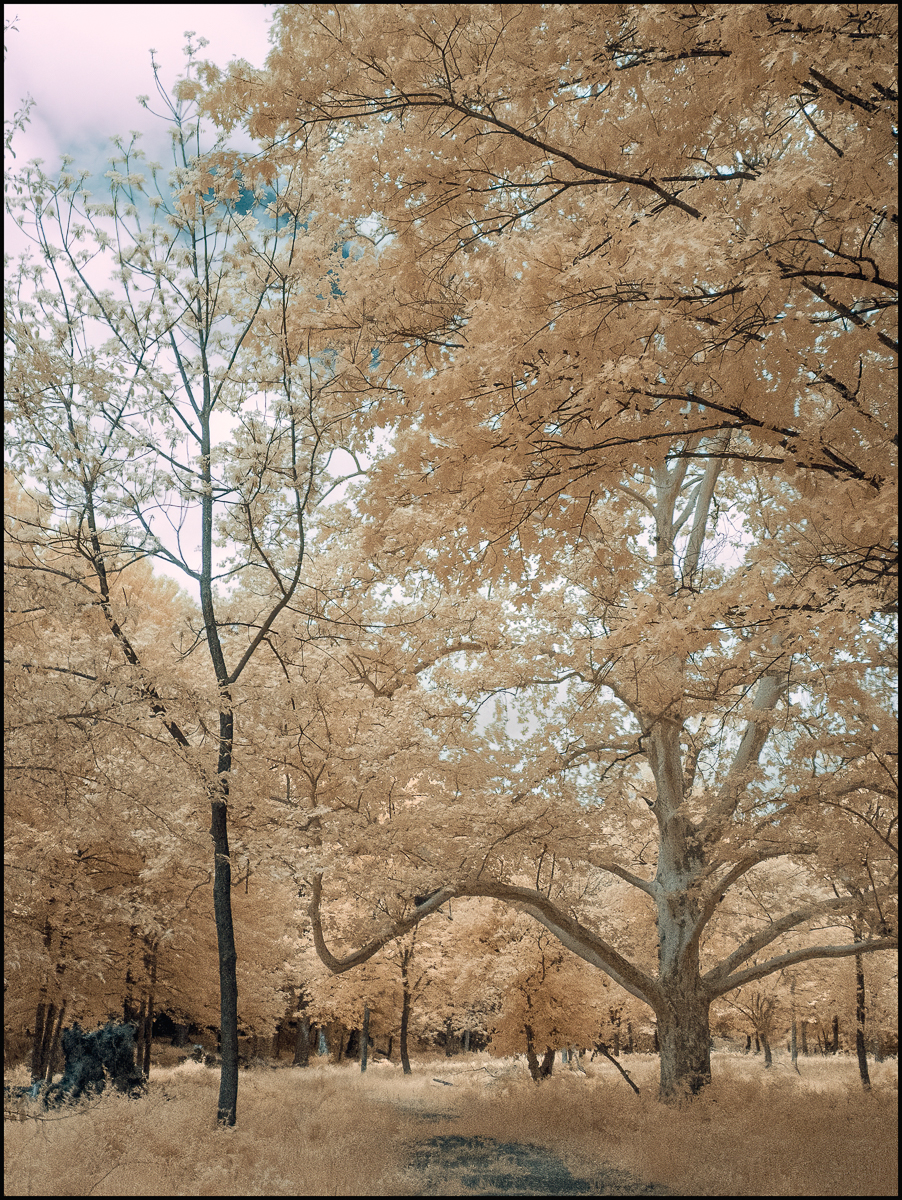
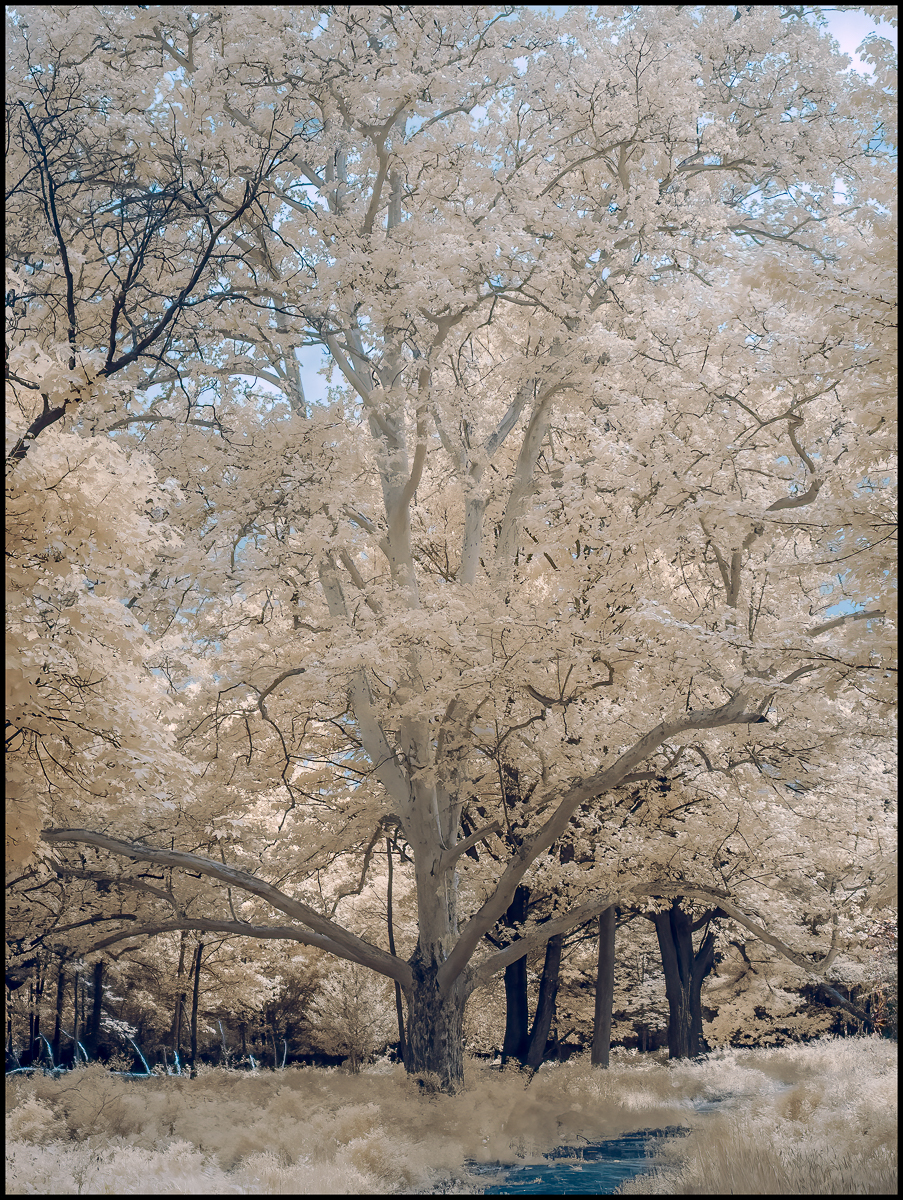
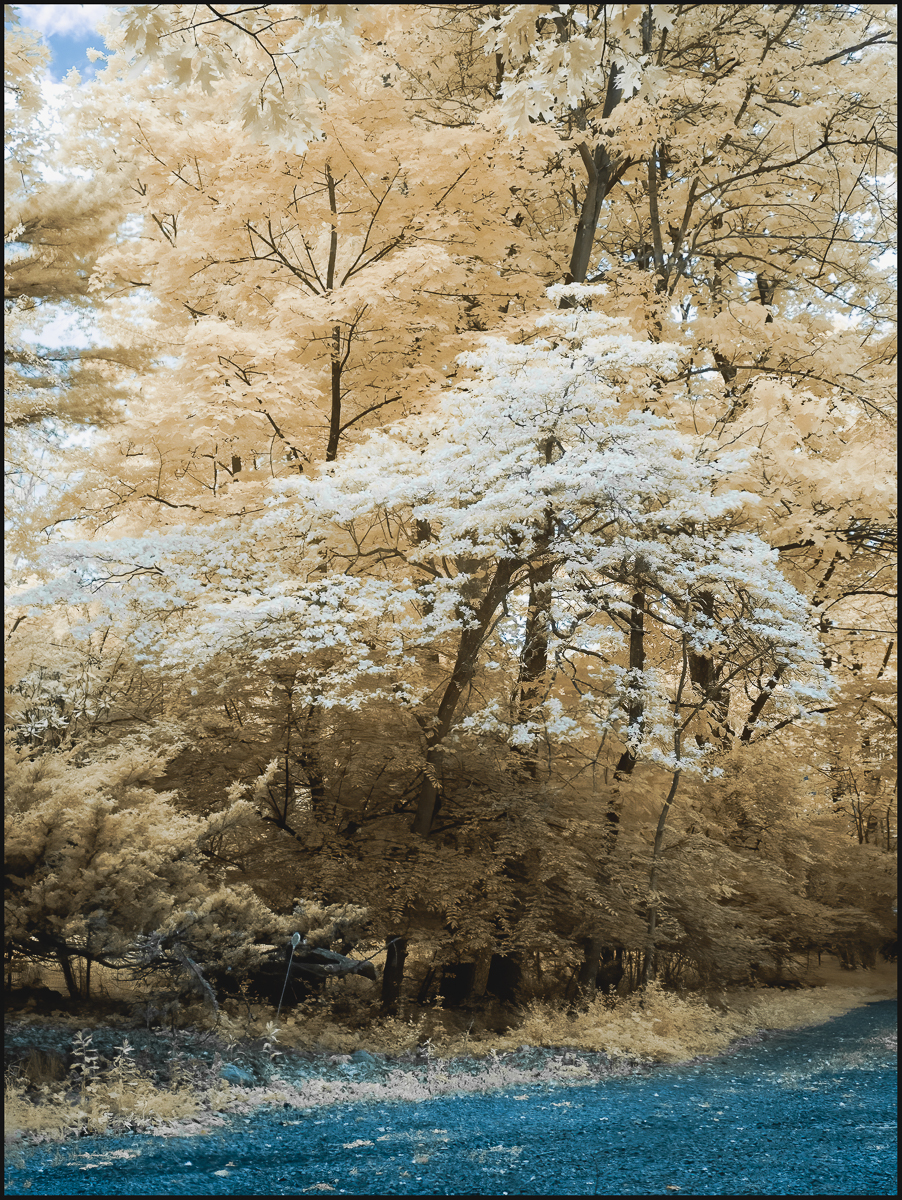
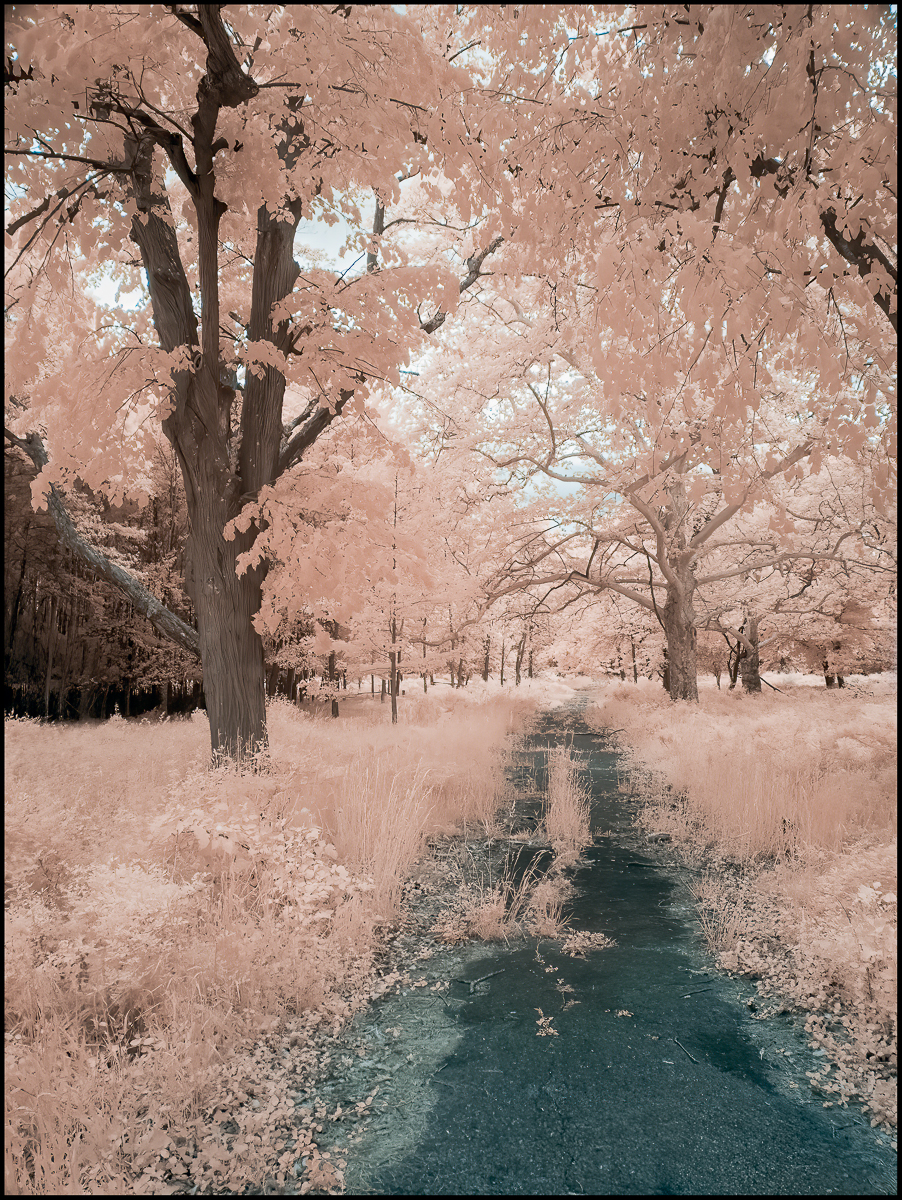
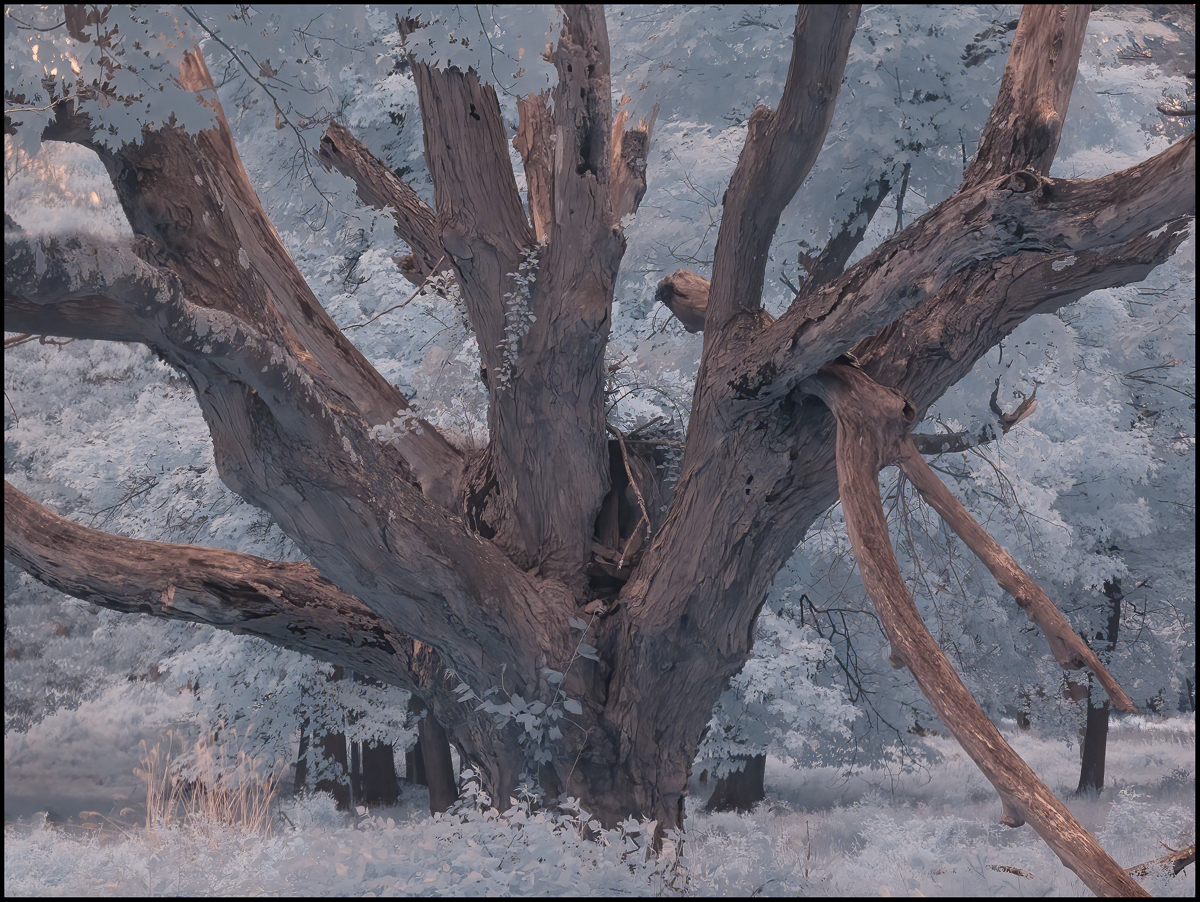
However, I can be quite persistent, and I vowed to try it again, so the other day I went out into some nearby woodland (actually it’s right across the road from my house) to try again. This time I was better prepared. I’d bought a book; watched YouTube tutorials; read articles etc. I was hoping for better results than the last. I wasn’t disappointed. My preparations seem to have helped. Of course, this type of photography is not to every one’s taste, but I rather like the way the pictures came out.

For more examples of this type of photography take a look at my website, here.

The first link above: Trying out Infrared Photography – Exploring the Options describes how I came to the camera I’m presently using for infrared photography. I love it, but it’s still a ten-year-old camera with a very small, low-resolution sensor. I bought it because I didn’t know if I’d enjoy infrared photography and I didn’t want to spend a lot of money until I was certain that I would want to continue with it. I’m now sure that I will and plan to acquire a newer, higher resolution camera with a larger sensor. More on that later.


Taken with a Sony F828 and fixed Zeiss 28-200mm f2-2.8

What’s with this stuff about pre-visualization?

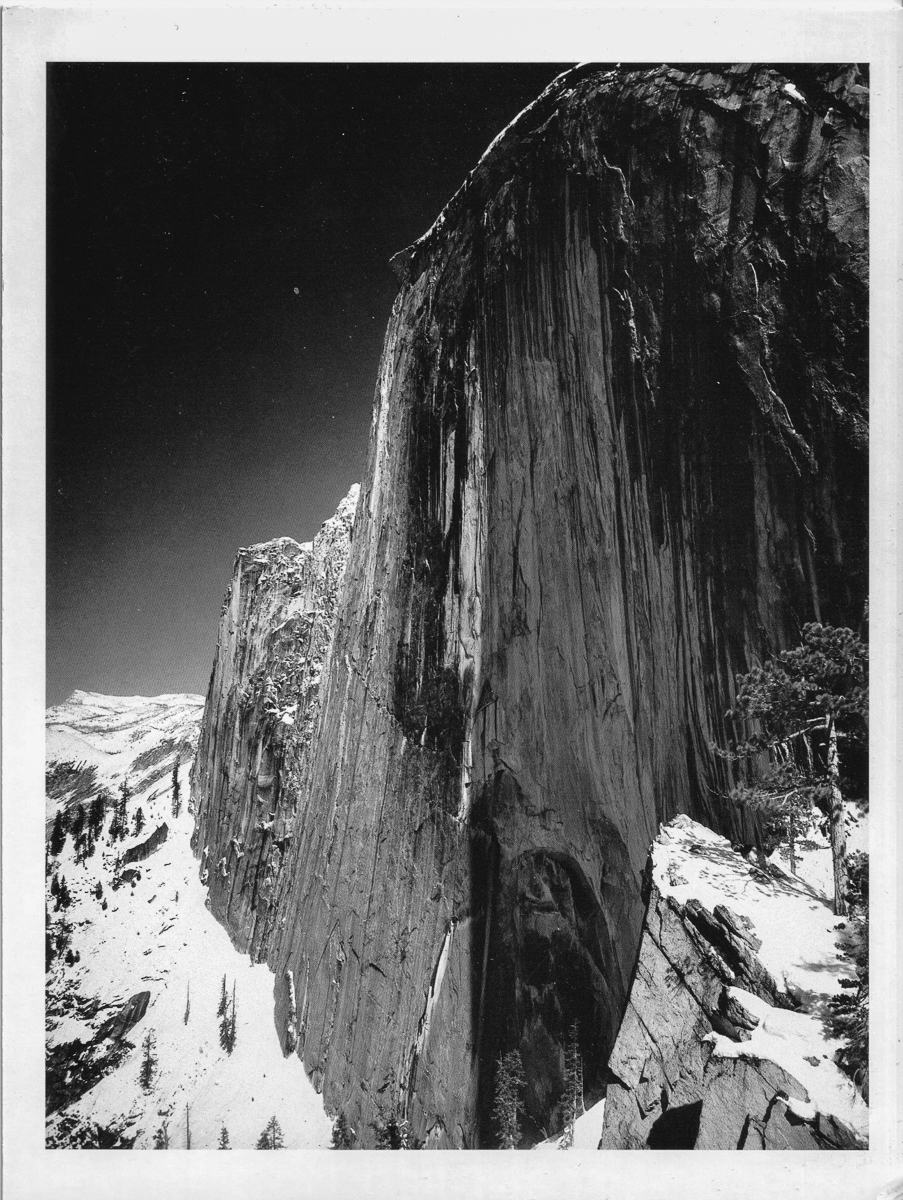
I believe that this originates from Ansel Adams who said:

“In my mind’s eye, I visualize how a particular… sight and feeling will appear on a print. If it excites me, there is a good chance it will make a good photograph. It is an intuitive sense, an ability that comes from a lot of practice.”

I get that. That’s pretty much what I try to do with my photography. When I see something that interests me, I have a sense of how the final photograph should look. In effect, I visualize how the final image will look and do all I can to get it to look the way I visualized it.

What I don’t get is where the “pre” comes from. The prefix “pre” means something that comes before something else e.g. “The tree was almost certainly planted pre-1700.” or “She attended a pre-adolescent dance class.”

So “pre-visualize” would suggest something that you do before you “visualize”. What is that? Am I missing something?

I quickly browsed around the internet and couldn’t find a quotation where Adams uses “pre-visualize”, although I did find examples (such as the one above) where he does use “visualize”.

Admittedly, I didn’t spend much time looking so I might well have missed something. It was just a passing thought that I don’t really want to spend more effort on.

Deep South

About a week ago I felt like going somewhere pleasant where I could sit and read. So, I decided to go walk down to a restaurant (3 Westerly) on the Hudson River – about a 45-minute walk from where I live. On the way I stopped at a great local bookstore: Hudson Valley Books for Humanity where I picked up a copy of “Deep South” by Sally Mann.

Publishers weekly described the book as follows:

Mann rose to prominence with Immediate Family, a collection of photographs of her children that some saw as emotionally direct and others found disturbingly erotic. Regardless, these photographs, and her subsequent work, demonstrate that Mann has a preternatural eye for light and composition. In this book, Mann, inspired by “”a cache of glass negatives…of familiar local places,”” set off with her camera through the South, using eighteenth century photographic techniques to capture the “”radical light of the American South,”” and the results are fascinating. In Georgia, a column of leaves dissipates into a luminous mist; in Virginia, a scumbled field with an empty cart in the distance suggests a test shot by Matthew Brady. Many of these photographs are startling in their intimations of violence: in the section called “”Deep South,”” Mann depicts the thick shaft of a venerable tree with a wound-like, horizontal slash near the trunk. Mann has also included the inevitable mistakes involved with such a tricky process: indiscernible unhappy accidents and washed-out near-abstractions. This is brave but puzzling. In one of her short essays, Mann writes that the Southern dusk makes “”the landscape soft and vague, as if inadequately summoned by some shiftless deity, casually neglectful of the details.”” A god may enjoy such prerogatives, but shouldn’t artists be more mindful? Most of the 65 images here are hauntingly beautiful and offer a stunning tour of a very off-the-beaten-path part of the country.

I’m a big fan of Sally Mann’s work and already own a couple of her books: her memoir: Hold Still: A Memoir With Photographs; and A Thousand Crossings.

For a good overview see: Sally Mann Photos – Intimate, Visceral.

I love this book. It’s large so the quality of the photographs is good. But it’s not so large that I can’t conveniently pick it up and read it. It’s a nice mix of text and photographs. I often come across photobooks with almost no text at all. I can understand why, but personally I like to have some text. I also come across photobooks that have acres and acres of text: multiple long articles, which I don’t usually mind to much unless they’re full of “criticspeak”.

In my opinion this book is a perfect blend of text and photographs. And the text is not coming from academics pontificating about here work. It’s Ms. Mann telling a story, which complements her photographs. In addition to being a great photographer, Ms. Mann is an excellent writer (she has an MA in creative writing and her mother ran a bookstore). I find the photographs to be atmospheric, and more than a little disturbing. I’m sure that those who insist on ultimate sharpness will not like this book. But I do.

This book is not easy to find and if you can find one it’s usually somewhat expensive. I was very pleased to find it, at a reasonable price in my local bookstore.