Fred Dill Wildlife Sanctuary 1: Overview

While walking along the Putnam County Trailway a while ago I noticed a path going off into the woods. I followed it for a while, but at that time the trees were bare, snow was on the ground and the trails were icy so I didn’t go too far. This time I approached the sanctuary from the other end (near where the old fairgrounds and racetrack used to be). In fall it’s a very pleasant place to walk. All told we walked for about two hours, covering all of the leave trail, yellow trail, and turtle trail.

According a brochure found at the trailhead:

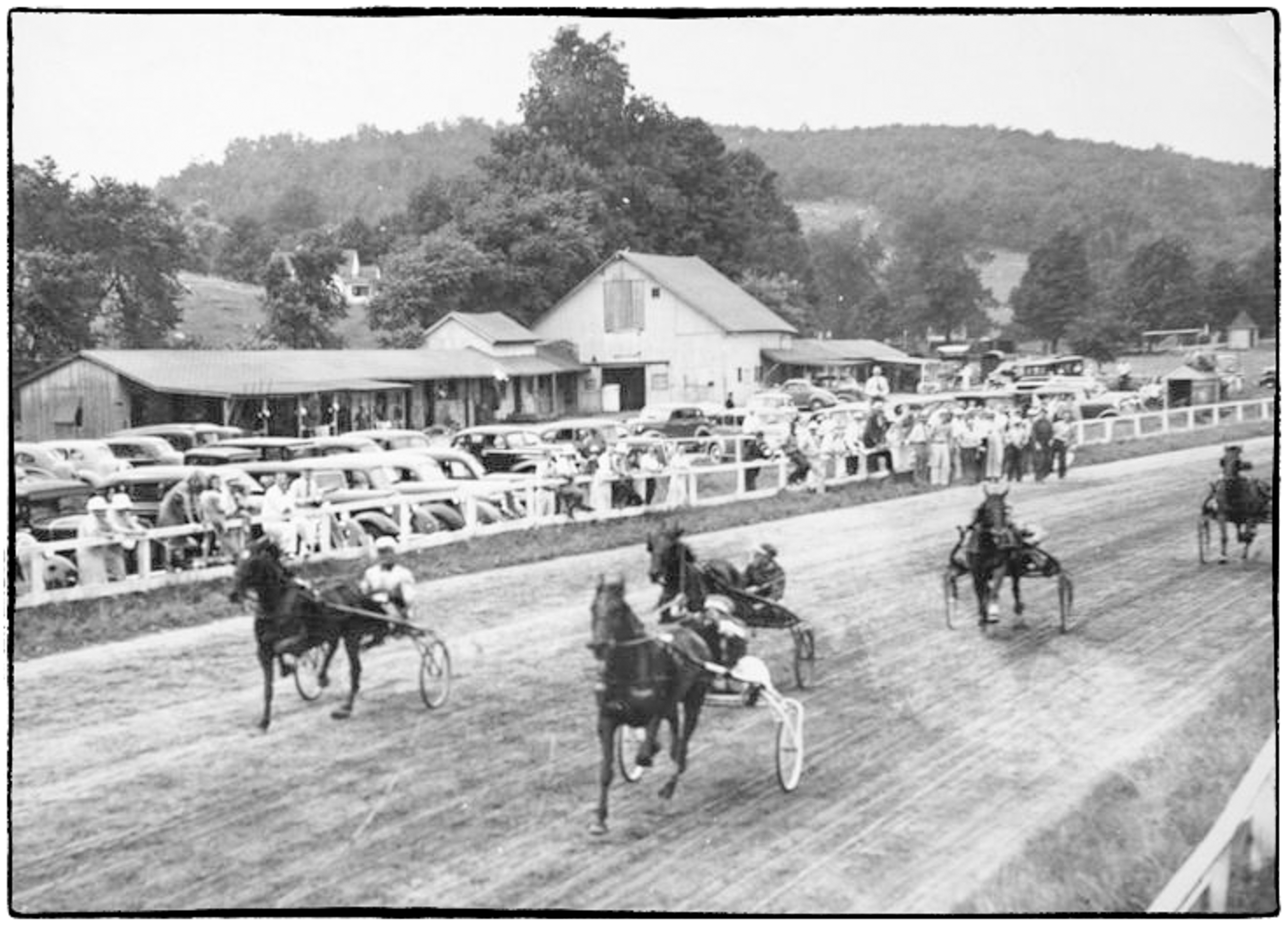
Fred L. Dill came to Carmel in 1933 after graduating with an Accounting Degree from Bentley College in Boston, Massachusetts. His father, Carl Dill trained and drove trotting horses and had moved his family from Goshen, NY to work at the horse racing track which was part of the Putnam County Fairgrounds located on a portion of this property. A faint outline of the old race track is still visible and is labeled “old racetrack” on the park map.

Upon completion of his first summer “swiping” horses and “mucking out” horse stalls, Fred decided the horse business was not for him. His dream was to be in business for himself. When working as office manager for American Oil in Carmel, he had the opportunity to manage Dain Supply and within 3 years was a partner in Dain and Dill. Eventually, Dain and Dill became Lloyd Lumber, a cash and carry lumber yard which grew into a chain of 21 stores in NY and CT.

Fred had achieved his dream of becoming a successful businessman, and he enjoyed using his financial success to benefit the Putnam County Community. The Fred Dill Wildlife Sanctuary and Outdoor Education Center is the last project Fred worked on before his death in 2004 at the age of 91. This property brought Fred to Putnam County and it gave him great pleasure to think of the many people who would walk the trails, enjoy the quiet, and learn about our local wildlife and history.
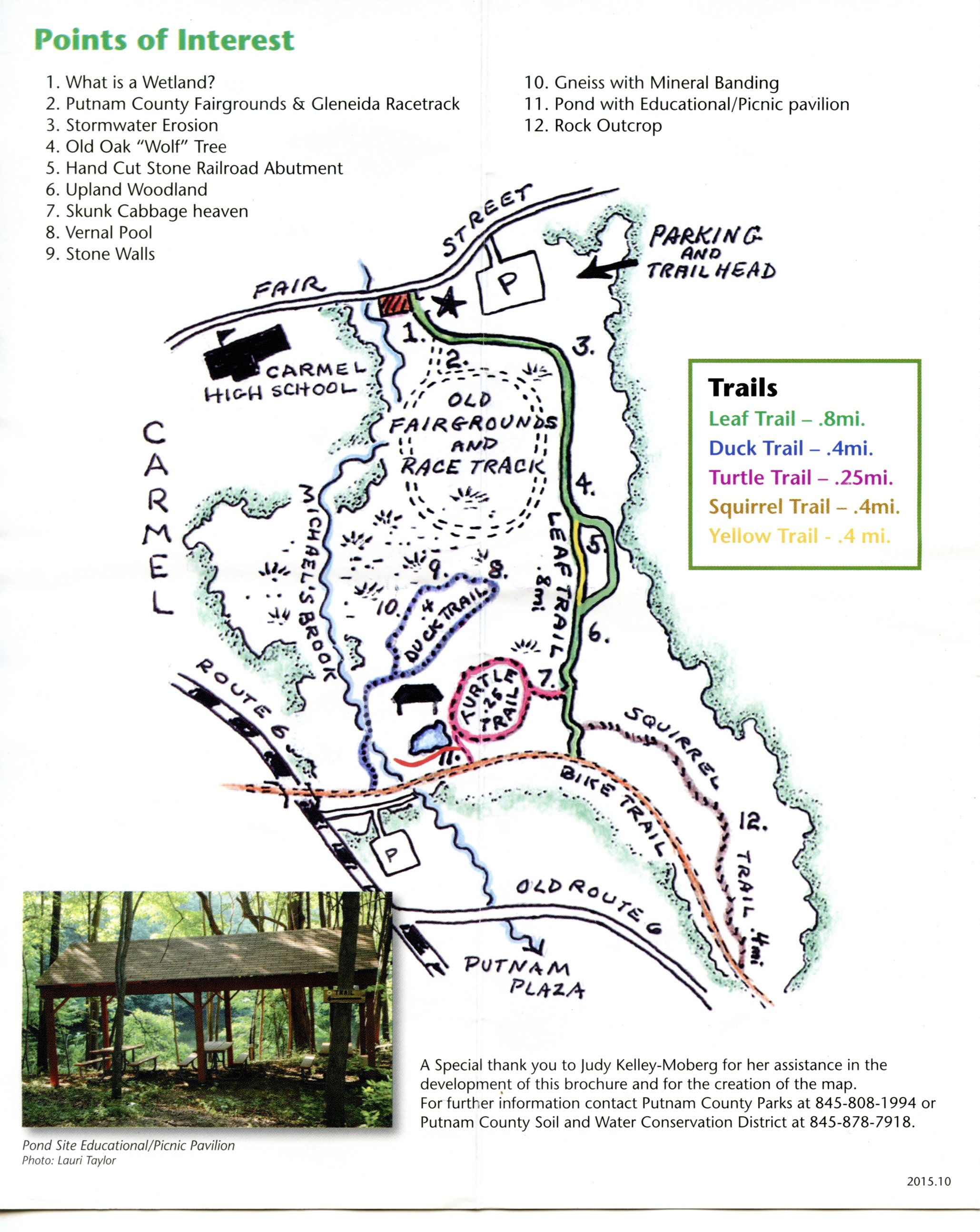
Source: Fred Dill Wildlife Sanctuary and Outdoor Education Center brochure

Source: Fred Dill Wildlife Sanctuary and Outdoor Education Center brochure

Around 1865 this property was acquired for the County Fairgrounds. A large building for exhibits was erected and a half mile race track was built on the low land directly in front of the exhibit building. A grandstand was later added. The original intent of the fair was to display prize livestock and produce. The decline of farming in the area left horse racing as the most important part of the fair. The Gleneida Racing Association held regular races at the track until 1932. Automobiles races on the track for a number of years in the 1930’s. Horses ere kept at the track and trained for harness racing until the 1960s

The fairground and racetrack have now been completely reclaimed by a marsh and other assorted brush. As mentioned above a “faint outline of the old racetrack” is still supposed to be visible, but I was unable to find it (I didn’t look all that hard though).
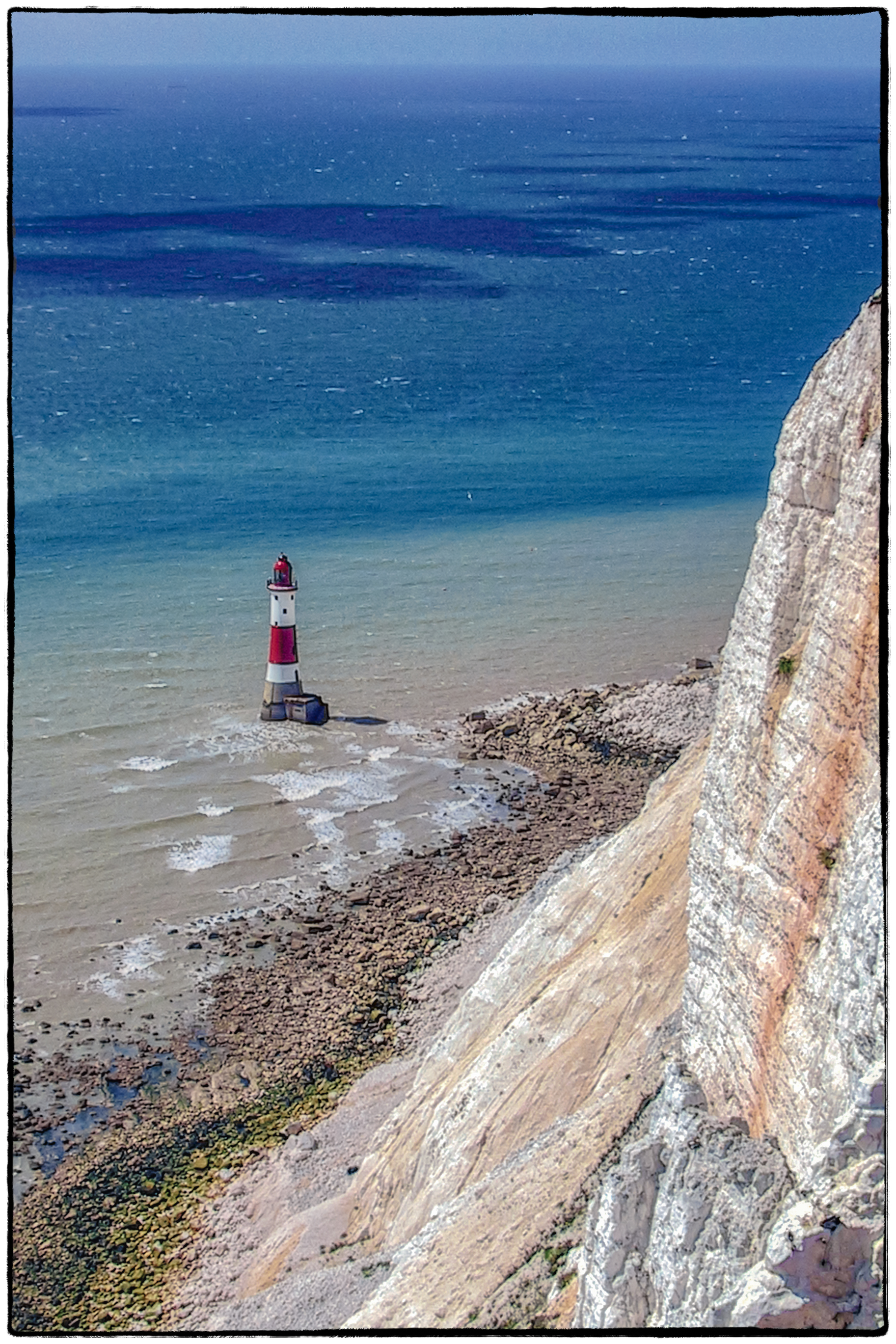
A lighthouse

Taken during a trip to the United Kingdom in 2004, this is, with it’s distinctive read and white stripes, the well-known Beachy Head Lighthouse near Eastbourne in East Sussex.

According to Wikipedia:

In 1900 to 1902 under the direction of Sir Thomas Matthews, the Trinity House Engineer-in-Chief, the lighthouse was built, sited about 165 metres seawards from the base of the cliffs. For the construction, a temporary cable car from the cliff has been installed for the transport of workers and stones to an iron ocean platform adjacent to the lighthouse. 3,660 tons of Cornish granite were used in the construction of the tower.

For more than 80 years, the red-and-white striped tower was manned by three lighthouse keepers. Their job was to maintain the light, which rotates, making two white flashes every 20 seconds. It was then visible 26 nautical miles (48 km; 30 mi) out to sea. The lighthouse was fully automated in 1983 and the keepers withdrawn.

In June 2010, Trinity House announced in the five yearly “Aids To Navigation Review” that the light range would be reduced to 8 nmi (15 km; 9.2 mi) and the fog signal discontinued. In February 2011, the work was undertaken and light range reduced by the installation of a new LED navigation light system. The old lens, though no longer in use, was left in situ. The fog signal was also discontinued at this time.

Trinity House announced in 2011 that it could no longer afford to repaint the distinctive red and white stripes and that it would have to be left to return to its natural granite gray. It stated that because boats now have high tech navigational systems the day marker stripes are no longer essential. However, a sponsored campaign to keep the stripes was launched in October 2011. The required £27,000 was raised. The tower repainting was completed in October using a team including two abseilers. Five coats of paint were applied to the copper lantern at the top and three on each hoop of the tower

The picture was taken with my second digital camera: A 2.1 megapixel Canon Powershot S-10. I remember being quite impressed with it at the time. I printed it 8×10 and was surprised at how good it looked.

.

Mills Mansion, Staatsburg, NY

We recently visited the Mills Mansion in Staatsburg, NY. Since we had the dog with us so I couldn’t go on the house tour, but my wife did and found it interesting. It’s a good place to walk a dog with attractive trails along the river and some nice views out towards the Catskills.

According to the Friends of Mills Mansion Website:

Originally built in 1832 and greatly expanded in the 1890’s, Mills Mansion (also known as Staatsburgh) is emblematic of the great country estates built in the nineteenth and early twentieth centuries to house America’s wealthiest families.

Staatsburgh is a New York State Historic Site located within the boundaries of Mills-Norrie State Park. It is an elegant example of the great estates built by America’s financial and industrial leaders during the Gilded Age.

A 25-room Greek Revival structure was built on the site in 1832 by Morgan Lewis and his wife, Gertrude Livingston, replacing an earlier house that had burned down. This second house was inherited by Ruth Livingston Mills, wife of noted financier and philanthropist Ogden Mills.

In 1895, Mr. and Mrs. Mills commissioned the prestigious New York City architectural firm of McKim, Mead and White to remodel and enlarge their Staatsburg home. After completion in 1896, the house was transformed into a Beaux-Arts mansion of 65 rooms and 14 bathrooms. Its exterior was embellished with balustrades, pilasters, floral swags, and a massive portico. The rooms were furnished with elaborately carved and gilded furniture, fine oriental rugs, silk fabrics, and a collection of art objects from Europe, ancient Greece, and the Far East.

In 1938, the house and 192 acres were given to the State of New York by Gladys Mills Phipps, daughter of Ruth and Ogden Mills.

Rear of the mansion overlooking a large lawn and down towards the Hudson River.

Another view of the rear of the mansion.

A walk around Sparta

I’ve been living near Sparta for about eighteen years and for most of that period have passed through it twice a day on the way to work and back. Never once have I thought to look up its history and to date I have not taken the walking tour (I’ll have to rectify that). Below, a few of the many historic homes in Sparta.

According to Wikipedia Sparta:

is a neighborhood of the village of Ossining in New York. Sparta borders the Hudson River south of most of the village of Ossining. The neighborhood was a hamlet of the town of Ossining, and remains its oldest community. Sparta was founded by Dutch settlers in the 17th century. It has zip codes 10510 and 10562. The elevation is 56 feet.

The neighborhood includes the Sparta Historic District, the Jug Tavern, and the Sparta Cemetery. The New Croton Aqueduct, Old Croton Aqueduct, Old Croton Trailway State Park, and Trailways State Park Aqueduct transverse the neighborhood.

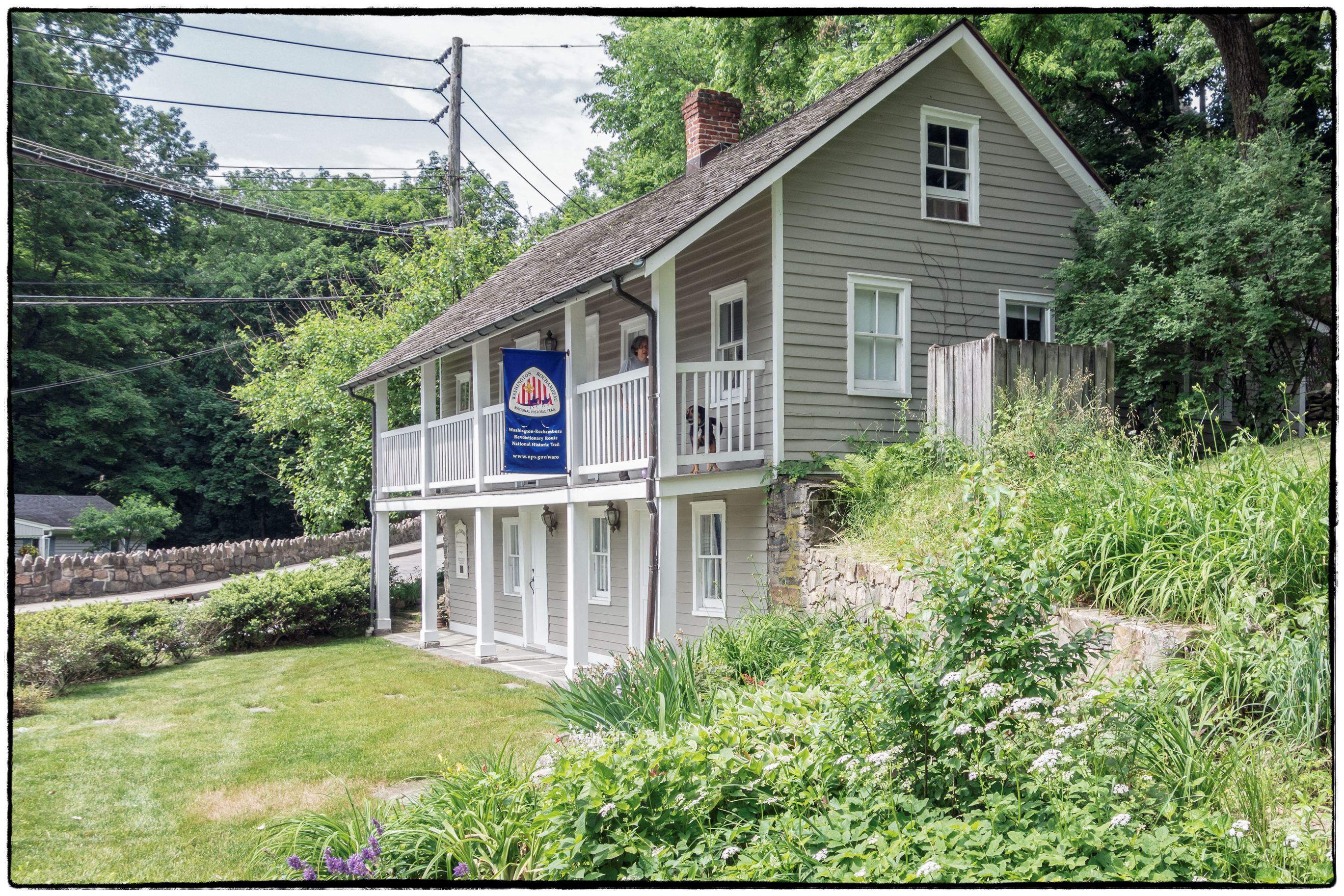
Above, The Old Jug Tavern:

74 Revolutionary Road. The Jug Tavern, or Davis-Garrison House, is believed to be the oldest surviving structure in the Village of Ossining. The northern half of the house was probably built by Peter Davis soon after his marriage in January 1758. Peter died before 1795, but his widow owned the house at least until 1810. By 1830, the house was owned by Nathaniel and Annie Garrison. Nathaniel died in 1843, but Annie lived there until her death in 1869 at the age of 99.

It is not clear how the Davis-Garrison House got the name “Jug Tavern,” but Nathaniel Garrison may have sold liquor by the jug, without benefit of a license, as there is no record of a tavern license having been granted to any occupant of the house. Mrs. William Mowatt sold the house to the Town of Ossining and the Ossining Restoration Committee in 1975, and the deed was transferred to the non-profit corporation Jug Tavern of Sparta Inc. in 1976. This house was rebuilt in 1884 and renovated from 1975 to 1991. It was entered in the National Register of Historic Places in 1976.

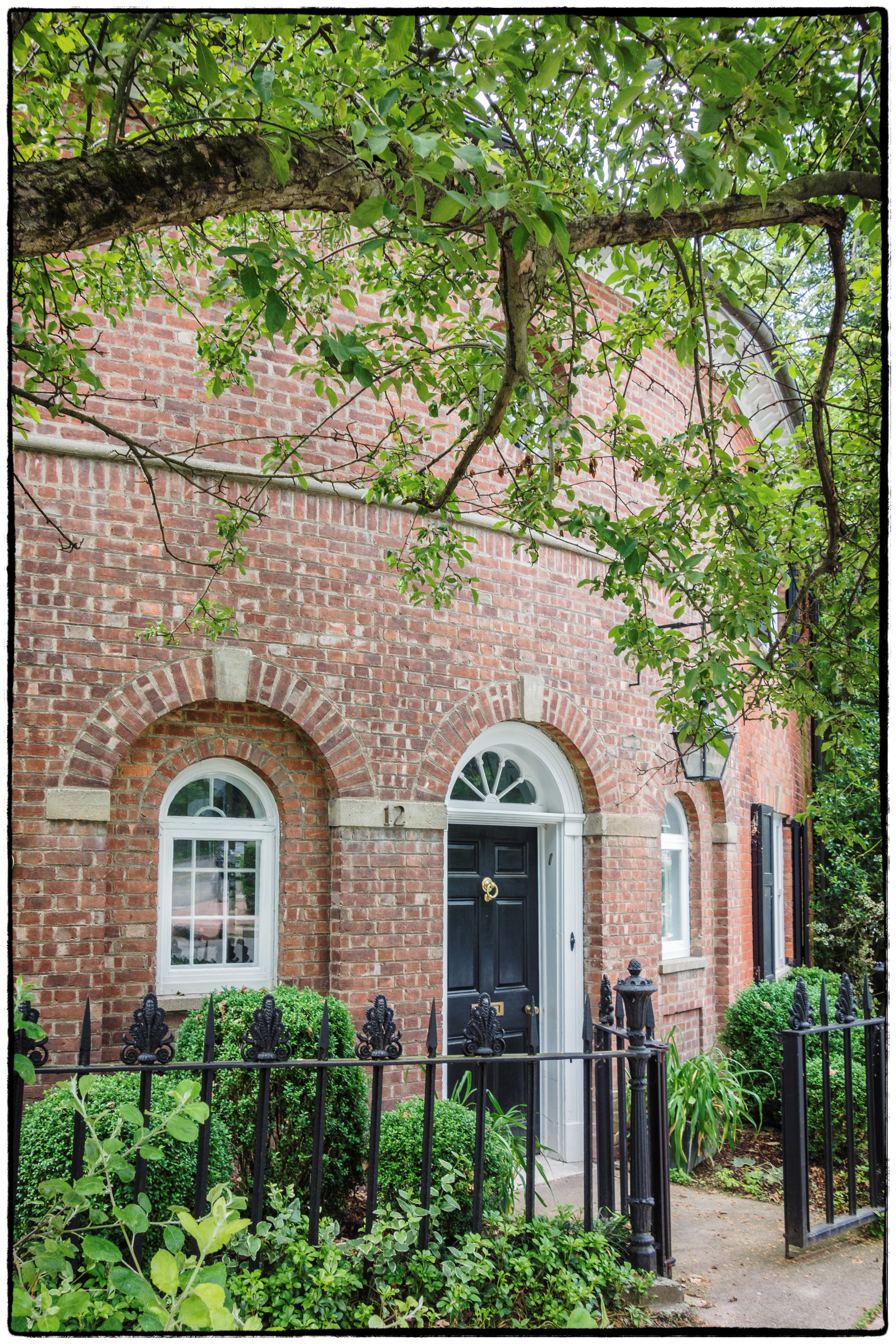
12 Liberty Street. This brick house with a Georgian-style curved front consists of the original square structure on the right-hand side, built in 1789 of Flemish bond construction, and the addition that was built during the Vanderlip restoration of Sparta between 1919 and 1922. The house was the Union Hotel, owned by Thomas Sherwood, in the 1860s and ’70s, and the Washington Inn in 1895. The local lore is that George Washington once slept there.

Sparta residents once got their water from a well in front of the house, at the intersection of Liberty Street and Rockledge Avenue. This was the site of the village well until about 1920.

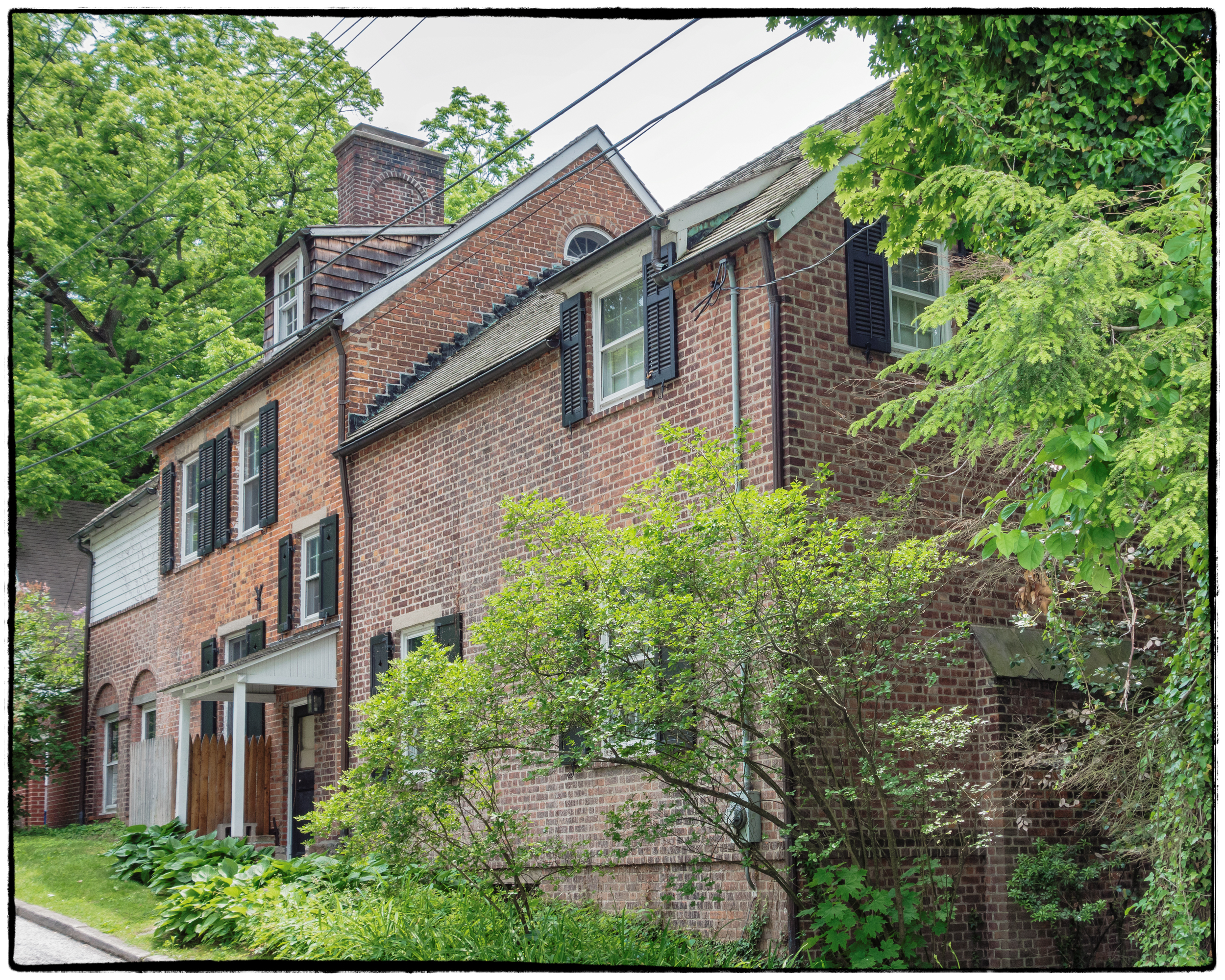
1 Rockledge Avenue. The original center portion of this brick house, built in 1784, is of Flemish bond construction. The owner, Josiah Rhodes, operated a mustard mill, in partnership with William Kemeys, on Sparta Brook from at least as early as 1797. Rhodes died in 1807.

Legend has it that the house served as George Washington’s headquarters while he stayed at the hotel across the street at 12 Liberty Street. The left and right wings were added in 1921 by Vanderlip‘s contractor, William Crawford. Andrew Lyon, a weaver, lived in the house during the 1860s and ’70s, and Harry Hopkins of the Franklin Roosevelt administration lived there from 1932 to 1936.

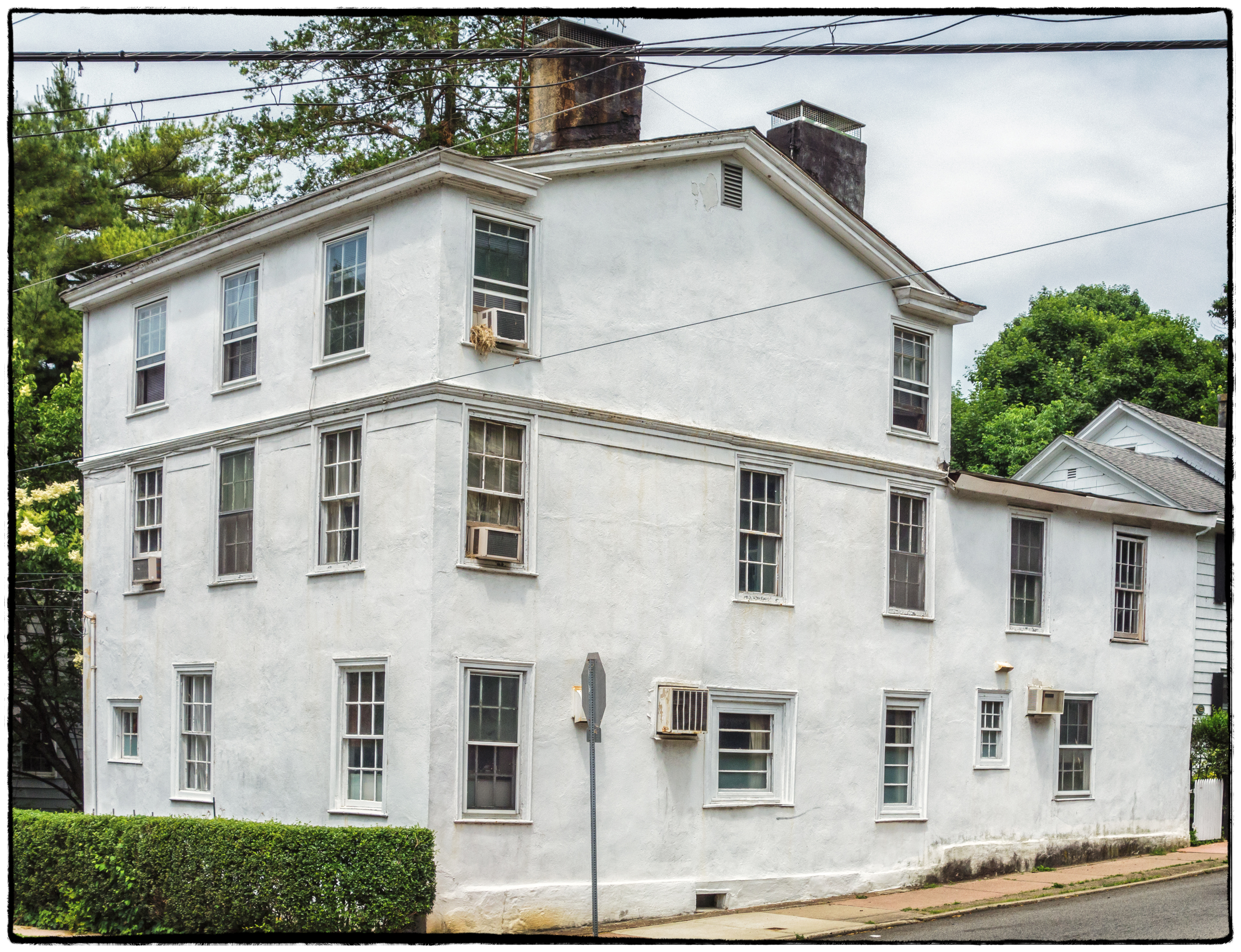
11 Liberty Street. This stucco house was built before 1820 and has been extensively altered since then. The building was a hotel called the “Branch House,” owned by A. Vanderhoff, in the 1860s and 1870s. It was the grocery and general store of Edward Storms at the turn of the century.

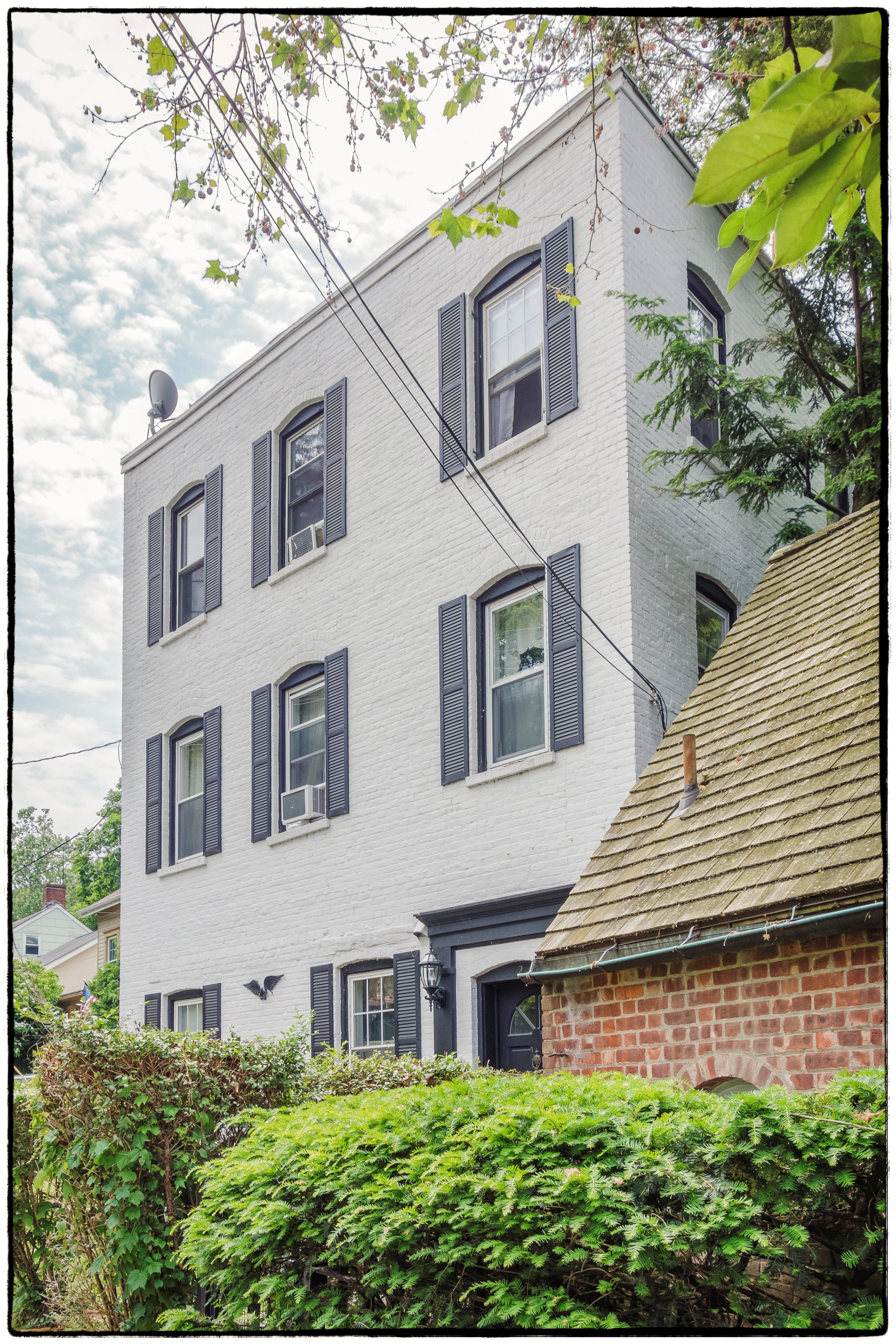
2 Rockledge Avenue. This white-painted brick house was built as a warehouse in about 1820. A large opening in the front, probably to allow horse-drawn carts to enter and exit, has been bricked in. A merchantile firm, Cypher & Slater, occupied the building in the 1860s and ’70s, and a grocery store was on the ground floor (and possibly a brothel on the upper floors) at the turn of the century. The house now contains five apartments.

With the exception of the extract from Wikipedia all of the quotations are taken from A Self-Guided Tour of Sparta. Historic Sparta Walking Tours are conducted throughout the Spring, Summer and Fall. The tours are guided by Dr. Alan M. Stahl, Sparta historian, resident and president of Jug Tavern of Sparta, Inc., who details the history of the Jug Tavern as well as Sparta’s homes and residents over the past 200 years. Check the Calendar for a schedule of Walking Tours and details.

Vision is better – by David DuChemin

I recently came across this video from David Duchemin. I have a couple of his books and I like the way he focuses on building photographic vision rather than the more common approach of improving photographic technique.

In the video he mentions two things, which relate to this post. The first is to look back on your work and possibly re-edit. Perhaps you’ll see pictures you didn’t like at the time but which now seem much better. Maybe you have some pictures, which with a little “tweaking” might come out well. The second is to try a black and white conversion as some pictures work better in black and white than they do in color.

I did both of these things with this picture. I’ve posted about Untermeyr Park before (see Untermyr Park, Yonkers, NY). At the time I must have been on a black and white binge since I converted pretty much all the pictures I took to black and white. I think a number of the pictures do work better in black and white so maybe I thought if I was posting some pictures in black and white I should post them all in black and white. It might have been better to just leave this one out I suppose as it clearly works much better in color. So I went back and edited it again so that I could post it again in it’s full color glory.

I see that the old post is also afflicted by my apparent need to post all (or at least most) of the pictures I took. There are eight pictures in this post – way to much! I rarely post more than five nowadays and often only one.

Taken in January, 2012 with a Sony Nex 5N and 18-55mm kit lens