Nepal 1999 – Buildings

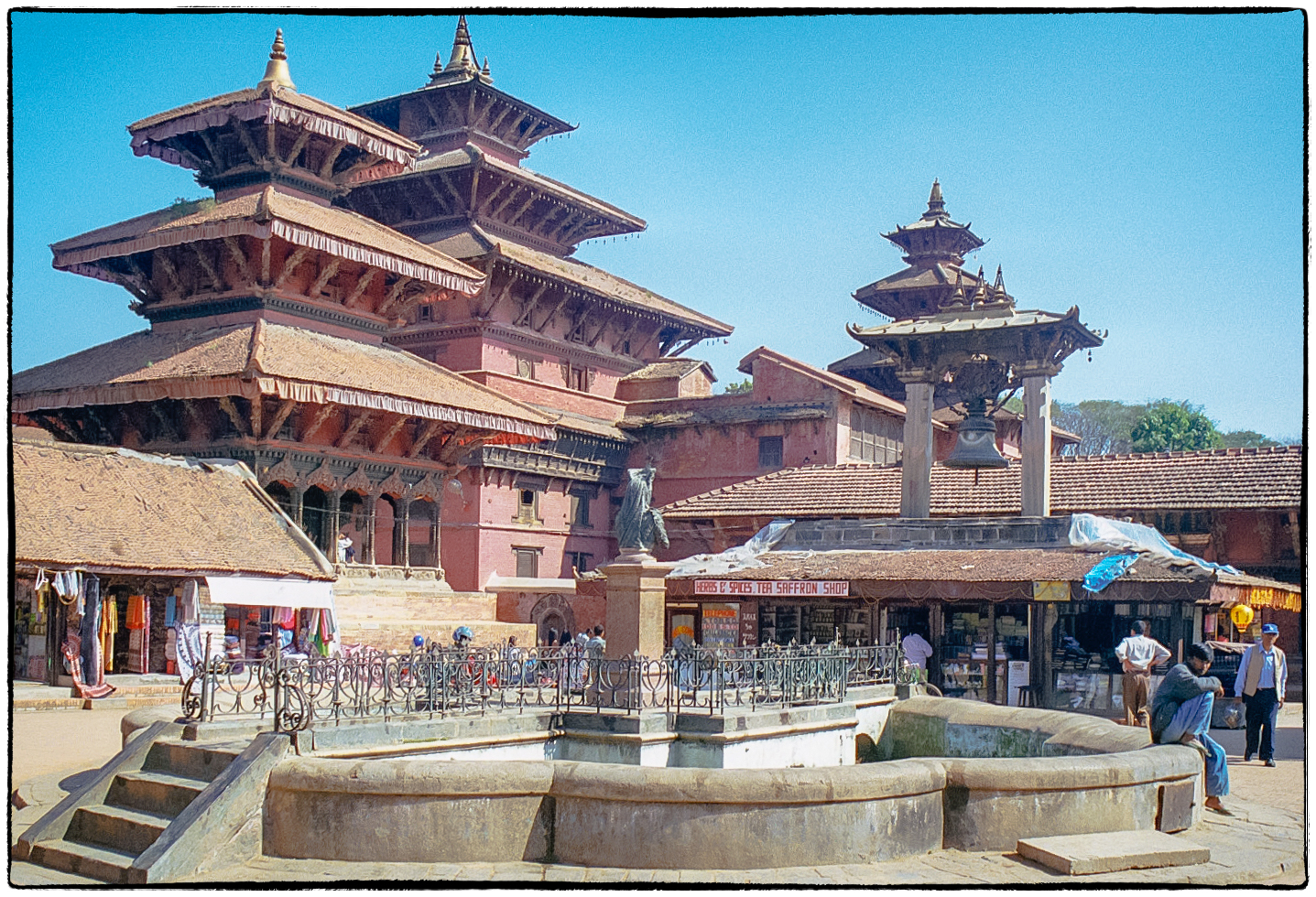
I was looking through some old pictures when I came across these scans of buildings in and around Kathmandu (Kathmandu, Patan, Bhaktapur), Nepal. They were taken some time around 1999 and unfortunately I no longer remember which picture was taken where. Seeing them made me think of the recent earthquake. The cost in human terms was terrible: almost 9,000 casualties in Nepal alone with additional casualties in India, China and Bangladesh. I wonder how many of these magnificent buildings are still standing?

Thailand – Ayutthya Historical Park

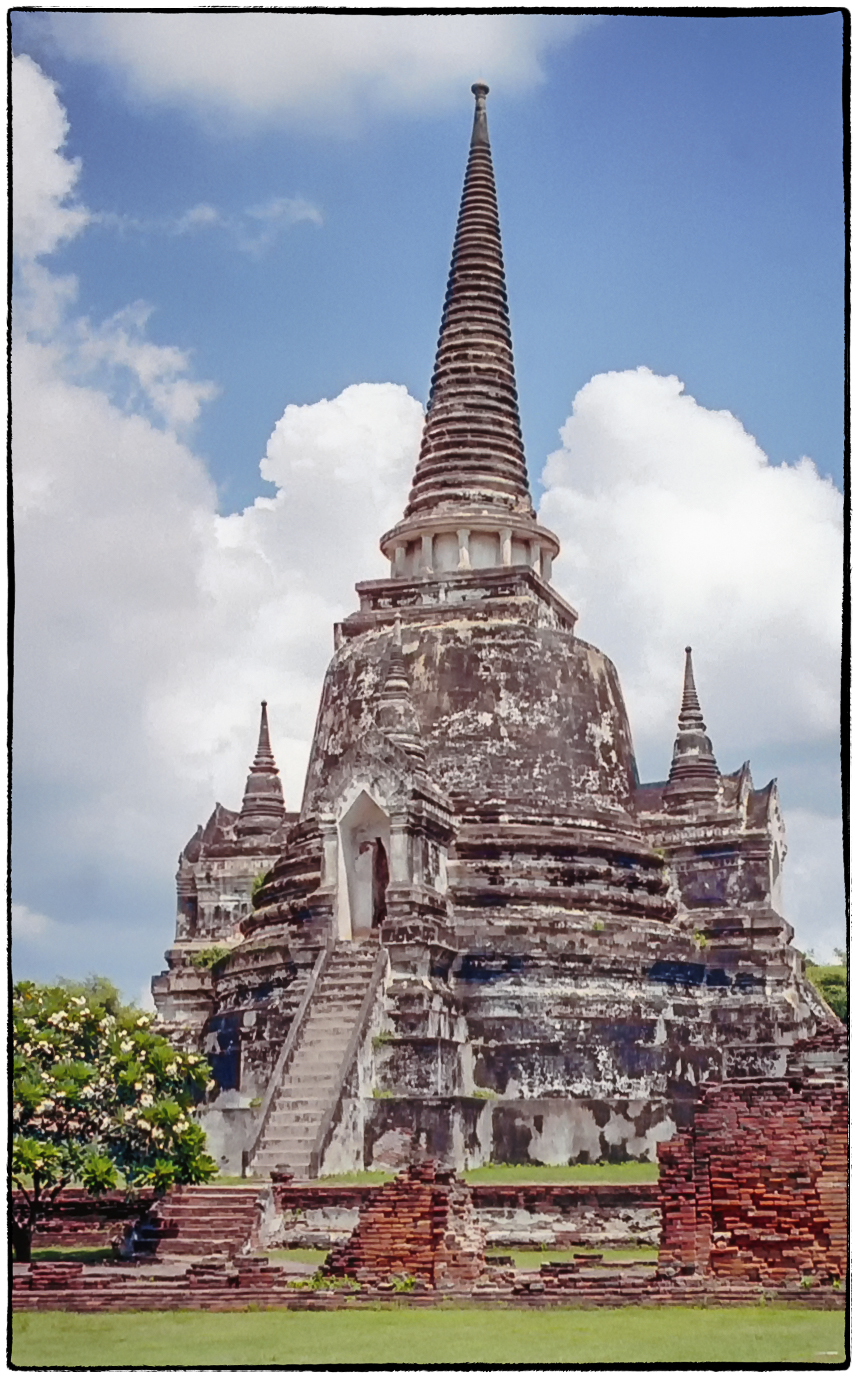
Wat Phra Si Sanphet.

According to Wikipedia:

The Ayutthaya Historical Park (Thai: อุทยานประวัติศาสตร์พระนครศรีอยุธยา (Pronunciation)) covers the ruins of the old city of Ayutthaya, Thailand. The city of Ayutthaya was founded by King Ramathibodi I in 1350 and was the capital of the country until its destruction by the Burmese army in 1767.

In 1969 the Fine Arts Department began with renovations of the ruins, which became more serious after it was declared a historical park in 1976. A part of the park was declared a UNESCO World Heritage Site in 1991. Thirty-five kings ruled the Ayutthaya kingdom during its existence. King Narai (1656 CE to 1688 CE) not only held court in Ayutthaya but also from his palace in the nearby city of Lopburi, from where he ruled 8–9 months in the year.

The park is about 50 miles north of Bangkok. I visited there in 1999 on a bus tour from Bangkok, which included other attractions e.g. Bang Pa In, the Floating Market etc. It was an all day trip, but there really wasn’t enough time to really take a look around. I could have spent the entire day in Ayutthya – it was so interesting.

I did get to ride on an elephant though.

Scanned from old negatives. I don’t remember which camera I was using at the time. It could have been a Canon AE-1 (most likely candidate), a Minolta Hi-Matic 7SII, or even a single use disposable camera I picked up because I neglected to bring a camera with me.

Headless Buddha

Temple

Ruins of an old city

Moss covered ruin

Ruined temple with pillar.

My first elephant ride

My first, and so far only ride on an elephant – seen here in the ancient Thai capital of Ayutthya (you can see some of the ruins in the background). It’s not much of a picture, but I can take solace in the fact that I clearly didn’t take it (that’s me on the left in the picture). It must have been taken with my camera though, as I have the negative. For all it’s failings the picture is worth having to document an event that may never (and probably won’t) take place again.

Thailand – Bang Pa In

Statue and Lake.

Some old negatives (about three rolls of 36 exposure film) recently came to light. I believe they were taken during a work related trip to Bangkok, Thailand around 1999. Usually when I travel on business I don’t find the time to look around much – mostly seeing the hotel, the road to the office, and the office itself. On this occasion though I must have had a weekend to myself because I was able to not only look around in Bangkok, but also to get out of Bangkok and see some sights outside of the capital. I’d already been to the Philippines, but somehow because of the deep connection the Philippines had with Europe (400 years under Spanish colonial rule) it didn’t feel much like what I expected Asia to be like. Thailand definitely did, with its bright (almost gaudy) temples; exotic looking palaces; mysterious ruins etc.

This post will be the first of a series and covers Bang Pa In: a royal palace about 40 miles north of Bangkok.

According to Wikipedia:

Bang Pa-In Royal Palace (Thai: พระราชวังบางปะอิน), also known as the Summer Palace, is a palace complex formerly used by the Thai kings. It lies beside the Chao Phraya River in Bang Pa-In district, Ayutthaya Province.

King Prasat Thong constructed the original complex[1]:211 in 1632, but it fell into disuse and became overgrown in the late 18th and early 19th centuries, until King Mongkut began to restore the site in the mid-19th century. Most of the present buildings were constructed between 1872 and 1889 by King Chulalongkorn.

Amidst vast gardens and landscaping stand the following buildings: Wehart Chamrunt (Heavenly Light), a Chinese-style royal palace and throne room; the Warophat Phiman (Excellent and Shining Heavenly Abode), a royal residence; Ho Withun Thasana (Sages’ Lookout), a brightly painted lookout tower; and the Aisawan Thiphya-Art (Divine Seat of Personal Freedom), a pavilion constructed in the middle of a pond.

The palace remains largely open to visitors, as King Bhumibol Adulyadej and his family use it only rarely for banquets and special occasions.

Phra Thinang Withun Thatsana or “Sage’s Lookout”.

Phra Thinang Withun Thatsana. A colorful Thai-style building in the middle of a pool, with the rather intimidating name of “The divine seat of personal freedom.” Apparently the only example of classical Thai architecture within the palace. It was built by King Chulalongkorn (Rama V) and houses his statue. It’s a rectangular building and this a view of one of the ends. The front facade is more spectacular, but I didn’t realize that at the time – only later when I saw a picture taken from a different angle.

Buddha

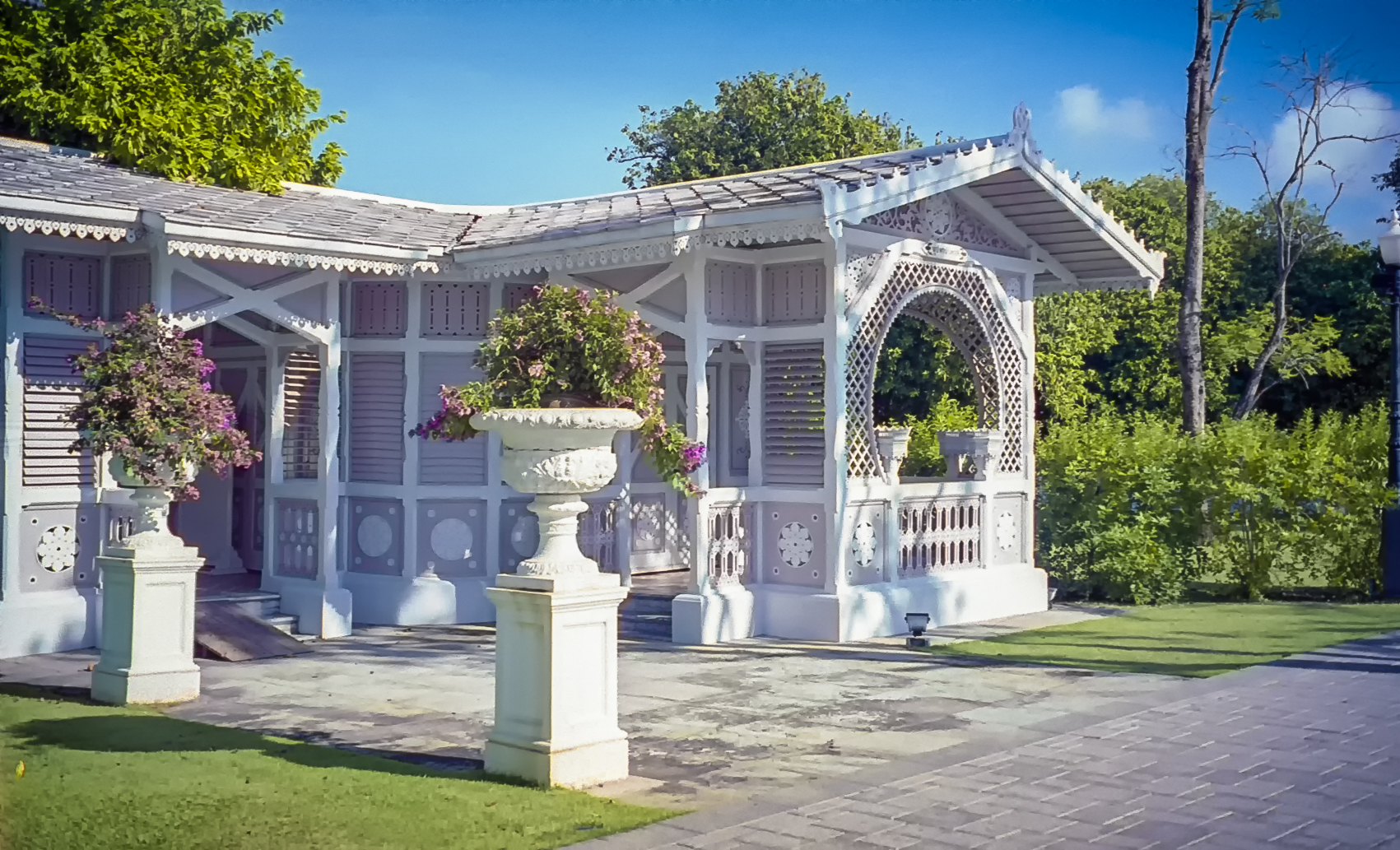
Pavilion

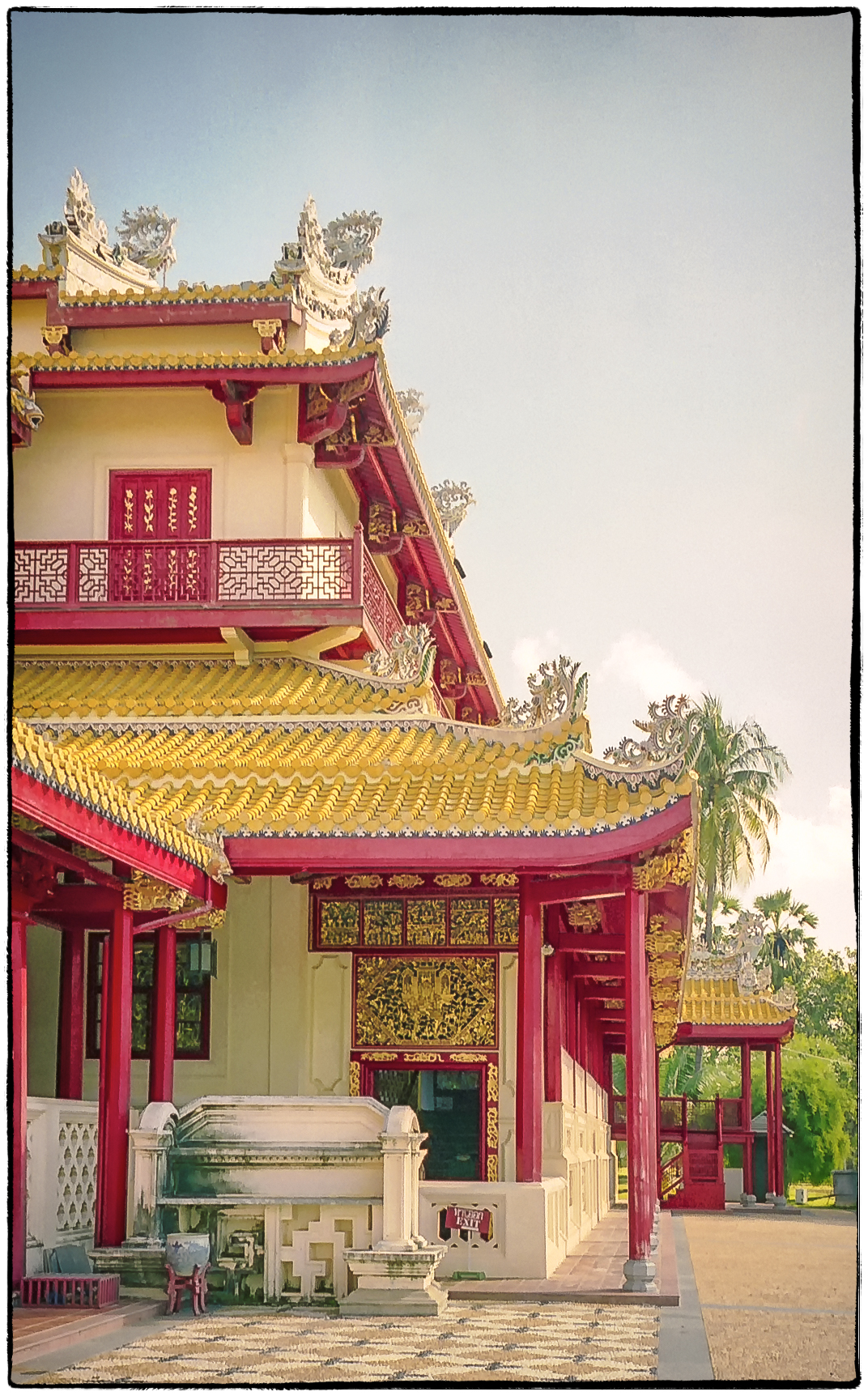
Phra Thinang Wehat Chamrun. Apparently built in China and given as a gift to King Chulalongkorn (Rama V) by the Chinese Chamber of Commerce in 1889.

Bannerman’s Island

I’ve taken pictures of Bannerman’s Island from afar – from both the west shore and the east shore of the Hudson. I finally decided to see it up close and took the tour – the island is about a 25 minute boat ride from Beacon, NY and the tour leaves from right next to the Beacon Metro-North station. Although there’s not a lot to see on the island, what there is is interesting and you won’t find anything like it anywhere else in the lower hudson valley. So to me the tour was worth it. The guides give lengthy descriptions of the history of the island, of Francis Bannerman and over the castle like buildings (actually they are arsenals). I’m sure I would have been more interested in the descriptions had I not recently attended a presentation on Bannerman’s Island at the Briarcliff Manor Historical Society

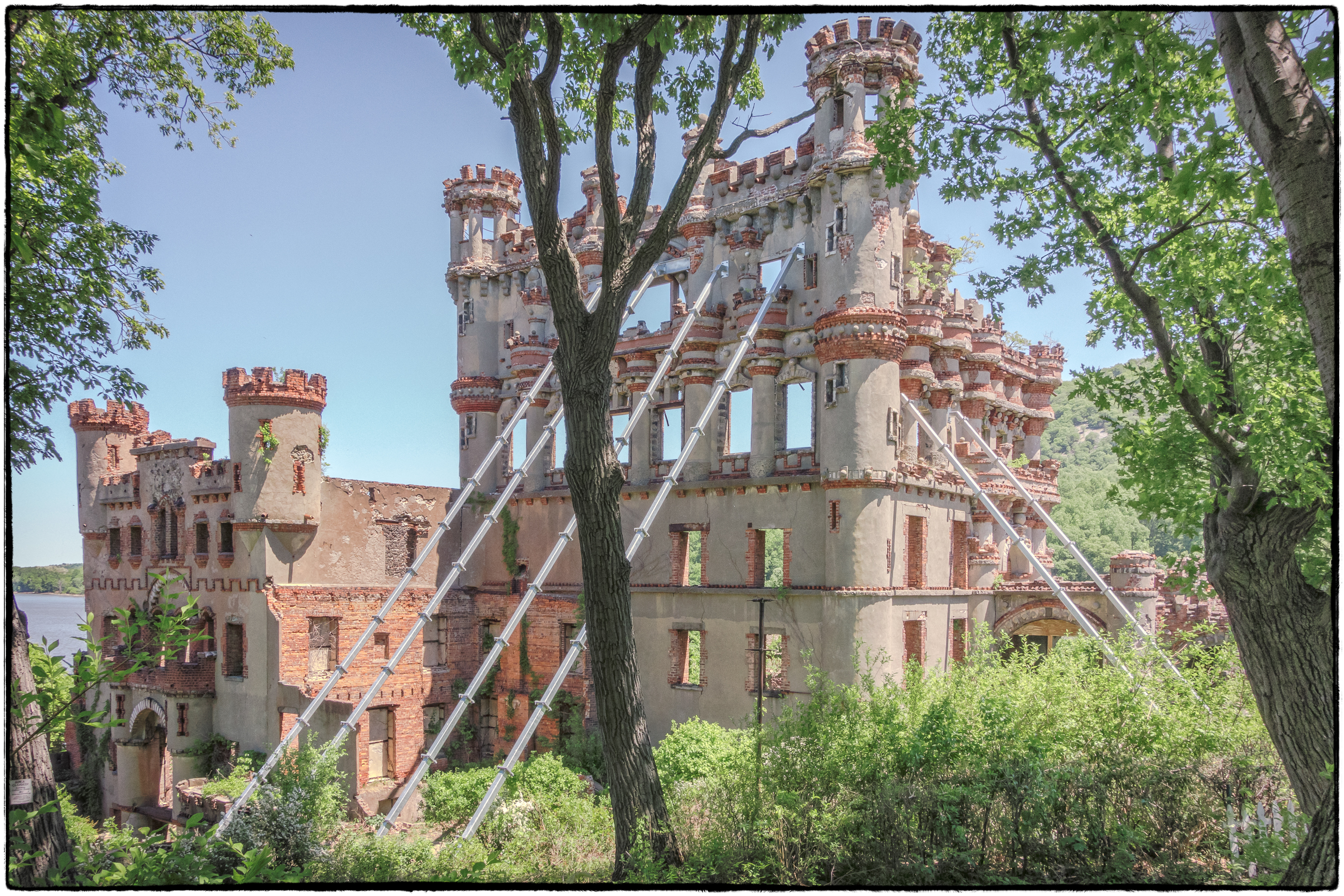
Crumbling arsenal buildings. Note the metal buttresses. About 40-50 percent of the arsenal buildings have collapsed in recent years.

According to “Scots and Scots Descendant in America. D. MacDougall. New York, April 10, 1917. Part V – Biographies“:

FRANCIS BANNERMAN, the noted merchant and authority on war weapons, is the sixth Frank from the first Frank Bannerman, standard-bearer of the Glencoe MacDonalds, who escaped the massacre of 1692 by sailing to the Irish coast. His descendants remained in Antrim for 150 years, intermarrying with Scottish settlers. In 1845, Mr. Bannerman’s father removed to Dundee, Scotland, where Francis VI was born, March 24, 1851. He came with his parents to the United States in 1854 and has resided in Brooklyn since 1856. The eldest son in each generation is always named Frank. The surname originated at Bannockburn, where an ancestor rescued the clan pennant, whereupon Bruce cut off the streamer from the Royal ensign and conferred upon him the honour of “bannerman.”

Young Francis left school at ten, when in 1861 his father went to the war. He secured employment in a lawyer’s office at two dollars a week, each morning, before going to the law-office, supplying with newspapers the officers of the warships anchored off the Brooklyn Navy Yard, near his home. Summer evenings, after work hours, he dragged the river with a grapple for bits of chain and rope, which he sold to junkmen. When his father returned disabled, he became a dealer in the material the boy collected, with a storehouse at 18 Little Street, also attending the Navy auctions, and later established a ship-chandlery business at 14 Atlantic Avenue. Frank went back to school for a time and won the scholarship for Cornell University, but could not accept owing to his father’s war disability requiring his assistance in carrying on the business.

Read More