Camera Lucida

I’m something of a “sucker” for books, articles etc. that deal with topics like: what is photography? is photography an art? am I an artist? I don’t know why I gravitate to (and buy!) such items, because invariably I don’t understand them, and often can’t get through them. They’re usually full off what I call “critic speak”: long, complex sentences peppered with foreign sounding words that I don’t know the meaning of and have to look up.

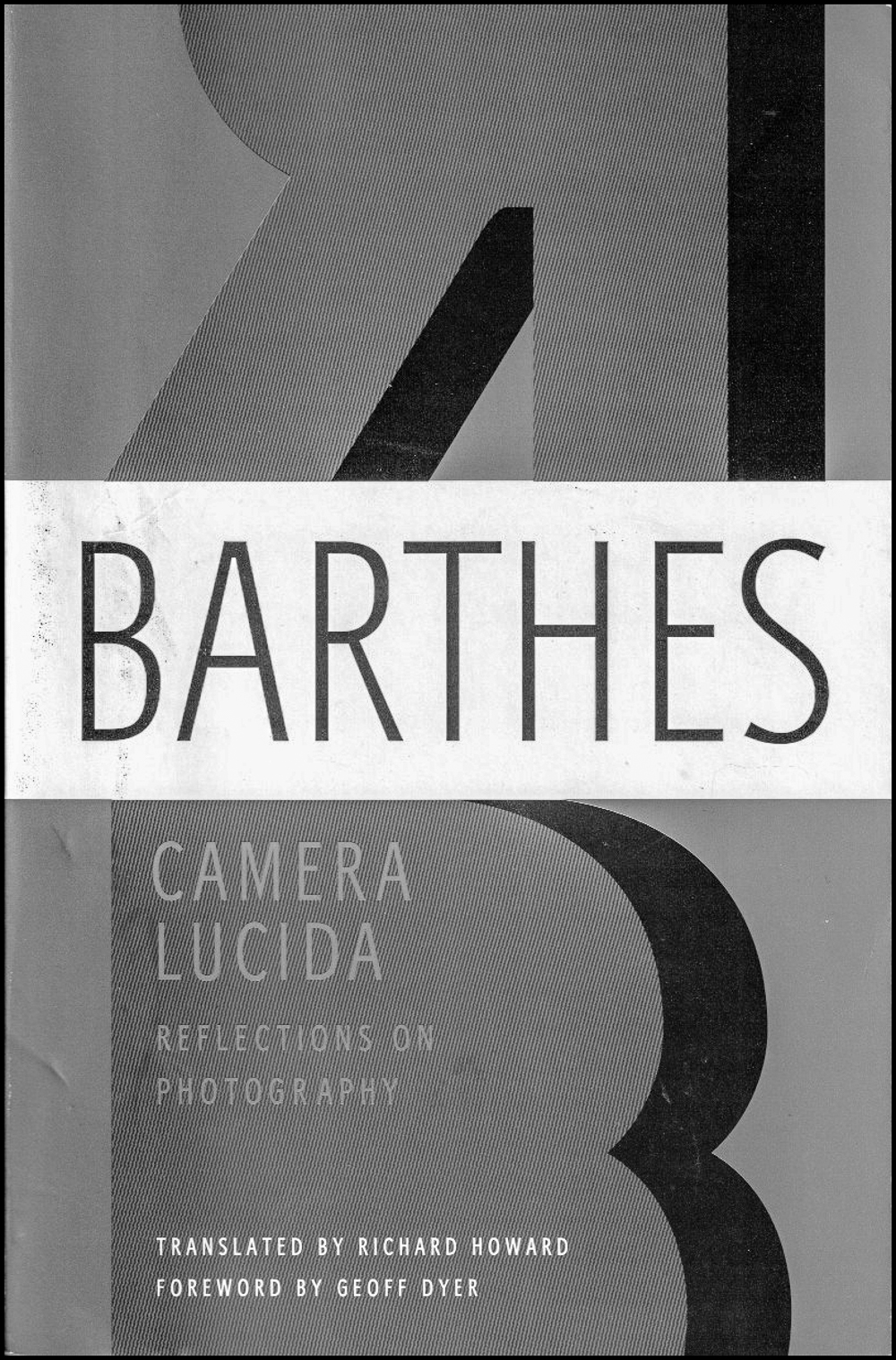
Two books of this nature, which are often recommended are “On Photography” by Susan Sontag and “Camera Lucida” by Roland Barthes. I bought “On Photography” some time ago and, predictably couldn’t get through it.

Being a glutton for punishment I recently acquired a copy of “Camera Lucida” with the same result: I can’t get through it.

Now please understand that I’m not attacking Ms. Sontag or Mr. Barthes. They’re both clearly highly intelligent and well-regarded people. And I’m willing to accept that the problem lies with me. I just don’t seem to be able to relate well to such books. So why do I keep buying them? I guess it’s probably because deep down inside I feel I should be able to understand them. And that maybe if I read enough of them, I’ll have some kind of epiphany, and all will become clear. But so far…

However, I haven’t completely given up on “Camera Lucida” yet. It’s in my bag and saying to me “Don’t give up. You can do it!”

In the meantime, there are many articles about “Camera Lucida”, too many to list in this post. Here’s a link to one of them: “Roland Barthes’ Camera Lucida: Absence as Presence

Sebastian Sadecki Street Photobook Series: Repetition

In this video, Sebastian Siadecki introduces a new series on street photography photobooks, a genre with which he has extensive experience. He provides a general definition of street photography: work primarily about people in public spaces, with generally no interaction before the photos are taken.

He then then discusses two photobooks that, according to him, use repetition in interesting ways:

  • 42nd and Vanderbilt by Peter Funch: This book features photos taken from the same vantage point: the corner of 42nd Street and Vanderbilt Avenue in Manhattan. The repetition of commuters in similar poses and expressions highlights their daily routines and habits. He explains that he initially dismissed the book because of its emphasis on the use of a long lens but later became “hypnotized” by the intimacy and focus on details. He notes how the book reveals not just repeated actions, but also consistent emotional states as part of the commute.
  • Twirl/Run by Jeff Mermelstein: This book is divided into two sections: women twirling their hair and men running in a hurry. The photos are displayed in a unique layout of three stacked images per page, emphasizing the collection over individual “bangers”. Siadecki discusses how Mermelstein’s long-standing practice of street photography led to the running series while the twirling series became a more conscious effort. He praises the book for reflecting the collective anxiety of New York City
  • I found myself wondering how the first one was created. Remember that Siadecki states that he almost dismissed it because of its use of a long lens (most street photographers use a normal or wide-angle lens). I worked in Manhattan for many years and know this area quite well. Its teaming with people and things happen very quickly. I don’t see how he could remember individuals passing by with possibly days between the chance encounters. The only way I can think that he did it was to take bursts of images and then later sort through them. So little technical skill may have been required. The images are not particularly pleasing aesthetically. So, I guess we’re in the realm of conceptual photography here: a genre that translates ideas or concepts into visual images, emphasizing the message over mere aesthetics and technique. It’s a genre that I’ve never fully understood, so I’d take what I’m saying, “with a grain of salt”. Maybe I just don’t get it.

    As for the second one, if you watch the video, you’ll discover that there are 120 images of women twirling their hair, and 120 images of men running. Too many for me I’m afraid. I don’t have that kind of attention span.

    So, I suspect I would find both books rather boring – if I were to buy them that is (which I probably won’t, although if I came across one in a bookstore, I’d probably spend a bit of time browsing through it). I think I’ll stick with the likes of Garry Winogrand, Joel Meyerowitz, Henri Cartier-Bresson etc.

    Note that this is not a comment on Mr. Siadecki’s channel, which I love. I collect photobooks and his channel has given me lots of pointers as to what my next purchase might be.

    Is it worth taking the same old boring fall pictures again.

    Every year for some time now I’ve been taking pictures of the fall foliage (see above and below). While they’re pretty, colorful, and in a few cases quite spectacular they’re all starting to look pretty much the same.

    So, unless I can come up with some clever idea of how to come up with something different, I’m not going to bother this year.


    Taken with a variety of different cameras and lenses.

    Self Portait

    I like black and white photography. In many ways I see things in black and white. Maybe it’s because I grew up in a time before color photography became important. Most of the photographs and movies I saw when I was young were in black and white. Yes, I know that color moviews had been available for quite some time, but the ones I seem to remember were all black and white.

    Of all places, this was taken in the men’s room in the building where I work with the Briarcliff Manor-Scarborough Historical Society. The day before I’d been watching a YouTube video about high-contrast black and white photography. As I was leaving the men’s room, bright light streamed in through a high window and fell on my face. It occurred to me that if I could get the exposure right, I might get something interesting.

    Many might think that I carry a camera with me wherever I go. But that wouldn’t be true. I don’t usually carry one with me to the men’s room. However, I did have one in a bag, downstairs where I work so I went down to get it.

    This is the result. I quite like it.

    Taken with a Sony RX100 M3.

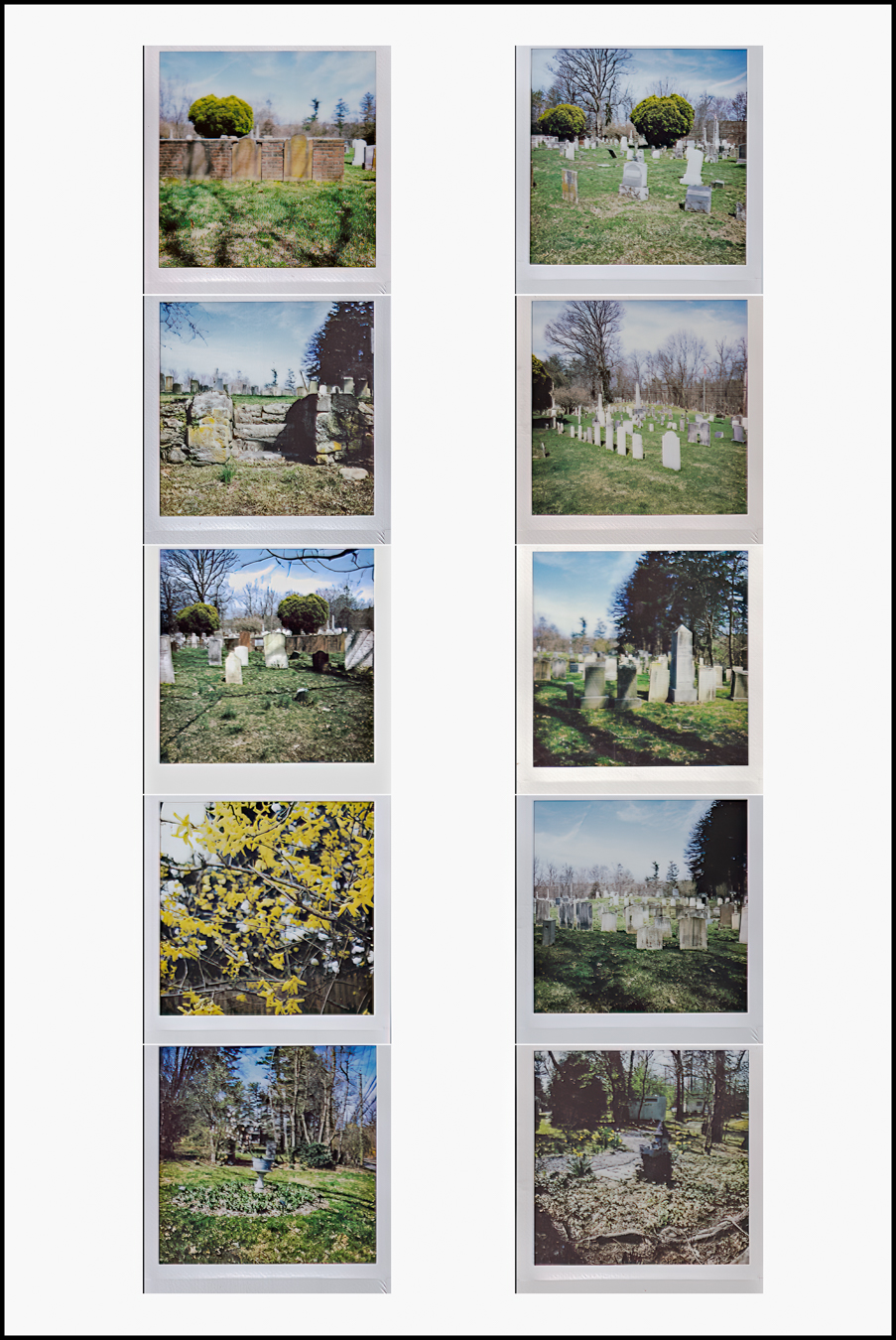
    Film Camera 2024 -3: Fujifilm Instax Square SQ-6 – Results

    So, after finding the results from the SX-70 and the I2 somewhat disappointing, how did I like what I got from the SQ-6?

    It’s an easy camera to use, largely point and shoot with relatively few additional functions that you might use. The learning curve with this camera is certainly much shorter than, for example, the I2.

    At first glance the prints looked better, with more vibrant colors if a little underexposed. However, after scanning I realized that pretty much all of the prints were out of focus. Now I’m new to instant photography and mostly likely a problem with the photographer (i.e. me) rather than the camera.

    I also found that the prints were a lot smaller than I had anticipated. Mea Culpa again. I was somehow thinking that they would be the same size as the Polaroid prints of yesteryear. Moreover, I’m also not entirely comfortable composing with a square format.

    Of course, the film is expensive, but that’s true of all instant film nowadays.

    So far, my attempts at instant photography have not been particularly successful and it seems to me that I now have two options:

    1. Decide that instant photography is not for me and give up.
    2. Don’t blame the cameras and accept that there’s always a learning curve and try harder until I get to a point where I’m satisfied.

    I prefer the second option. There were reasons why my first few attempts didn’t succeed. The SX-70 was an old camera bought second hand. It clearly wasn’t working as originally intended. I might get it checked out, if possible fixed and try it again. The problem with the I2 was known (the autoexposure didn’t work correctly) and I chose to use it anyway. This has now been fixed in the recent firmware up, which I’ve now applied. I’m keen to try again and this will be my next attempt. The SQ6 was, I suspect, just plain lack of knowledge and familiarity with the camera.

    Clearly, I have to use the cameras much more frequently. As the saying goes “if at first you don’t succeed try, try again”. It’s not rocket science.