
After the bicycle riding show we were hungry and went back to Quincy Market for something to eat: lobster rolls. Yummy.

Taken with a Sony A6000 and 18-135mm f3.5-5.6 OSS
Photographs and thoughts on photography and camera collecting

After the bicycle riding show we were hungry and went back to Quincy Market for something to eat: lobster rolls. Yummy.
Taken with a Sony A6000 and 18-135mm f3.5-5.6 OSS
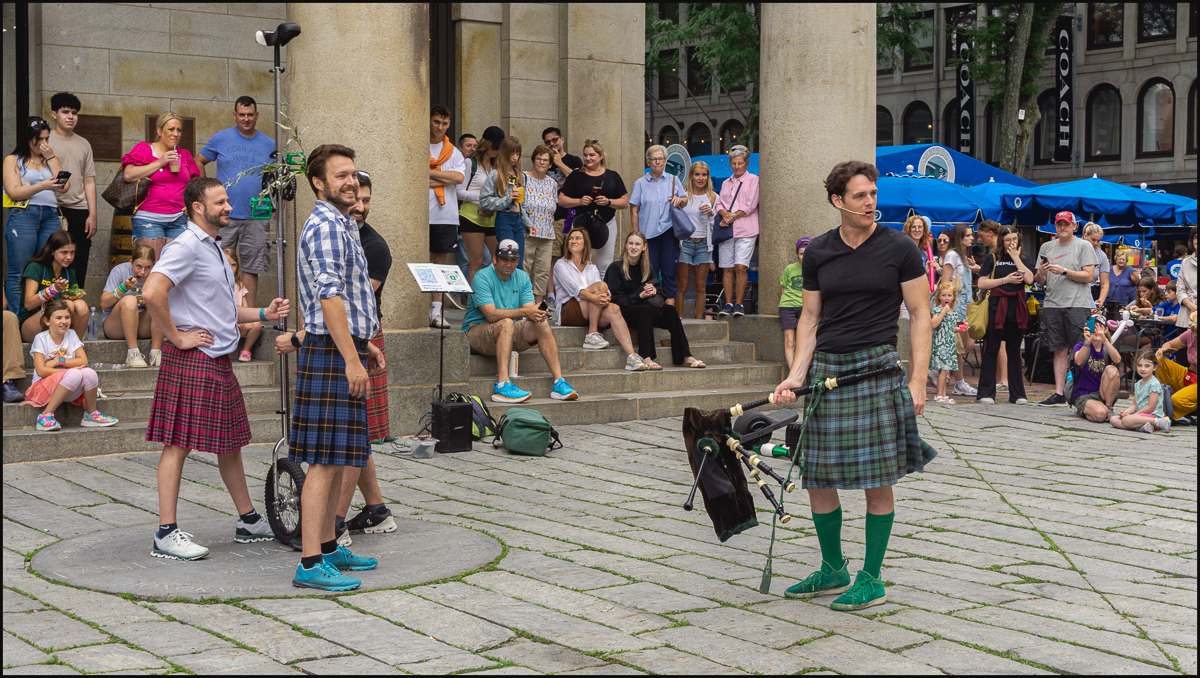
I must say that he was very entertaining. And I don’t think that I’ve ever seen anyone juggling two (I think it was two. Might have been three) knives while riding a 10-foot-tall unicycle and playing bagpipes. He could probably do it in his sleep, but managed to give the impression that he might fall off at any moment.
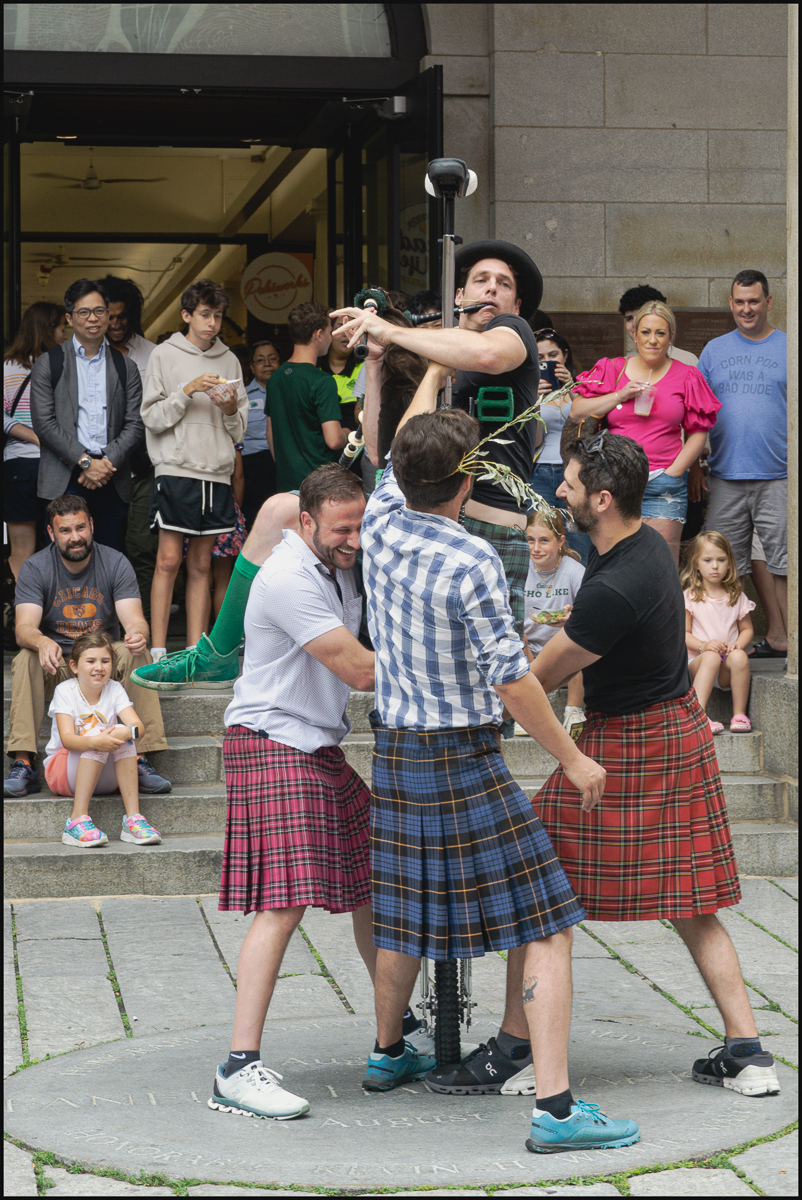
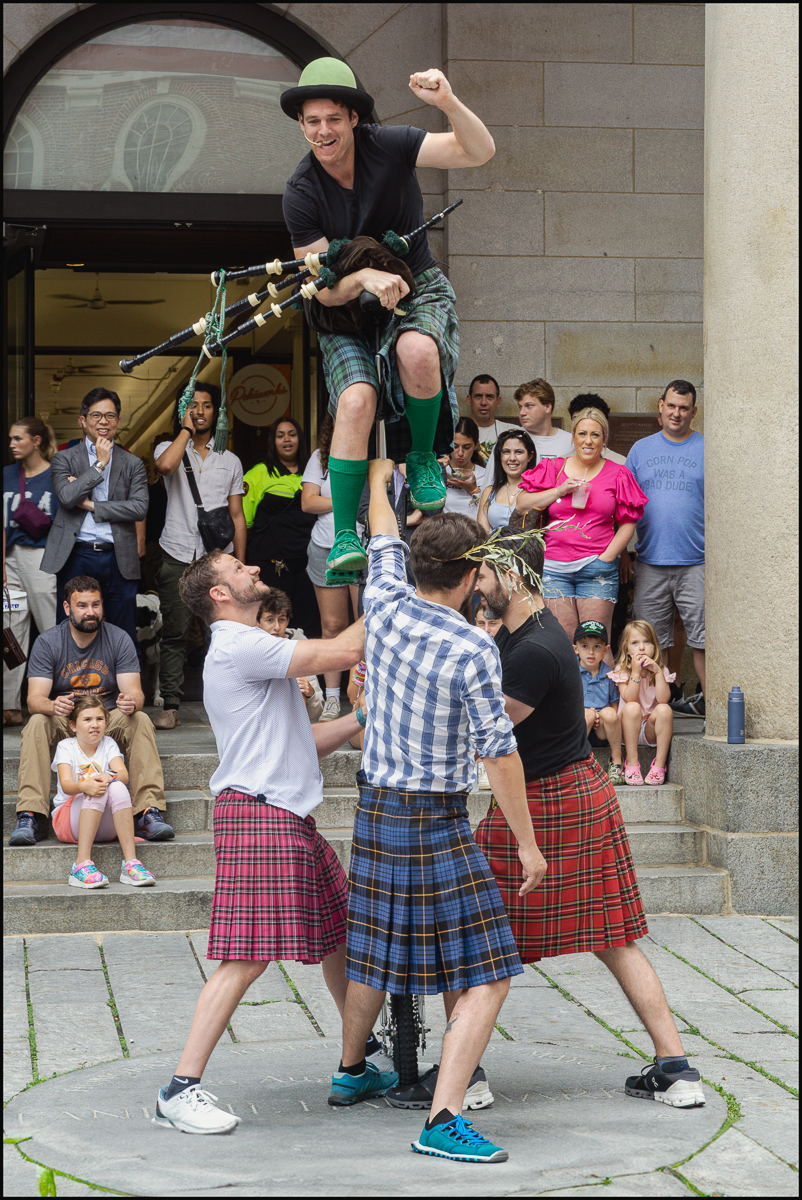
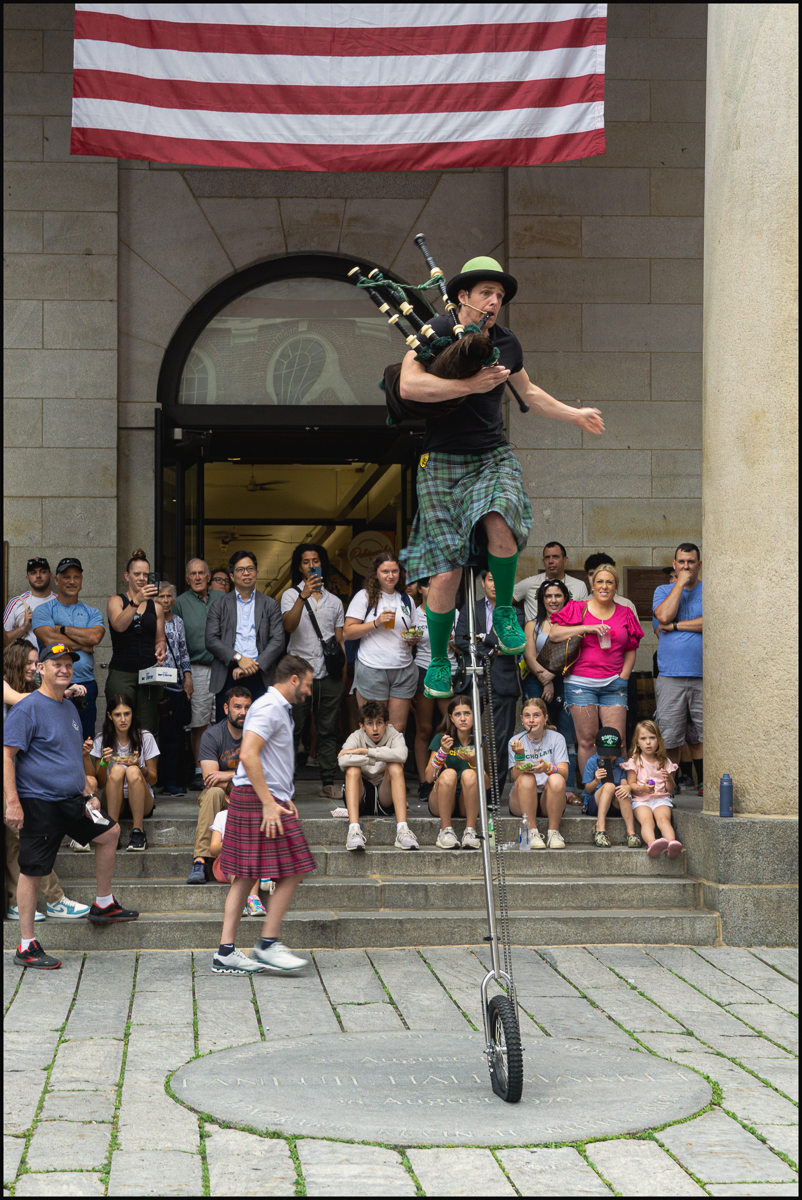
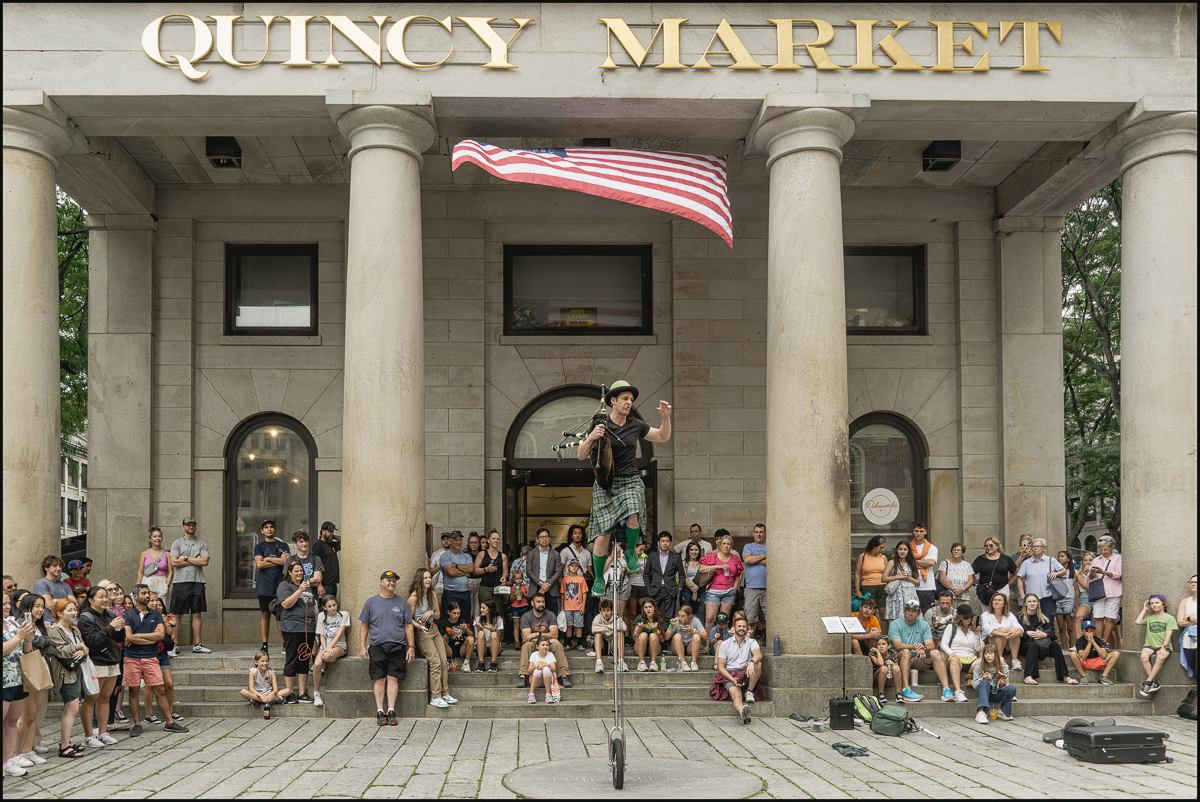
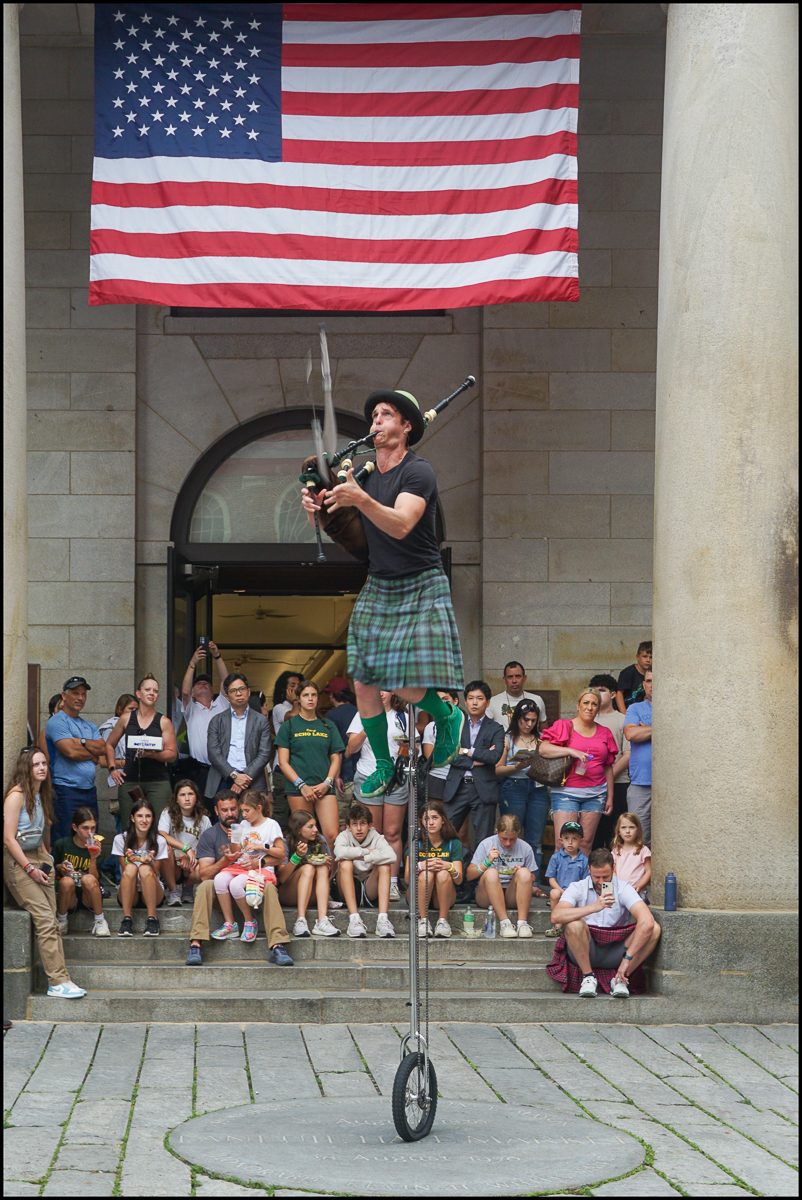
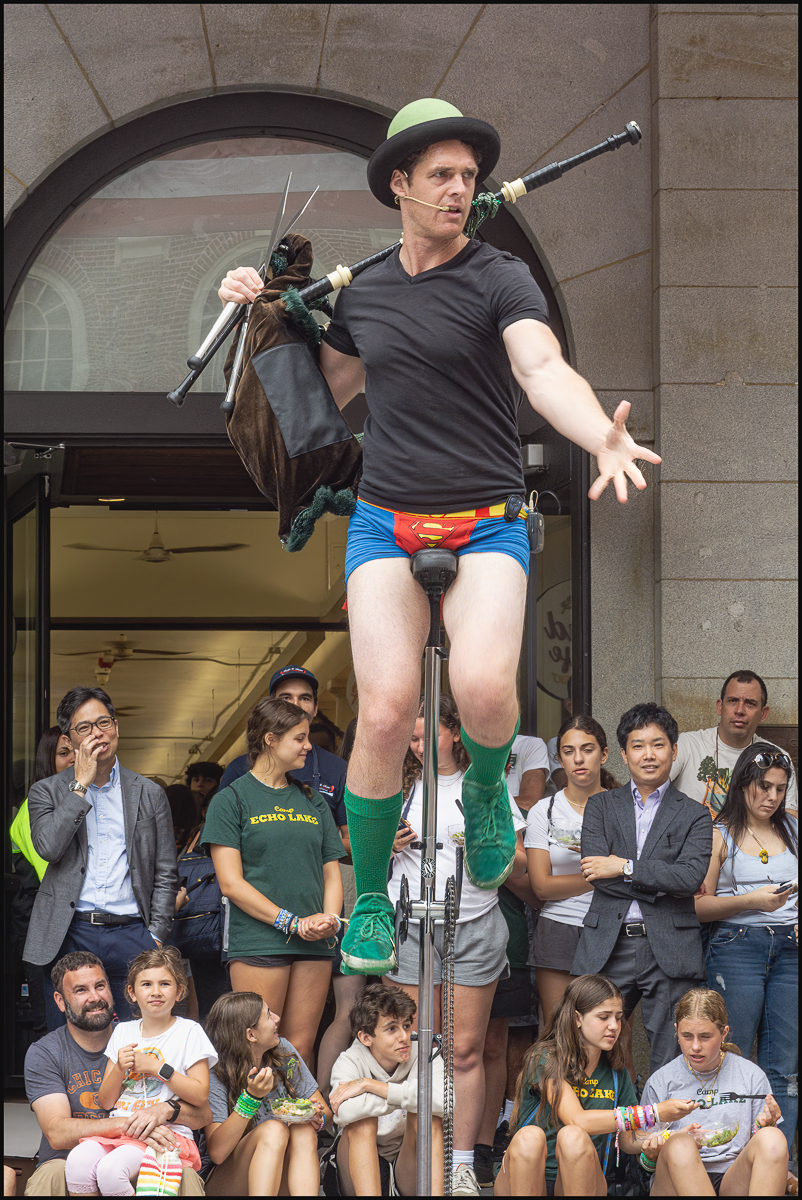
Taken with a Sony A6000 and 18-135mm f3.5-5.6 OSS

“Quincy Market is a historic building near Faneuil Hall in downtown Boston, Massachusetts. It was constructed between 1824 and 1826 and named in honor of mayor Josiah Quincy, who organized its construction without any tax or debt. The market is a designated National Historic Landmark and a designated Boston Landmark in 1996, significant as one of the largest market complexes built in the United States in the first half of the 19th century. According to the National Park Service, some of Boston’s early slave auctions took place near what is now Quincy Market.
As the central building of Faneuil Hall Marketplace, Quincy Market is often used metonymically for the entire development. By the mid-20th century it was badly in need of repair, and it was redeveloped into a public shopping and restaurant area in the early 1970s and re-opened in 1976. Today, this includes the original Quincy Market buildings, the later North Market and South Market buildings that flank the main Quincy Market, the historic Faneuil Hall lying at the west end, and two smaller curved buildings, added later to the eastern end.” (Wikipedia)


Taken with a Sony A6000 and 18-135mm f3.5-5.6 OSS.
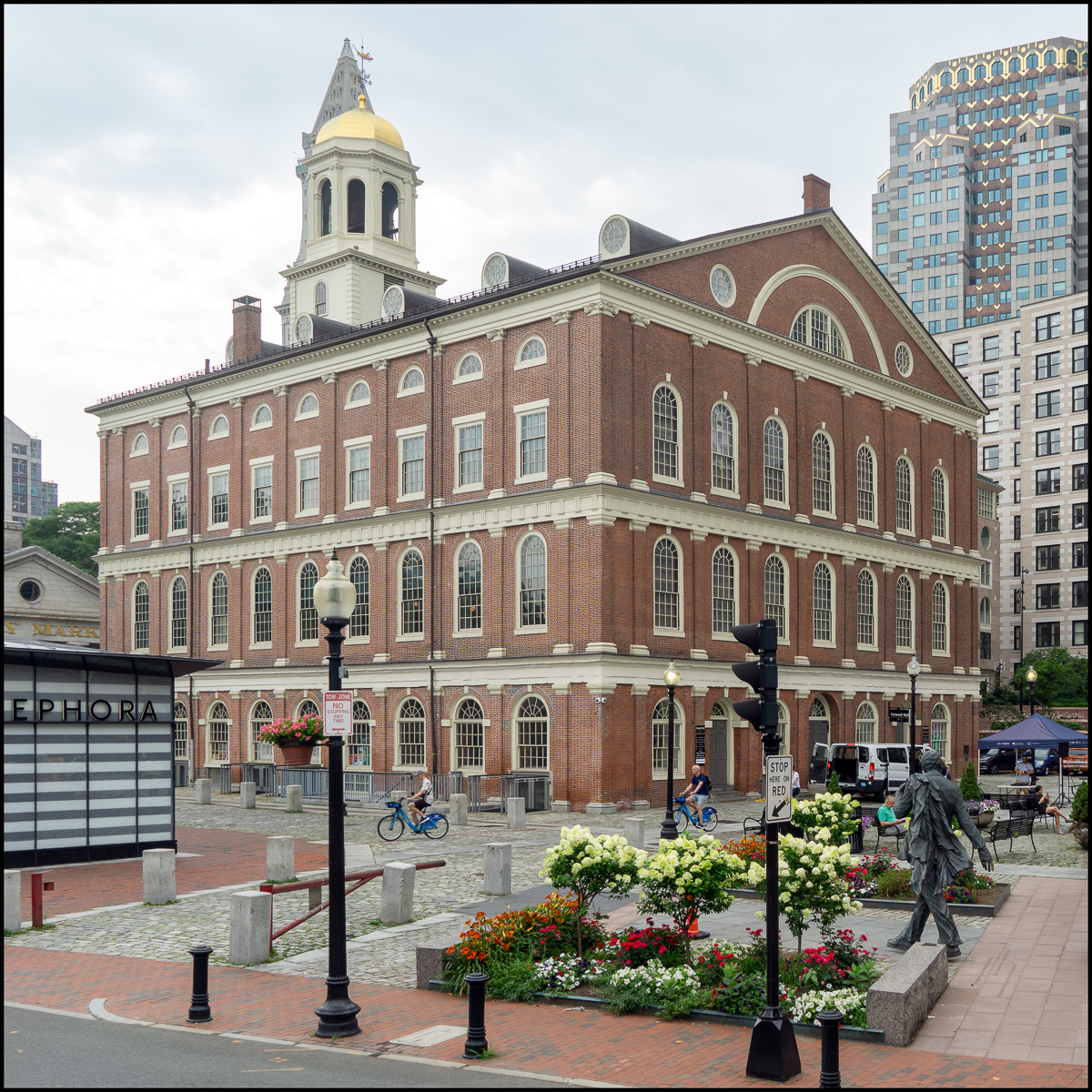
Faneuil Hall is a marketplace and meeting hall located near the waterfront and today’s Government Center. Opened in 1742, it was the site of several speeches by Samuel Adams, James Otis, and others encouraging independence from Great Britain. It is now part of Boston National Historical Park and a well-known stop on the Freedom Trail. It is sometimes referred to as “the Cradle of Liberty”. (Wikipedia)
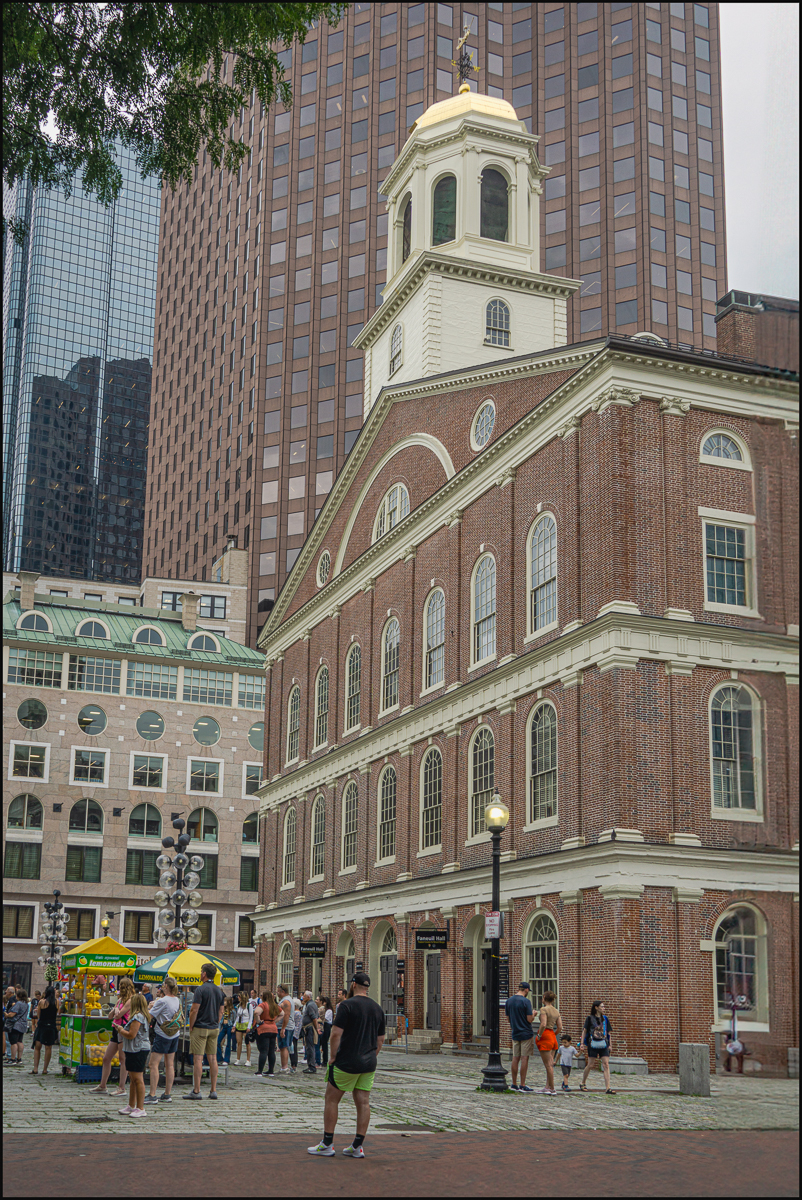
Taken with a Sony A6000 and 18-135mm f3.5-5.6 OSS.
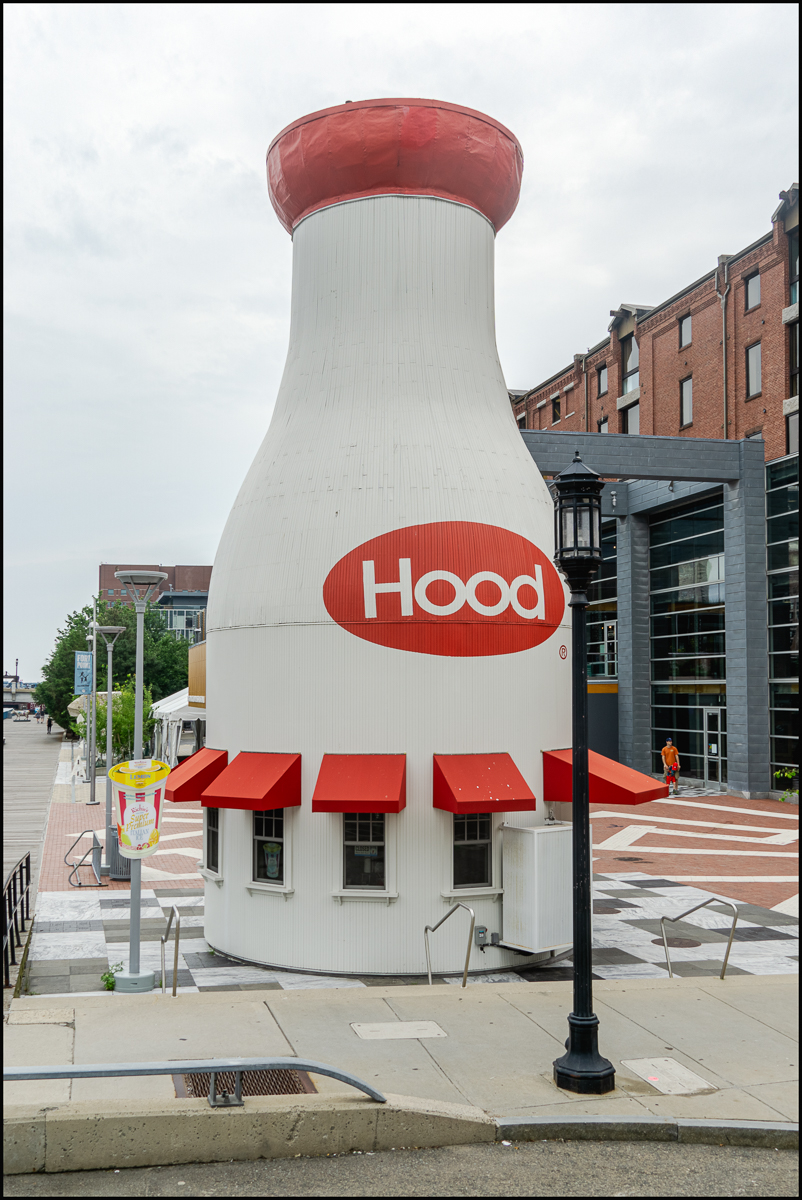
“Standing 40 feet tall, this giant milk bottle sits next to the Boston Children’s Museum, just across the Fort Point Channel. In 1930, Arthur Gagner built the milk bottle next to his store to sell his homemade ice cream. Gagner built the structure entirely of wood, and while these days people are now quite used to this kind of novelty architecture, at that time it was one of the first.Gagner sold his giant bottle in 1943. By that time the shape of milk bottles had already changed to a square squat style bottle, dating the large bottle, and by the 1960s, like glass milk bottles themselves, the bottle was abandoned. It stood empty and neglected for a decade when H.P. Hood and Sons, Inc. a dairy company, was persuaded to buy it and give it to Boston Children’s Museum in 1977”. (Hood Milk Bottle, Boston, Massachusetts)
For more information see How the Famous Hood Milk Bottle Arrived in Fort Point
Taken with a Sony A6000 and 18-135mm f3.5-5.6 OSS.