In New York City – A Commemorative Plaque

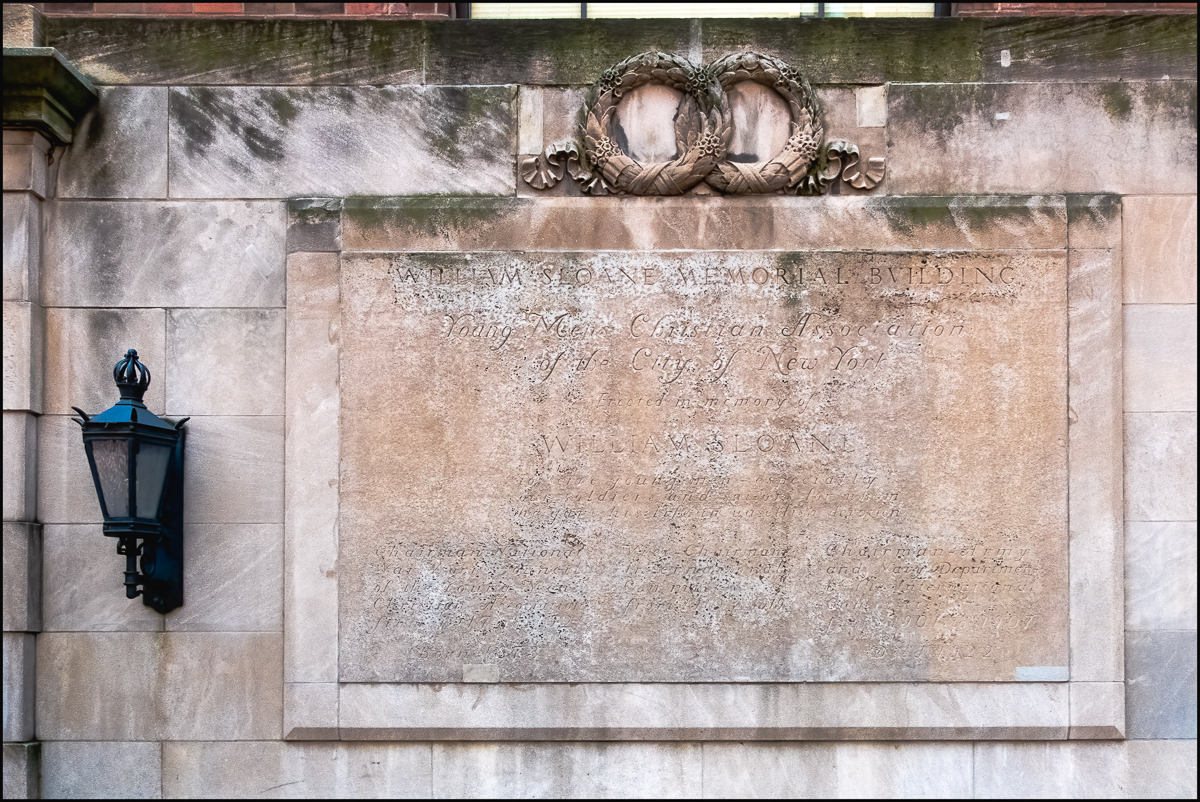
As we were walking along 34th Street I notice this plaque on the side of a building. It’s obviously suffered over the years and I couldn’t read much of it. It was, however, possible to pick out the words “William Sloane Building”. This caught my attention because of the name William Sloane and Walter Law, the founder of my village, Briarcliff Manor, NY. (See: A visit to Merestead – Overview and the posts which follow).

It seems that William S. Sloane was heavily involved with the YMCA.

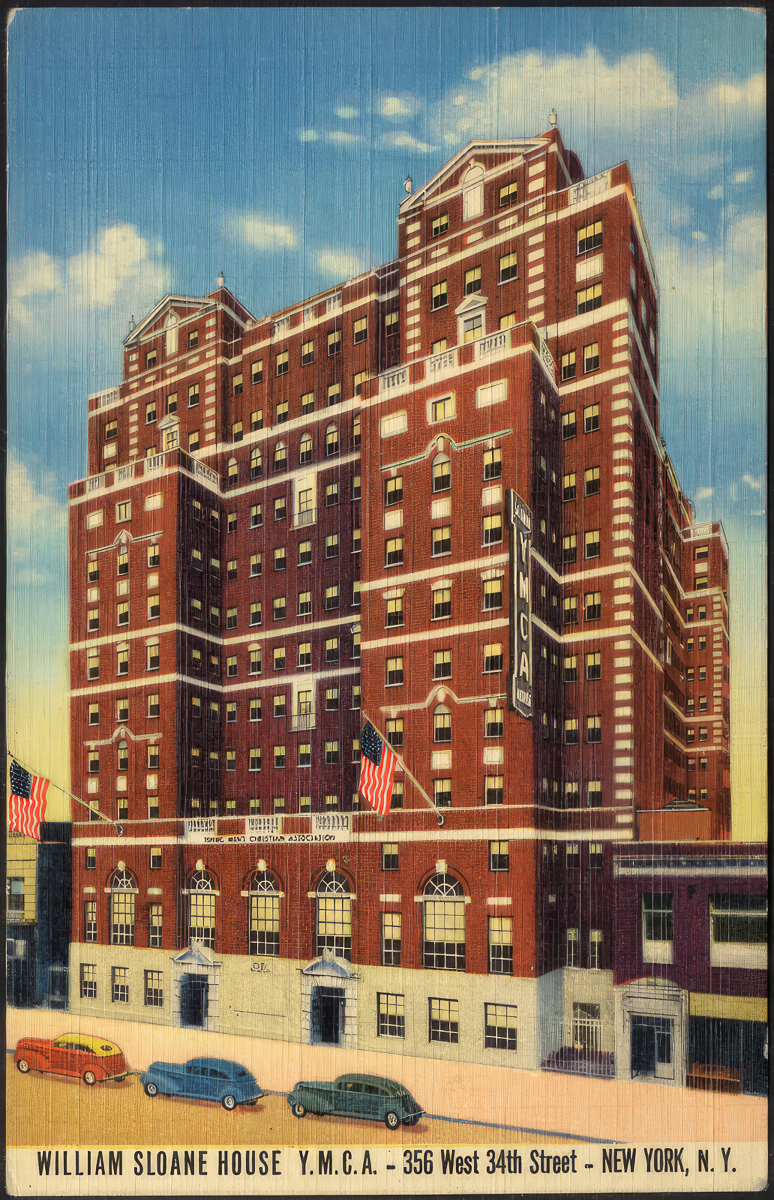
The building on which the plaque is placed is the Sloane House YMCA, also known as William Sloane House YMCA, at 356 West 34th Street in Manhattan. It was the largest residential YMCA building in the nation. It was sold in 1993 for $5 million and converted to rental apartments later. For more information on the William Sloane House see: The Sloane House YMCA – Infernal Machine on glasscapsule media archive

It’s practically impossible to read the words on the plaque, but I managed to find a description on the Historical Marker Database (note that there seems to be an error in this description. It says the he was “Chairman – Army and Navy Department of the International Commission from 1910 to 1907“. This is clearly wrong. Moreover, it couldn’t be 1910-1927 because he died in 1922. So I’ve changed it to 1910-1917).

William Sloane Memorial Building
Young Men’s Christian Association of the City of New York
Erected in memory of William Sloane
to serve young men – especially our soldiers and sailors for whom he gave his life in unselfish devotion
Chairman – National War Work Council of the Young Men’s Christian Association from 1917-1920
Born 1873
Vice-Chairman International Commission from 1920 to 1919
Chairman – Army and Navy Department of the International Commission from 1910 to 1917
Died 1922

Sloane was also inducted into the National YMCA Hall of Fame where his entry reads:

William S. Sloane (1873-1922). William Sloane was President of the National War Work Council, which was formed in 1917 and raised and managed hundreds of millions of dollars to support YMCA initiatives to serve American and Allied troops during World War I. During the war, he was one of the “dollar-a-year-men”, who put aside their own personal gain and fortune to put their vast experience earned in the private sector to work at hugely expanding the outreach of the YMCA. The contributions of the YMCA during the war were amazingly extensive and impressive, involving the construction and operation of thousands of centers for service personnel, support for U.S. YMCA’ serving the military, mobilizing well-known entertainers for service abroad, and literally hundreds of other programs and services that employed more than 25,000 YMCA workers. In 1930, Sloane House, a New York YMCA residence for servicemen, was opened in his honor.
Taken with a Fuji X-E3 and Fuji XC 16-50mm f3.5-5.6 OSS II

In New York City – My granddaughter arrives

As mentioned in the previous post I waited at the Skylight Diner until my granddaughter arrived. After a short chat while I finished my coffee, I asked her if she was hungry. She replied that she was. I asked her if she liked Korean Food and she answered that she did. So off we went to find a Korean restaurant, which since we were in Koreatown was pretty easy.

Taken with an iPhone SE II.

In New York City – The Skylight Diner

By this time in my walk I had been walking around for nearly three hours and I was feeling tired and hungry. So I looked for something/somewhere to eat. I realized that coincidentally I had walked to the largest (I think) photographic store in New York: B&H Photo. It occurred to me that I could find somewhere close by to eat and then after that have a walk around B&H. Then I could return to wherever I found and have a coffee while waiting for my granddaughter to arrive. Looking around I discovered the Skylight Diner, just across the road.

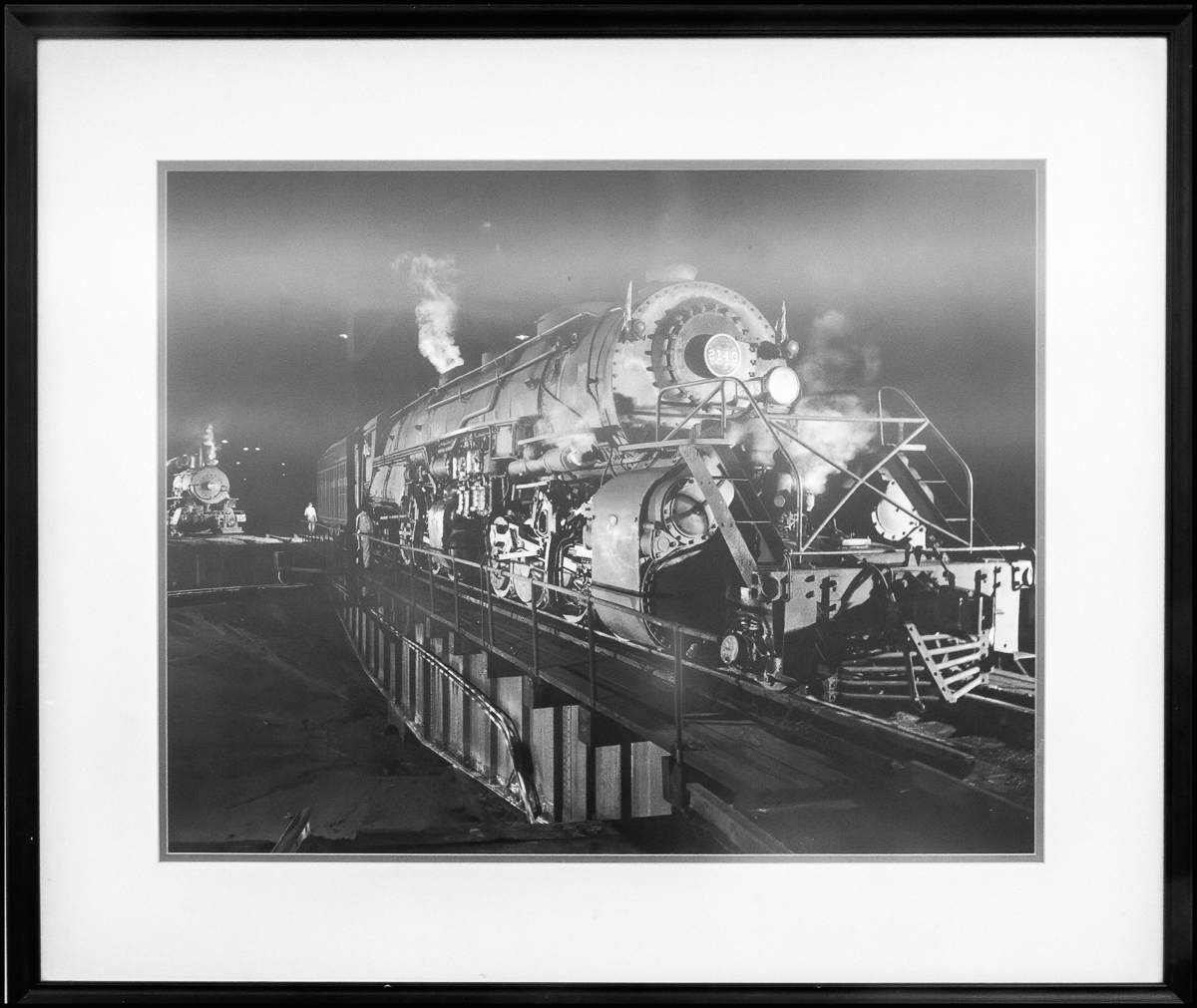
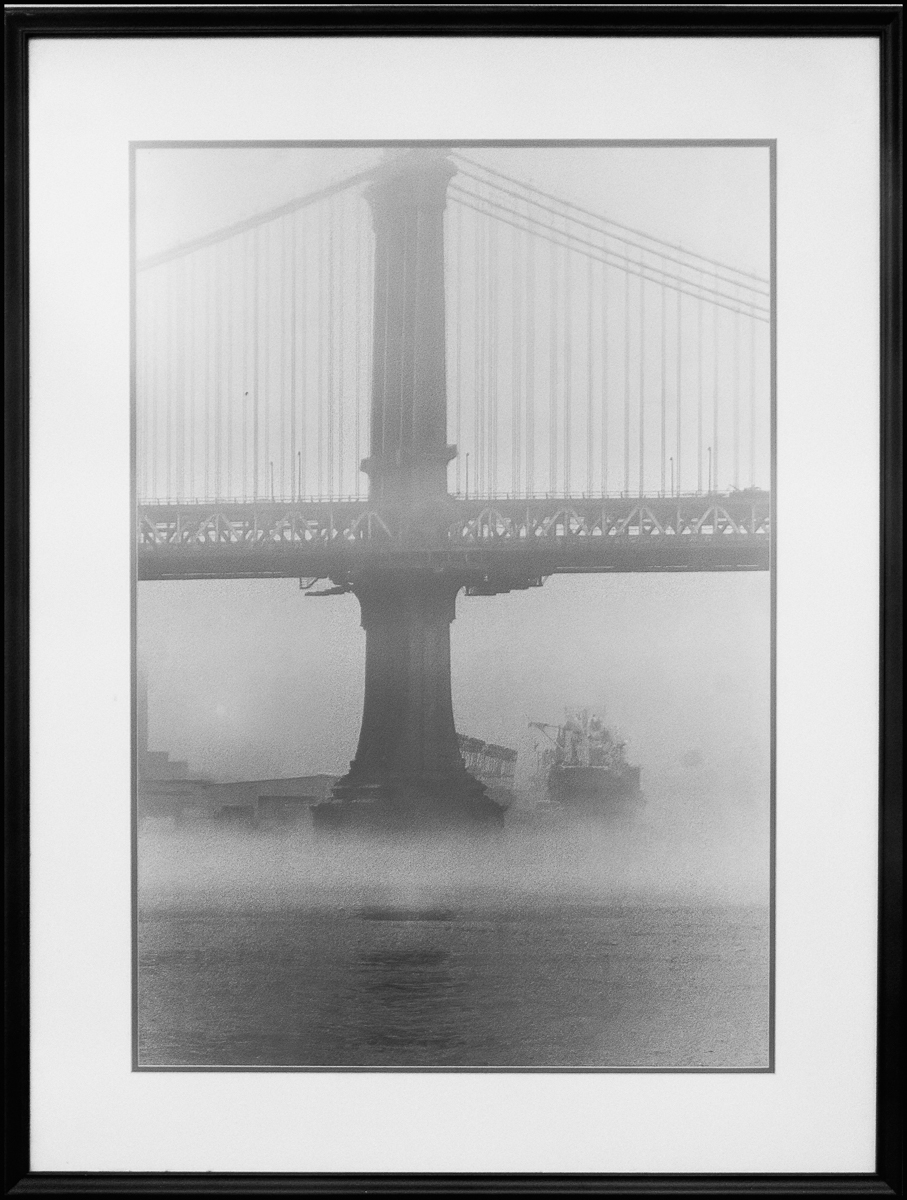
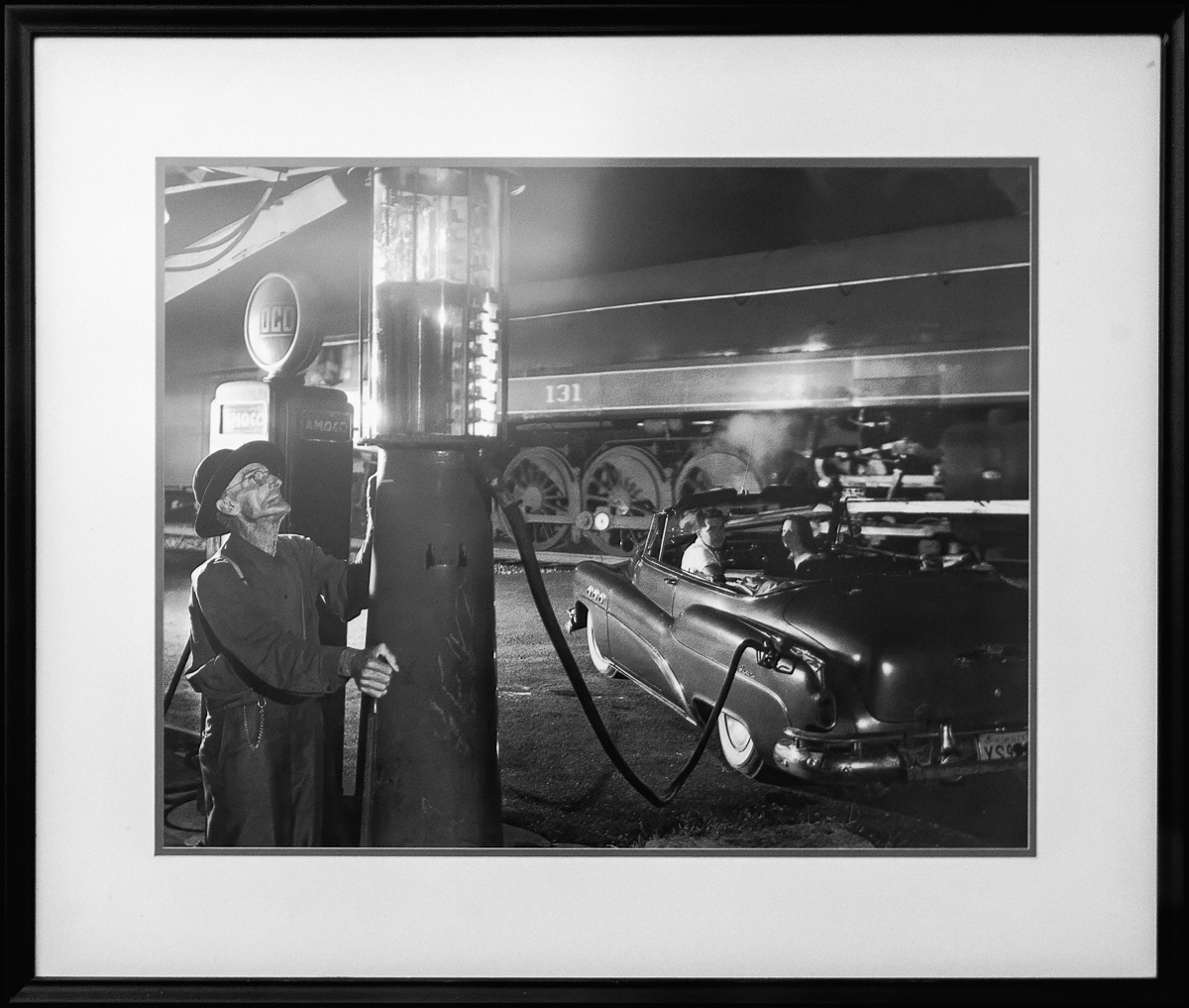
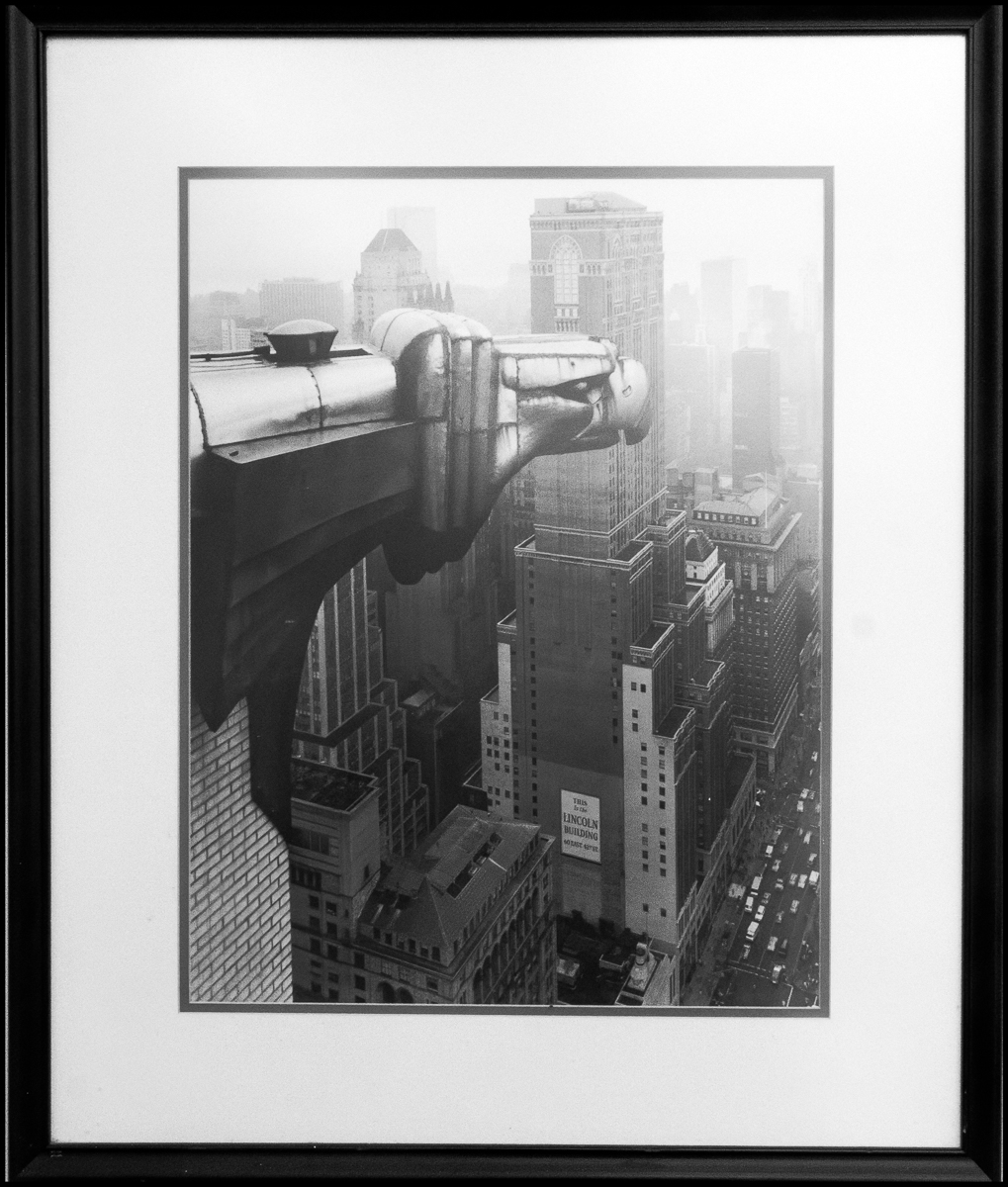
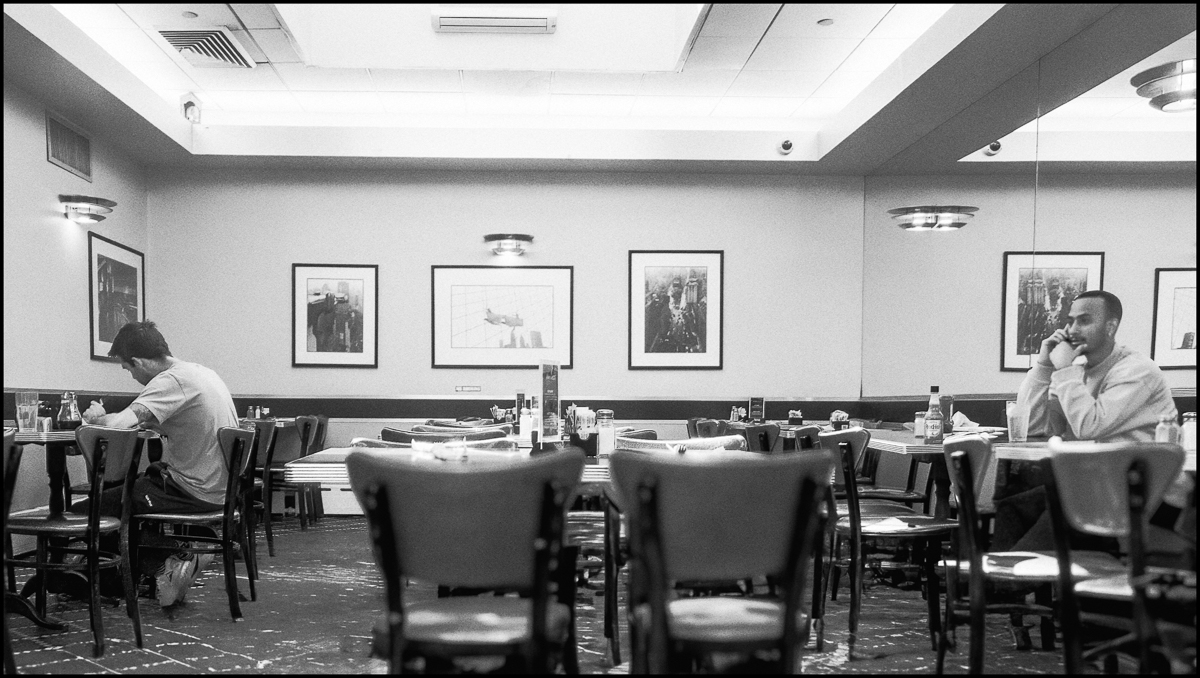
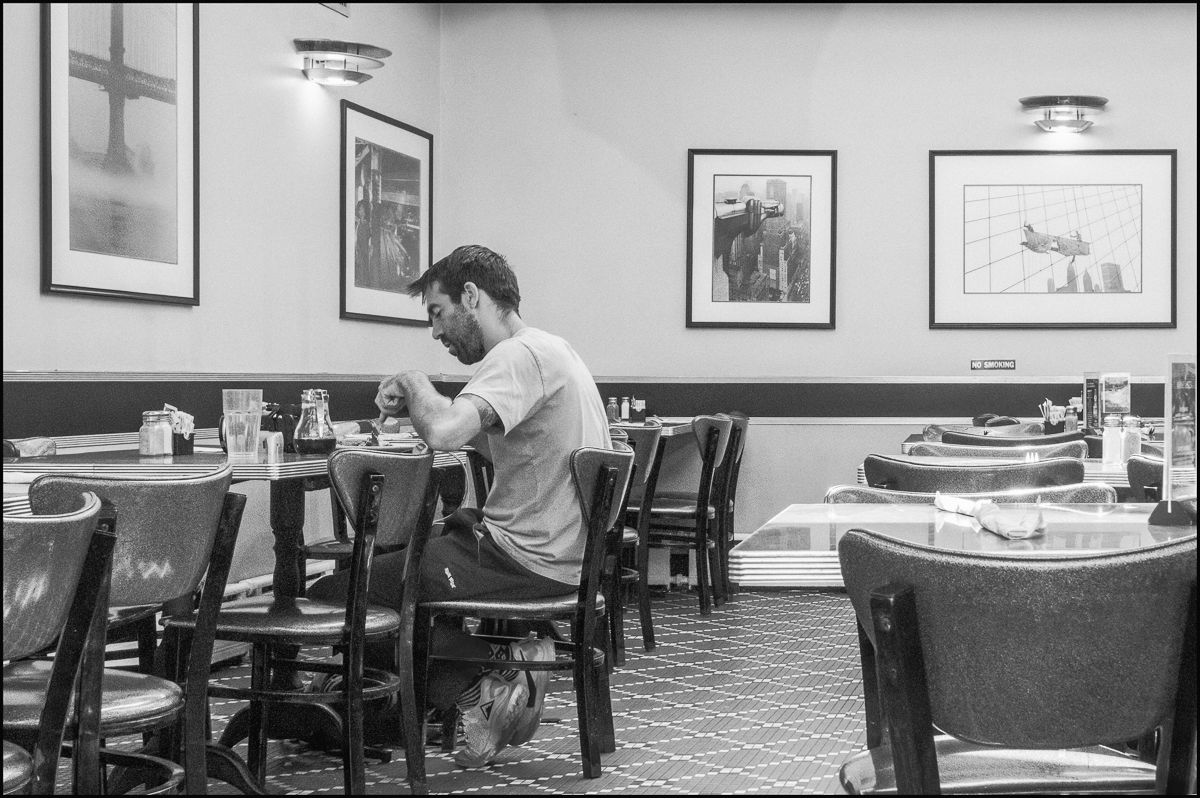
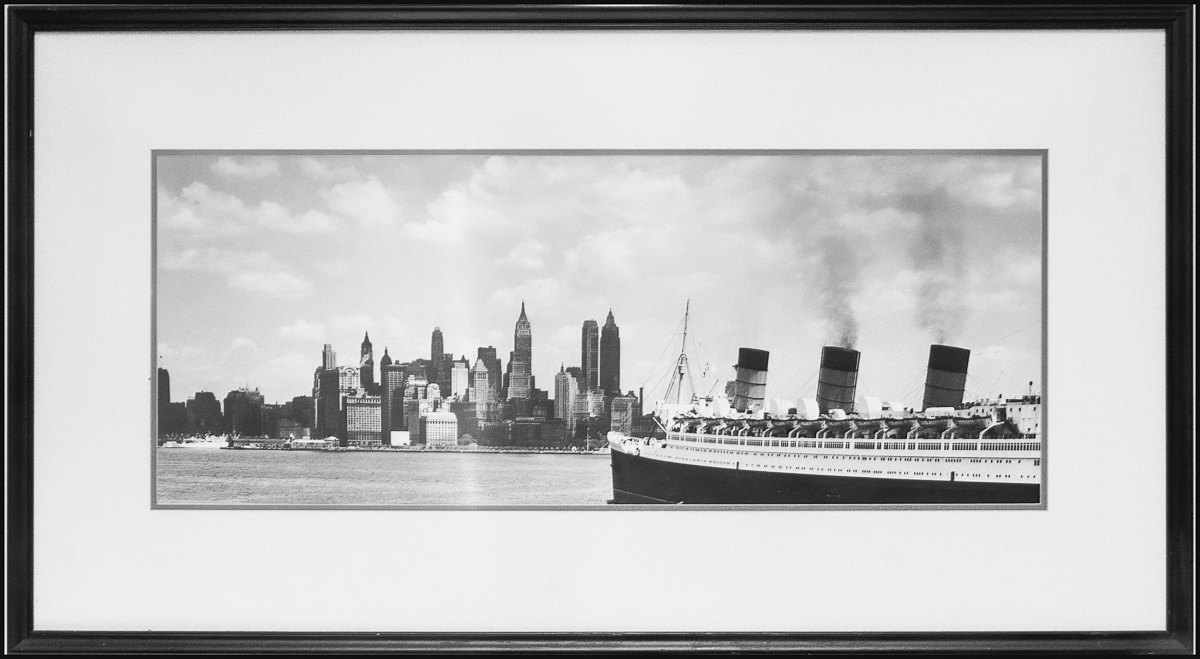
It bills itself as “The Best Diner in Manhattan”, which might be true since there aren’t many classic diners left in Manhattan. I went in and found a very pleasant diner with, to my surprise, a number of nice black and white (i.e. monochrome) prints on the wall. I ordered a full English breakfast. The bacon was American style rather than my preferred English style (less smoky, less salty and more meaty), both other than that it really hit the spot. After I’d finished I went off to B&H. Amazingly I overcame my Gear Acquisition Syndrome (GAS) and didn’t buy anything. Then, as mentioned above returned to wait for my granddaughter.


Taken with a Fuji X-E3 and Fuji XC 16-50mm f3.5-5.6 OSS II
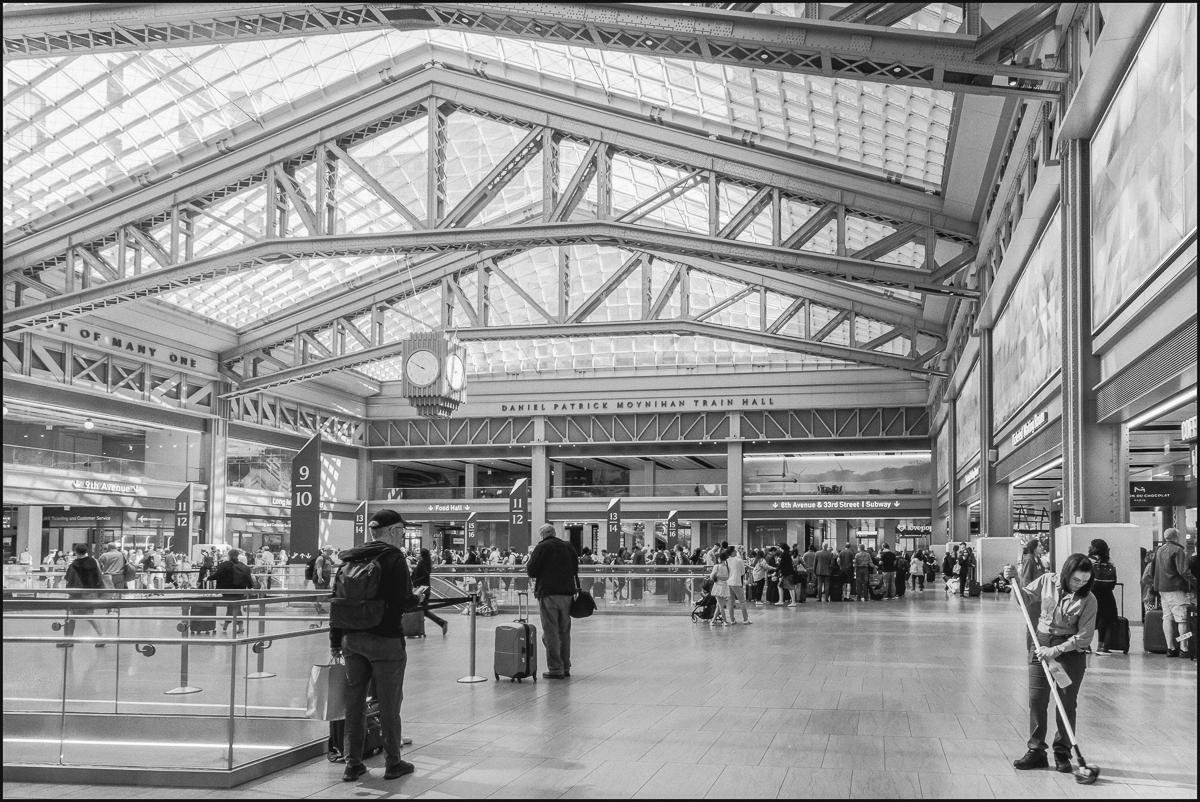
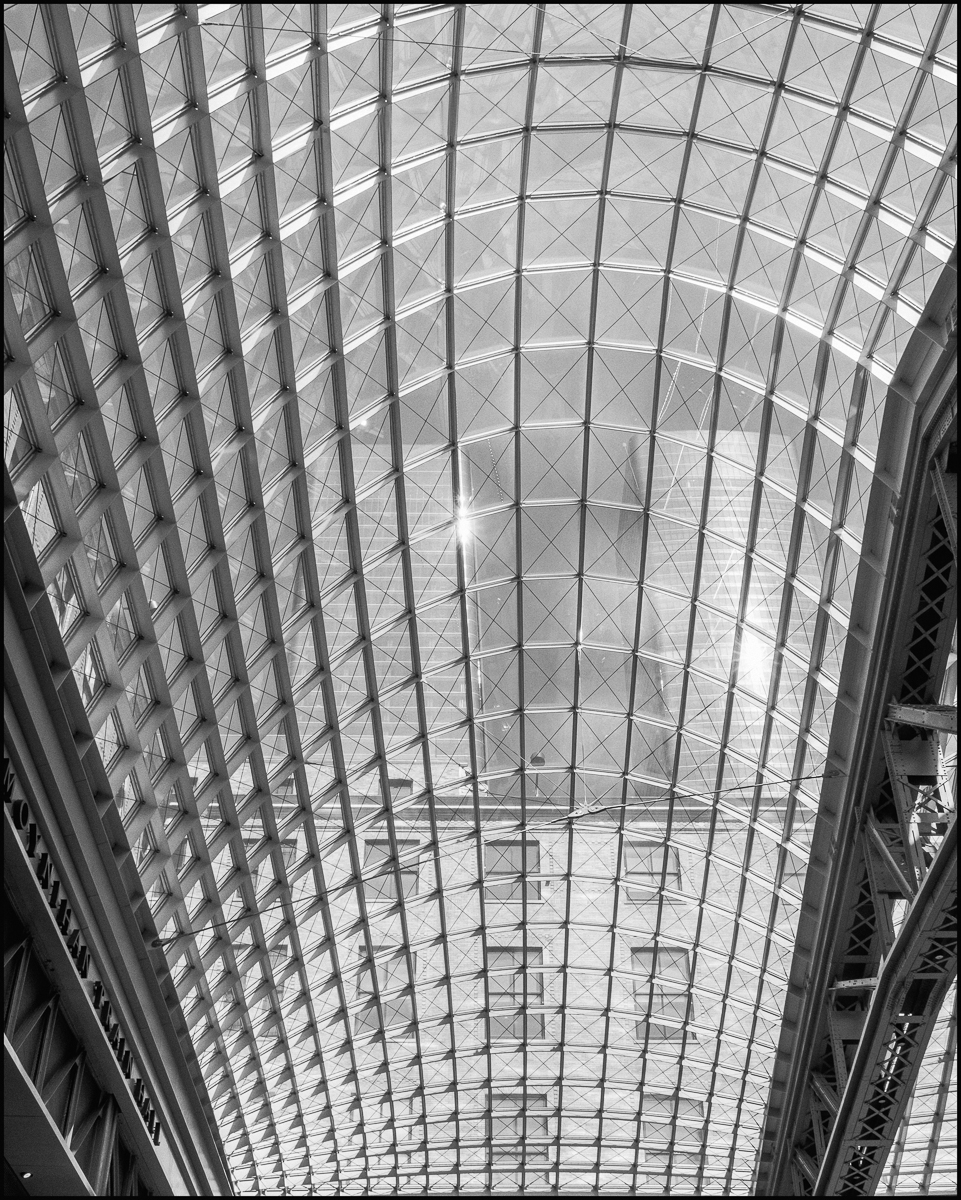
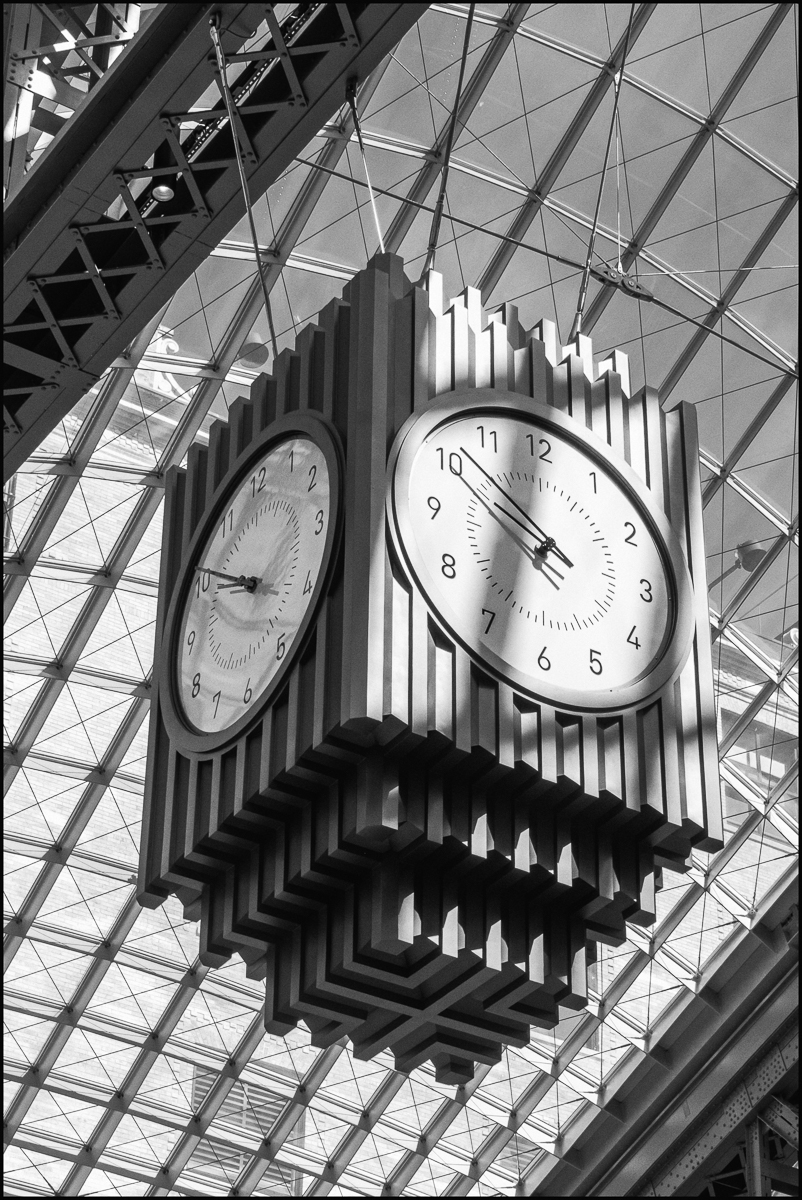
In New York City – The Moynihan Train Hall

I’ve always hated Pennsylvania Station, or at least the one under Madison Square Garden (which I also hate because it’s ugly and it caused the demolition of the beautiful old station, which preceded it). The old Pennsylvania Station was an architectural masterpiece and it was a tragedy when it was torn down in 1966 to make way for the current monstrosity.

So I was pleased to read that they were going to use a portion of the James A Farley Building as a train station. However, I hadn’t actually seen it until today.

The Moynihan Train Hall is an expansion of Pennsylvania Station, the main intercity and commuter rail station in New York City, into the city’s former main post office building, the James A. Farley Building. Located between Eighth Avenue, Ninth Avenue, 31st Street, and 33rd Street in Midtown Manhattan, the annex provides new access to most of Penn Station’s platforms for Amtrak and Long Island Rail Road passengers, serving 17 of the station’s 21 tracks. The hall is named after Daniel Patrick Moynihan, the U.S. Senator who had originally championed the plan. The building’s Beaux-Arts exterior resembles that of the original Penn Station; both buildings were designed by the architectural firm of McKim, Mead & White.

The 486,000 sq ft (45,200 m2) complex was built to alleviate congestion in Penn Station, which saw 650,000 daily riders before the COVID-19 pandemic in 2020. The $1.6 billion renovation restored the Beaux-Arts Farley Building, a designated landmark, and added a central atrium with a glass roof. Moynihan Train Hall includes retail space, a 320-seat waiting area, and public restrooms. The hall is decorated with three artworks: a ceiling triptych named Go, a group of photographic panels, and a sculptural group.

The project had been in consideration since the early 1990s, with the first blueprints made public in 1993. However, several previous plans had failed because of a lack of funding and logistical difficulties. Amtrak withdrew as a tenant in 2004, but returned after the Farley Building was sold to the New York state government in 2006. A first phase, involving an expansion of a concourse under the Farley Building, started in 2010 and was completed in June 2017. Construction of the train hall proper commenced in 2017, and it opened January 1, 2021. (Wikipedia)

While it’s not a patch on the old station, it’s a definite improvement on what preceded it.

Taken with a Fuji X-E3 and Fuji XC 16-50mm f3.5-5.6 OSS II
In New York City – James A. Farley Building

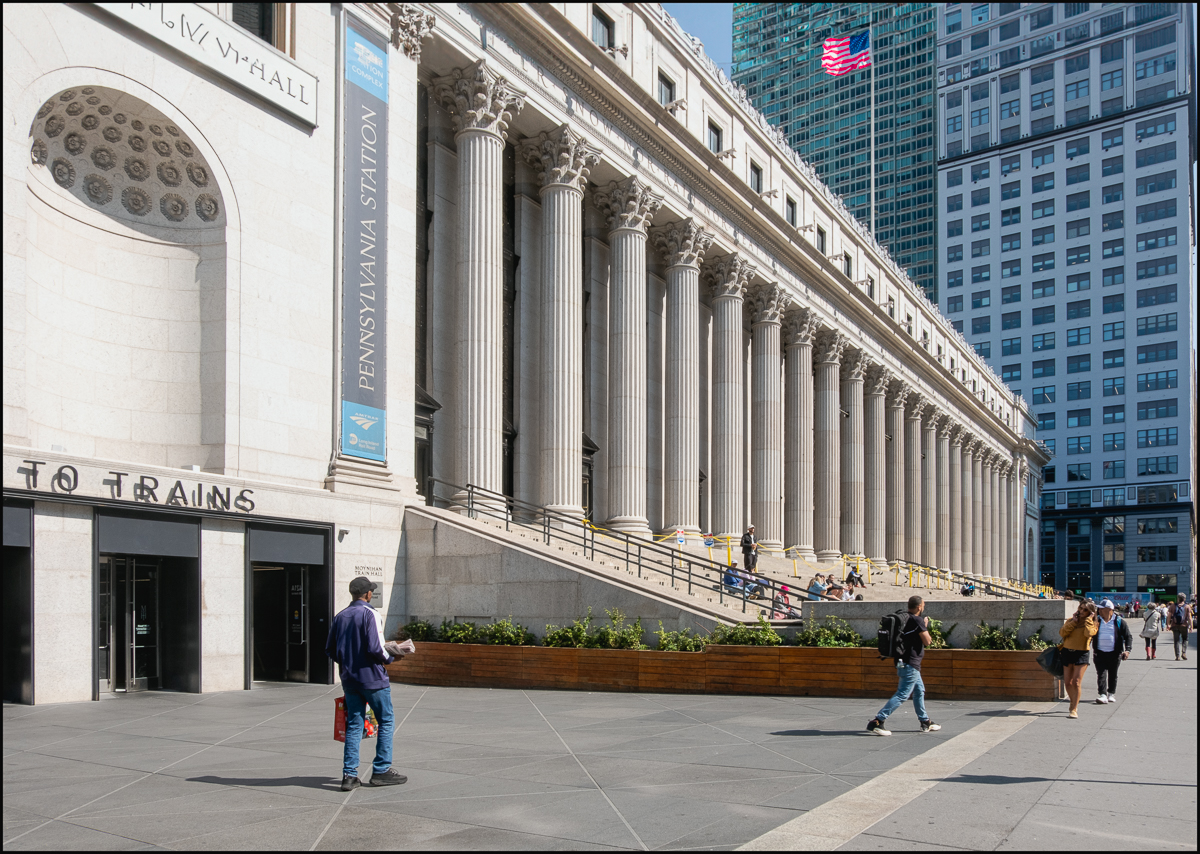
What an impressive building:

The James A. Farley Building is a mixed-use structure in Midtown Manhattan, New York City, which formerly served as the city’s main United States Postal Service (USPS) branch. Designed by McKim, Mead & White in the Beaux-Arts style, the structure was built between 1911 and 1914, with an annex constructed between 1932 and 1935. The Farley Building, at 421 Eighth Avenue between 31st Street and 33rd Street in Midtown Manhattan, faces Pennsylvania Station and Madison Square Garden to the east.

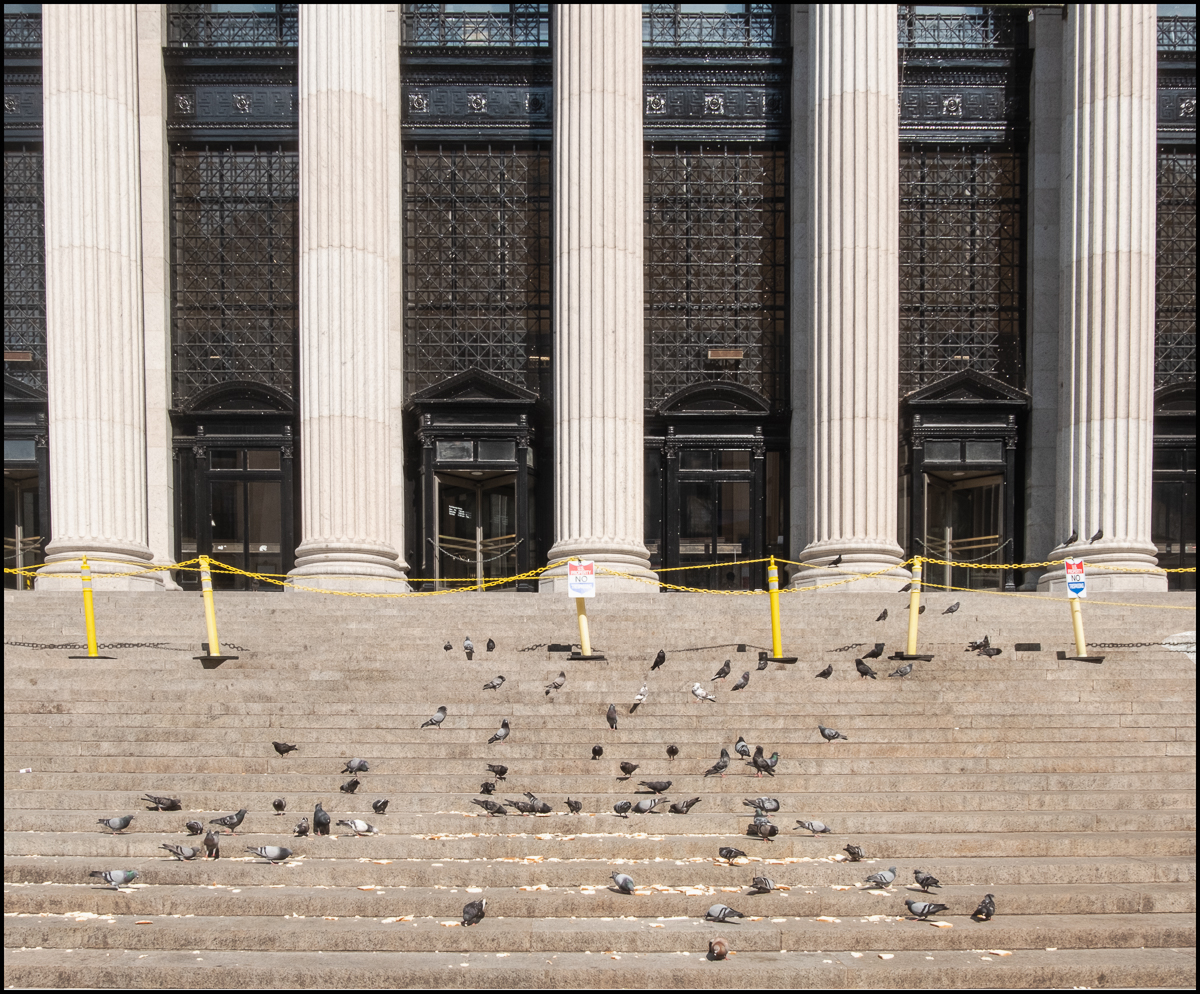
The main facade of the Farley Building (over 8th Avenue) features a Corinthian colonnade—the largest of its style in the world—finishing at a pavilion on each end. The imposing design was meant to match that of the original Pennsylvania Station across the street. An entablature above the colonnade bears the United States Postal Service creed: “Neither snow nor rain nor heat nor gloom of night stays these couriers from the swift completion of their appointed rounds.” The colonnade’s inner ceiling is decorated with the crests or emblems of ten major nations that existed at the building’s completion. The remaining three facades have a similar but simpler design.

The James A. Farley Building was known as the Pennsylvania Terminal until 1918, when it was renamed the General Post Office Building. The building was made a New York City designated landmark in 1966 and was added to the National Register of Historic Places in 1973. It was officially renamed in 1982 in honor of James Farley who was the nation’s 53rd Postmaster General and served from 1933 to 1940. The building was sold to the New York government in 2006. The interior space that once housed the main mail sorting room now houses the Moynihan Train Hall since 2021. Office space in the building was leased to Facebook in 2020 (Wikipedia).

Taken with a Fuji X-E3 and Fuji XC 16-50mm f3.5-5.6 OSS II