Lunch in Yonkers, NY – The Riverfront Library

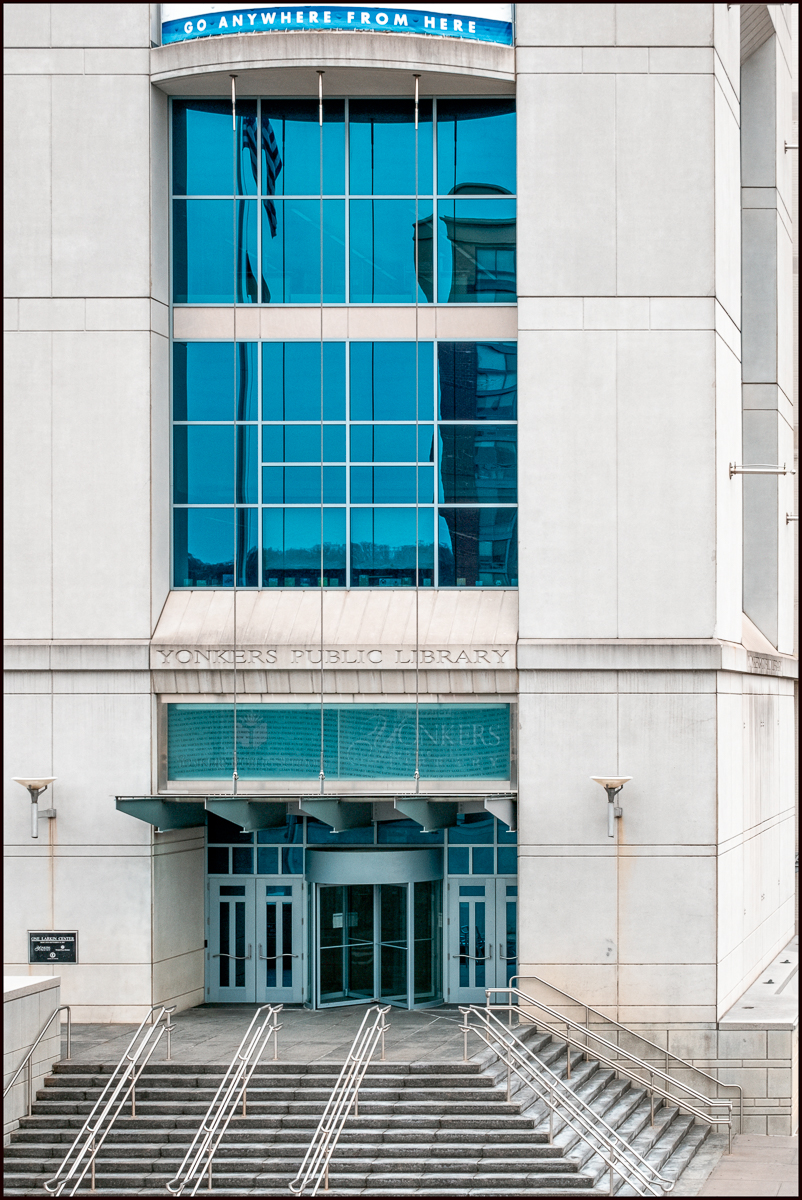
“The Yonkers Public Library in Yonkers, New York, consists of three branch libraries. The main branch is the ‘Yonkers Riverfront Library’ which overlooks the Hudson River and New Jersey Palisades. Yonkers Riverfront Library is located in one of the former Otis Elevator buildings and it is across the street from the Yonkers train station. The new main library was opened in 2002, contains an area of 200,000 square feet (19,000 m2) and 4 stories.

The library also consists of the Grinton I. Will branch and the Crestwood branch. All three libraries offer a variety of services, including computer and internet access, movie, audio book and CD check-outs, as well as traditional book loans. The library offers free computer classes, from beginner to advanced, and is a source of free public programming all year round, including concerts and movies, classes, homework help, research help and informational workshops.

The Yonkers Public Library is a founding member and the largest member of the Westchester Library System (WLS), a consortium of 38 libraries serving the residents of Westchester County. The Yonkers Public Library operates with a budget of over $9 million, 105 staff members, and a collection of nearly 700,000 books and other materials. The Director of the Library is Jesse Montero and the President of the board of trustees is Nancy Maron.
History

The Yonkers Public Library was chartered by the state of New York on February 9, 1893. Having been formed in 1883 by the consolidation of five public school libraries, the Library called various sites home between the years 1883 and 1904. Yonkers Mayor Leslie Sutherland, joined by writer John Kendrick Bangs and educator Charles E. Gorton, formed a committee in 1900 to request funds from Andrew Carnegie for the construction of a permanent library building. 17,000 volumes of books were kept in the Nisbet Mansion in Washington Park until the building was completed.

Carnegie responded in March 1901, with a donation of $50,000, asking only that the City of Yonkers provide a suitable site for the library building and that it agree to expend $5,000 annually on the building’s maintenance. Several sites for the new library were proposed by members of the Yonkers Board of Aldermen, including the site in the southwest corner of Washington Park that was eventually selected. Designed by local architects Edwin A. Quick & Son, and constructed by the local firm of Lynch and Larkin, Mr. Carnegie’s library building opened to the public on the corner of South Broadway and Nepperhan Terrace on July 9, 1904. Support for this newly built library came from Ervin Saunders. Saunders, an executive of a machinery manufacture at Saunders & Sons, Incorporated, bequeathed $50,000 to the Yonkers Public Library before his death in 1909. There was a stipulation that all of the money had to be spent on the purchasing of nonfiction books.

The Carnegie library building served the Yonkers public for almost 80 years. Doomed by the decision to expand Nepperhan Avenue into an arterial, the building was closed and eventually demolished in May 1982, to the dismay of many. (Photos of the old Carnegie Library are available for viewing through the Library of Congress, from the American Memory Project). Having been evicted from its old home, the main branch of the Library took up quarters in the former Genung’s Department Store at 7 Main Street in Getty Square. Opening there in May 1981, the main branch remained there for over 20 years. Its current home, since September 2002, is 1 Larkin Center. Now encompassing four floors, the spacious Riverfront Library shares the former, and thoroughly retooled, Otis Elevator Works building with the headquarters of the Yonkers Board of Education.” (Adapted from Wikipedia)

Taken with a Fuji X-E3 and Fuji XC 16-50mm f3.5-5.6 OSS II
Lunch in Yonkers, NY – Saw Mill River Daylighting

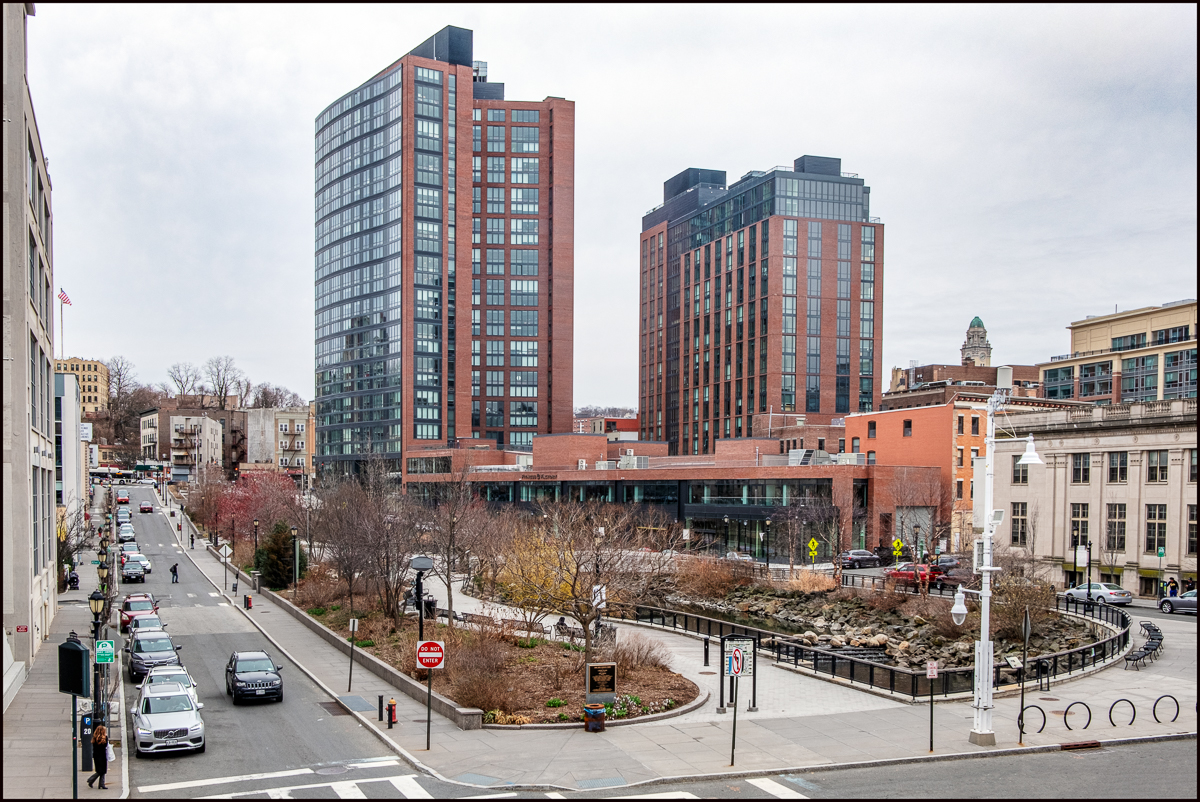
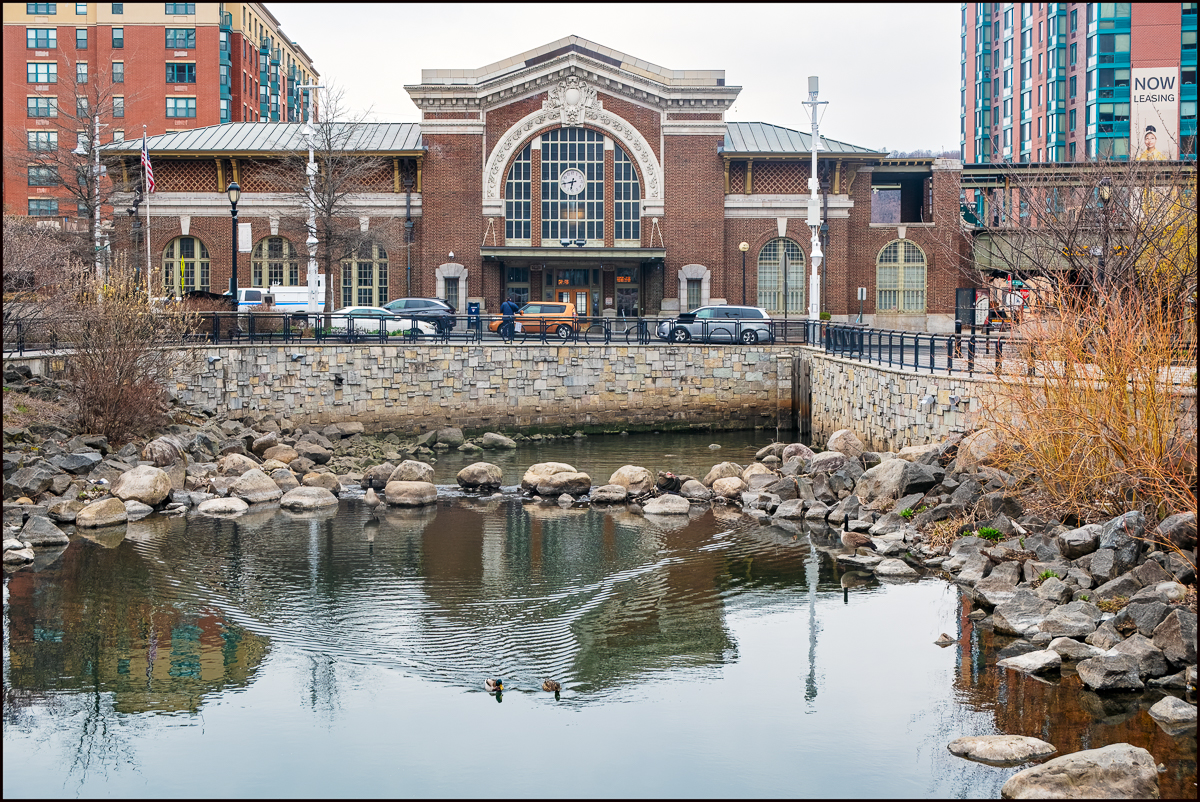
Above: View of the Saw Mill River as it passes through Van der Donck Park with the Metro North Station in the background.

“Scenic Hudson spearheaded the “daylighting” (uncovering) of the Saw Mill River that forms the centerpiece of this exciting urban oasis. When is a river not a river? When it’s buried beneath pavement, as the Saw Mill River was in downtown Yonkers for most of the 20th century. Scenic Hudson took initial steps to demonstrate the feasibility of “daylighting” this important Hudson River tributary and partnered with local groups to convince city officials to launch this revolutionary project. Today, a rippling Saw Mill is the centerpiece of this park that replaced an unsightly parking lot. It’s an excellent place to relax and enjoy nature — including eels, which are making a comeback in the resurrected river.” (Scenic Hudson)


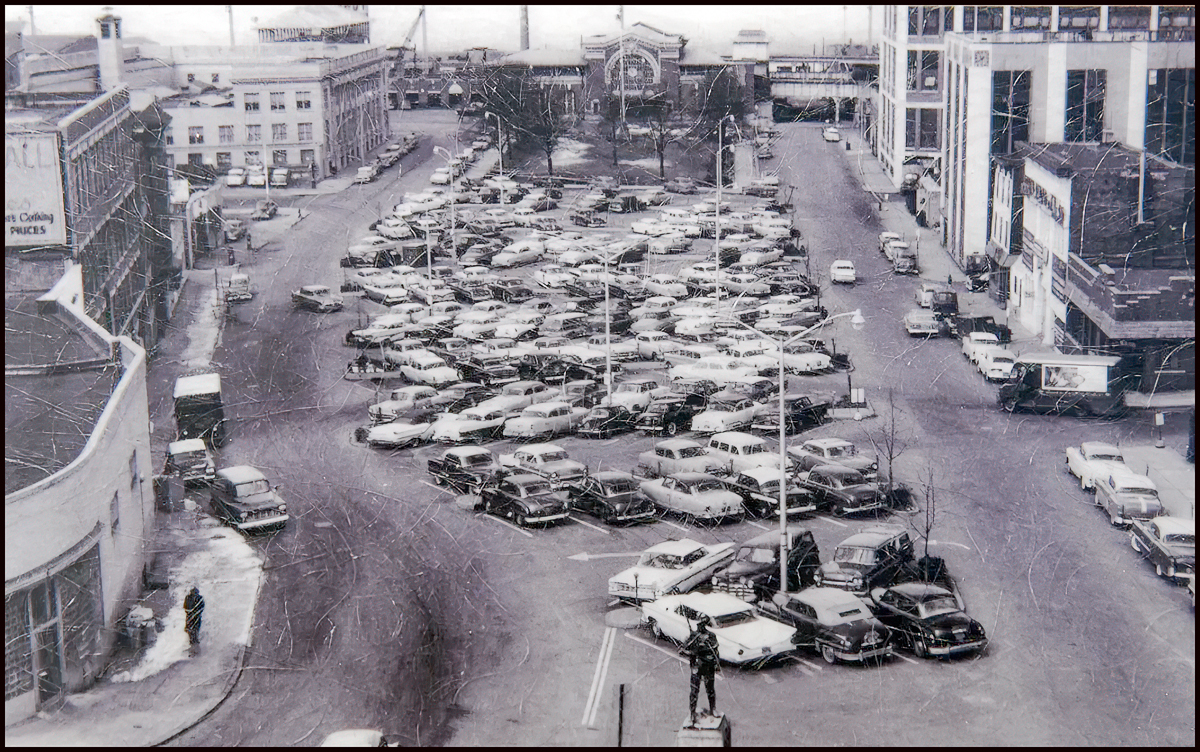
The Saw Mill River lay buried under concrete in this park/parking lot from 1922-2011.


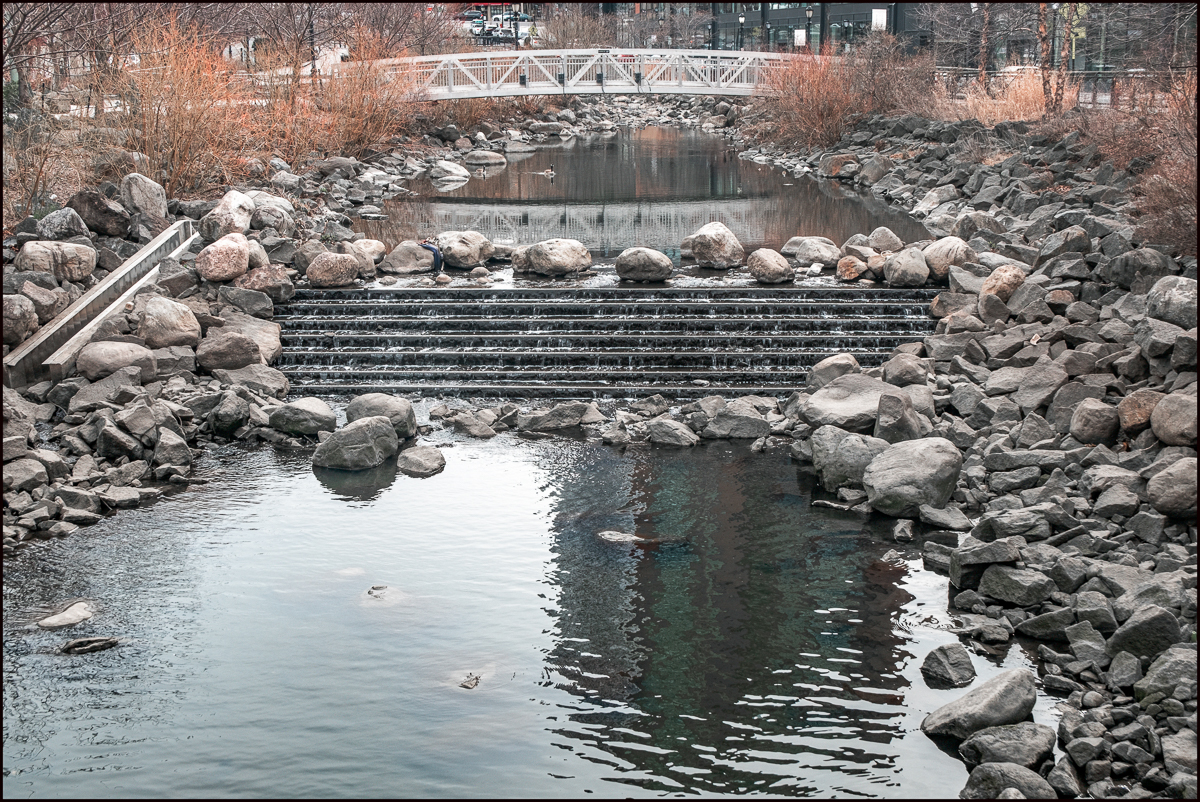
A fish ladder and an eel ladder have been built, allowing migrating species to travel upriver. The river is now home to hundreds of different species, including snapping turtles, egrets, and salamanders.


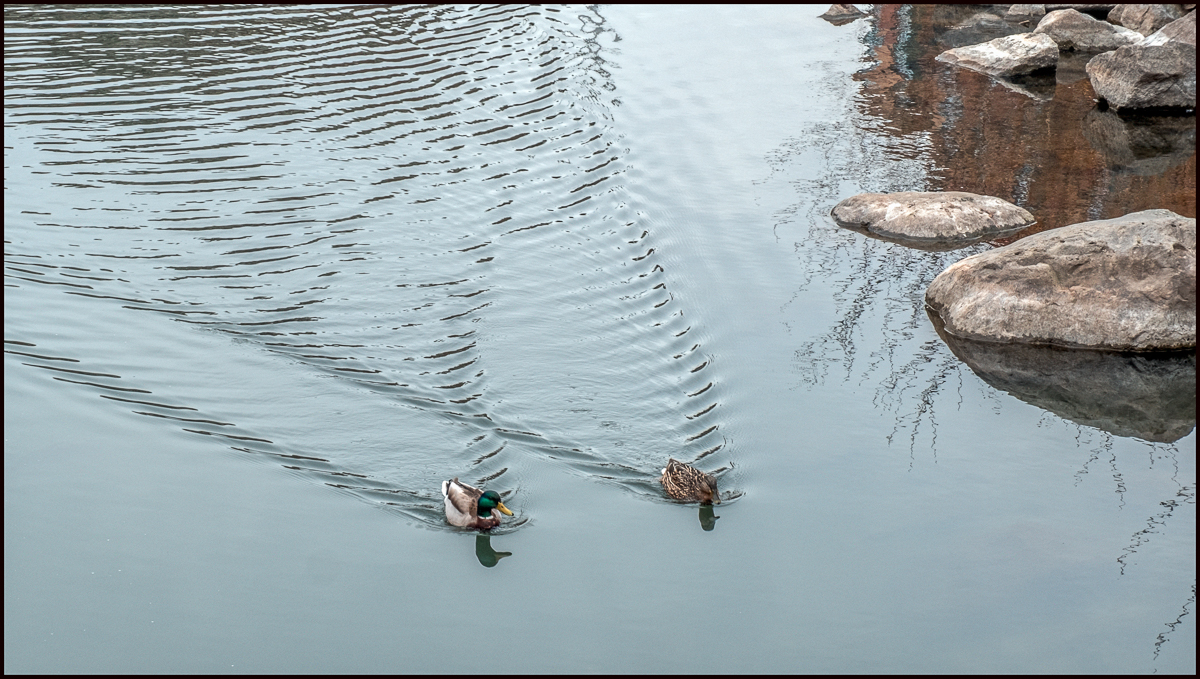
A pair of mallards on the Sawmill River.

Taken with a Fuji X-E3 and Fuji XC 16-50mm f3.5-5.6 OSS II
Lunch in Yonkers, NY – Yonkers Metro North Station

“Yonkers station is a Metro-North Railroad and Amtrak railroad station located in Yonkers, New York. It serves Metro-North commuter trains on the Hudson Line. It is one of four express stations on the line south of Croton–Harmon, but most Metro North express trains do not stop here. It is 14.4 miles (23.2 km) from Grand Central Terminal in Manhattan and travel time to Grand Central is about 33 minutes. It is the only intercity rail station in the southwestern portion of Westchester County, connecting the region to Albany and points beyond.

The station is two blocks west of the center of Getty Square in downtown Yonkers (where additional Bee-Line Bus System connections can be made), across the street from the historic Yonkers Post Office. It is also near the former Yonkers Trolley Barn.

As of August 2006, daily commuter ridership was 922. Four outdoor bicycle parking racks sit across Buena Vista Avenue from the station at the edge of Van Der Donck Park.

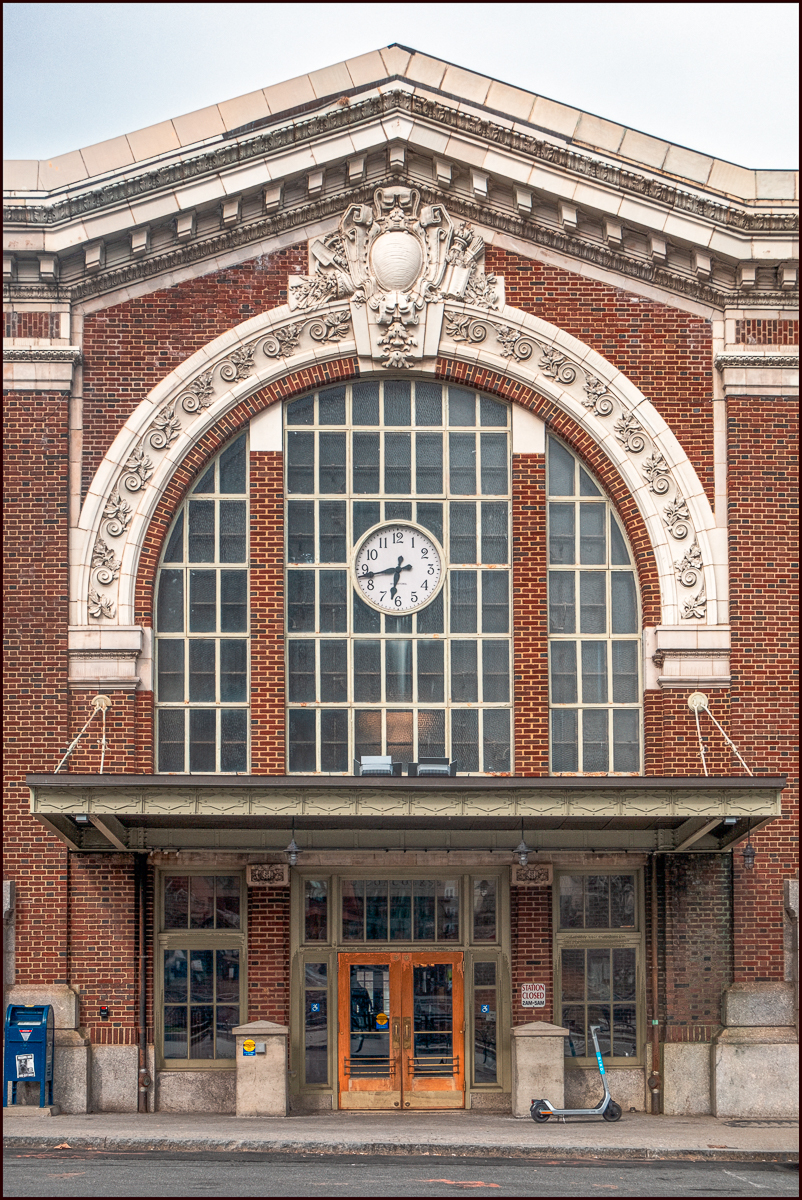
The current station building was built in 1911 for the New York Central & Hudson River Railroad (NYC) in the Beaux-Arts style. The architects were Warren and Wetmore, one of the firms responsible for Grand Central Terminal. It was meant to be a smaller version of Grand Central; Guastavino tiles are featured prominently in both stations.

Upon the merger of the NYC and the Pennsylvania Railroad in 1968, the station became a Penn Central commuter rail station. By this time, intercity service to Yonkers had ended. Penn Central continued operating commuter travel until 1976, when it was taken over by Conrail, which in turn transferred the service to Metro-North in 1983. Intercity service returned to Yonkers in 1989 after a two-decade absence in an effort to revitalize the Saw Mill riverfront. In 2004, Metro-North completed a $43 million restoration of the Yonkers station.

The ticket office at the station closed on July 7, 2010, so that passengers must now buy their tickets from vending machines at street level. A Metro-North Railroad Police substation is in the terminal on the ground floor.


The main exit from the station. This is where the ticket office used to be. Straight ahead the waiting room can be seen, it didn’t seem to be in use when I was there. Maybe it’s permanently closed? Or perhaps only temporarily because of COVID?

Taken with a Fuji X-E3 and Fuji XC 16-50mm f3.5-5.6 OSS II
Lunch in Yonkers, NY – Larkin Plaza

Larkin Plaza with Van der Donck park as seen from the platform at the Yonkers Metro North Station.

Adriaen Cornelissen van der Donck (c.1618 – 1655) was a lawyer and landowner in New Netherland after whose honorific Jonkheer the city of Yonkers, New York, is named. Although he was not, as sometimes claimed, the first lawyer in the Dutch colony (an ‘honor’ that befell the lesser-known Lubbert Dinclagen who arrived in 1634), Van der Donck was a leader in the political life of New Amsterdam (modern New York City), and an activist for Dutch-style republican government in the Dutch West India Company-run trading post.

Enchanted by his new homeland of New Netherland, van der Donck made detailed accounts of the land, vegetation, animals, waterways, topography, and climate. Van der Donck used this knowledge to actively promote immigration to the colony, publishing several tracts, including his influential Description of New Netherland. Charles Gehring, Director of the New Netherland Institute, has called it “the fullest account of the province, its geography, the Indians who inhabited it, and its prospects … It has been said that had it not been written in Dutch, it would have gone down as one of the great works of American colonial literature.”

Newly translated records from the colony suggest that van der Donck was a significant figure in the early development of what would later become the United States, neglected by history because of the eventual English conquest of New Netherland. Today, he is also recognized as a sympathetic early Native American ethnographer, having learned the languages and observed many of the customs of the Mahicans and Mohawks. His descriptions of their practices are cited in many modern works, such as the 2005 book 1491: New Revelations of the Americas Before Columbus.” (Wikipedia).

Taken with a Fuji X-E3 and Fuji XC 16-50mm f3.5-5.6 OSS II
Lunch in Yonkers, NY – Overview

Back in March I met with some friends visiting from Toronto for lunch on the Hudson in Yonkers, NY.

According to Wikipedia:

Yonkers is a city in Westchester County, New York, United States. Developed along the Hudson River, it is the third most populous city in the state of New York, after New York City and Buffalo. The population of Yonkers was 211,569 as enumerated in the 2020 United States Census. It is classified as an inner suburb of New York City, located directly to the north of the Bronx and approximately two miles (3 km) north of Marble Hill, Manhattan, the northernmost point in Manhattan.

Yonkers’s downtown is centered on a plaza known as Getty Square, where the municipal government is located. The downtown area also houses significant local businesses and nonprofit organizations. It serves as a major retail hub for Yonkers and the northwest Bronx.

The city is home to several attractions, including access to the Hudson River, Tibbetts Brook Park, with its public pool with slides and lazy river and two-mile walking loop Untermyer Park; Hudson River Museum; Saw Mill River daylighting, wherein a parking lot was removed to uncover the Nepperkamack (Saw Mill River); Science Barge; and Sherwood House. Yonkers Raceway, a harness racing track, renovated its grounds and clubhouse, and added legalized video slot machine gambling in 2006 to become a “racino” named Empire City. In more recent years, Yonkers has undergone progressive gentrification.

I’d not explored Yonkers before. I’d heard that it wasn’t a very nice (and possibly dangerous) place to visit and driving through parts of it at various times seemed to confirm this. In any case I went in a few hours before our lunch so I could look around and take some pictures.

I was pleased to discover that the area around the restaurant is quite attractive, with lots of other restaurants, nice old building etc. The town also has an interesting history.

It was well worth the visit.

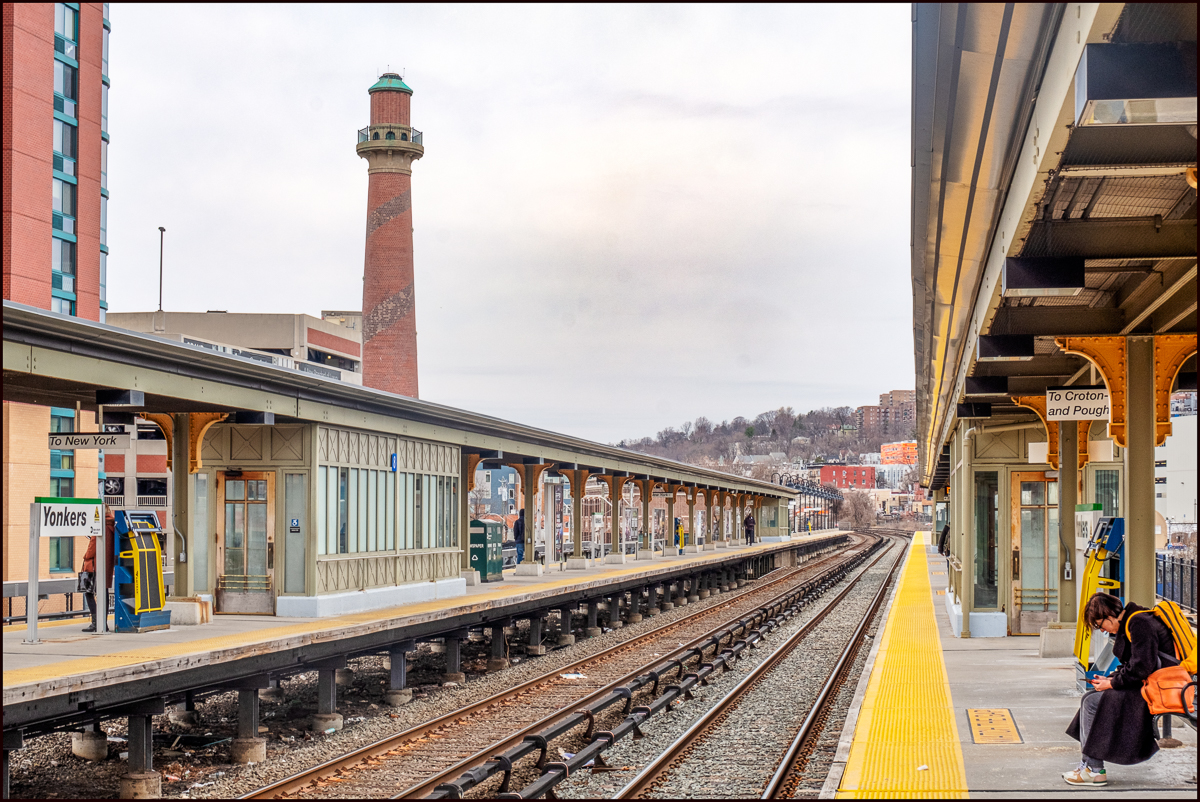
Above Yonkers Metro-North railroad station looking North.

Taken with a Fuji X-E3 and Fuji XC 16-50mm f3.5-5.6 OSS II