The Cloisters – Exteriors

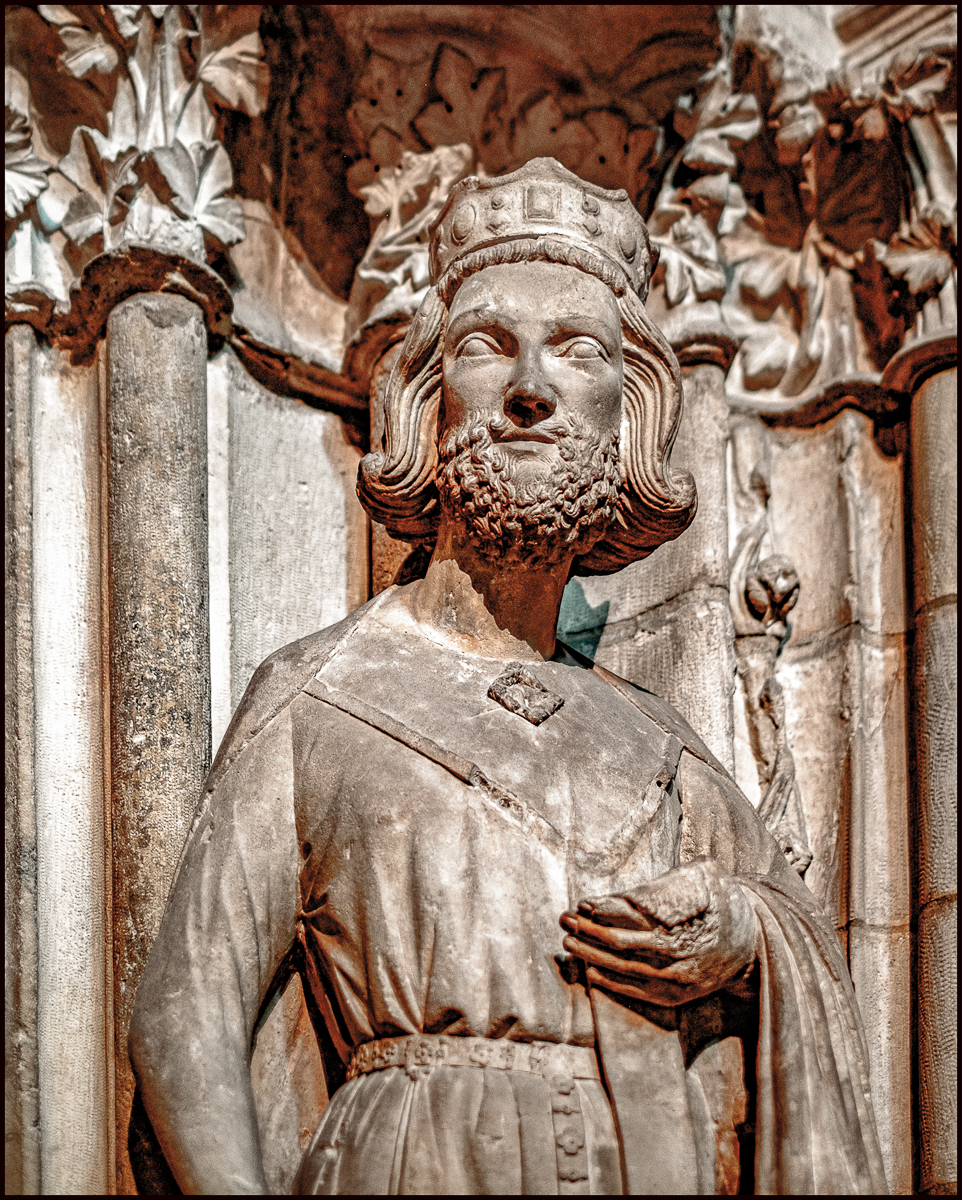
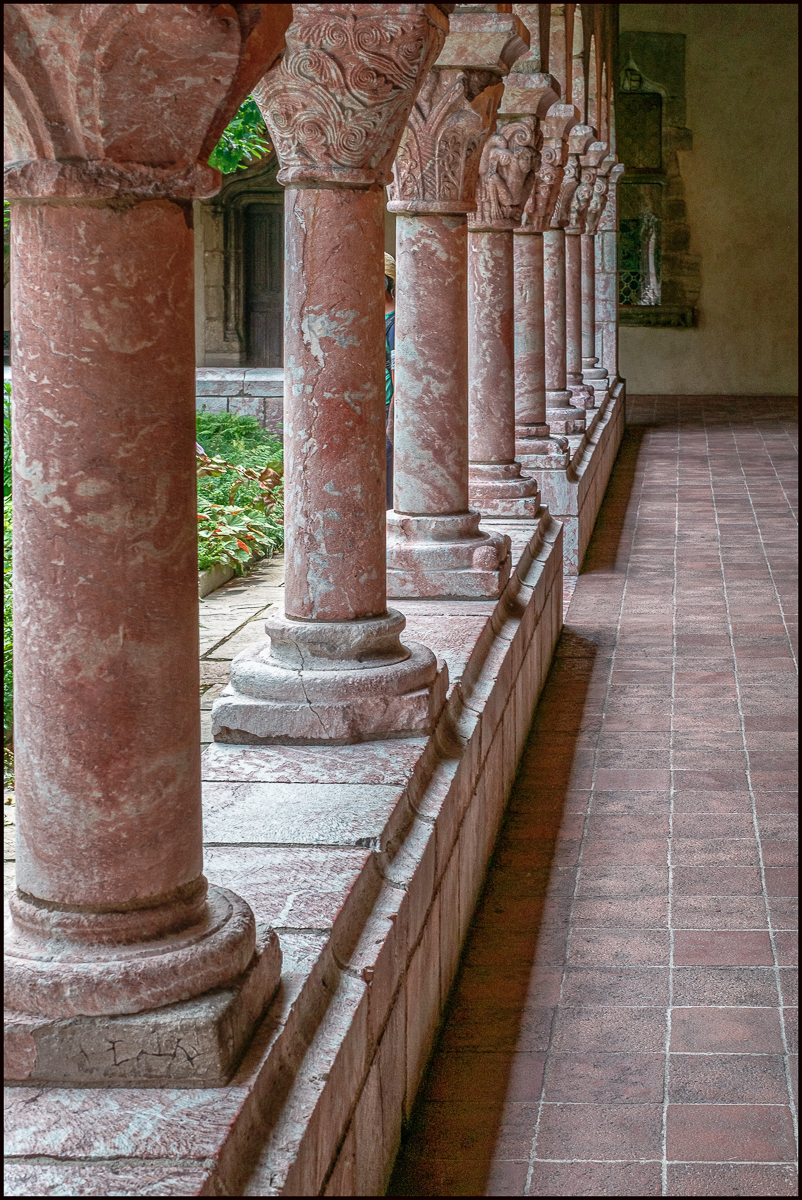
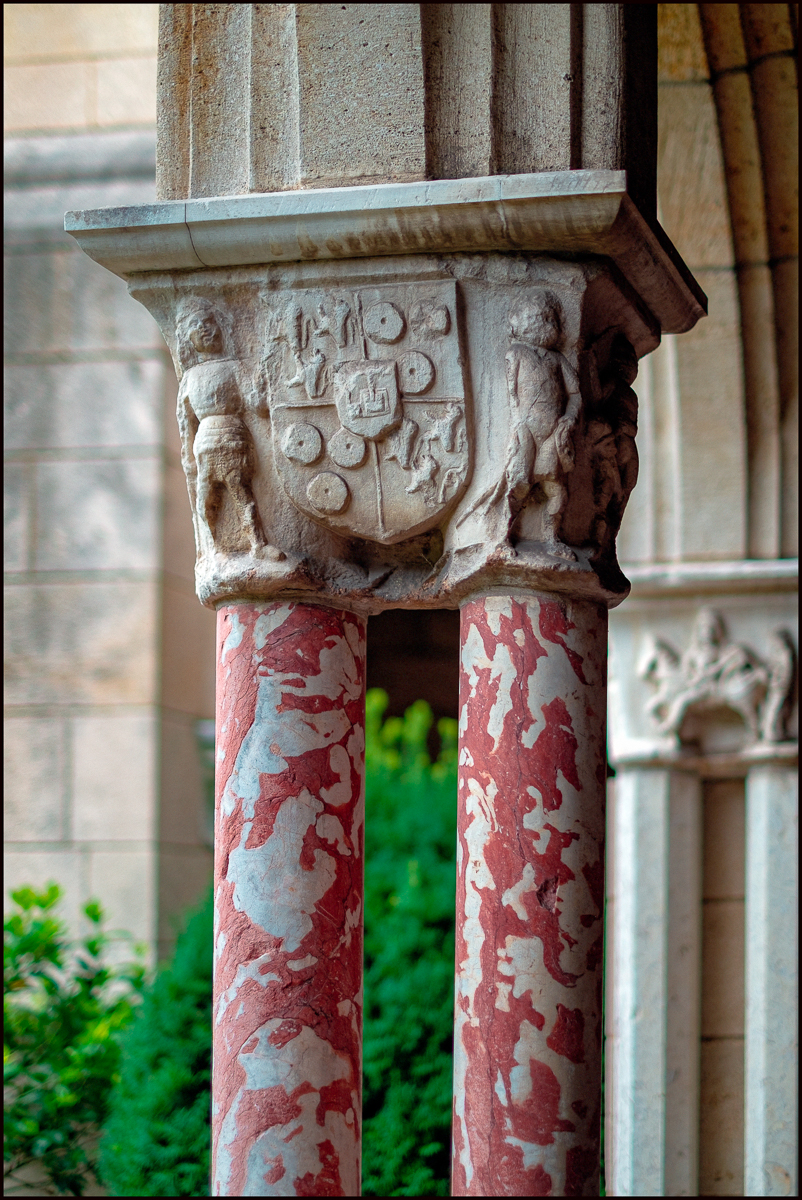
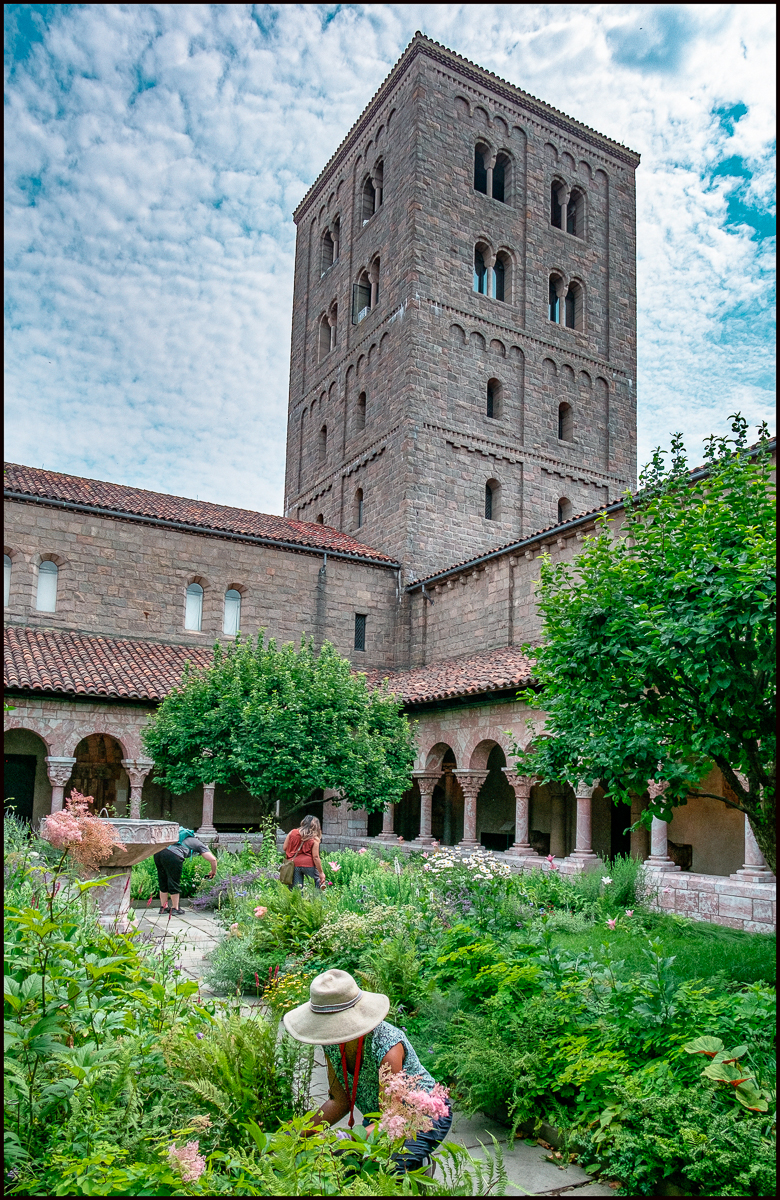
“The building is set into a steep hill, and thus the rooms and halls are divided between an upper entrance and a ground-floor level. The enclosing exterior building is mostly modern, and is influenced by and contains elements from the 13th-century church at Saint-Geraud at Monsempron, France, from which the northeast end of the building borrows especially. It was mostly designed by the architect Charles Collens, who took influence from works in Barnard’s collection. Rockefeller closely managed both the building’s design and construction, which sometimes frustrated the architects and builders.

The building contains architecture elements and settings taken mostly from four French abbeys, which between 1934 and 1939 were transported, reconstructed, and integrated with new buildings in a project overseen by Collins. He told Rockefeller that the new building “should present a well-studied outline done in the very simplest form of stonework growing naturally out of the rocky hill-top. After looking through the books in the Boston Athenaeum … we found a building at Monsempron in Southern France of a type which would lend itself in a very satisfactory manner to such a treatment.”

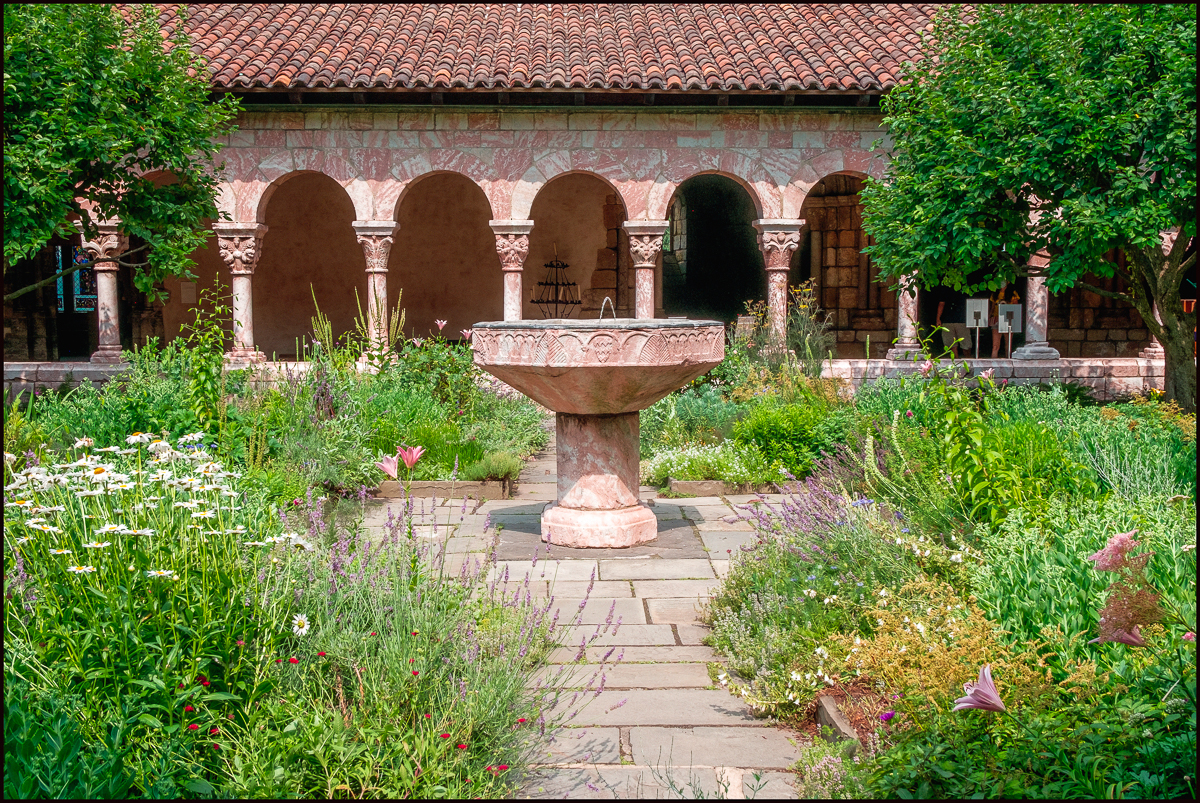
The architects sought to both memorialize the north hill’s role in the American Revolution and to provide a sweeping view over the Hudson River. Construction of the exterior began in 1935. The stonework, primarily of limestone and granite from several European sources, includes four Gothic windows from the refectory at Sens and nine arcades. The dome of the Fuentidueña Chapel was especially difficult to fit into the planned area. The east elevation, mostly of limestone, contains nine arcades from the Benedictine priory at Froville and four flamboyant French Gothic windows from the Dominican monastery at Sens.” (Wikipedia).
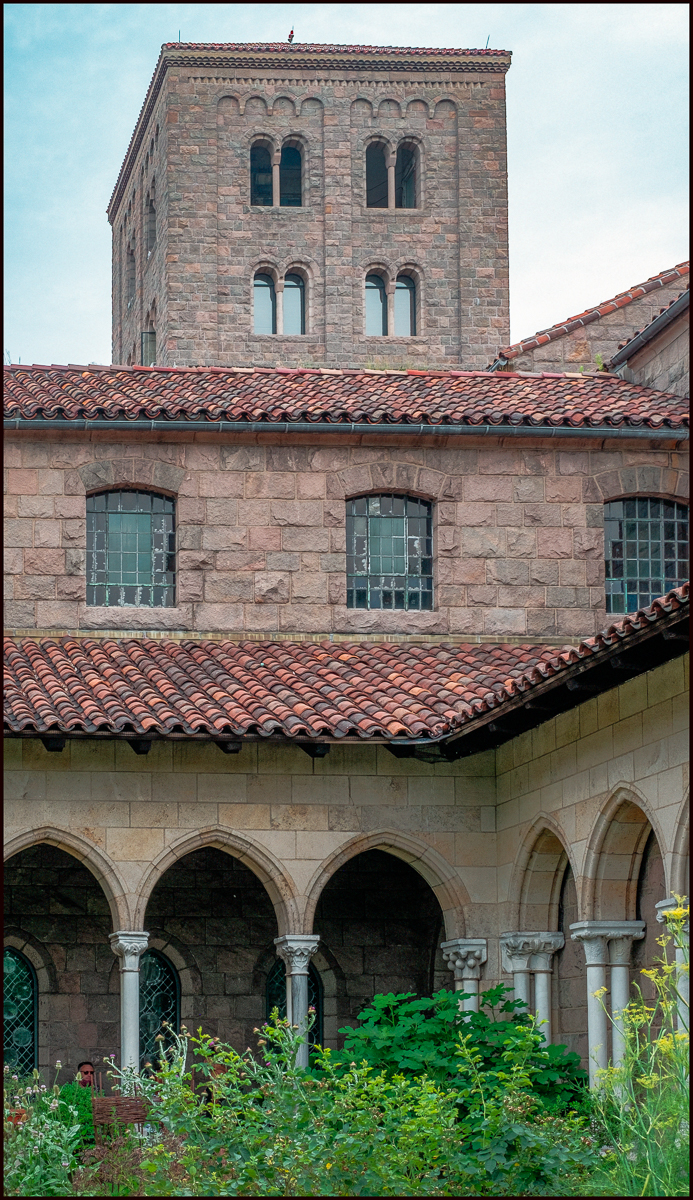
Taken with a Fuji X-E1 and Fuji XC 16-50mm f3.5-5.6 OSS II

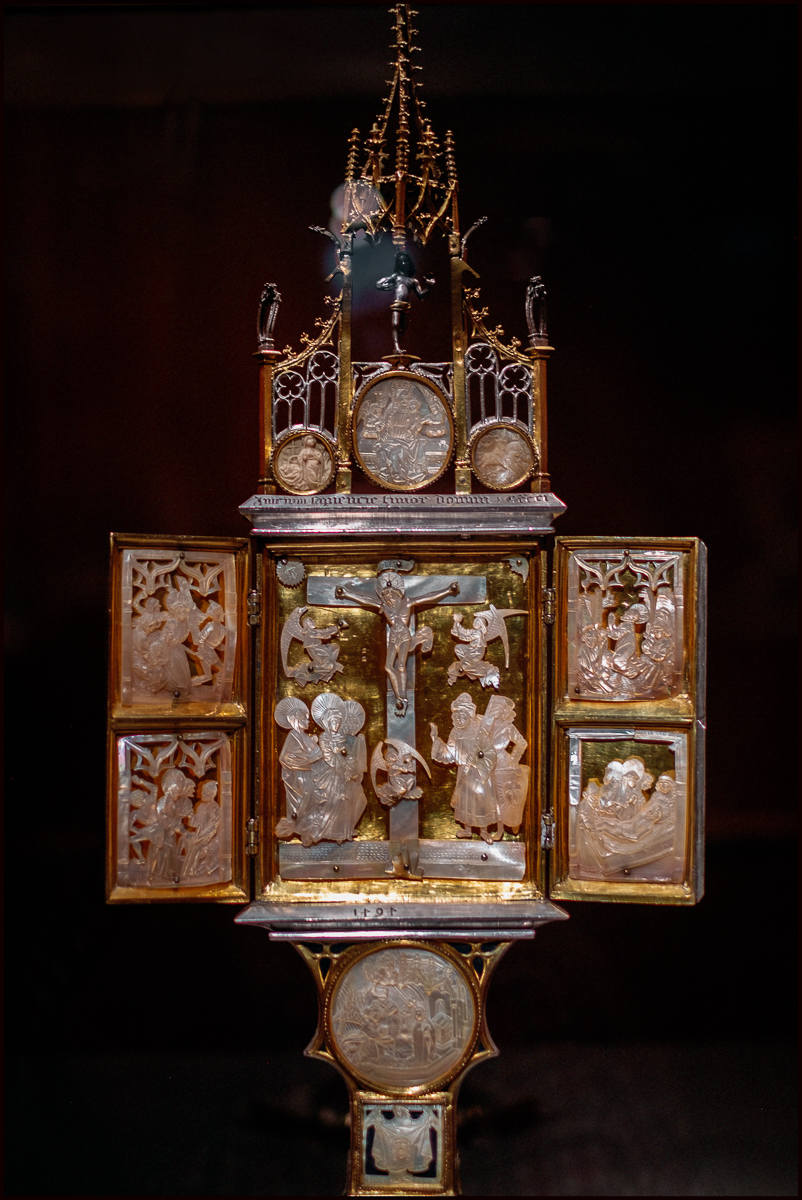
The Cloisters – Tapestries

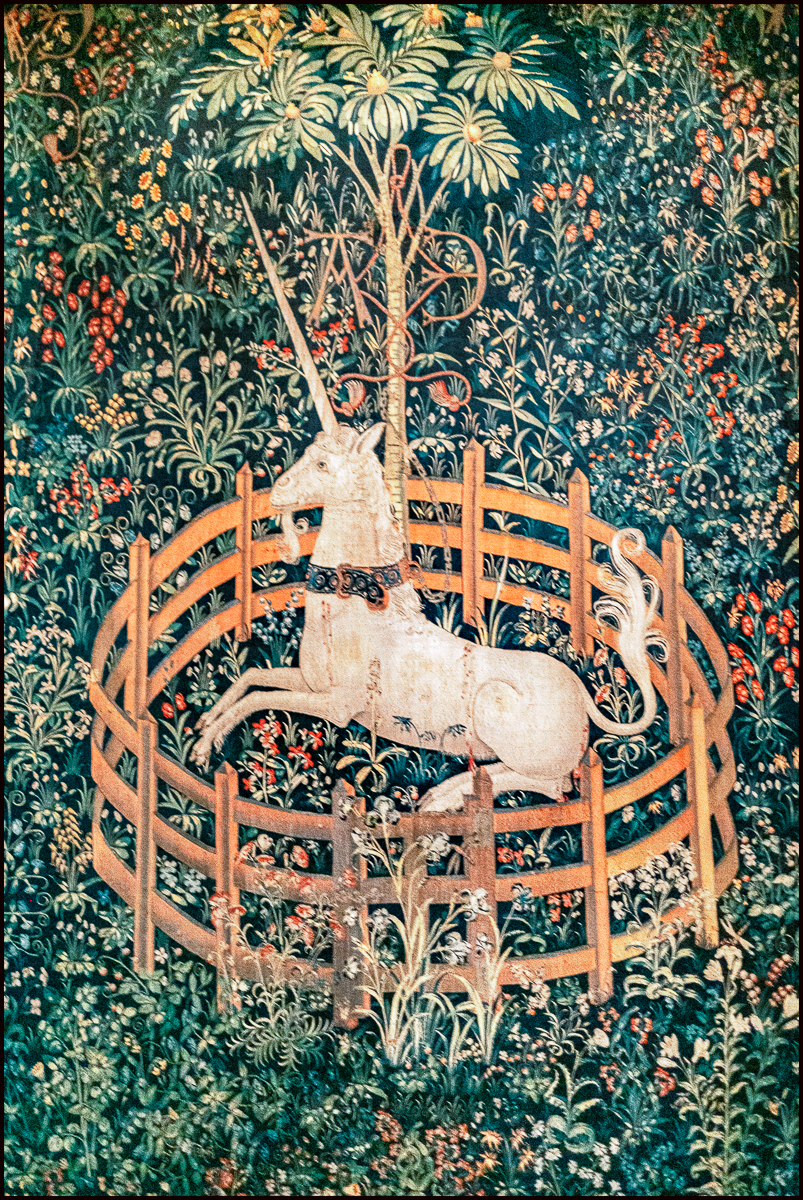
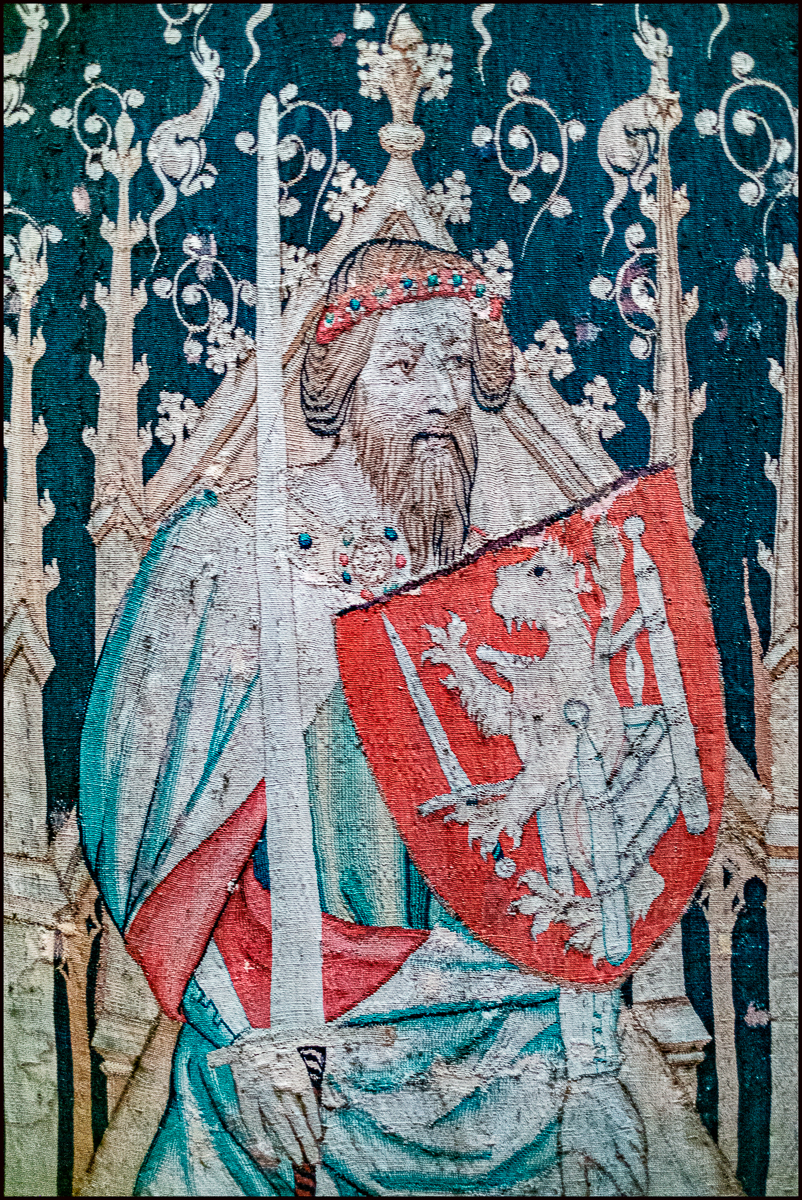
“While examples of textile art are displayed throughout the museum, there are two dedicated rooms given to individual series of tapestries, the South Netherlandish Nine Heroes (c. 1385) and Flemish The Hunt of the Unicorn (c. 1500). The Nine Heroes room is entered from the Cuxa cloisters. Its 14th-century tapestries are one of the earliest surviving examples of tapestry, and are thought to be the original versions following widely influential and copied designs attributed to Nicolas Bataille. They were acquired over a period of twenty years, involving the purchase of more than 20 individual fragments which were then sewn together during a long reassembly process. The chivalric figures represent the scriptural and legendary Nine Worthies, who consist of three pagans (Hector, Alexander the Great and Julius Caesar), three Jews (Joshua, David and Judas Maccabeus) and three Christians (King Arthur, Charlemagne and Godfrey of Bouillon). Of these, five figures survive: Hector, Caesar, Joshua, David and Arthur. They have been described as representing “in their variety, the highest level of a rich and powerful social structure of later fourteenth-century France”.

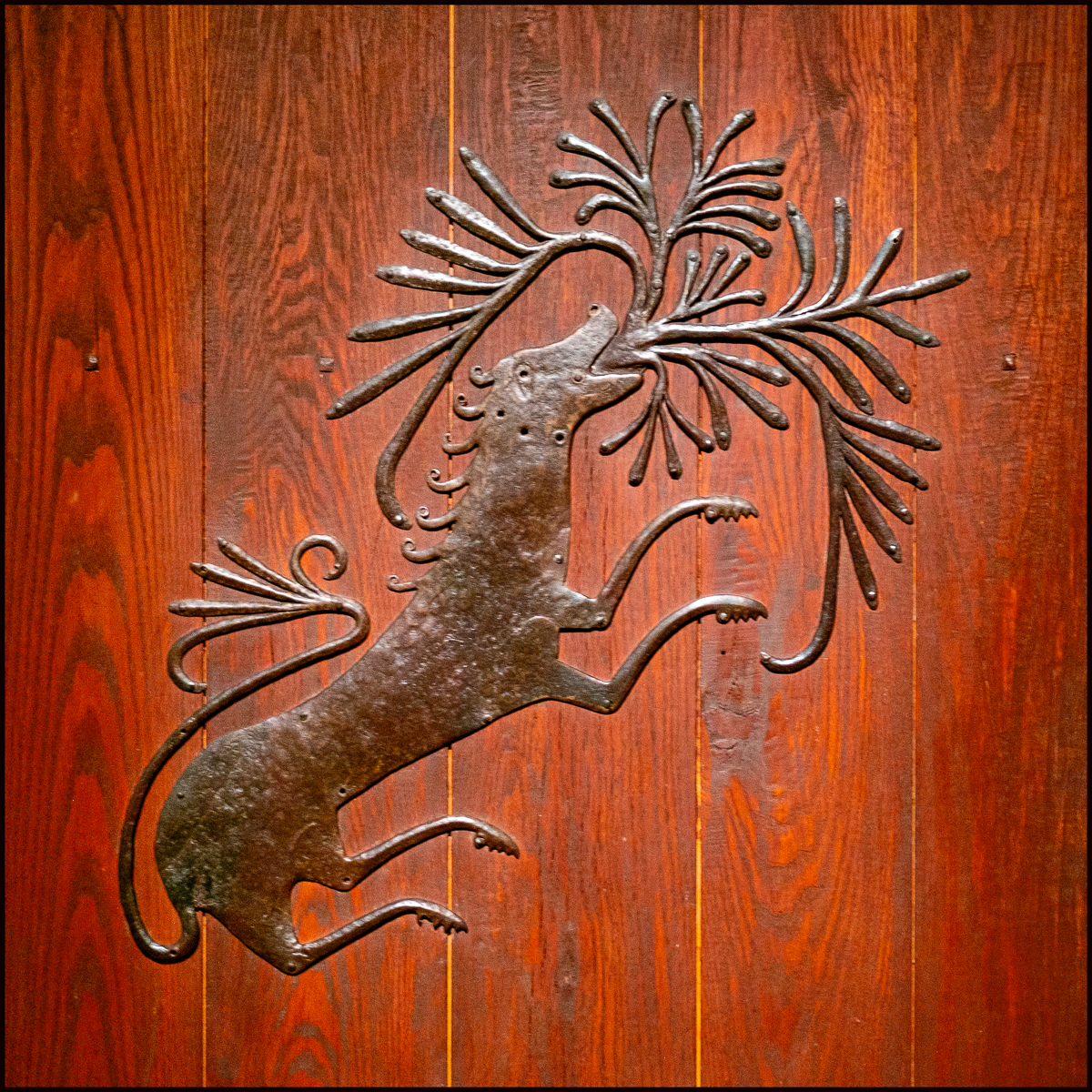
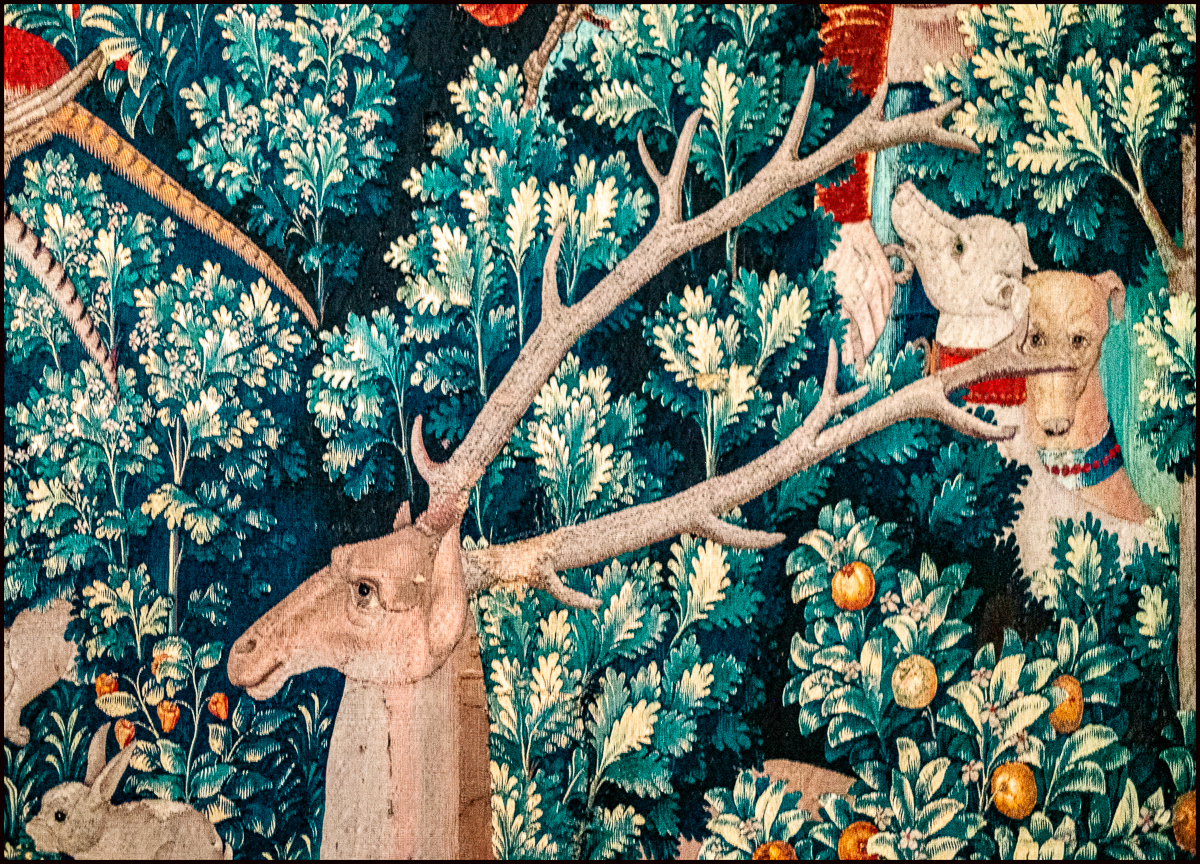
The Hunt of the Unicorn room can be entered from the hall containing the Nine Heroes via an early 16th-century door carved with representations of unicorns. The unicorn tapestries consist of a series of large, colourful hangings and fragment textiles designed in Paris and woven in Brussels or Liège. Noted for their vivid colourization—dominated by blue, yellow-brown, red, and gold hues—and the abundance of a wide variety of flora, they were produced for Anne of Brittany and completed c. 1495–1505. The tapestries were purchased by Rockefeller in 1922 for about one million dollars, and donated to the museum in 1937. They were cleaned and restored in 1998, and are now hung in a dedicated room on the museum’s upper floor.

The large “Nativity” panel (also known as “Christ is Born as Man’s Redeemer”) from c. 1500, South Netherlandish (probably in Brussels), Burgos Tapestry was acquired by the museum in 1938. It was originally one of a series of eight tapestries representing the salvation of man, with individual scenes influenced by identifiable panel paintings, including by van der Weyden. It was badly damaged in earlier centuries: it had been cut into several irregular pieces and undergone several poor-quality restorations. The panel underwent a long process of restoration from 1971, undertaken by Tina Kane and Alice Blohm of the Metropolitan’s Department of Textile Conservation. It is today hung in the Late Gothic hall.” (Wikipedia).


Taken with a Fuji X-E1 and Fuji XF 35mm f1.4 R