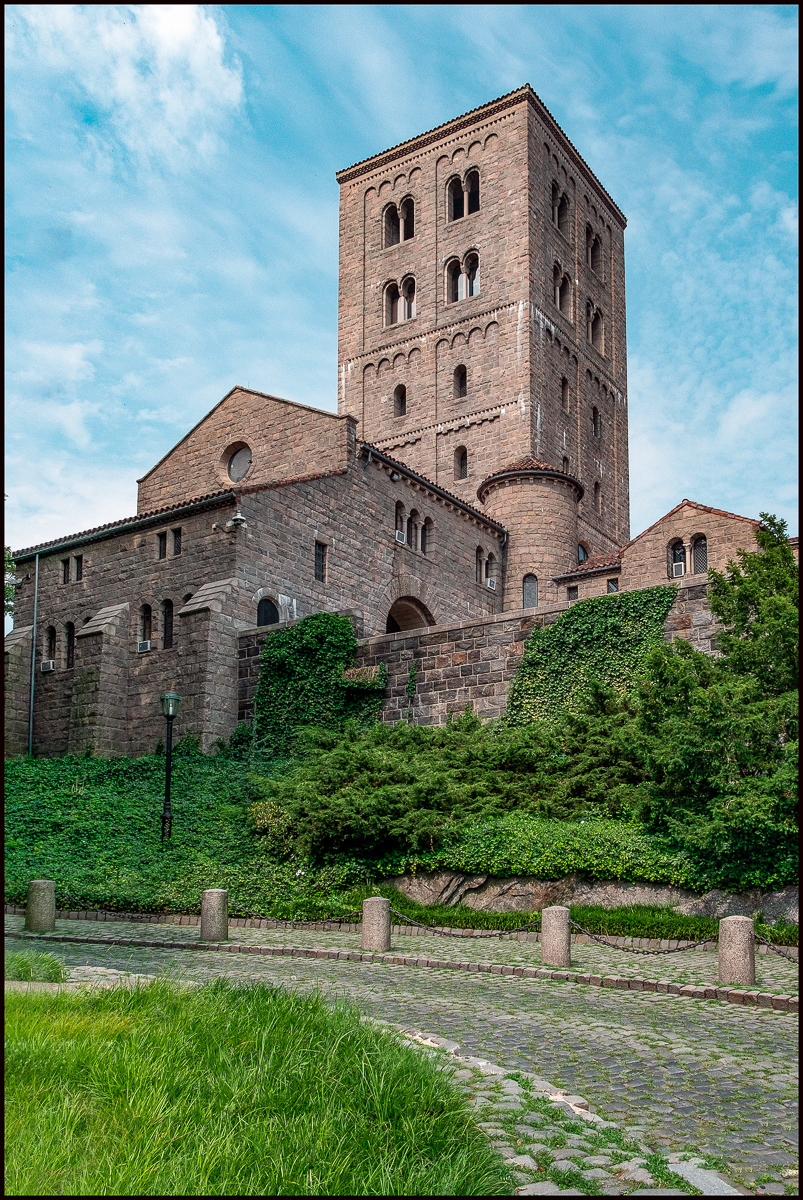
Back in July I went with a friend to The Cloisters. For any non New Yorkers reading this The Cloisters “is a museum in Fort Tryon Park in Washington Heights, Manhattan, New York City, specializing in European medieval art and architecture, with a focus on the Romanesque and Gothic periods. Governed by the Metropolitan Museum of Art, it contains a large collection of medieval artworks shown in the architectural settings of French monasteries and abbeys. Its buildings are centered around four cloisters—the Cuxa, Saint-Guilhem, Bonnefont and Trie—that were acquired by American sculptor and art dealer George Grey Barnard in France before 1913, and moved to New York. Barnard’s collection was bought for the museum by financier and philanthropist John D. Rockefeller, Jr. Other major sources of objects were the collections of J. P. Morgan and Joseph Brummer.
The museum’s building was designed by the architect Charles Collens, on a site on a steep hill, with upper and lower levels. It contains medieval gardens and a series of chapels and themed galleries, including the Romanesque, Fuentidueña, Unicorn, Spanish and Gothic rooms. The design, layout, and ambiance of the building are intended to evoke a sense of medieval European monastic life. It holds about 5,000 works of art and architecture, all European and mostly dating from the Byzantine to the early Renaissance periods, mainly during the 12th through 15th centuries. The varied objects include stone and wood sculptures, tapestries, illuminated manuscripts and panel paintings, of which the best known include the c. 1422 Early Netherlandish Mérode Altarpiece and the c. 1495–1505 Flemish Hunt of the Unicorn tapestries.”
It’s taken me so long to post these because I took a lot of pictures – so many beautiful things.
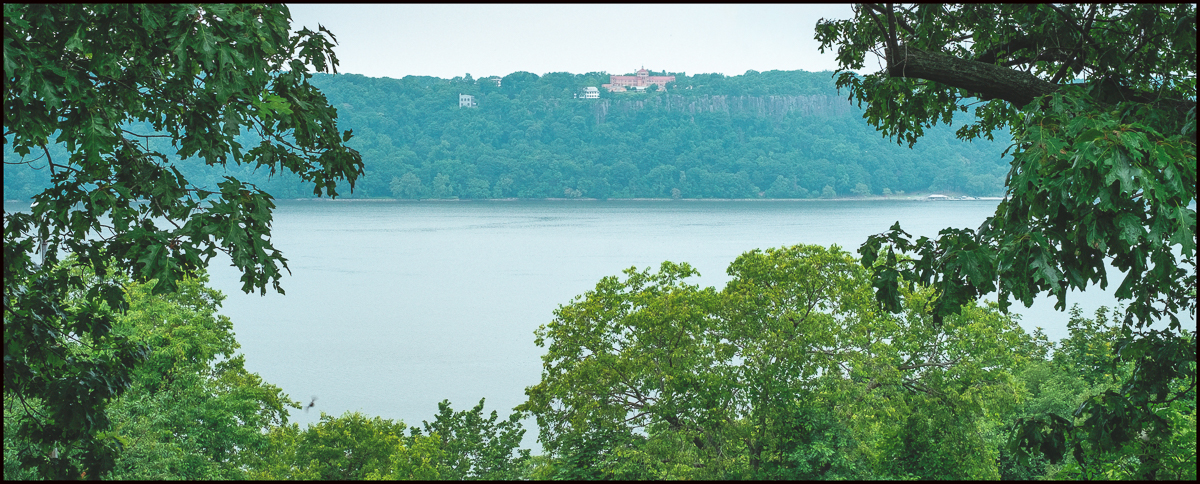
View of the Hudson River from The Cloisters.
Taken with a Fuji X-E1 and Fuji XC 16-50mm f3.5-5.6 OSS II