Military Re-Enactment Day at Boscobel – Overview

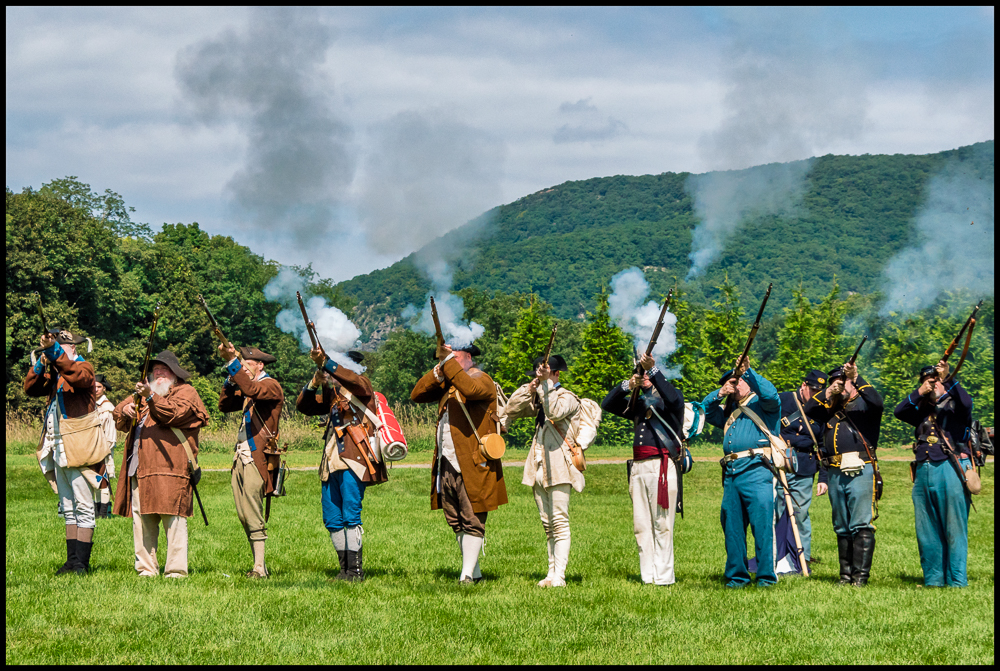
Above re-enactors in costumes from the Revolutionary War (on the left) and the war of 1812 (on the right) fire off their weapons. In the background Breakneck Ridge in the Hudson Highlands.

I took these pictures almost a year ago and only now have gotten around to posting them. According to the Boscobel Web Site:

History comes alive as military re-enactors set up encampments from the American Revolution, War of 1812, Civil War, and World Wars. They demonstrate camp life with inspections, formations, musket firings, artillery demonstrations, and drills.

See General George Washington inspect his troops, hear President Abraham Lincoln address his army, and experience a Parrott rifled cannon—forged in Cold Spring at the West Point Foundry—shooting across the Hudson River. Celebrate the 240th anniversary of the Great Chain across the Hudson by seeing an original link from the Chain.

Throughout the event, 18th-century children’s lawn games will be available and the Historic House Museum will be open to explore at your own pace and direction, with expert guides stationed to offer insight and information. Rain or shine.

11:00am 6th NY fire cannon to signal camp is open; camp life with drill
12:30pm Hudson River Valley Stories by Jonathan Kruk
1:00pm Inspection of troops by General Washington, President Lincoln, and General Grant, and including children, at camp sites
1:15pm Address by President Abraham Lincoln
1:30pm Massed drill and weapons’ firing
2:15pm Hudson River Valley Stories by Jonathan Kruk
3:15pm Tactical exercise
3:45pm Retreat

Food and beverages will be available for purchase from the Farmers & Chefs food truck, known for Hudson Valley farm-fresh food.

Taken with a Sony A77II and Tamron A18 AF 18-250mm f3.5-6.3.

Squirrel

We filled up three bird feeders with seed the other day. My wife wanted to attract more birds to the garden and I hoped to get some pictures of them when they came. Since then we haven’t seen a single bird come to the feeders, but we have seen lots of squirrels, so many in fact that that they’ve completely cleaned out the bird feeders.

I caught this one on top of one of the brackets holding a bird feeder. He must have been disappointed because one of his brothers (or maybe him himself) had knocked the feeder off the bracket yesterday – and spilled all of the seeds onto the ground.

This didn’t seem to bother him much though. He just stretched out to sun himself for a while.

Taken with a Sony A77 II and Sigma 400mm f5.6.

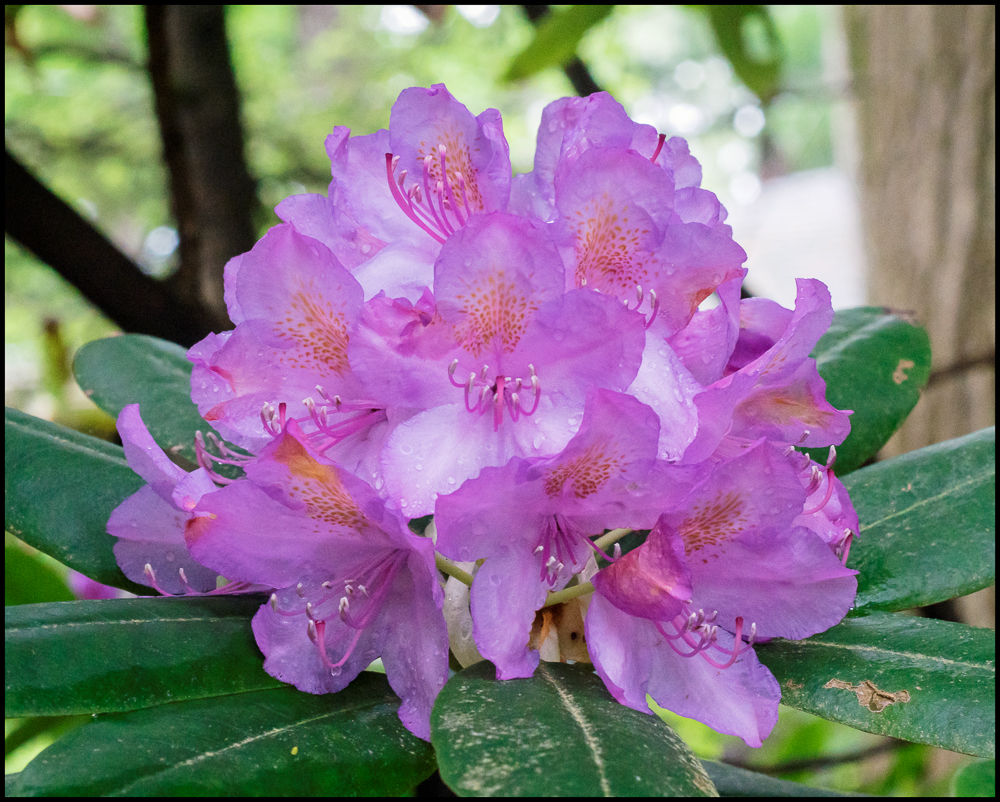
Flowers in our garden – Rhododendron

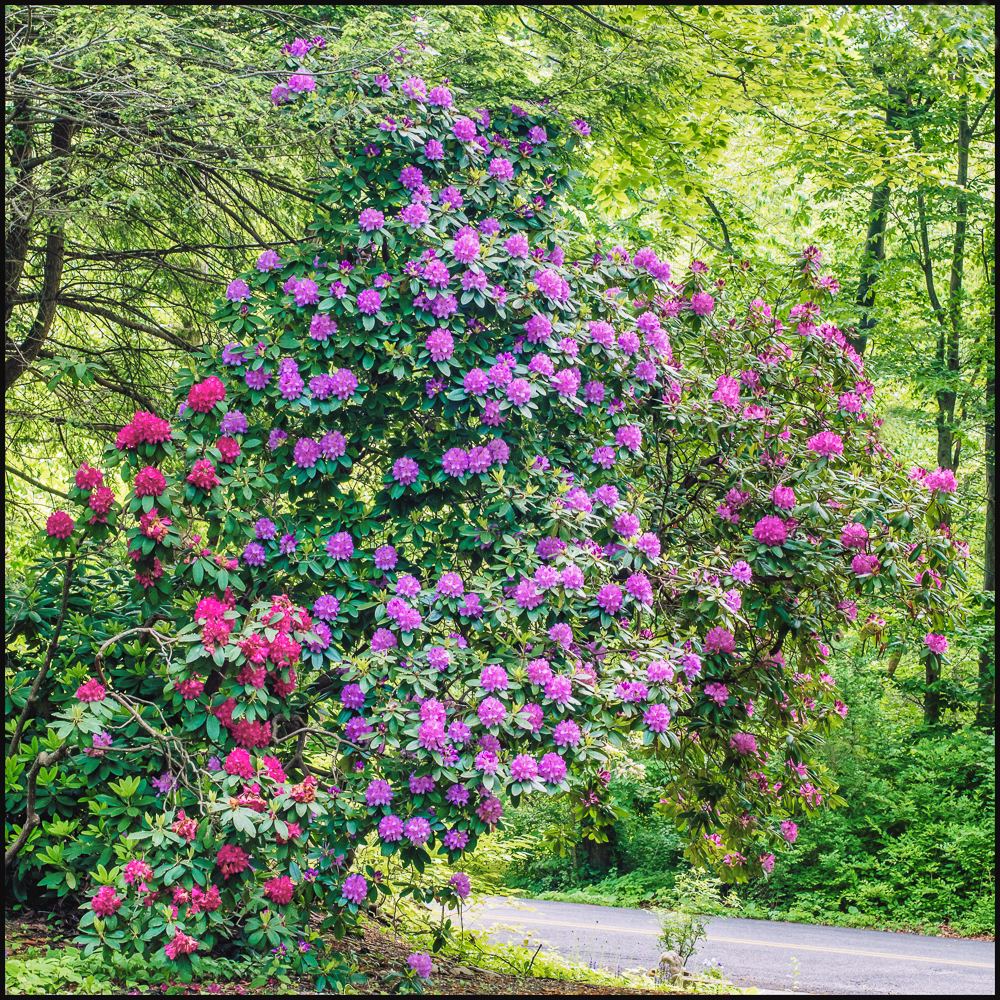
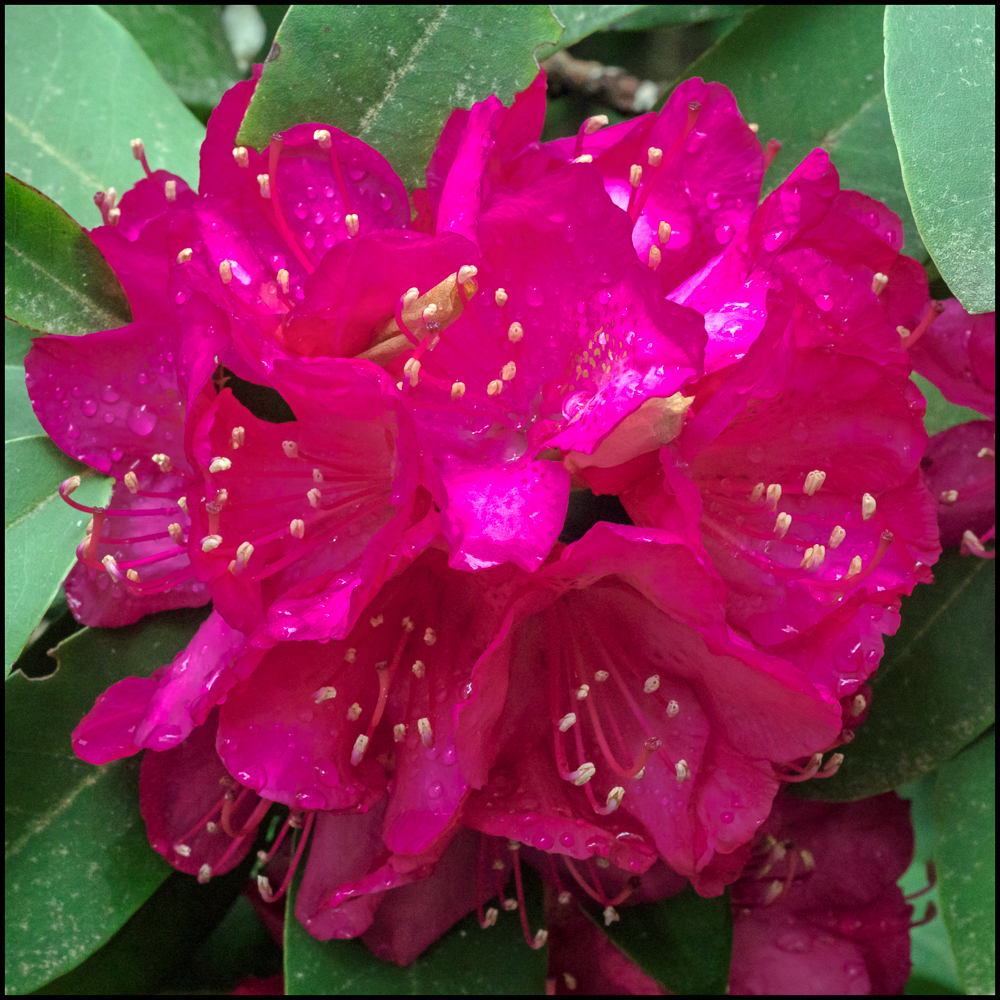
We have a huge rhododendron on the side of our driveway. The picture (above) doesn’t do justice to it. We can only reach the lower branches to prune it. Another strange thing about it is that, at a quick glance, it looks as though three different colored blossoms are growing on the same tree. This isn’t actually the case. If you look carefully there are three distinct trunks, the branches of which have all grown together. Below the red blossoms, and the purple blossoms. I don’t seem to have taken a picture of the third.

Taken with a Sony A77II and Minolta 50mm f2.8 Macro.

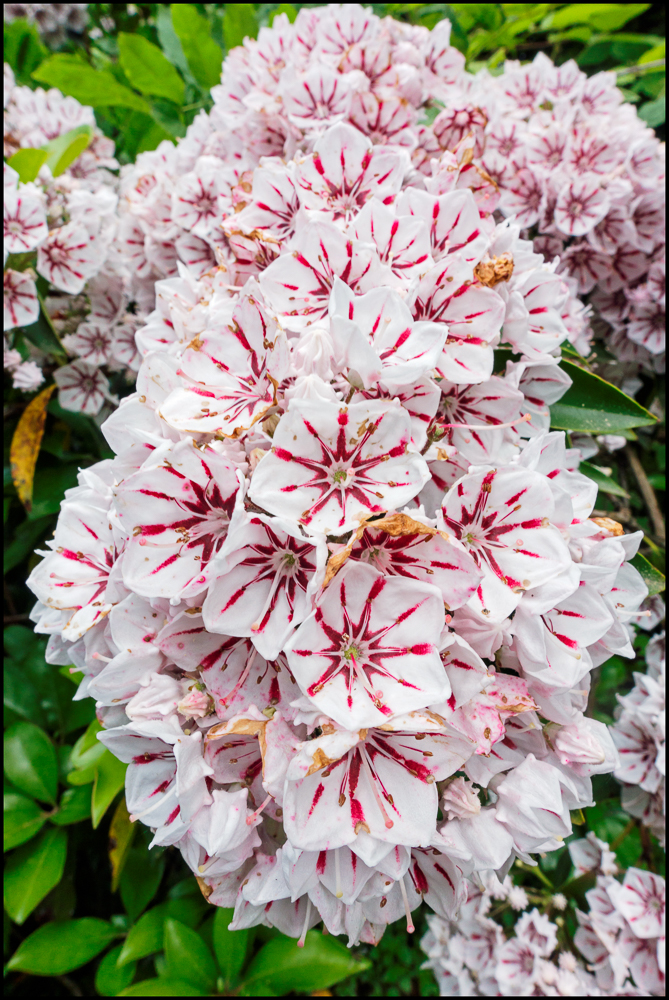
Flowers in our garden – Kalmia latifolia

Otherwise known as mountain laurel. It’s quite beautiful, but apparently highly toxic. Since we found out we’ve tried to keep our dog away from it – just in case.

According to Wikipedia:

Mountain laurel is poisonous to several different animals, including horses, goats, cattle, deer, monkeys, and humans, due to grayanotoxin and arbutin. The green parts of the plant, flowers, twigs, and pollen are all toxic, including food products made from them, such as toxic honey that may produce neurotoxic and gastrointestinal symptoms in humans eating more than a modest amount. Symptoms of toxicity begin to appear about 6 hours following ingestion. Symptoms include irregular or difficulty breathing, anorexia, repeated swallowing, profuse salivation, watering of the eyes and nose, cardiac distress, incoordination, depression, vomiting, frequent defecation, weakness, convulsions, paralysis, coma, and eventually death. Necropsy of animals who have died from spoonwood (Note: an alternative name) poisoning show gastrointestinal hemorrhage.

Taken with a Sony RX-100 M3.