An enormous moth

I was sitting in the house the other day when I heard my wife calling me to go our an take a look at something. She has a lot of roses and they are starting to bloom, so usually when she calls me it’s to take a picture of one of them. I’d taken a lot of pictures of her flowers recently and I wasn’t too enthusiastic about going out and taking another.

This time, however, it was something different: a huge green moth. I was even able to measure it: 4 inches long; wingspan also 4 inches.

I had no idea what it was so after taking the pictures I went back into the house and ‘googled’ ‘enormous green moth NY state’. An image like that of the one in our garden was the first to come up. I guess there aren’t that many types of ‘enormous green moth’ in NY state.

It’s a Luna Moth. This one is male. Apparently the male has thicker antennae than the female.

A couple of interesting facts about luna moths. First Luna moth caterpillars click their mandibles (mouth parts) and regurgitate smelly liquids when threatened by predators; Second when a luna moth emerges it doesn’t have mouth parts to feed, it’s sole purpose is to reproduce. In this winged form it lives only one week; Third the tail can apparently fool the echo location used by bats.

Taken with a Sony A77II and Minolta Maxxum AF 50mm f2.8 Macro.

Battle of Pines Bridge Revisited – The Forge

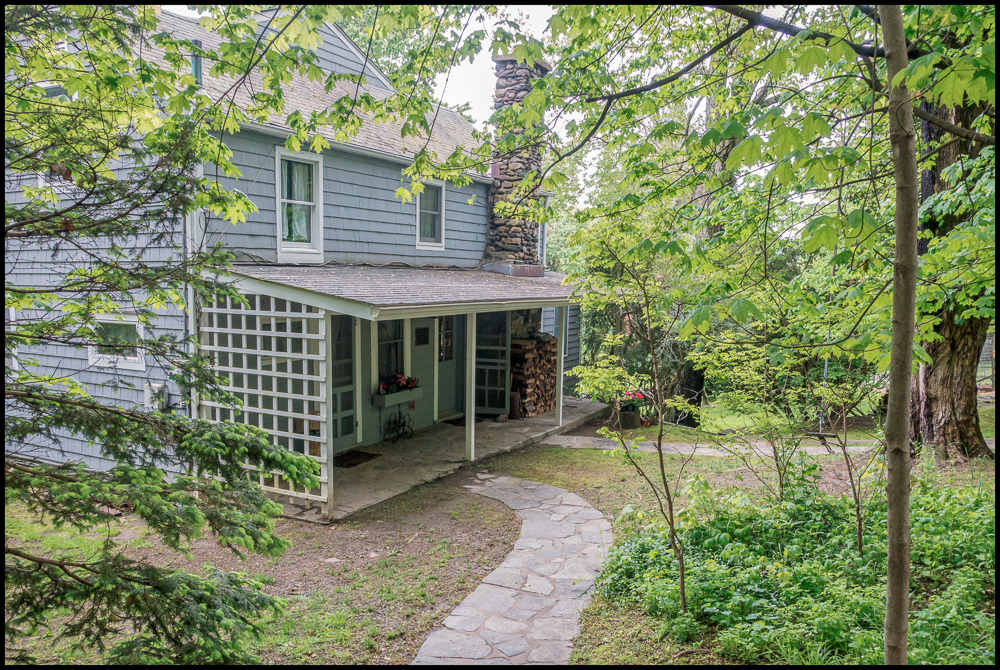
This house stands almost directly opposite the Davenport House. A nearby historical marker reads:

The Forge. 18th Century. Originally a part of the Davenport House lands this house was used as a Blacksmith Shop for area families during the 18th and 19th centuries. Designated a local historical landmark, March 2 1976.

The fact that it was “originally part of the Davenport House lands” and “served as a blacksmith shop…during the 18th centur(y)” indicates that the house was there at the time of the battle. What, if any, role it might have played I have no idea.

Taken with a Sony RX100M3.

Battle of Pines Bridge Revisited – The Davenport House

The battle actually took place in and around this house: the Davenport House, now a private dwelling.

According to the New York Times:

The First Rhode Island’s ranking officer was Col. Christopher Greene, 41, Nathanael Greene’s third cousin, who had come from Valley Forge. Other white officers included Col. Jeremiah Olney, Lieut. Col. Samuel Ward Jr. and Maj. Ebenezer Flagg.

Traveling west from Newport on Jan. 5, 1781, to join the main army, the First Rhode Island was observed at a Connecticut ferry crossing by the Marquis Francois Jean de Chastellux, one of Rochambeau’s five major generals. Chasetellux wrote in his journal: “The majority of these enlisted men are Negroes or mulattoes, strong, robust men. Those I saw made a very good appearance.”

On April 15, 1781, the First Rhode Island was assigned a defensive position at the northern bank of the Croton River, on the American lines guarding the northernmost part of Westchester County’s Neutral Ground, an almost uninhabited, unfortified area between the two armies.

The area protected by Greene’s First Rhode Islanders included several fords across the Croton plus one strategic structure, the Pines Bridge, over which the spy Maj. John Andre, displaying Benedict Arnold’s pass, had crossed the previous fall.

The Pines Bridge was guarded at all times. But the pickets at the fords were customarily withdrawn at dawn, on the assumption that an enemy force would not try a daylight crossing.

As was customary at the time, the country around the river crossings was infested by Tories. Many disaffected farmers had fled to New York City to join Col. James De Lancey’s Loyal Westchester Refugee Corps. De Lancey, always eager to strike an unexpected blow at the Americans, received intelligence about the intermittently guarded fords across the Croton.

Late on May 13, 1781 — 215 years ago this week — De Lancey assembled a sizable loyalist force of 60 cavalry and 200 infantrymen and slipped north on back roads through the Neutral Ground. His destination, Blenis Ford on the Croton River, was kept secret. There were too many spies on both sides.

Halting just short of the ford, the British raiders remained hidden in the woods until, with the first gray light of May 14, the American guards withdrew for breakfast. Minutes later De Lancey’s troopers crashed out of the shrubbery and galloped across the ford, riding hell for leather up a steep slope toward the elegant Davenport house, where Greene and his officers were still sleeping.

It was far from the first British hit-and-run cavalry attack in upper Westchester County, but it was one of the bloodiest.

De Lancey was angered by a pistol shot from an upstairs window of the house. His Refugees dismounted and tore into the house, sabering Colonel Greene and killing Major Flagg and his lieutenant.

Outside loyalist infantrymen overwhelmed the Rhode Islanders, who were outnumbered 2 to 1. The raiders killed 14, wounded 100 and took 30 prisoners, most of whom were soon sold into slavery in the British West Indies.

De Lancey, without a single casualty, left as swiftly as he had arrived, riding down the hillside and crossing Pine’s Bridge.

Colonel Greene, in his nightclothes, was thrown over a saddle and died.

Taken with a Sony RX100 M3.

Battle of Pines Bridge Revisited – The New Pines Bridge Monument

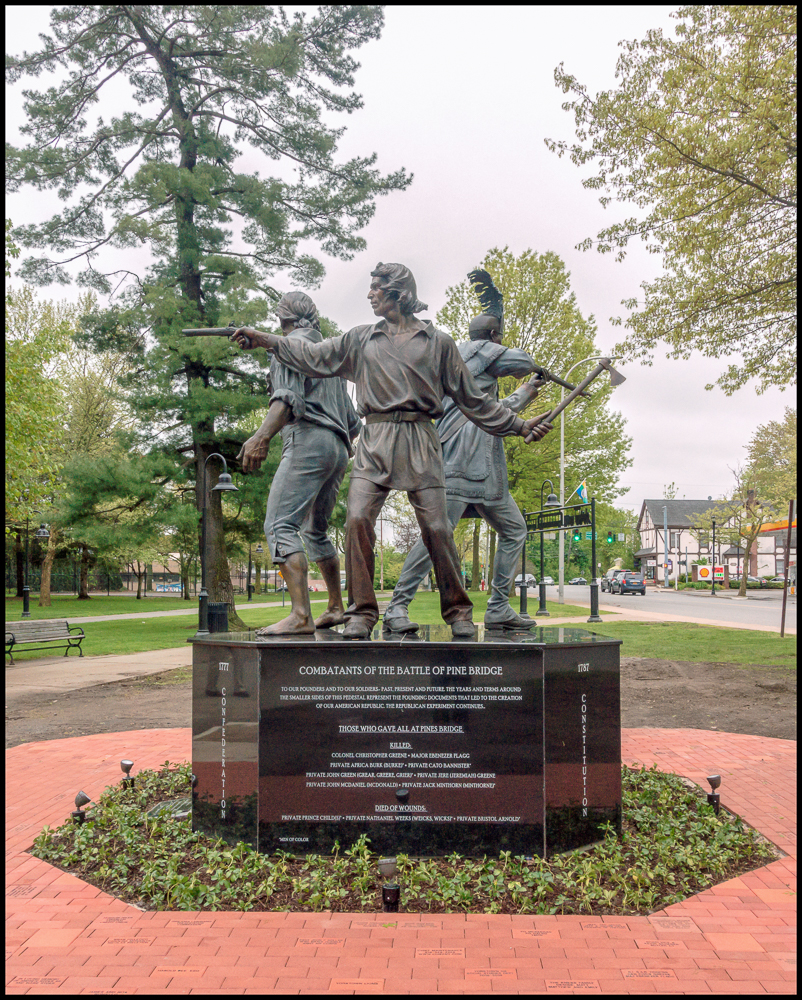
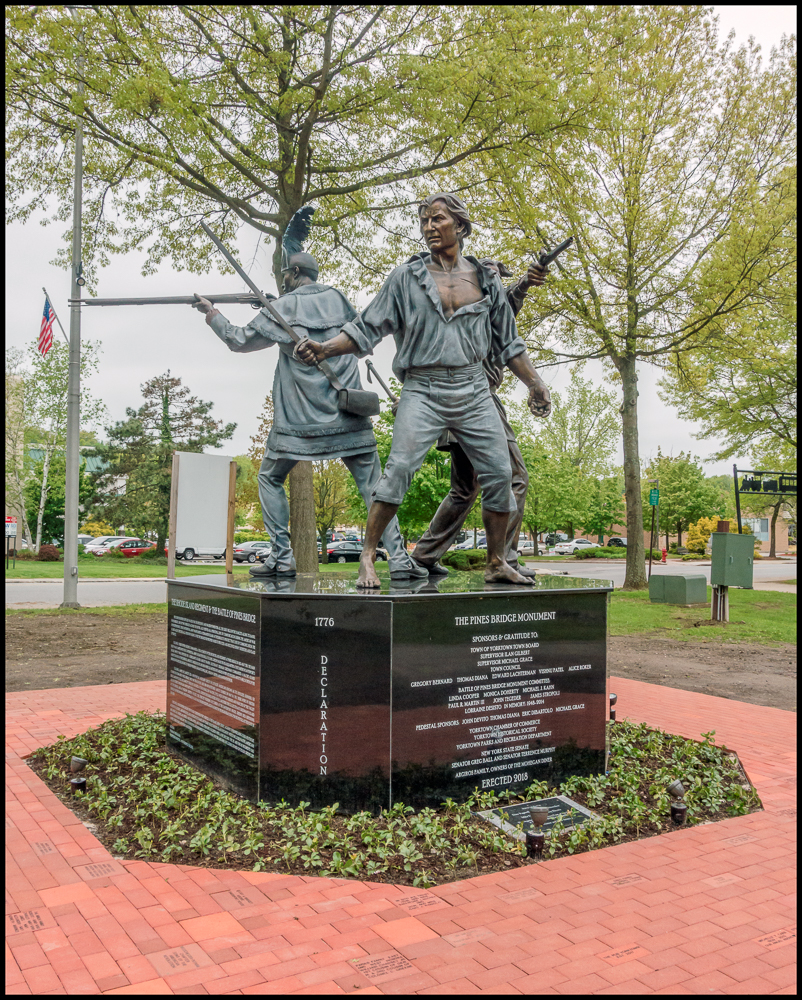
For me this was the highlight of our visit. I’d been to the other places before (my friend Ken hadn’t), but this was new to me. I’d understood that the monument was to stand in Downing Park almost directly opposite the First Presbyterian Church, but it turned out that this was not the case. In fact it’s in Railroad Park right next to the old Putnam Railroad Depot.

According to the Town of Yorktown, NY site:

…Dedicated to educating and commemorating the rich Revolutionary War History found here in Yorktown Heights, the Pines Bridge Monument Committee was formed to create a monument to America’s first veterans whose brave actions created our new republic. Fought within Yorktown’s borders, the “Battle of Pines Bridge” was one of the bloodiest small unit actions in the first military undertaking of this great nation, the War for Independence. People know little of this memorable event, nor the role of the African American, Native American and Colonial Soldiers who fought the battle on May 14, 1781. Certainly these men “who gave their all!” deserve such a monument that will “sharpen our sense of local and national purpose.”

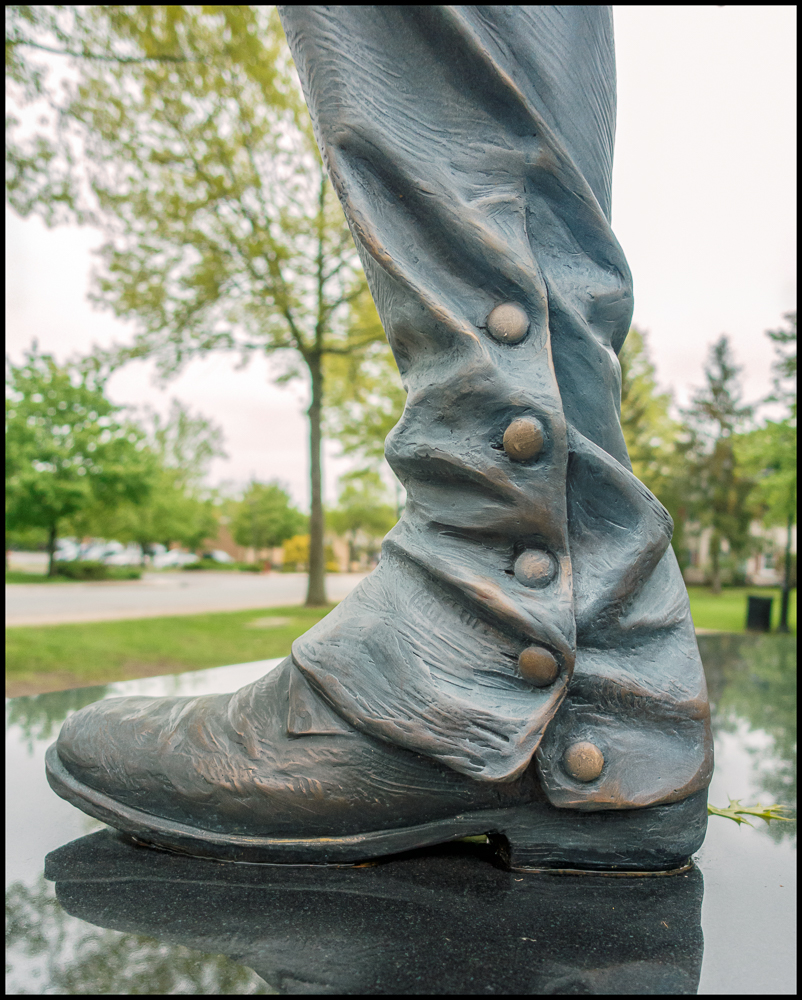
The monument, in the form of a heroic sculpture by nationally noted sculptor Jay Warren of Oregon, pays tribute to the members of the Rhode Island Regiment who died defending the Pines Bridge crossing of the Croton River. It depicts Colonel Christopher Greene, the legendary commander of the regiment. Two soldiers fight beside him, an African American and a Native American, all doomed to perish in the brief and desperate battle.

The history of the Rhode Island Regiment embodies the racial and ethnic melting pot that represents America’s greatest strength and her greatest trials. The mixed fighting unit, made up of men of European, African, and Native American descent, was not common until the American military officially integrated nearly two centuries later.

This grand sculpture illuminates the exceptional diversity of our nation; conveys the nobility and tragedy of these soldiers of the American Revolution and represents and honors ALL American veterans of every race and ethnicity who followed them.

Note that the above text refers to: “…men of European, African and Native American descent” and that the monument reflects this in the three figures: one European, one African American and on Native American. So after only 237 years the Native Americans finally get their monument.

Taken with a Sony RX100M3.