Bridgeview Tavern, Sleepy Hollow, NY

I’ve been having a weekly lunch with a friend for the past few weeks. On this occasion we went to the Bridgeview Tavern. It’s a pleasant establishment serving pub style food. The overall ambience is welcoming and the staff were very friendly. One entire side of the restaurant has a fantastic view of the Hudson River and the Tappan Zee.

Very pleasant.

As we were leaving it started to snow.

Taken with a Minolta Hi-Matic 9 and TMAX-100.

Film Camera 2019/1 – Minolta Hi-Matic 9 – Results

So the verdict is: Keep the camera, change the photographer.

When I first got the results back from the lab I was very disappointed. I didn’t think any of pictures were any good. They were all underexposed. After adjusting the exposure in Lightroom they looked a lot better, but why the underexposure in the first place? Then it occurred to me that I didn’t remember putting a battery in. Who knows how long the old battery had been in there? And it might not even have been the right battery in the first place. I suppose this could have caused the underexposure. Lesson learned: make sure that the camera has a fresh battery.

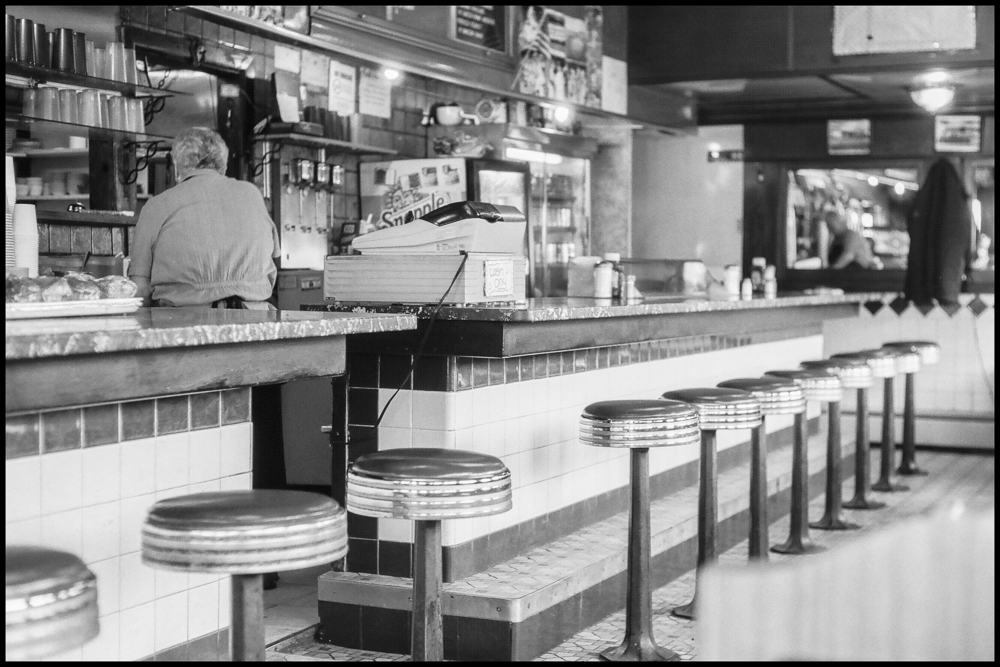
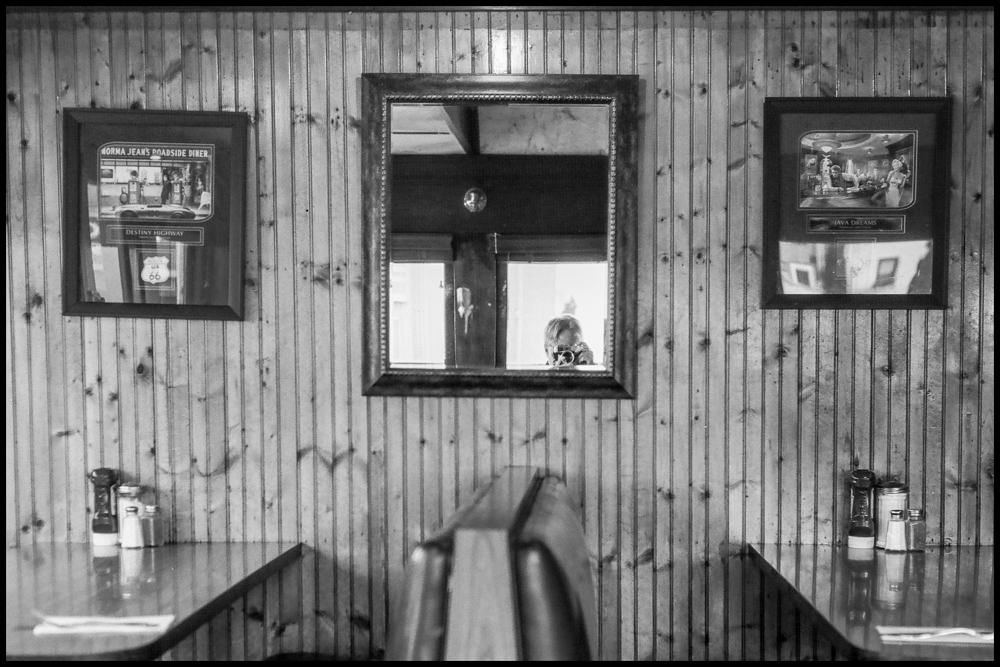
Then I chose the wrong film. It’s Winter here in NY state and the days are usually quite gloomy. For some reason I chose to use an ISO 100 film. Maybe this would have worked if I hadn’t been using the camera in its fully automatic mode. The lowish ISO combined with the dark conditions probably caused the camera to chose a wide aperture with consequent shallow depth of field (as you can see in the second picture below). It may also have chosen a slow shutter speed, contributing to camera shake. Lesson learned: choose an ISO better suited to the conditions you’re shooting in.

Framing issues. As far as I can tell the camera has no parallax correction mechanisms, not even markings in the viewfinder. This caused me to miss the framing in a number of close compositions. Lesson learned: not sure.

The pictures are particularly uninspired. When I’m testing a new camera the pictures are not usually very spectacular, but in this case they’re particularly bad. Usually I go to a new place and find some new (to me) and sometimes interesting opportunities for pictures. On this occasion it was cold and gloomy. I didn’t really want to be walking around taking pictures, but I felt I had to finish the roll. So I just walked around in the immediate vicinity of our house taking pictures of anything that seemed vaguely interesting (most of them weren’t). Lesson learned: Don’t go out taking pictures if you’re not inclined to do so.

Still after some correction in Lightroom the pictures were not the worst I’ve every taken. I think I’ll try it again this time in better conditions, with an appropriate film and using fully manual or semi automatic settings so that I at least know what aperture/shutter combination is being chosen.

The two pictures in this post were taken in a lovely 1930s vintage diner in Peekskill, NY: The Center Diner.

Van Tassel Apartments

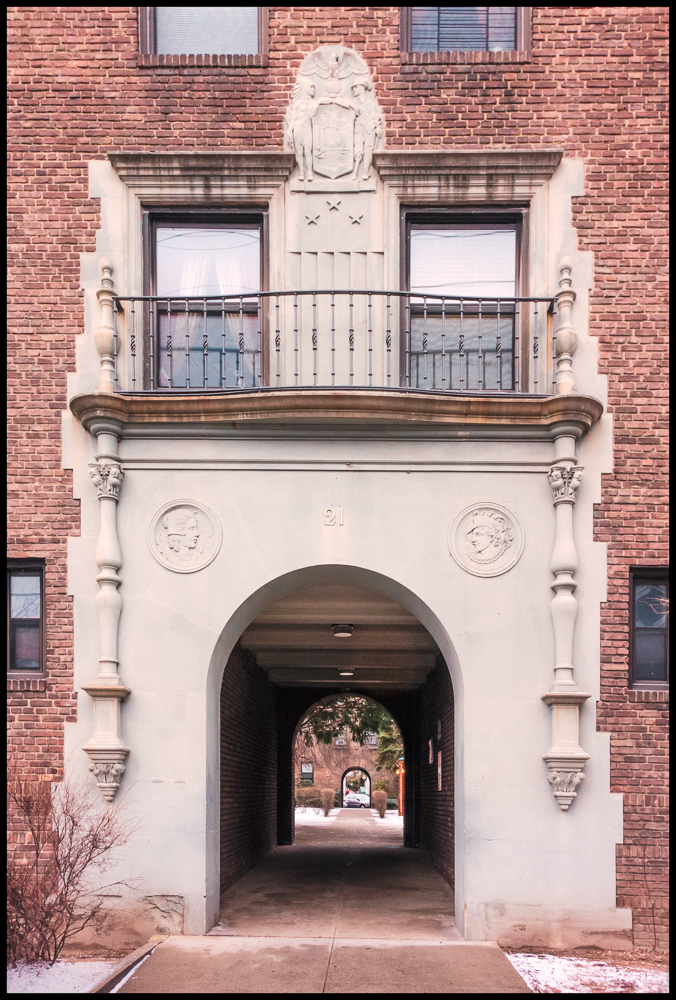
I found myself back in Sleepy Hollow yesterday having lunch with our friend Ken at J. P. Doyles. As we were walking back to Ken’s car we noticed an interesting looking entrance to a building we hadn’t noticed before. After a bit of research I discovered that it’s the Van Tassel Apartments and it has some attractive details around the entrance.


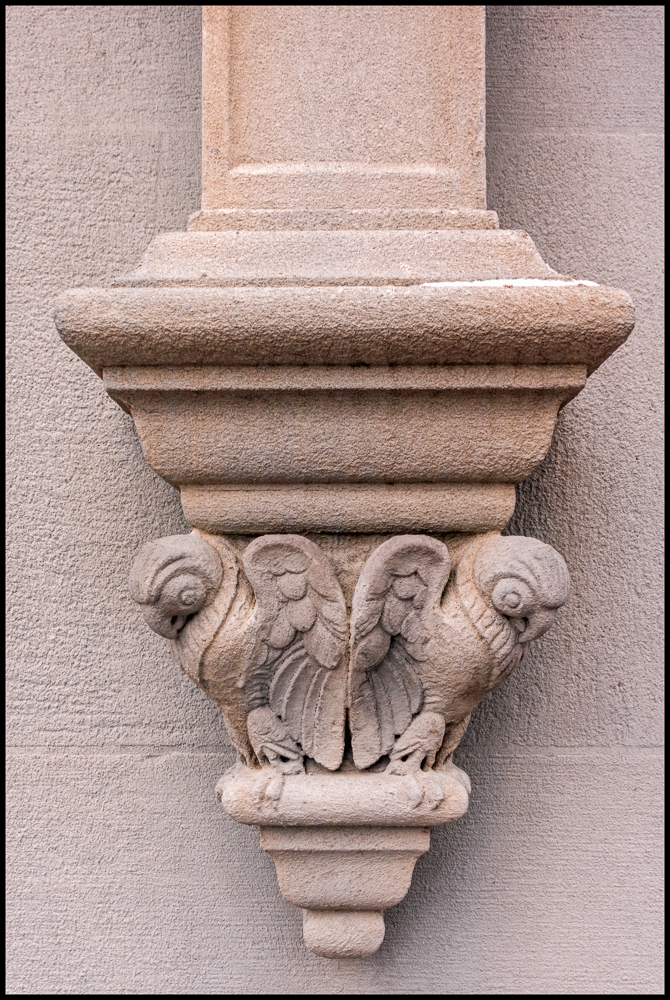
Birds. I have no idea what they symbolize.


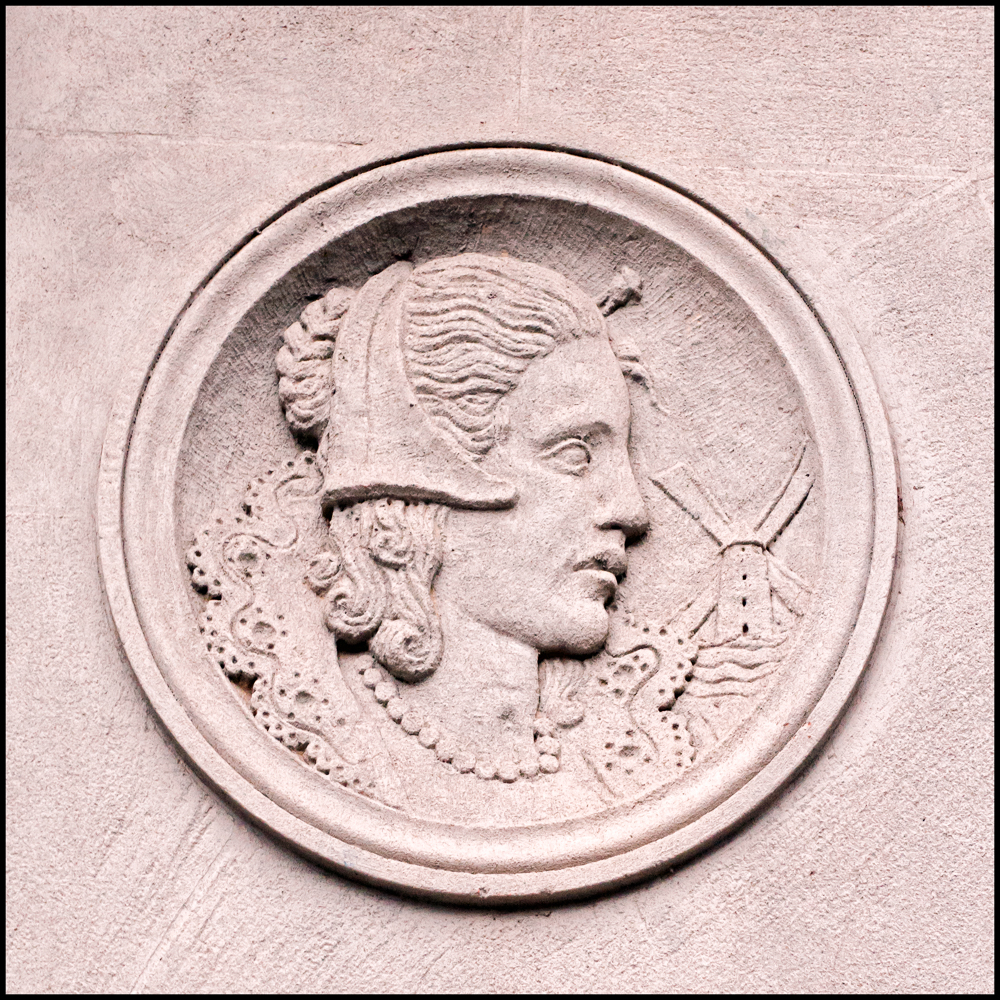
Woman with windmill. Because of the name of the apartments, the Dutch connection implied by the windmill and the association with “The Legend of Sleepy Hollow” I’m guessing this is Katrina Van Tassel the main female character in the story.


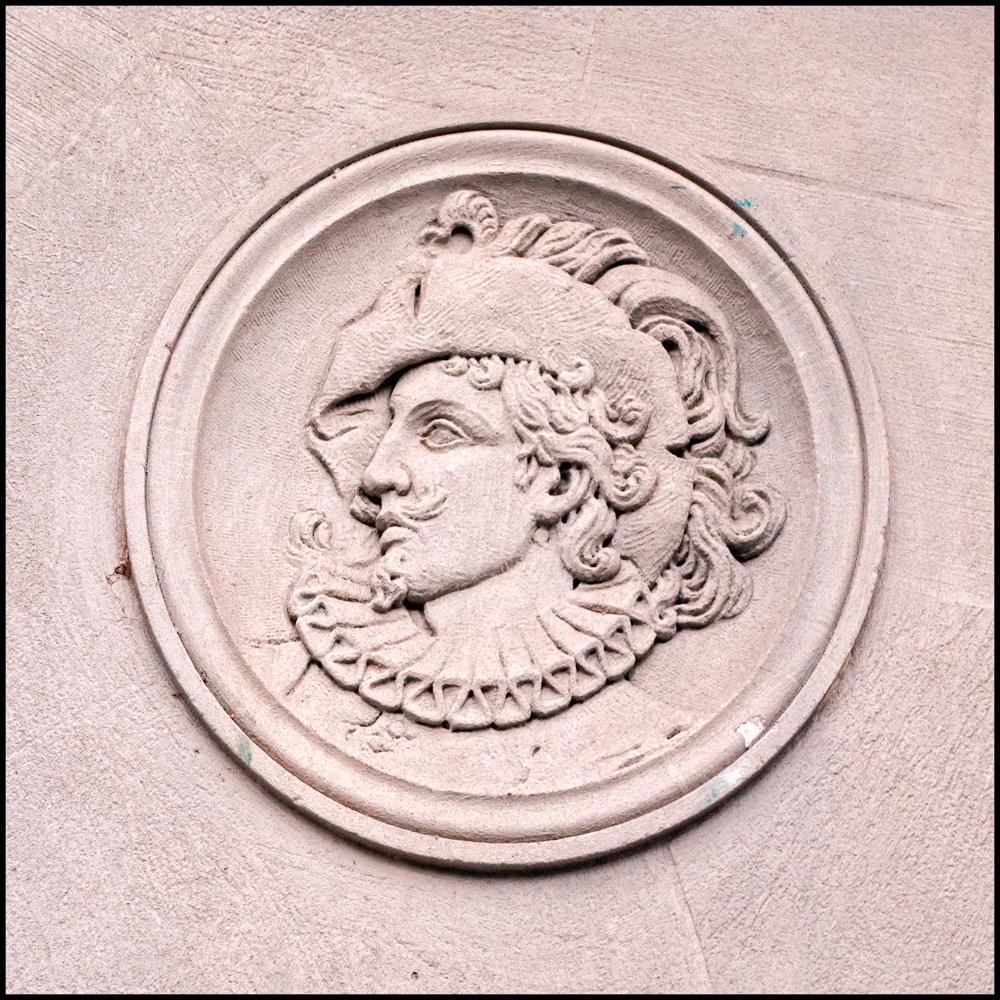
According to Warner Oral His­to­ries: Life in the Van Tas­sel (which also provides lots of other information about the apartment complex) this is a portrait of Henry Hudson.


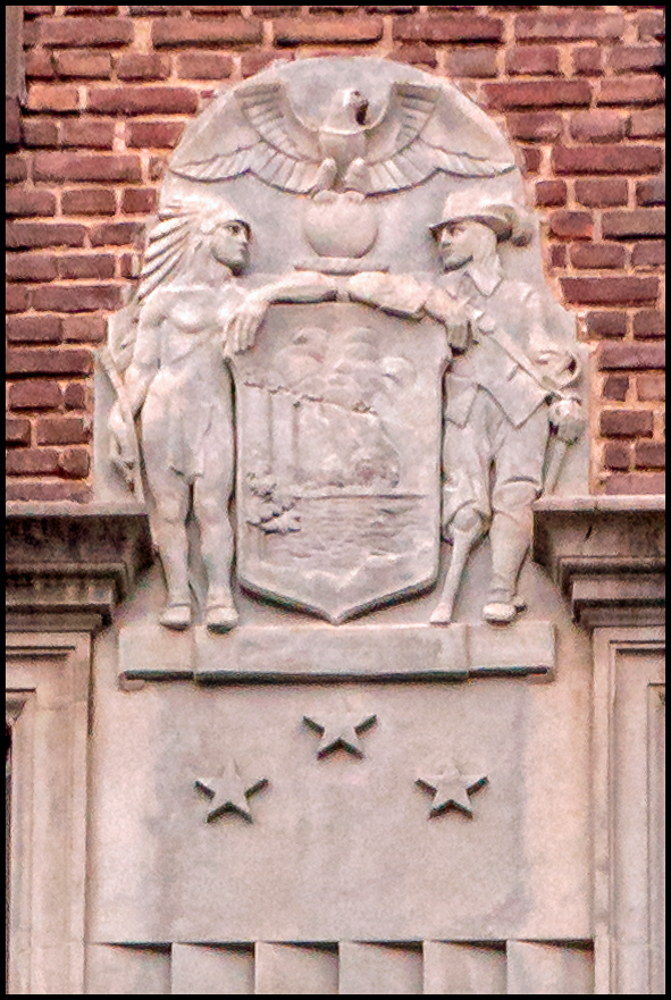
This grouping is topped by an eagle. Below that are two figures – on the left a Native American and on the right what judging from the peg leg is probably Peter Stuyvesant. They’re both leaning on a shield. Unfortunately, I find it difficult to make out what’s on the shield. I have no idea what the significance of the three stars might be.

Taken with a Sony RX-100 M3.

Back to the Sleepy Hollow Cemetery – Mile Marker

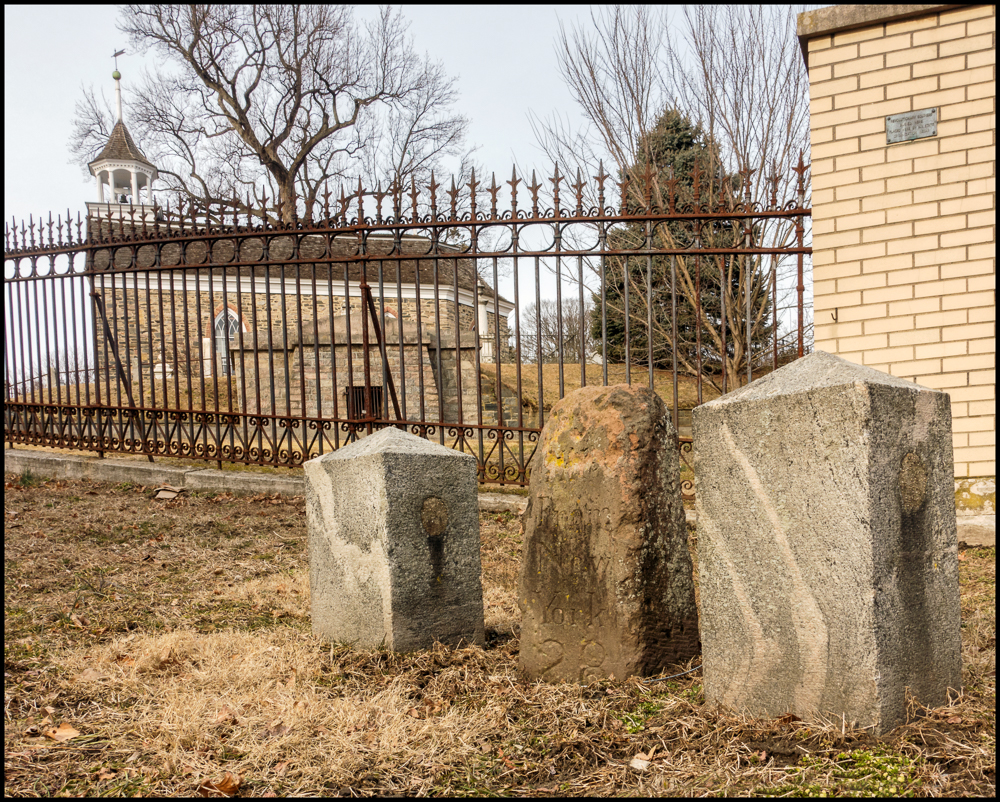
This old mile marker stands on Albany Post Road (Route 9) just outside one of the main entrances to Sleepy Hollow Cemetery.

According to Wikipedia:

The Post Road followed the original the Wickquasgeck Trail, carved into the brush of Manhattan by its Native American inhabitants. This trail originally snaked through swamps and rocks along the length of Manhattan Island. Upon the arrival of the Dutch, the trail soon became the main road through the island from Nieuw Amsterdam at the southern tip. The Dutch explorer and entrepreneur David Pietersz. de Vries gives the first mention of it in his journal for the year 1642 (“the Wickquasgeck Road over which the Indians passed daily”). The Dutch named the road “Heerestraat”.

In 1669, the provincial government of New York designated a postal route between New York City and Albany, the colony’s two most important settlements at the time. It was little more than a narrow path in many places, following old trails used by the Wiccoppe and Wappinger tribes. Stagecoaches headed north originally started from Cortland Street in lower Manhattan; later the starting point was moved up to Broadway and Twenty-first Street.

In 1703, the legislative body provided for the postal road to be a “public and common general highway” along the same route, starting in Kingsbridge, Bronx and ending at a ferry landing in present-day Rensselaer. It was called the Queen’s Road, after Queen Anne.

The King’s Bridge was built as a toll bridge in 1693, by Frederick Philipse, a wealthy merchant and major landholder in the Bronx and Westchester. The bridge, the first connecting Manhattan with the mainland, spanned the former Spuyten Duyvil Creek at what today is Kingsbridge Avenue. At Kingsbridge the Post Road split with the eastern spur heading to Boston, and the northern branch heading to Albany.

The Albany Post Road, still called “Broadway”, continues to Van Cortlandt Park, through what was once called the “Vale of Yonkers”, and passes Greystone, the former estate of Samuel J. Tilden, now part of Untermyer Park. The village of Ardsley takes its name from the estate of Cyrus W. Field, who owned 780 acres (3.2 km2) of land lying between Broadway (Dobbs Ferry) and the Sprain Brook (Greenburgh) named Ardsley Park. He had named Ardsley Park after the English birthplace of his immigrant ancestor, Zechariah Field (East Ardsley, West Riding of Yorkshire, England), who immigrated to the U.S.

Just north of Washington Irving’s Sunnyside is the Old Dutch Church of Sleepy Hollow featured in his “The Legend of Sleepy Hollow” (1820). Running concurrent with U.S. Route 9, the Albany Post Road drops the name “Broadway” as it approaches the village of Ossining. In early autumn 1777, General Israel Putnam retired along the Post Road in the face of Sir Henry Clinton’s advance on Peekskill.

The marker is quite worn and difficult to reads, but indicates that it’s 28 miles from New York City. The two concrete “lumps” on either side of the mile marker are quite unsightly. I can only assume that they are there to protect the marker itself. It’s quite close to the road and I imagine it could easily be damaged if a vehicle mounted the kerb.

Taken with a Sony RX-100 M3.