A walk around Ossining – First Presbyterian Church

According to the Village of Ossining Downtown Walking Tour:

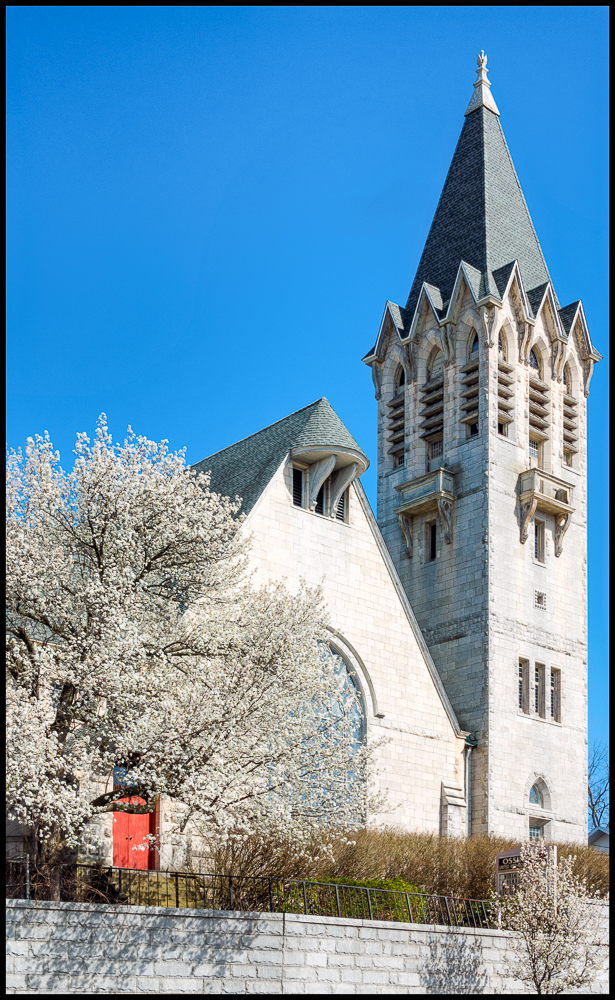
The First Presbyterian Church is a High Victorian Gothic style structure built in 1870 to house the congregation of the same name. The congregation’s previous church, located in the Sparta neighborhood, was damaged during the Revolutionary War. This prompted the congregation to build a new structure on the site of the current Trinity Episcopal Church at 7 South Highland Avenue in 1803. As the congregation grew, this church was expanded several times until it was no longer adequate to house all those who wished to worship there. The present church was constructed from 1868 to 1870 for a cost of approximately $95,000 by contractor Peter H. Terhune of Binghamton, NY and designed by Isaac Gale Perry, one of the designers of the New York State Capitol building.

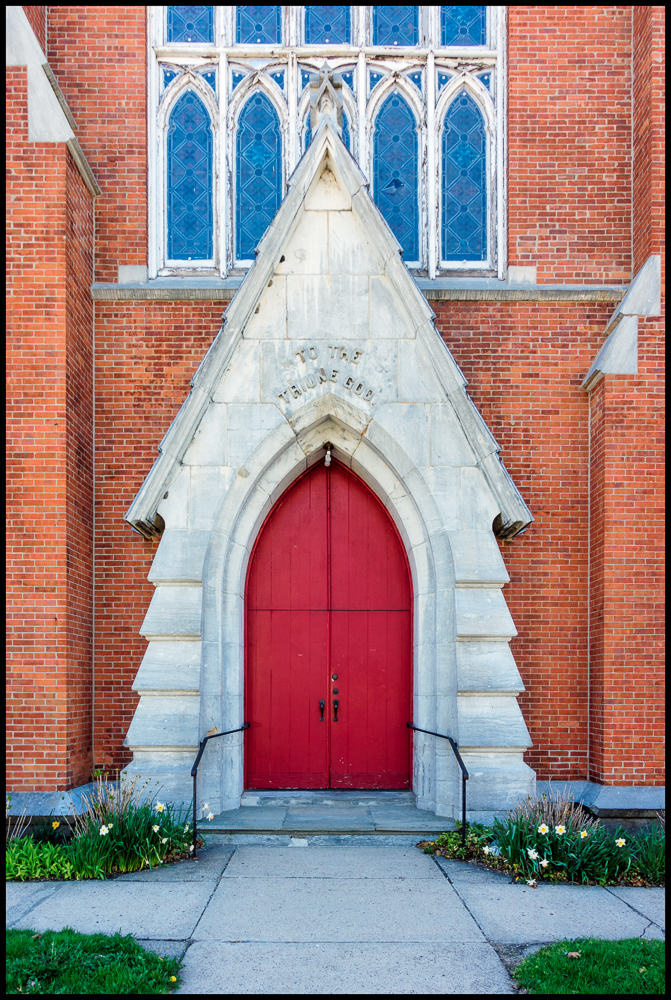
I was attracted to the rather unique shape of the stone surrounding the doorway. The word over the door read “To the Triune God”.

According to the church’s own website:

Our church came into being on June 28, 1763, when the Presbytery of Dutchess County delegated the Rev. John Smith, of White Plains, to conduct monthly worship service in homes in the Ossining area. Our first church was built in 1768 in the area now known as Sparta cemetery.

The first building was damaged in the Revolutionary War, and a new one was built in the village of Sing Sing, on the site of the present Trinity Episcopal Church, in 1803.

To accommodate further increases in the congregation, the present building was completed in 1870, with the high steeple on the south tower serving as a navigational aid for river traffic. The building was extensively renovated and modernized in the mid-1950’s, including the removal of the tall steeple and the addition of Sunday school rooms.

Today our Church houses an active ministry to Ossining and local community groups, in addition to a myriad of congregational activities.

It’s a pity that the spectacular, high steeple was removed!

Taken with a Sony RX-100 M3.
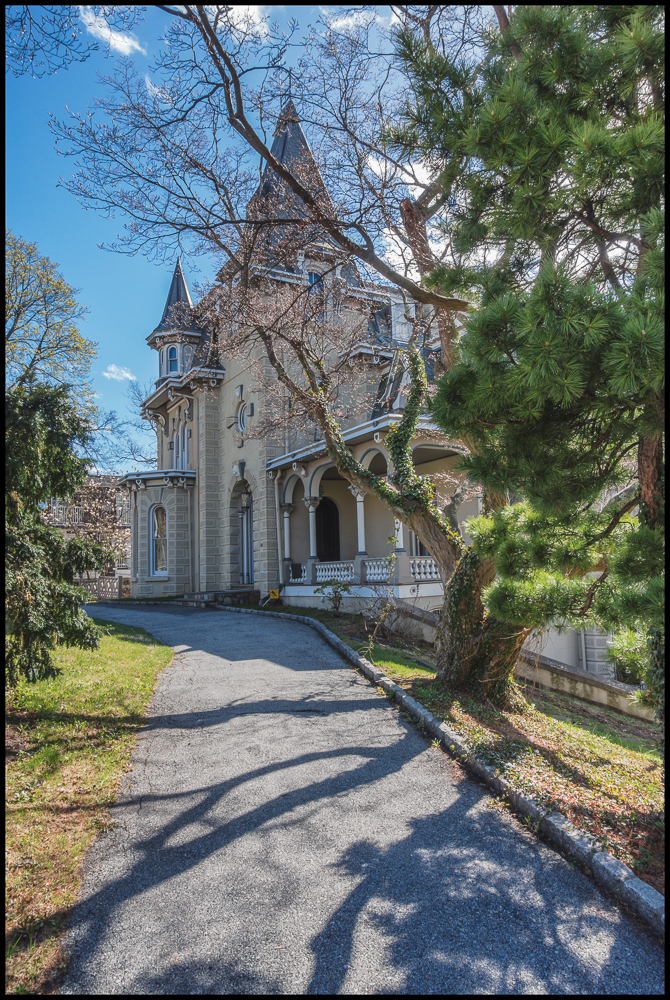
A walk around Ossining – Highland Cottage

According to the Village of Ossining Downtown Walking Tour:

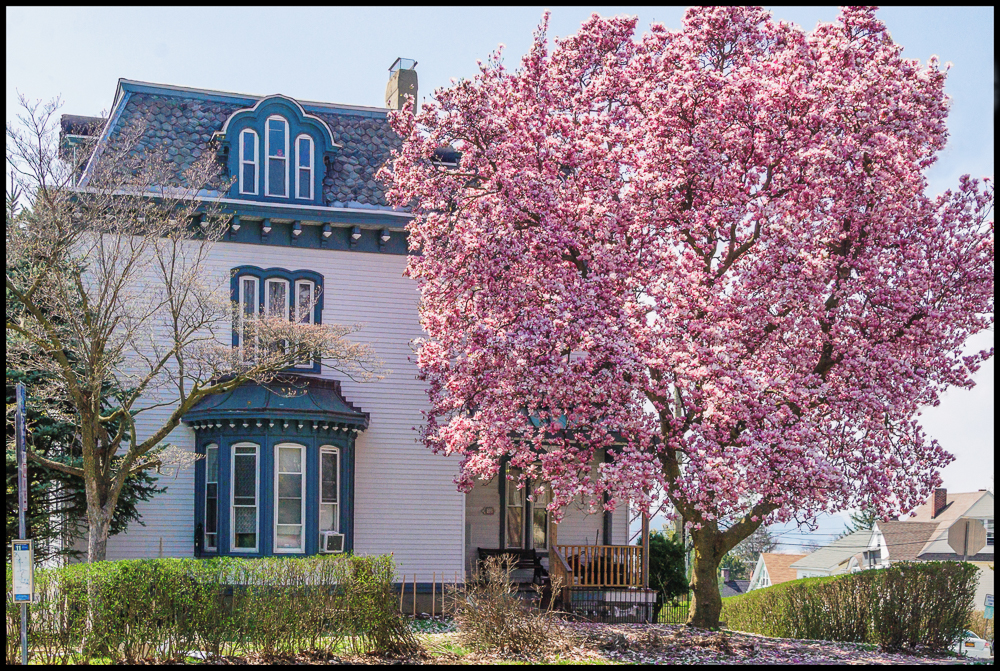
Highland Cottage, also known as the Squire House, is a High Victorian Gothic style house constructed in 1872. The house was built almost entirely from concrete, leading to the disparaging nickname “Mud House.” Workers experienced in the use of concrete in house construction were brought from England to build the house. Residents of the house included Dr. Amos Osborne Squire (1875-1949), who served as chief physician of Sing Sing Prison, along with his daughter Evelyn Squire Culp (1907-2002), a prominent citizen who played a key role in the community’s civic life during the mid and late 20th century.

Taken with a Sony RX-100 M3.

A walk around Ossining – United Methodist Church

According to the Village of Ossining Downtown Walking Tour:

The United Methodist Church, located at 1 Emwilton Place and constructed from 1877 to 1885, was built to house the Sing Sing Methodist Congregation and was originally known as the Sing Sing Union Chapel. It is one of a number of High Victorian Gothic churches in Ossining. A chief sponsor of the new church’s construction was Henry J. Baker, who built the nearby Highland Cottage. Baker helped raise $30,000 toward the church but died in 1878, a year after the start of construction. Baker’s passing, the lack of funds and higher than expected construction costs delayed completion of the building, which sat unfinished for eight years until finally completed in 1885. The structure features windows created by the Tiffany Glass and Decorating Company of New York City.

Taken with a Sony RX-100 M3.

A walk around Ossining – Yet more signs of Spring – Magnolia

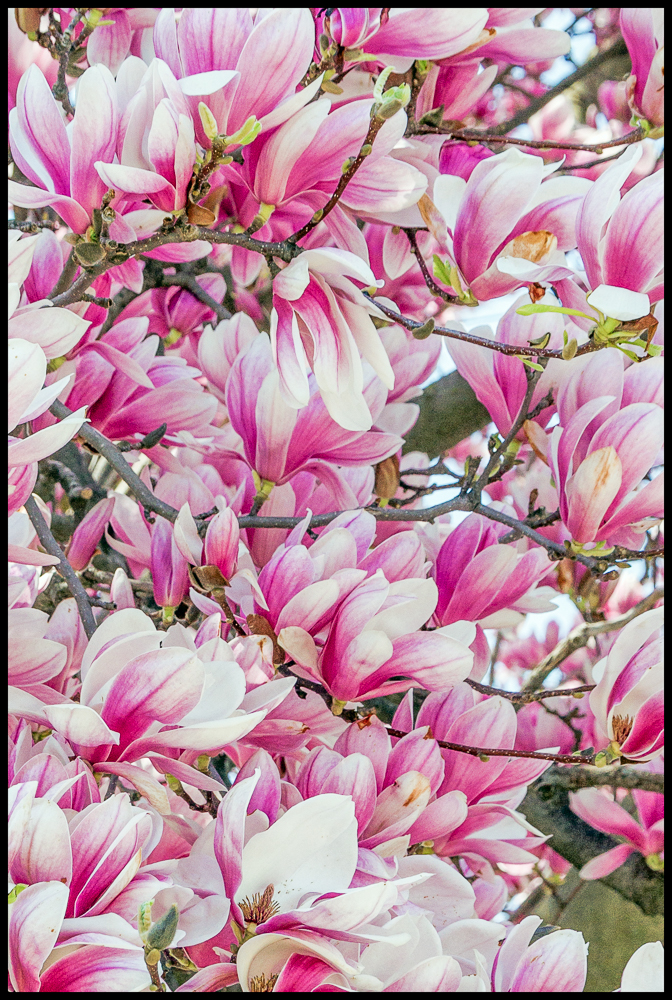
Although I didn’t really know what the flowers/tree in the last two posts were I’m fairly certain that I know what this is: A Magnolia, and a pretty spectacular one at that. It stands next to a house on Route 9.

According to Wikipedia:

Magnolia is a large genus of about 210 flowering plant species in the subfamily Magnolioideae of the family Magnoliaceae. It is named after French botanist Pierre Magnol.

Magnolia is an ancient genus. Appearing before bees did, the flowers are theorized to have evolved to encourage pollination by beetles. To avoid damage from pollinating beetles, the carpels of Magnolia flowers are extremely tough. Fossilised specimens of M. acuminata have been found dating to 20 million years ago, and of plants identifiably belonging to the Magnoliaceae date to 95 million years ago. Another aspect of Magnolia considered to represent an ancestral state is that the flower bud is enclosed in a bract rather than in sepals; the perianth parts are undifferentiated and called tepals rather than distinct sepals and petals. Magnolia shares the tepal characteristic with several other flowering plants near the base of the flowering plant lineage such as Amborella and Nymphaea (as well as with many more recently derived plants such as Lilium).

The natural range of Magnolia species is a disjunct distribution, with a main centre in east and southeast Asia and a secondary centre in eastern North America, Central America, the West Indies, and some species in South America.

Taken with a Sony Alpha 500 and Tamron A18 AF 18-250mm f3.5-6.3,

A walk around Ossining – More signs of Spring – White blossoms

Once again I’m not really sure what kind of tree this is, but my wife (who knows much much more about flowers and flowering trees than I do) tells me its a flowering pear (Pyrus calleryana), described by Wikipedia as follows:

Pyrus calleryana, or the Callery pear, is a species of pear tree native to China and Vietnam, in the family Rosaceae. It is most commonly known for its cultivar ‘Bradford’, widely planted throughout the United States and increasingly regarded as an invasive.

Pyrus calleryana is deciduous, growing to 5 to 8 m (16 to 26 ft) tall, often with a conical to rounded crown. The leaves are oval, 4 to 8 cm (1.6 to 3.1 in) long, glossy dark green above, on long pedicels that make them flash their slightly paler undersides in a breeze. The white, five-petaled flowers are about 2 to 2.5 cm (0.79 to 0.98 in) in diameter. They are produced abundantly in early spring, before the leaves expand fully.

The inedible fruits of the Callery pear are small (less than one cm in diameter), and hard, almost woody, until softened by frost, after which they are readily taken by birds, which disperse the seeds in their droppings. In summer, the shining foliage is dark green and very smooth, and in autumn the leaves commonly turn brilliant colors, ranging from yellow and orange to more commonly red, pink, purple, and bronze.However, since the color often develops very late in autumn, the leaves may be killed by a hard frost before full color can develop.

Callery pears are remarkably resistant to disease or fireblight though some cultivars such as ‘Bradford’ are particularly susceptible to storm damage and are regularly disfigured or even killed by strong winds, ice storms, heavy snow, or limb loss due to their naturally rapid growth rate. The ‘Bradford’ in particular is also known for its sickly sweet, often unpleasant smell during its flowering stage.

The species is named after the Italian-French sinologue Joseph-Marie Callery (1810–1862) who sent specimens of the tree to Europe from China.

These trees are all over Ossining, including spectacular lines of them on either side of Main Street, giving the town a very cheery Spring feeling. I’ve never noticed them before. Are they recent plantings? Or is it just that I’ve never bee there at this time of year.

Taken with a Sony RX-100 M3.