Some more from the Internet

An interesting two part interview with Henri Cartier-Bresson:

The journalist and filmmaker Sheila Turner-Seed interviewed Henri Cartier-Bresson in his Paris studio in 1971 for a film-strip series on photographers that she produced for Scholastic. After her death in 1979 at the age of 42, that interview, along with interviews that Ms. Turner-Seed had conducted with Bruce Davidson, Cornell Capa, Lisette Model, W. Eugene Smith, Don McCullin and others, sat like a time capsule in the archives of the International Center of Photography in New York.

via Henri Cartier-Bresson: Living and Looking – NYTimes.com.

The second part of that interview, transcribed from tape by Sheila Turner-Seed, continues where we left off yesterday. It has been lightly edited. A DVD of the Cartier-Bresson interview, with his photos, is available from the International Center of Photography’s online bookstore.
via Henri Cartier-Bresson: ‘There Are No Maybes’ – NYTimes.com.

Thames & Hudson’s Photofile series. I have a couple of these and can recommend them:

Thames & Hudson’s Photofile series – a sort of Reader’s Digest of coffee table books – offers well-produced paperbacks containing approximately 60 decent reproductions. Rather than review one at a time, I’ll review the series, as most are worthwhile, and the concept of these affordable and small packages is fantastic.

Quality photo books generally are priced too high for students (or anyone on a budget) to purchase with abandon. Additionally, they can be cumbersome and better suited to adorn a coffee table than to actually thumb through. Thus the Photofile series addresses an important gap in the marketplace. These portable and reasonably priced ‘mini-monographs’, allow readers to enjoy well-reproduced photos without breaking the back or the bank. They are to large art books what a high quality point and shoot is to the professional DSLR. Let’s go through some of their strong points….

via The Photofile Series published by Thames & Hudson: Digital Photography Review.

Ever wanted to make your own camera. Now’s your chance with the Lomography Konstruktor (from Petapixel).

You may have seen built-it-yourself 35mm pinhole cameras before, but have you ever seen a DIY SLR? Lomography today announced the Konstruktor, a camera it calls “the world’s first 35mm do-it-yourself” SLR camera. If you loved building model airplanes as a kid, this is one camera kit you’re going to love.

via Lomography Konstruktor is the World’s First Build-It-Yourself 35mm SLR.

Now you too can make blurry, over-saturated, grainy, cross-processed, light polluted pictures with your very own home built camera. Sounds like I hate lomo cameras :-). Actually I don’t – even if I find them typically overpriced. I do like some of the pictures they produce and I admire the way they seem to have introduced an entire new generation to film photography. For $35 I might pick up one myself.

I loved this parable: “Losing your marbles” from Kirk Tuck at the Visual Science Lab.

“One day, as if by magic, a young boy in a very poor village, found a small, perfectly round object only half an inch across that seemed to glow with the most beautiful blue light. He carefully put the round object in his pocket and went home to show his parents. The parents were delighted because, living in a village made of beige mud they’d never seen anything so beautiful. ‘If you can find more of these we could sell them and become rich.’ Said the boy’s father. So the boy decided to go out into the world and find out the secret of the small, perfectly round, beautiful orbs. He put the one he’d found into his pocket, packed a few sandwiches and headed off to search the world for more………

Follow the link for more via Losing your marbles. | The Visual Science Lab / Kirk Tuck.

It seems that Kodak is not quite dead yet.

The first fruits of Kodak’s partnership with JK Imaging are starting to emerge. Chinese camera site DCFever has published some photographs of the Kodak S1, a new Micro Four Thirds camera that was announced at the beginning of the year.

via New Photos of the Kodak S1 Micro Four Thirds Mirrorless Camera.

The camera never lies. We all know that this has never been true and it’s particularly not true in the Photoshop era. Is this good or bad? My view is that it depends. If the picture purports to present reality (e.g. a news photo) then it should not be manipulated. If not (e.g. if the picture is more artistic in nature) then anything goes. Whatever makes a good image.

We are bombarded with images from television, computer screens, newspapers, and magazines.  There are advertisements, illustrations for news stories, snapshots from social media, and on and on.  From time to time there are news stories expressing outrage about manipulated photographs in advertisements and, heaven forbid, enhanced photos in news stories.  There are rants about “fake” photographs, and prestigious publications such as the New York Times proclaim their purity.  In the nytco web site1 we find, “Images in our pages that purport to depict reality must be genuine in every way.”

Does this make any sense?  Is there such a thing as a fake painting, a fake magazine article, a fake television show?  I think there are fakes, but to me these are things that are meant to deceive, in other words, things that are not what they claim to be.  The problem with photographs is the out-of-date notion that photographs represent reality and have an implied label of nonfiction.

via ethics-fake.

This article also pointed me towards an interesting site, which, among other things, provides numerous examples of actual photomanipulation.
.Ethics in Photo Editing.

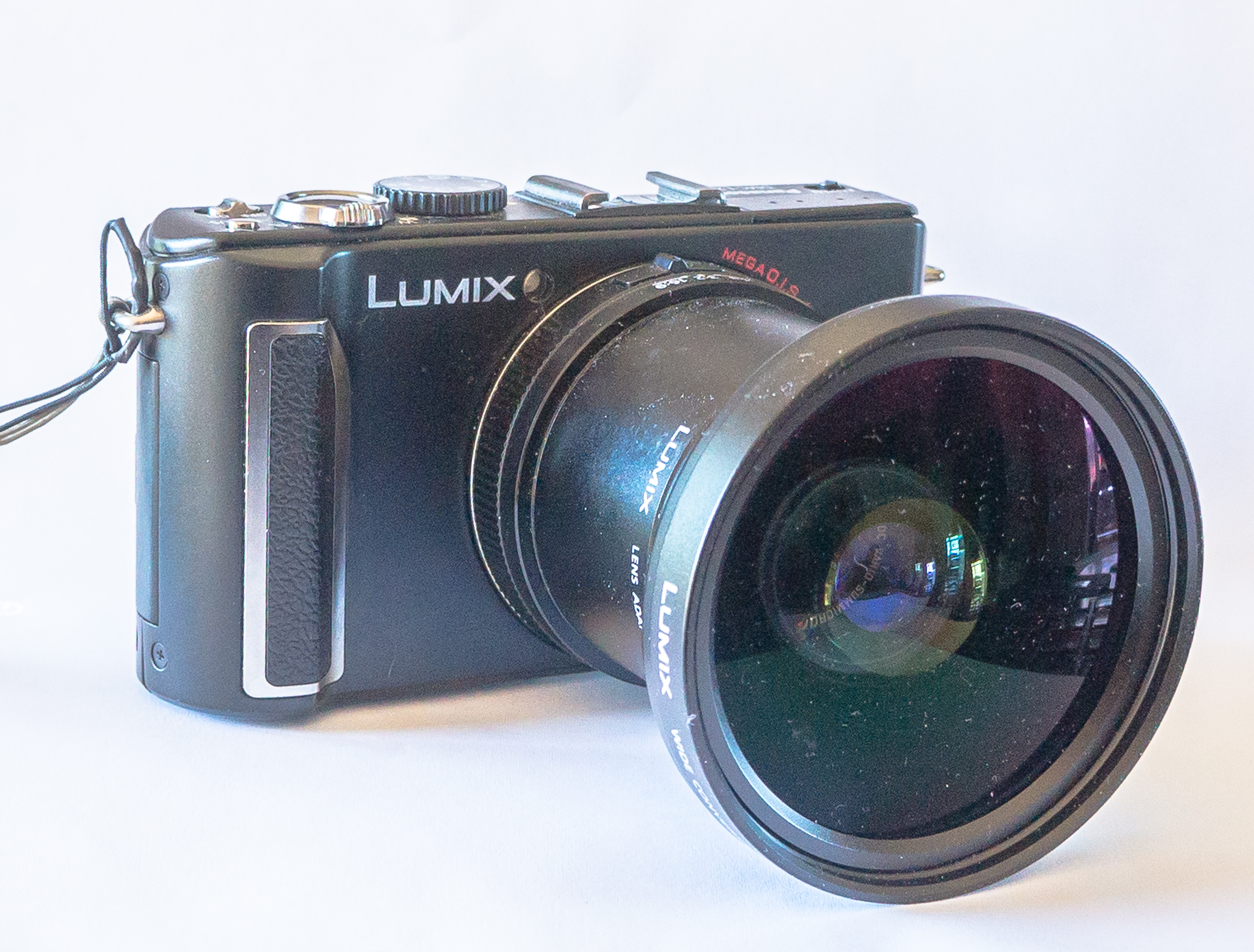
Panasonic Lumix LX-3

Panasonic Lumix LX3 with its excellent wide angle adapter.

I owe a lot to this camera. Somewhere along the line I’d lost interest in photography. Over the years I’d gone from the Minolta 7sii rangefinder that got me started, to a film SLR (Canon AE-1) and then to digital (Maxxum D SLR and Canon Powershot S-50). I’d also picked up a used Rolleiflex on a whim, but only used it once or twice – but that’s another story. I’d reached a point where I rarely went out to take photos, and was even reluctant to take a camera on vacations, family events etc. I’m not entirely sure why I lost interest. As I had moved to SLRs they had gotten bigger (the bodies and especially the lenses) and I no longer wanted to lug all of this stuff around.

More importantly perhaps was that I was dissatisfied with my pictures because I couldn’t entirely control the results. I never developed my own film and so I was always at the mercy of the labs. Even with digital images I had rarely post processed (even though I had copies of an older version of photoshop and also Photoshop Elements.)

I’d stopped carrying around the SLRs and pretty much restricted myself to the Canon. Then I was in Switzerland for my younger daughter’s wedding and I left the Canon in a taxi. It was later returned to me and I eventually gave it to my grandson, but for a while I was without a small, carry around camera. So I did some research and decided to get the LX3. I was very impressed with the results. I liked that it was small enough to carry around; it has a great f2.0 lens; 10 megapixel resolution; multiple aspect ratios; good macro and wide angle performance.

Although the LX3 is a wonderful camera there are still things about it I don’t like including: It’s small but still a little too large to comfortably carry around in a pocket; Noise starts to get bad above ISO 400; The zoom range (24-60mm equivalent) is a bit short;The LCD screen is almost impossible to see in bright sunlight and the only viewfinder option is a fixed 24mm optical.

The LX3 pretty much solved the portability problem. When I got this camera I also started to use RAW format files and Adobe Lightroom. This combination gave me much of the control I was lacking. Not all of it though. I still haven’t fully mastered digital printing.

Overall I was more than satisfied and I started taking pictures again – lots of them. It came at just the right time. With retirement looming I needed a hobby – something to occupy my time. Suddenly I was back into photography with a vengeance. Not just taking pictures, but studying the philosophy of photography, the history of photography etc. I even got into vintage cameras and started using film again. I’m now retired and spend a lot ob my time on “things photographic”. I don’t know if this would have been the case without this camera.


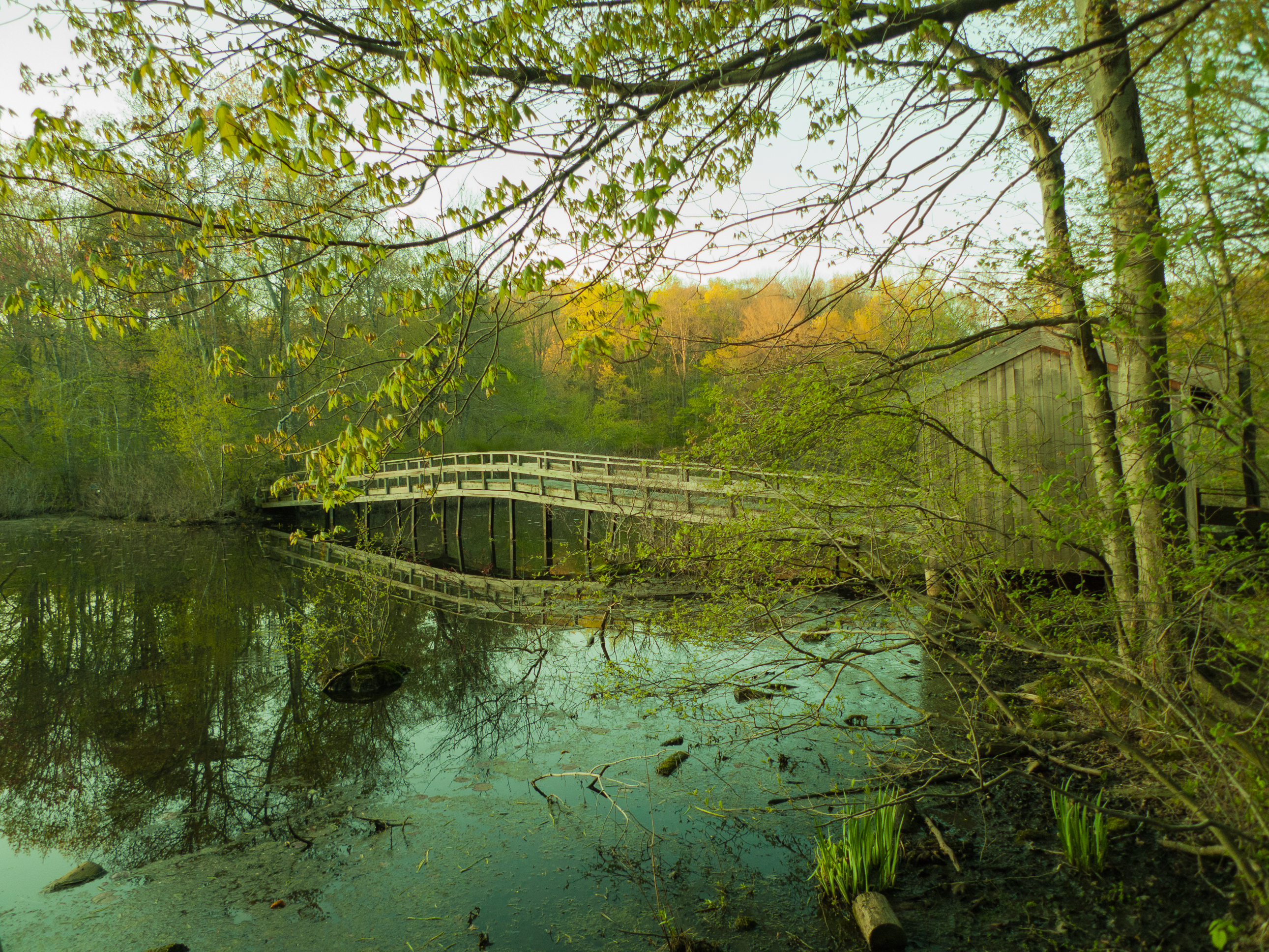
Bridge to Wildflower Island, Teatown preserve


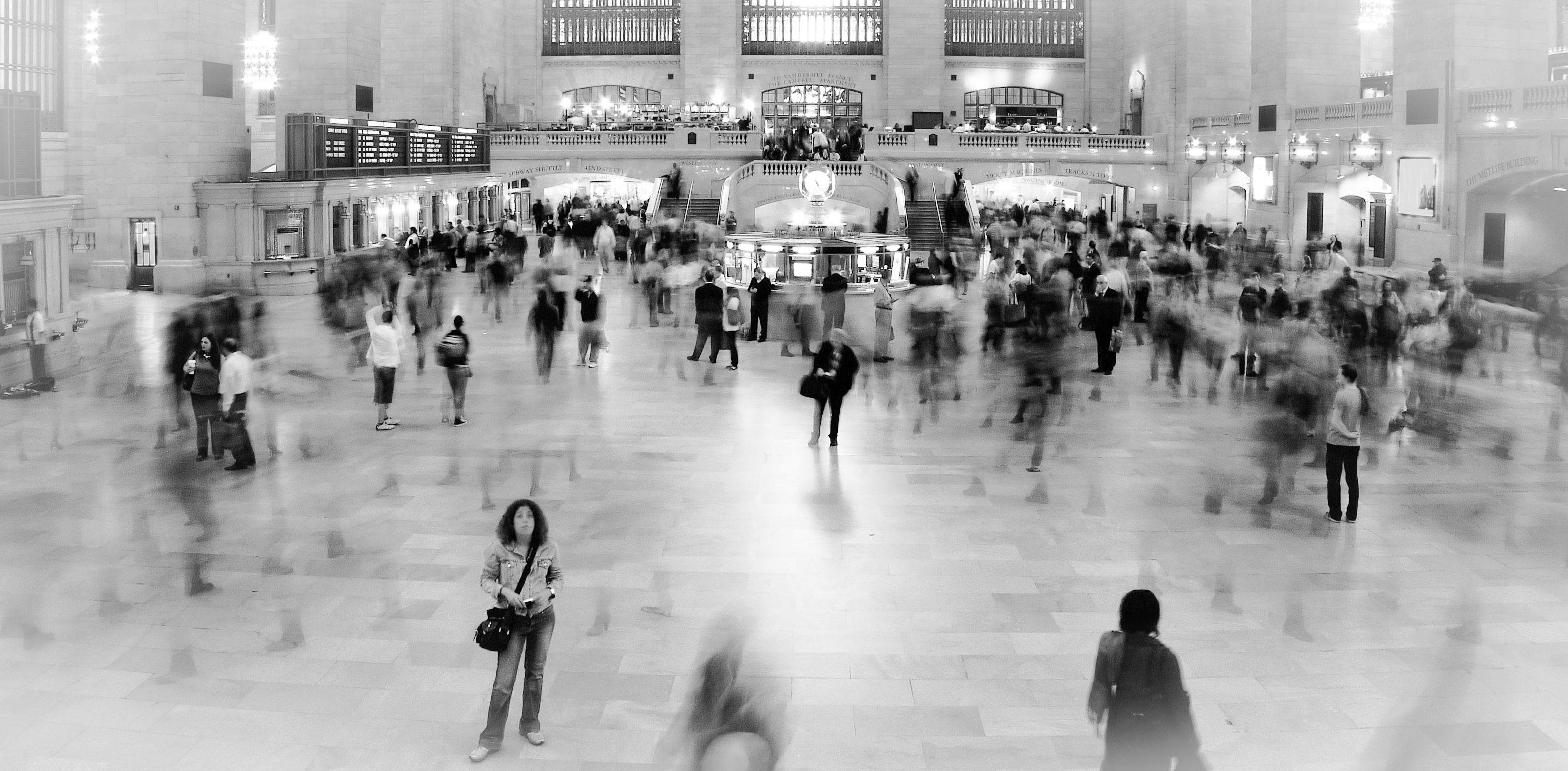
Grand Central Terminal, NY


Autumn leaves at Kingsland Point Park, Tarrytown, NY


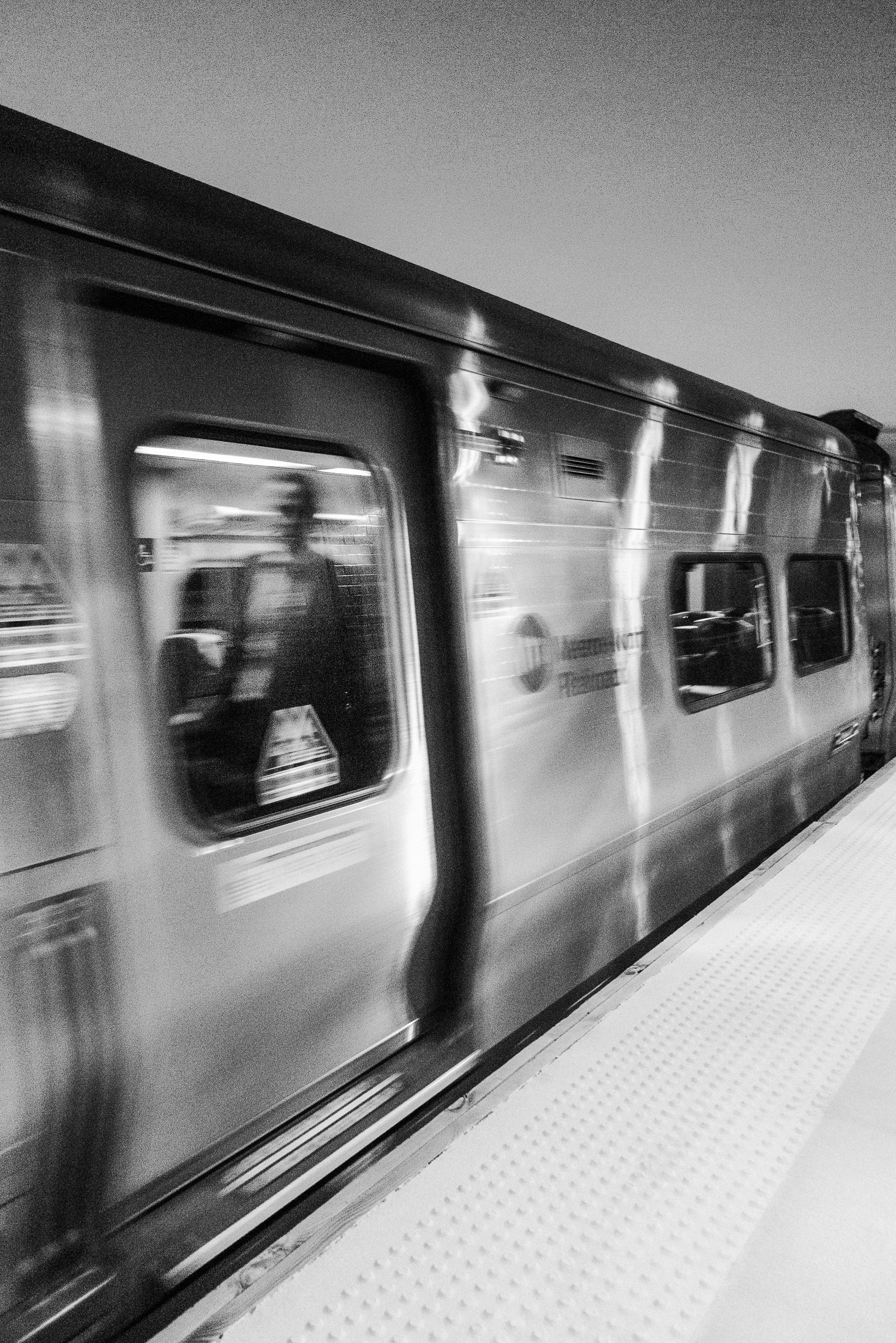
Man on a Train. Scarborough Station, Briarcliff Manor, NY

Roaring Brook Lake Regatta

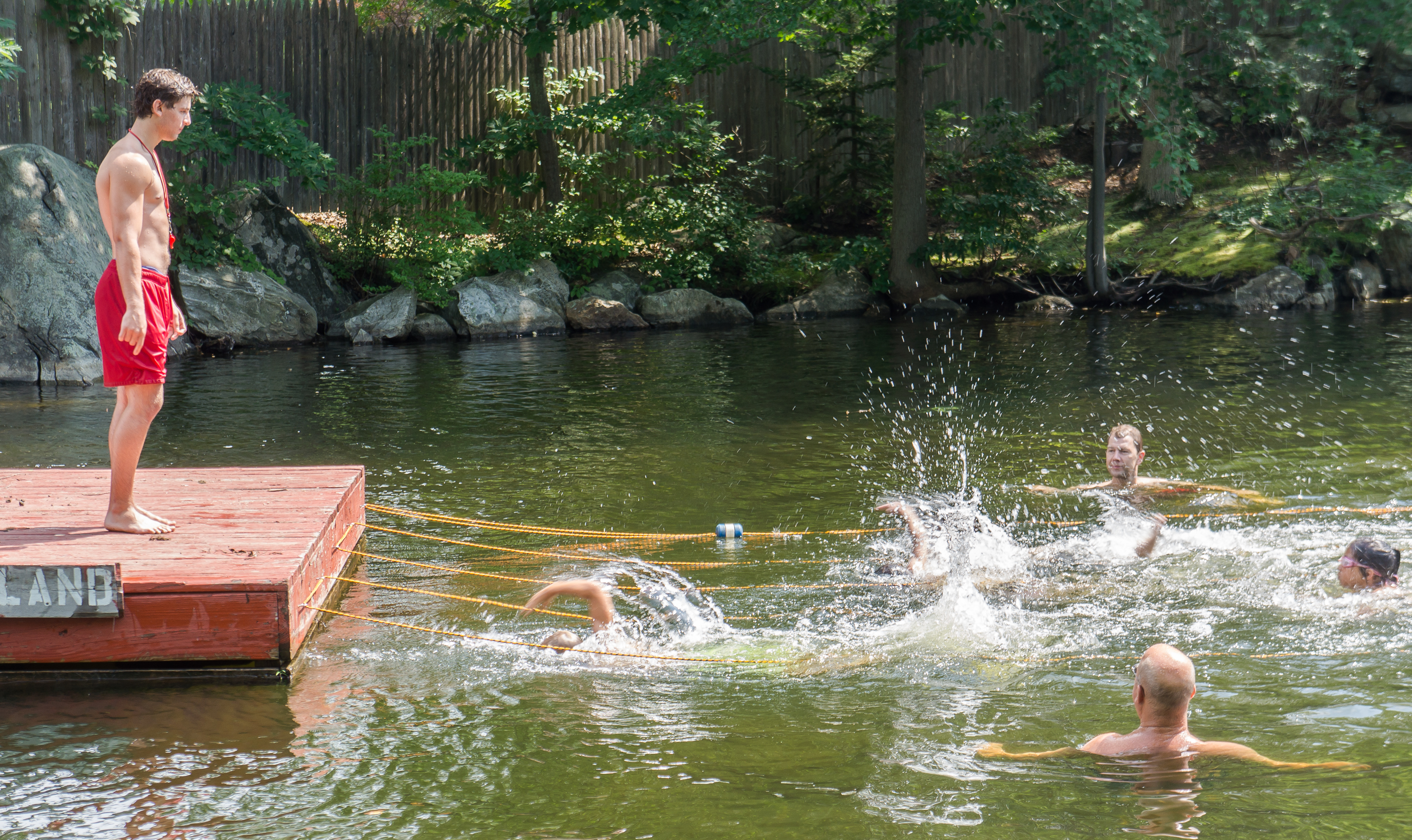
Our first “Roaring Brook Lake Regatta” took place  July 20. When we lived on Lake Geneva in Switzerland every year they had something called the “Bol d’Or” where several hundred sailboats of all shapes and sizes raced from one end of the lake to the other and back. It was really quite spectacular. I suppose we were expecting something along these lines – but of course with fewer boats. I understand from old time residents that once upon a time there were quite a few boats, but this is no longer the case. In fact the sailboat with the pennants in the picture was the only one to turn up and it never left children’s beach. So it was more of a party on children’s beach. Cold drinks and other snacks were served and later there was a barbecue. There were swimming races for the kids. Everybody seemed to be having a great time. It just wasn’t what I thought of as a regatta. Here are a few snapshots:


Balloon Arch near the entrance to Children’s Beach


Waiting for the swimming races to begin.


And they’re off!


The end of a race


Family fun in the water


Nail hammering contest

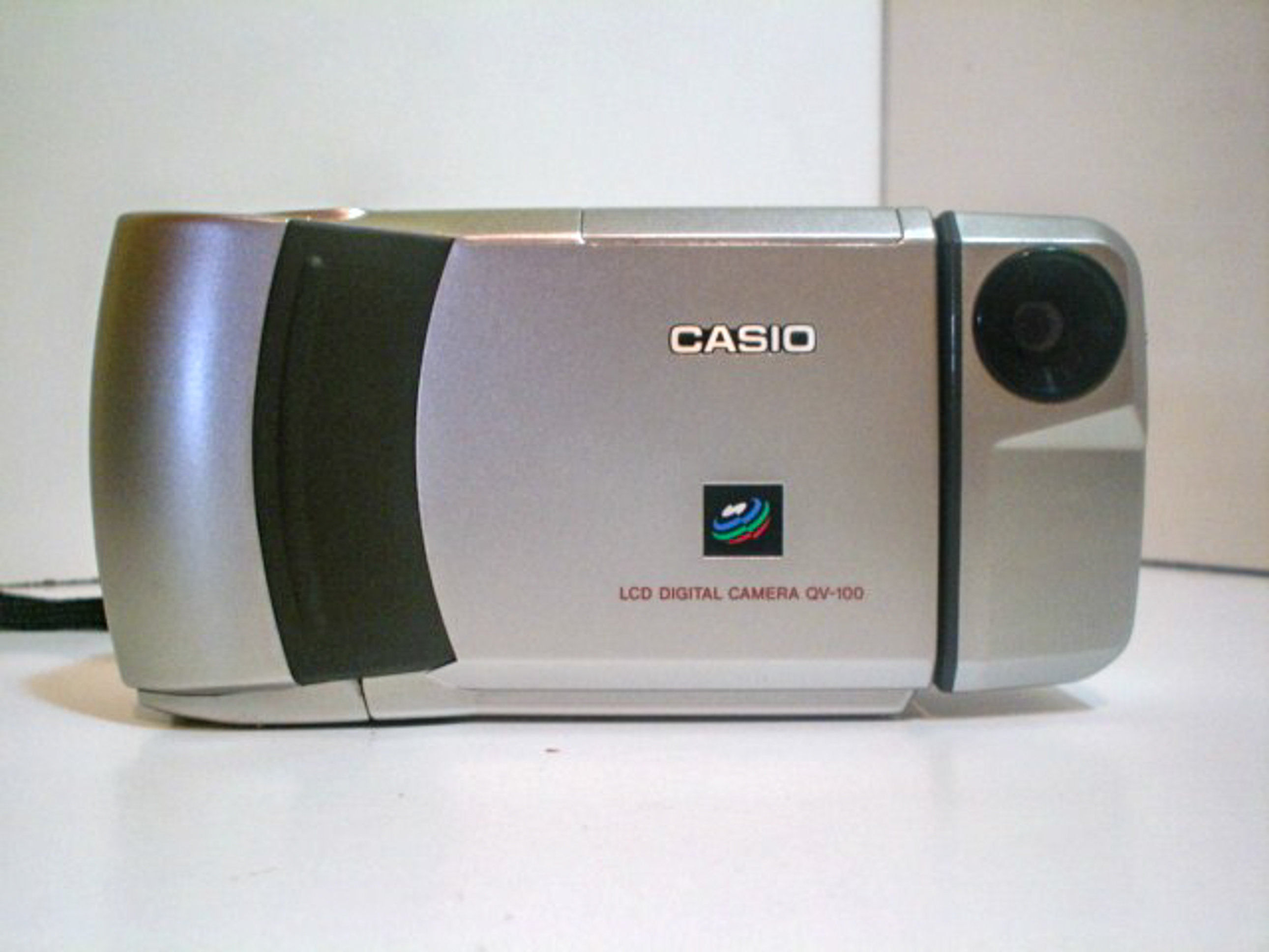
Gone but very definitely not forgotten (even though I’ve tried) – Casio QV100


This is a third of a series of posts. The first covered some cameras, which I liked but which I no longer have. The second covered a camera, which I still have but which I find hard to like. In this post we look at a camera, which I no longer have and which I didn’t really like. In fact I’d consider it to be absolutely the worst camera I’ve ever owned. Also one of the most expensive. It’s a Casio QV100. I don’t actually have a picture of it. I’ve tried my best to blot out the memory so I’ve had to “borrow” one from the internet. I “borrowed” the camera photograph from Alistair Patterson’s photostream on flickr, where you will also find a very interesting (and probably more balanced) review of the camera.

Cast your mind back to 1996. I was living in Geneva, Switzerland at the time. I’d been using film cameras (Minolta Hi-Matic 7sii and Canon AE-1) for some time. I was working in IT and now here was a digital camera. I can’t remember what it cost, but I do recall that it was very expensive – more expensive than most of the cameras I’ve bought. But I couldn’t resist it. Among other things it was the first camera with an LCD screen. You could actually see the pictures you were taking!!

I don’t have any pictures taken with this camera. I remember having it, but I had forgotten the model number. We moved back to NY late in 1998. Some boxes were not unpacked immediately and went into our garage. We (my wife and I) were cleaning out the garage the other day and we found some boxes untouched since 1998. In one of these boxes was the manual for the QV100. I no longer have the camera. I gave it to my older daughter who took it back to the UK where it is stolen. Probably the best thing that could have happened to it. I feel sorry for the thief.

So what was wrong with the camera? Well… pretty much everything. The specification in the manual says that this was a “Digital (JPEG based)/Field Recording” system. It had a “built in “32 mbit flash memory” capable of storing “64 fine” (fine being 640×480) images. The manual further claims approximately “150 minutes continuous operation … for about 96 images (one images per minute)”. It had a “61,380 1.8 inch TFT low-glare colorLCD”. Shutter speed “1/8 – 1/4000 second”

My memory is that the image quality was terrible and that the battery seemed to last about five minutes. Maybe I was doing something wrong.

Perhaps I’m being unfair. This was after all in the infancy of digital cameras and the technology had probably not advanced to the stage where it was truly usable. My fault for getting in too early.

I always say that it’s not the technology that matters. It’s the person using the technology and I’m sure there are people who produced lovely pictures using this camera. Unfortunately I wasn’t one of them. There is a flickr group for the QV100. It has two members. Take a look at the pictures. Judge for yourself. Note: I just took a look at this group again and noticed that many of the pictures are not actually taken with a Casio QV100. I thought they looked too good. Strange.

Interesting Crimean War Photographs

From a post: Photographic Mystery Solved by Gerald C Koch on the Analog Photographer’s User Group (APUG). Video from YouTube.

The British photographer Roger Fenton (1819 – 1869) was noted for his photographs of the Crimean War. He is the subject of a recent very interesting PBS radio special. One of his most famous photographs is titled “The Valley of the Shadow of Death.” He has been accused of faking this photograph by making changes to the scene. Susan Sonntag believed that the scene had been manipulated. Here’s where the mystery enters the debate. Another nearly identical photo exists showing no cannon balls on the road. An analysis of both photos shows that they were taken on the same day within hours of each other. Obviously the scene has been altered but which photo is the real one? Conventional analysis of shadows had failed to ascertain which one is the real one. The mystery remained unsolved for many years until recently. Under high magnification a crucial difference was noted, that is five pebbles had moved. Since pebbles do not roll uphill it became obvious which photo was taken first. The famous photograph had been faked by placing cannon balls on the road for a more dramatic effect.

The first photograph from the site: Crimean War Photographs by Roger Fenton, March-June 1855 shows the photograph in question. There are many more interesting photographs.