Got some photography books for Christmas

It seems that my family finds it difficult to decide what to get me for Christmas. For many years now I have made an Amazon.com wish list, which they then choose from. Typically it contains books, CDs, DVDs, the occasional electronic gadget; maybe something to assist with my cooking.

This year I got, among other things, a number of photography-related books, specifically:

Why People Photograph by Robert Adams

Aperture Magazine Anthology – The Minor White Years 1952-1976. Edited by Peter C. Bunnell.

A History of the Photgraphic Lens by Rudolf Kingslake.

The Photographer’s Eye by John Szarkowski.

Annie Leibovitz at Work by Annie Leibovitz.

I haven’t had a chance to read them yet, but even just browsing through them they seem very interesting.

The Adams book is a collection of essays on selected topics e.g. colleagues, humor, collections, writing, teaching, money, dogs followed by sketches of a number of famous photographers including Edward Weston, Paul Strand, Laura Gilpin, Judith Joy Ross, Susan Meiselas, Michael Schmidt, Ansel Adams, Dorothea Lange and Eugene Atget.  The collection closes with three chapters on ‘working conditions’.

The Aperture anthology is quite a thick book.  The preface says: “It is not a comprehensive reprint of the issues, but rather a highly selective anthology of texts that were published in the magazine.  While a selection of photographs has been chosen from those illustrating the original articles, and several spreads from two image-drive issues consisting mainly of images are reproduced to give a sense of sequence, the focus here is on words….The goal is to give the reader a sense of ‘Aperture’ and the range of subjects that White and his colleagues addressed during his editorship, and to reflect on the development of serious art photography during the period 1952-1976”

The Kingslake volume.  Absolutely fascinating.  Couldn’t understand a word.  Actually that’s not true.  I could understand quite a bit, but there’s still a lot that’s beyond me at the moment.  I’ll keep plugging away at it until I can understand more.

The Photographer’s Eye.  Divided into an introductory essay and five sections (The thing itself; The Detail; The Frame; Time; and Vantage Point.  Each section begins with a couple of paragraphs of text followed by a series of photographs.   Very easy to ready and the photos are lovely.

They Leibovitz book will appeal to anyone interested in how a real life photographer actually works.  The fact the Leibovitz’s takes pictures of some of the world’s most famous celebrities gives this a sort of ‘voyeuristic’ appeal.

I’m dreaming of a White Christmas


We ended up with a white Christmas after all – just.

About a week before we had about a foot of snow and I was convinced that there would be a white Christmas. Then the temperatures went up into the high 60s/low 70s and it all melted. No white Christmas in the offing. Then, on Christmas Eve, we had another snowfall. I believe the actual definition of a white Christmas is that there must be an inch of snow on the ground on Christmas Day – and that was just about what we got.


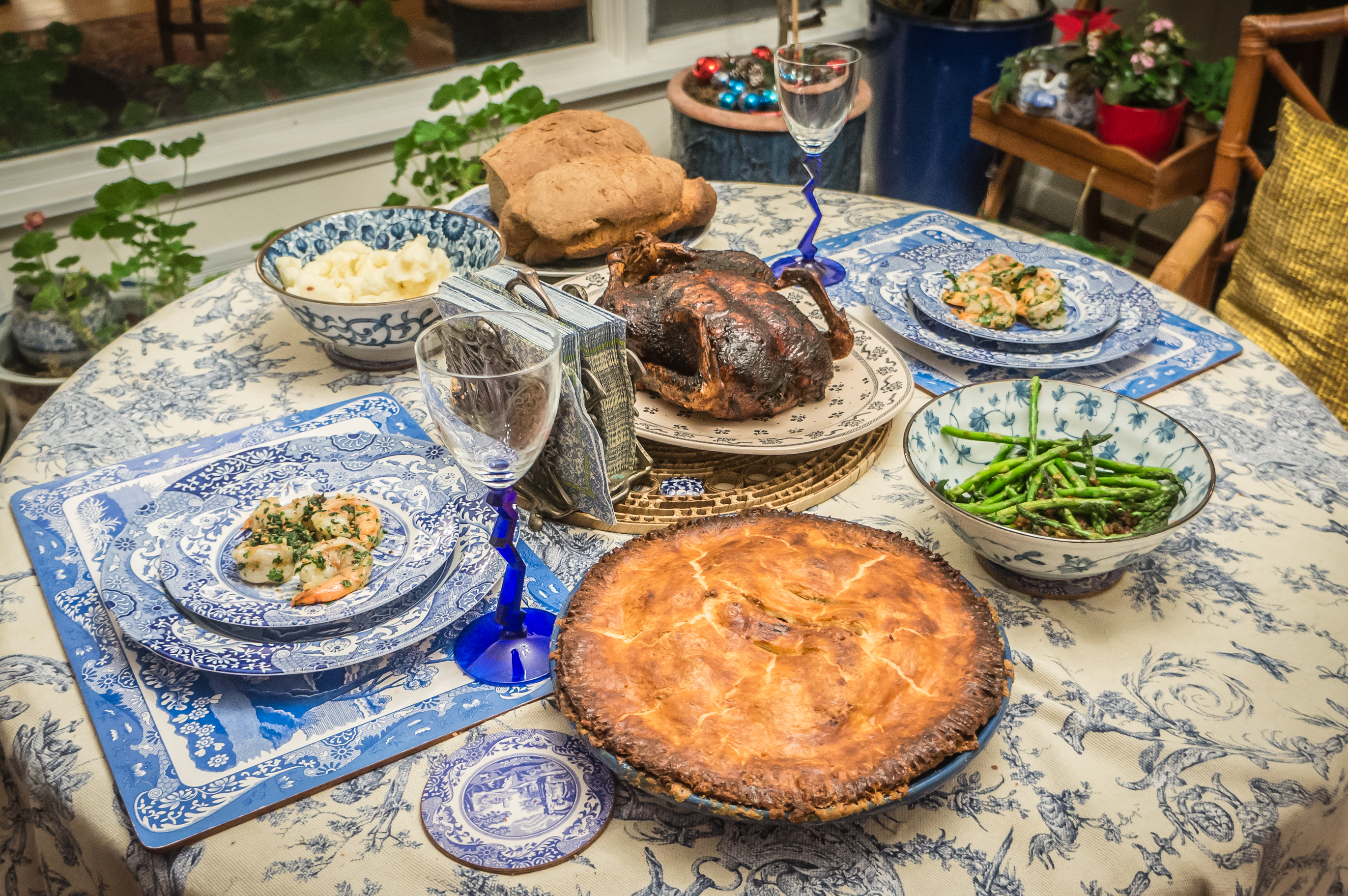
I spent the day cooking. Spicy garlic shrimp; roast duck marinated in five spice powder and stuffed with oranges, garlic and ginger; mashed potatoes; sauteed asparagus; homemade apple pie and rye bread. I got a certain satisfaction that I had made everything except the wine we had to accompany the meal: Ladoix premier from Bourgogyne.

Happy Christmas everyone!

A Holiday Poem for All: A Gearhead’s Christmas

My thanks to Les Berkley. I enjoyed this.

via A Holiday Poem for All – Photo.net Casual Photo Conversations Forum.

A Gearhead’s Christmas

‘Twas the night before Christmas, and all throught the world

The gearheads had gathered–including both girls.

Their anticipation it grew and it grew,

In hope to find something with better IQ.

The children were finally shipped off to bed.

While visions of X-Boxes danced in their head.

As soon as I knew they were comfortably sleeping,

I scurried upstairs to do some pixel-peeping.

All week we had labored in decking the halls

With pictures of test charts,of cats and brick walls,

But the light of the moon on the new-fallen snow

Made me wish for a sensor with high ISO.

When out in the drive there arose such a clamor,

I thought ’twas a Fed-Ex sent from Adorama.

I opened the window, and saw all alone

Alight on my driveway an Amazon drone.

And standing beside it, light meter in hand,

My wondering eyes saw this strange little man.

With that Moonrise aglow as he trod the macadam,

I knew in a flash it must be Ansel Adams.

His beard was as white as a polished iPad.

‘Round his neck on a strap hung a chrome Hasselblad,

And as he grew closer ’twas incontrovertible

That the lens in his pocket read ‘Triple-Convertible’.

“Merry Christmas,” he said, “or Kwanzaa or Yule.

Now remember a camera’s only a tool.

The worth of your image most often depends

On the nut that is found ’bout a foot from the lens.”

“Only a tool? That’s not very nice,”

Said I, “I was looking for better advice

On Canon on Nikon, on Pentax and Sony,

On whether Ken Rockwell was really a phony.

On zooms versus primes, ballheads that are sloppy,

And whether my lens is a good or bad copy.

How may I obtain that bokeh so fine?

Do I need to purchase a Leica M9?”

The smile never dimmed on his face as he said,

“One thing I must tell you, you hopeless gearhead.

There isn’t a need for these OCD worries,

Your cameras are better than Steve McCurry’s.

“On this special day, I would hope you could see,

Two lenses–no more–sufficed HCB,

And W. Eugene would oft tell the tale,

How his Nikon was useful for driving a nail.”

Then laying his meter in front of his eye,

He and his drone flew up to the sky.

And still I remember his last shouted strictures:

“Stop testing already! Go out and take pictures!”

–Les Berkley


Foggy scenes through a train window


Tappan Zee Bridge

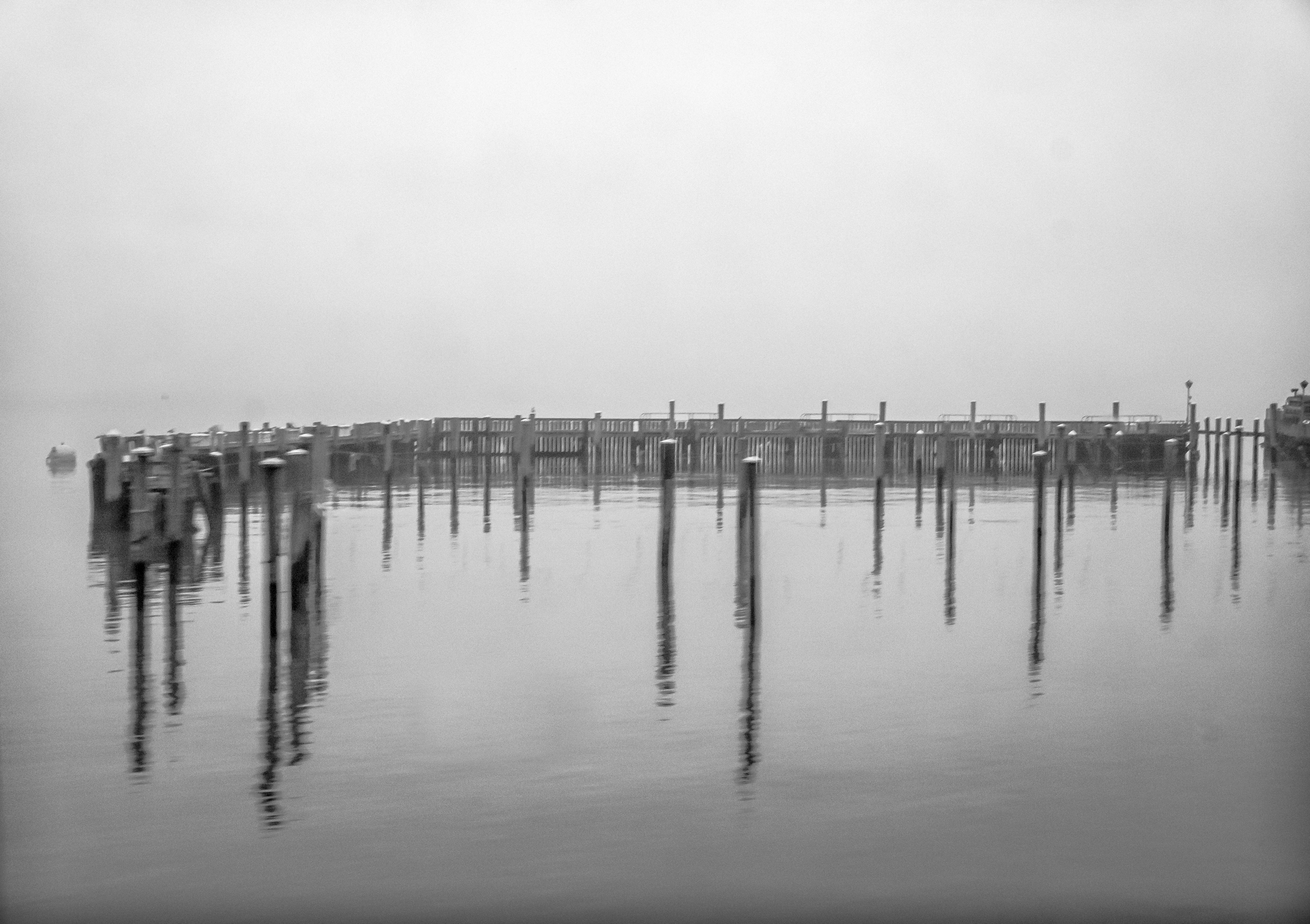
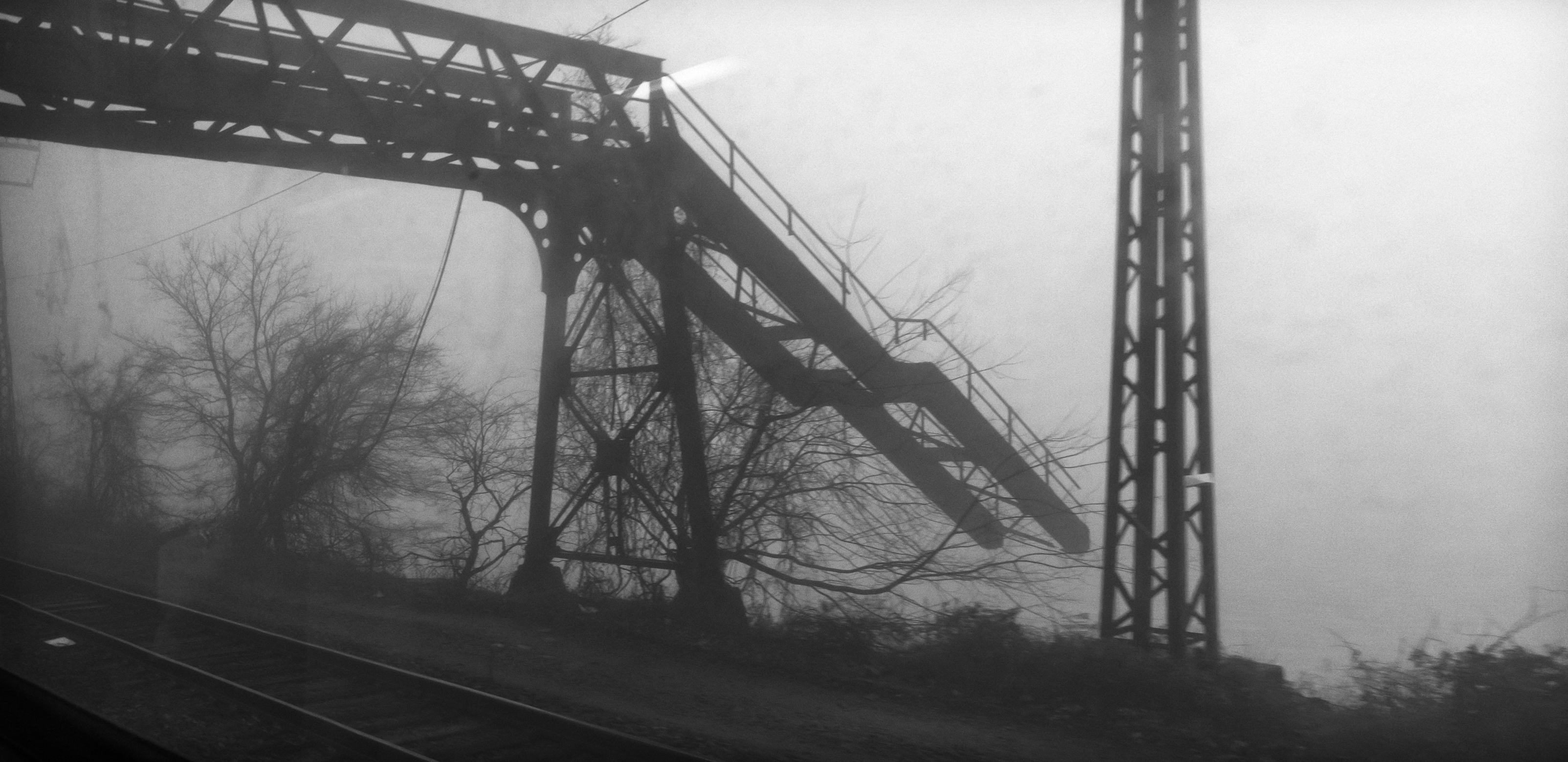
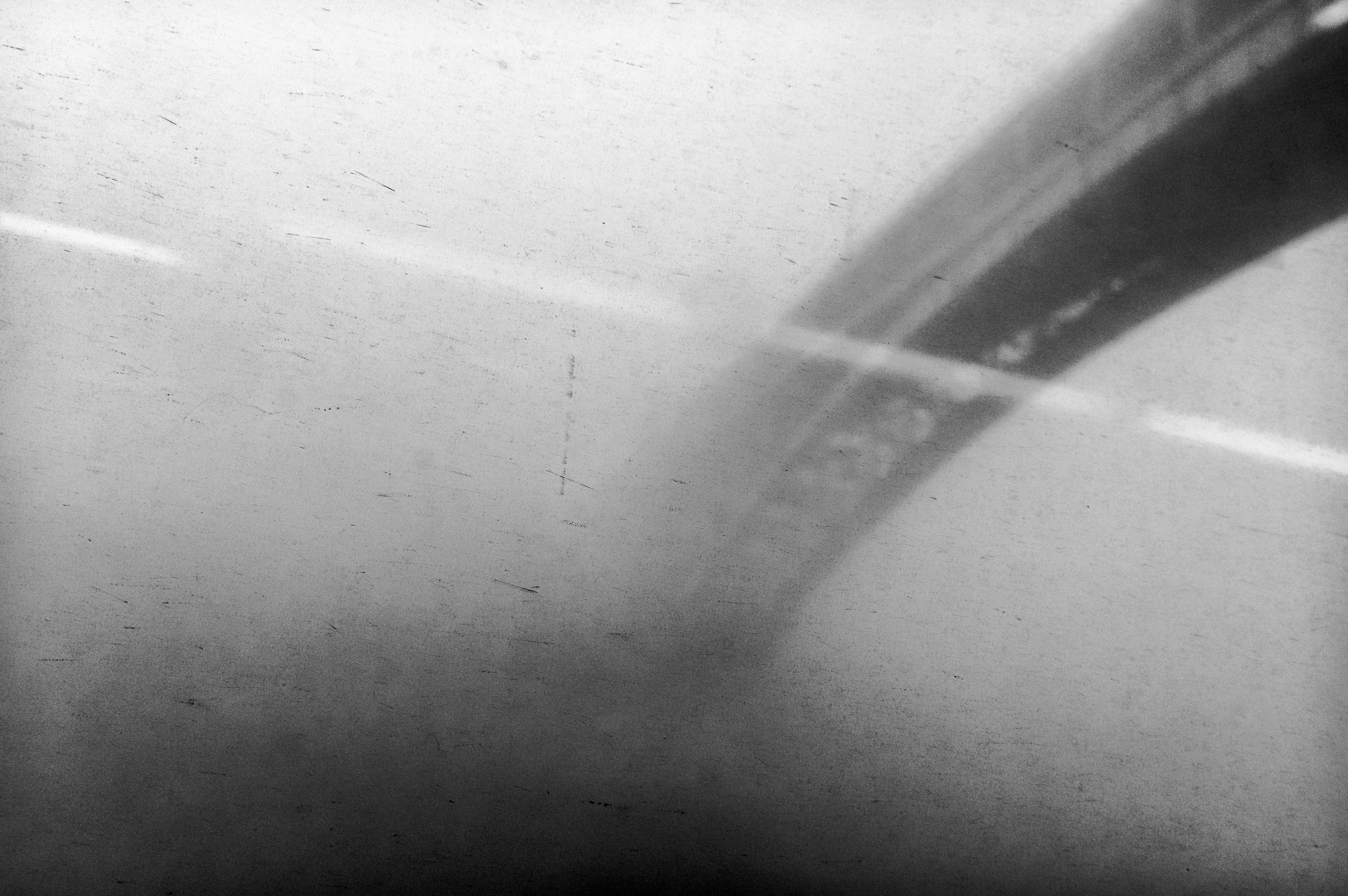
I was returning from New York city on the train to Cold Spring on an extremely foggy day. I loved the shapes emerging from the from the fog so I took a few pictures. They have a lot of problems: missed focus; motion blur; reflections etc. This was quite “experimental” for me. Still they’re rather different from my normal pictures and there’s something that I like about them. Another positive was that I at least tried. All too often I would have looked out of the window, decided that there were no picture taking opportunities and then turned back to my book.

Or maybe they’re just lousy pictures?


Wood pilings


Tree lined shore


Pilings and shoreline


Bridge to nowhere


Henry Hudson bridge