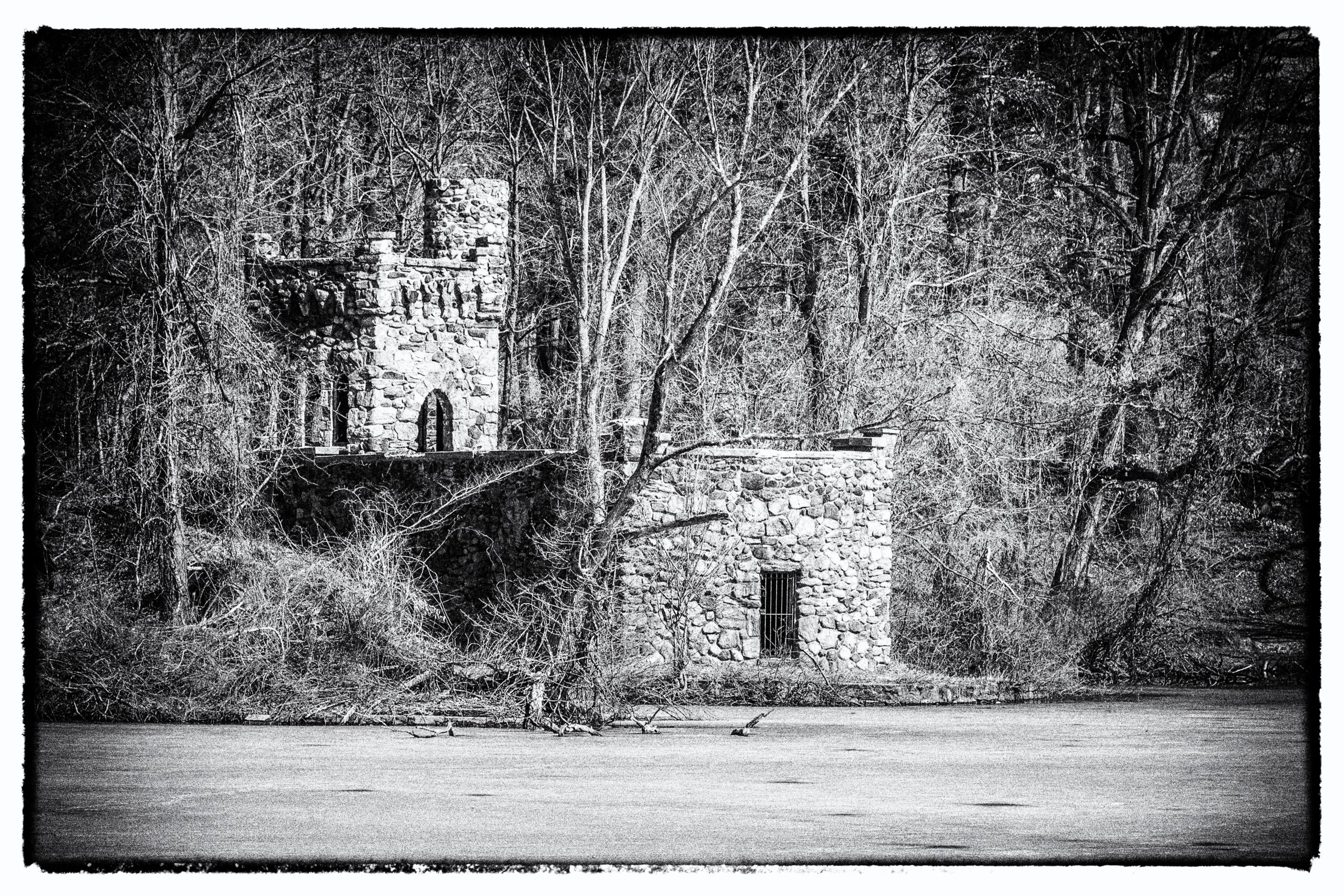
Beltzhoover Teahouse on Halsey Pond


A plaque at the site reads:

Beltzhoover Teahouse on Halsey Pond. Largest remaining structure of “Rochroanne”, the 200 acre Belzhoover Estate built in 1905. Melchior Belzhoover was “President” of Irvington from 1904 to 1916. The Halsey family owned a portion of the property from 1927-1976. The pond area became Village land in 1980. From 1994 to 1997 many citizens volunteered their time, expertise, and craftsmanship to save the structure. Preservation of the Teahouse was financed equally by private donations and Village funds. Irvington Landmark Preservation, Inc. 1997.

The structure is right next to a pond and consists of a tower with a flat platform in front of it. You can go into the tower and walk across the platform. Underneath the platform is another room, which is barred and inaccessible.
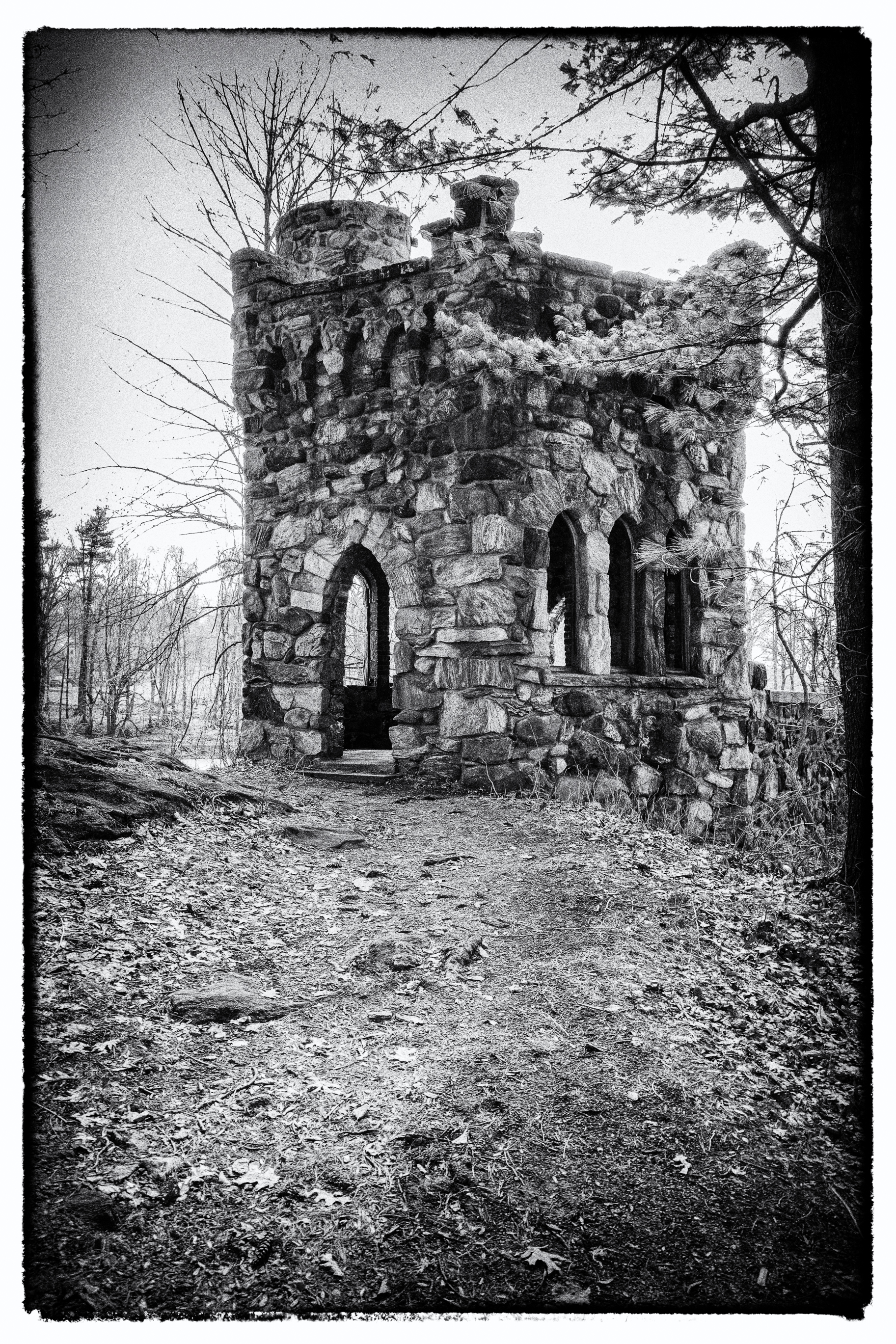

Entrance
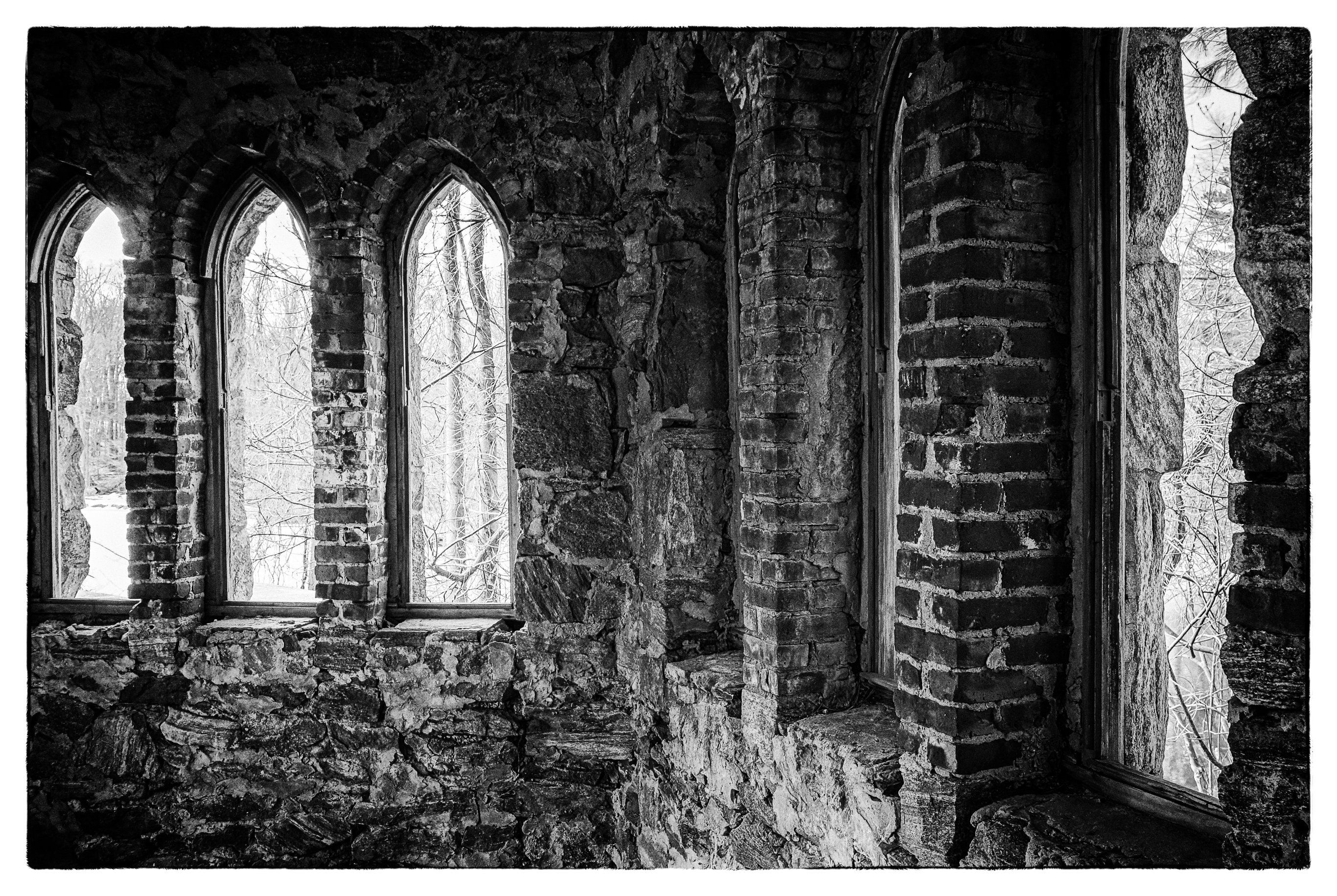
Interior
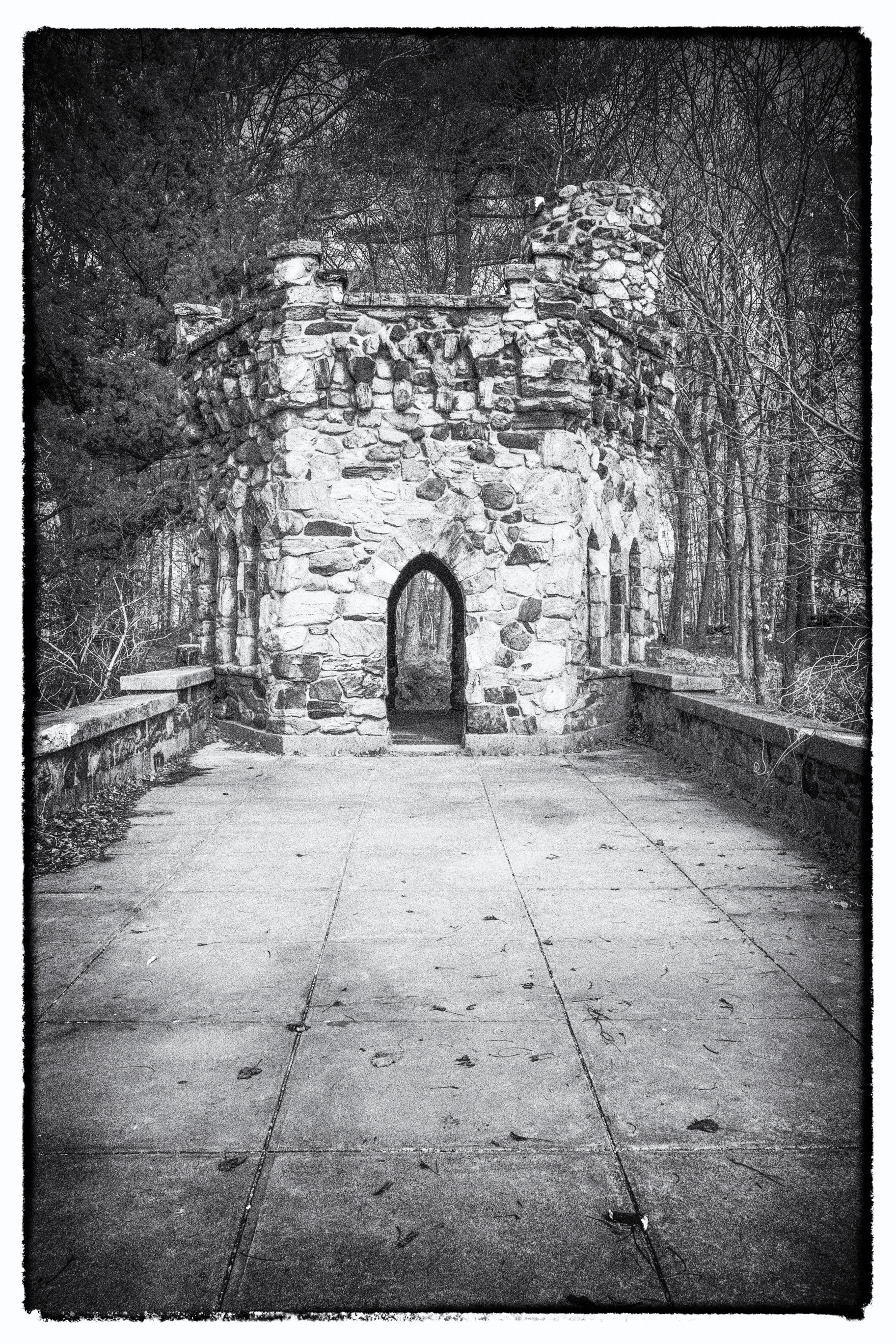
Looking back towards the tower
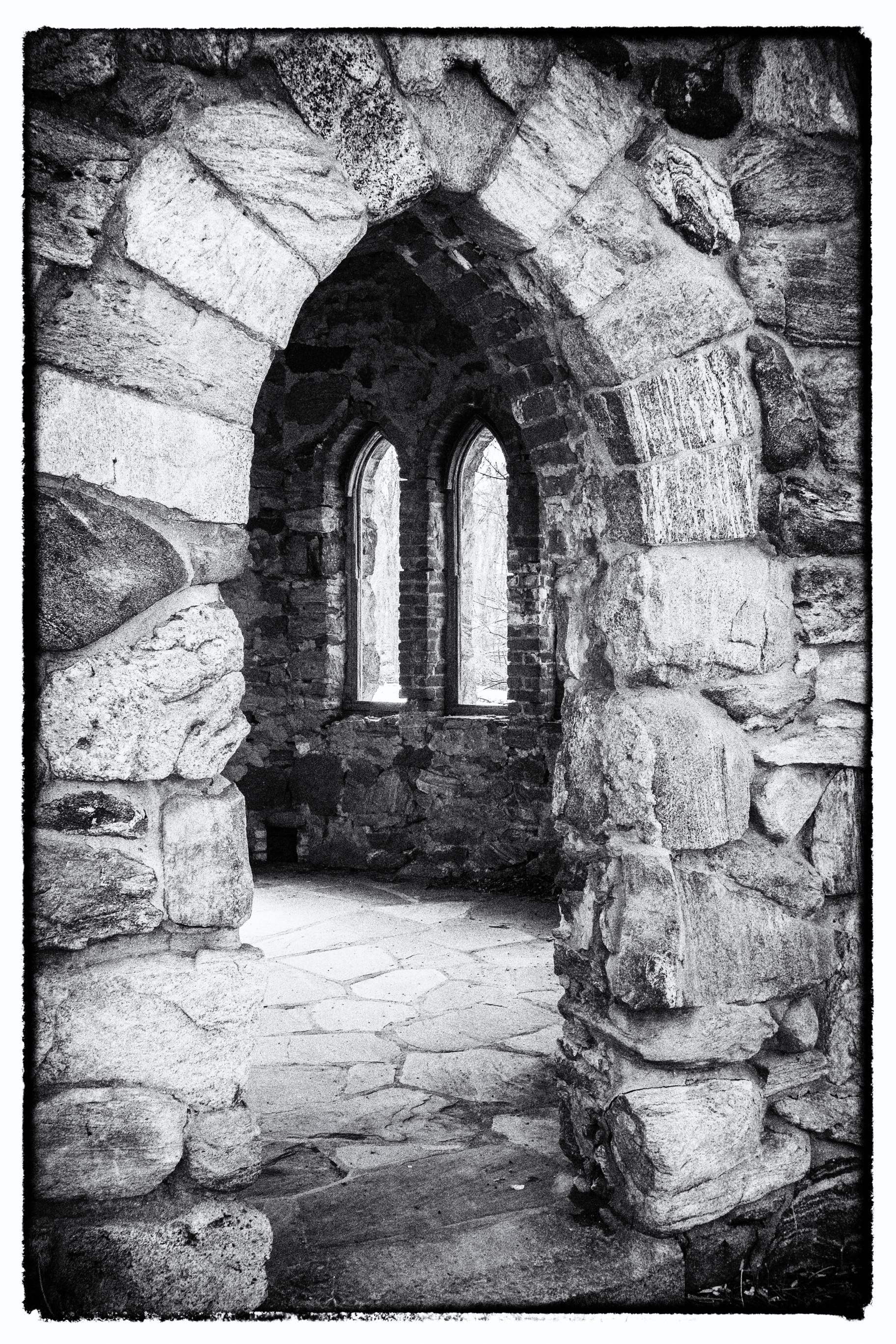
View of the interior from the entrance
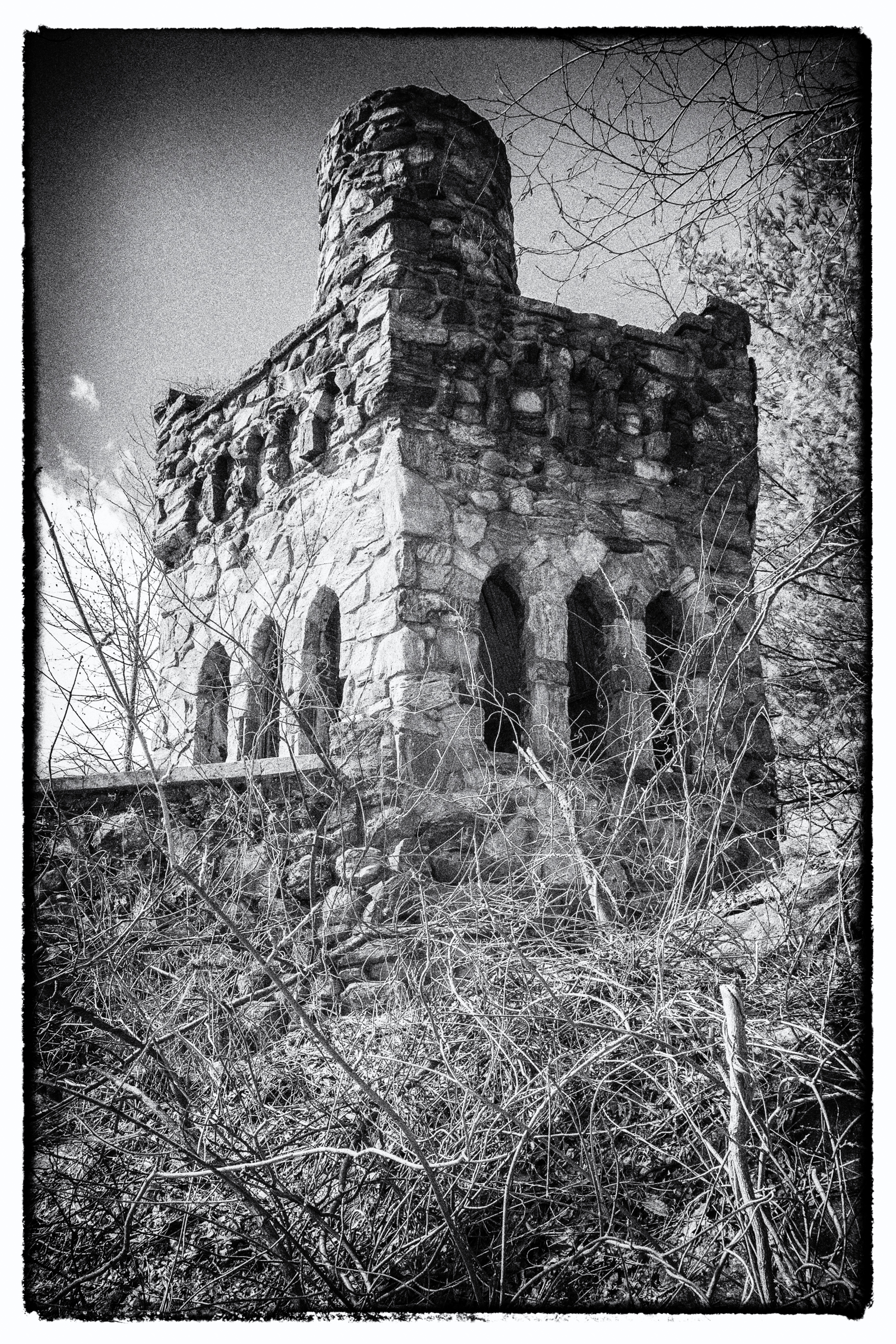
Tower
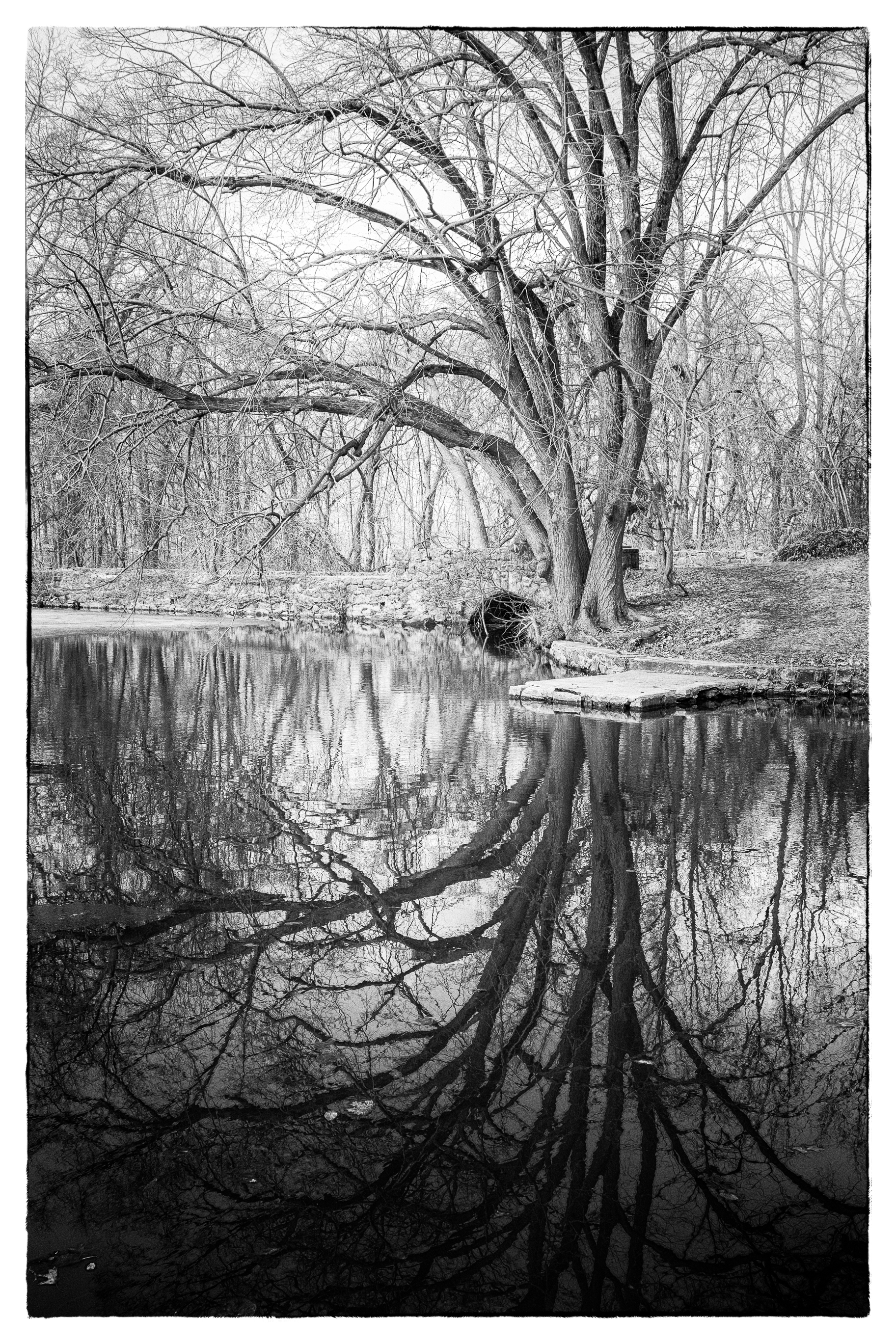
Pond, bridge and tree. I loved the reflection of the tree

Rob Yasinsac and Tom Rinaldi’s interesting site: “Hudson Valley Ruins” shows how the original mansion looked:
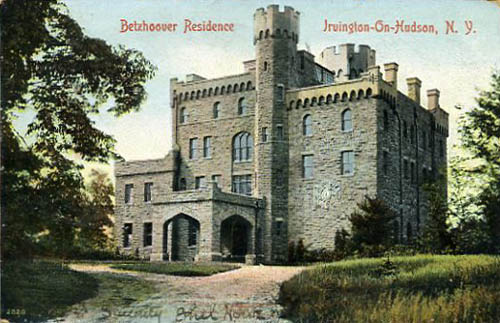
Beltzhoover Teahouse at Halsey Pond


And provides additional information:

Tucked away in the back part of Irvington is the remains of a once-grand estate. The centerpiece was a stone castle-like mansion known as Rochroane. Designed by local resident A.J. Manning for village president Melchior Beltzhoover in 1905, the house has been called a “Rhine Castle,” as it was said to be a replica of a German Castle. (I’ve yet to see a photo of such to validate this, but just about any castle in the Hudson Valley is said to be a replica of some European edifice.) The estate was acquired by Benjamin Halsey in 1927, who renamed it Grey Towers. The pond now goes by the name Halsey Pond.

The property was donated by Mrs. Halsey to the local Roman Catholic Church in the mid 1970s. Promptly enough, the house burned due to fire of unknown origin. Rochroane/Grey Towers was demolished soon thereafter. The local Catholic Church has a record of losing old structures, as the Old Immaculate Conception Church itself suffered a similar fate. Anyhow, we have now lost both buildings – the church was demolished in 1996 after standing for many years in ruin. The church was probably just after the money, as the property was sold to a developer, who gave the pond to the village in exchange for being allowed to develop the rest of the estate. The same developer now wants to build on land surrounding the pond that did not get covered over the first time around.
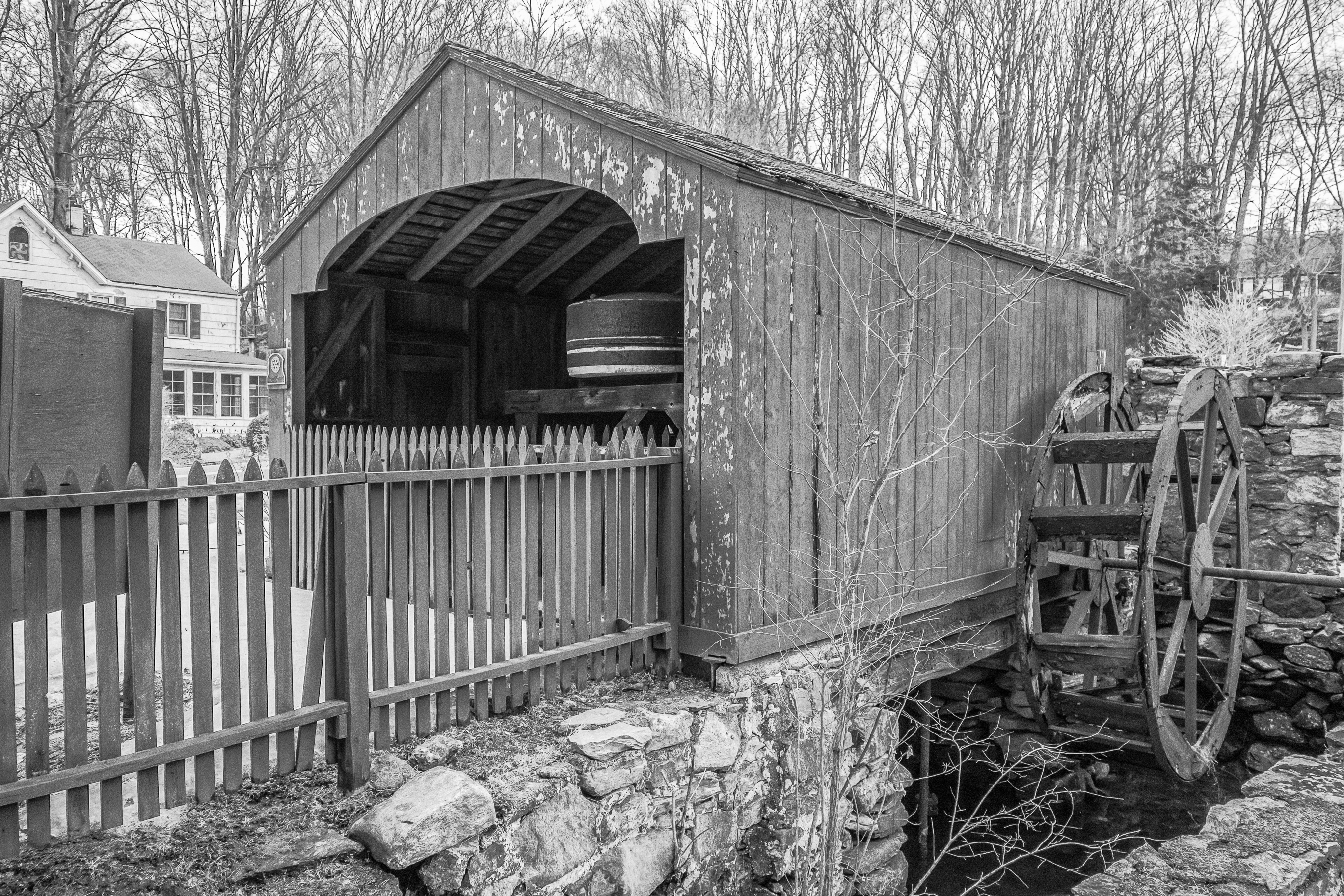
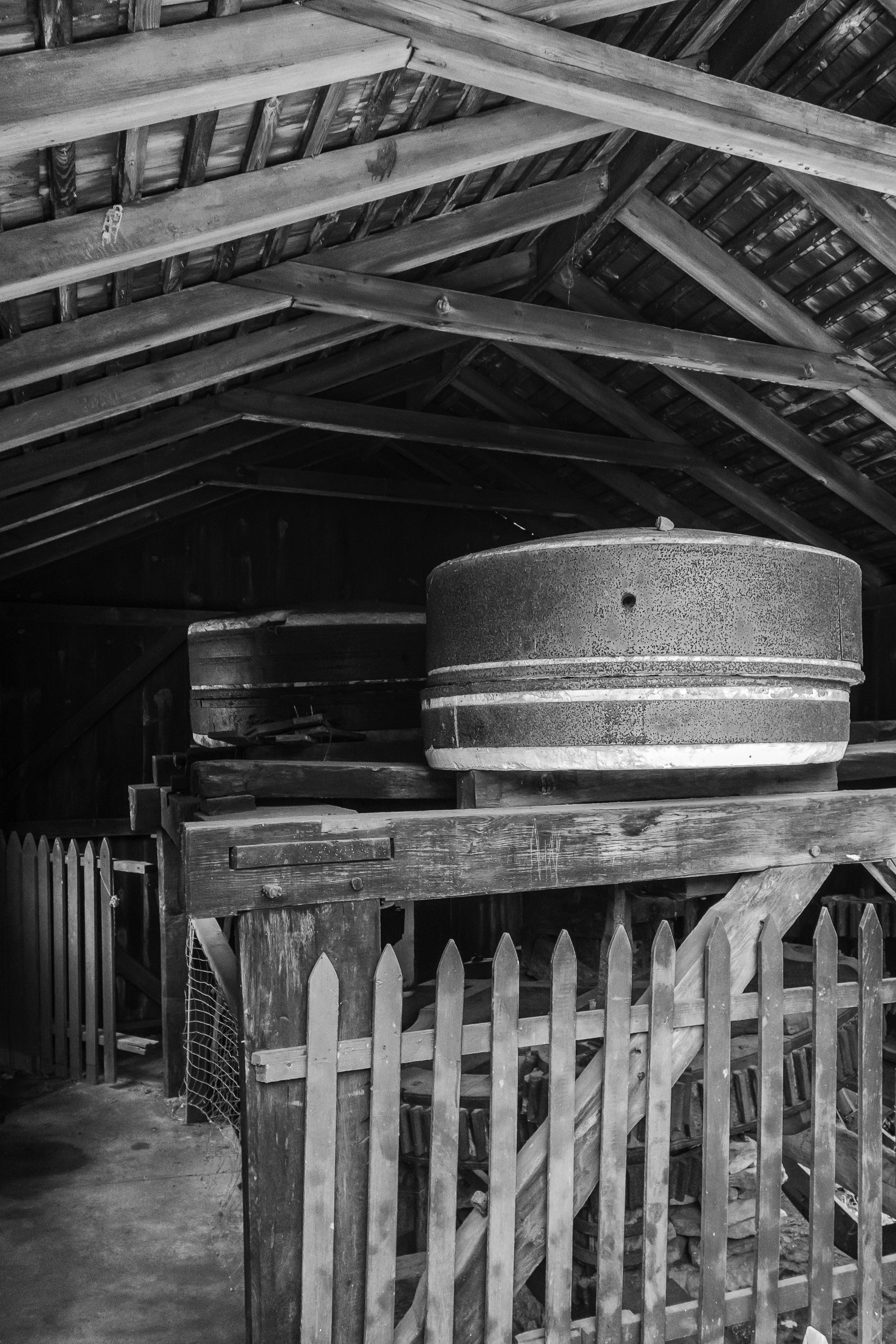
Rundle’s Mill


Drive along Peekskill Hollow Road and turn onto Mill Street (by the Putnam Valley Museum). Before you get to Route 6 You’ll pass a small, red building on your left – on the corner of Mill Pond Road. It looks like a shed and it’s easy to miss, but it’s well worth stopping for a short visit. There’s not a lot to see, but what you’ll find is all that remains of Rundle’s Mill. An information board has some pictures of the original mill and Mr. and Mrs Rundle. It also provides some background on how the mill functioned. It must have been quite impressive in its day. There’s also a short summary history:

A mill operated on this site perhaps as far back as 1788. Falling water provided the necessary power for mills and the stream and local topography made this an ideal location. Charles Rundle purchased the mill in 1883 and passed it on to his son, Arthur. The remnants of the master gear drive and the millstone are all that remain of the Rundle mill.
The three story structure processed three different products. Apples were converted into cider on the first and second floors. Corn was coarsely cracked into chicken feed on the middle level. Converting grain into fine flour required several operations, utilizing equipment on the upper levels. The saw mill functioned in a shed on the side.
By the mid 1920s, mill operations had ceased except for processing the local apple crop in the fall. Arthur Rundle died in 1932 and so did the mill. The building was rather deteriorated and the next owners had it demolished in the late 1930s.

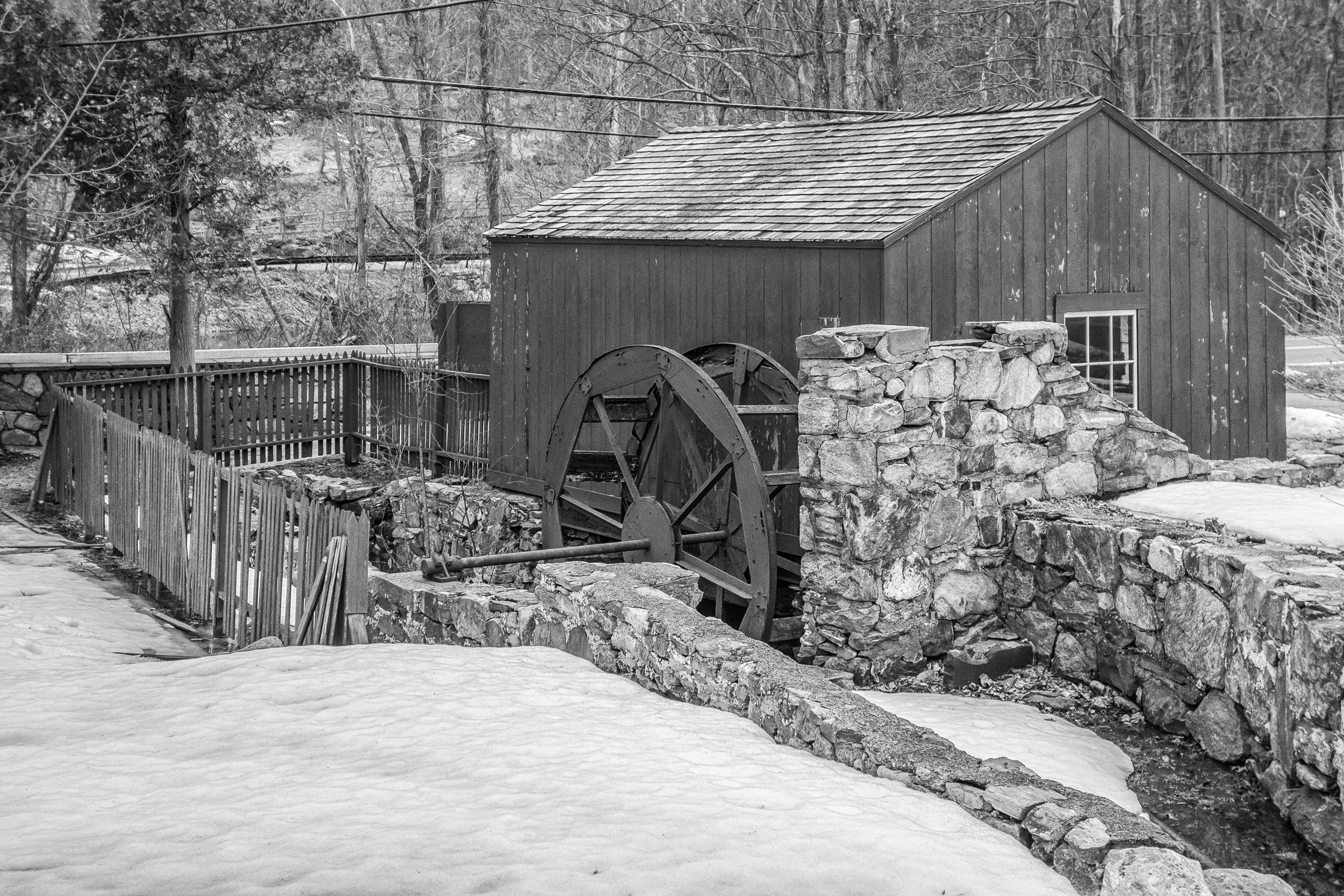
So the original mill is long gone and the existing, more modern structure merely picturesquely covers the old machinery. Even this building is showing its age: the (I assume) fake water wheel is starting to come apart and the surrounding fence is also breaking up. It’s a pity it’s not better maintained. Perhaps I’m not being fair. It could be that the “run down” look of the building has been brought about by this years harsh winter.


Interior with machinery


Water wheel


Side window


Rear view

Stained Glass Windows


A series of stained glass windows taken inside St. Philips Church in the Highlands, Garrison NY. An article in Wikipedia states:

St. Philip’s Church in the Highlands is an Episcopal church located on New York State Route 9D in the hamlet of Garrison, New York, United States. It is a stone Gothic Revival building designed by Richard Upjohn, a congregant of the church, opened in 1865.

The church itself has a long and complex history, dating back to colonial times. Its development has paralleled and sometimes spurred that of the Garrison community itself, and it was accepted for listing on the National Register of Historic Places in 1982. However, the church itself objected, and it was not formally added to the Register until 1995.

The article goes on to state that during the Revolution: “… the church was so despised locally for its Tory associations that legend has it a mob came together to burn it down at one point during the later years. They were supposedly dissuaded from doing so by George Washington himself, who stood at the door and said “That, sir, is my church!” In gratitude the stained glass window in the church’s vestibule depicts him.” Unfortunately I didn’t see the George Washington window.


Kodak Brownie


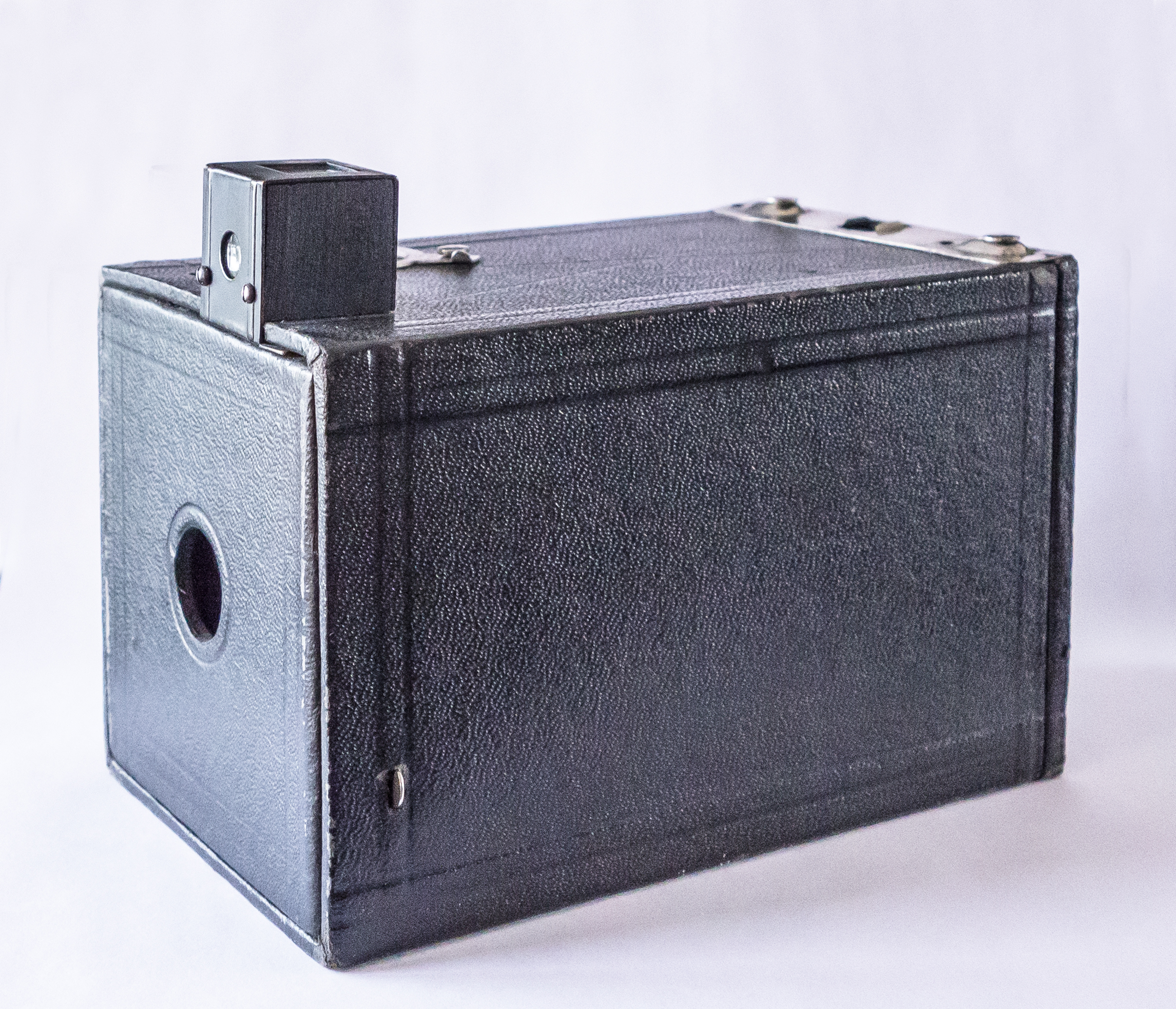
A Kodak Brownie from 1900. Of course not the original “Kodak” camera from 1888. It’s not even the first version of the Brownie. This came out in February 1900 and was something like a shoe box in that the entire back of the camera pulled off. This is the second version where the “pull off” back has been replaced in March 1900 with a more rigid “hinged” back with a sliding metal latch. This one also has the optional viewfinder, which came out in August 1900. Unfortunately I won’t be posting any pictures from it. It used the now defunct 117 film. The later (October 1901) Brownie 2 used 120 film, which is still available. Maybe I’ll get one to see what shooting with a Brownie is like.

The Kodak Brownie Camera webpage says:

The camera that started it all was a leatherette covered card box with a wooden film carrier. The original had no finder but did have V sighting lines on top. A clip-on accessory reflecting finder became available from August 1900. It had a detachable film winding key that I would imagine got lost often.

This camera is considered by many experts to be the most important camera ever manufactured. The reason is that it was produced so cheaply that anyone, not just professionals or people of means, could own it. Because it was so simple to use, anyone could operate it right out of the box.

I browsed the internet in search of a picture taken with a 1900 Brownie. Unfortunately I haven’t been able to find anything that I could, with certainty, attribute to this specific model i.e. as distinct from something taken by one of the many other Brownie models. I’ll keep looking.