Cows

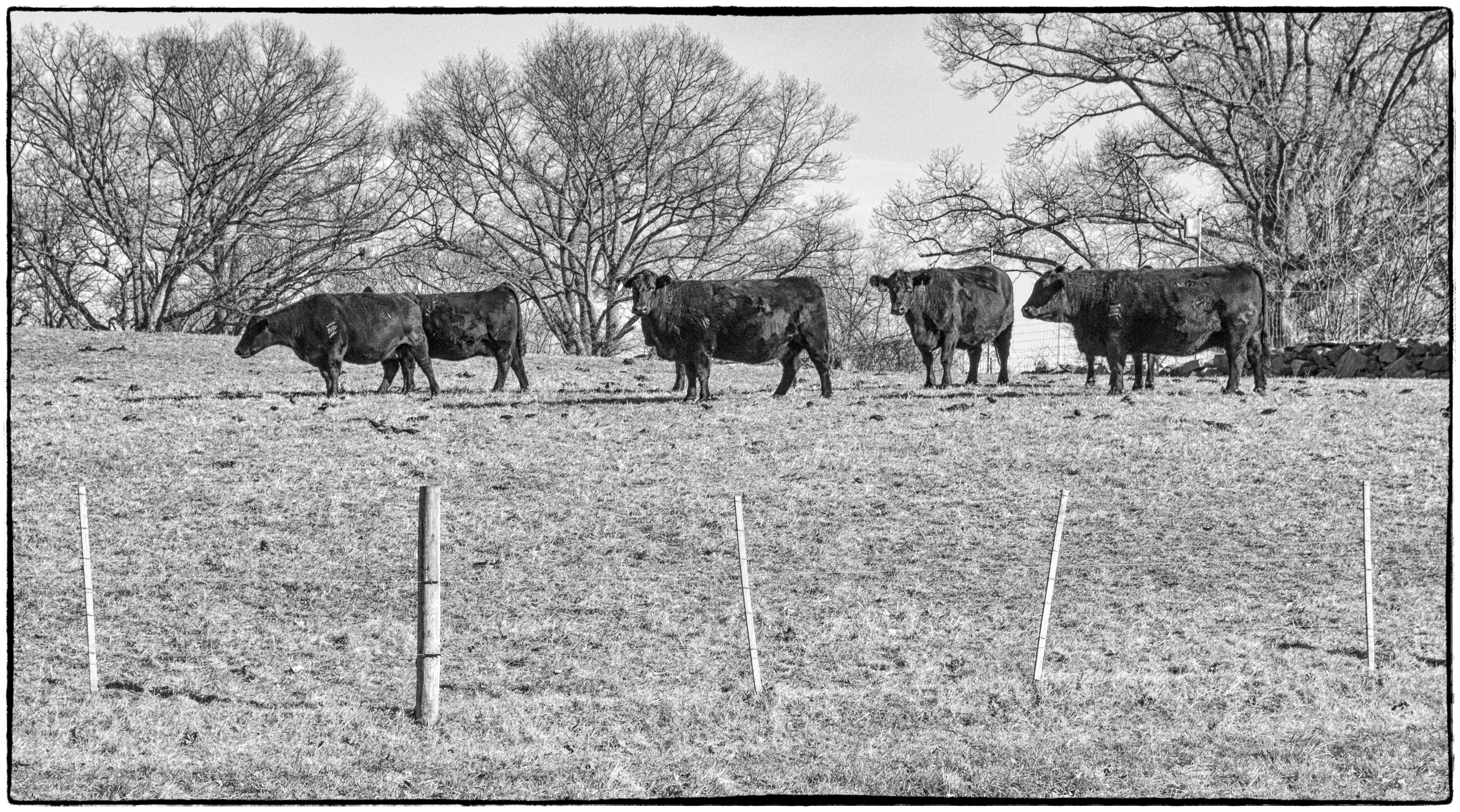
Cows and fence.

I must confess that one of my reasons for taking our new dog, Harley for a walk around Stone Barns was that I wanted to introduce him to the cows. Before we got him Harley was a stray and I suspect that he was a town dog. He’s fascinated by the countryside, particularly waterfalls. He’ll spend a long time staring at a waterfall, even a small one.

So I wanted him to see the cows. How did he react? He was very excited – running around, jumping and barking a lot. He didn’t seem to be afraid of them though.

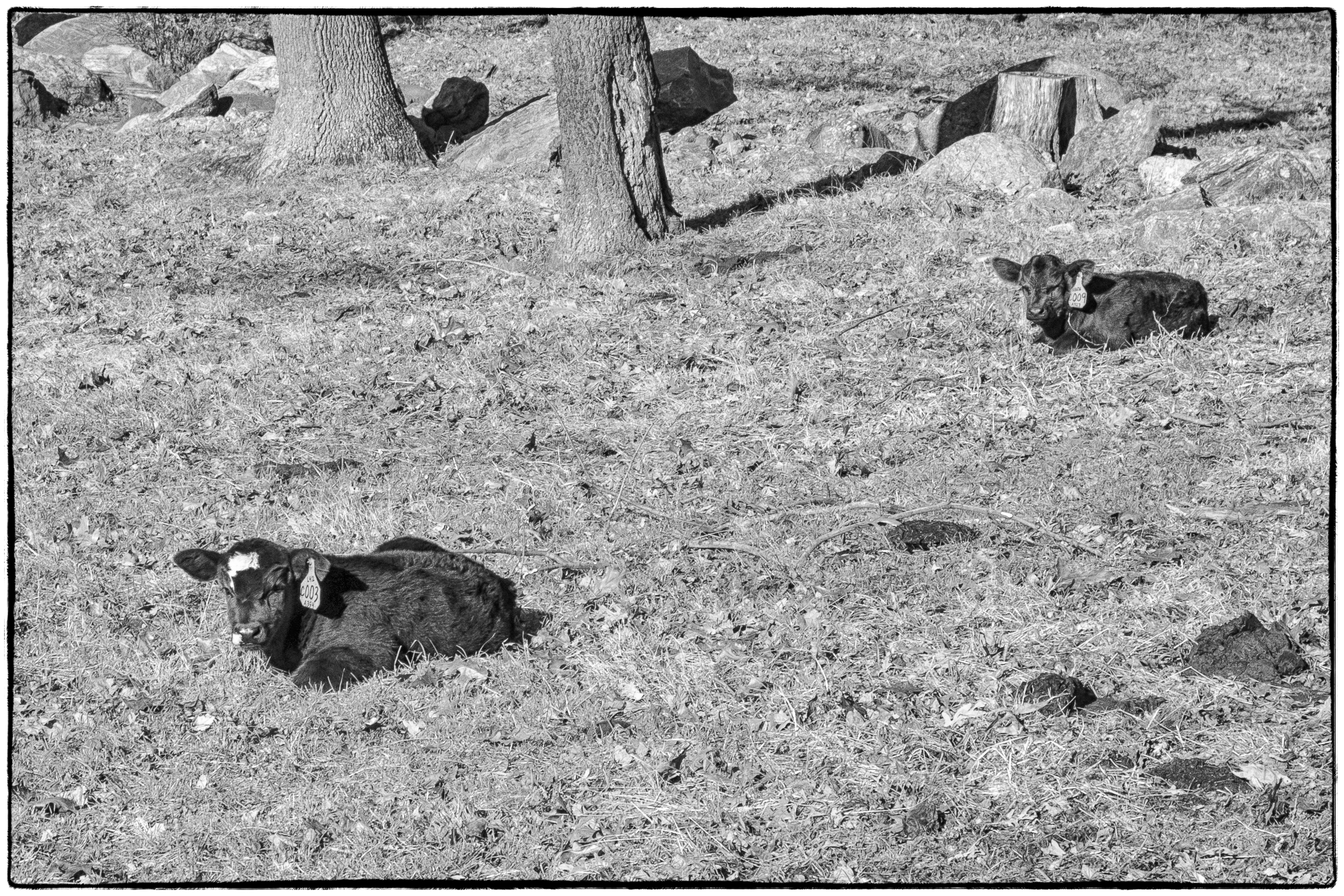
Two calves.

Brian Griffin video

“There’s something spiritual about this picture” . . . Brian Griffin’s shot of a farmer and lamb in Iceland. From the Guardian Online, 16 June 2010

I came across these two videos via post by David Allen on the Analog Photographers User Group . I’m not sure how I feel about them. I don’t think that Mr. Griffin does a very good presentation (it’s bit too rambling and repetitive for my taste) and, at first viewing, I don’t really like his work all that much. Maybe if I spend some more time with it?

I did, however, like the idea of doing a kind of biographical project: documenting his early life through pictures and words. I grew up about 40-50 miles away from where he did and there’s not a lot of difference in our ages (he’s a little bit older than I am). So a lot of what he talks about and what he shows is quite familiar to me. Unfortunately I don’t think I’ll ever be able to undertake such a project. The raw materials just don’t exist. Although I had a camera when I was young it was rarely used and most of the pictures taken have disappeared. I have a few pictures of me as a young boy, and some of my parents, their friends and relatives. But not enough, I fear to try a project of this nature. I didn’t start to take photography more seriously until about 20 years later. It’s a pity that I have so few pictures of such an important period of my life.

By sheer chance I came upon this two part video of my friend, and a UK photographer whose career I have admired for a long time now, Brian Griffin talking about his life and how it has been reflected in his work. The talk was at the Royal Photographic Society and I recommend it to all here.

Brian Griffin Video 1

Brian Griffin Video 2

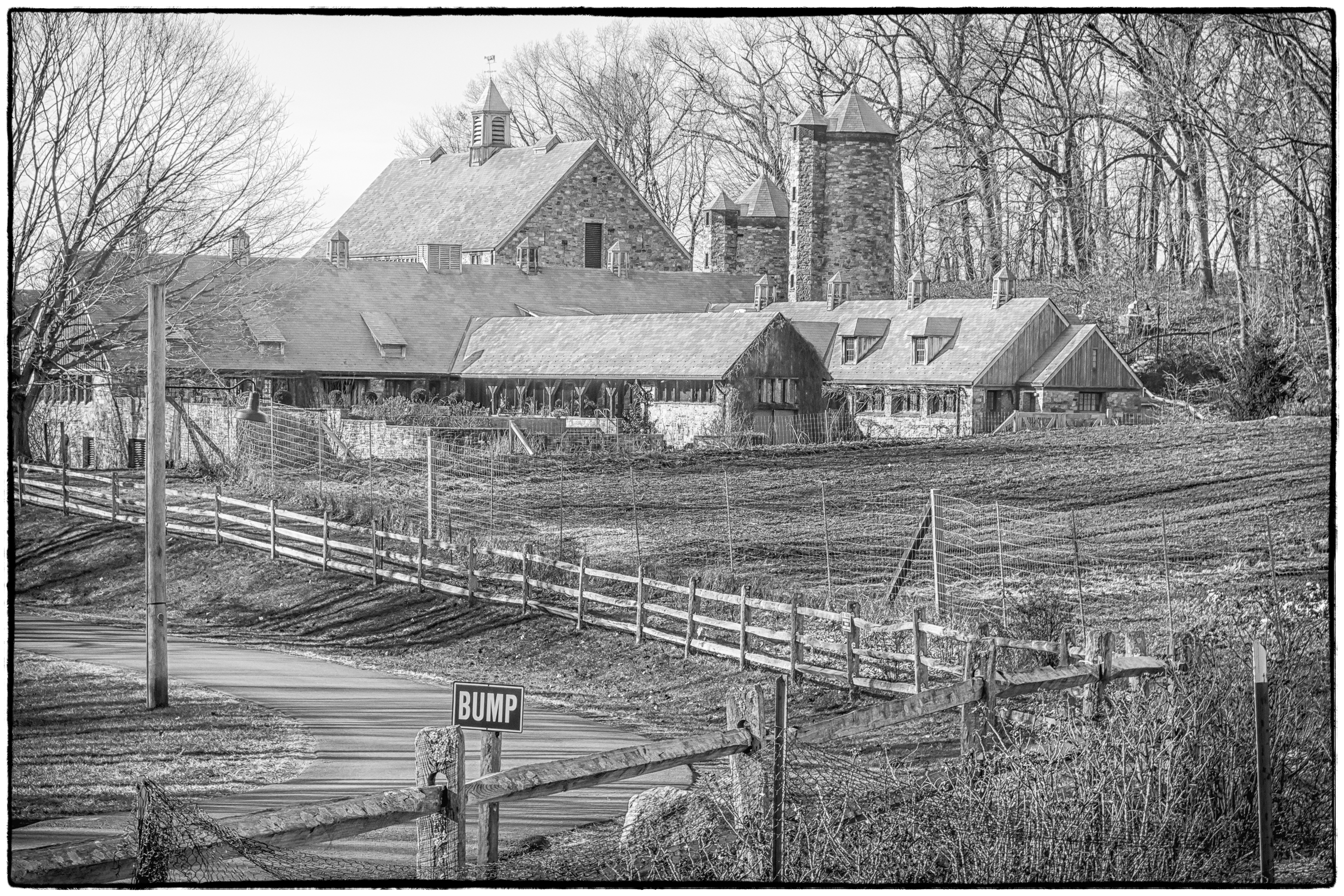
Stone Barns

According to Wikipedia:

Stone Barns Center for Food & Agriculture is a non-profit farm and educational center with a partner restaurant, Blue Hill at Stone Barns, located in Pocantico Hills, New York. The Center was created on 80 acres (320,000 m2) formerly belonging to the Rockefeller estate in Pocantico Hills by David Rockefeller and his daughter, Peggy Dulany. Stone Barns promotes sustainable agriculture, local food, and community-supported agriculture. Stone Barns is a four-season operation.

Stone Barns Center is also home to Blue Hill at Stone Barns, a restaurant that serves contemporary cuisine using local ingredients, with an emphasis on produce from the Center’s farm. Blue Hill staff also participate in the Center’s education programs.

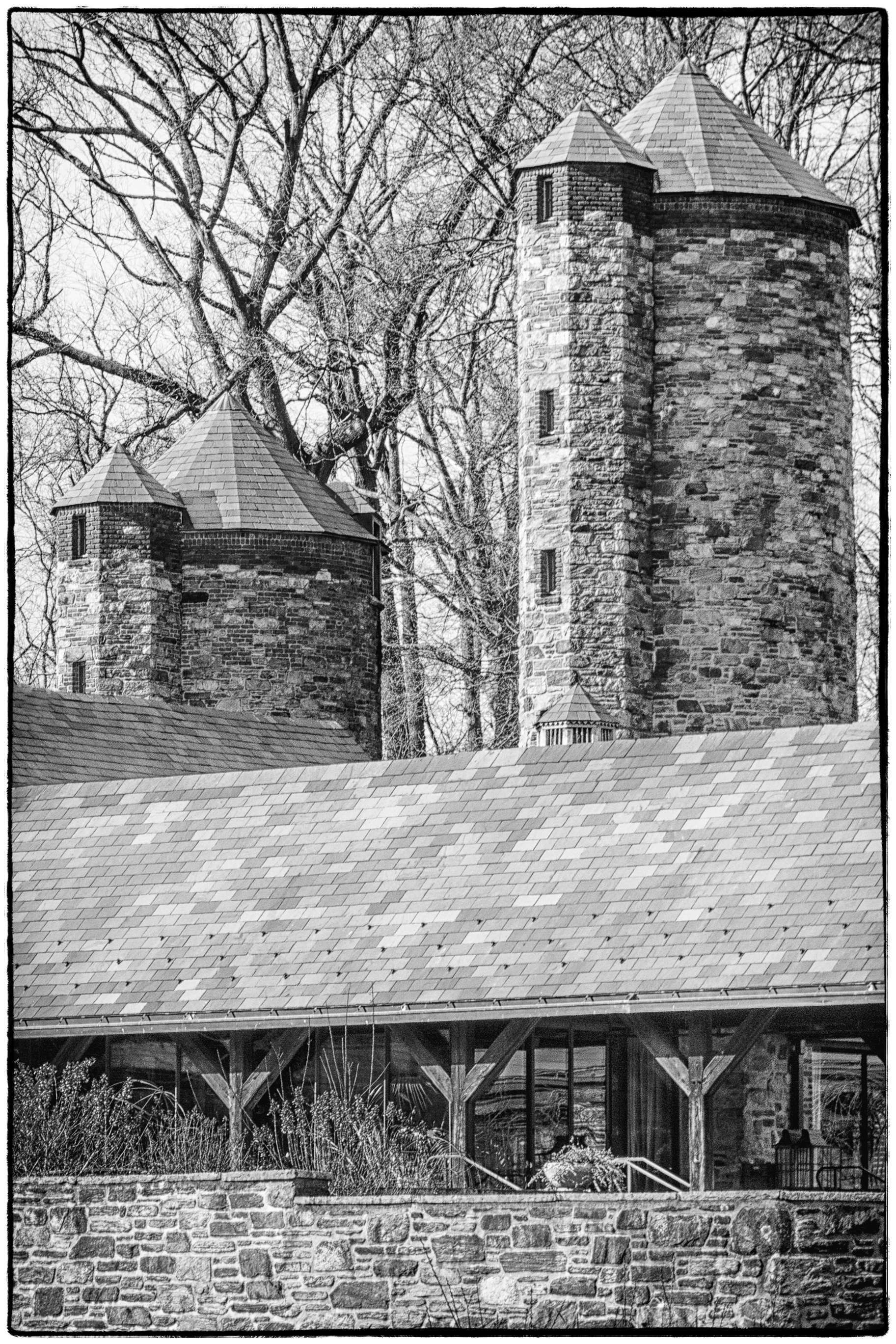
It’s quite close to our house in Briarcliff Manor and is connected to the Rockefeller Preserve, a pleasant place for hiking with numerous trails to chose from. The area around Stone Barns always reminded me of where I grew up in the north of England: rolling fields enclosed by stone walls containing browsing cows. Stone Barns itself always makes me think of French medieval manor houses with its turrets, interior courtyard and stone walls. The description of “Blue Hills” in Wikipedia really doesn’t do it justice. It’s one of the best (and most expensive) restaurants in the Hudson Valley. We’ve been there a few times and it’s excellent. The setting is magnificent.

I’ve spent many pleasant hours wandering around Stone Barns and the Rockefeller State Park.

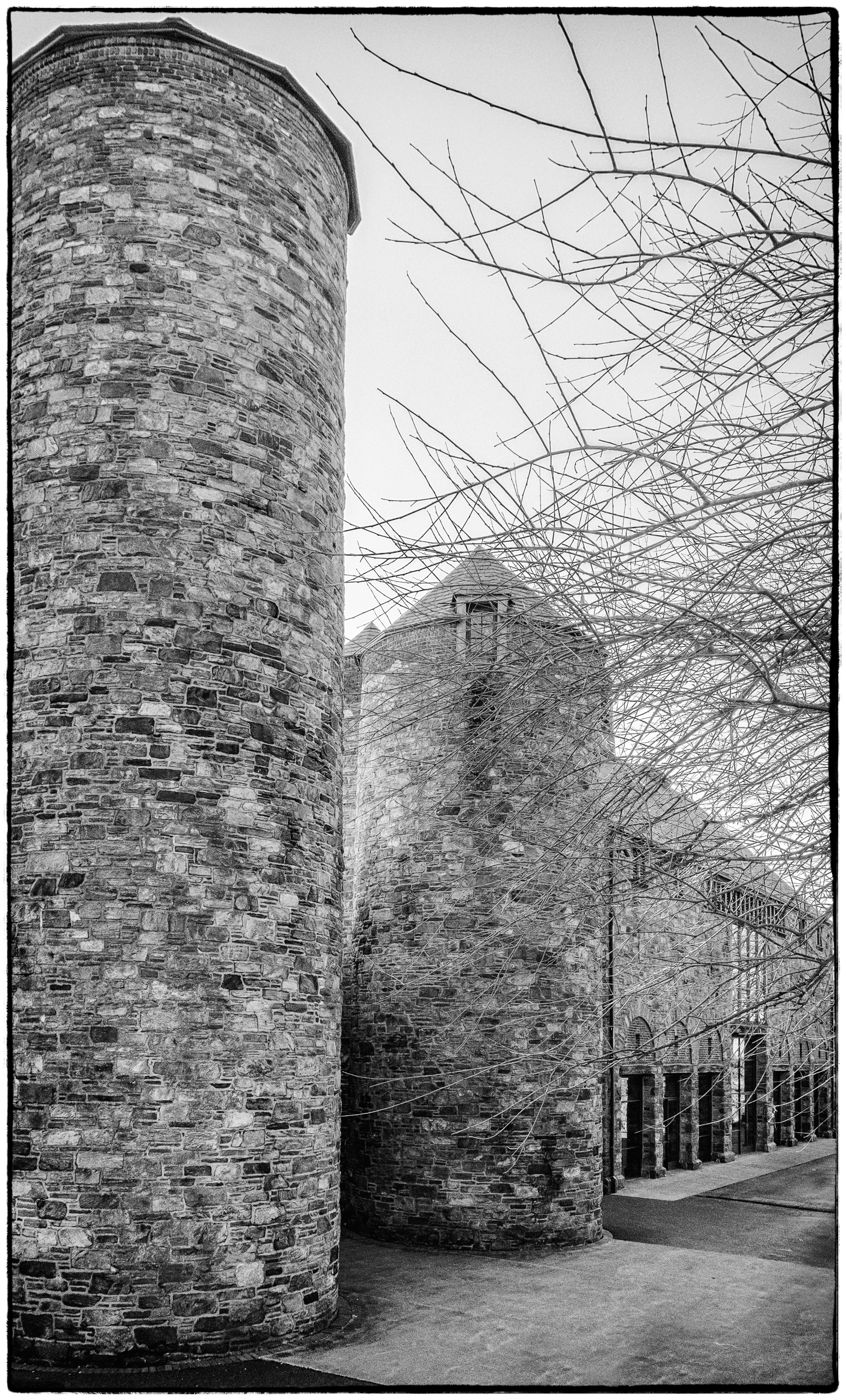
Close up of turrets.

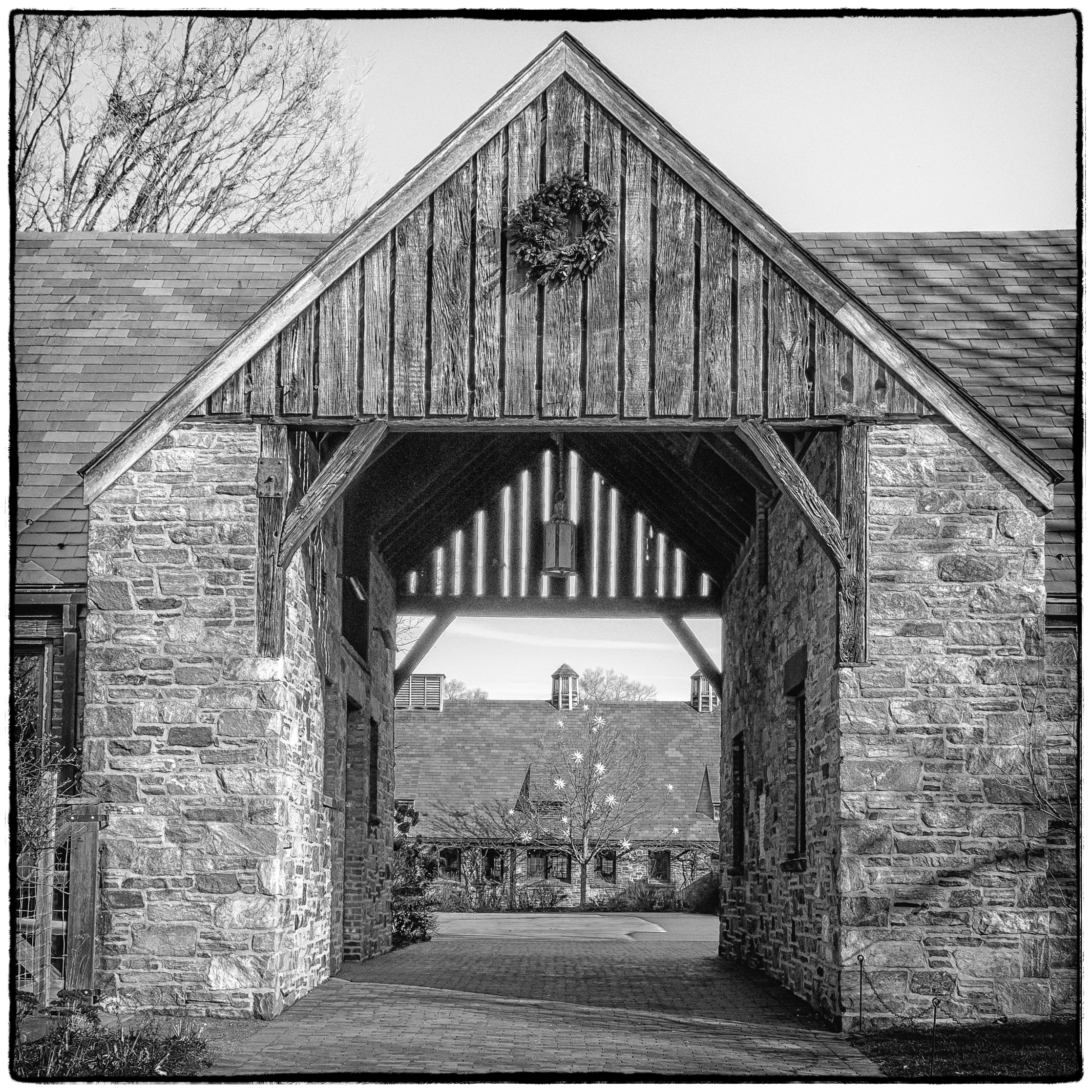
Entrance to the Interior Courtyard.

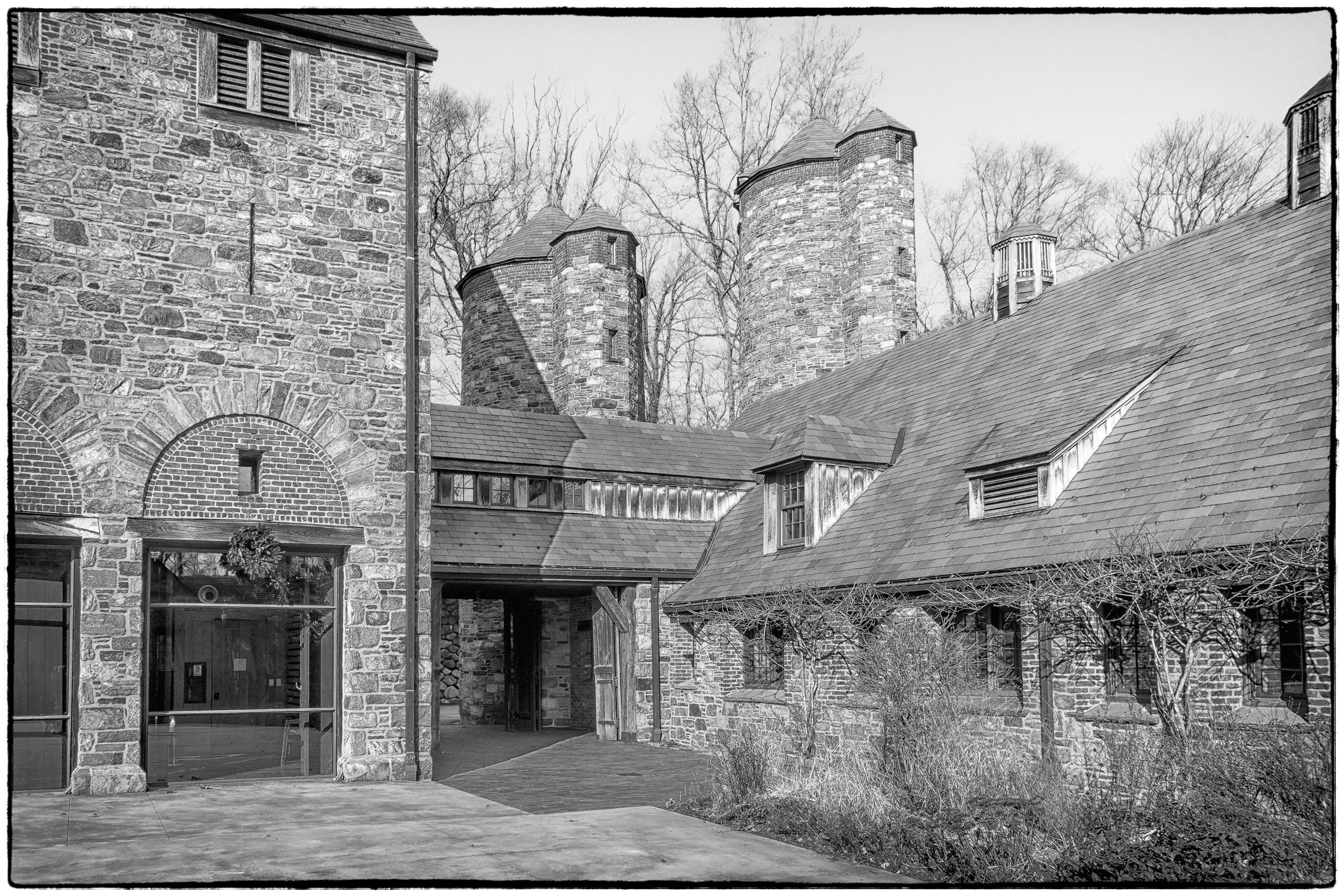
Inside the Courtyard.

Rear View.

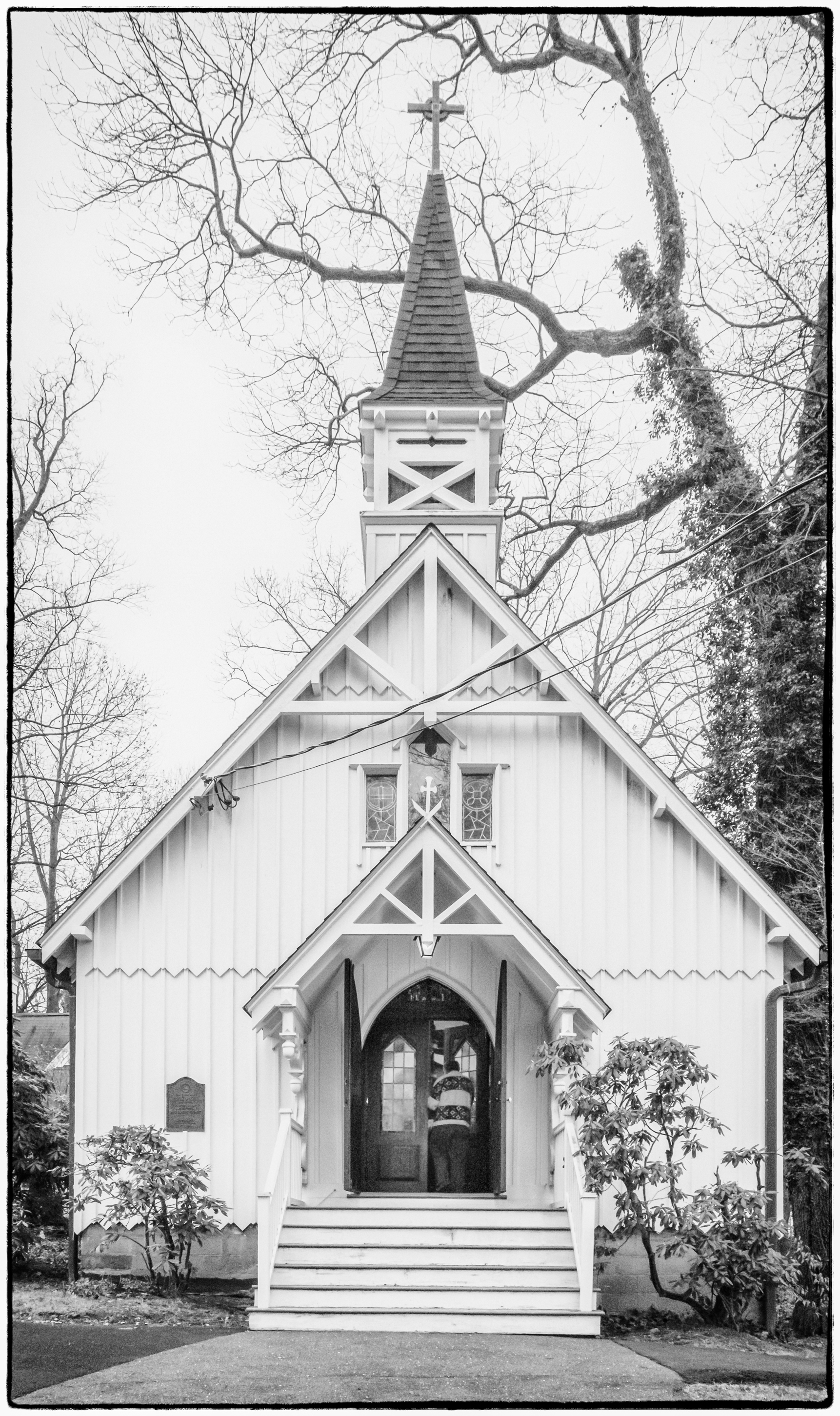
Grace Episcopal Church in Hastings-on-Hudson

We recently went to this lovely church for the first time – to attend a memorial service for our friend Bob Mawson, who passed away on November 22.

Building adjoining the church – Probably the Parish Hall I imagine?

The church has an interesting history as described on its website (which provides additional historical information):

Grace Episcopal Church, today one of nine houses of worship in Hastings-on-Hudson, was built with prize money donated by Admiral David Glasgow Farragut, a southerner by birth, who moved to Hastings in 1861, shortly before the Civil War. Farragut’s resounding victories at Mobile Bay and New Orleans made him one of the great Northern heroes of the war (to this day, several streets and the public middle school in Hastings bear his name), and he became the first naval officer in American history to attain the rank of full admiral. In thanksgiving for his safe delivery from war, Farragut donated $1,000 of his prize money from the Battle of Mobile Bay toward building a new church in his village.

Richard Upjohn, then one of America’s most famous architects (known for the Gothic Revival Trinity Church in Lower Manhattan) designed the church in a style known as Hudson River Gothic. The anchor finials, still on the dormer windows, are said to be a symbol of grace and hope. The construction of what was then called Zion Chapel cost $6,000. The cornerstone of the church, an event attended by Farragut, was laid on October 2, 1867.

In 1909, the Rev. Walter Archbold became Zion Chapel’s first full-time vicar and in 1917, under the leadership of the Rev. Horace Clute, the mission became an independent self-supporting parish known as Grace Church.

In 1919, the parish was given “Cooke’s Woods,” the land the church sits on today, by a wealthy family and parishioner whose homestead stood on the site of what is now La Barranca Apartments on South Broadway. The gift stipulated that the parish build a church on the property and maintain the Cooke family cemetery in the rear of the land in perpetuity. The church began a building drive in 1922 with a goal of raising $100,000. Among the contributors to the drive was the famed theatrical couple (and Hastings’ residents) the producer Florenz Ziegfeld (of Ziegfeld’s Follies) and actress Billie Burke (Glinda in The Wizard of Oz).

Richmond Shreve of Hastings (architect of the Empire State Building as well as the Hastings Municipal Building and most of the Farragut Avenue public schools) was hired to design the new church. But with the advent of the Depression, parishioners were suddenly unable to make good on their pledges and construction came to an abrupt standstill. Under the creative stewardship of the rector of Grace, the Rev. Walter Overs, the vestry voted to put a roof on what had begun as the new church and make it the parish hall, and then move the original Upjohn church (at the bottom of Main Street) onto the new site.

In November 1930, Main Street was sealed off to traffic for 48 hours in preparation for the move. The church steeple was removed in order for the building to fit underneath the telephone wires. Then, in what has become Grace Church’s most famous hanging-in-the-balance moment, while the church was firmly lodged in the middle of the street, the movers went bankrupt. The vestry came through once again and managed to raise the funds necessary to move the church onto its new site. Bishop Overs also oversaw the construction of the present English Tudor-style rectory by Sears and Roebuck, one of the company’s earliest prefabs.