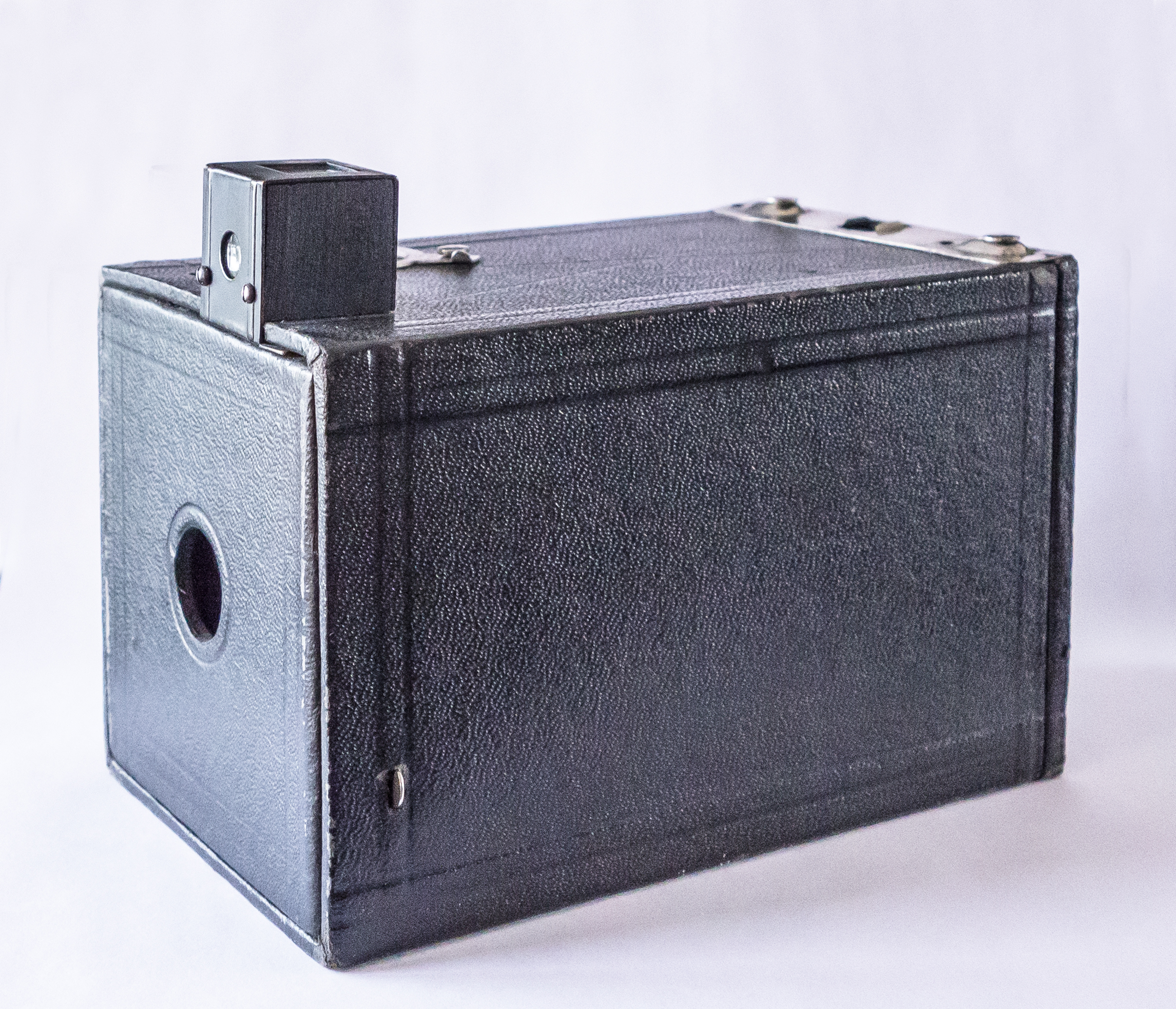
Kodak Brownie


A Kodak Brownie from 1900. Of course not the original “Kodak” camera from 1888. It’s not even the first version of the Brownie. This came out in February 1900 and was something like a shoe box in that the entire back of the camera pulled off. This is the second version where the “pull off” back has been replaced in March 1900 with a more rigid “hinged” back with a sliding metal latch. This one also has the optional viewfinder, which came out in August 1900. Unfortunately I won’t be posting any pictures from it. It used the now defunct 117 film. The later (October 1901) Brownie 2 used 120 film, which is still available. Maybe I’ll get one to see what shooting with a Brownie is like.

The Kodak Brownie Camera webpage says:

The camera that started it all was a leatherette covered card box with a wooden film carrier. The original had no finder but did have V sighting lines on top. A clip-on accessory reflecting finder became available from August 1900. It had a detachable film winding key that I would imagine got lost often.

This camera is considered by many experts to be the most important camera ever manufactured. The reason is that it was produced so cheaply that anyone, not just professionals or people of means, could own it. Because it was so simple to use, anyone could operate it right out of the box.

I browsed the internet in search of a picture taken with a 1900 Brownie. Unfortunately I haven’t been able to find anything that I could, with certainty, attribute to this specific model i.e. as distinct from something taken by one of the many other Brownie models. I’ll keep looking.
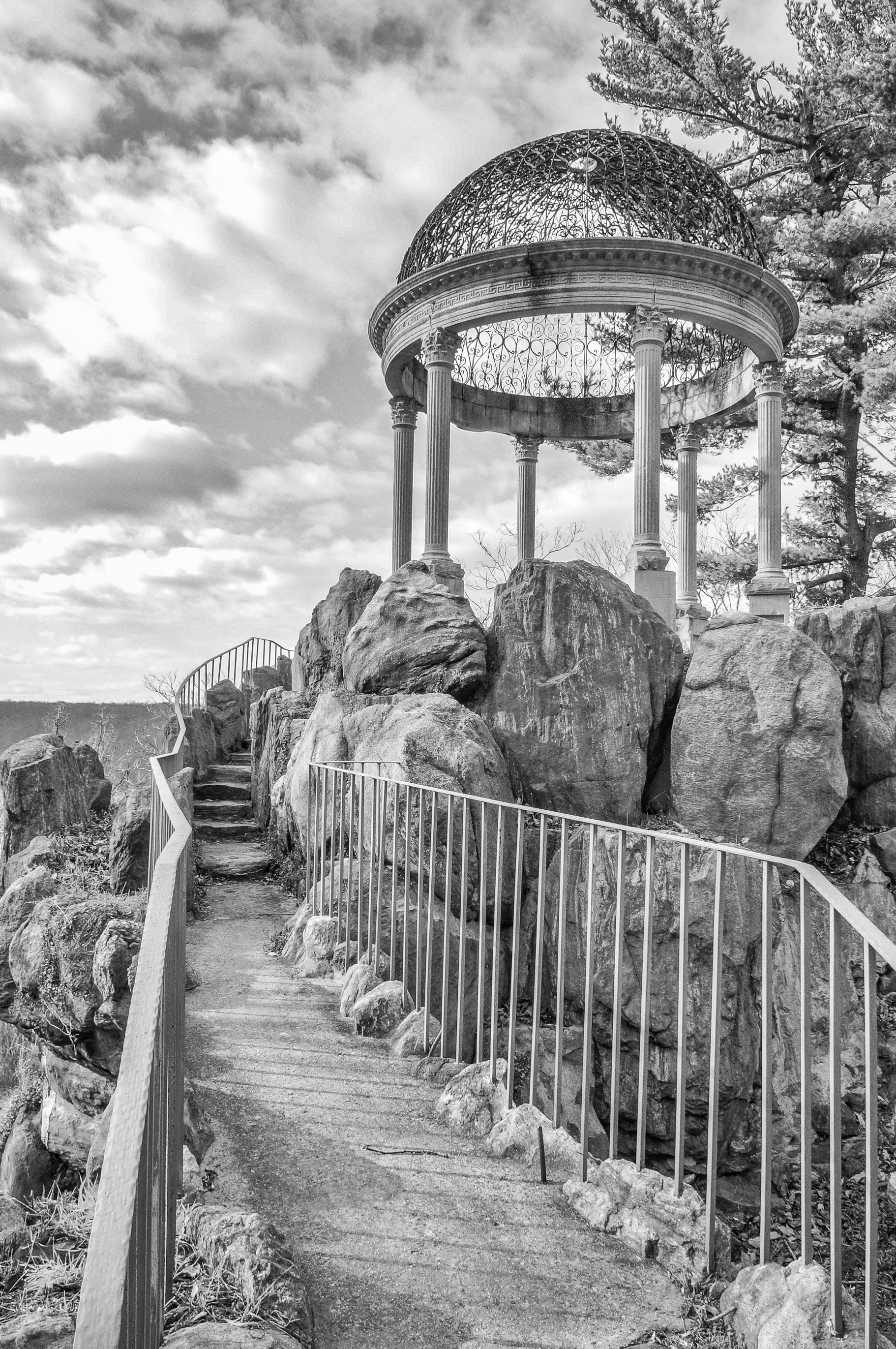
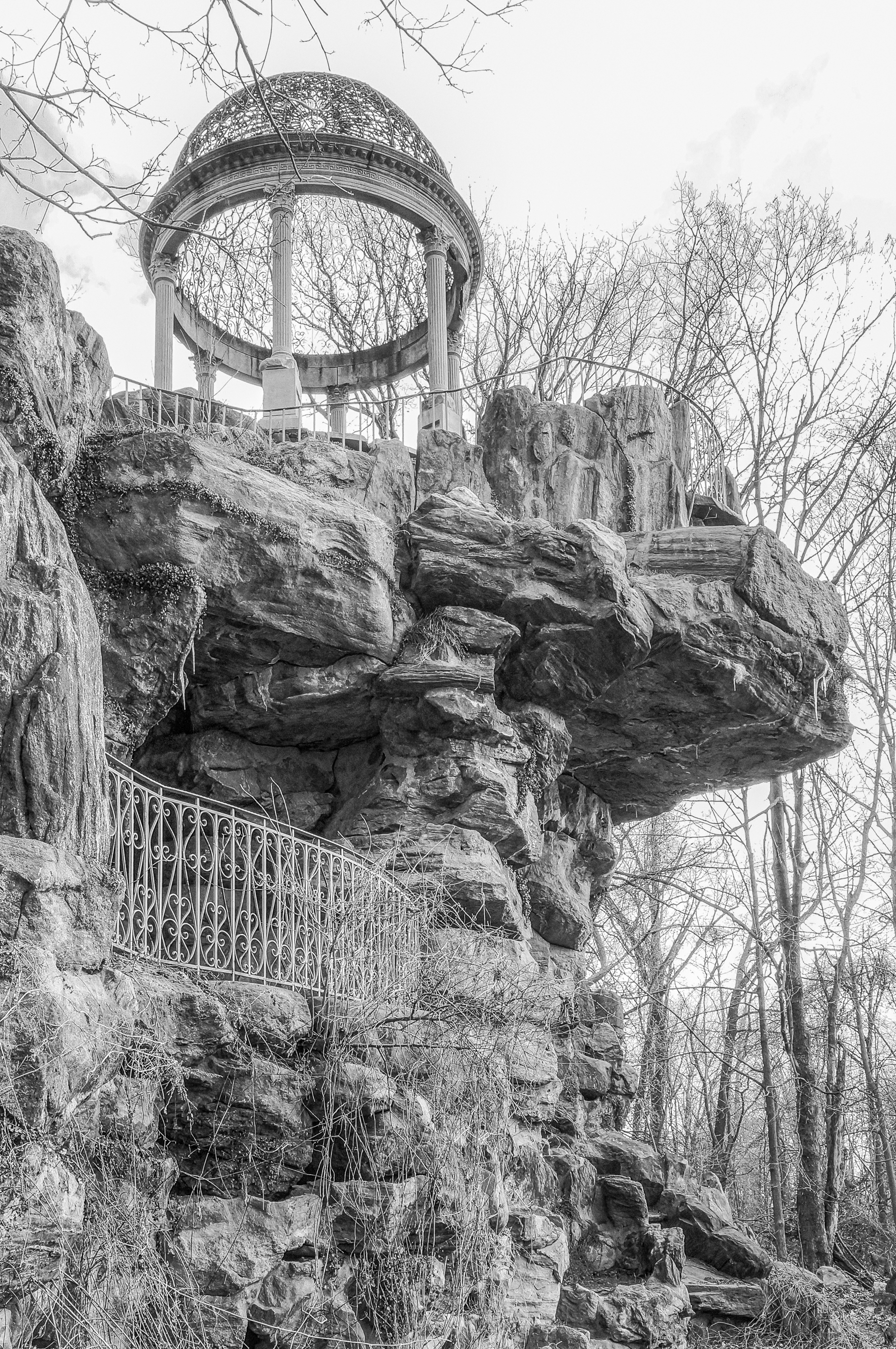
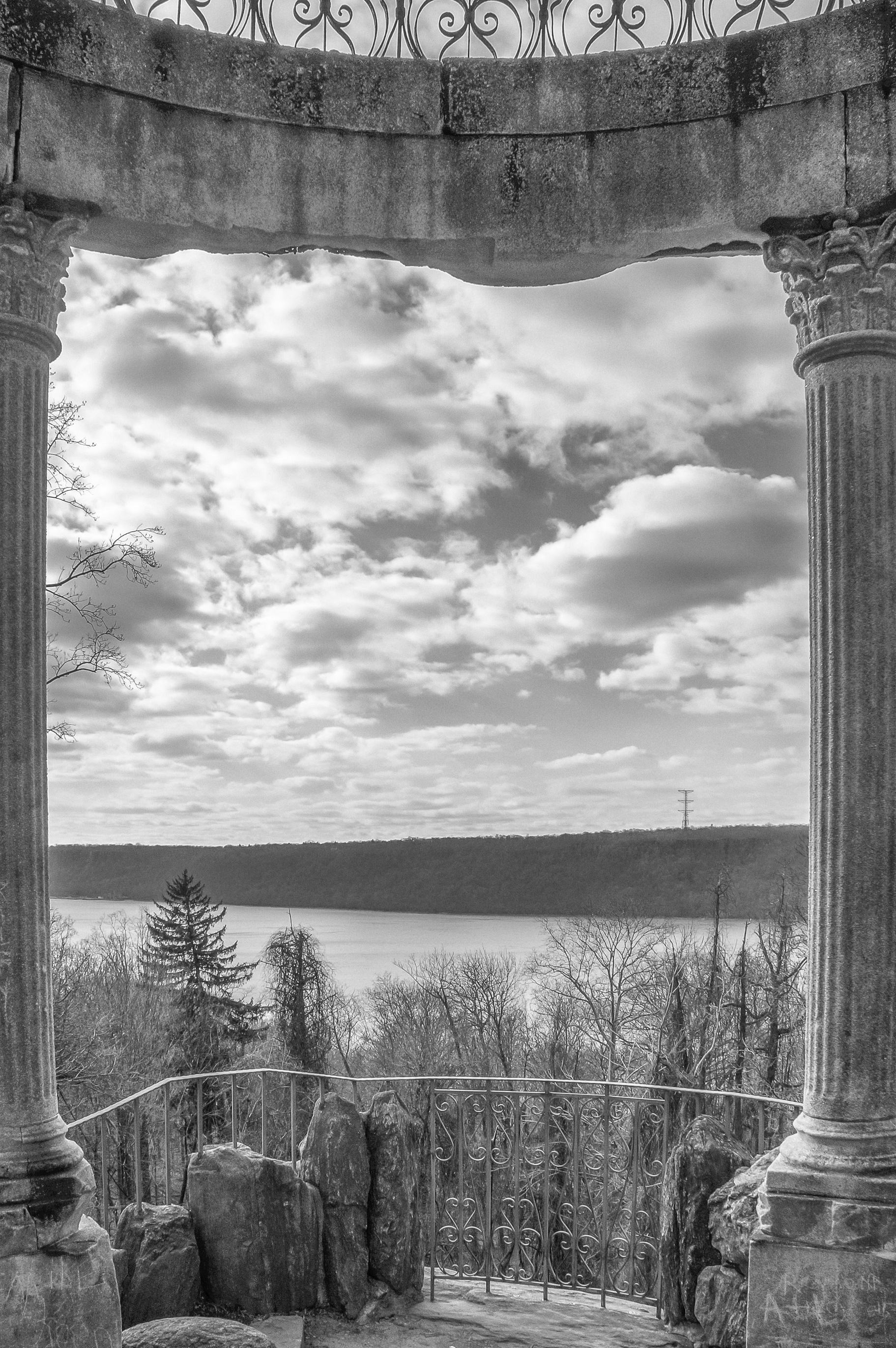
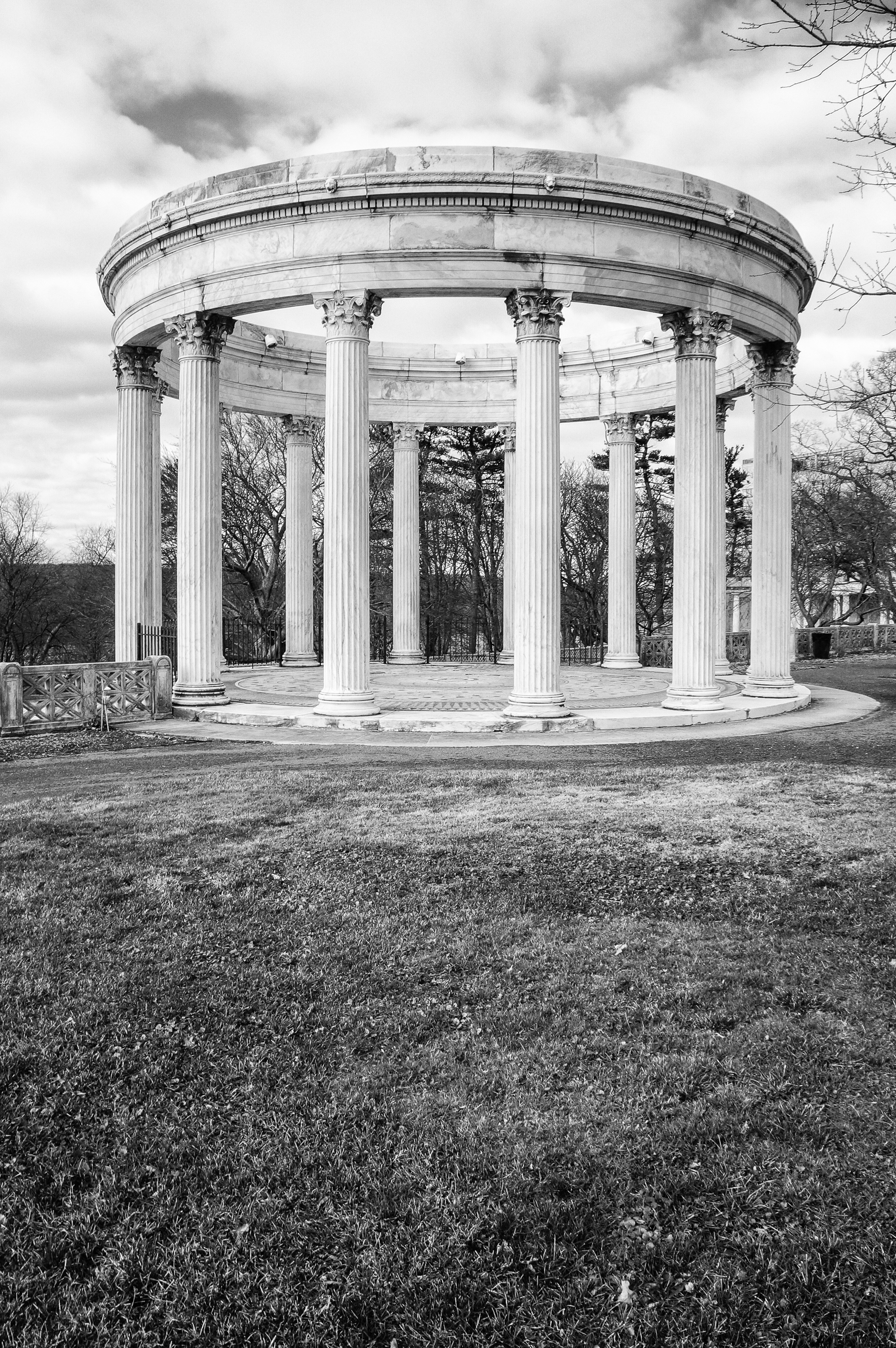
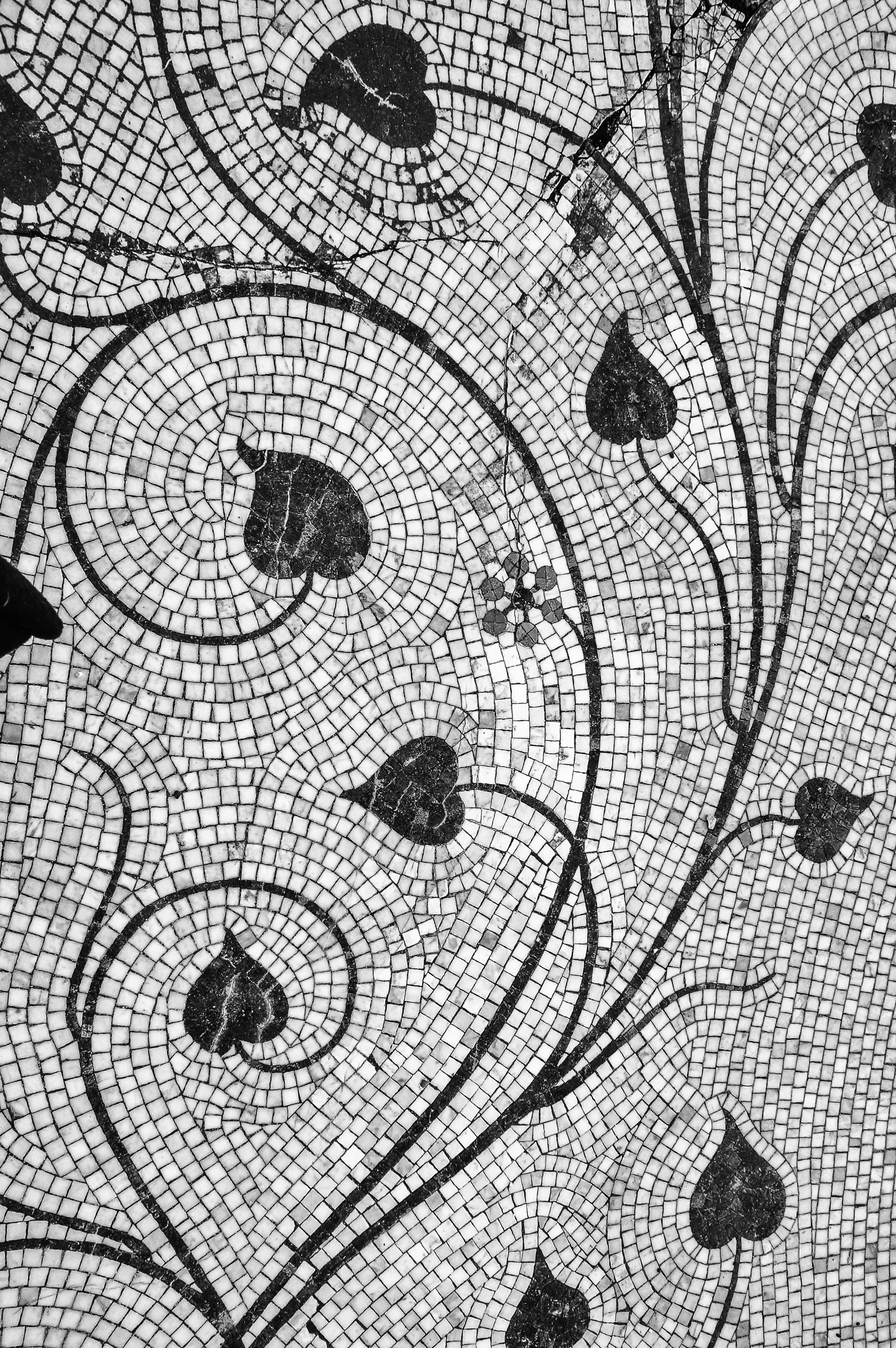
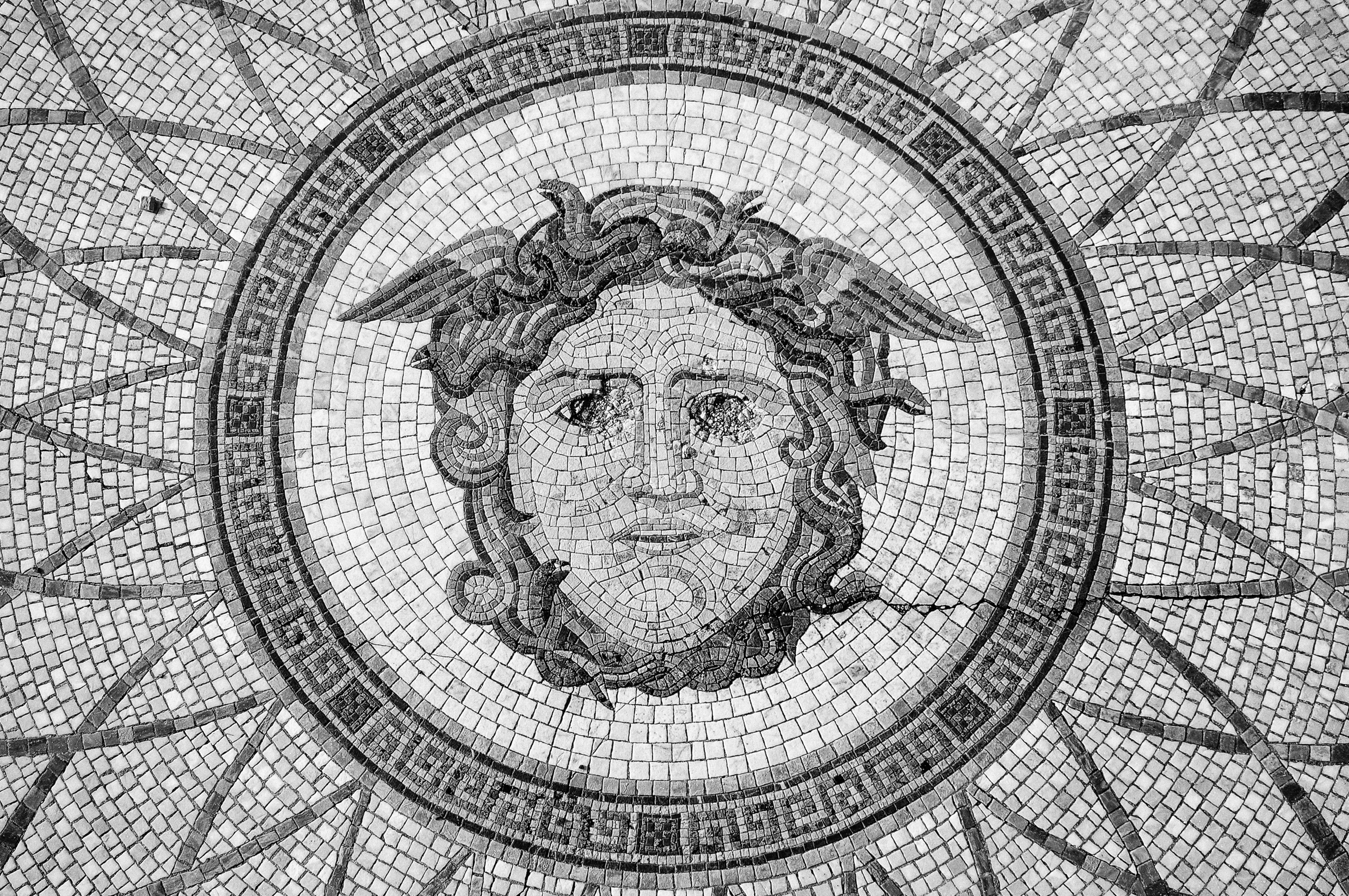
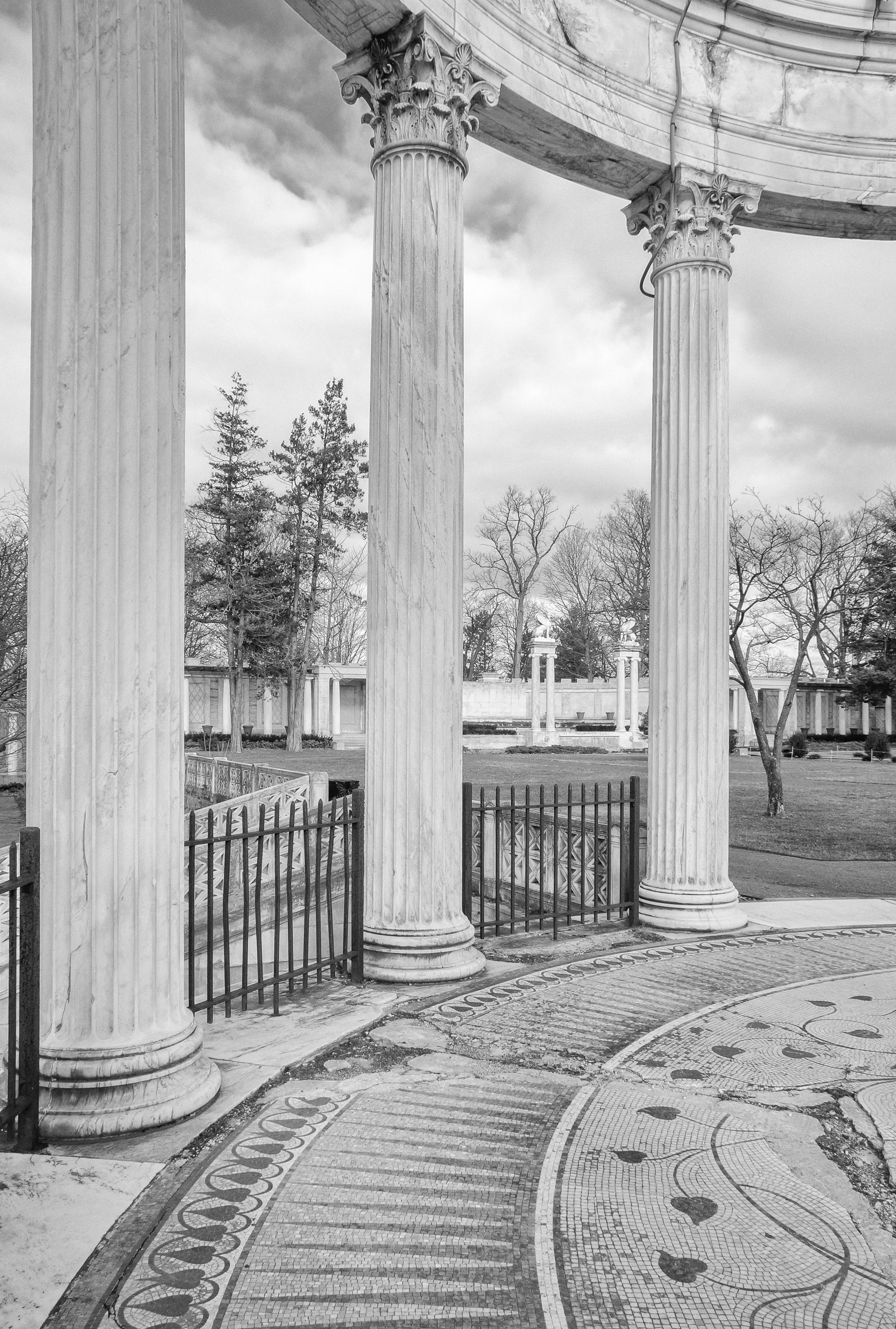
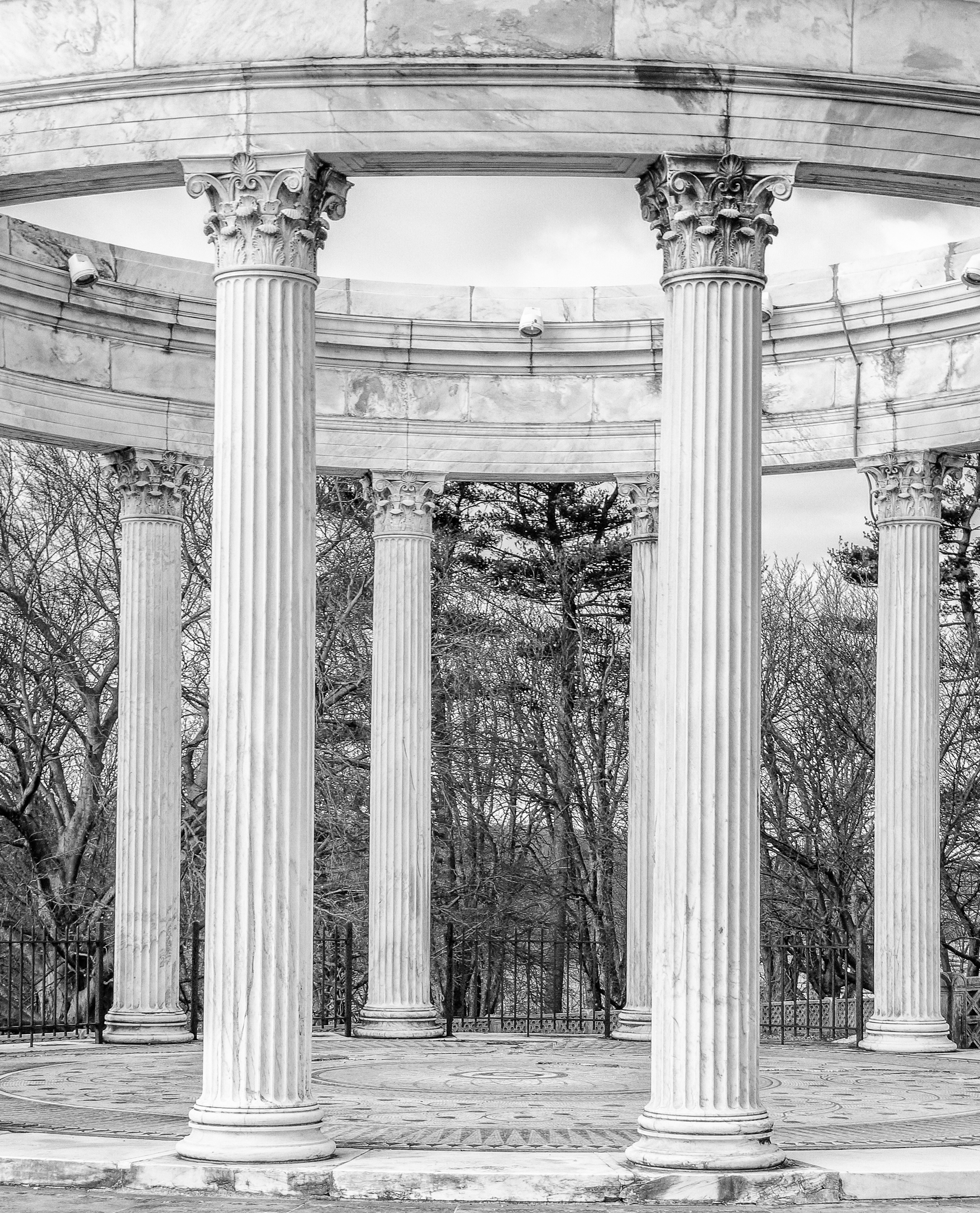
Untermyr Park, Yonkers, NY


Wikipedia has this to say about Untermyr Park:

Untermyer Park (also known as Untermyer Gardens, previously part of an estate known as Greystone) is a historic park of 43 acres, situated in Yonkers, Westchester County, New York, just north of New York City. Untermyer Park is on a hillside above the Hudson River and features a rock garden, a “Grecian garden” (actually a Persian Paradise garden), a small Grecian-style amphitheater, a classical pavilion, pergola, statuary, and a view of the river.
The Untermyer Gardens were developed during the first 40 years of the 20th century, when the area now enclosed by the park was part of an 150-acre site that was the estate of the lawyer and civic leader Samuel Untermyer.
Greystone had previously been owned by defeated Presidential candidate Samuel Tilden. Untermeyer purchased Greystone when Tilden died in 1899; when Untermyer himself died in 1940, his plan had been to donate the whole estate to the Nation, or the State of New York or at least to the City of Yonkers. Eventually the city of Yonkers agreed to accept part of the estate; this parcel of land, which was the core of the gardens, was renamed Untermyer Park in his honor. The Park was added to the National Register of Historic Places in 1974.

I’ve subsequently discovered that there’s more to the park than I realized. When I went it was still very cold so I didn’t hang around for long. Hopefully I’ll be able to go back one day when the weather is warmer.

I’ve read that they don’t like you to take pictures inside the walled garden. However, when I went nobody was around. If you go, it’s probably a good idea to take a small camera though – something unobtrusive.


Read More

Squirrel

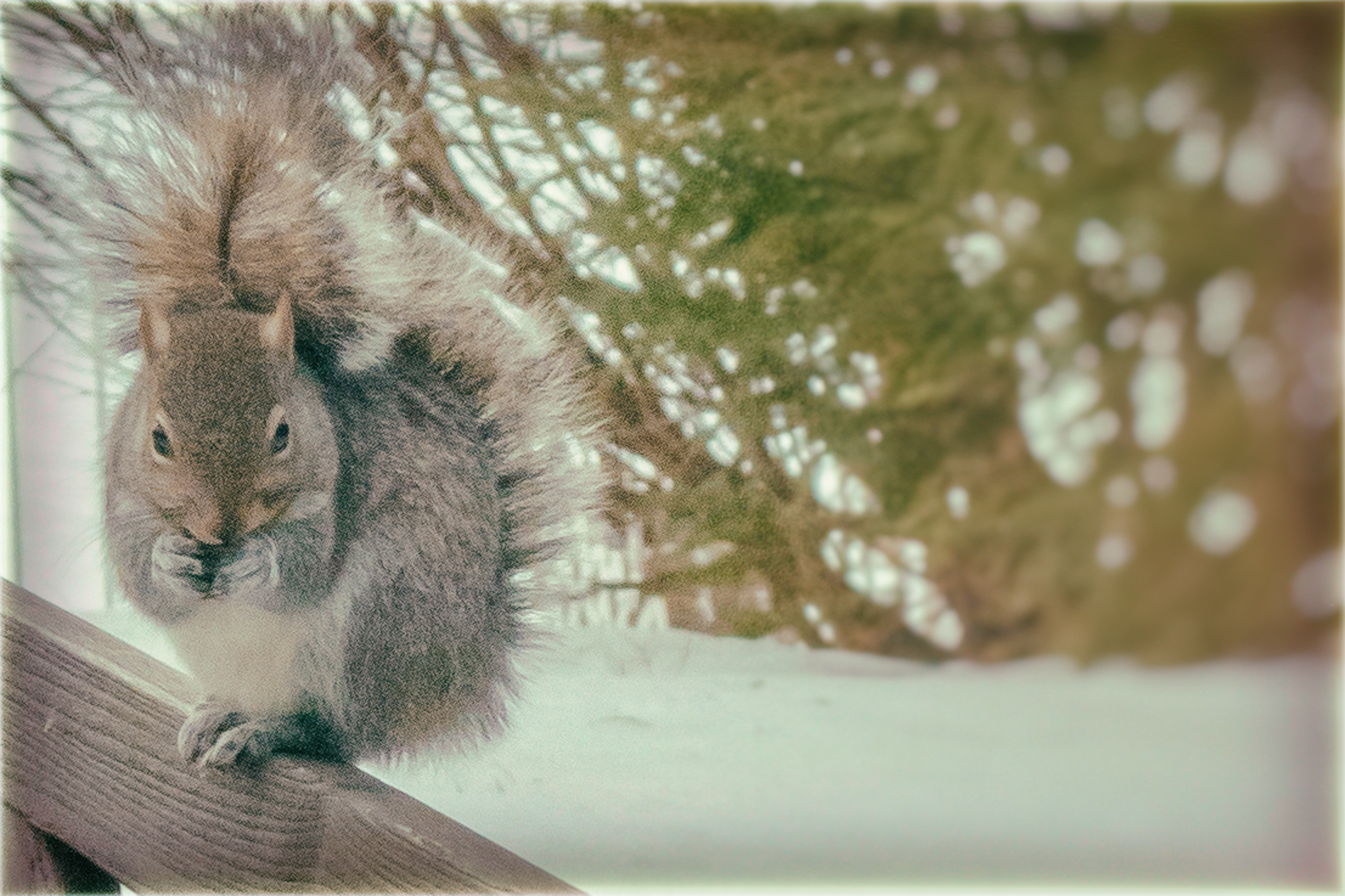
Early this morning I was sitting having a coffee when this little guy turned up. At first he perched on the head of a statue in our garden. Definitely picture worthy – but where were my cameras? I have a house full of them, and I usually have the most frequently used (Nex 5N and RX100) close to hand for when I go out. Unfortunately, because of visitors my wife had insisted that all the cameras had to be put out of sight. They were downstairs, so off I went thinking that by the time I got back the squirrel would have departed. When I got back he was still there.

I grabbed the RX100 because of it’s slightly longer zoom than the 45mm Minolta I had on the Nex. The squirrel was still quite a long way away and it was rather dark outside. This is a very extreme crop and the resulting pictures were dark and grainy. Regular processing in Lightroom couldn’t save them so I thought I’d go for the “Vintage” look (a la “Instagramme”. Here’s the result:


While I’m not particularly happy with it (it’s still very grainy and really only suitable for very small size web viewing) it’s better than nothing.

Finally a nice day


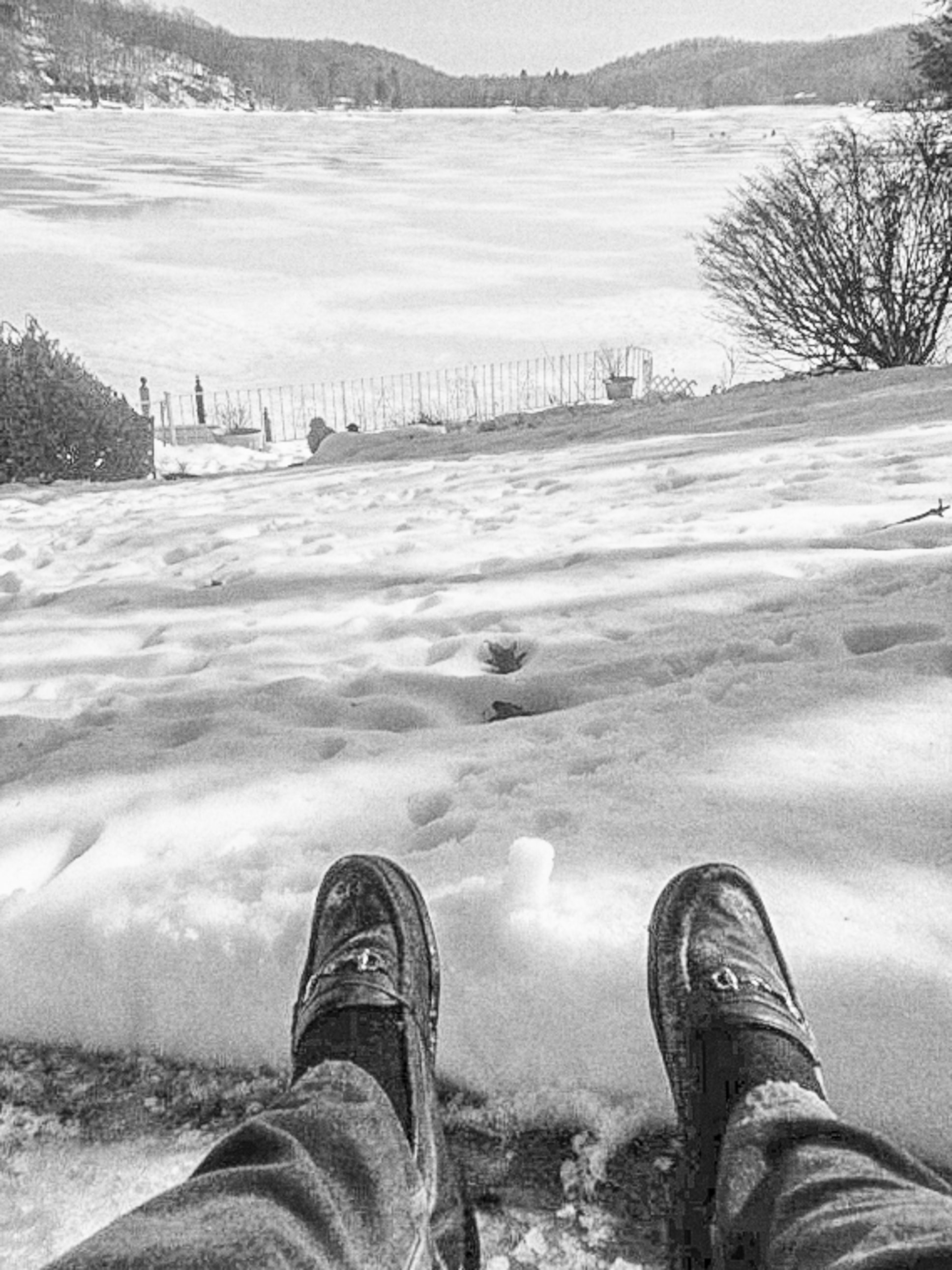
The Weather Channel (if you believe anything that they say) is threatening a “potential” significant storm towards the middle of next week. For now though the weather is gorgeous: around 50 degrees Fahrenheit. There’s still quite a bit of snow on the ground, but I was able to dig a path to our two Adirondack chairs where I sat for a couple of hours looking at the lake and watching the people on the lake who were, I think, trying to cut holes in the ice so that they could fish. Jackson wandered around for a while until he sat down on the snow (looked awfully cold) so I got out his dog bed and put it on one of the chairs. He jumped up and seemed to be very comfortable. After a couple of hours the sun started to go down and I set off to go in. Jackson didn’t want to budge so I had to pick him up and carry him in. I guess he was enjoying it.

Although I have a house full of cameras I had my antediluvian iphone 3GS with me so I used that.

1957 Issues of Life Magazine


A friend of mine collects vintage magazines. He has a novel way of displaying them. On his walls you see nicely framed covers. However, if you take the frame down you see that it isn’t just the covers that are framed, it’s the entire magazine – very clever.

He wanted to get rid of some old ‘Life’ magazines and since ‘Life’ was known for its photography I took them, eight in all. Every issue has at least one (and sometimes more than one) photo essay from well known photographers. In my set (all from 1957) were the following:

– The reigning royalty of Europe: in a democratic era they survive by serving it, June 17 by Nina Leen.
– A farewell to bright college years, June 24 by Alfred Eisenstaedt.
– Pilgrims of the USA visiting the Capitol, July 8 by Henri Cartier-Bresson.
– In image of the master the famous photographs of Mathew Brady are matched today with the pioneers own camera, September 23 by Edward Clark.
– A frenchman looks at american women, Sept 16 by Pierre Boulat.
– Gunners choice: sites favored by ducks and hunters, September 23 by N.R. Farbman and Andreas Feininger.
– Ordeal for the “Beasts”: West Point plebes get stern barracks discipline to toughen them up as the future leaders in battle, October 14 by Pierre Boulat.
– Hunting the Alaskan Brown Bear: North Americas most imposing quarry is bagged, October 14 by N.R.Farbman.
– Ghostly American legends: the early tales die hard even in this skeptical age, October 28 by Nina Leen.
– The Madonna and Child, December 16 by Marik Kauffman, Gjon Mili and Howard Sochurek.

In addition to the photo essays there are lots of great pictures scattered throughout the articles. It’s also worth looking at some of the old ads e.g. cars with fins all over the place: “The EDSEL! To give YOU a wider choice”. There are even a number of camera ads: old folding polaroids, Argus C3s etc.