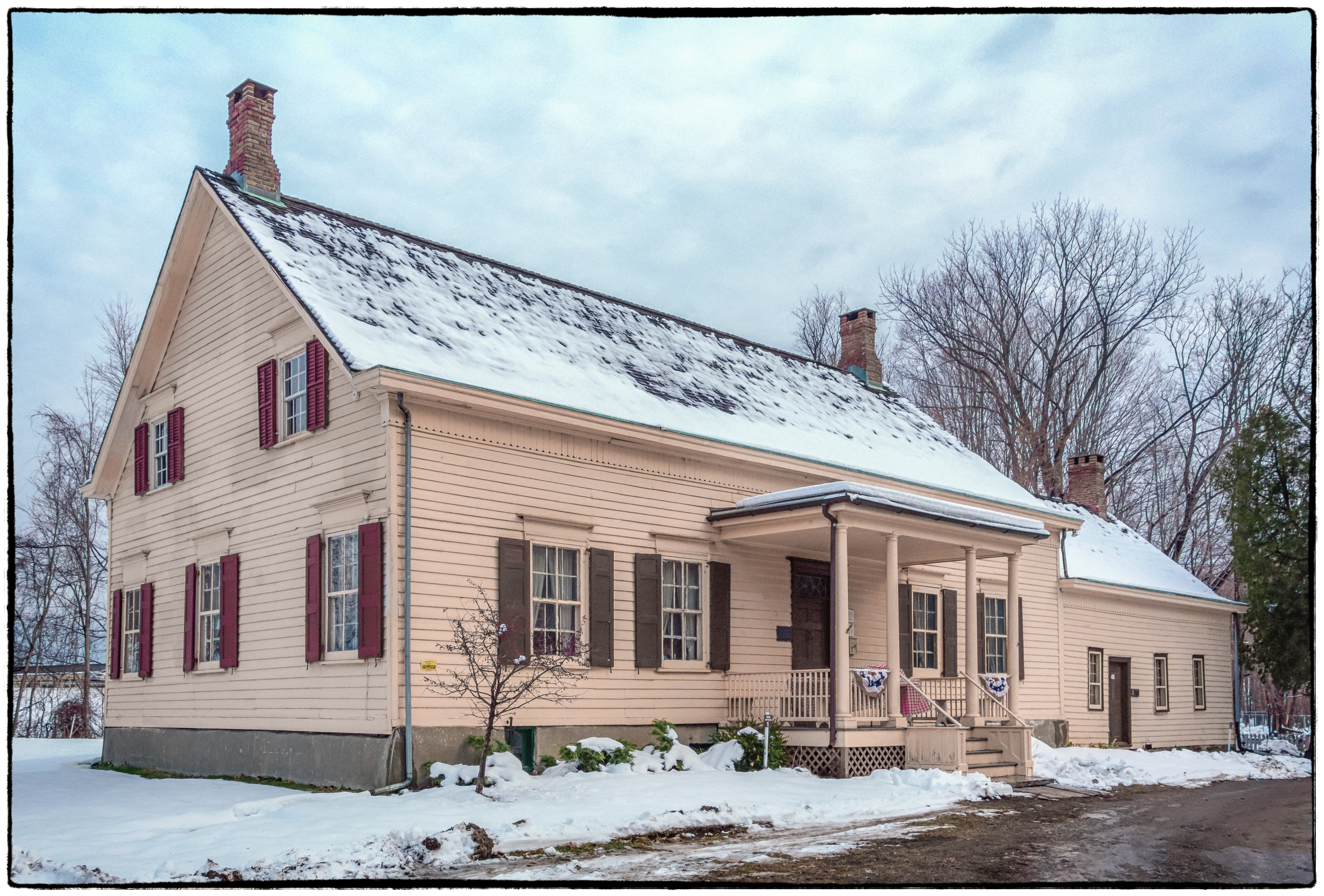
Madame Brett Homestead, Beacon, NY

According to the Hudson Valley National Heritage Area website:

In 1709, Roger and Catheryna Brett, with their children and slaves, emigrated from New York to Dutchess County and hired a Long Island architect to build this Dutch-style house. Over the next seven generations, until 1954, the home remained in the family.

Today, the Madam Brett Homestead is the oldest house in Dutchess County and is maintained by the Daughters of the American Revolution. Architectural features include original scalloped shingles, Dutch doors, and sloping dormers. The home’s interior is decorated with original Georgian, Empire, and Victorian furniture; a collection of 18th-century Chinese porcelain; silver tea sets; displays of early doll collections, textiles, and tools; a copy of Houdon’s bust of Robert Fulton; a punch bowl presented by Lafayette; plus items belonging to Catheryna Brett.

The remaining five acres surrounding the home feature a perennial garden, brook, and one of New York State’s Big Trees dating to the time of Catheryna Brett.

According to an article on the Madame Brett Homestead in Wikipedia it was, like the not too far distant Van Wyck Homestead, almost demolished – in this case to make way for a supermarket. Once again this attempt failed – thanks to the Melzingah Chapter of the Daughters of the American Revolution who were able to purchase it.

Rear view with well.

Rear View.

Rear Porch.


Wagon Wheel in the Woods (actually in the garden but I couldn’t resist the alliteration.)
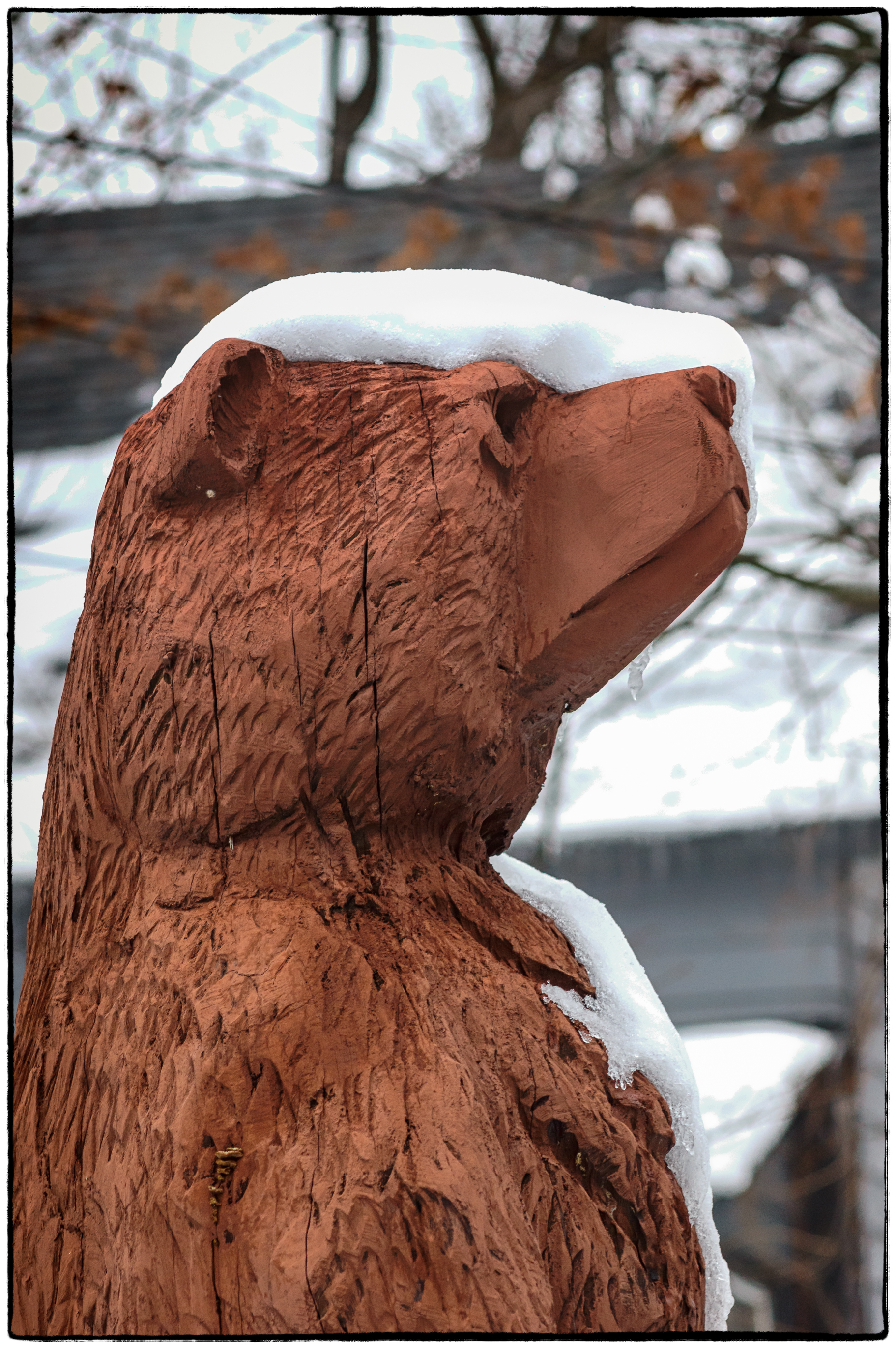
Large Bear on Route 9

This wooden bear is huge! Surely larger than life size. Bears can’t get this big can they? If they can I hope I never meet one. Come to think of it I don’t think I want to meet any kind of bear in the wild – even a small one. I thought it was somewhat quirky, especially with the snow on its head.

Van Wyck Homestead, Fishkill, NY

Rear view from garden.

The Hudson Valley Heritage Area website describes it as follows:

This Dutch Colonial house was built by farmer Cornelius Van Wyck in multiple phases, beginning with a simple one- to three-room dwelling in 1732 and ending with an elaborate addition sometime before 1757. When Fishkill was chosen as the site of a supply depot to serve the northern branch of the Continental Army during the Revolutionary War, the home became the headquarters of the sprawling complex. It was visited by numerous dignitaries, including George Washington, the Marquis de Lafayette, Alexander Hamilton, and John Jay. Here also occurred the mock trial of Continental spy Enoch Crosby, upon whose exploits James Fenimore Cooper allegedly based protagonist Harvey Birch in his novel, The Spy.

Today, the home contains original woodwork, archaeological relics from the depot, 18th- and 19thcentury furniture, and portraits by noted itinerant painter Ammi Phillips. Displays also highlight various Colonial crafts, including woodworking and weaving. A self-guided trail takes visitors past historic monuments and the foundations of farm outbuildings.

Wood chopping anyone?

Axe and chopping block

Front view.

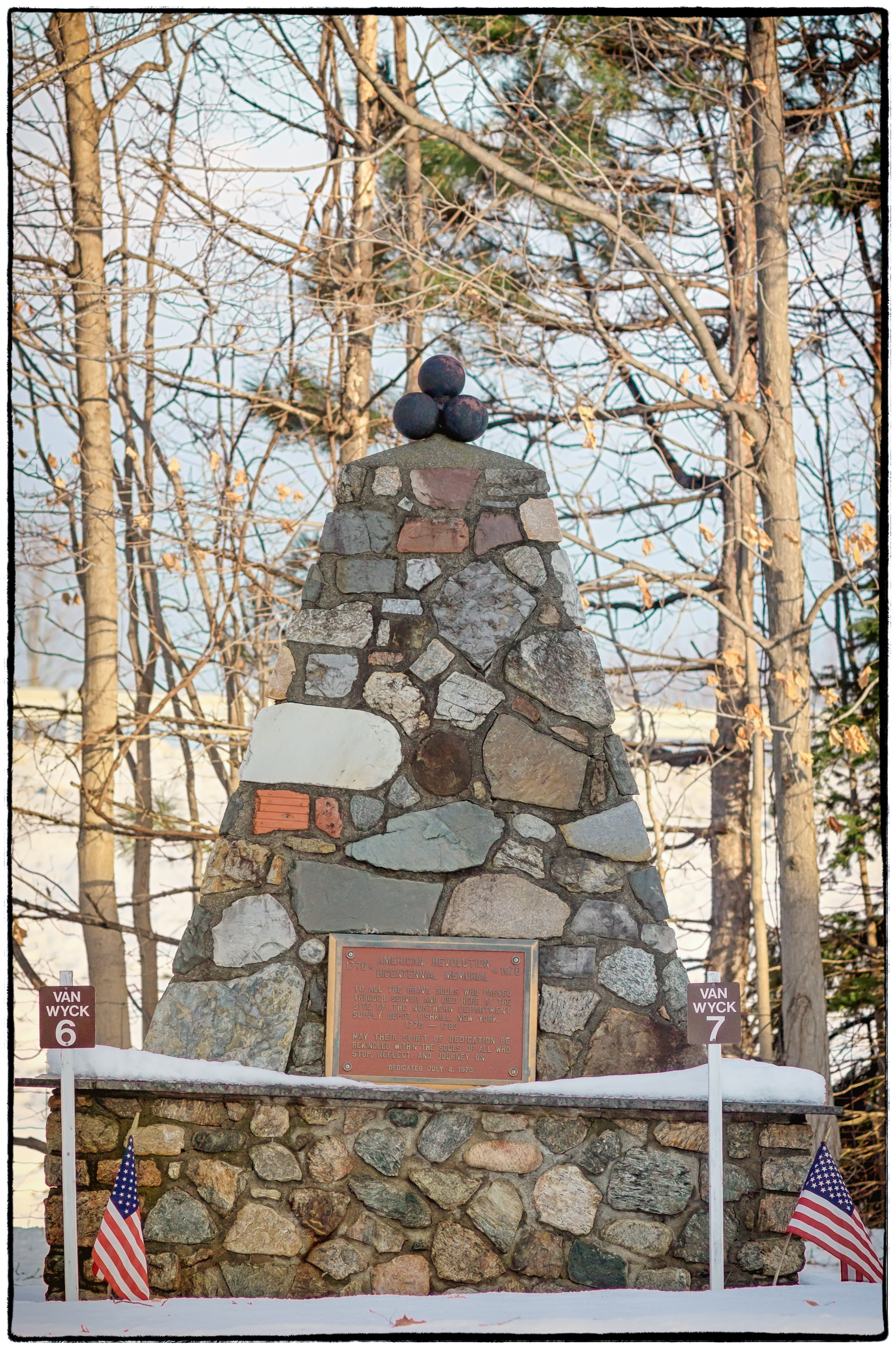
According to the self-guided tour brochure this is the Bicentennial Monument in celebration of which the Historical Society: “…erected this pyramid consisting of stones donated by over 50 historic sites. Among these are stones from Saratoga, Yorktown, Bennington and Fort Ticonderoga. The museum has a guide to which stones came from where.” Continuing with the brochure: A road crew digging a trench on Jackson Street in Fishkill discovered a skeleton that was determined to be that of an Indian Maiden in her late teens.” She was laid to rest under this pyramid.

I arrived early in the morning expecting everything to be closed, but it seemed that there was a craft show later in the day and someone was there tidying and cleaning in preparation. The told me that the house was almost demolished to make way for the I84 intersection. The guided tour brochure elaborates: “In the 1960’s the Van Wyck Homestead was going to be torn down to make a cloverleaf. The Fishkill Historical Society was formed in 1962 and was able to save the structure. Across Route 9 in the center of the cloverleaf is where remains of the Revolutionary blacksmith shop were found. Facing Route 9 and looking to the right you can see the I84 entrance ramp that runs parallel to the property. This change is what saved the house.”

Thank God they didn’t destroy this beautiful and historic house to make way for a highway access point.

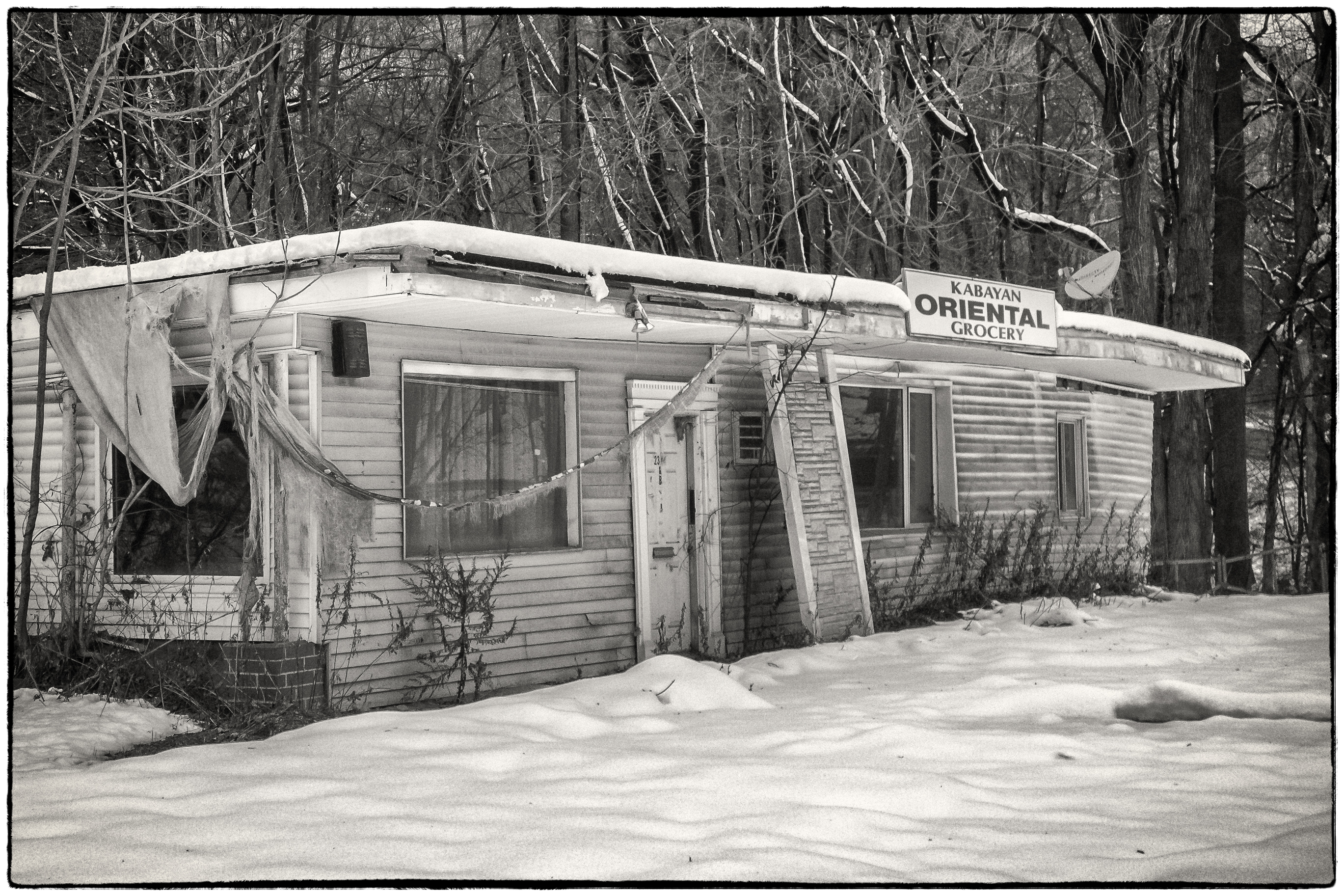
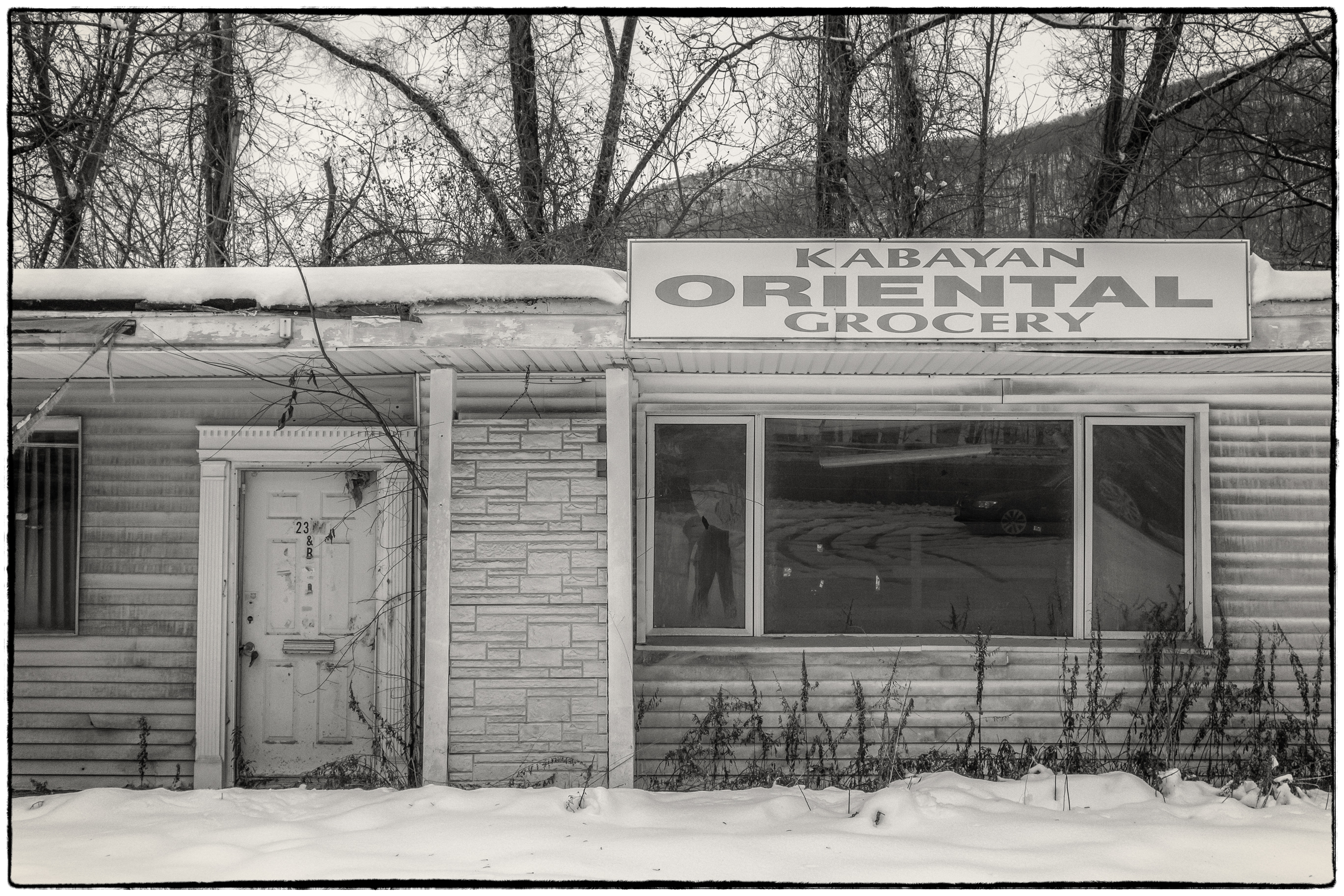
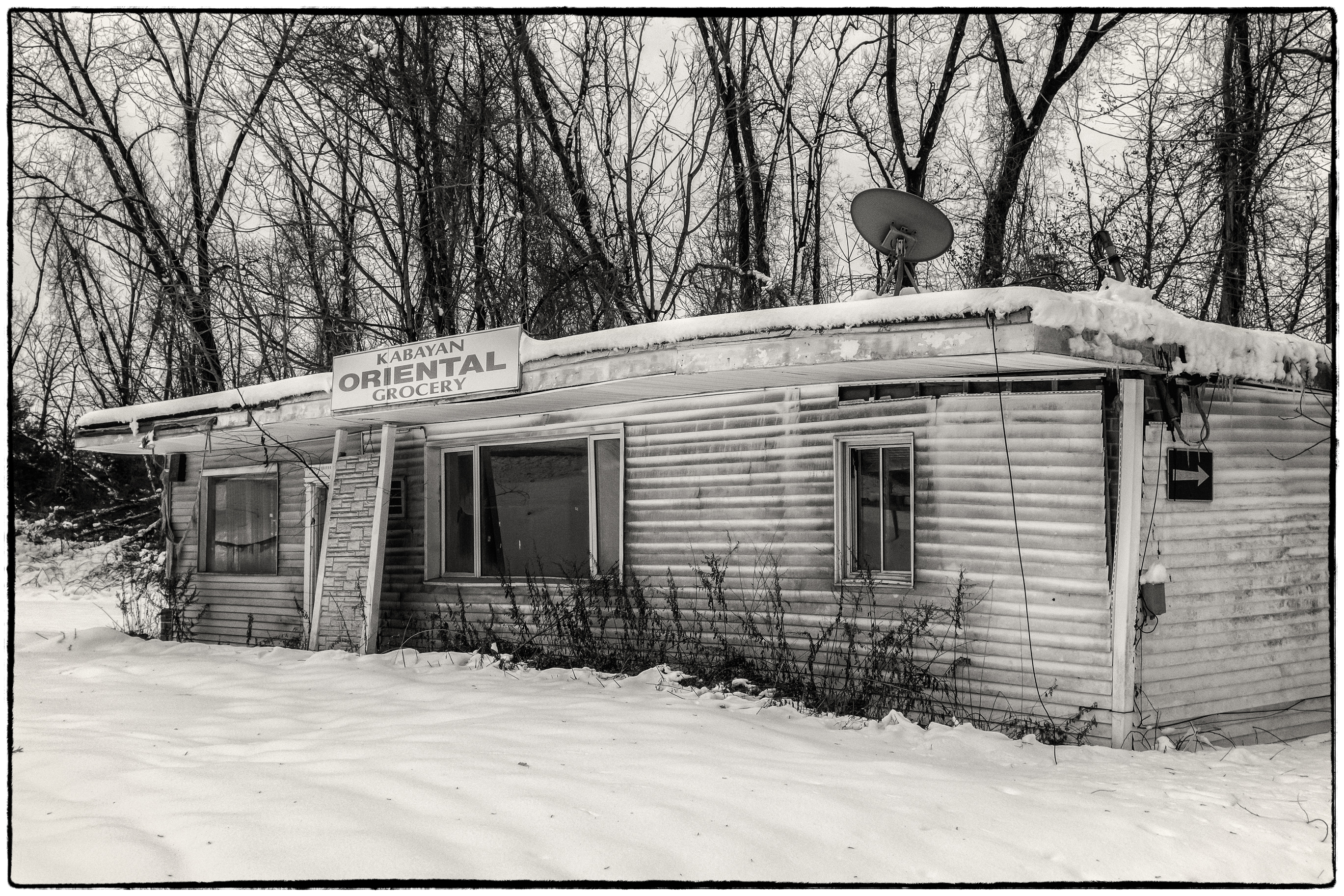
Kabayan Oriental Grocery

This former store sits abandoned by the side of Route 9. It’s a bit “off the beaten track” and seemed to me to be an odd location for an oriental grocery. Possibly this is the reason it failed. The word “Kabayan” caught my eye. My wife is originally from the Philippines and the word sounded filipino to me. So I looked it up and indeed it means ‘compatriot’ or ‘comrade’ in Tagalog.

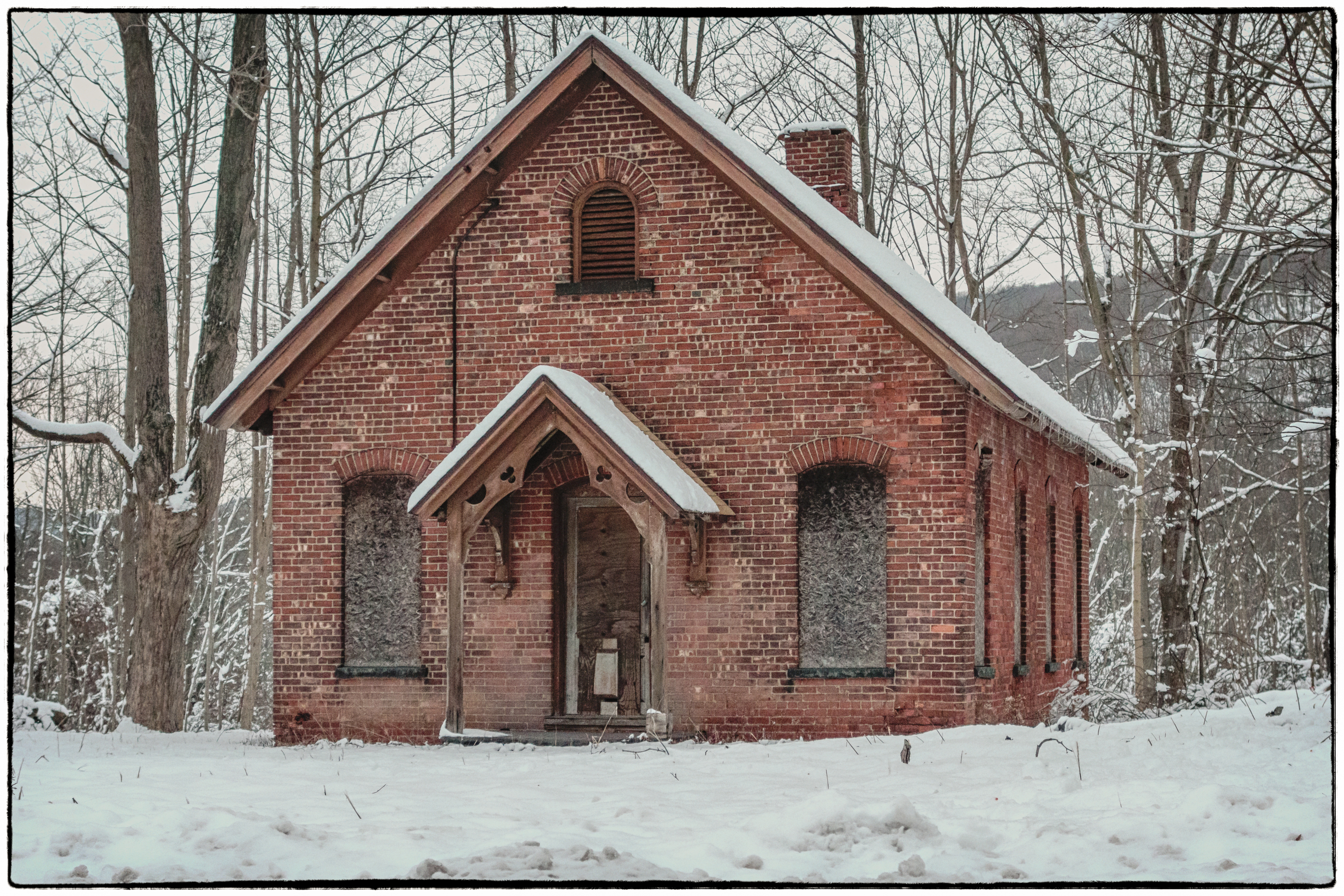
Abandoned Schoolhouse

I’d read about this schoolhouse in “Hudson Valley Ruins. Forgotten Landmarks of an American Landscape. ” by Thomas E. Rinaldi and Robert J. Yasinsac where it’s described as follows:

District No. 8 School, McKeel Corners. Built c. 1875, this fine example of a country schoolhouse stands about two miles east of Cold Spring near the northeast corner of the intersection of what was once known as the Albany Post Road and the Cold Spring-Carmel Turnpike. The hilly area surrounding the school once supported active farms. Many of these were abandoned over the course of the nineteenth century as industrialization and westward migration led to a downturn in agriculture that was particularly felt in Putnam County. Schools like this continued to serve the families that remained until centralization in the twentieth century caused many of these archetypal building to be abandoned. In 1996 the state Office of Parks, Recreation and Historic Preservation acquired the building and the land around it. Now part of the Clarence Fahnestock Memorial State Park, the schoolhouse remains empty…”

For some reason I had difficulty finding it despite the quite precise directions. I thought it was farther south than it is, and back in the woods. It’s actually right on the east side of Route 9 (The Albany Post Road mentioned) a little north of the intersection with Route 301 (The Cold Spring – Carmel Turnpike mentioned).