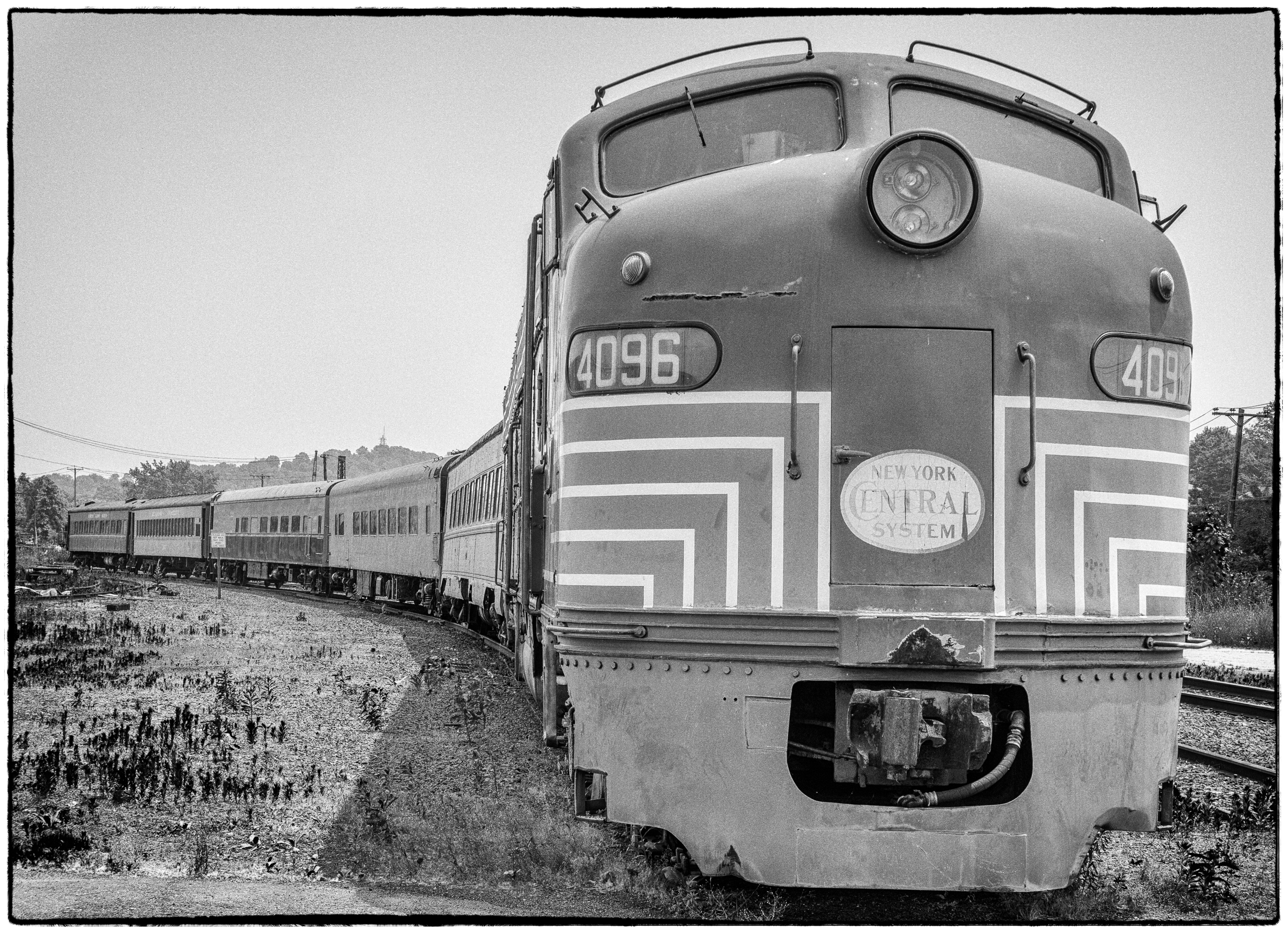
New York Central Locomotive

The museum’s web site provides the following information:

As built, this was an E-7 diesel-electric demonstrator unit which was labeled “The Train of Tomorrow”, a four-car domed streamliner. This train made two visits to Connecticut – once in November 1948 and again in April 1949. In 1964, it was converted to an E-8 by the Union Pacific (UP) which ran it for passenger service between Chicago and the West Coast. In May, 1971, they sold it to AMTRAK which, in 1974, replaced the two 1200 hp ‘567’ engines installed by UP with two 1300-hp ‘645’ V-12 prime mover engines making it an E-9A unit with 2600-hp. AMTRAK first used it for service out of Boston and then out of Virginia on the AutoTrain run to Florida. It is said to have made the last run when AutoTrain was suspended. Before AMTRAK resumed that service 417 was sent to the boneyard in New Haven where it was rescued by the Connecticut Valley RR Club. Desiring to show the colors of something like it that ran in New England they thought of New York Central’s Boston to Albany run which was once an E-8. They chose Number 4096 as it is the next number after the last E-series the New York Central ran (although this engine never ran as NYC).

Taken in June, 2013 with a Sony Nex 5N and 18-55mm kit lens at the Railway Museum in Danbury, Connecticut.

Spider in a Train Station Window

When I was working I took the train every day from Scarborough Station in Westchester County to Grand Central Terminal. The platform is right on the Hudson, separated from it by a number of windows. Before they renovated the station a few years ago the windows were covered with spider webs. Here’s one of the spiders. After the renovation the spiders seem to have disappeared.

A 2010 vintage shot taken with a Panasonic Lumix ZS-3.

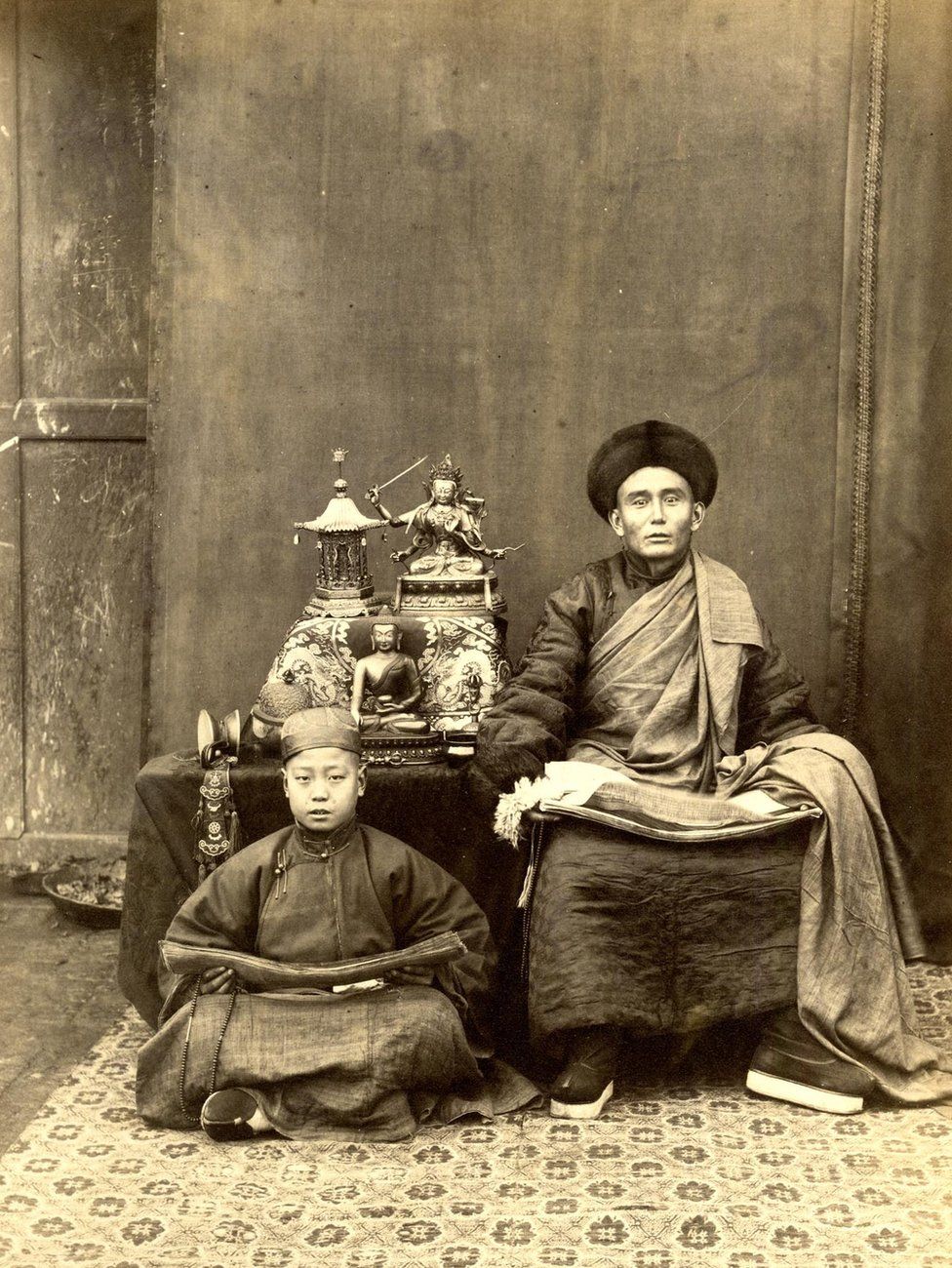
China as it once was – photographs by Thomas Child

This photograph by Thomas Child, titled Mongolian Lama, is one of the earliest photographic portraits of a religious figure in Peking. In the 19th century, the term lama referred to any Tibetan Buddhist monk or teacher. The lama and his pupil both hold prayer beads and bundles of sutras in their laps. Displayed neatly on the table are bronze sculptures and sacred Tibetan ritual objects including a skull cup.

Photographs of Peking, now known as Beijing, made by Thomas Child in the 1870s and 1880s are to go on show in London’s Chinatown as part of Asian Art in London season.More than 30 original photographs from the Stephan Loewentheil Historical Photography of China Collection, the largest holding of historical photographs of China in private hands, are included in the show. During two decades as a resident, Child documented life in the city with his camera.

Source: Rare early photographs of Peking – BBC News

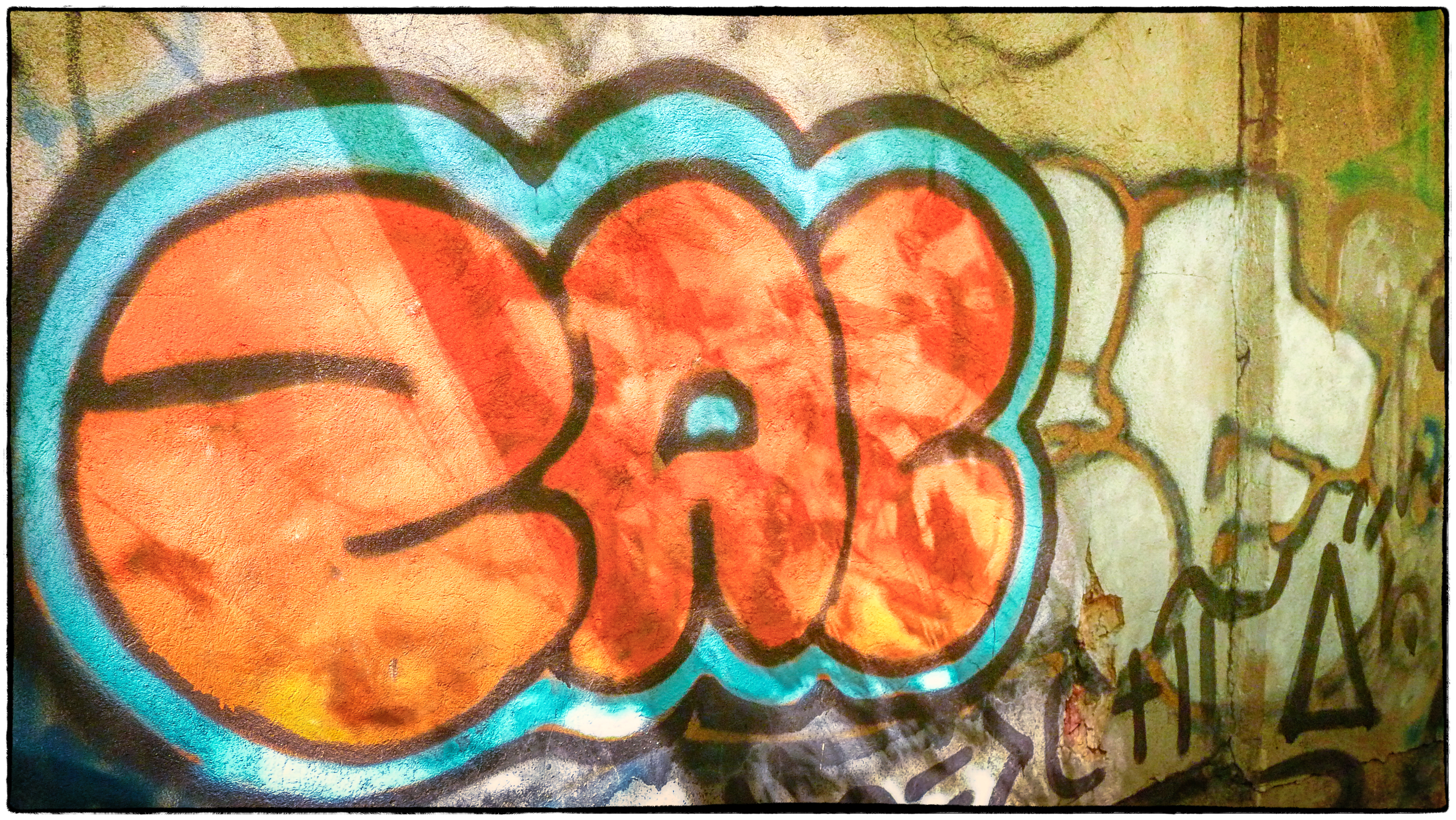
Grafitti

Although I took this back in 2011 I have a very clear memory of taking it. I was at the old, disused waterworks at Pocantico Lake walking along the side of one of the buildings (actually the one in the first picture in the linked post). The trail was narrow and passed between a wooded hillside and the building so it was hard to get far enough away from the building to take the picture. Luckily the camera (a Panasonic Lumix ZS-7) had a lens that was wide enough to allow me to get the picture.

Although the side of the building was very much in shadow I recall that enough light was getting in to make the grafitti very bright and colorful. Unfortunately, when I got the picture on the computer it didn’t look at all like I had expected: very dull, and with a strong green tint (a problem with this camera). At the time my post-processing skills weren’t advanced enough to be able to fix the problems.

As I often do I was today browsing through old pictures with the view to delete some of them when I came across this one. I thought I’d see what I could do with it now. It seems that my editing skills have improved because with only minimal effort I was able to come up with something that was much much closer to what I remembered having seen.