At the Bookstore

Source: Creativity Corporation by Mr. Fish via And Then The Fun Began

I’ve always been an avid reader and before I got my Amazon Kindle part of my weekend routine was to visit our local bookstore and spend an hour or two browsing. Now much of my reading is done electronically (although not photography books which I still buy in hard copy. The photographs just don’t work on the Kindle), but I still go to the bookstore from time to time. I find a couple of interesting books, go to the coffee shop, have a coffee and read for a bit.

Of course, I always look at the photography books. Generally there are two sections. One, called “Digital Photography” that for the most part contains books on photographic technique and cameras. The second is usually called “Art and Photography” and contains books by photographers e.g. I recently noticed books by Sally Mann, Annie Leibovitz, Dorothea Lange, Drew Barrymore and a bunch of books by Ansel Adams.

Of late I’ve noticed more of a certain kind of book in the first section, books not focused on individual cameras, not focused on what f-stop to use in a certain situation. For want of a better word I’ll say that I’m seeing more books devoted to inspiration, vision, creativity etc. Some Examples:

Achieving your potential as a photographer.
The Creative Fight.
Inspiration in Photography.
Learning to see creatively.
The Essence of Photography.

Can it be that photographers (mostly amateur photographers I imagine) are finally realizing that sophisticated cameras and a good knowledge of photographic technique can only take you so far? The problem is that it’s quite easy to learn how to use a camera. It’s a bit more difficult (but not much) to learn photographic technique. At a certain point I realized that I was buying books on photographic technique and my pictures weren’t getting any better. I knew as much about technique as I needed to. Now it was just practice and developing some kind of vision. The latter is the hard part. I’ve read some of the above books and, while interesting, I’m not at all convinced that they helped much. In my darker moments I think that either you have vision/creativity/inspiration etc. or you don’t – and if you don’t there’s not a lot you can do about it. Then the gloom dissipates and I start to think that with persistence, resolve and practice some kind of vision will evolve. As Henri Cartier-Bresson once said: “Your first 10,000 photographs are your worst.” Someone I came across on a photography forum added something like: “And in my case the second 10,000 are not much better”. I couldn’t agree more.
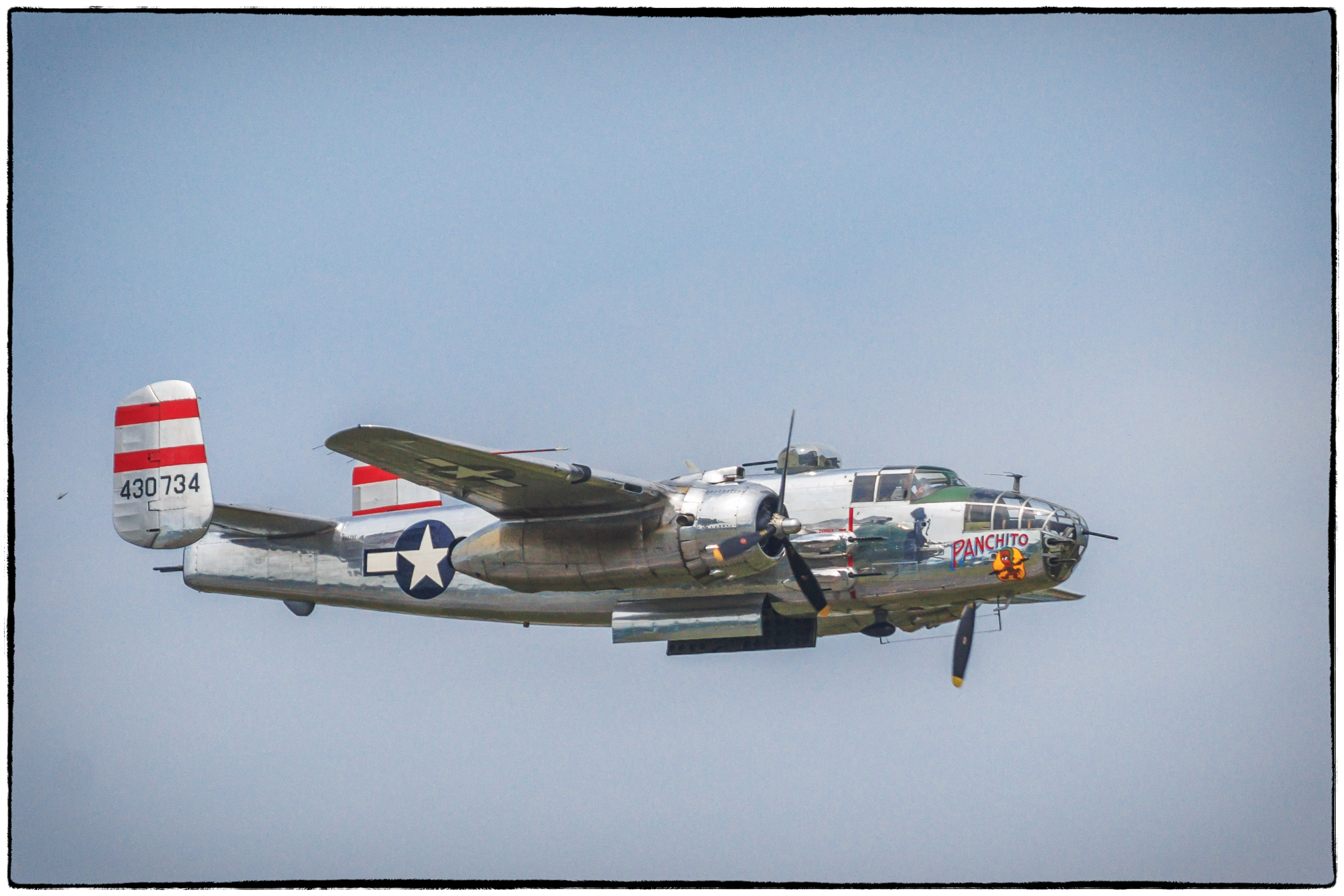
NY Air Show – B25 Mitchell

After the modern technology of the F/A-18 we now step back in time to World War II (WWII) with the B-25 Mitchell, the plane used in the famous Doolittle Raid shortly after the attack on Pearl Harbour. The Boeing website describes the B25 as follows:

The North American B-25 Mitchell, a twin-engine bomber that became standard equipment for the Allied air forces in World War II, was perhaps the most versatile aircraft of the war. It became the most heavily armed airplane in the world, was used for high- and low-level bombing, strafing, photoreconnaissance, submarine patrol, and even as a fighter and was distinguished as the aircraft that completed the historic raid over Tokyo in 1942.

It required 8,500 original drawings and 195,000 engineering man-hours to produce the first one, but nearly 10,000 were produced from late 1939, when the contract was awarded to North American Aviation, through 1945.

Named for famed airpower pioneer Brigadier General William “Billy” Mitchell, it was a twin-tail, mid-wing land monoplane powered by two 1,700-horsepower Wright Cyclone engines.

Normal bomb capacity was 5,000 pounds (2268 kilograms). Some versions carried 75 mm cannon, machine guns and added firepower of 13 .50-caliber guns in the conventional bombardier’s compartment. One version carried eight .50-caliber guns in the nose in an arrangement that provided 14 forward-firing guns.

As a child I was fascinated by WWII aircraft as I suspect where many of my generation. I was born not long after the war and my father was a soldier in the British army during it as was one of my uncles. My father didn’t really like to talk about the war, but my uncle did. He would regale us with stories of his military prowess. Sometimes after he left my father, who was in the same regiment, would turn to me and say: “you know none of that was true”. One of the famous victories that stood out was, of course, the Battle of Britain – an air battle in which, so the story goes, a relatively small number of British pilots stood up to the might of the German Luftwaffe. Spitfires, Hurricanes, Messerschmitts and Focke-Wulfs (although the latter did not become operational until after the Battle of Britain was over) were all the well known to us. US aircraft were also known to us, although perhaps not as well as the their British equivalents. I certainly knew about the B25 and the Doolittle Raid. My friends and I used to make Airfix scale models of the best known planes. Some of my friends were really good at it and produced beautiful creations. I seemed to lack the skill to do it properly: I always managed to get glue all over my fingers and subsequently all over the kit. My attempt at the camouflage paint also always seemed to leave something to be desired. None of this stopped me building them though. After I’d done one I’d attach thread to it and tack it to the ceiling of my bedroom so that it would be hanging as if flying. These kits are still available and sometimes when I’ve seen them in stores I’ve been tempted to buy one to see if I could do a better job now.

So, of course, it was with some nostalgia that I watched this venerable old WWII warbird take to the skies.

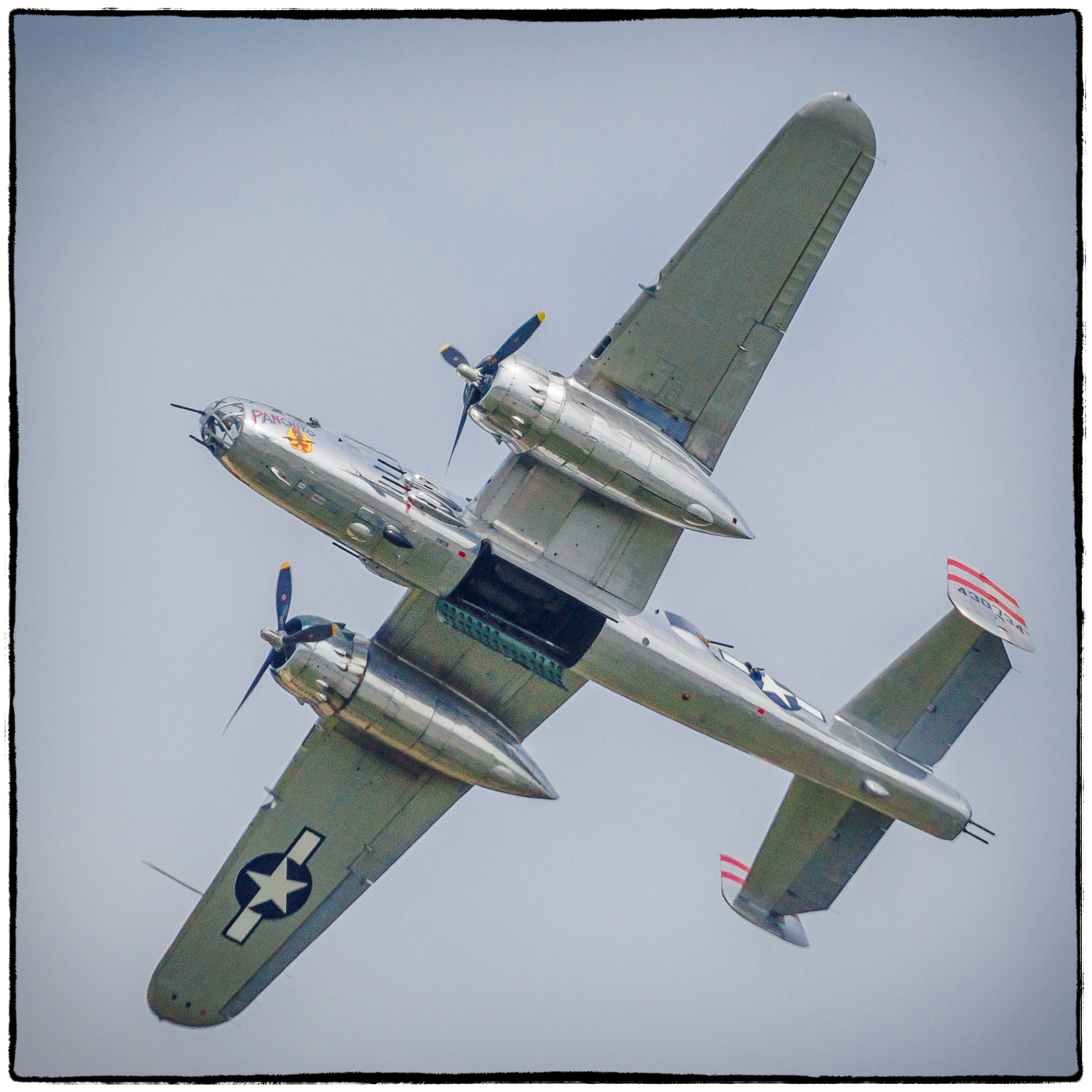
Bomb bay doors open.

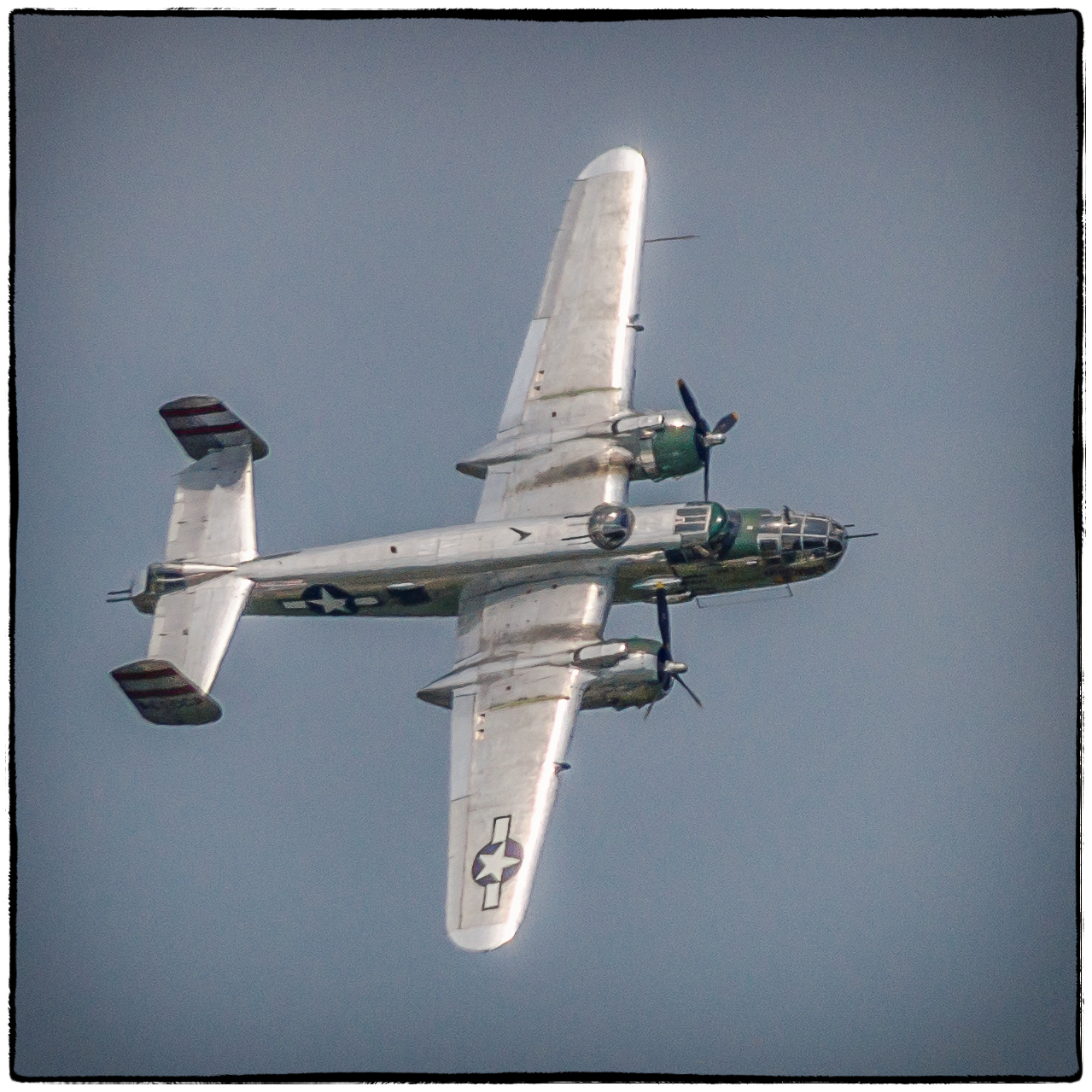
Top View.

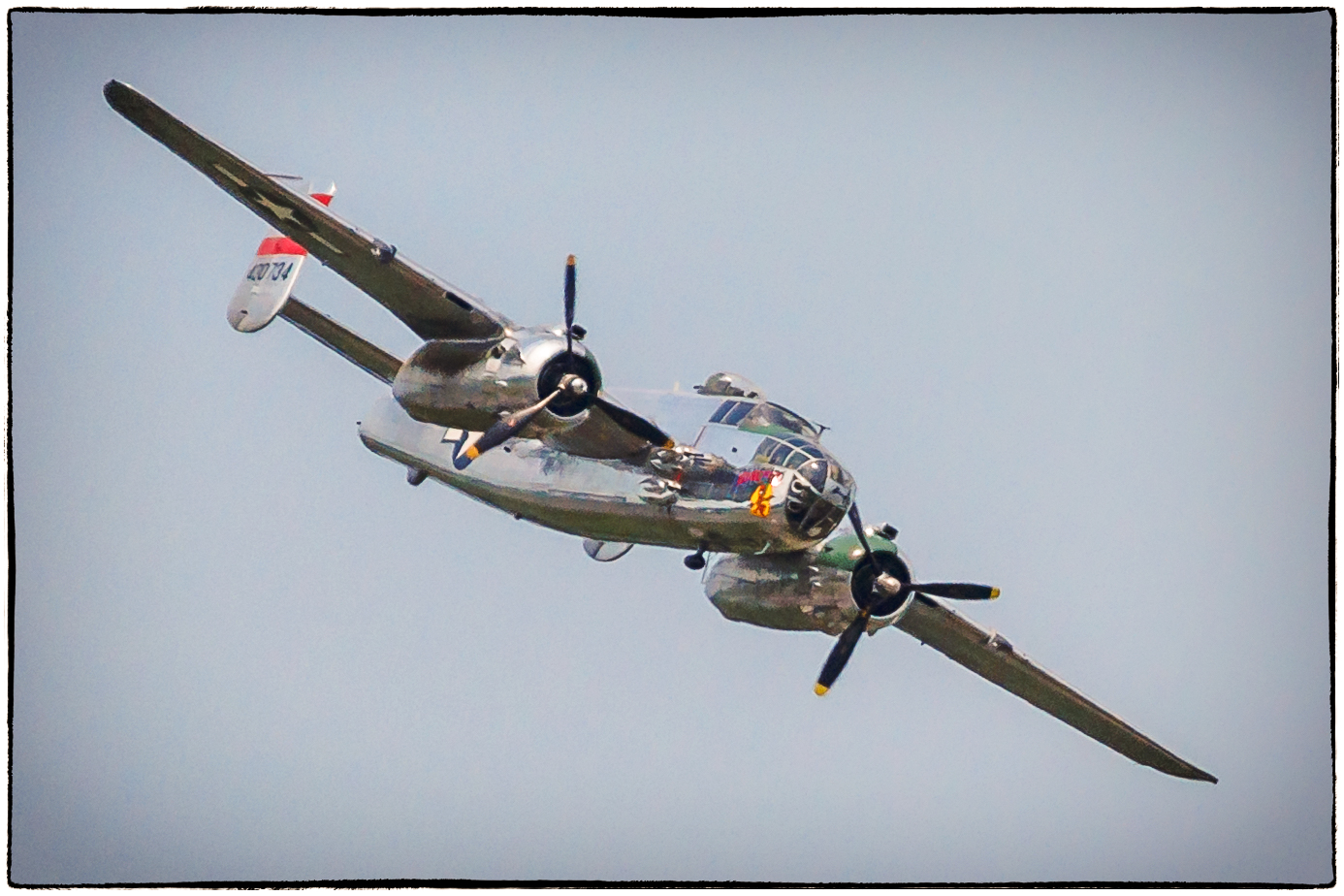
Front View.

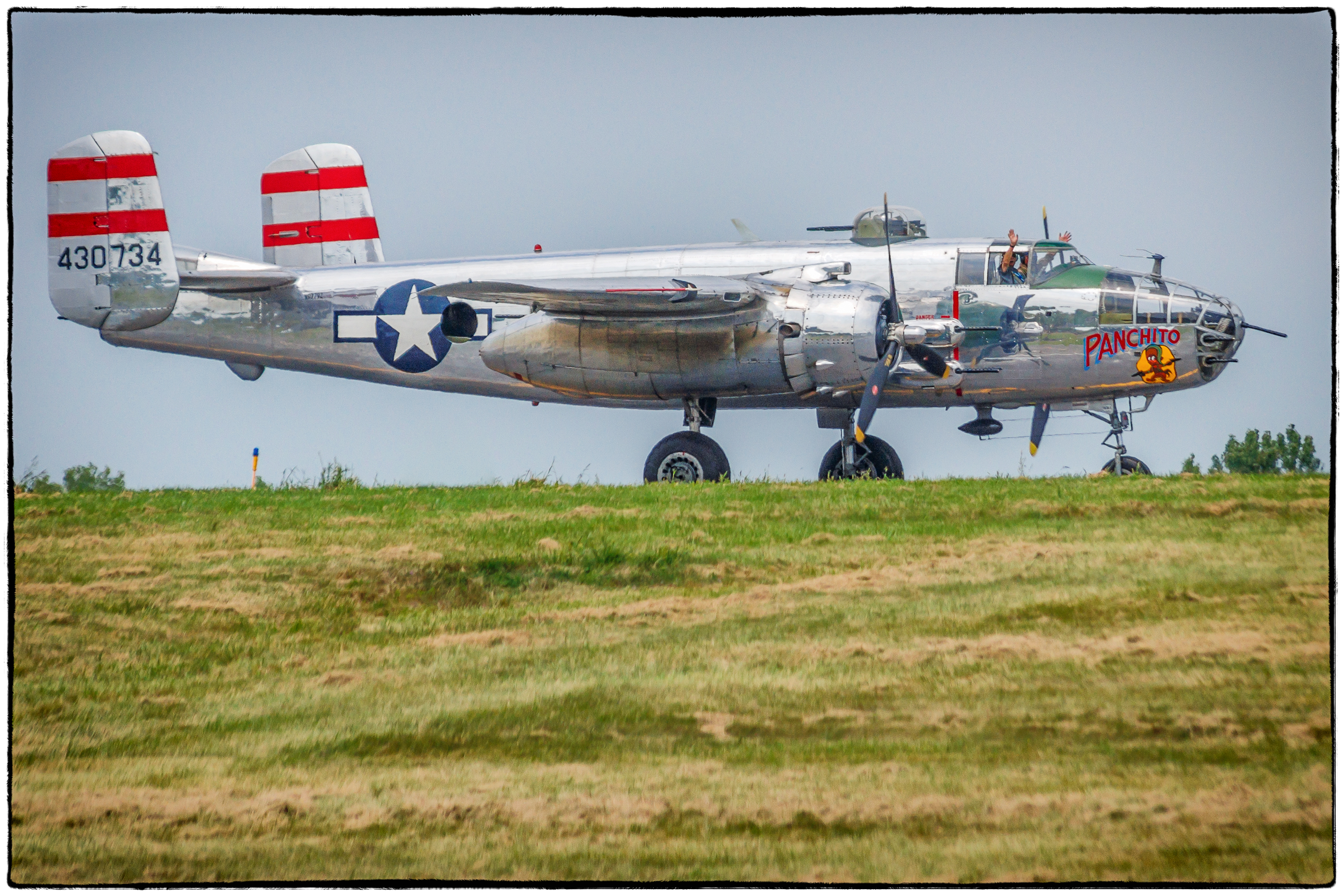
Taxiing and waving goodbye.

A tree rose in our garden

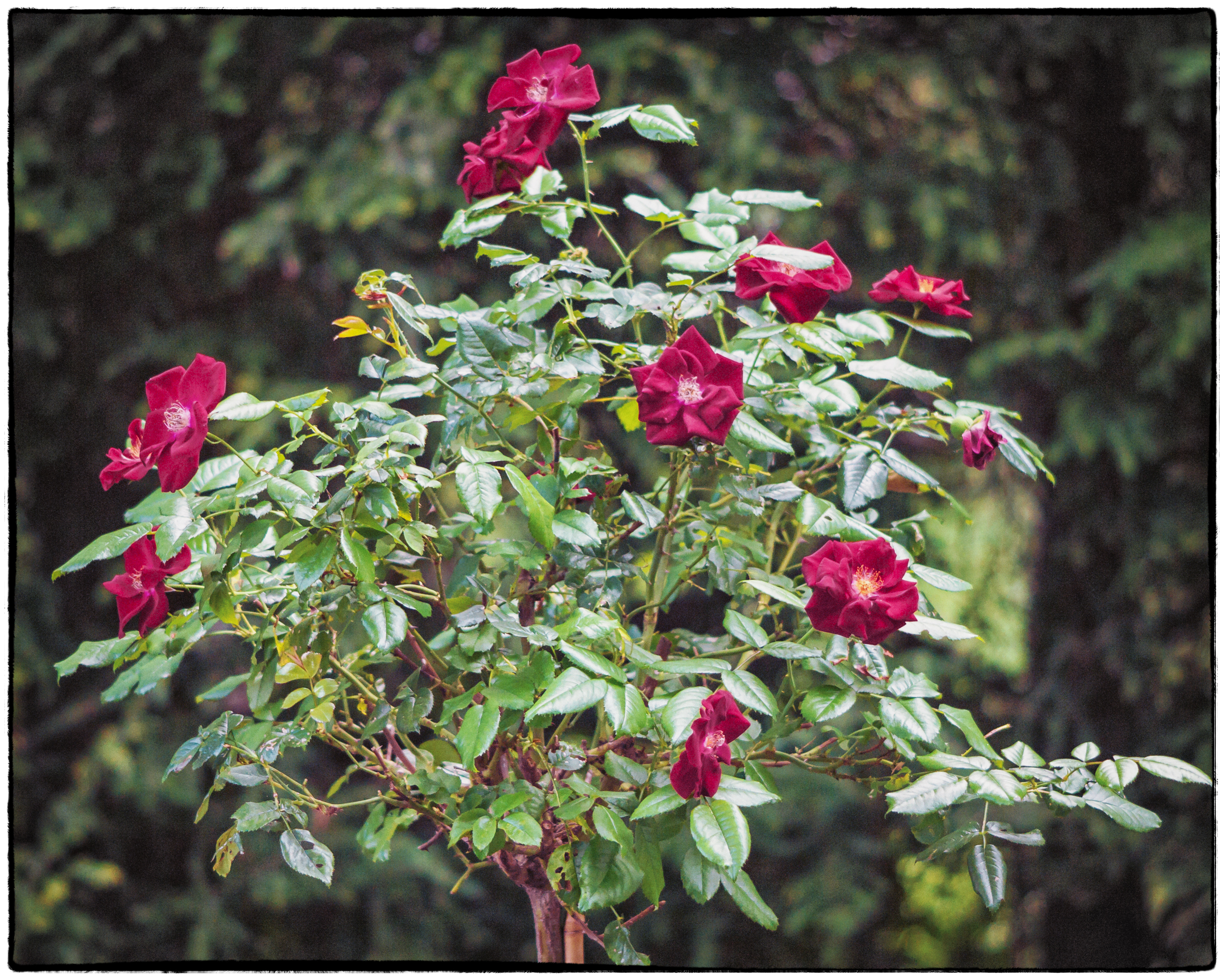
Another one of my wife’s roses: this time a tree rose. Taken with a Sony Alpha 500 and Minolta AF 100-200mm f4.5 lens. I had a lot of difficulty with the color of the roses and looking out of the window right now I can see that the reds are still not what they should be. I’m disappointed in the way this camera renders reds. They seem to be over saturated and over exposed. I think the hues are off too. Try as I may I don’t seem to be able to reliably fix them. Sometimes I get closer than others. Still, even if the reds are a bit off I like the picture. I find the swirly out of focus areas to be “interesting”

A Guide to Contemporary Indian Photography

Mother and Elsa: from Life is Elsewhere by Sohrab Hura

I’ve always wondered about what new photography is happening in India but never really knew quite how dynamic Indian photography is until I asked Sohrab Hura (Magnum member and author of the truly fantastic Life is Elsewhere) about it. Sohrab is helping to run the Delhi Photo-Festival – which takes place at the beginning of November and doubles up with Photo Kathmandu if you’re thinking of an India/Nepal Photo-Festival double-header. 

via Colin Pantall's blog: A Guide to Contemporary Indian Photography.

Interesting overview of photography in India (and to a lesser extent other parts of South Asia). I especially liked the links to the work of various Indian photographers. This will make it much easier for me to pursue this topic further – although as Mr. Hura points out: “Many of the photographers in India don’t have websites so you’ll need to dig a bit to see their works and I’m sure I’ve missed out on quite a few other names as well.”