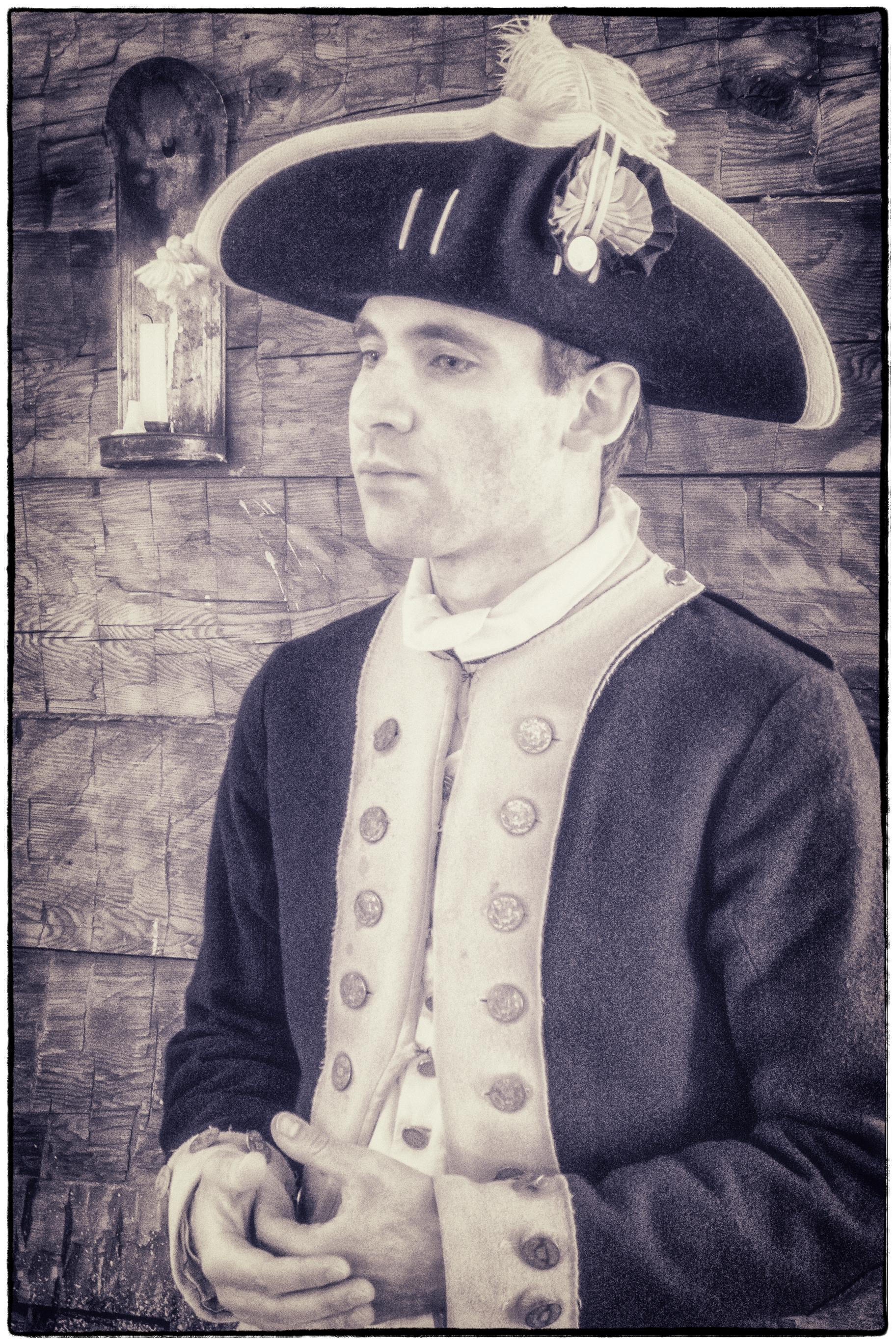
Taken during a visit to the New Windsor Cantonment where the American army finished up the Revolutionary War while waiting for peace. This guide is in the uniform of a Massachusetts regiment. He also did the musket firing and blacksmithing demonstrations. As I was processing this picture I noticed that it was taking on a kind of “painterly” quality, which I then thought to enhance. This monochrome version looks to me like a sketch. I love his expression. It looks as if he’s gazing out wistfully over a Hudson Valley landscape finally understanding that the Revolutionary War he’d been fighting for 8 years was now over and he could go home at last. Of course the reality is rather different. He’d been talking a mile a minute explaining the history of the cantonment. My friend Ken must have asked a question (it must have been Ken because we were the only two people there and if it had been me he would surely have looked in my direction) and he paused briefly to listen before charging off again with an answer. Quite amazing (And very lucky. Although as someone once said: “I’m a great believer in luck. The harder I work, the more of it I seem to have.”) that I got this brief, tranquil moment in between.
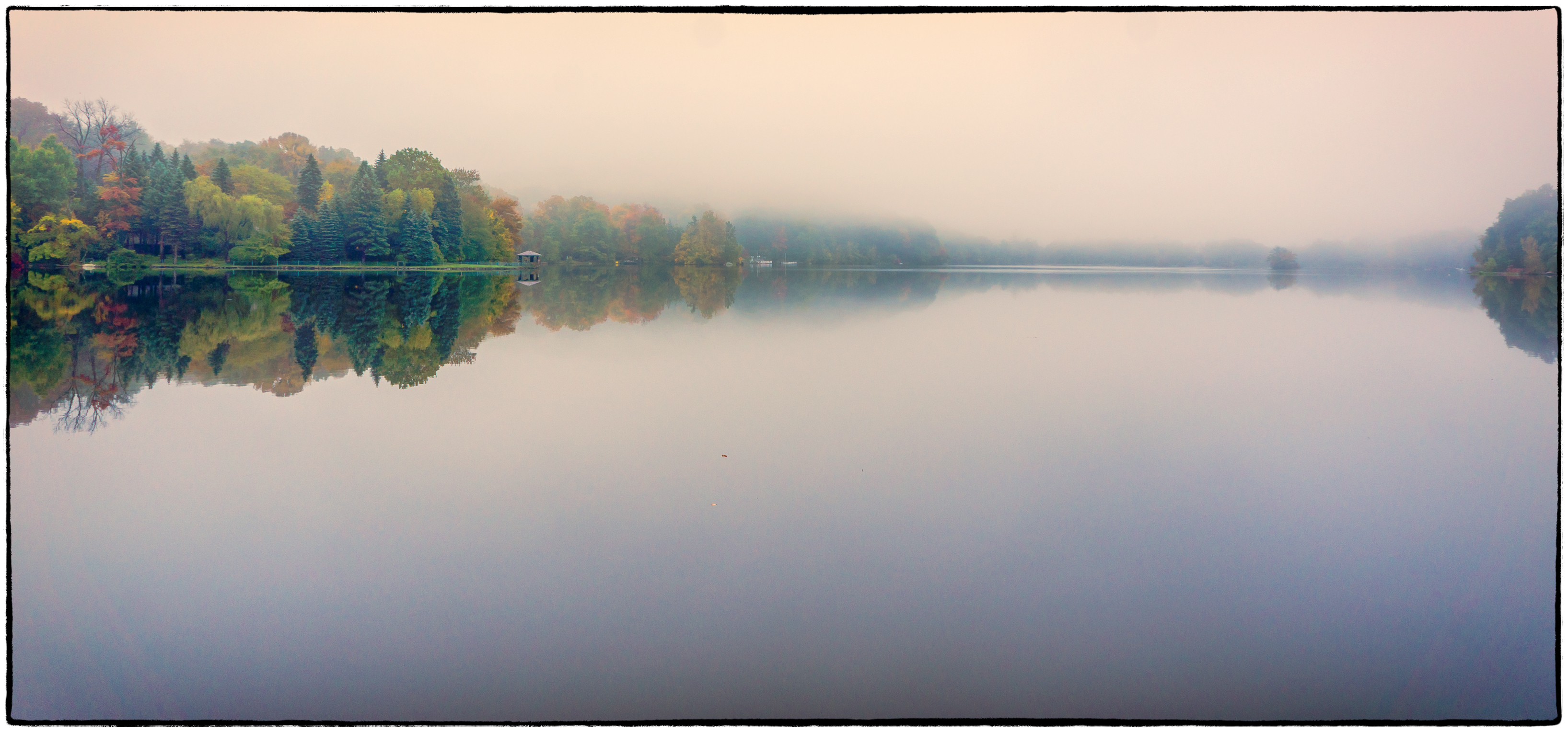
Lake View – Morning
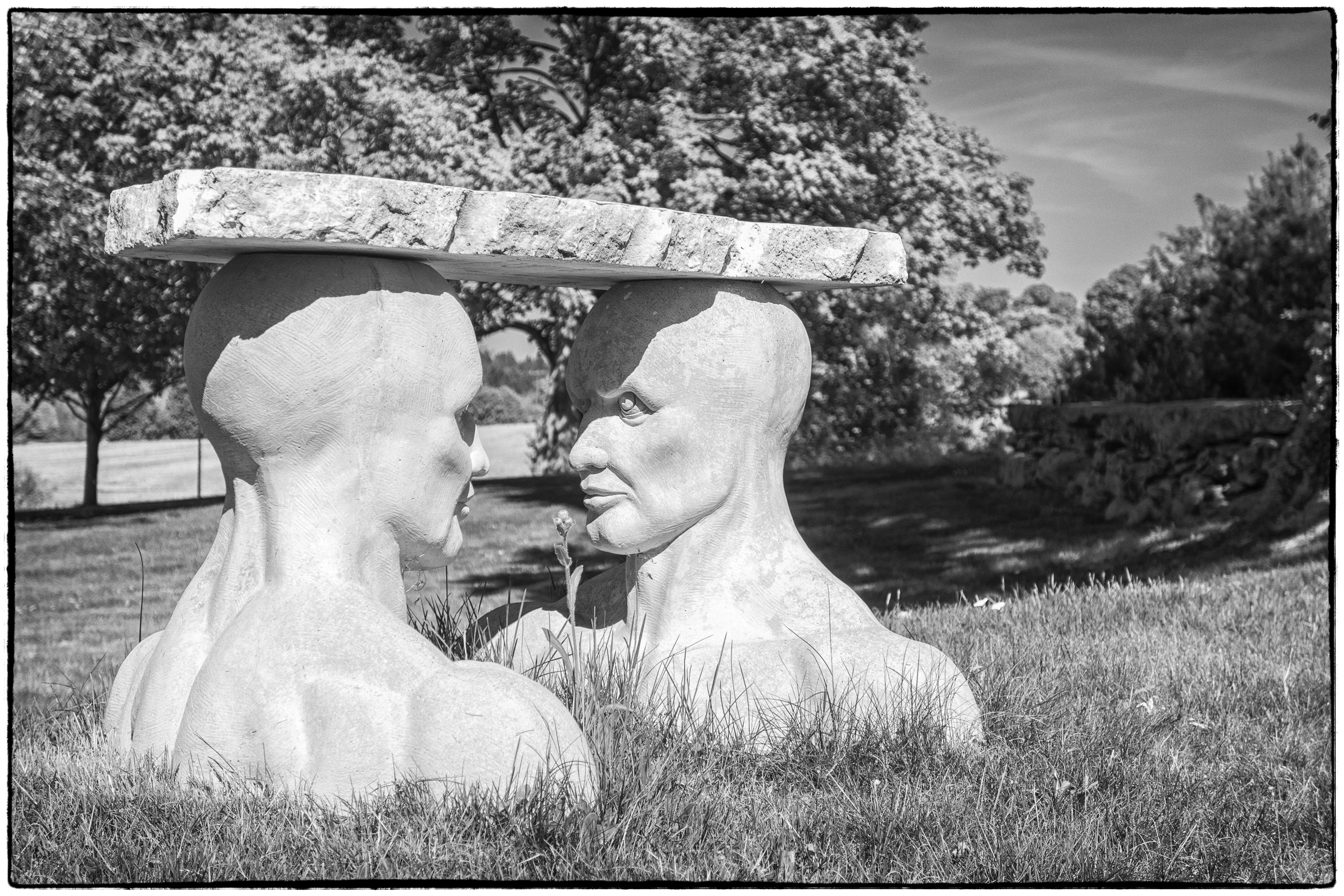
Two heads are better than one
Fact and Fiction in Modern Photography – from the New York Times
World Press Photo Strips Giovanni Troilo of His First Prize Win for Misrepresenting Photo via PetaPixel
There is a struggle going on in documentary photography between proponents of journalistic ethics and practices and those who believe that new visual and storytelling strategies are needed to communicate effectively in the modern world. The controversies surrounding this year’s World Press Photo awards have amplified this debate.
An interesting article. I find myself pretty much in agreement with Santiago Lyon. Vice president and director of photography, The Associated Press when he outlines the following tenets, which I summarize here:
- Photographer must be truthful. Scenes must not be created or recreated.
- Image should not be altered later electronically e.g. remove and inconvenient element.
- Image should not be darkened or lightened in a way the portrays the scene differently from originally seen.
- News or sports photographer should not interfere with or direct subjects.
- Other forms of photography (the example given was portraiture) should be clearly described as something other than photojournalist along with an indication of what was done “to achieve the image on scene, in camera or in postproduction.”
…
There are those, myself included, for whom the basic journalistic values outlined here are paramount while others are frustrated by the perceived restraints of convention and cliché and seek broader storytelling latitude.The two notions need not be mutually exclusive. I am all for creativity and artistic provocation; I merely seek clear definitions of the work produced so that we don’t damage that ever important trust — so crucial to our credibility and survival as journalists.
Thankfully I’m not into any form of photojournalism so I can do with my photographs as I will – all in the name of fine art photography.