Kodak House Museum Video Illustrating the History of Photography

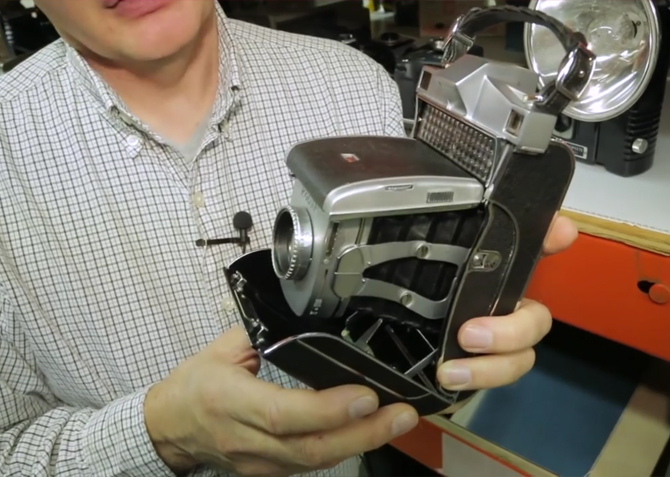
Kodak Super Six-20: the first camera with automatic exposure, introduced by Kodak in 1938.

If you’re really into old cameras (as I am) you’ll probably love this. If not you’ll probably find it boring. It’s essentially a conversation between Chris Marquardt and Todd Gustavson (from the Kodak Museum) regarding the history of cameras. It’s quite long (over one hour) and at times a bit rambling. I’m not sure that Mr. Marquardt adds much: he interjects a few words here and there, but Mr. Gustavson does most of the talking. I suspect that I would have enjoyed the video more if it has just been Mr. Gustavson talking. I found Mr. Marquardt’s interjections somewhat distracting I’m afraid. I would congratulate him on initiating the video though, which I found quite engrossing.

I have books on the history of cameras, but Todd Gustavson really brought the story to life. I found a number of items particularly interesting: the first zoom lens (the Voigtlander Zoomar); the first auto exposure camera, the Kodak Super 620 (I didn’t realize it was so big); the first flash bulb, the vacublitz (a glass tube filled with magnesium foil – it was absolutely enormous). It also reminded me how recent digital photography is. The first digital cameras (made by Kodak, using Kodak sensors and at various times Canon and Nikon bodies) came out in the early 1990s: only about 25 years ago. Interestingly they cost $25,000.

One word of warning though. My brother-in-law lives in Rochester, and during a visit we went to the Kodak Museum (formerly the Kodak House). While it was somewhat interesting I was a little disappointed. If you go don’t expect to see these vaults. They’re not accessible to the public (although a docent told me that if you give them advanced notice and indicate which areas you’re interested in it is possible to arrange a visit. I don’t know if he was correct). A small room with a limited collection of important historical cameras is open to the public, but this collection is much smaller than I thought it would be.

I can also recommend Mr. Gustavson’s book: Camera: A History of Photography from Daguerreotype to Digital.

From a complicated, time-consuming and expensive process to the simple press of a button, photography has come a very long way since the first cameras came along in the early 1800’s.The vast majority of this fascinating evolution can be seen in this video where Chris Marquardt went on a private tour of Kodak’s technology vault.Think you’ve got an impressive camera collection? Wait until you see this 8,500-strong collection of almost every significant camera invented in the last 200 years.

Source: A Journey Through The History of Photography in Kodak’s Technology Vault – DIY Photography
Guardian Photographer of the year – 2015 Shortlist


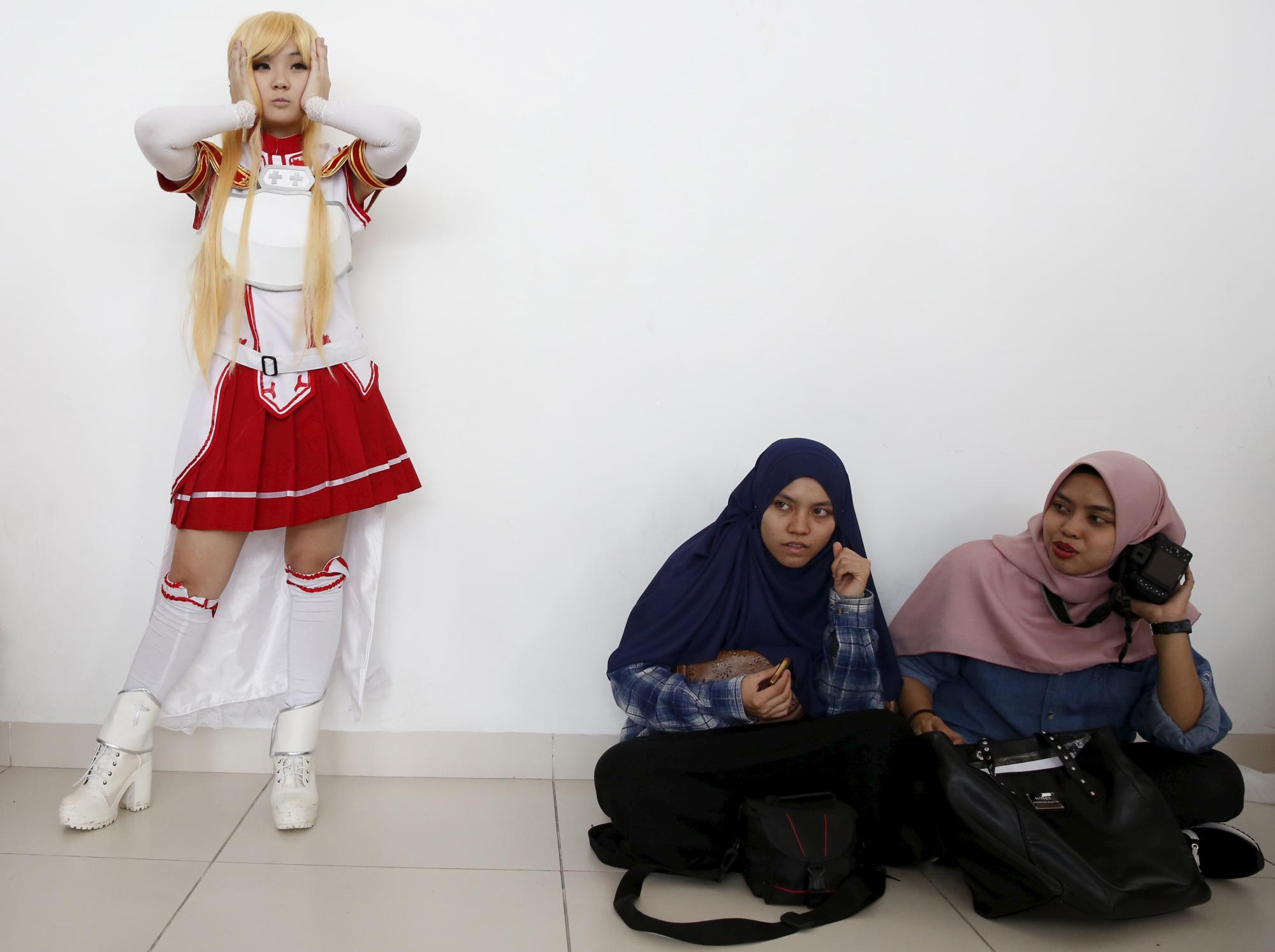
Olivia Harris: A cosplayer poses at the 2015 Comic Fiesta event in Kuala Lumpur, Malaysia. London-born Harris is based in Kuala Lumpur for Reuters. She covered news and features in London before moving to South-east Asia, where her images often make our photo highlights selections.

Some compelling pictures here:

Photographer of the year – 2015 shortlist: atrocities in Paris and Syria, bodybuilders in PalestineSpanning the human cost of air strikes in Syria and the refugee crisis, child jockeys, forest fires and Boris Johnson taking a tumble, here are the most incredible images that agency photographers sent to our picture desk this year. The overall winner will be announced on 21 December

Source: Photographer of the year – 2015 shortlist.

Some 40 plus pictures appear here – all but two of them feature people. Compare that to my pictures almost none of which have any people in them. I guess I shouldn’t look forward to appearing on the Guardian pictures of the year short list any time soon. After all this is the Guardian and newspapers tend to focus on reportage and photojournalism so I suppose I shouldn’t be too surprised.

I look forward to hearing who the ultimate winner is.

Thai Woodcarver

Taken somewhere outside of Bangkok, Thailand sometime in the early 2000s. I don’t remember what camera I used or what film. I do remember being quite impressed by his abilities and his concentration. Even with lots of people (including myself) milling around him, making noise, shooting off flashes etc. he remained entirely focused on his task. I didn’t pick up a wood carving at that time, but at some point we acquired a very nice, and extremely detailed Indonesian wood carving.

Phra Pathommachedi

At 120.5 metres (395 ft) the Phra Pathommachedi is the tallest stupa in the world. Little is known of the its construction many legends have arisen, the most famous is which is the Legend of Phaya Gong and Phaya Phan (apologies for the somewhat tortured English):

The story is about a king of Nakhon Chai Si, Phaya Gong, had a baby boy, Phan, but the court astrologer predicted that Phan will commit fratricide in the future. Phaya Gong then abandoned Phan. The orphan baby had been unknowingly adopted by chidless Granny Hom. Granny Hom raised Phan in Ratchaburi, a vassal city state of Nakhon Chai Si. One day an elephant of the local lord was in rut and attacked people. Phan went to see the elephant and was able to subdue it. After Ratchaburi lord heard about heroic act of Phan, the lord adopted Phan as his son. Phan wanted to conquer Nakhon Chaisi of Phaya Gong, so he sent a letter to Phaya Gong for war elephant duel battle. Phan killed Phaya Gong, and demand Phaya Gong’s wife to become his queen according to ancient custom. When the queen met Phan, she recognized him to be her son, and told him the truth. Shocked Phan, now became king and named Phaya Phan, executed old Granny Hom for not reveal the truth before he killed his father. After realised that he did a great sin by killing both father and a person who raised him, Granny Hom, in the year 26 BCE Phaya Phan consulted with a group of arhats how to relieve his sin. The arhats recommended Phaya Phan to build a great stupa with great height that birds can fly. Phaya Phan then built a Sri Lanka style stupa by using a very big gong and his bed as foundation and put Buddha’s tooth relic inside. Hundreds years later, the king of Bago wanted the big gong, so he ordered to dig the stupa’s foundation; as a result, both gong and stupa then collapsed. The Bago king tried to rebuild the stupa, so he built Khmer style stupa on the top of old stupa, which was the stupa form until the reign of Mongkut.

Scanned from a film negative. At first I thought the black dots around the stupa (particularly to the right) were marks on the negative, but they’re not. They’re birds.

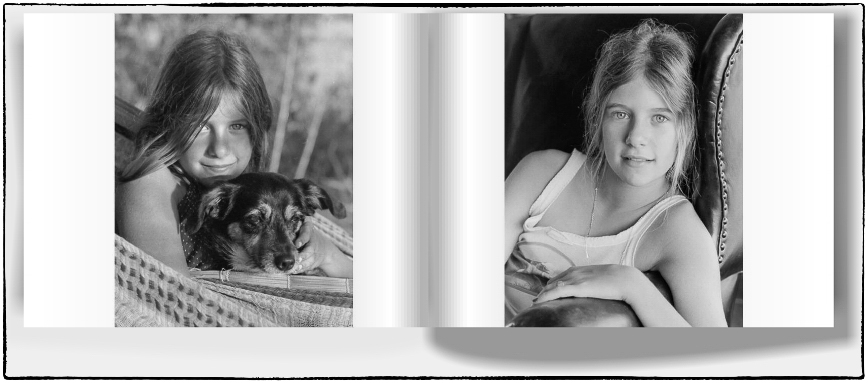
Photobook completed

I have a number of ongoing projects few of which I’ve actually completed. In this case, however, I managed to finish one – probably because it had a very definite end point. Back in May 2015 our friend Paul expressed a wish to do something with his old negatives. Specifically he wanted to come up with something that he could give to his two daughters for Christmas. I showed him some of the photobooks that I’d done before and he decided that that would do it. I mentioned this in an earlier post: Paul and Family.

We started off well scanning some of the negatives (all black and white and mostly 30-40 years old) quickly. Then we stopped and with one thing and another didn’t spend much time on this for quite a while. Finally we noticed that Christmas was getting close and maybe we should get a move on. So we finally knuckled down to finish it off.

He didn’t want anything too complex so in the end we selected about 20 of the scanned negatives for inclusion in a simple, softcover 5×7 photobook. I then did a basic layout, which we then reviewed together with Paul making suggestions as to the order of the pictures. By 21 November we were done and the book went off to be printed – two copies. We received them 5 December with plenty of time for him to send them to his daughters in California.

He was pleased with the results and so was I. I always approach prints with a certain amount of trepidation as pictures sometimes look quite different in print than they do on screen. In this case they did look different – better.

I was encouraged by the exercise and I think I’ll do some more photobooks – in color this time. I don’t think I’ve done a color photobook since 2011.