Lugano

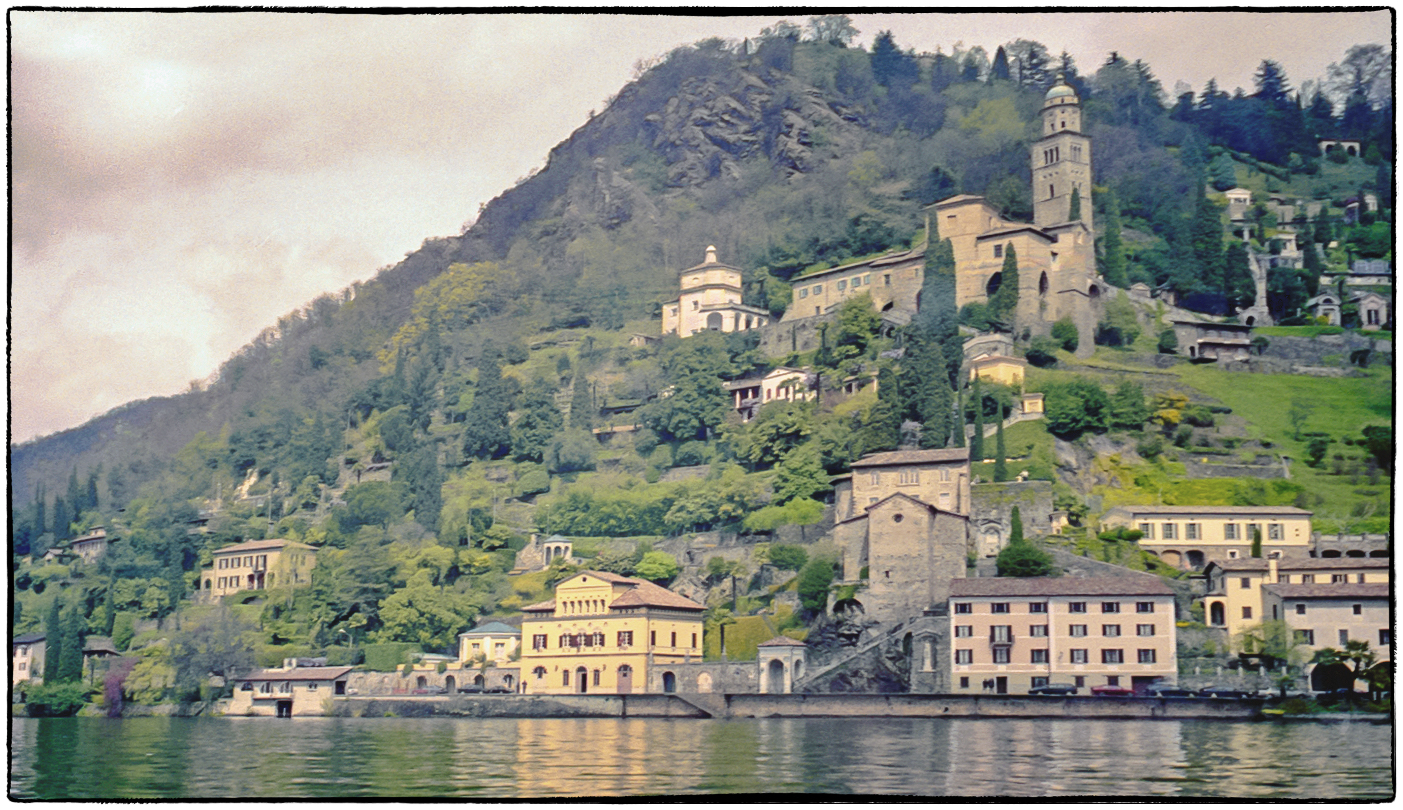
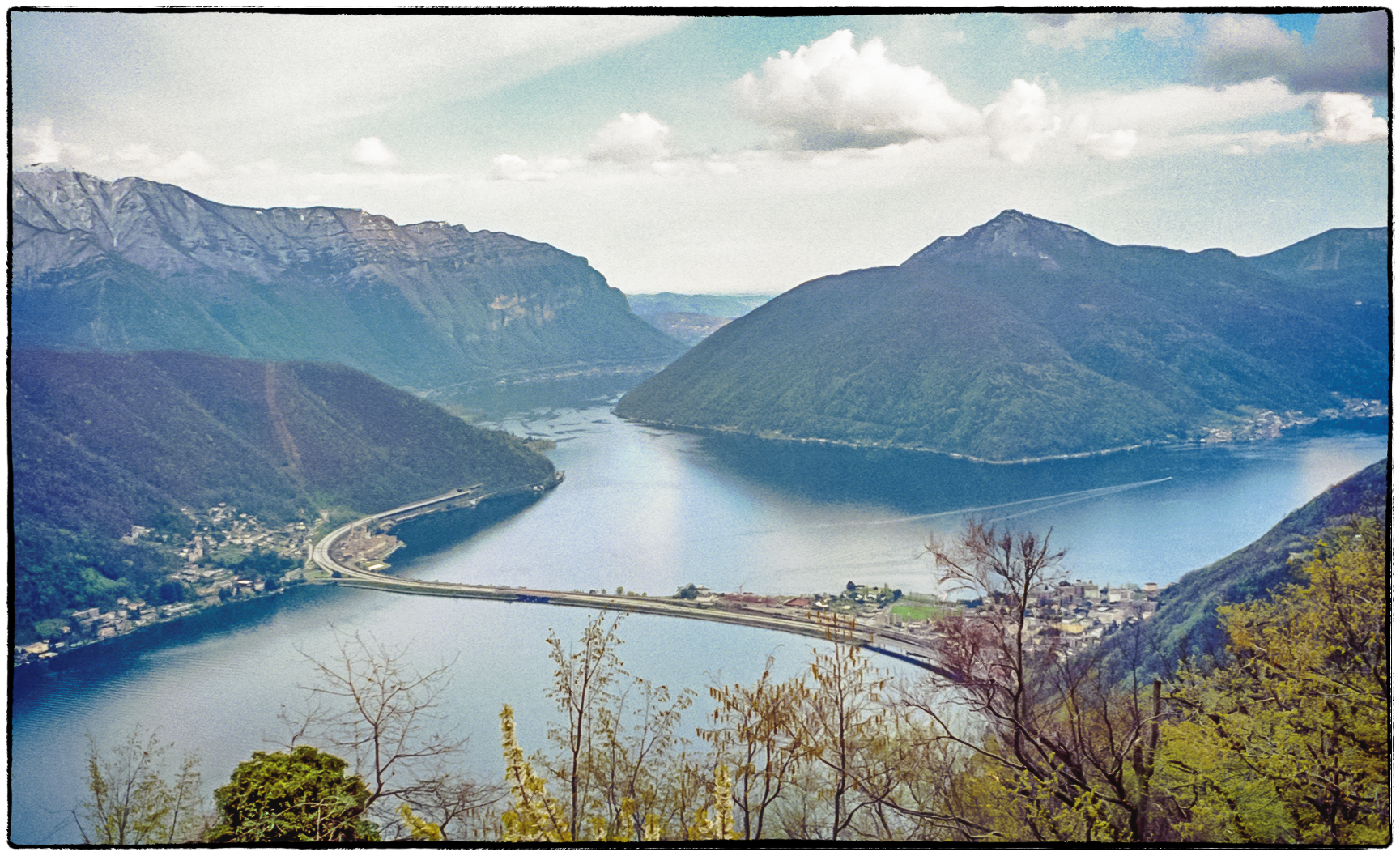
I came across these negatives recently. I remember where they were taken (Lugano), but I don’t remember exactly when – sometime in the mid 1990s I believe.

I do remember the trip though – vividly! We’d decided to drive from Geneva to Lugano for Easter and left before 9:00am on a gorgeous sunny day. All went well until we got to somewhere around Luzern then the traffic stopped completely. After a while it started again and we moved about a hundred yards and then it stopped again. This continued for hours. Eventually the road started to rise and we figured out what the problem was: snow. There had been significant snow in the Alps and the roads over the passes had been closed. The only way down towards Italy was through the St. Gotthard tunnel and all the traffic was funneling in that direction. To make matters worse for some reason I’m at a loss to understand the lanes cross at the entrance to the tunnel i.e. the right lane goes into the left part of the tunnel and the left lane into the right. A traffic light controls this and this was what was causing the stop/start nature of the traffic.

I hate driving in snow and as we got higher the snow was coming down quite hard. To make matters worse my car was a Mercedes 280SL convertible – a nice car, but because of its rear wheel drive not good on snow. Moreover, I’d already taken the snow tires off as I thought Winter was over. So we came out on the other side of the St. Gotthard tunnel with snow still falling heavily. Luckily we were in Switzerland and everybody was very organized. We were on a three lane highway and all the traffic got into a single file in the middle lane and leaving lots of space between the cars we went slowly down towards Lugano. Somewhere around 800 meters the snow turned to rain and the rest of the journey was pretty easy.

We finally got to our hotel just before 10:30pm just minutes before room service closed. We quickly ordered and I still remember what I had: pasta with funghi porcini. And it tasted delicious!!!

The journey had taken about 14 hours (it should have taken 4-5).

I recall that we took a boat ride on the lake, but I don’t remember going into the surrounding mountains. Since some of the pictures below seem to have been taken from some height, I’m thinking that they may have been taken on the way home. We took a different way back via Milan and the Mont-Blanc tunnel. This time the journey did take about 4-5 hours.

One from my wife

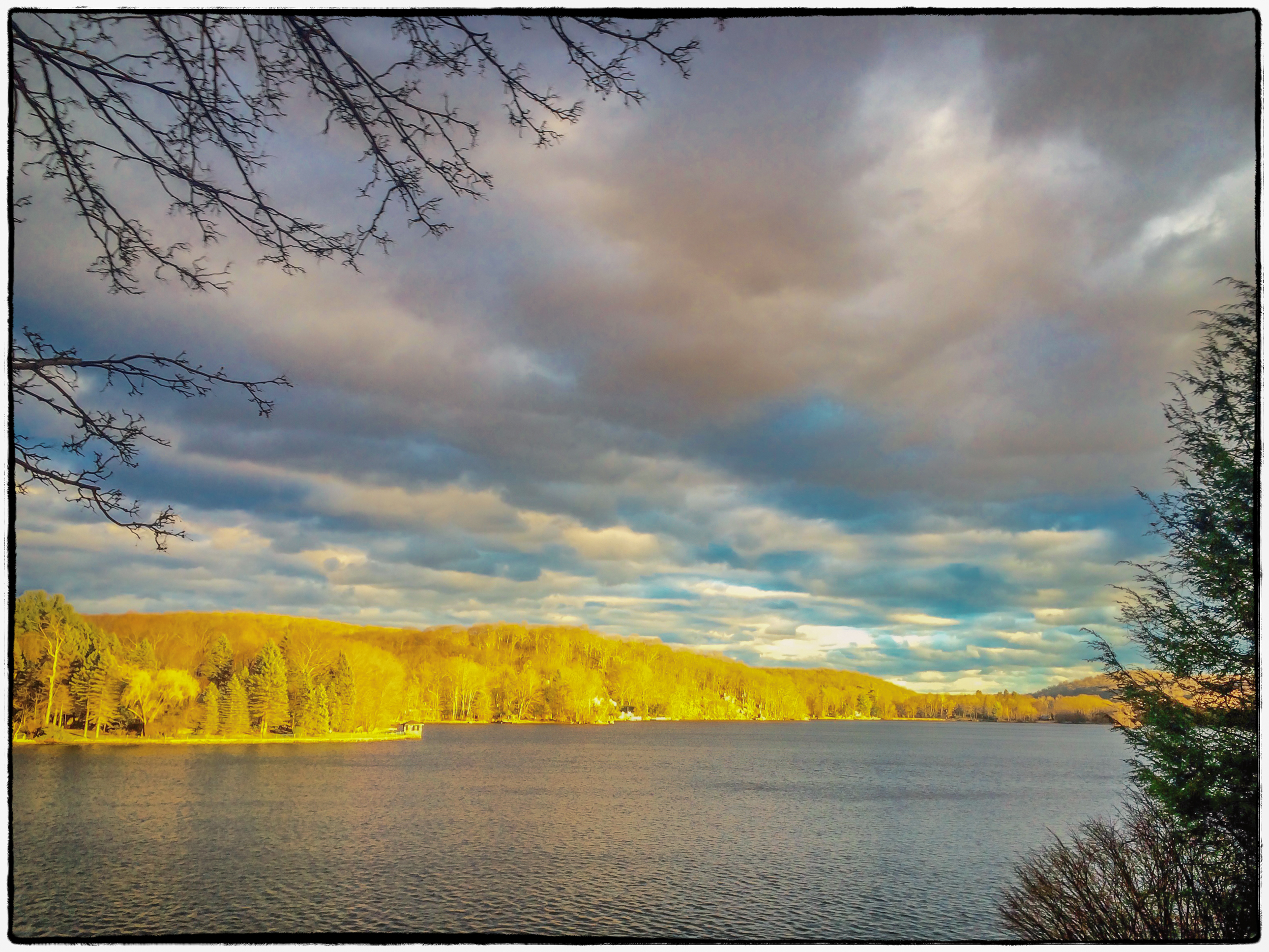
My wife took this one at about 6:30 in the evening. I was busy making dinner (Szechuan Chicken) when she said something to me. I looked over in her direction and noticed over her should that the light over the opposite site of the lake was amazing. She hadn’t even noticed it so I drew it to her attention. I was too busy with the cooking to grab a camera so she grabbed her iphone 5s, rushed outside and took this picture. Seconds later the light had gone. Well done love!

A party in the woods

I was walking along an old woods road (I now believe it’s called Dicktown Road) when I came across this enormous firepit. Someone had also made a sort of rustic bench and there was also a rusted chair nearby (see picture below). Looks like this was a regular place a party. This was confirmed by a large number of beer cans scattered around. It looks as if the place is frequently used. There were lots of footprints and tire tracks (probably from ATVs as I’ve seen them before in these woods) around.

Old Rusted Chair.

If they have to come into the woods to drink beer can’t they at least drink decent beer.

More worrying to me were the shotgun cartridges scattered around. I don’t like the idea of people with guns shooting near where I’m walking. I once heard what sounded like automatic rifle fire in Fahnestock State Park. It sounded as if it was quite a bit ahead of where I was but just the same I immediately stopped and turned around. On my way back I encountered a park employee and a local policeman who asked me if I’d heard shooting. I said I had and asked if shooting was legal in the park. They told me that it certain types of shooting (bow, shotgun, pistol) was legal, but only at certain times of the year and in certain locations (well away from the public hiking trails).

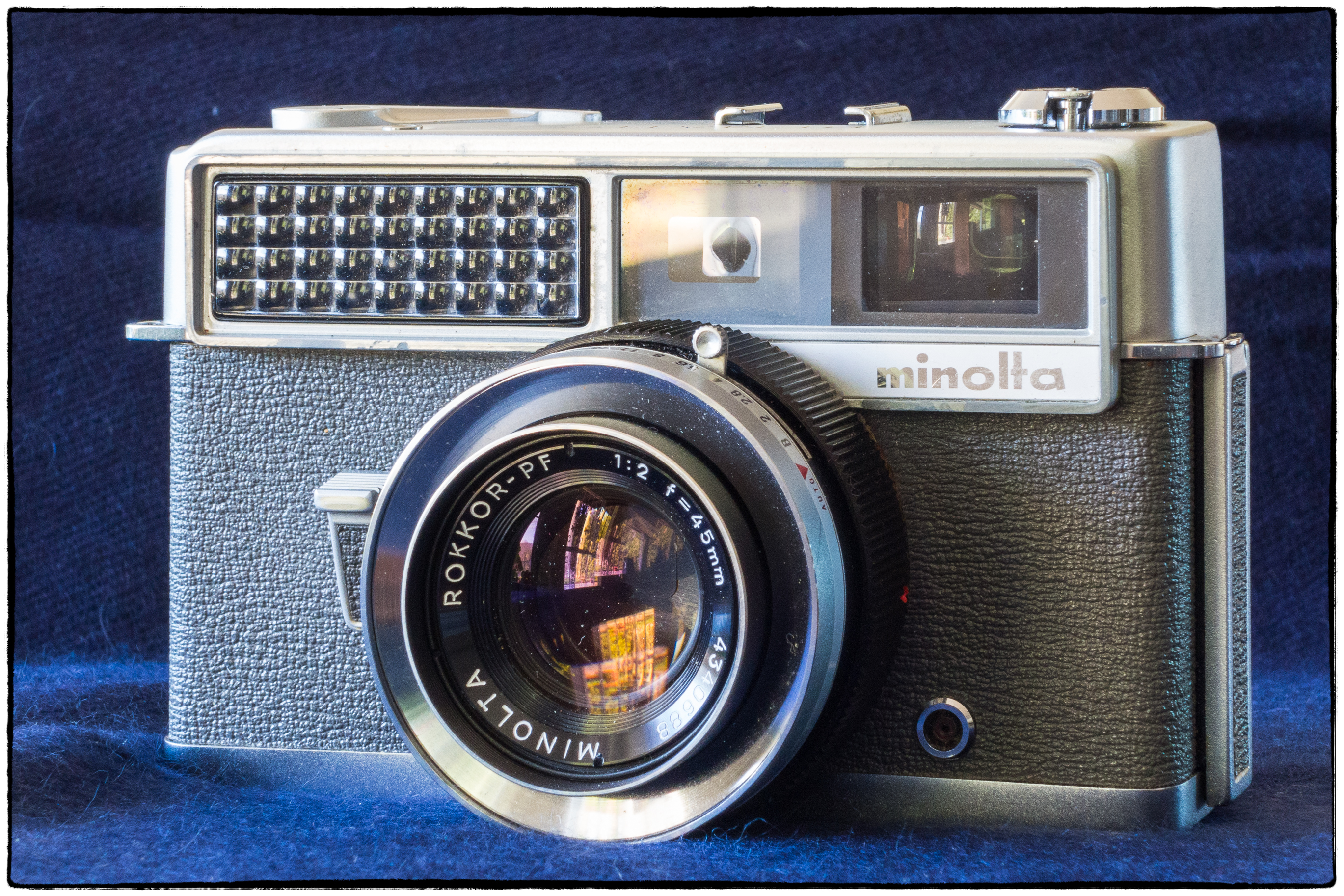
Minolta Hi-matic/Ansco Autoset

When I started collecting cameras I insisted on getting cameras that worked. After getting a number of them, however, I resigned myself to using only a few. So I don’t really expect to use this camera much – if at all. So why did I get it? I got it because it fits a couple of niches in my camera collection: 1) It’s a rangefinder camera, which I what I originally started collecting; 2) My original camera was a Minolta Hi-matic 7sii and I’ve always had an idea that I might collect all of the cameras in the series and this is the original Minolta Hi-matic, or as the re-badged US version was called: the Ansco Autoset; 3) The Ansco Autoset has an interesting story behind it – it may well have been the first camera in space:

Nearly 50 years ago, John Glenn purchased a camera at a drug store that served as the first astronomical experiment performed by a human in space. That three-orbit voyage for Glenn included two cameras, one the Ansco he purchased and the other a Leica supplied by NASA. The flight not only kicked off decades of orbital experiences for U.S. astronauts, but also science experiments, observations, and thousands of rolls of film and digital files created through hand-held photography. The results of those experiments and the photos taken are what people left on Earth use even today to understand human spaceflight.

Source: Another Journey for John Glenn’s Ansco Camera – AirSpaceAirSpace

John Glenn’s Ansco camera in front of “Friendship 7”

As can be seen in the picture above the camera was much modified. Note that the camera is upside down, with a handle added on top (bottom in the picture) and an additional viewfinder has been added to the bottom (top in the picture). Follow the link above to an article with more information.

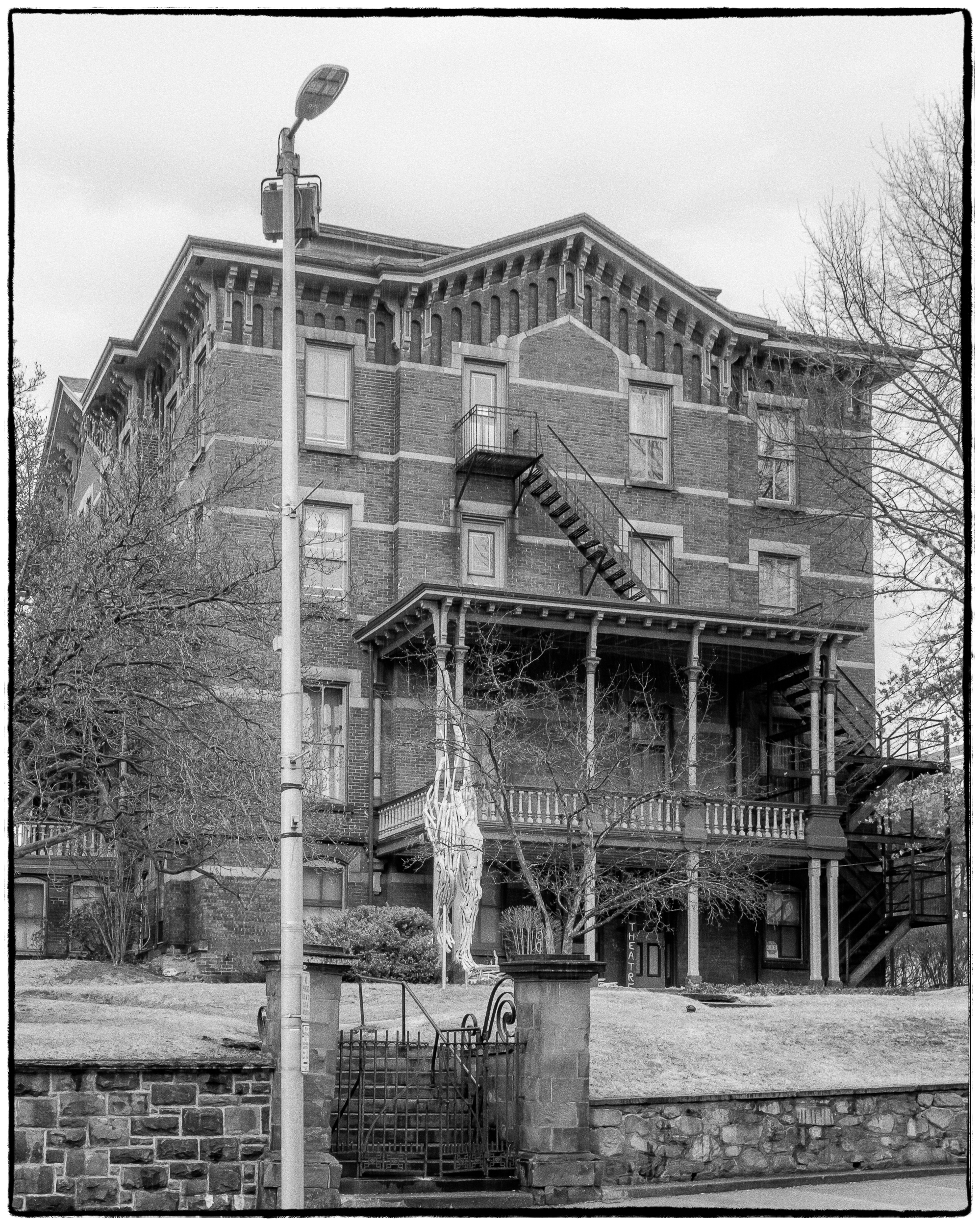
Matthew Vassar House

This house once belonged to Matthew Vassar (April 29, 1792 – June 23, 1868. Born in the UK, Vassar was a prominent businessman and Brewer. He was also known for his philanthropy. He was the founder of the renowned Vassar College (founded 1861).

A historic marker on the property reads: “Matthew Vassar. Founder of Vassar College lived house on this site for many years. Now site of Vassar Brothers Home for Aged Men“. The sign isn’t entirely correct. As Wikipedia explains:

The Home was built by Vassar’s nephews on the site of his old house, incorporating some of the original interior trim, such as the black marble mantels. It cost $45,000 ($1,103,000 in contemporary dollars) to build and was completed in 1880. The following year it was officially opened.

Designed for 50 men, it was initially home to six who met the criteria of being at least 65 years old, Protestant and residents of New York State. It continued to operate below capacity until 1903, when the death of Matthew Vassar’s widow made enough money available.

It remained a senior citizen’s home throughout much of the 20th century. In the 1970s, it became the property of the Cunneen-Hackett Arts Center, which has used the lower floor for galleries, public and private events, and rented out the upper floors as office space for other local non-profit organizations

So it seems that although Vassar lived on this site, he never actually lived in this building. And while the house was once the Vassar Brothers Home for Aged Men – it isn’t any more. Maybe they should think about changing sign.

Vassar also lived on a large estate in Poughkeepsie (Springside) in the latter part of his life. It seems it was never finished and much of what was finished has now disappeared. However, the gatehouse has been partially restored and the original pathways and trees remain. I believe it’s open to the public now. Perhaps I’ll go for a walk there one day.

I’m fond of co-incidences and in my research around this house I discovered a couple:

Vassar’s Springside estate was designed by Andrew Jackson Downing. Part of the reason why it was not completed was because Downing died at the early age of 36 on the Henry Clay Steamboat Disaster. In the past weeks I’ve been reading about Henry Clay in the context of the Mexican American War. The Henry Clay was built by Thomas Collyer, whose mausoleum I recently visited in Dale Cemetery, Ossining.

How’s that for a bunch of co-incidences! And this post, which started out as a simple snapshot taken in the rain in Poughkeepsie while waiting for my wife to finish what she was doing has now become longer than intended. An uninspired picture (I even considered not posting it) combined with an interesting (at least to me) story. It made me think about whether I’m more interested in the pictures or the stories. Or maybe both. In this case without the picture I would never have found out about the story. So I think they both go together.