Untermyer gardens revisited – the vista

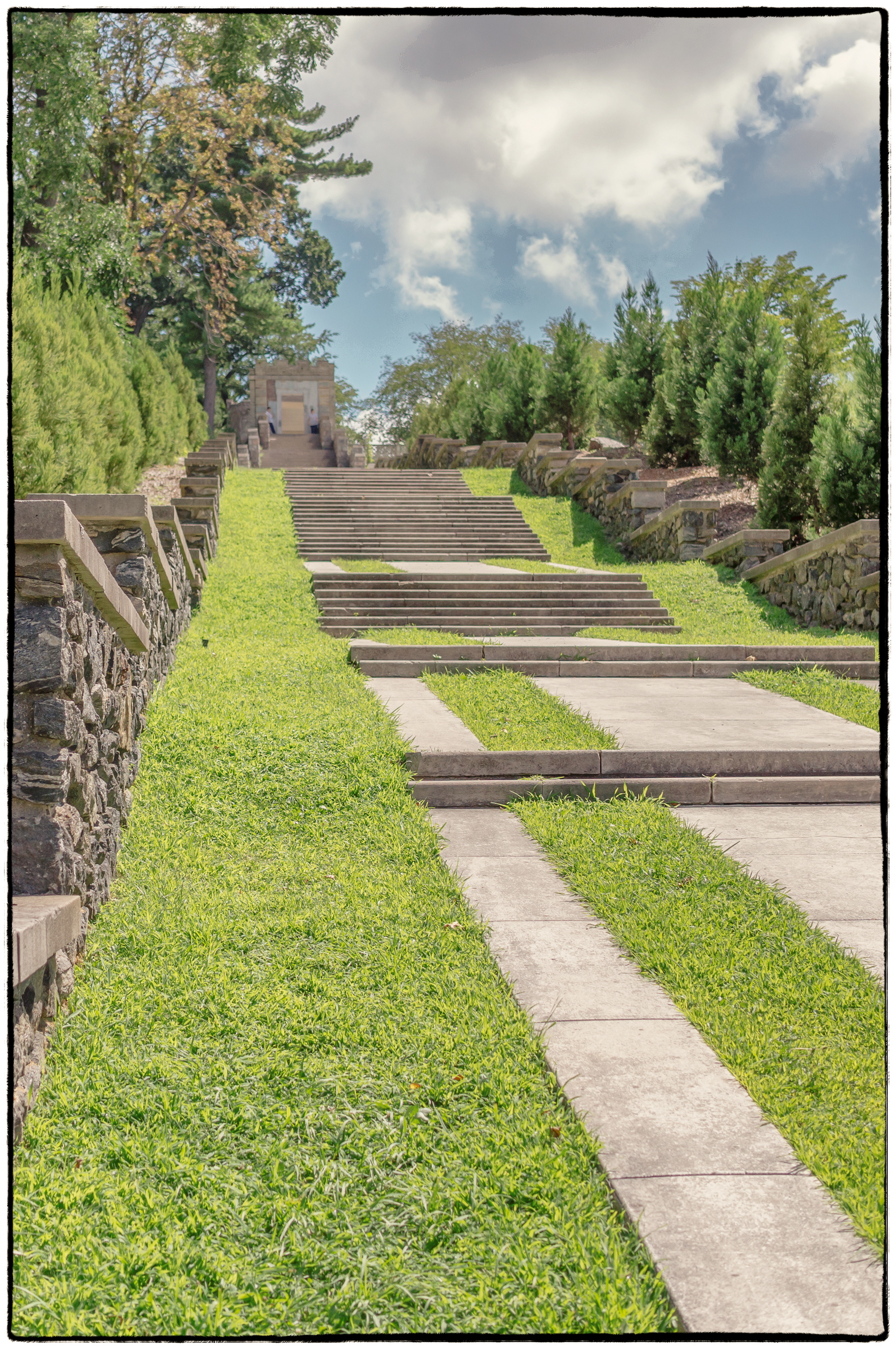
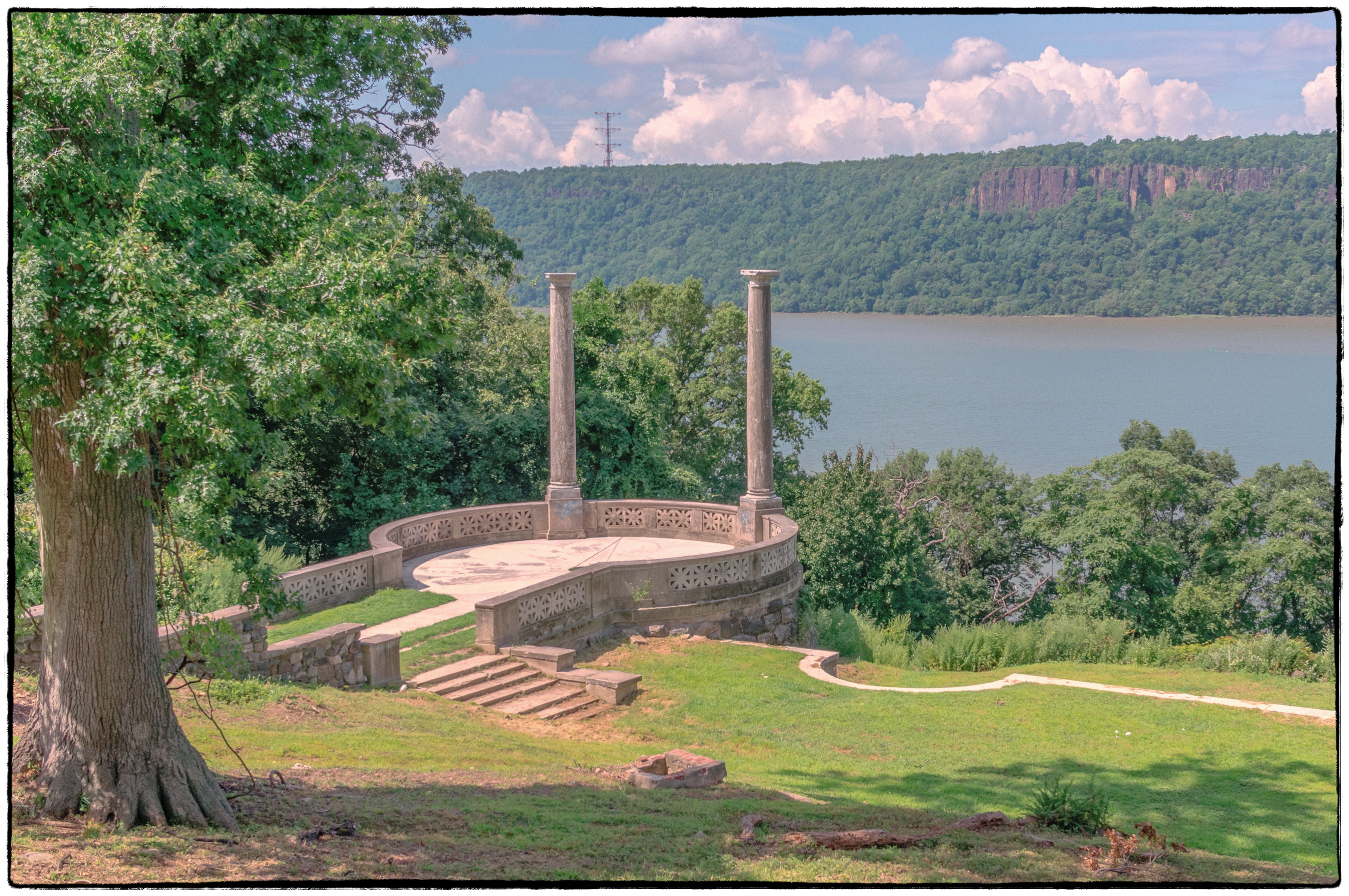
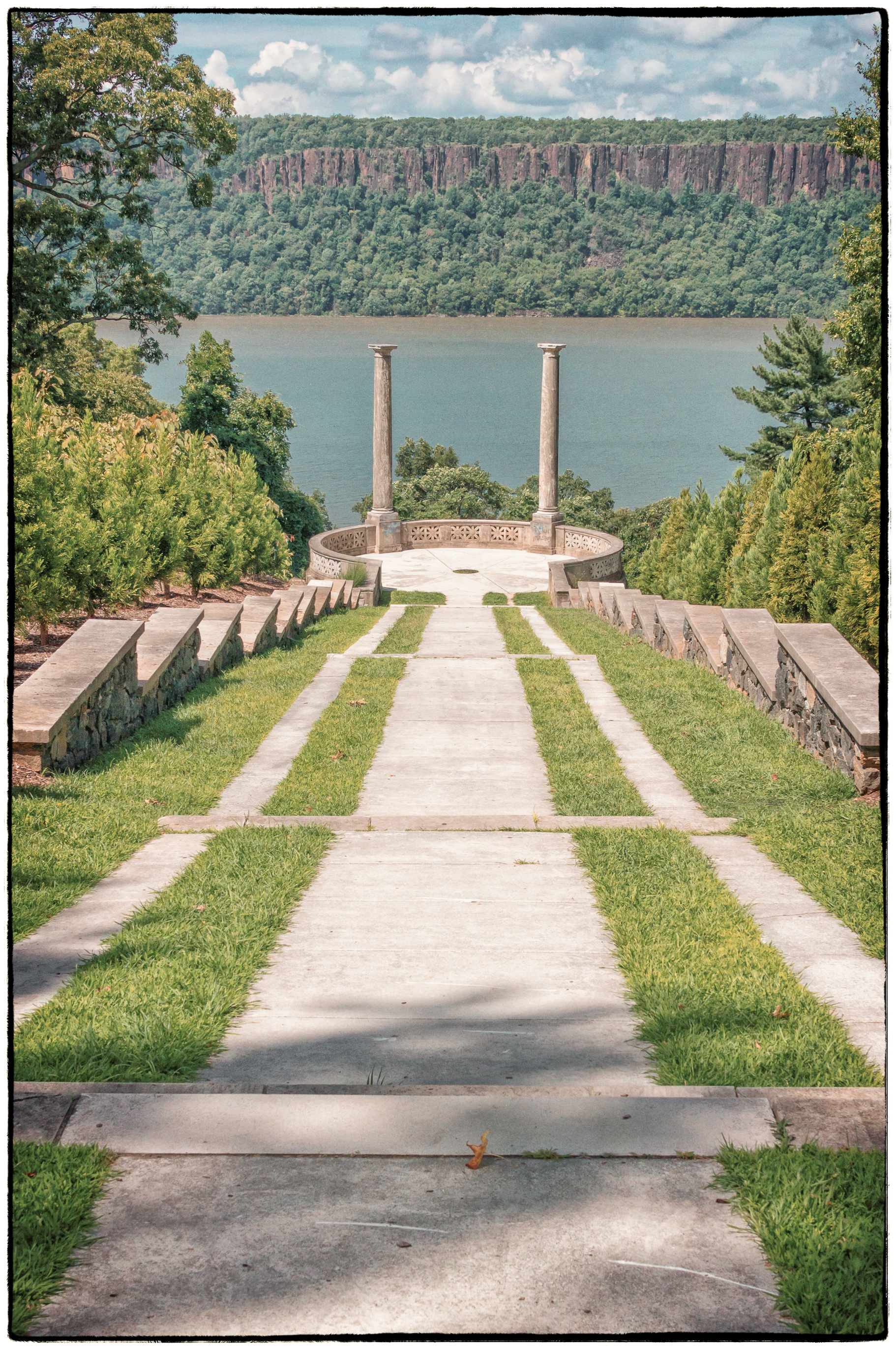
The lower portion of The Vista looking down towards the Hudson and the Pallisades. I missed this section of the gardens during my last visit.

According to the Untermyer gardens website:

The Vista was modeled on a similar series of descending stairs at the Villa D’Este in Italy. At the Villa D’Este, the stairs descend gracefully toward Lake Como while at Untermyer, they cascade toward the Hudson River. Bosworth’s original design flanked the stairs with Japanese cedars mimicking the dark cypress of the original. In 2015 we replanted more than 100 Japanese cedars to restore the original allee.

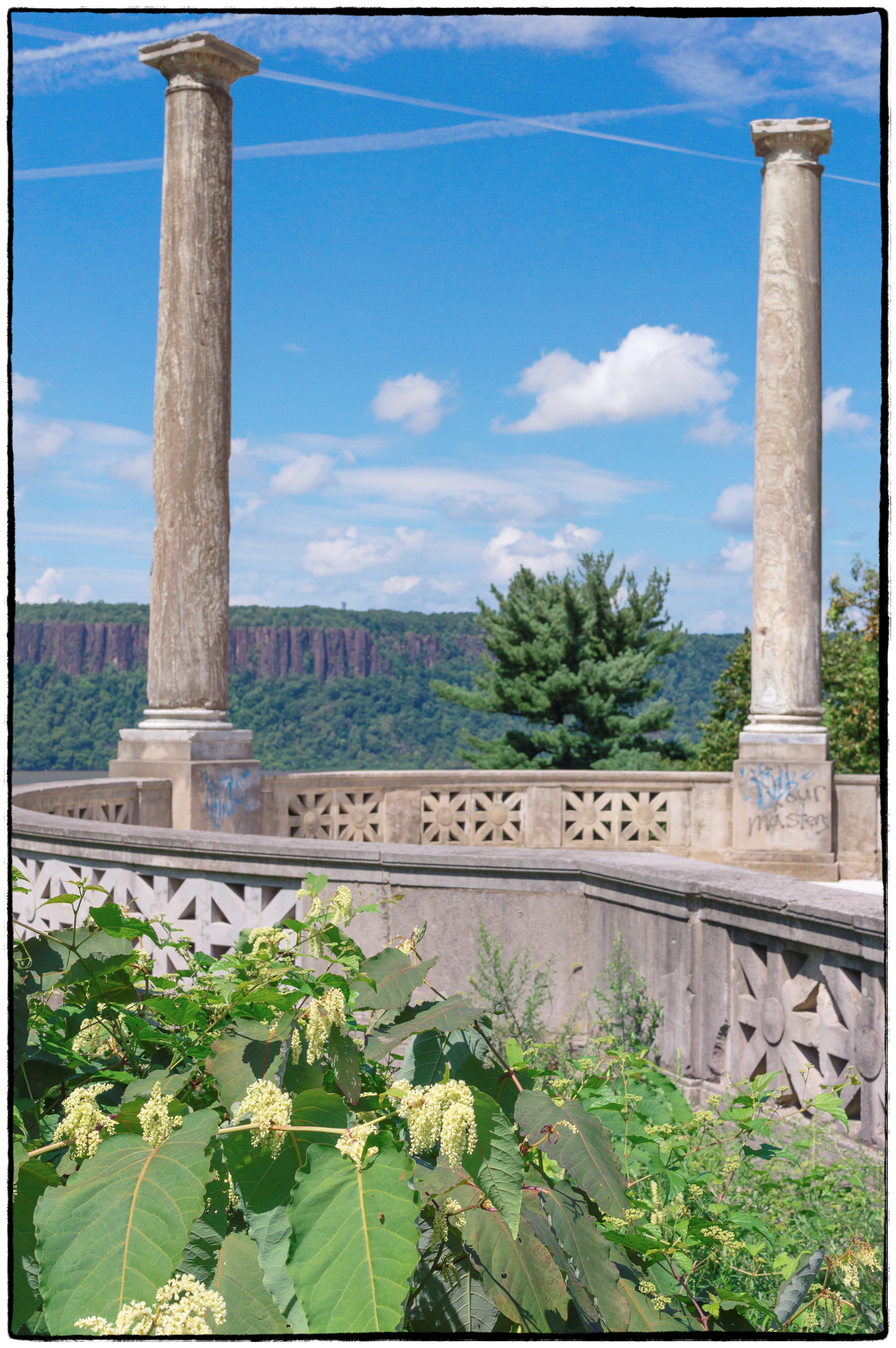
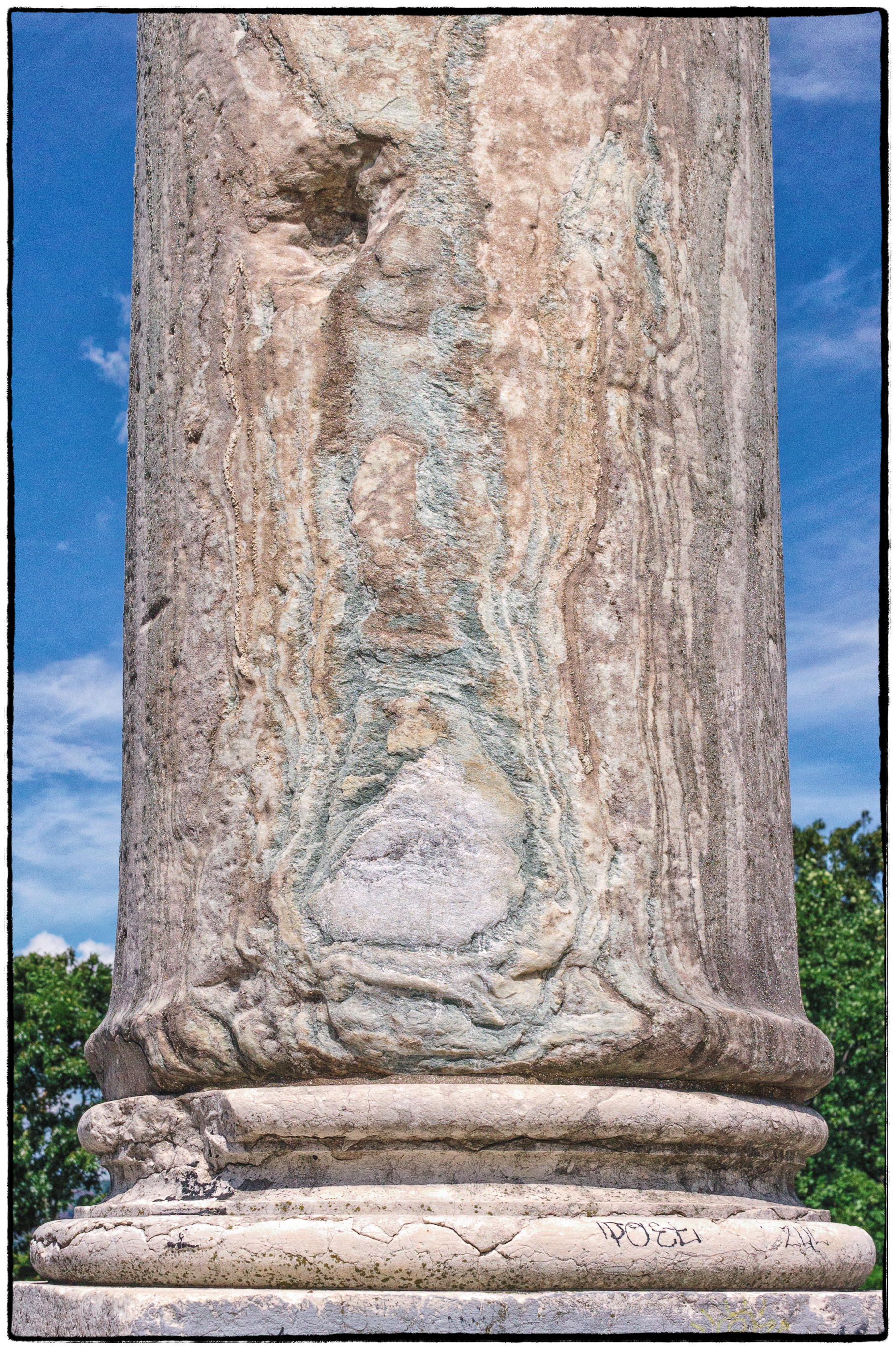
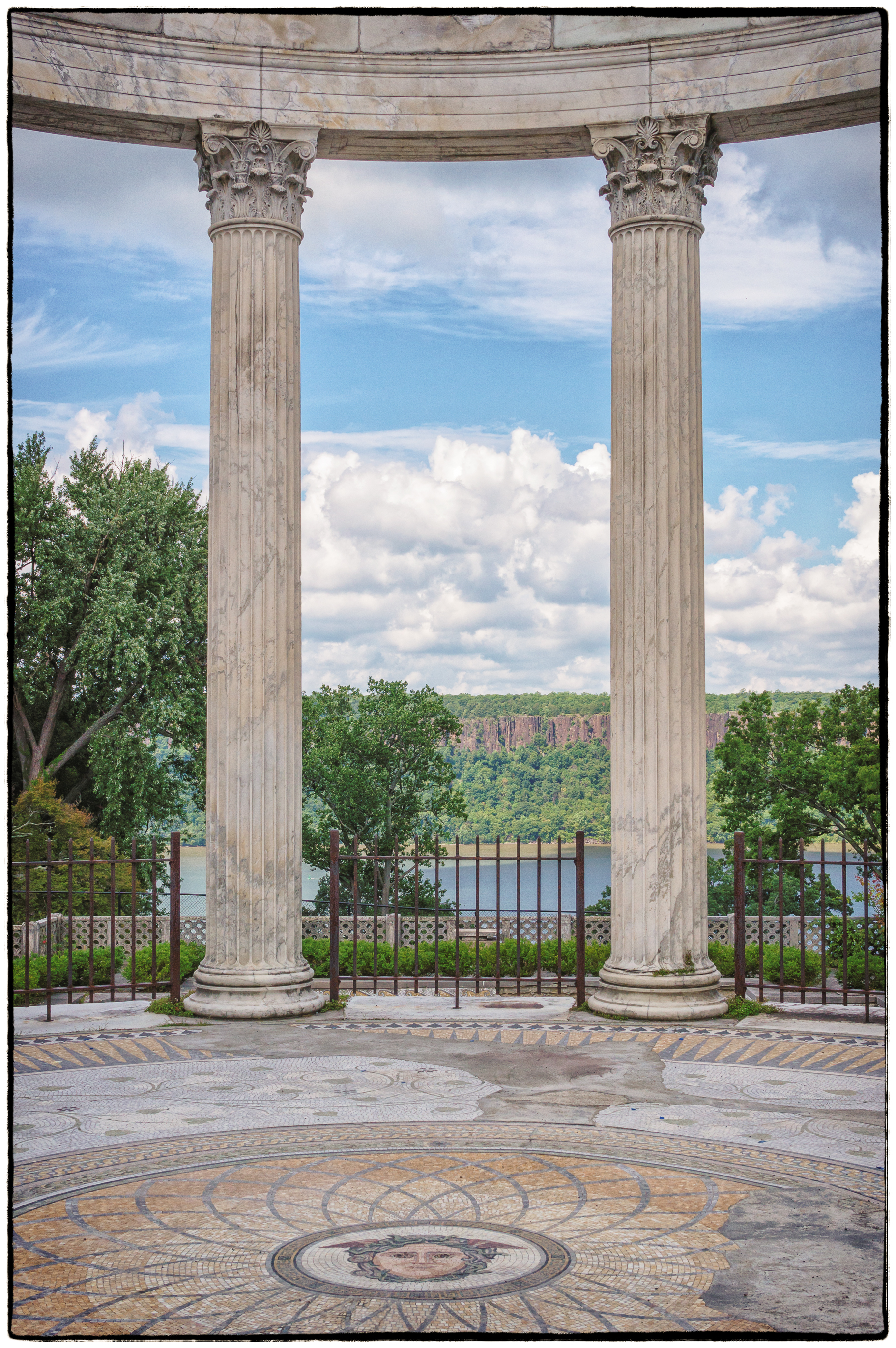
At the base of the Vista is the Overlook. The two columns framing the view of the Hudson River and the Palisades are ancient Roman monolithic cipollino marble columns from the estate of Stanford White.

Looking up towards the entrance from the Walled Gardens.

The Vista Overlook 1

The Vista Overlook 2

Detail of one of the columns

Untermyer gardens revisited – the walled garden

The first thing you see on the tour is the Walled Garden. The Untermyer Gardens website describes it as follows:

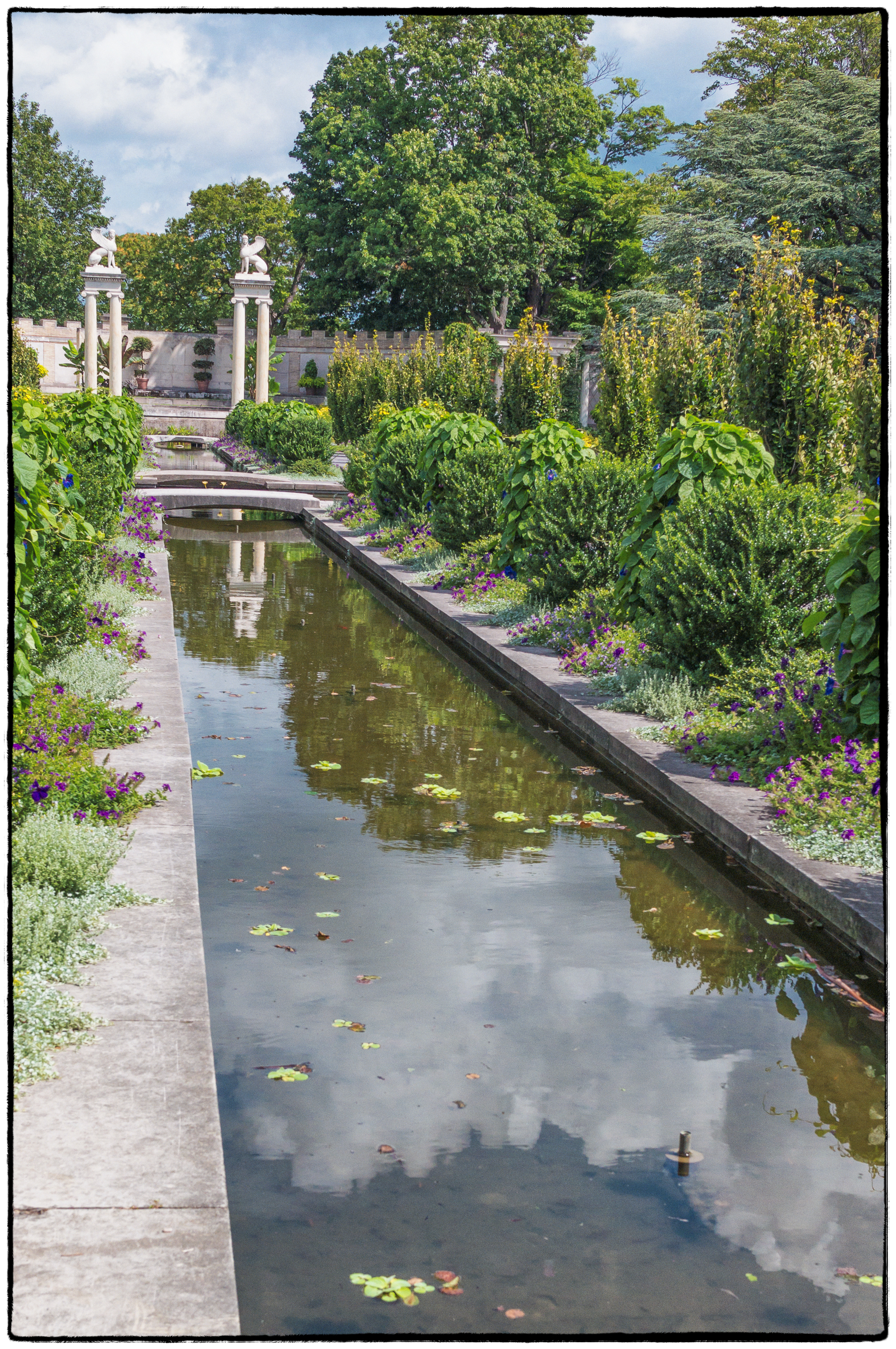
The Walled Garden owes its inspiration to the great Indo-Persian gardens of antiquity. Like the ancient gardens, the Walled Garden is divided into quadrants by waterways and bordered by crenellated walls anchored by octagonal towers. The Indo-Persian walled garden was intended to mimic a paradise on earth and thus had features inspired by religious descriptions of paradise. Biblical descriptions of Eden include four rivers (Pison, Gihon, Tigris and the Euphrates) and two great trees (the Tree of Life and the Tree of the Knowledge of Good and Evil). Islam describes paradise, or Jannah, and includes similar elements: four rivers of life (water, milk, honey and wine), and the Tree of Life. The word ‘Paradise’ itself comes from the Persian words ‘Pairi’ and ‘Diz’ meaning, respectively, ‘Around’ and ‘To create (a wall)’.

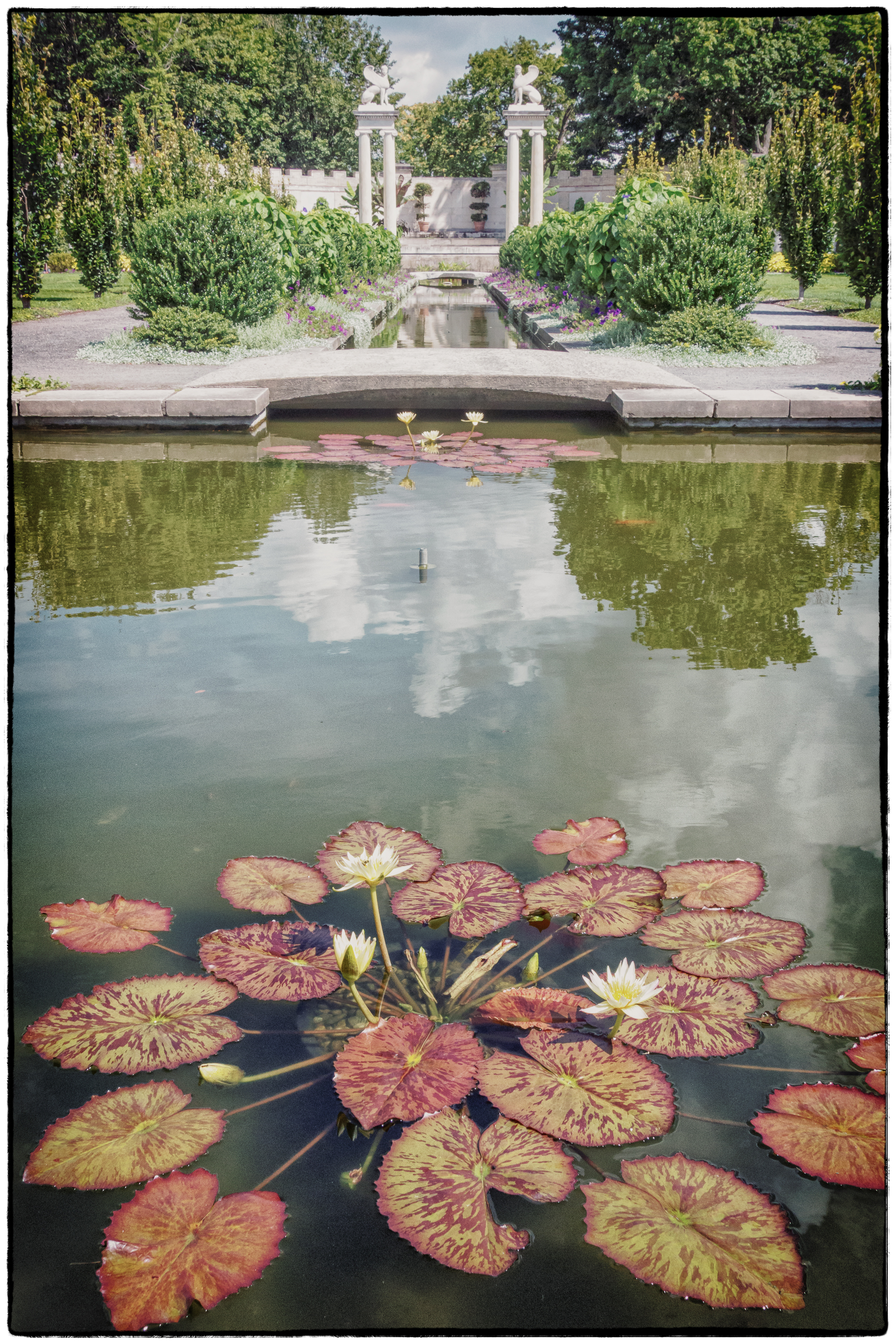
The walled garden from the entrance

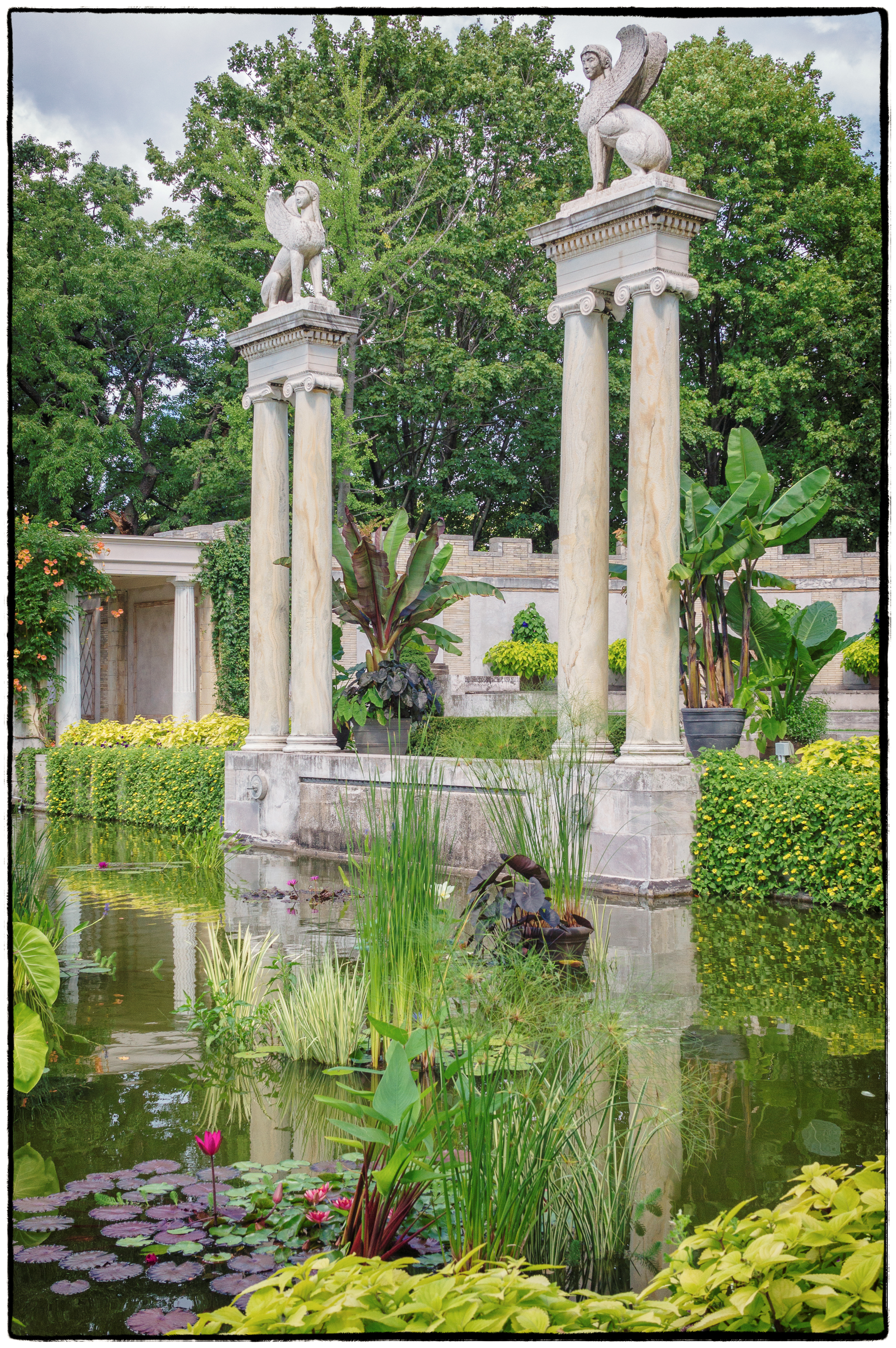
Sphinxs

Temple of the sky (with the Hudson River and Pallisades in the background).

While the concept was Indo-Persian, the gardens at Greystone were appointed with Greek-inspired elements including the Temple of the Sky, a roofless circle of Corinthian columns topped by an entablature festooned with a classic palmette and anthemion design, the open air amphitheater where guests could be entertained by dancers, musicians or poetry, and the stoa where one could relax.

Untermeyr gardens revisited – overview

In a recent post (Upcoming visit to Untermeyr Park) I mentioned that I would be going back to Untermeyr Gardens after more than four years. We went with a friend who lives in nearby Hastings-on-Hudson. The weather was not supposed to be good (showers and thunderstorms) but it turned out that the forecast was wrong (what a surprise!) and we had glorious sunny weather.

The garden’s website provides the following overview:

The Untermyer Gardens Conservancy is a non-profit organization which is collaborating with the City of Yonkers to facilitate the restoration of Samuel Untermyer’s gardens in Yonkers, New York. Untermyer Park and Gardens is a City of Yonkers public park.

In 1899 Samuel Untermyer purchased Greystone, the former estate of Samuel Tilden. In the forty one years Untermyer owned Greystone, he transformed the gardens and greenhouses into some of the most celebrated gardens in America. After expanding the estate through property purchases to the north and east of the original estate, he hired Beaux Arts architect Welles Bosworth to design gardens around 1916. These gardens sprawled over 150 acres overlooking the Hudson River and were maintained by 60 gardeners and supplied by 60 greenhouses. It was open to the public on a weekly basis during the 1920’s and ’30’s and for special events, including displays of his famous chrysanthemums and tulips. Thirty-thousand people visited it on one day in 1939.

Upon his death, the gardens were left in limbo while the estate was settled and a plan to care for the gardens determined. A core part of the gardens was acquired by the City of Yonkers in 1946 . In the 1990’s, another parcel was acquired, bringing the total today to 43 acres. While the core is intact, much of the gardens are in ruin.

The park had changed quite a bit since I was last there. First, my previous visit had been in Winter so nothing was in bloom. Now spectacular blossoms were everywhere. Before, the pools, which are such an important part of the gardens were empty. Now they glittered in the sunlight and the fountains were running. Second, there had been significant renovations since my previous visit. Portions of the gardens that had been in ruins have now been restored (not everything has been completed yet, but they’ve done a great job so far). Finally, I was able to visit an area (Marked ‘Vista’ and ‘Vista Overlook’ on the above map) that I had missed the last time I was there. We decided to take the tour (1.5 hours for $20) and it was well worth it as the guide was extremely knowledgeable.

We had thought to go to lunch at Harvest-on-Hudson, but it turned out that it doesn’t open until 4:00pm on Sundays so instead we went to Maud’s Tavern.

Although I thoroughly enjoyed the visit it wasn’t really the best time of day for taking pictures: 11:00 am to 12:30 pm. It was a very bright sunny day and the light was extremely contrasty. The lens I was using (Sigma AF 30mm f/2.8 EX DN) was also very contrasty, which added to the problem. Maybe I’ll go back again sometime at a time when the light can be expected to be better.

A new visitor

I’ve been walking the dog around the lake for about four years now and until recently I’d never seen a rabbit. Now I see them every day including this one today in our garden.

I was excited to see a new visitor and also felt a kind of “Aw – how cute” sensation – particularly since one of our granddaughters spotted him first and was particularly excited. My wife shared our enthusiasm but I’m sure her feelings will change shortly when she realizes that she/he will probably start eating her flowers soon.

Abstract

This was taken through the window of a travelling north along the Hudson River. Some of the reasons I like it:

1. The diagonal lines
2. The darker areas at the top and bottom
3. The almost abstract look
4. The ambiguity. It’s not immediately apparent what it is

I don’t like the lighter spots and blurred areas in the foreground, but I guess it’s inevitable considering the picture was taken through the window of a moving train..