Community church of Yorktown cemetery – Overview

This cemetery is adjacent to the Community church of Yorktown.

The Find a Grave website describes it as follows:

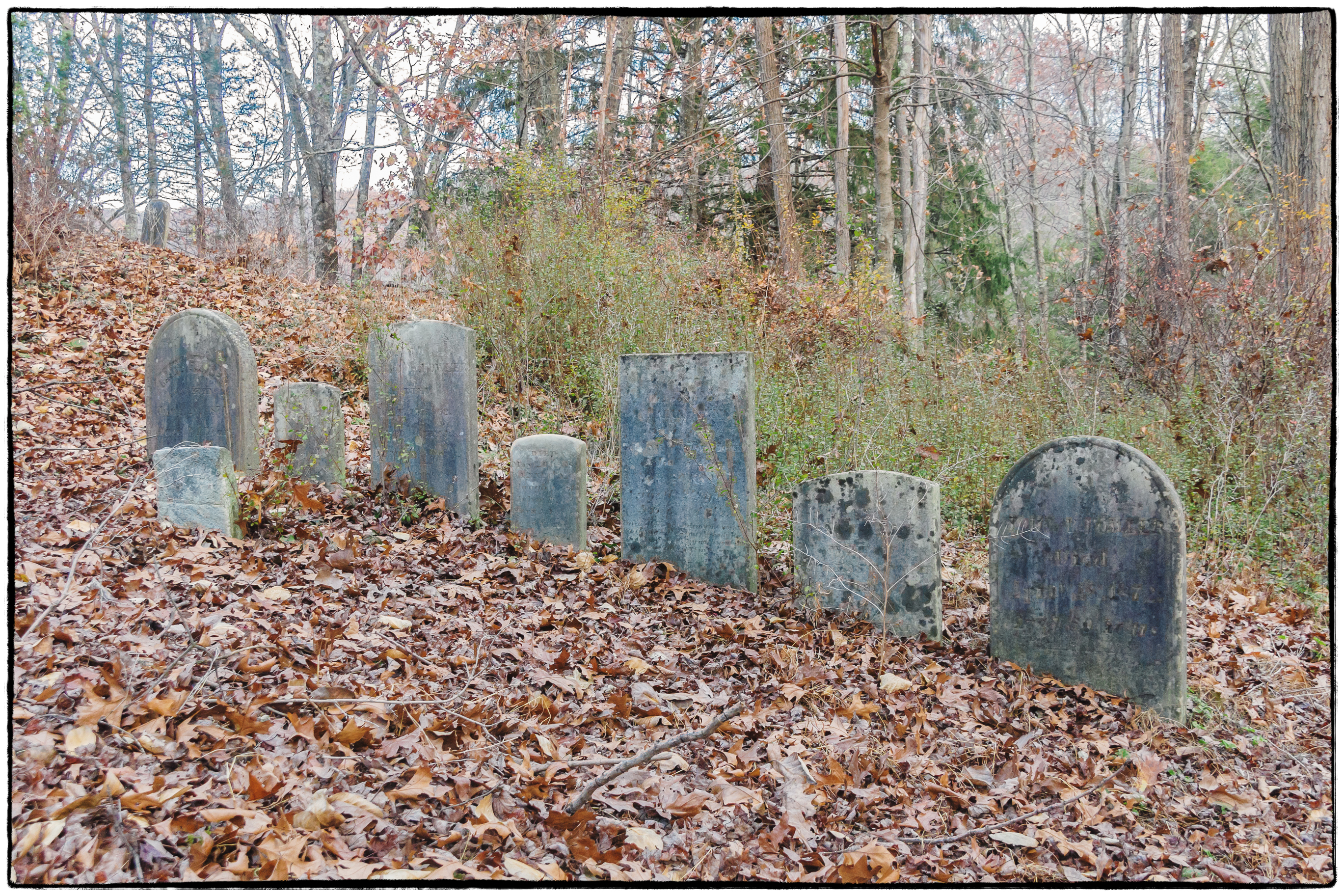
The church cemetery, which church members are gradually reclaiming from the woods, hosts dozens of Tompkins and pre-Revolutionary War residents

Building of the Croton Dam. Fifteen hundred bodies were moved out of the six cemeteries that lay in the path of the Croton River, which flows from Connecticut to the Hudson River.

One of those hamlets was the community of Huntersville. Now part of Yorktown, the 6-square-mile area lies roughly within the boundaries of the Taconic Parkway to the east, the reservoir and Route 129 to the south, and the Town of Cortlandt to the west. According to Christopher Tompkins, author of “The Croton Dams and Aqueduct,” the center of old Huntersville is now underwater.

There are many reburials from Huntersville in the church yard.

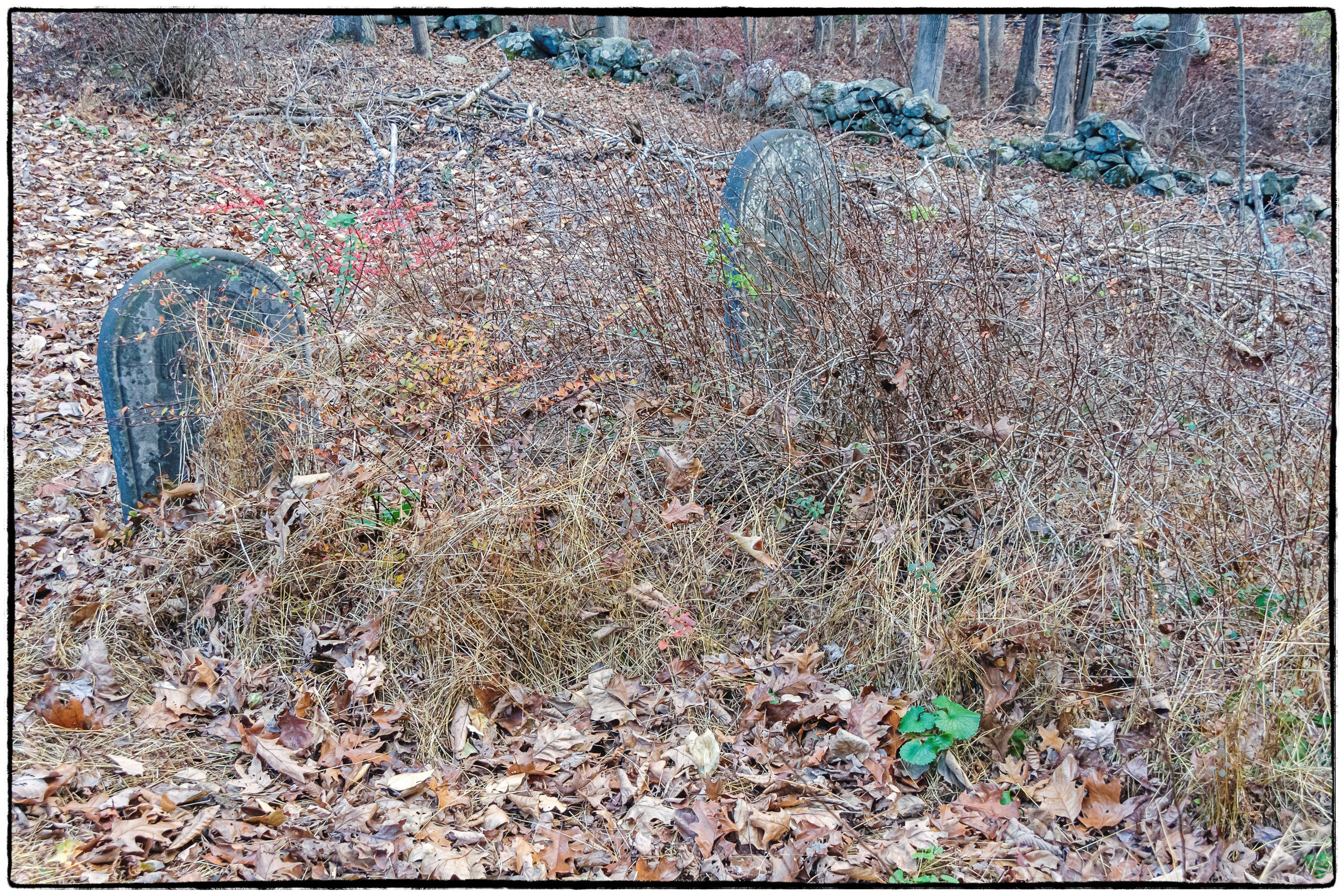
As may be inferred from the above parts are well maintained, but the terrain is somewhat hilly and graves down the hillside are not as well looked after (I imagine that they have not yet been “reclaimed from the woods”).
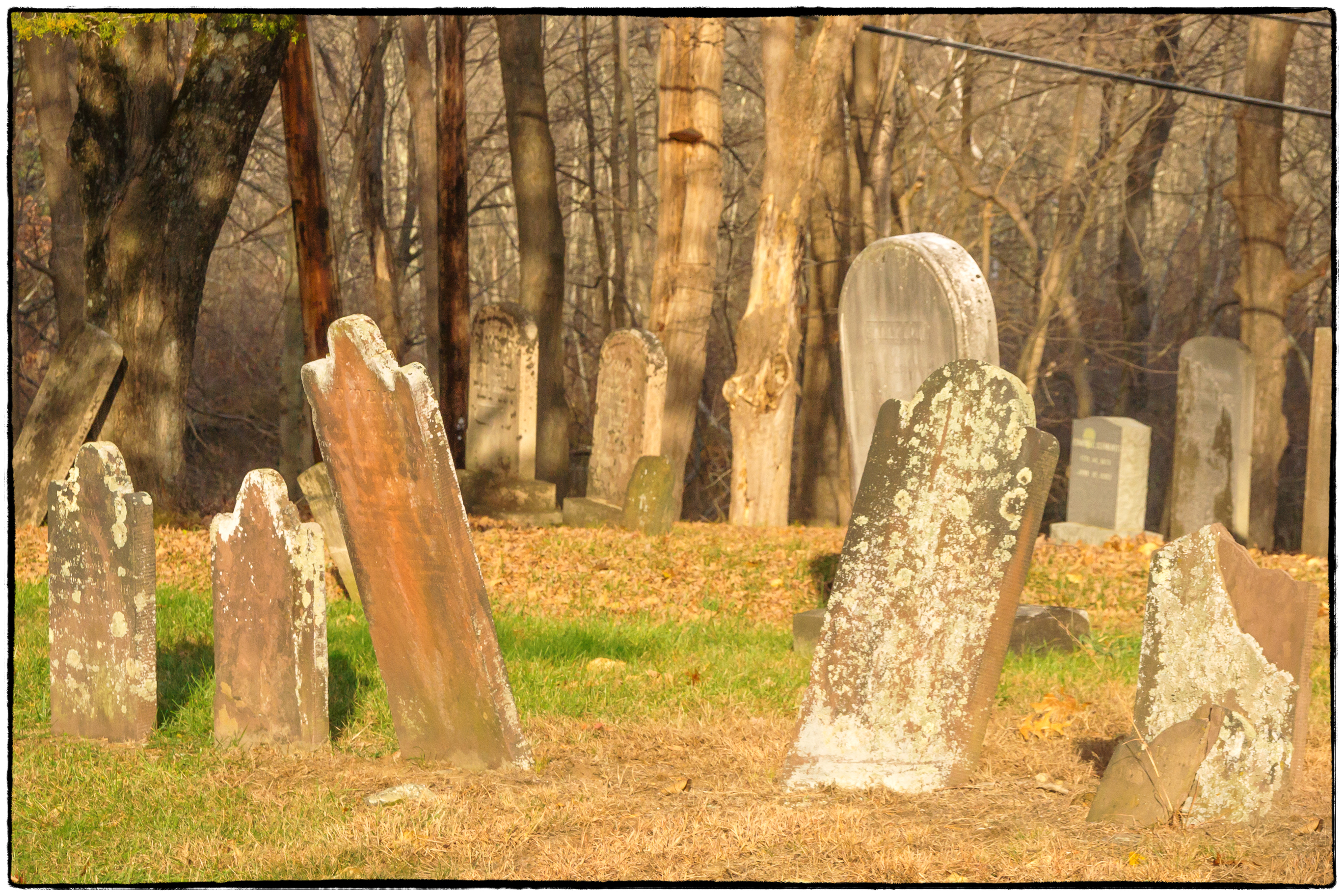
Most of the graves (apparently some 549 in total) seemed to be from the 1800s with some from the 1700s. There is little statuary and the graves are for the most part unadorned with decoration, merely bearing names and other inscriptions.
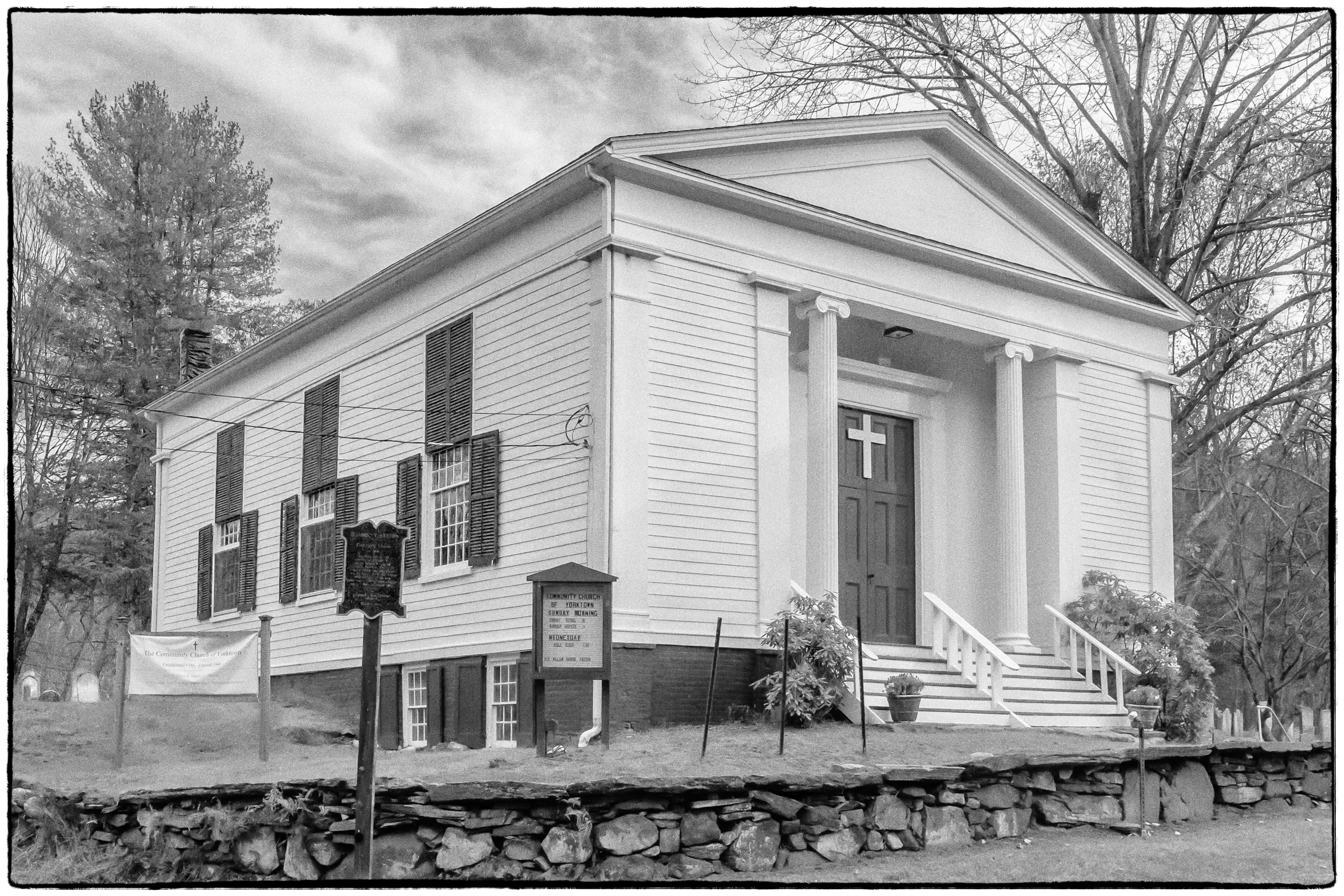
Community Church of Yorktown

The Church’s website provides the following history:

My friend George took me for a drive to a couple of Yorktown cemeteries, familiar to him, but unknown to me. The first is right next to this church.

Our church history goes back to 1785 when the Yorktown Baptist Society, a branch of the Stamford Baptist Church, was organized. In 1788 the Yorktown Baptist Church was officially constituted, with Elder Reuben Garrison as the first pastor. Services were held in homes until the first Baptist meeting house was built in 1802, during the pastorate of Elder Isaac Rhodes. This original building, which was later moved to the corner of Baptist Church and Hunterbrook Roads and remodeled, has at times served as a parsonage. In recent years it has provided housing for the church caretakers.

In 1848 the present Greek Revival-style building, larger than the first building, was constructed and dedicated to the Lord. Services were held under various pastors and visiting preachers until 1890, after which the church was mostly closed for 27 years. In 1917 Rev. Harry B. Roberts, pastor of the Yorktown Presbyterian Church, began holding Sunday afternoon services in the Baptist Church building. In the following years a movement was begun to buy the building from the Baptist Society. The purchase was completed in 1924 and a non-sectarian Community Church, complete with constitution and by-laws, was organized. In 1933 Rev. Roberts became permanent pastor of Community Church and that year conducted the first of our continuous Christmas Eve candlelight services.

In 1940, under the leadership of Rev. F. Gordon Ham, the church was incorporated as The Community Church of Yorktown under the religious corporation laws of the State of New York. Fellowship Hall and our Sunday School classrooms were added to the building in the early 1970s, while Malcolm Foster was pastor.

And now, after several years of repairing and improving the property, we are rededicating the building to God, desiring that for years to come the message of peace through our Lord Jesus Christ will be heard in this place. To God be the glory! Amen. (Oct. 1998)

The historic marker on the property adds:

This Greek revival style church was originally the Baptist Church serving the community known as Huntersville. Most of Huntersville disappeared when the waters of the New Croton Dam put most of the area under water. The adjacent cemetery contains many pre-revolutionary war graves.

Snow scene

We had our first snow of Winter 2016-2017 last night (even if it isn’t yet Winter). The snow – about 2 inches – was a bit of surprise. Looks nice though and is, unfortunately, a hint of what’s to come. It seems that a tree fell on lake shore road and took the power out. But by the time we got back home it was, thankfully, on again.

Happy Birthday, M. Daguerre

Louis-Jacques-Mandé Daguerre was born on 18 November 1787 in Cormeilles-en-Parisis, Val-d’Oise, France. Best known as one of the first pioneers of photography he was also an accomplished painter, businessman and advocate of the diorama.

His positive daguerrotype process for a while dominated photography until ultimately supplanted by William Henry Fox Talbot‘s, negative calotype process.