Facade

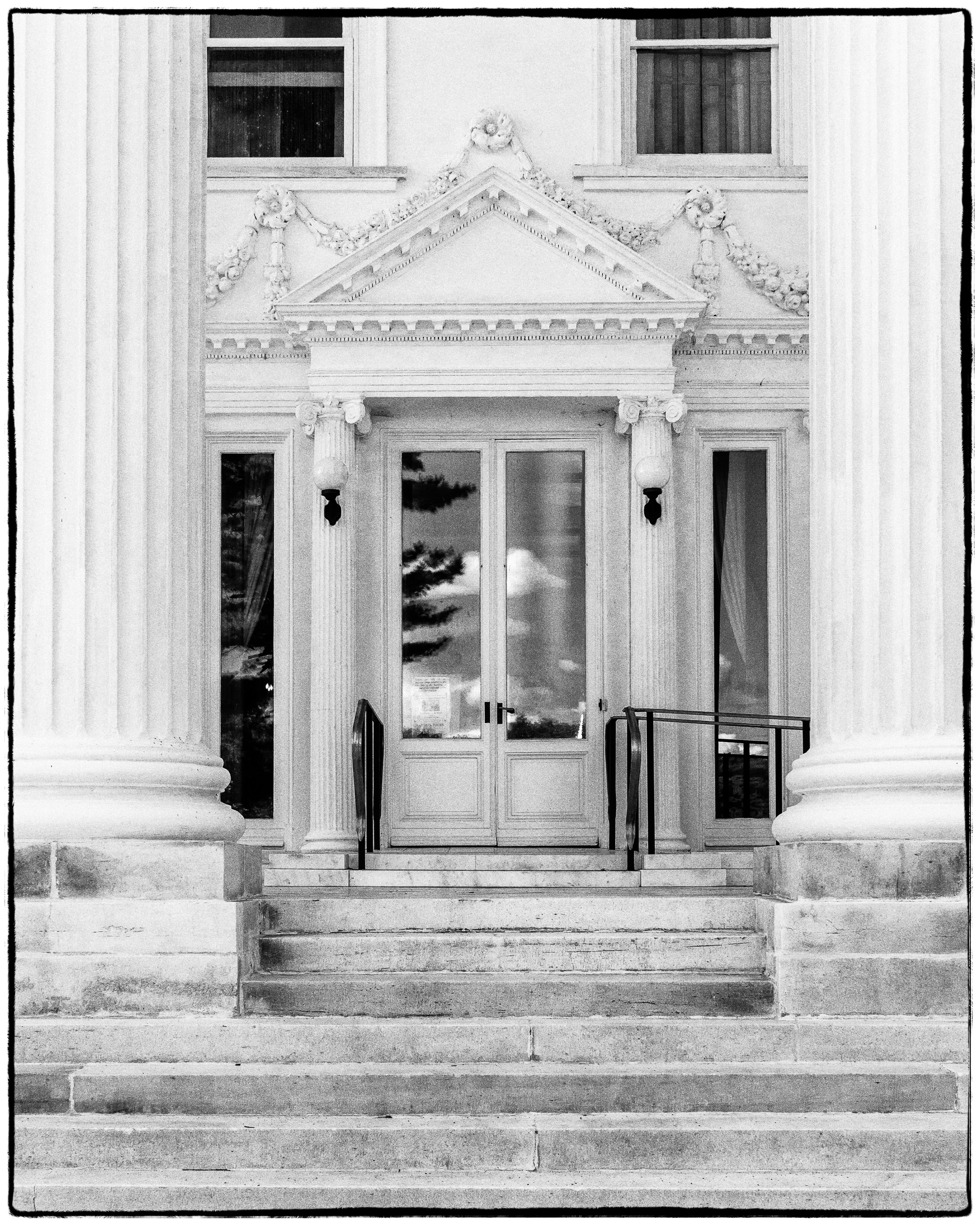
What I felt most when approaching this magnificent old mansion was a sense of awe. The front facade really was quite imposing in its size and solidity. You approach the house from below, which makes it look even more spectacular.

I’ve since learned that it’s not quite as solid as it looks. In the second of two posts dating from 2011 the Big Old Houses site describes it as follows:

I’m very fond of this house but let’s be honest, it was not built for the ages. At first glance, most people assume it’s clad in limestone or marble. Not so. The walls are brick overlaid with wire mesh onto which stucco – meaning layers of fine cement – has been applied by hand. What look like carved stone architectural elements – moldings, brackets and so forth – are all made out of stucco too. In the case of this section of cornice, the projecting shape is not a function of a piece of stone but has been created by means of projecting metal brackets whose wire mesh has fallen off with the missing stucco. At one point the State sprayed the whole building with gunnite, being cement forced out of a hose at high speed, giving the place an unfortunate batter-fried look. The Staatsburg State Historic site is trying its best to remedy the sins of the past by restoring the facade to its original appearance. So far they’ve done one elevation.

It seems that they have now done more. I didn’t notice any of the damage shown in the pictures on this site.

As an aside I noticed that the posts on the Big Old House blog had stopped in July 2015 with a post noting that effective July 2015 posts would appear on the author’s new site. I looked for his new site, but was unable to find it. Eventually I found a notification the the author of the blog, John Foreman, passed away in April 2016. Very sad. I wish I’d found his blog earlier. He seems to have been an interesting person.

Light fixtures

Taken in December, 2012 at a nearby Japanese restaurant. I’d recently acquired a Jupiter 9 lens and adapter for my Sony NEX 5N. It’s a great lens, a copy of a pre World War II Zeiss Sonnar 85mm f/2. There are several versions. Mine is black (rather than silver) and the serial number that indicates that it was built in 1968. I bought it with a Kiev 4am along with a Jupiter 12 (which I’m afraid to use because the protruding rear element looks very easy to damage) and a Helios-103, which I’ve used and is also an excellent lens. Some say it’s a copy of the Zeiss Biotar 58mm f2, but I have one of these and the results seem quite different. Others say it’s a modified version of a Jupiter 8 (itself a copy of the Zeiss Sonnar 50mm f2) and therefore a uniquely soviet design. I’ve also found people who think it’s a copy of a Leitz Summitar so who knows.

I really liked the results from this lens, but I haven’t used it all that much. Why? I think it’s probably because it’s quite large and heavy and of course the adapter makes it even larger and heavier. On the NEX it feels somewhat unbalanced because the body is so small and light.

I haven’t yet used it with the camera with which I bought it. The Kiev 4am is also fairly heavy so it may be that it will feel better on that body. I haven’t shot any film for a while. Maybe I’ll give it a try.

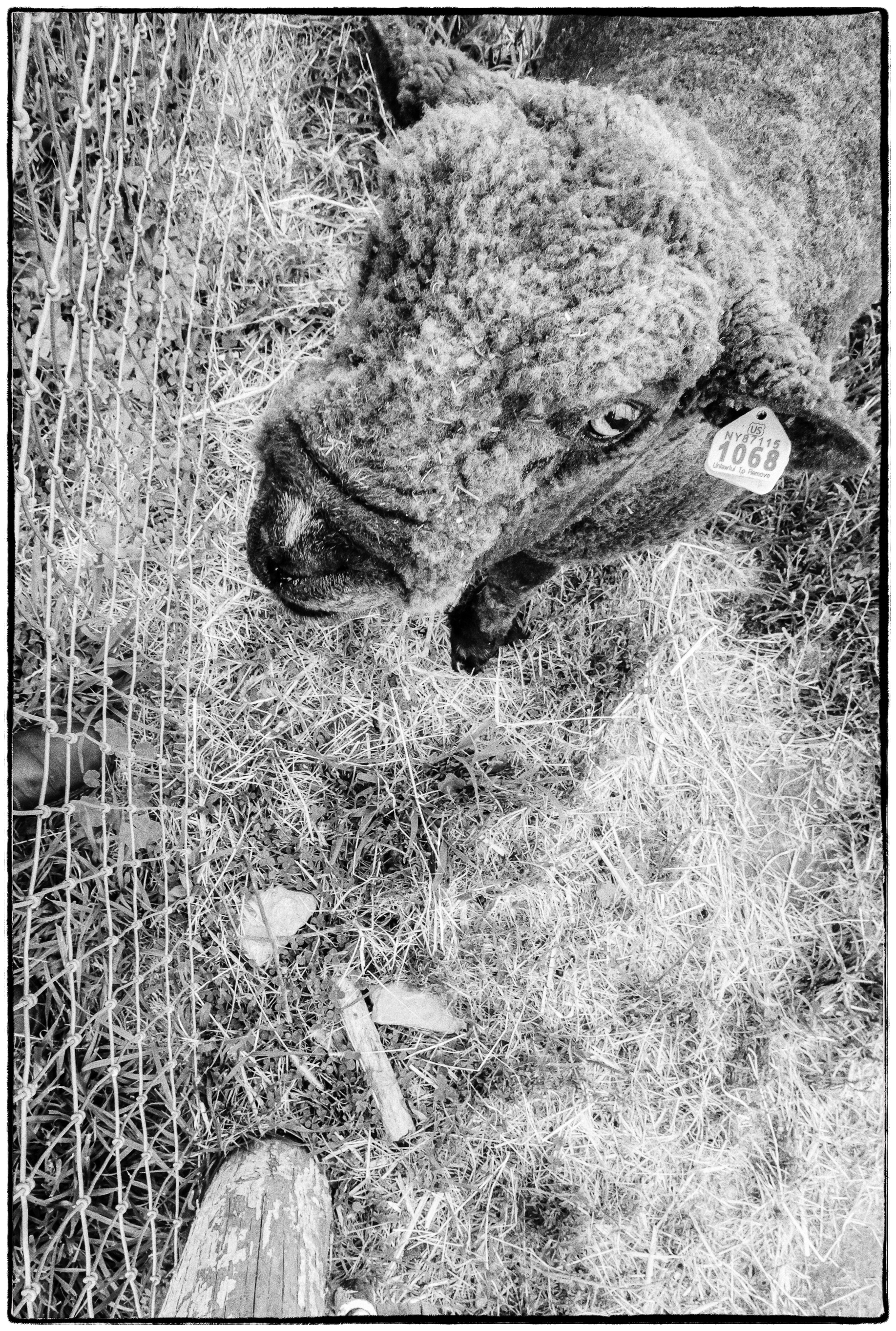
I’ve got my eye on you

I was wandering around at a nearby working farm when this cow (I think it’s a cow) ambled over. I waited for a while in the hope that it would look up, which it eventually did. It’s a fairly rare picture for me in that 1) I don’t often take pictures of animals and, more significantly, I almost never take pictures looking down. I’m not sure why that is. I usually take pictures at eye level and sometimes get down low to take pictures looking up, but I rarely take pictures looking down.

I imagine I was thinking that it looked rather “cute” and I’m sure I had a smile on face because of the way it looked up at me.

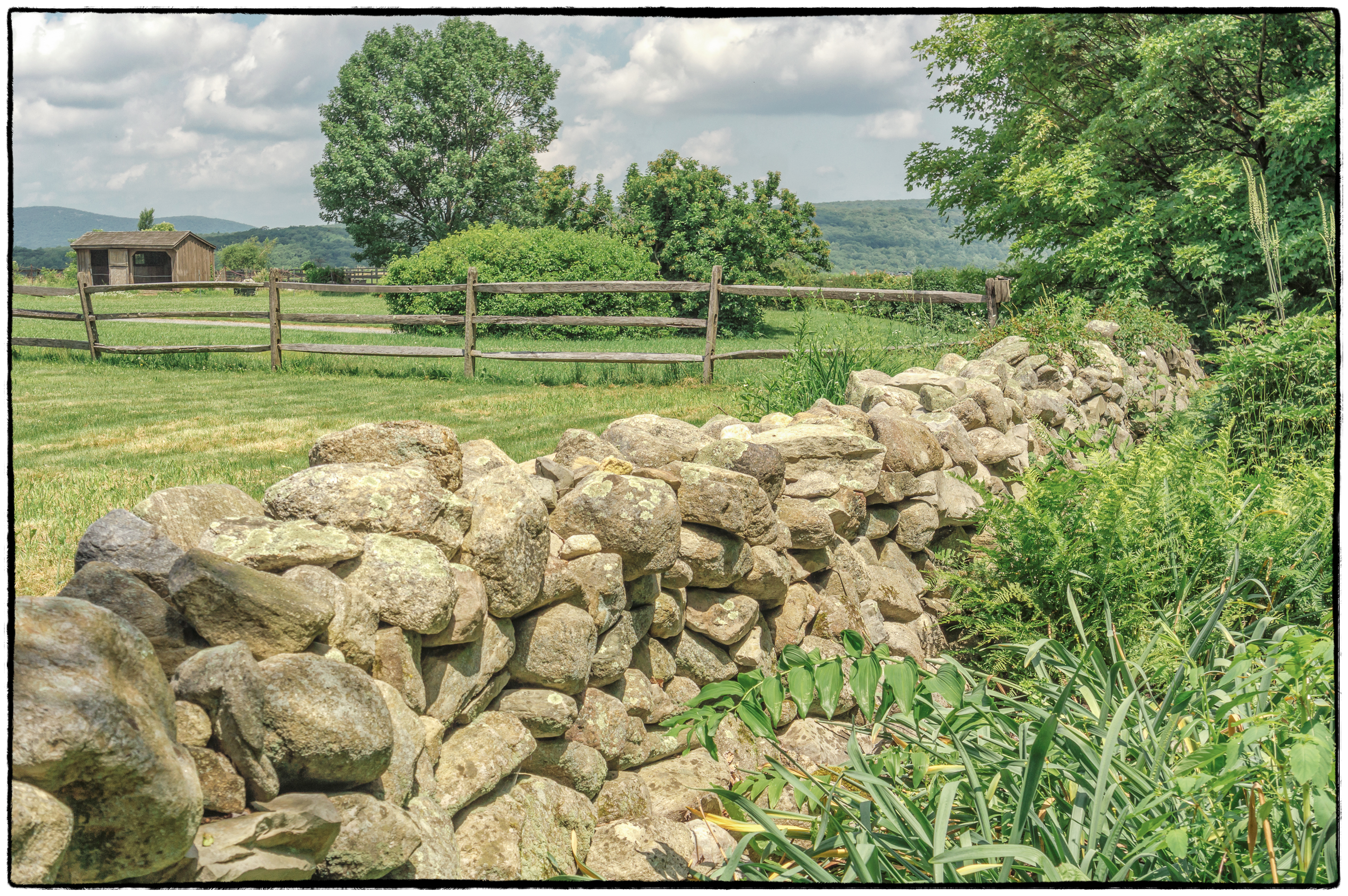
Stone wall, fence and shed

Taken in the Hudson Valley a while back. I don’t really remember what I was feeling when I took it. I imagine a certain sense of calm and tranquility brought about by the way the landscape recedes into the distance. I’ve always liked the textures of stones (on looking at it again I might perhaps of enhanced them a bit) and the way the stone wall leads diagonally across the frame until it reaches the wooden fence with it’s own distinctive color and texture (just barely visible). The fence leads off on a slight diagonal to the left eventually ending up at the shed and the hint of hills rising up behind it. Or at least I hope that’s what happens.

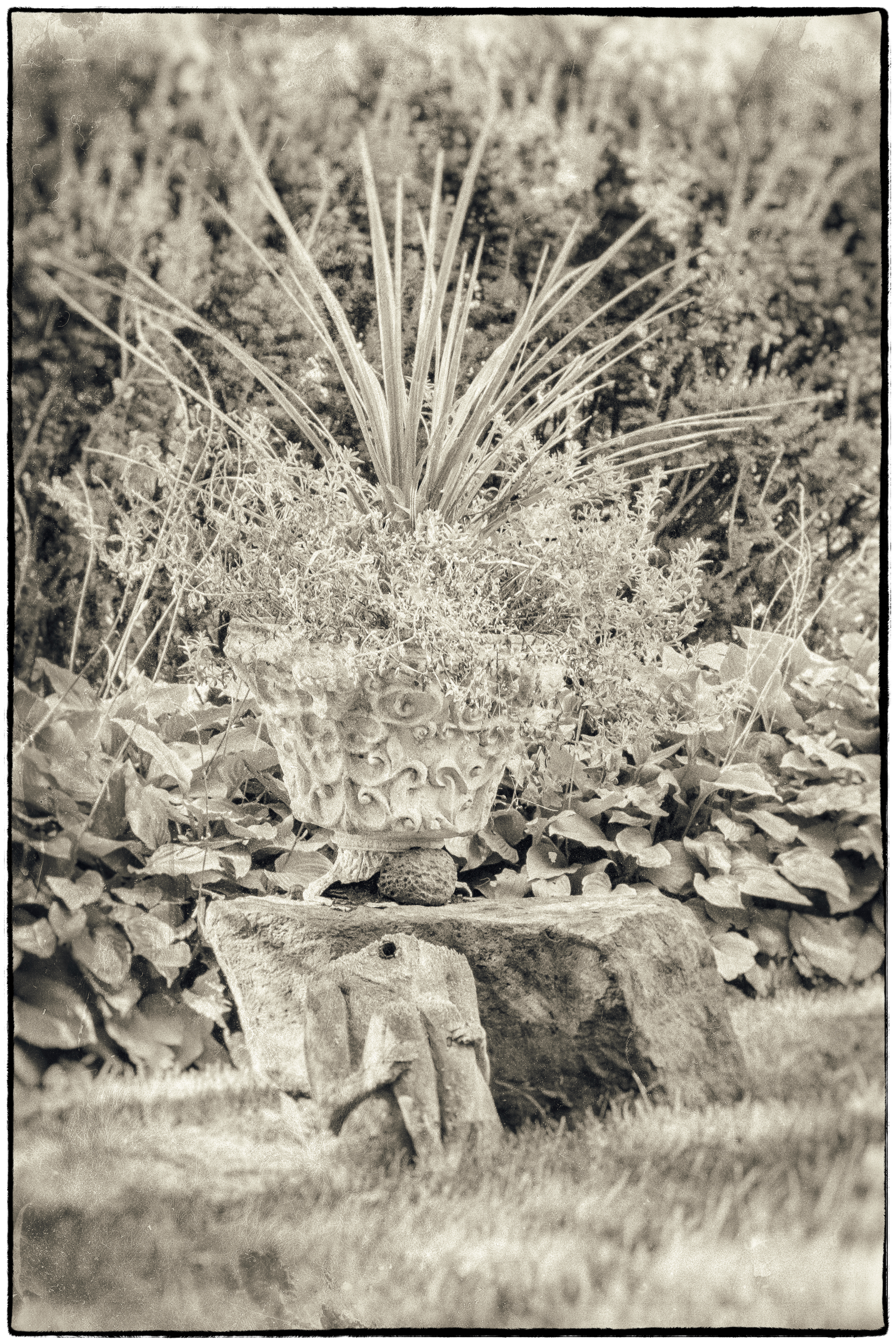
Headless statue

I came across this decapitated statue in a nearby garden. I could see it from the road as I was walking the dog. It seemed a little peculiar and appealed to my sense of humor. As with many old statues I’m always reminded of my idol Eugene Atget. Once again this is a flawed attempt at emulating him – hence the old style treatment.