Thrift store find – Canon AF35M

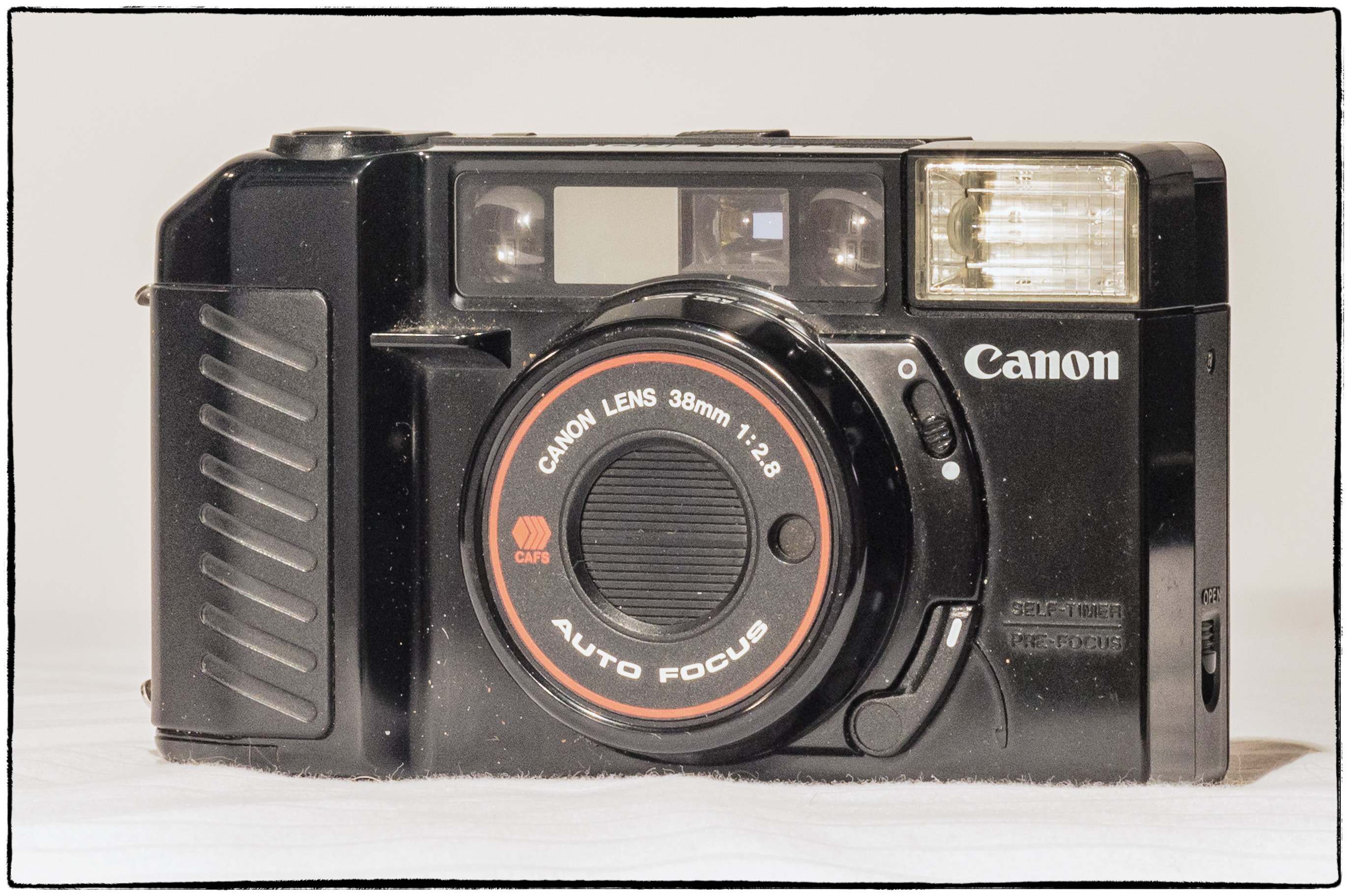
I came across this camera in a nearby thrift store (Goodwill). It seemed to be in pretty good shape and had a solid feel to it. Although I’d already read about this camera before I’d forgotten about it. So I left it. After returning home I looked it up and discovered that it might have some historical significance. The Konica C35 AF (which I also have) was the first autofocus camera, but it apparently had a not particularly impressive passive autofocus system. The Canon AF35M introduced a better active autofocus system, which I believe has formed the basis for camera autofocus ever since.

According to a post (Canon AF 35M), which also provides a detailed review of the camera on Mike Eckman’s excellent site:

In terms of historical significance, the AF35M was the first camera in the world to offer a modern automatic focusing system. The reason I threw the word “modern” in that previous sentence is because its actually the second auto-focus camera released in the late 70s. The first was the Konica C35 AF which came out two years earlier in November 1977. Many people do not consider the Konica C35 AF to be a truly automatic focus camera because Konica “cheated” somewhat in how they accomplished automatic focus.

An ad from 1980 for the AF35M hyped the frustration free simplicity of the camera. Konica employed the use of the Visitronic AF system that was created and produced by Honeywell. This system was a passive auto-focus design which used a traditional two window rangefinder to compare the light entering each window, and through the use of a primitive CPU, it would estimate range and then adjust the focus of the lens to achieve proper focus. Canon’s CAFS (Canon Auto Focus System) from the AF35M used a scanning infra-red light beam that would triangulate distance by reflected light bouncing back to the camera. Konica’s system was easily tricked and could not handle moving or very small objects very well. Canon’s CAFS system was far from fool-proof, but it handled a variety of scenes, including low light situations, much more reliably.

I also discovered that the camera is capable of taking impressive pictures (see A Canon in A Minor – the AF35M on Random Camera Blog).

I had to go back to the same area the following day and I decided that, if the camera was still there, and if the price was less than $10 I’d get it (the camera had no price sticker on it). As it turned out the price was $5 so I got it.

Surprisingly the camera had functioning batteries in it and fired up immediately when I turned it on. Everything else seemed to be working fine too.

I did a bit more research and discovered that this particular model was not the first in the series though. There are a large number of different models from the first in 1979 to the last in 2005. I’m most interested in the early models. The first three models were (the names represent the way the camera was designated in the USA, Europe and Japan):

Canon Sure Shot/AF35M/Autoboy (1979)
Canon Super Sure Shot/AF35ML/Autoboy Super (1981)
Canon (New) Sure Shot/AF35M II/Autoboy 2 (1983)

The one I had was the third: (New) Sure Shot, AF35 M II, Autoboy 2. The problem arises because the first and third US models are both labeled on the top plate as simply ‘Sure Shot’. Of course I decided that I had to have the first. I found one on ebay and hope to receive it soon. Then I’ll have decide if I want the Super Sure Shot with its faster lens (f1.9 instead of f2.8). A quick look at ebay tells me that this model is somewhat more expensive so maybe I’ll just wait and see if I bump into one in a thrift store of flea market.

Haven’t been getting out much lately

I wasn’t able to get out much to take pictures this July.

First, we had an unusually large volume of visitors. It started with a visit from our younger daughter, who was in NY on business. She wasn’t able to come out and visit, so we went into the city to have lunch with her at the Oyster Bar in Grand Central Terminal. Then two old friends came to stay over the weekend. They had both suffered losses in 2015: one the death of a husband, and the other a death of a child. It was great to have them with us. We took them to see a production of “As you like it” at the Hudson Valley Shakespeare Festival at Boscobel. This was followed by a quick visit from one of our sons-in-law (the husband of our younger daughter). He frequently comes to NY on business so we see him quite a lot. After him our older daughter and her family (husband and three grandchildren) came to stay (from Amman, Jordan). The month ended with a visit from one of my wife’s former colleagues and a friend of hers. The weather was bad, but the rain managed to hold out long enough for us to visit nearby Chuang Yen Monastery (above), to sit down on the dock for a while, and to have dessert on the patio.

Second, the weather has (at least from my perspective) been terrible. It was very hot (high 90sF/low 100sF) and extremely humid for some time. This is my least favorite weather. Eventually it cooled down, but then turned stormy. We’ve just had a very wet weekend (6+ inches of rain). Even when there were breaks I didn’t feel like walking around taking pictures.

Third, somewhere along the line I developed a stiff neck (a little painful, but not excessively so); and a painful left foot (probably from being on my feet cleaning the house for 12 hours followed by four hours cooking the next day. Finally, I woke up this morning with a runny nose, sneezes, and a sore throat. My wife has had these symptoms for about a week so I guess I got it from her. Shouldn’t complain though. I can’t remember when I last had a cold.

The weather is supposed to improve tomorrow and remain good for most of the following week. If my cold doesn’t get significantly worse I hope to be able to get out with a camera. I’m looking forward to it.

Portrait of a woman 2

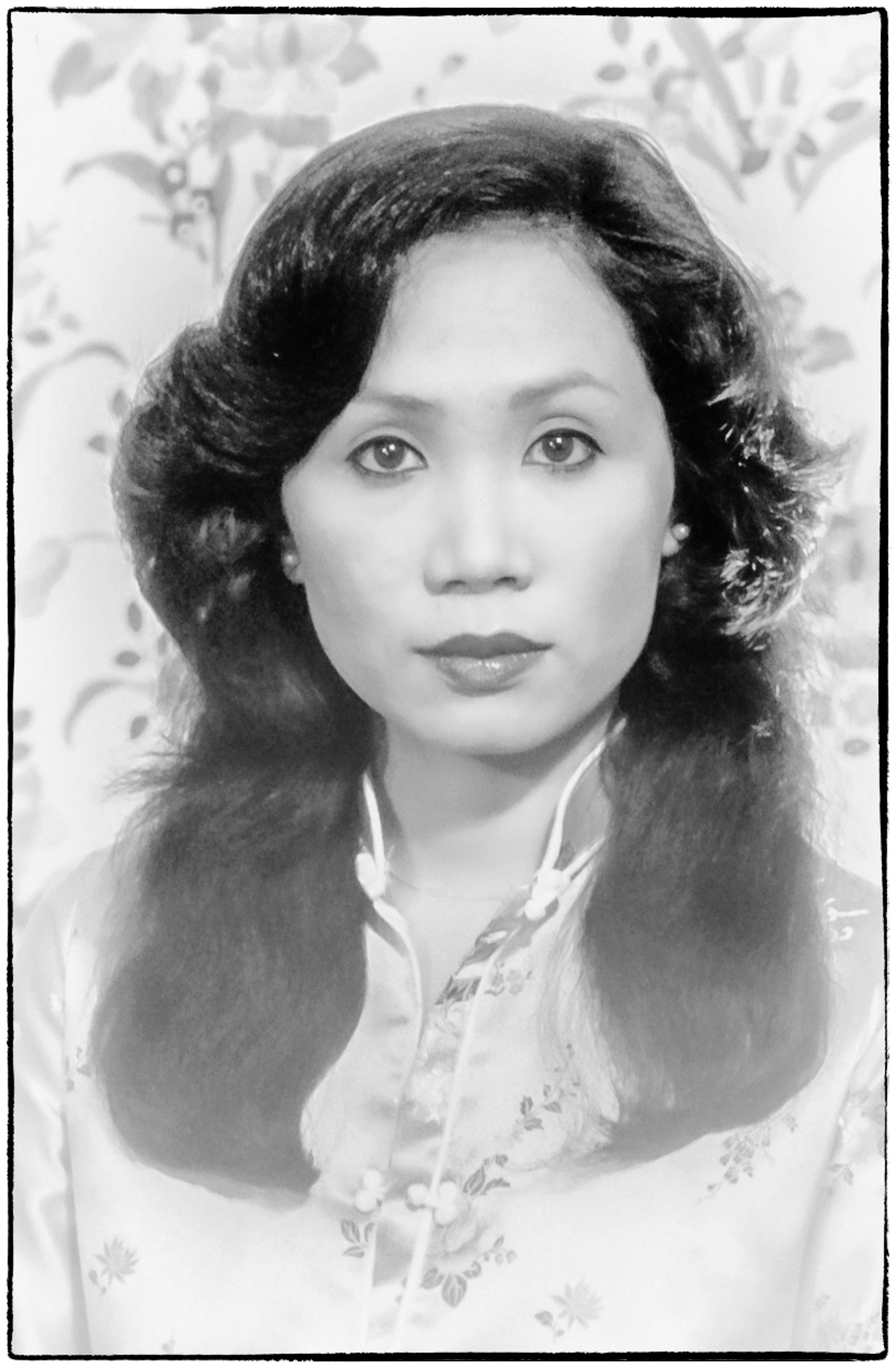
For time to time I go through boxes of negatives from long ago looking for candidates for scanning. I say negatives, but there are also a few (very few) slides – this is one of them. I no longer remember what camera it was (probably a Canon AE-1 or a Minolta 7sii rangefinder), but it was certainly taken in the late 1970s early 1980s. The subject is, of course, my wife.

I like scanning slides. The quality seems to be so much better than scanning negatives, and many many times better than scanning prints.

Contrast

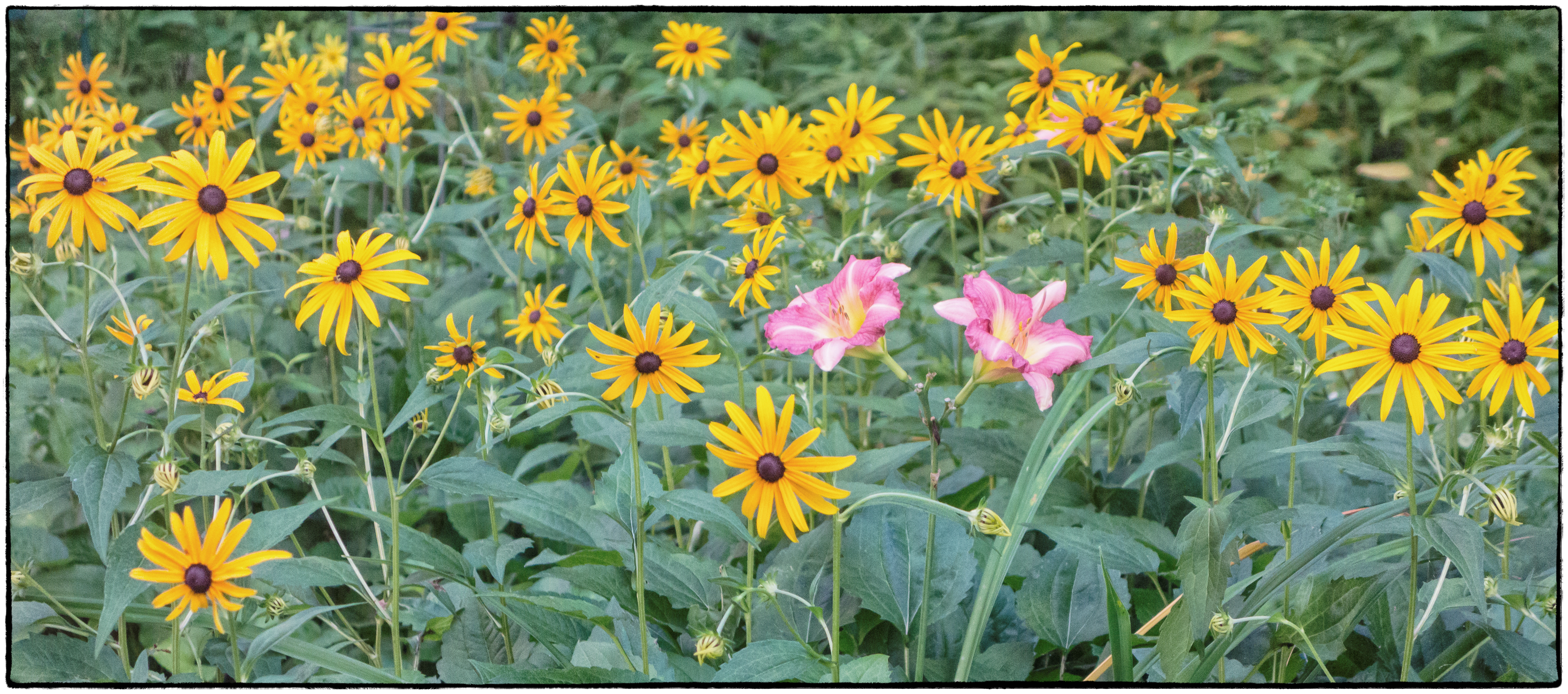
I thought about including this in the “By the roadside” series, but then it occurred to me that all of the pictures in that series were of flowers/plants growing wild by the side of the road. This is a actually a picture of someones garden.

I was taken by the mass of Rudbeckia (otherwise known as coneflower or black-eyed susan) surrounding the solitary Asiatic Lily .

French Photography in the 19th Century

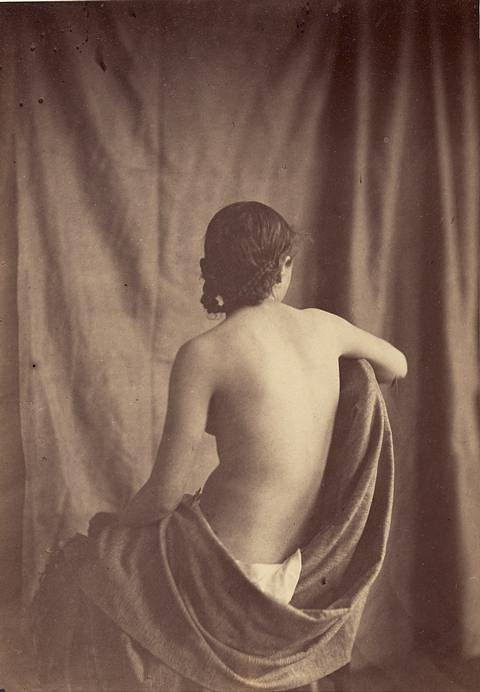
Jean-Louis-Marie-Eugène Durieu (French, 1800 – 1874) and Possibly with Eugène Delacroix (French, 1798 – 1863), Draped Model, about 1854, French, Albumen silver print, 18.6 × 13 cm (7 5/16 × 5 1/8 in.), 35.1 × 27 cm (13 13/16 × 10 5/8 in.), 85.XM.351.9, The J. Paul Getty Museum, Los Angeles

Not much text in this post (other than the extremely detailed captions), but some interesting early photographs.

France is one of the pioneers of photographic technology and advances — progressing it as art and as science. The works of French photographers Édouard Baldus, Gustave Le Gray, Henri Le Secq, and Charles Nègre helped the development of paper photography.

Opening on August 30, here are some of the photographs set to highlight in the upcoming exhibition “Real/Ideal: Photography in France, 1847-1860” at the Getty Museum.

Source: French Photography in the 19th Century · Lomography