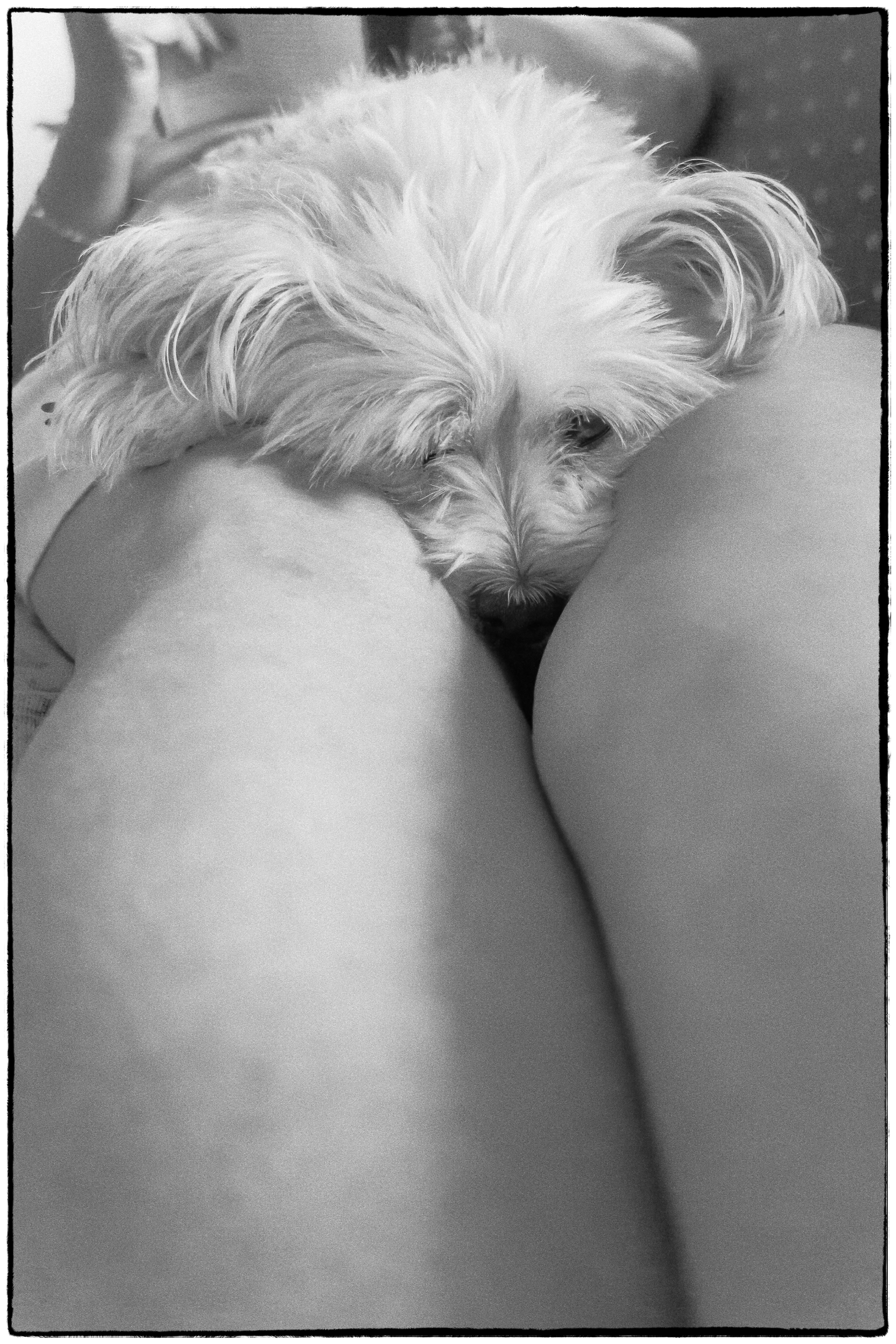
Our dog, Harley found a comfortable spot for a nap: on my wifes’ legs as she was lying on the sofa reading the newspaper.
Photographs and thoughts on photography and camera collecting

Our dog, Harley found a comfortable spot for a nap: on my wifes’ legs as she was lying on the sofa reading the newspaper.

Back in July 2012 I was walking around in a small park by the railroad tracks and the Hudson River at the end of Liberty Street in Ossining, NY. I don’t even know the park’s name. I noticed this hole and finding it vaguely interesting took a picture of it. Since it wasn’t much of a picture I didn’t think any more about it.
Until recently. I was looking up the history of Sparta for a recent post: A walk around Sparta when I came across this reference: “About a mile south of the village green is the Sparta Mine, a silver and lead mine that was worked prior to the Revolutionary War”. I don’t know where the “village green” is/was, but if it was referring to the centre of Ossining then “a mile south” seemed to be about right.
Looking further I came across this tidbit:
An old lead and silver mine located about 1 mile (1.6 km) south of the Ossining railroad station.
Stearns (1852) gives a brief history of the mine:
“Mr. Sampson Simpson…obtained many valuable mining rights from individuals and the Crown of Great Britain…the silver mine at Sing Sing, Westchester County, New York, [was] very extensively worked and proved exceedingly rich. [This] mine yielded a large quantity of native silver, some portions of which may now be seen at the office of Sampson Simpson, Esq., No. 13 Beekman Street, New Tore.
As a large number of the stockholders of this silver mine at Sing Sing, belonged to the British Army at the commencement of the Revolutionary War, and as its location was very much exposed, the operations upon it were suspended at that time. The tools, smelting house and other buildings were removed by the Continental Army to West Point, and the latter were made to serve for barracks during the war. It was, therefore, solely on account of these circumstances, and not from a scarcity of metal that this work was discontinued. It is certainly to be hoped that some enterprising individuals will again open these mines, and render their untold wealth useful to mankind, as well as profitable to their present proprietor.”
The article also included some pictures, which seemed to confirm that this is indeed the mine in question.
The Iron Miners site provided some additional information:
The Sparta Mine was discovered around 1820 by the Westchester Copper Mine Company. Later on April 12, 1824, the company was officially incorporated with Edward Kemeys serving as president. In the fall of 1827, a 30 foot deep shaft was deepened to 80 feet in depth. An adit met the shaft at a distance of 400 feet in from its mouth. Several tons of rich ore were removed from this shaft, some of it yielding 75% copper. In addition, lead was also produced. Further shaft sinking reportedly totalling 530 feet failed to locate ore.
Under the guidance of Joseph Tregaskis, the Westchester Copper Mine company hired miners directly from Cornwall, England.
Around 1860, Kemeys refurbished the shaft with the intent of continuing mining but this effort was short lived.
Another site (Abandoned mines.net) suggests that the mine was accessible as recently as 2009.
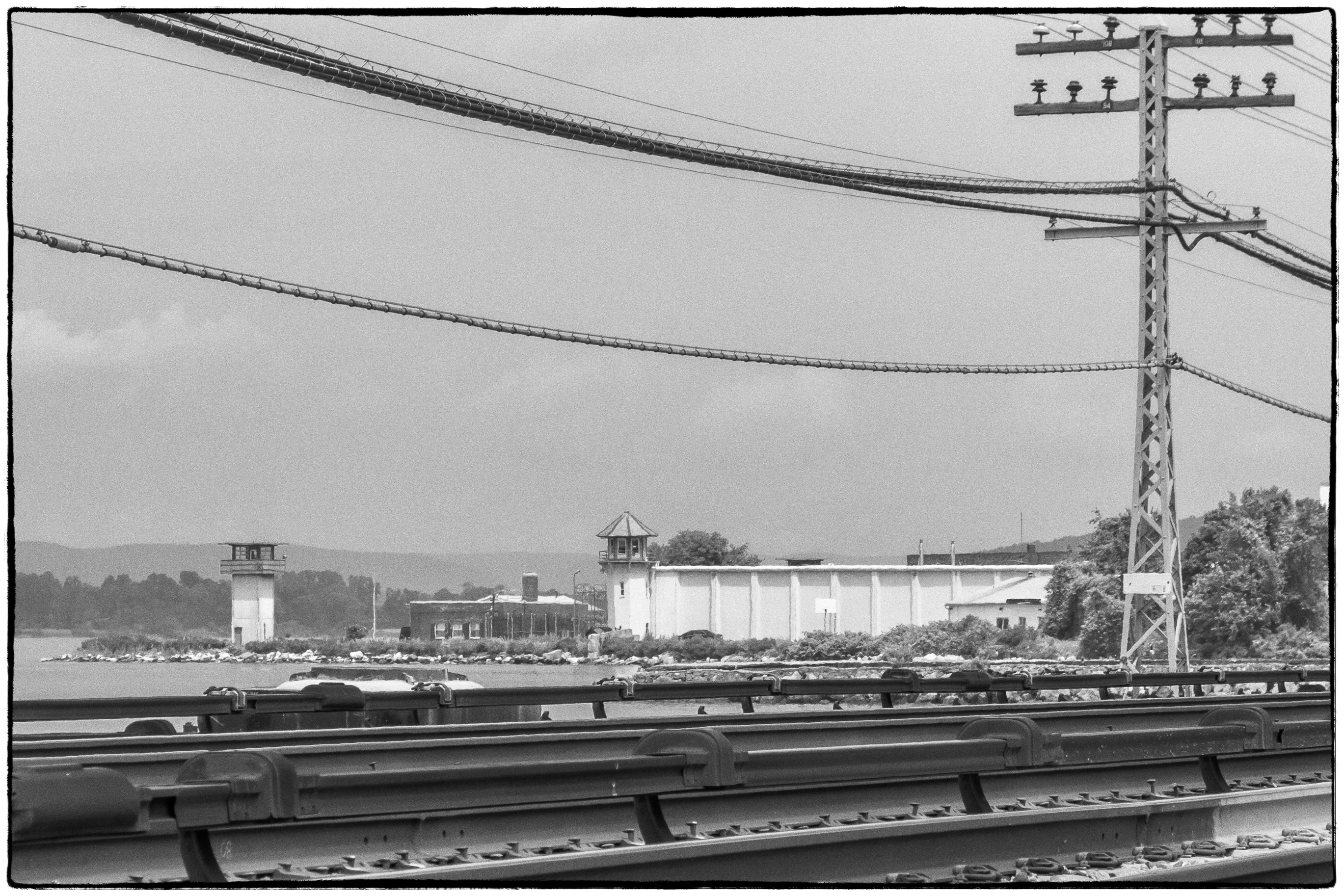
Seen from down by the Hudson Line railroad tracks in Ossining, NY. Looking at this picture closely you can see that what should be vertical lines are, in fact, wavy. It was a very hot day so I suppose that this effect is some kind of heat haze.
According to Wikipedia:
Sing Sing Correctional Facility is a maximum security prison operated by the New York State Department of Corrections and Community Supervision in the village of Ossining, in the U.S. state of New York. It is located about 30 miles (50 km) north of New York City on the east bank of the Hudson River.
In 1970, the name of the facility was changed to “Ossining Correctional Facility” but, in 1985, it reverted to its original name. “Sing Sing” was derived from the name of a Native American Nation, “Sinck Sinck” (or “Sint Sinck”), from whom the land was purchased in 1685.
Sing Sing prison confines about 1,700 prisoners. There are plans to convert the original 1825 cell block into a time specific museum.
The prison property is bisected by the Metro-North Railroad’s four-track Hudson Line.
…
Sing Sing was the third prison built by New York State. The first prison, Newgate Prison, was built in 1797 in Greenwich Village and a second one in 1816 called Auburn State Prison.
In 1824, the New York Legislature gave Elam Lynds, warden of Auburn Prison and a former Army captain, the task of constructing a new, more modern prison. Lynds spent months researching possible locations for the prison, considering Staten Island, The Bronx, and Silver Mine Farm, an area in the town of Mount Pleasant, located on the banks of the Hudson River.
By May, Lynds had finally decided to build a prison on Mount Pleasant, near (and thus named after) a small village in Westchester County named Sing Sing, whose name came from the Native American words “Sinck Sinck” which translates to “stone upon stone”. The legislature appropriated $20,100 to purchase the 130-acre (0.53 km2) site, and the project received the official stamp of approval. Lynds hand-selected 100 inmates from the Auburn prison for transfer and had them transported by barge via the Erie Canal and down the Hudson River to freighters. On their arrival on May 14, the site was “without a place to receive them or a wall to enclose them”; “temporary barracks, a cook house, carpenter and blacksmith’s shops” were rushed to completion.
When it was opened in 1826, Sing Sing was considered a model prison, because it turned a profit for the state, and by October 1828, was finally completed. Lynds employed the Auburn system, which imposed absolute silence on the prisoners; the system was enforced by whipping and other brutal punishments.
Thomas Mott Osborne’s tenure as warden of Sing Sing prison was brief but dramatic. Osborne arrived in 1914 with a reputation as a radical prison reformer. His report of a week-long incognito stay inside New York’s Auburn Prison indicted traditional prison administration in merciless detail.
Prisoners who had bribed officers and intimidated other inmates lost their privileges under Osborne’s regime. One of them conspired with powerful political allies to destroy Osborne’s reputation, even succeeding in getting him indicted for a variety of crimes and maladministration. After Osborne triumphed in court, his return to Sing Sing was a cause for wild celebration by the inmates.
Another notable warden was Lewis Lawes. He was offered the position of warden in 1919, accepted in January 1920, and remained for 20 years as Sing Sing’s warden. While warden, Lawes brought about reforms and turned what was described as an “old hellhole” into a modern prison with sports teams, educational programs, new methods of discipline and more. Several new buildings were also constructed during the years Lawes was warden. Lawes retired in 1941 after 21 years as warden and died six years later.
In 1943, the old cellblock was finally closed and the metal bars and doors were donated to the war effort.
In 1989, the institution was accredited for the first time by the American Correctional Association, which established a set of national standards by which it judged every correctional facility.
Today, Sing Sing houses more than 2,000 inmates, with about 1,000 people working there and 5,000 visitors per month. The original 1825 cellblock is no longer used and in 2002 plans were announced to turn this into a museum. In April 2011 there were talks of closing the prison in favor of real estate.
I’ve been living near Sparta for about eighteen years and for most of that period have passed through it twice a day on the way to work and back. Never once have I thought to look up its history and to date I have not taken the walking tour (I’ll have to rectify that). Below, a few of the many historic homes in Sparta.
According to Wikipedia Sparta:
is a neighborhood of the village of Ossining in New York. Sparta borders the Hudson River south of most of the village of Ossining. The neighborhood was a hamlet of the town of Ossining, and remains its oldest community. Sparta was founded by Dutch settlers in the 17th century. It has zip codes 10510 and 10562. The elevation is 56 feet.
The neighborhood includes the Sparta Historic District, the Jug Tavern, and the Sparta Cemetery. The New Croton Aqueduct, Old Croton Aqueduct, Old Croton Trailway State Park, and Trailways State Park Aqueduct transverse the neighborhood.
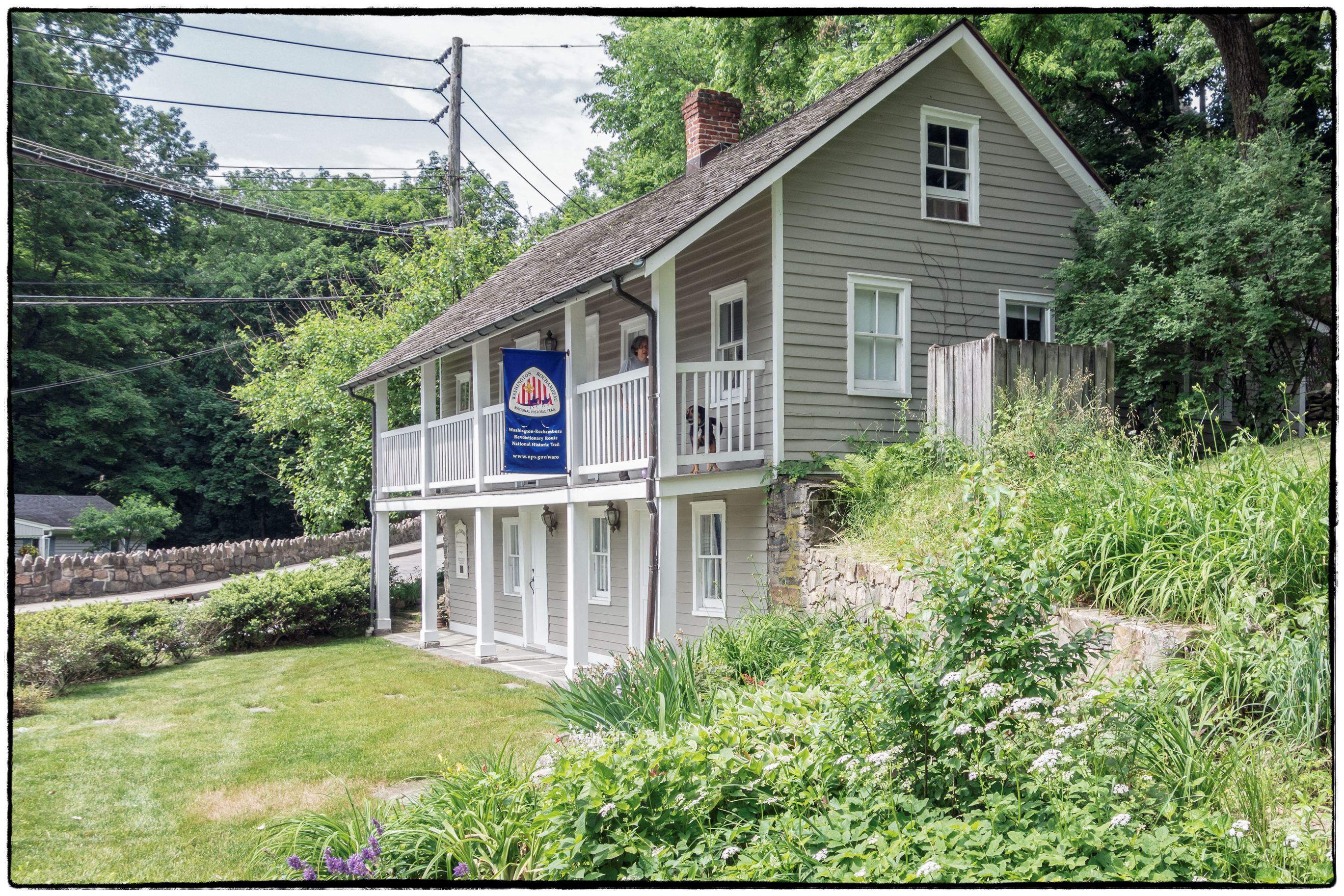
Above, The Old Jug Tavern:
74 Revolutionary Road. The Jug Tavern, or Davis-Garrison House, is believed to be the oldest surviving structure in the Village of Ossining. The northern half of the house was probably built by Peter Davis soon after his marriage in January 1758. Peter died before 1795, but his widow owned the house at least until 1810. By 1830, the house was owned by Nathaniel and Annie Garrison. Nathaniel died in 1843, but Annie lived there until her death in 1869 at the age of 99.
It is not clear how the Davis-Garrison House got the name “Jug Tavern,” but Nathaniel Garrison may have sold liquor by the jug, without benefit of a license, as there is no record of a tavern license having been granted to any occupant of the house. Mrs. William Mowatt sold the house to the Town of Ossining and the Ossining Restoration Committee in 1975, and the deed was transferred to the non-profit corporation Jug Tavern of Sparta Inc. in 1976. This house was rebuilt in 1884 and renovated from 1975 to 1991. It was entered in the National Register of Historic Places in 1976.
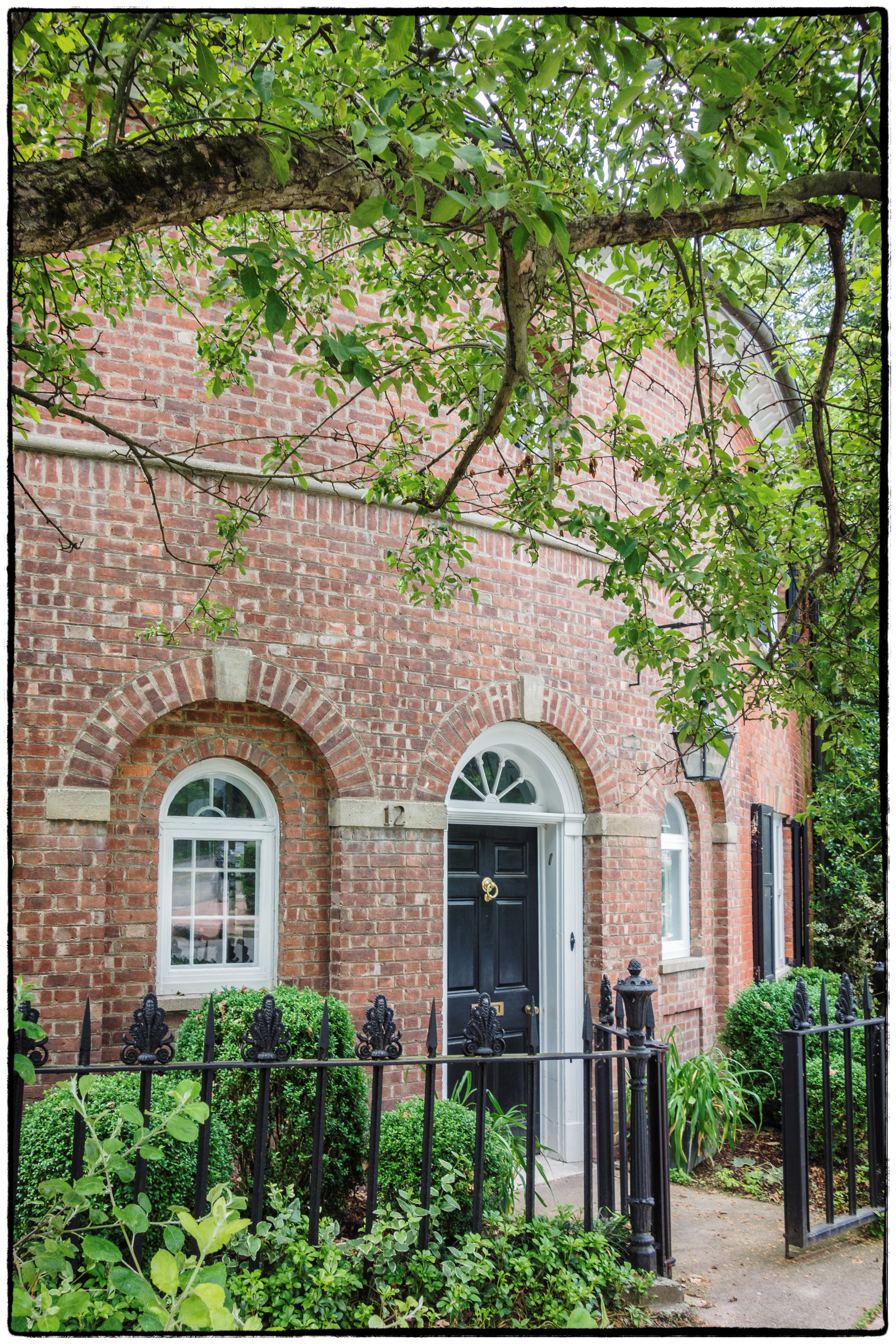
12 Liberty Street. This brick house with a Georgian-style curved front consists of the original square structure on the right-hand side, built in 1789 of Flemish bond construction, and the addition that was built during the Vanderlip restoration of Sparta between 1919 and 1922. The house was the Union Hotel, owned by Thomas Sherwood, in the 1860s and ’70s, and the Washington Inn in 1895. The local lore is that George Washington once slept there.
Sparta residents once got their water from a well in front of the house, at the intersection of Liberty Street and Rockledge Avenue. This was the site of the village well until about 1920.
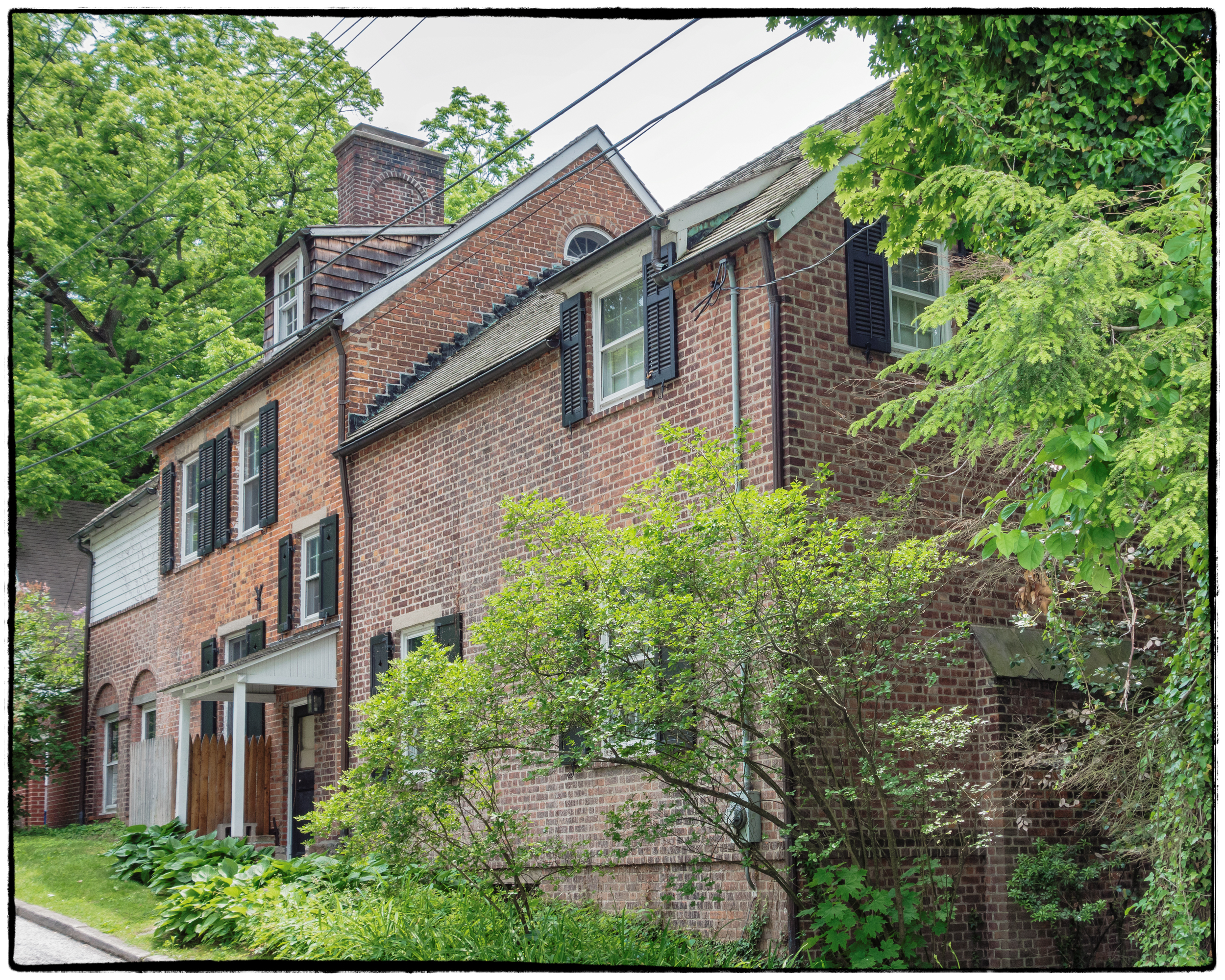
1 Rockledge Avenue. The original center portion of this brick house, built in 1784, is of Flemish bond construction. The owner, Josiah Rhodes, operated a mustard mill, in partnership with William Kemeys, on Sparta Brook from at least as early as 1797. Rhodes died in 1807.
Legend has it that the house served as George Washington’s headquarters while he stayed at the hotel across the street at 12 Liberty Street. The left and right wings were added in 1921 by Vanderlip‘s contractor, William Crawford. Andrew Lyon, a weaver, lived in the house during the 1860s and ’70s, and Harry Hopkins of the Franklin Roosevelt administration lived there from 1932 to 1936.
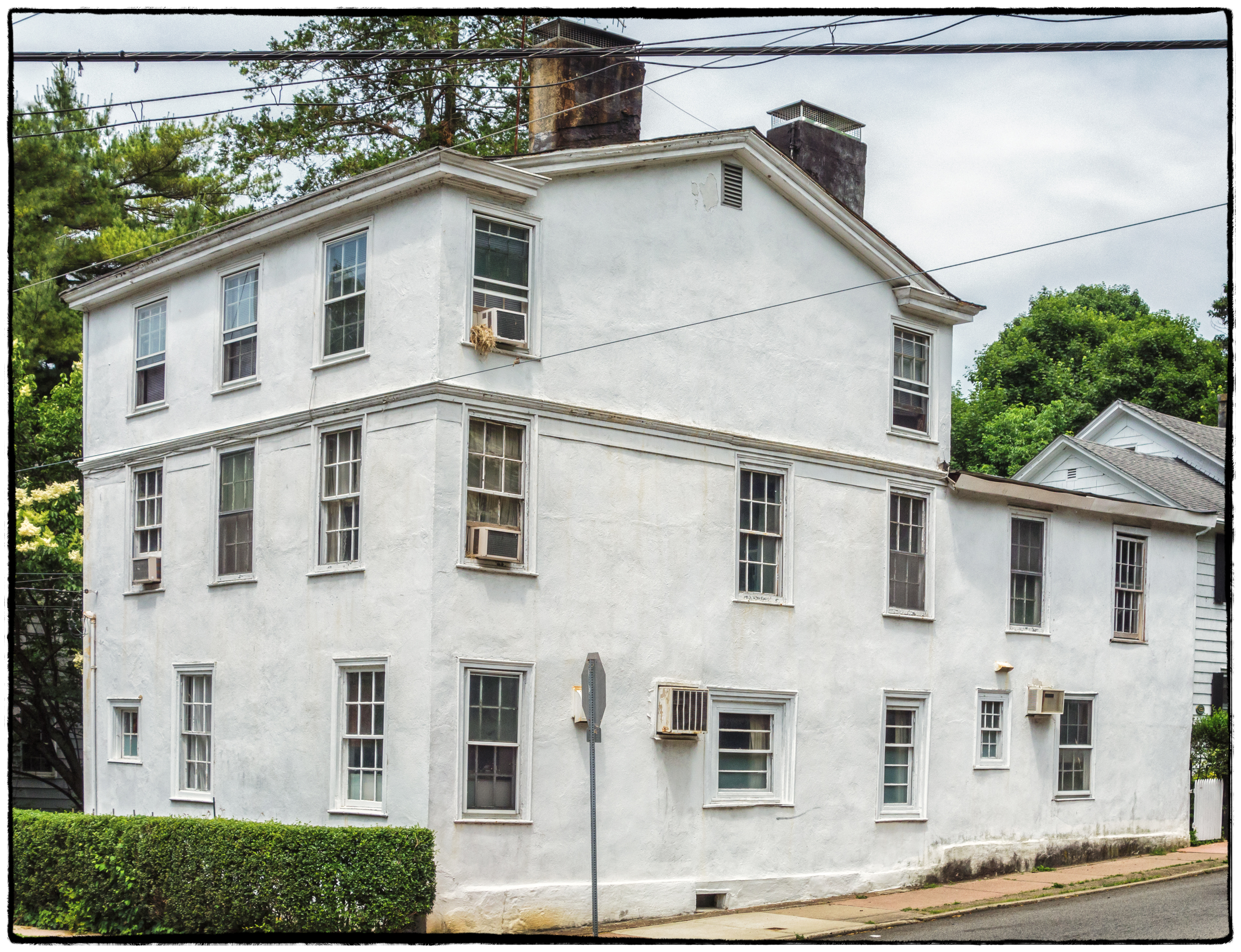
11 Liberty Street. This stucco house was built before 1820 and has been extensively altered since then. The building was a hotel called the “Branch House,” owned by A. Vanderhoff, in the 1860s and 1870s. It was the grocery and general store of Edward Storms at the turn of the century.
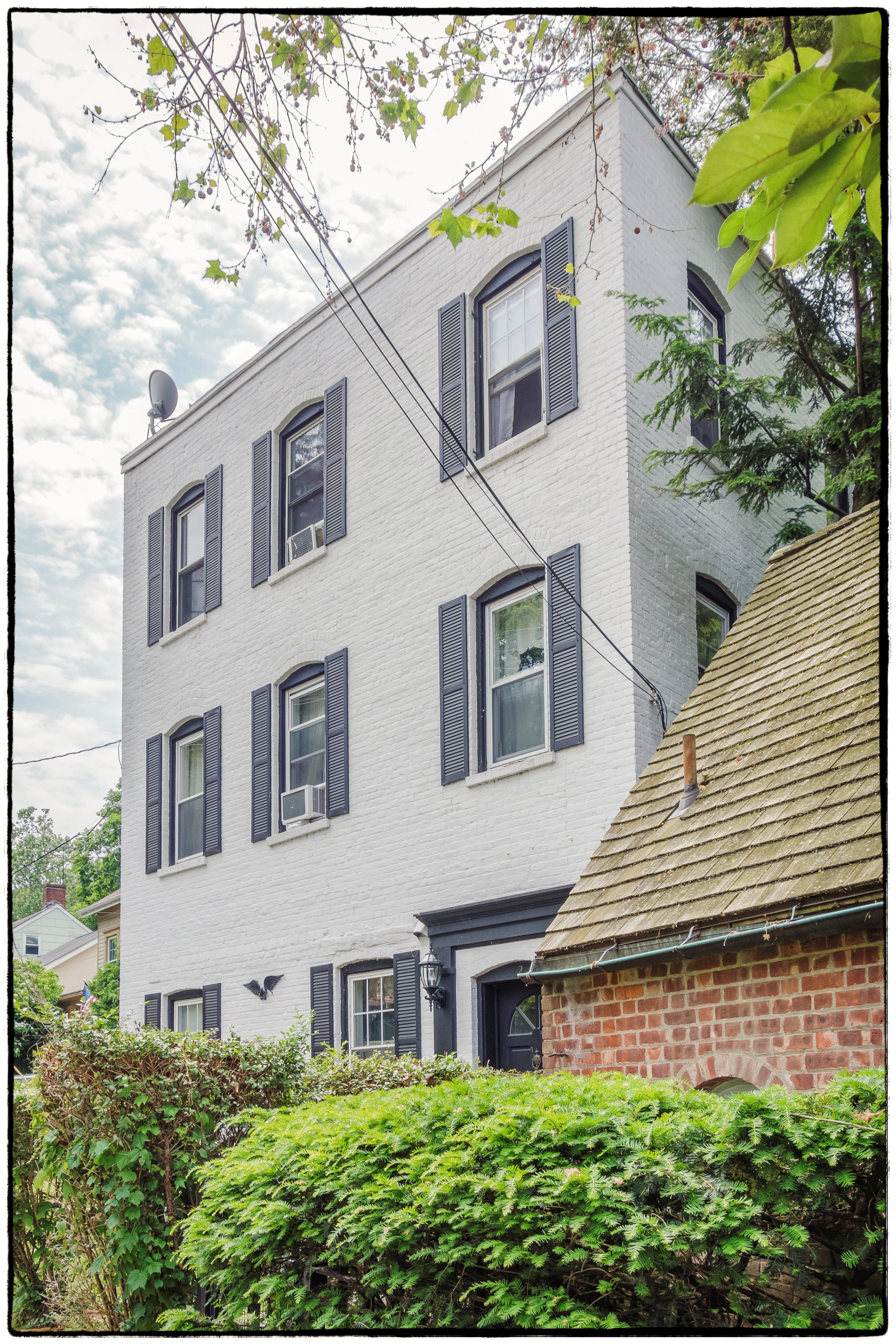
2 Rockledge Avenue. This white-painted brick house was built as a warehouse in about 1820. A large opening in the front, probably to allow horse-drawn carts to enter and exit, has been bricked in. A merchantile firm, Cypher & Slater, occupied the building in the 1860s and ’70s, and a grocery store was on the ground floor (and possibly a brothel on the upper floors) at the turn of the century. The house now contains five apartments.
With the exception of the extract from Wikipedia all of the quotations are taken from A Self-Guided Tour of Sparta. Historic Sparta Walking Tours are conducted throughout the Spring, Summer and Fall. The tours are guided by Dr. Alan M. Stahl, Sparta historian, resident and president of Jug Tavern of Sparta, Inc., who details the history of the Jug Tavern as well as Sparta’s homes and residents over the past 200 years. Check the Calendar for a schedule of Walking Tours and details.
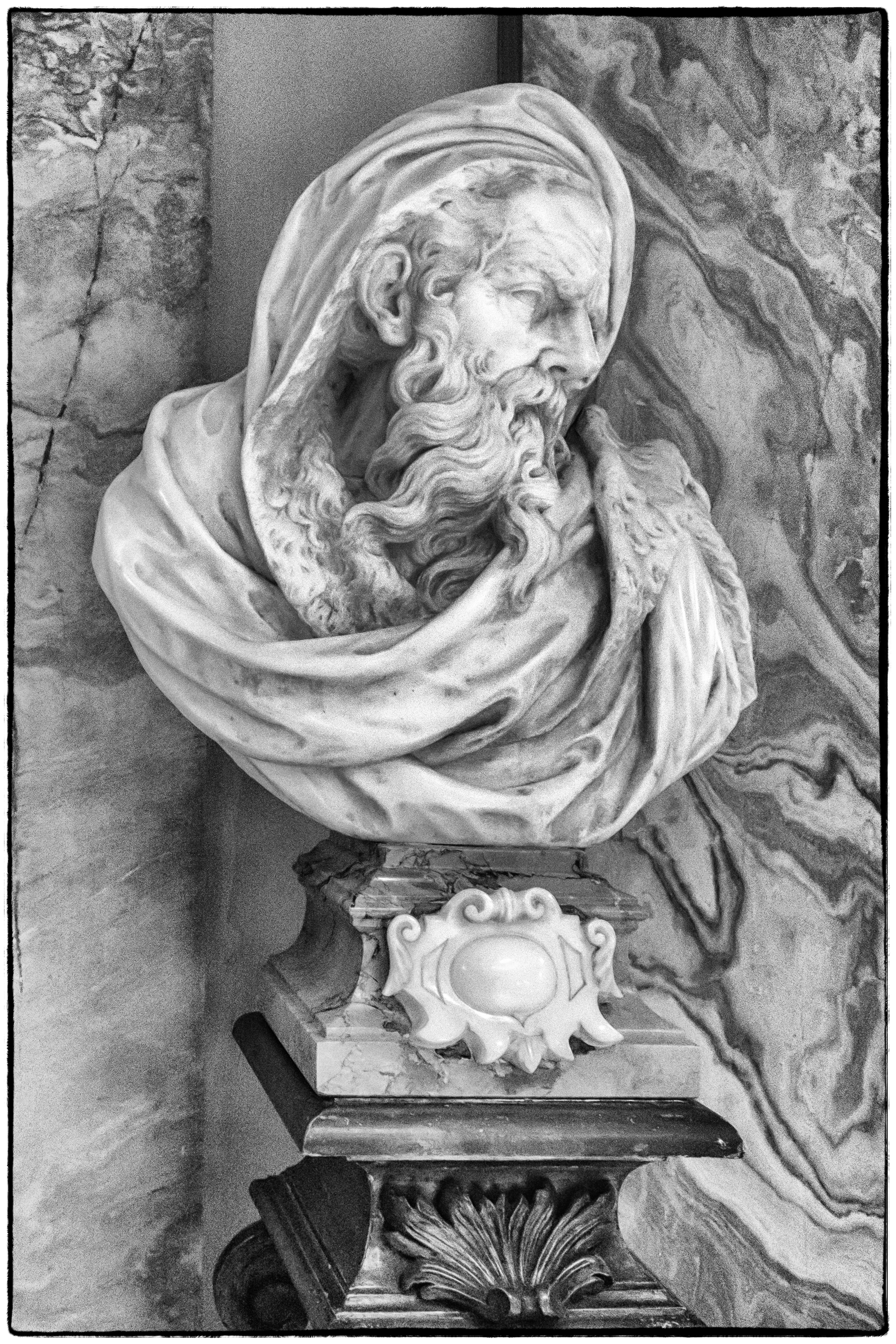
Seen on one of the magnificent staircases at the Vanderbilt Mansion in Hyde Park, NY. I like the flowing lines and the textures of the two pillars. I have no idea who this depicts, nor do I know who created it and my attempts to find out have so far come to nothing.