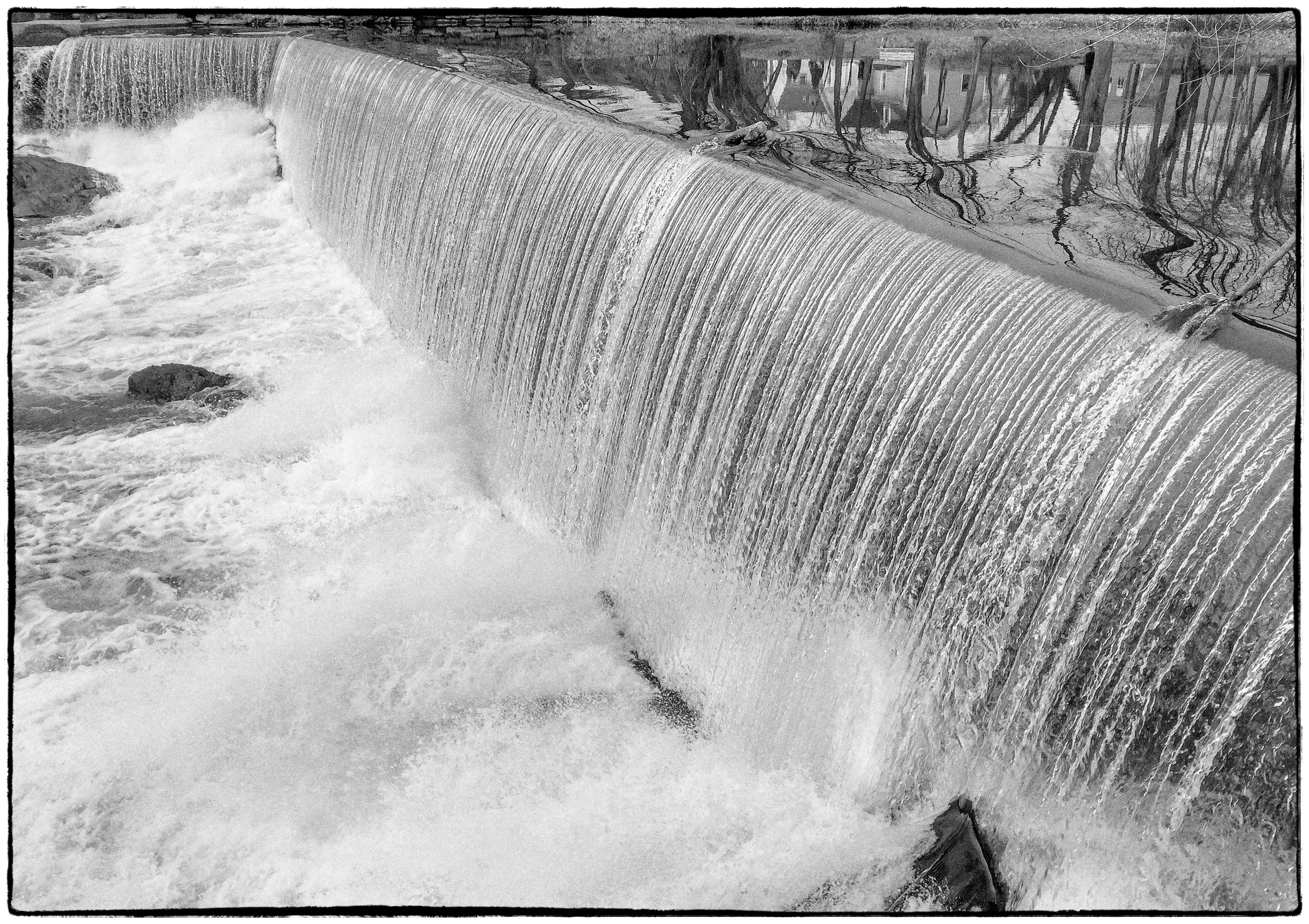
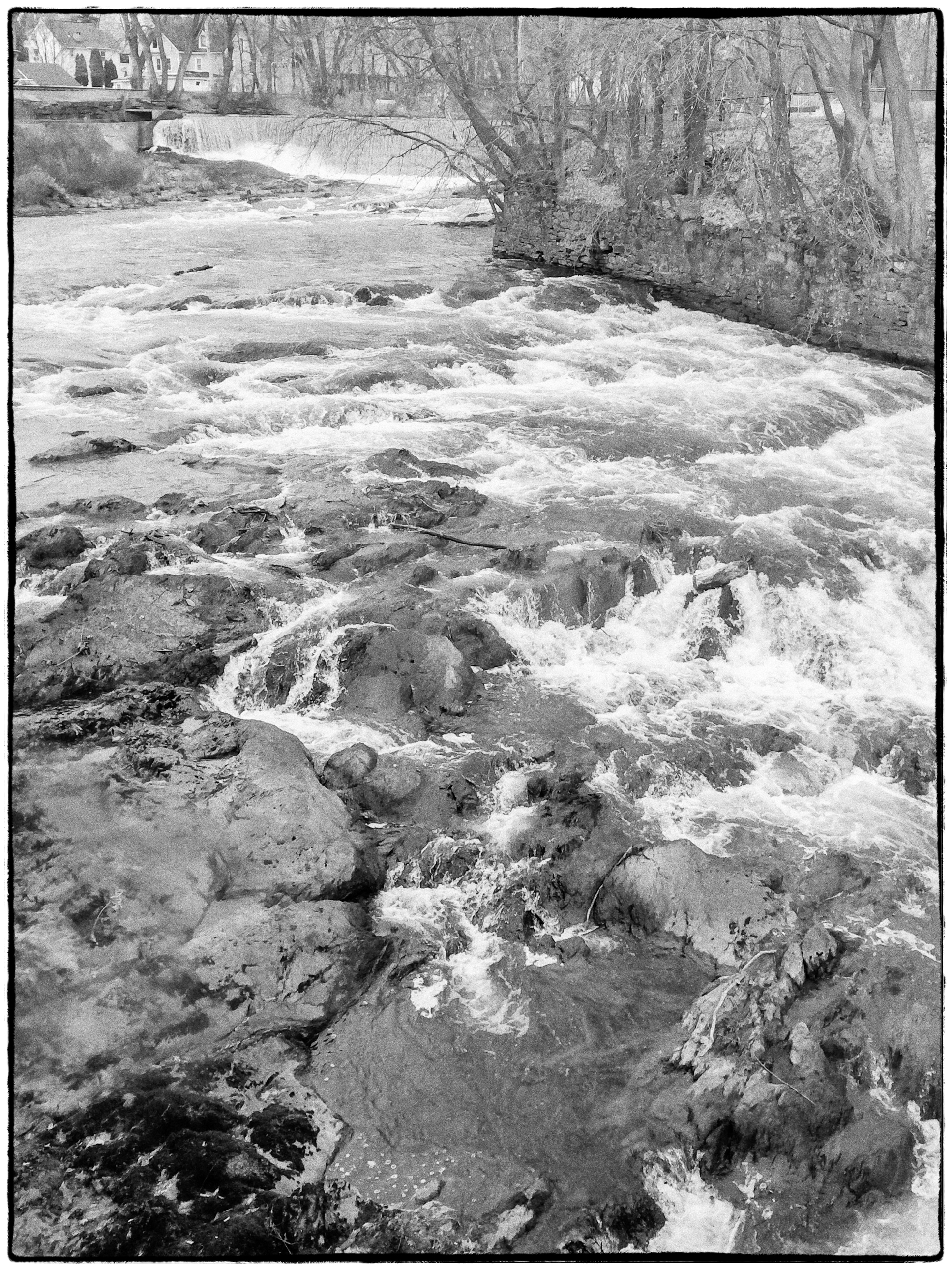
As it flows through Beacon, Fishkill Creek drops over a waterfall and then tumbles over a number of boulders past old buildings from another time. It also passes by one of our favorite restaurants: SWiFT at the Roundhouse at Beacon Falls. I’d neglected to bring a camera with me so these were taken with my wife’s iphone 5s.
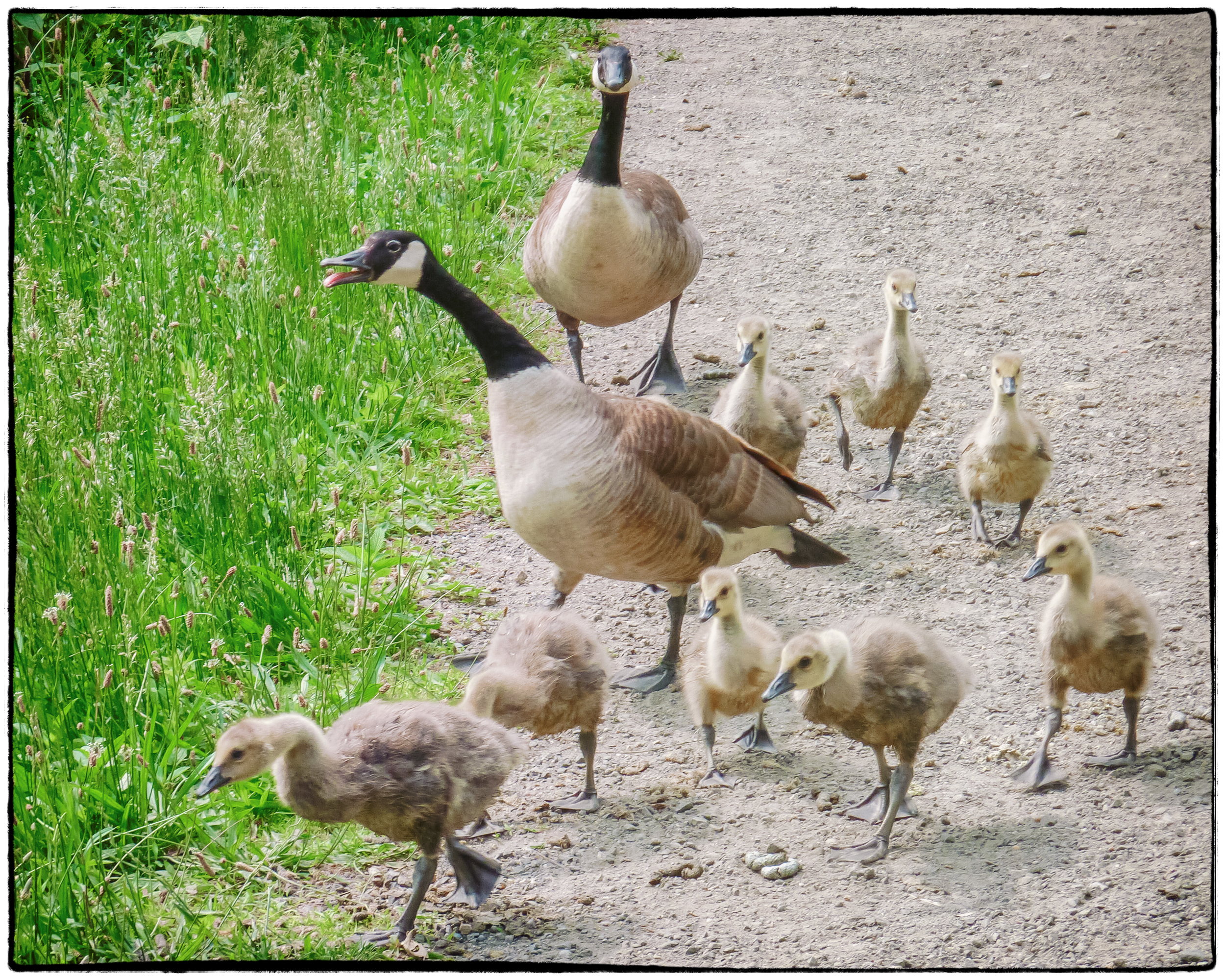
A gaggle of geese
Taken in May, 2010 on Swan Lake in the Rockefeller Preserve with a Panasonic Lumix ZS3.
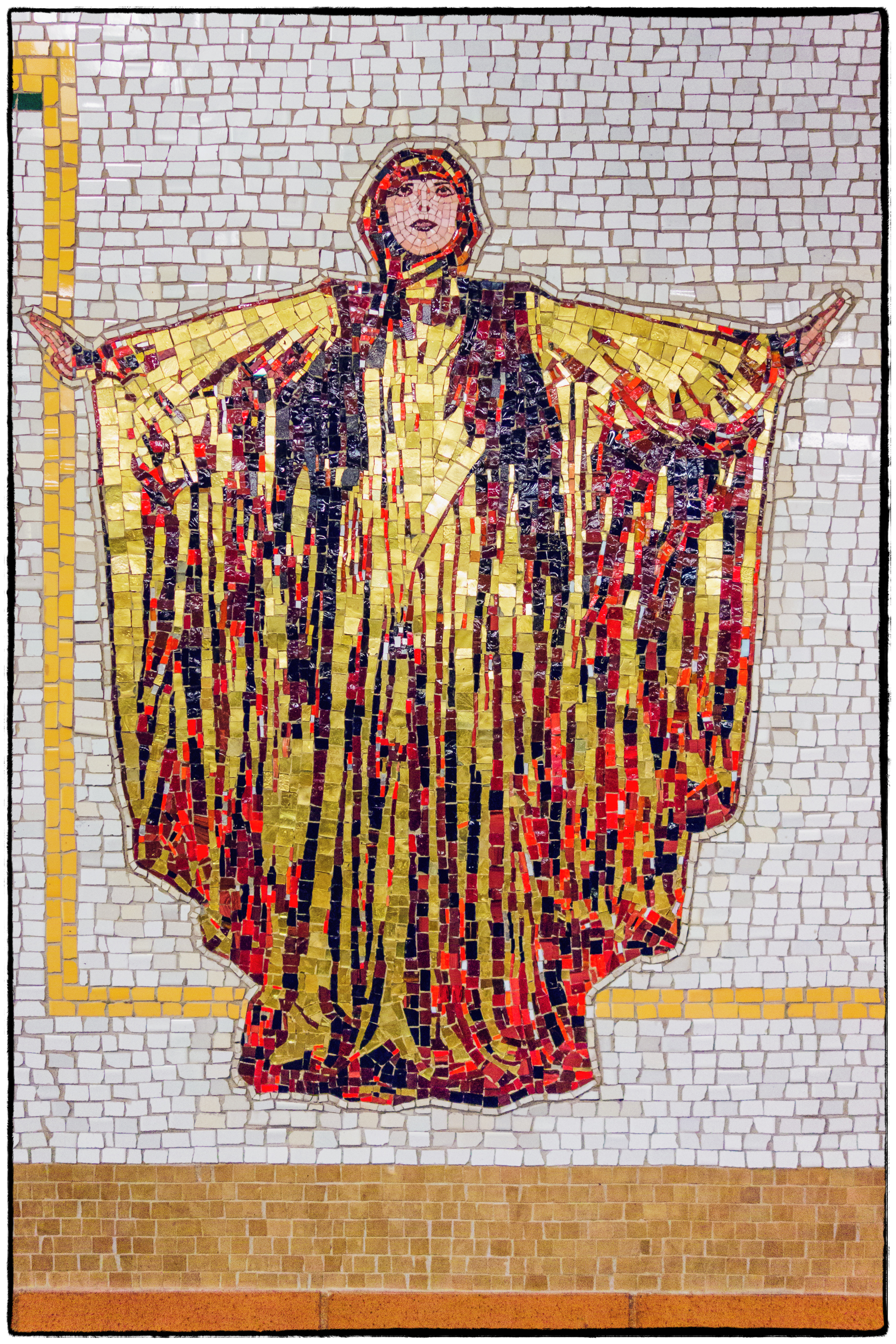
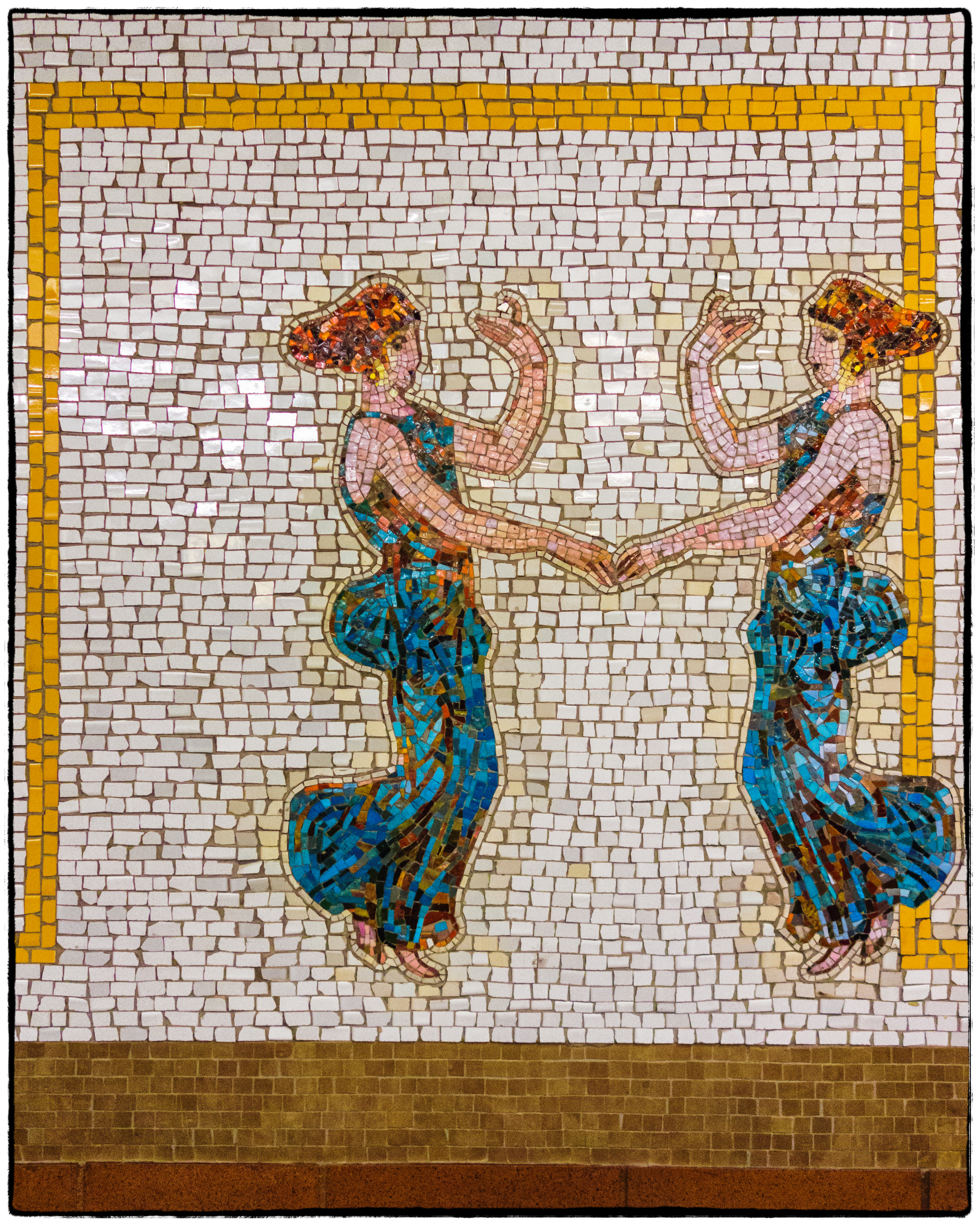
Mosaics at the 66th street subway station
When we went to see “The King and I” other day we took the subway to the 66th Street-Lincoln Center stop. As we were returning I noticed these colorful mosaics on the walls.
According to the Metropolitan Transit Authority (MTA) – Arts and Design:
NANCY SPERO
Artemis, Acrobats, Divas and Dancers, 2001
Glass and ceramic mosaic on platform walls
This series of 22 brilliantly colored glass mosaic panels lines the walls of the station and bows to Lincoln Center’s opera, ballet, and classical music halls – and the vibrant, artistic character of the Upper West Side neighborhood. Spero conveys this through the use of iconic images of women both real and mythical, from such varied sources as archaeology, architecture, mythology and the contemporary world.
In Artemis, Acrobats, Divas, and Dancers, the central icon of opera, the Diva, is repeated in various forms that lead and follow riders through the station, giving the illusion of movement and change. Elsewhere, Spero represents scenes from the subway and the city outside, the architectural backgrounds enlivened by musicians performing and athletes running, signaling you are in a creative and energetic place, the Upper West Side of Manhattan.
According to Wikipedia:
Nancy Spero (August 24, 1926 – October 18, 2009) was an American visual artist. Born in Cleveland, Ohio, Spero lived for much of her life in New York City. She was married to, and collaborated with, artist Leon Golub.[1] As both artist and activist, Nancy Spero had a career that spanned fifty years. She is known for her continuous engagement with contemporary political, social, and cultural concerns. Spero chronicled wars and apocalyptic violence as well as articulating visions of ecstatic rebirth and the celebratory cycles of life. Her complex network of collective and individual voices was a catalyst for the creation of her figurative lexicon representing women from prehistory to the present in such epic-scale paintings and collage on paper as Torture of Women (1976), Notes in Time on Women (1979) and The First Language (1981). In 2010, Notes in Time was posthumously reanimated as a digital scroll in the online magazine Triple Canopy

Another visit to the Old West Point Foundry Preserve
Yesterday was my wife’s birthday. We’d already celebrated the day before, but she didn’t feel like staying home so we decided to take the dog for a walk. I know the places to walk better than she does so the decision was up to me. At first I thought of going to Little Stony Point (where she’s been before), but then it occurred to me that she’d never been to the Old West Point Foundry Preserve. As it turned out I was glad that we made this choice.
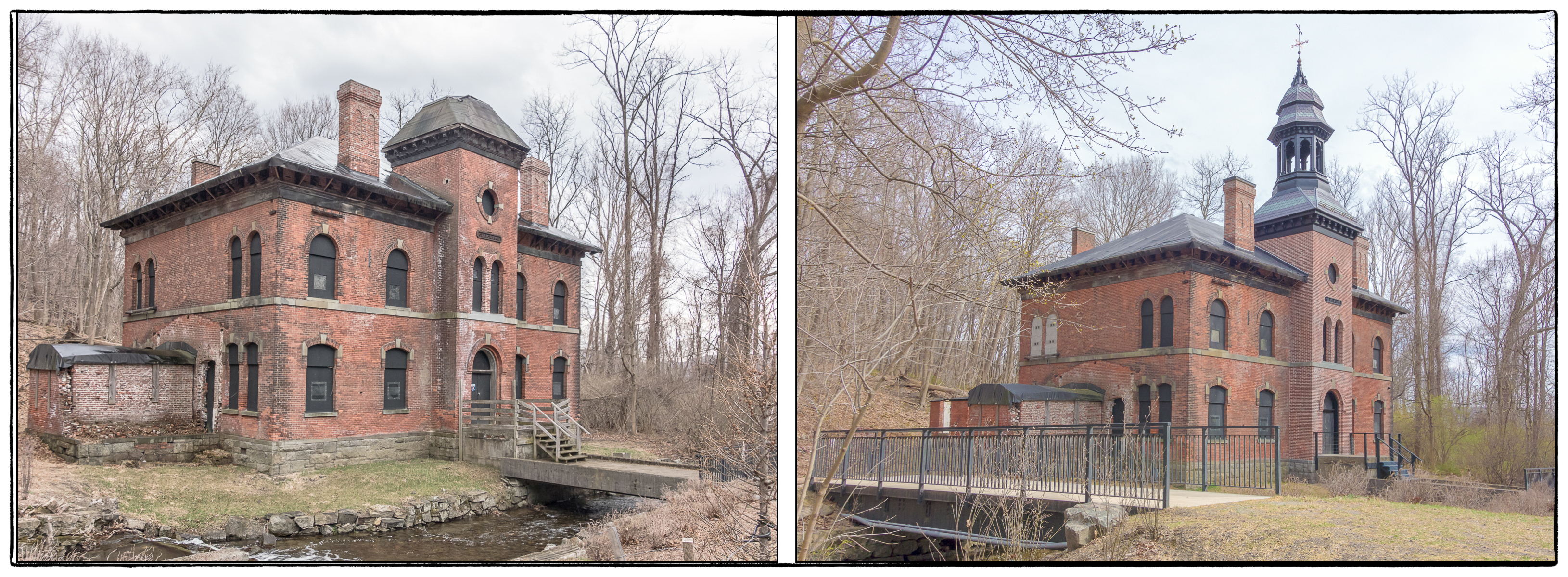
The old administration building is the only remaining building and as we approached it I had a feeling that something was different. Had they cleared away some trees so the view was better? Was it a different season so I could see the building more easily? And then it hit me: in previous visits the cupola was on the ground in a small wooden shelter while it was being worked on. Now it was back on top where it belonged.
Above you can see before and after pictures. The one on the left was taken during my first visit in April 2014 and the one on the right yesterday (i.e. March 31, 2016). What a difference! Now this magnificent old building seems complete.
This was a very pleasant surprise. I often hear about old buildings being demolished, but it’s rare that I hear of one being restored like this. I must admit that when I’d seen the cupola in its shelter during previous visits I rather cynically thought that that was where it would stay and that the restoration would never take place. I’m so pleased that this was not the case.
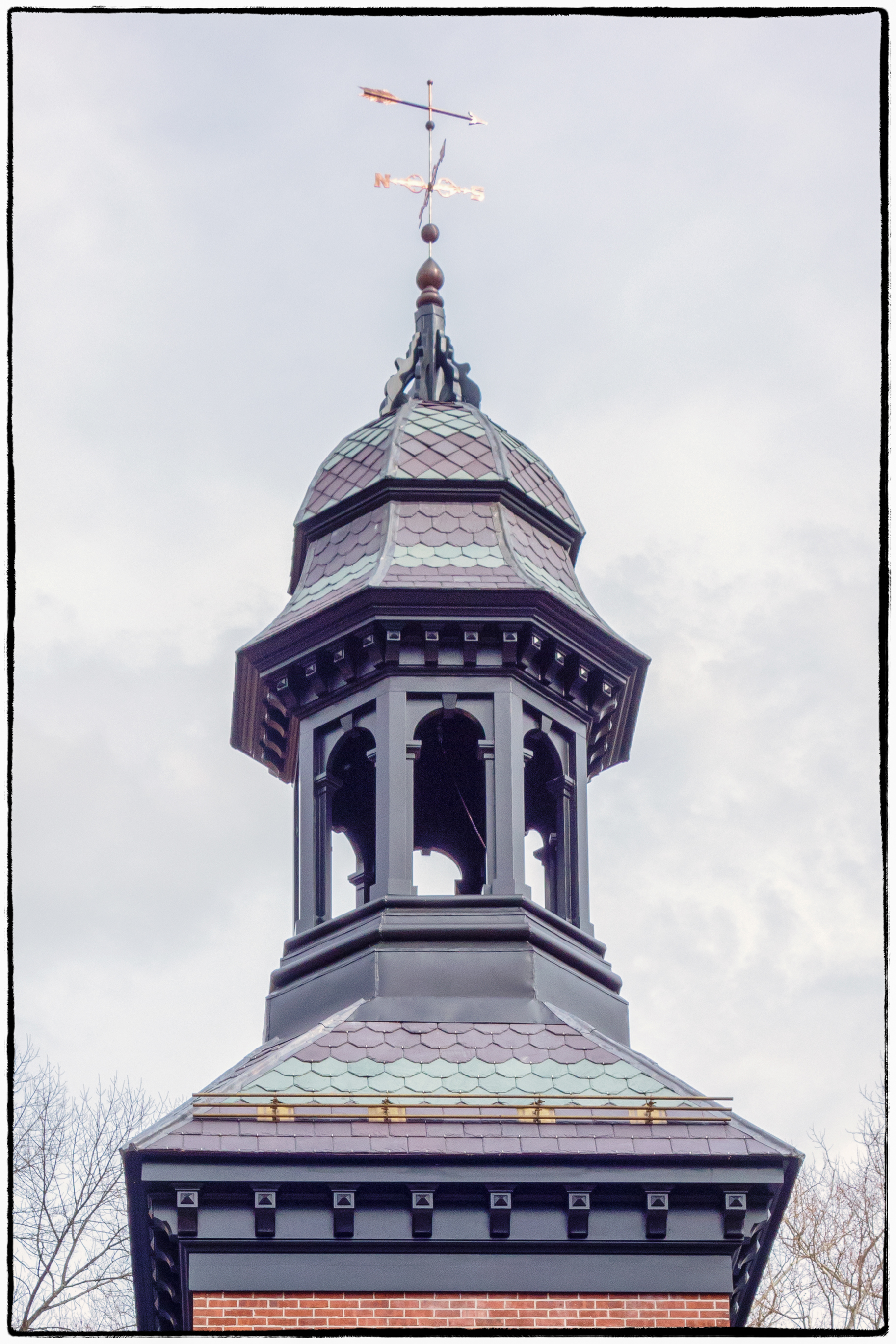
Closer view of the restored cupola.
I’ve posted about the foundry before in:
A few black and whites from the West Point Foundry Preserve
The Old West Point Foundry
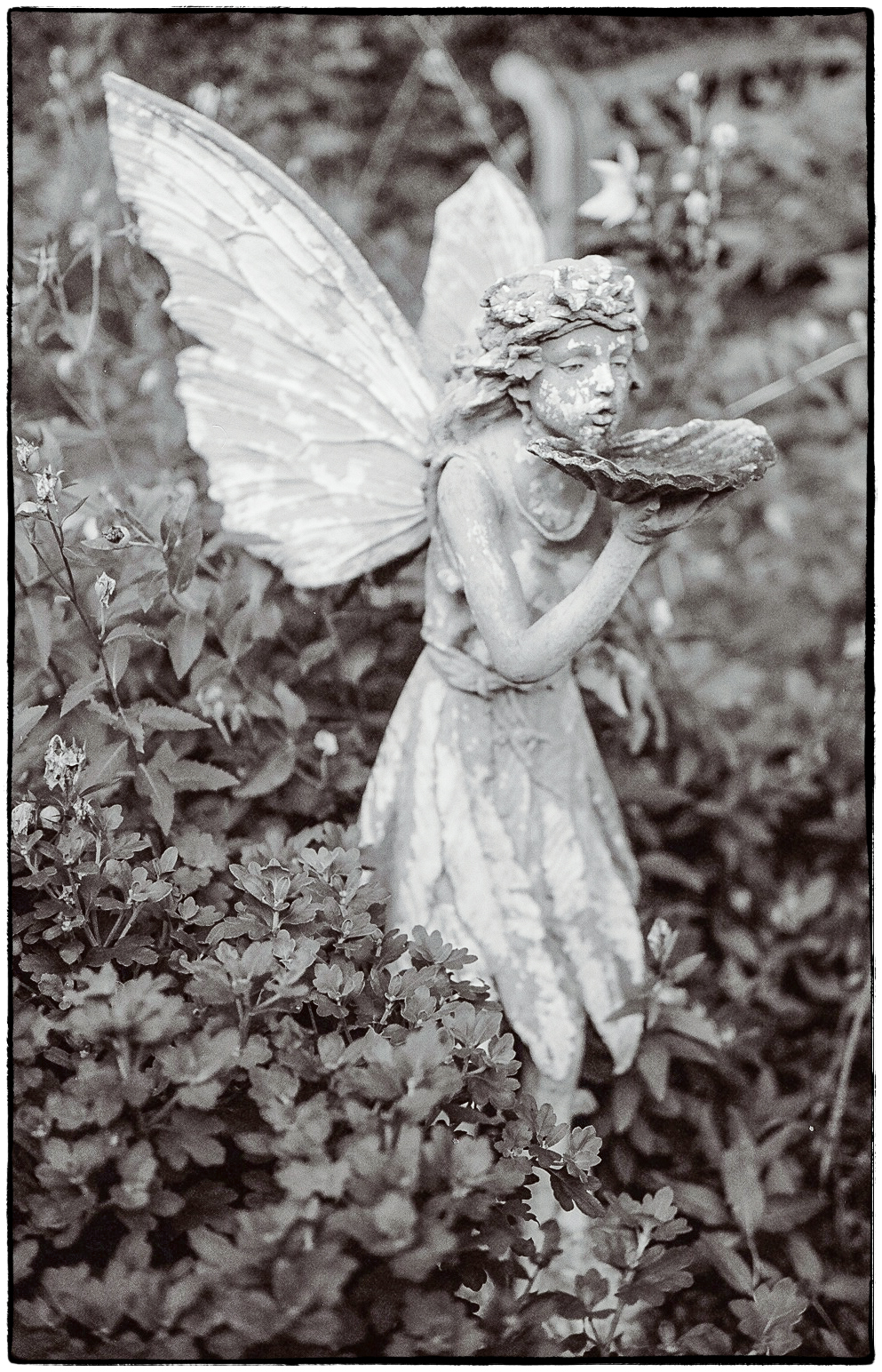
Fairy in the garden
Taken in our garden at the lake house in June, 2013 with a Yashica FX-2. I’m little confused with this one. It’s certainly taken with a Yashica FX-2 (with 50mm Yashica DSB lens) and it’s with a number of other pictures with the June 2013 date, but doesn’t it look like snow on the statue’s head? If it is snow then the date must be wrong. If it isn’t snow then I can’t imagine what it could be.
The picture below shows a different view of the statue in a different location: at our house in Briarcliff Manor. This was taken with a different camera/lens combination: A Former Soviet Union FED-2 with Industar 61 lens.
In both cases I believe the film would have been Kodak BW400CN