The King and I

It’s my wife’s birthday today and she wanted to see “The King and I” on Broadway starring Kelli O’Hara and Ken Watanabe. It’s showing at the Vivian Beaumont Theater in Lincoln Center. Ms. O’Hara was not performing on 31 March so we got tickets for March 30.

I have a strange relationship to Rodgers and Hammerstein musicals. I really like one of them: Carousel (which I’ve read was Richard Rodger’s favorite), but I’m lukewarm to the others. Maybe the reason for this originates in my childhood. My family was not very musical and we didn’t have many records (this was pre-CD, pre internet download etc.). One we did have was the soundtrack of the movie: “The Sound of Music”. My mother played this endlessly. Actually she probably didn’t, but it seemed like it to me at the time. I grew to hate it. So I’m reluctant to go to one even though when I do I usually enjoy it. For example I saw “The Sound of Music” a few years ago and had a thoroughly good time.

I enjoyed this production too. As most people know it’s based on “Anna and the King of Siam” (present day Thailand). As usual for shows in NY the sets (the opening is particularly impressive) and lighting were great, and the costumes spectacular. The cast was terrific especially the principals: Kelli O’Hara, Ken Watanabe, Ruthie Ann Miles, and Ashley Park (whose voice I particularly liked) even though it was a bit difficult to figure out what Mr. Watanabe was saying at times.

I’ve now seen all of the famous Rodgers and Hammerstein musicals on Broadway and my preferences are as follows (from favorite to least favorite):

1. Carousel
2. South Pacific
3. Oklahoma
4. The Sound of Music
5. The King and I

So you can see that “The King and I” is my least favorite Rodgers and Hammerstein musical, which is a pity because it’s complex and interesting (see Scott Miller’s analysis). It has it’s points and some of the songs are wonderful. But to me it’s too long and there’s too much spoken dialogue. I found my attention wandering in the parts between the songs. I’m also not too fond of the lengthy ballet in the second act. I’d also agree with what Ben Brantley when he describes that show (in a generally positive review) as a “…colonialist-minded musical that, by rights, should probably embarrass us in the age of political correctness.

After the show we decided to finish the day with some Thai food (it seemed fitting) so we went to our favorite local Thai Restaurant: Bangkok Spice in Shrub Oak.

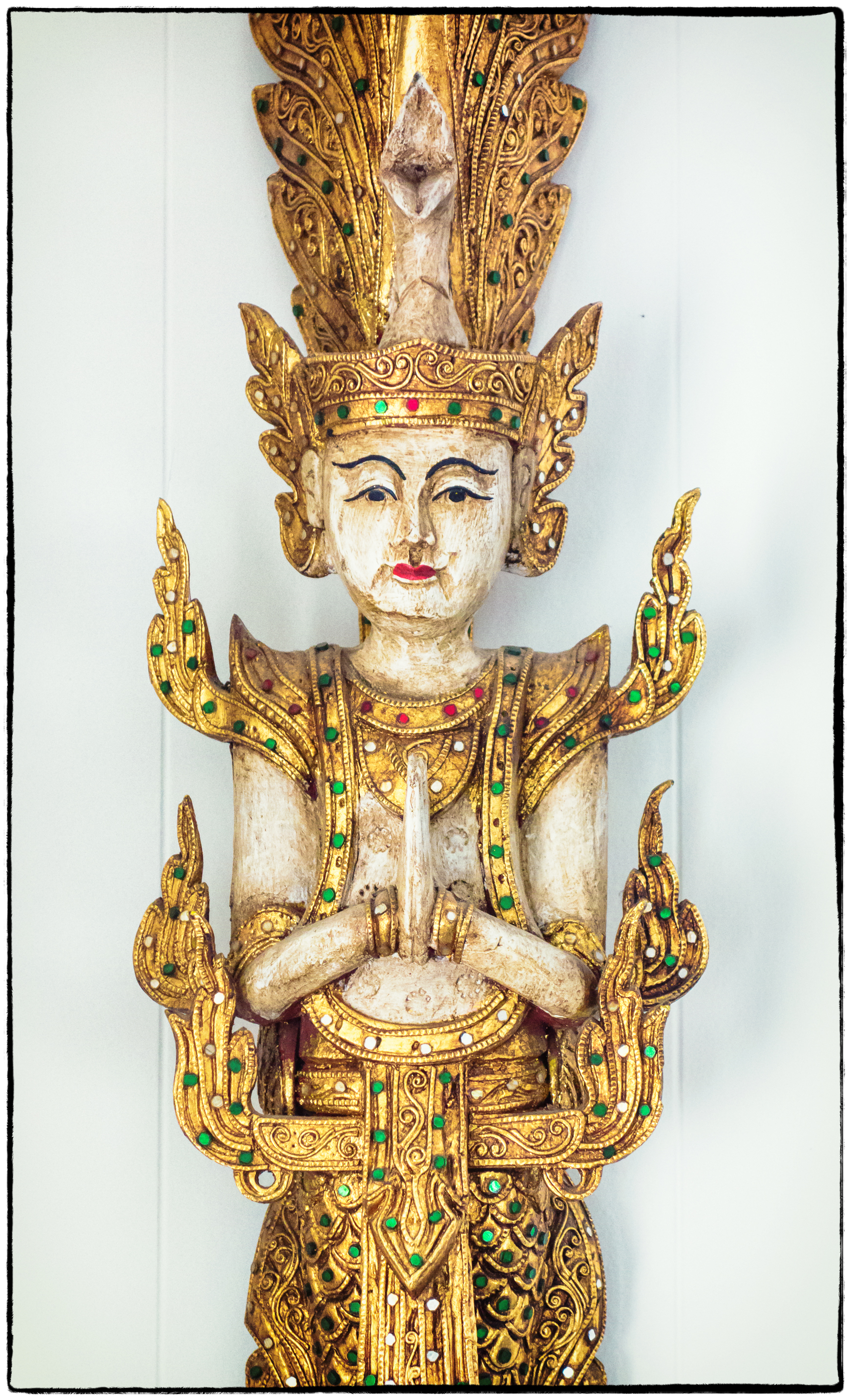
My wife and myself have been to Thailand many times. The statuette above was bought at a market outside of Bangkok and hangs on our living room wall. There’s a story behind it (and it’s later twin) but this post’s already long enough so I’ll keep it for another time.
Fujica 35-ML

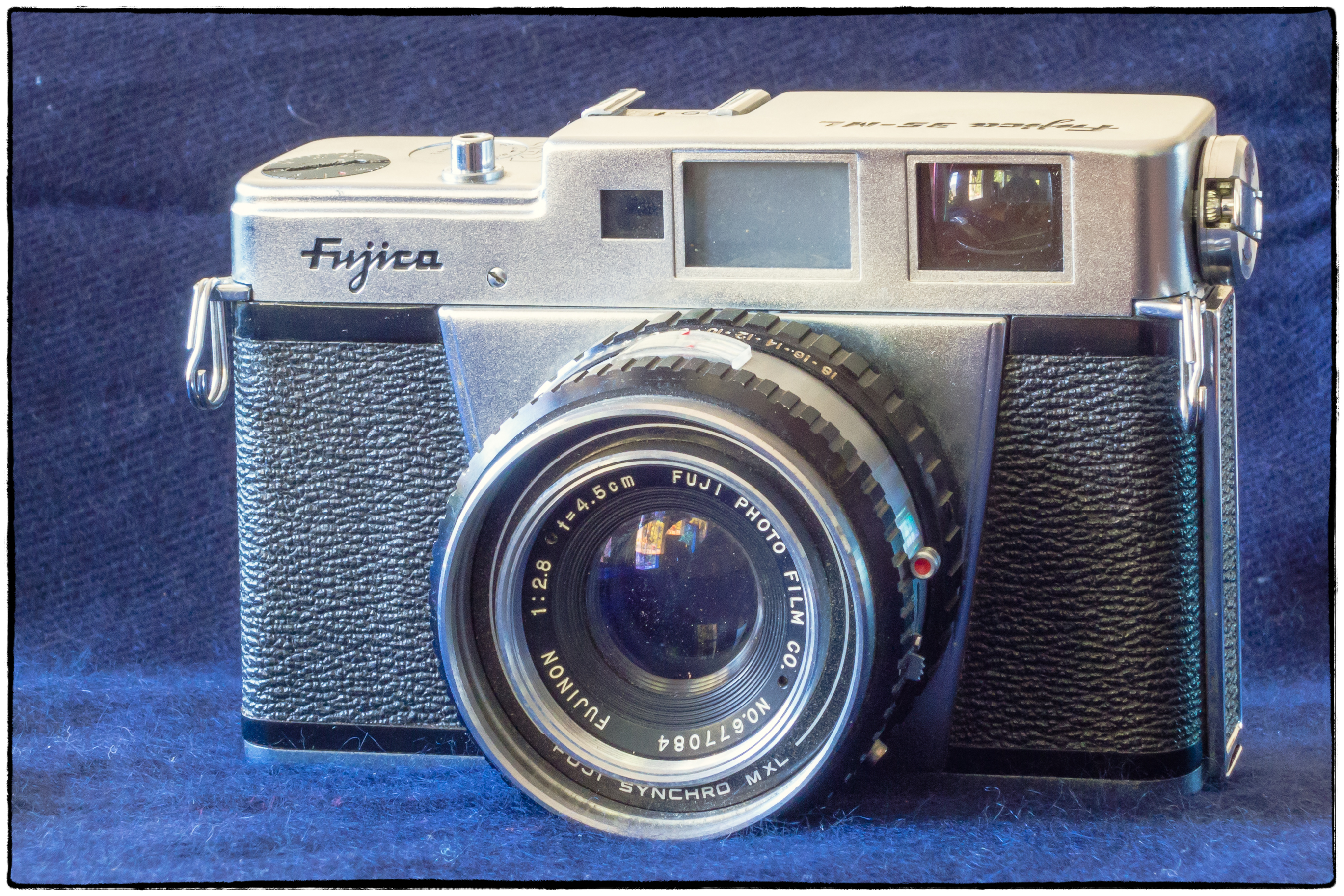
A few years ago I began my camera collection. After getting a couple of rangefinder cameras I started to browse the internet to see what others I might find and bumped into this post on photo.net: The Final Fujica’s Film. I liked the look of the camera and was somewhat taken by the images provided. Time went by and I would occasionally see one for sale, but until now I hadn’t actually gotten around to acquiring one. Recently, however, I saw this one. It was quite inexpensive and looked to be in fairly good condition. So I purchased it.

According to Sylvain Halgand’s wonderful site:

This camera has a coupled rangefinder and a parallax correction. An ultra-bright orange framing view is visible in the viewfinder and moves accordingly to the setting of distance. This setting is a first surprise because the setting is not made by turning a ring around the lens, but by turning a knob located where there is most often a film advance lever, it means under the right thumb. Distances are displayed by a rotating plate, located on the cover of the camera (near the frame counter) also serving as depth of field chart.

Accordingly, the film advance lever is below the camera without doubt in order to leave a body cover as flat as possible; the rewind crank is located on the side, such as a Leica.

The shutter speed and aperture settings are made by turning the two rings around the lens. A small window on the top of the lens displays the selected values. The values are combined using EV (exposure value).

The shutter allows shutter speeds from 1 second to 1/500 per sec, plus B. It has a self-timer, and M sync and X sync.

The lens is a Fujinon 45mm/2.8 with 5 elements.

In 1959, this camera was sold in the United States, § 69.95.

I was a little disappointed when it arrived. I’d bought it from a reputable dealer, from whom I’d bought a number of cameras in the past and with whom I’d always been satisfied. The camera was described as working and came with a decent warranty. However, when I examined it I noticed that in fact it wasn’t working – the shutter was stuck. I could have returned it under the warranty, but I’d paid so little for it I couldn’t be bothered. I’ve always had a yen to try fixing these older cameras. I’ve got to start somewhere. Maybe with this one?

And even if I never get it to work – so what! It still makes a decent display piece.

Grand Central Terminal

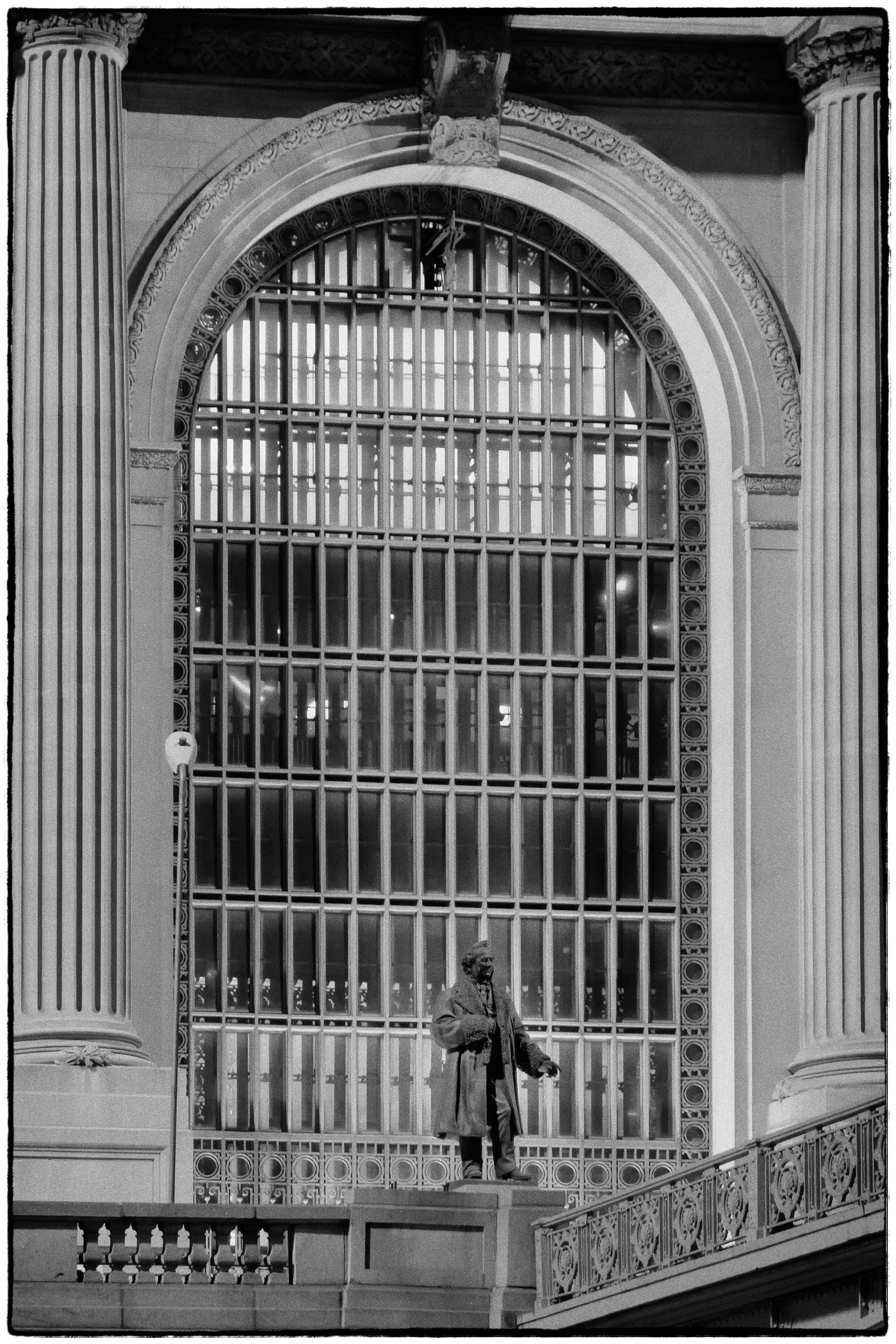
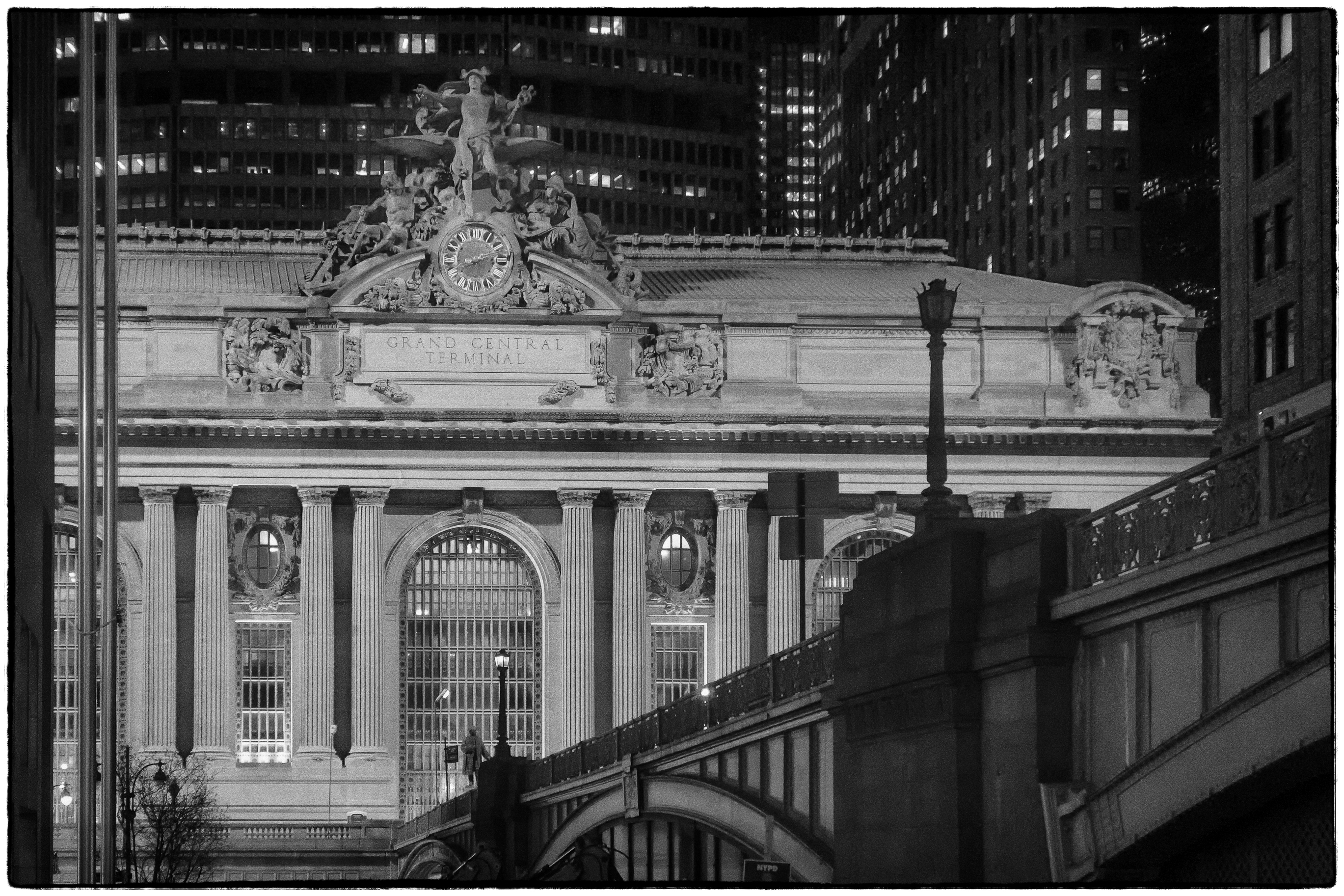
I went into New York City last night to have a drink with a friend and former colleague. We arranged to meet in “The Shakespeare”, and English pub-like place in the William hotel on 39th street between Park and Madison Ave. As I was walking back along Park Avenue I noticed the brightly lit facade of Grand Central Terminal in front of me.

Cornelius Vanderbilt Statue. He built the original Grand Central Depot on 42nd Street in Manhattan. Finished in 1871 it served as the terminus for his railroad. The depot was replaced by the present Grand Central Terminal in 1913. Wikipedia describes him as follows:

(May 27, 1794 – January 4, 1877), also known informally as “Commodore Vanderbilt”,[2] was an American business magnate and philanthropist who built his wealth in railroads and shipping. Born poor and with but a mediocre education, his luck, perseverance and intelligence led into leadership positions in the inland water trade, and the rapidly growing railroad industry. He is best known for building the New York Central Railroad.

As one of the richest Americans in history, he was the patriarch of the Vanderbilt family and provided the initial gift to found Vanderbilt University. According to historian H. Roger Grant:

Contemporaries, too, often hated or feared Vanderbilt or at least considered him an unmannered brute. While Vanderbilt could be a rascal, combative and cunning, he was much more a builder than a wrecker….being honorable, shrewd, and hard-working.”

David Hockney Photographer

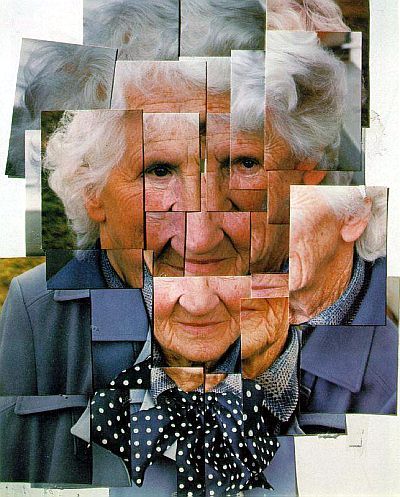
Mother – Hockney

I didn’t know that David Hockney was a photographer. Actually after seeing some of his photography I suspect that he is, like many other contemporary photographers, less of a photographer than an artist who sometimes uses photography in his works.

David Hockney is a great painter,but he has also known fame through photography, although he does not mince his words when he says ‘Photography will never equal painting!’

Source: David Hockney – Photography will never equal painting! | Photography and Music

Below he talks a little about lost knowledge and photography.

Lugano

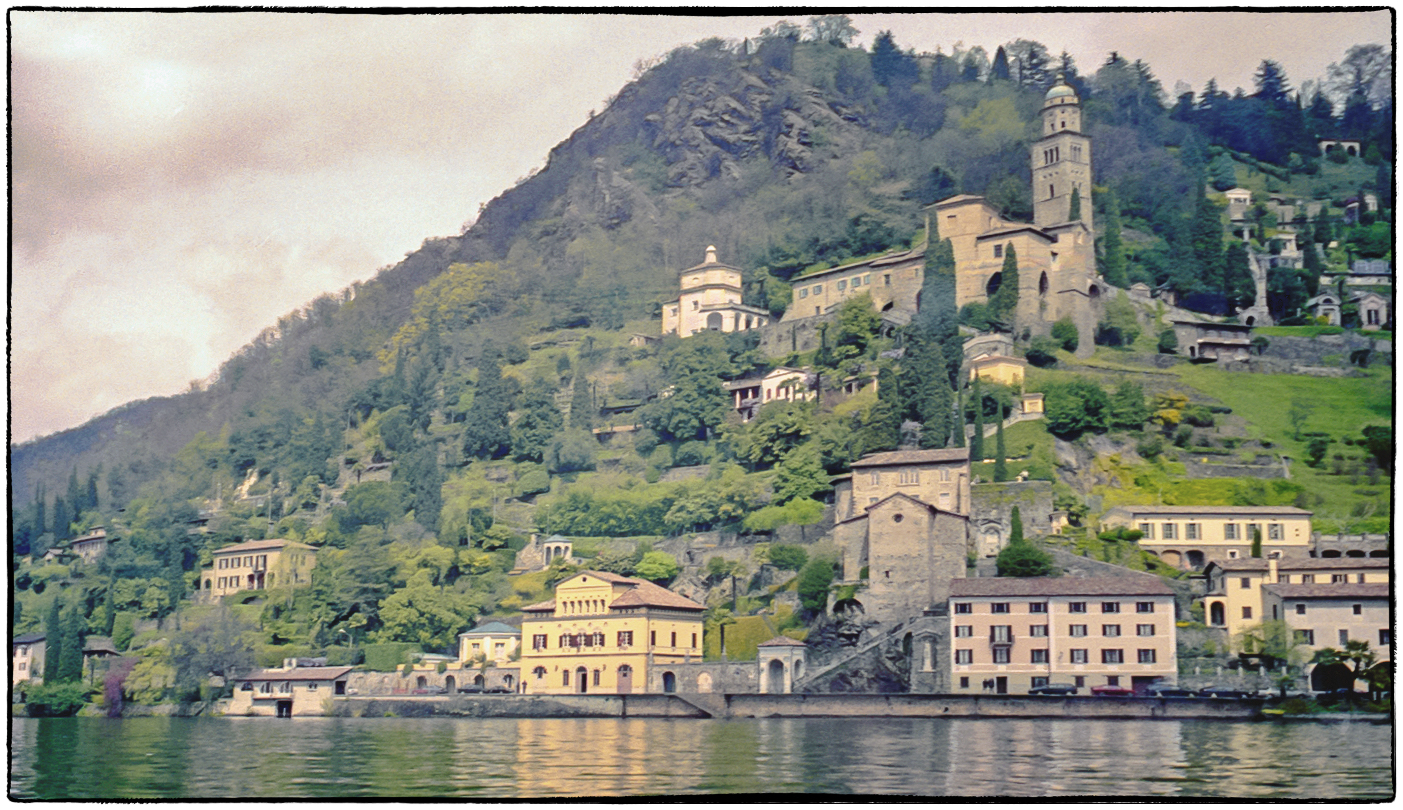
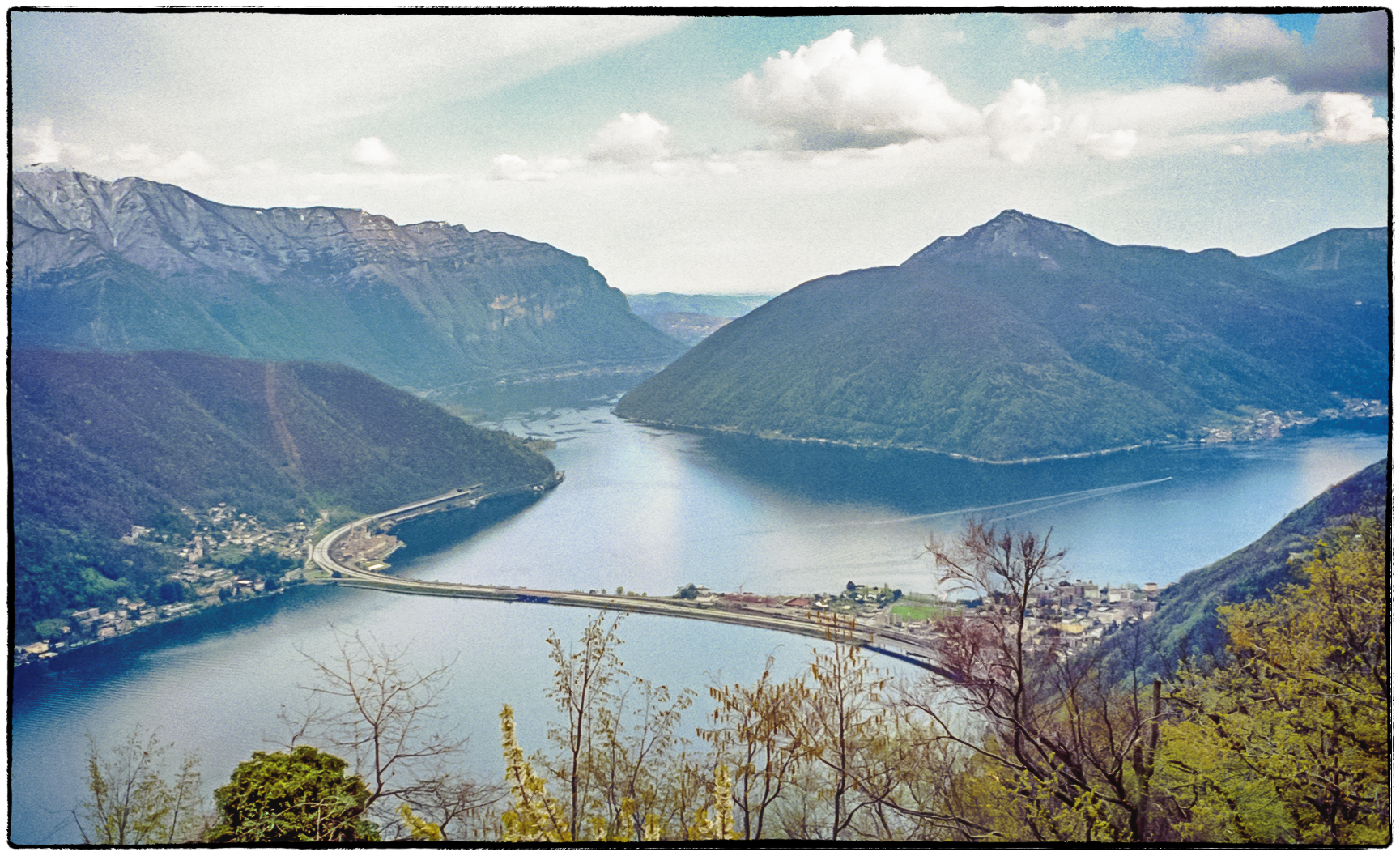
I came across these negatives recently. I remember where they were taken (Lugano), but I don’t remember exactly when – sometime in the mid 1990s I believe.

I do remember the trip though – vividly! We’d decided to drive from Geneva to Lugano for Easter and left before 9:00am on a gorgeous sunny day. All went well until we got to somewhere around Luzern then the traffic stopped completely. After a while it started again and we moved about a hundred yards and then it stopped again. This continued for hours. Eventually the road started to rise and we figured out what the problem was: snow. There had been significant snow in the Alps and the roads over the passes had been closed. The only way down towards Italy was through the St. Gotthard tunnel and all the traffic was funneling in that direction. To make matters worse for some reason I’m at a loss to understand the lanes cross at the entrance to the tunnel i.e. the right lane goes into the left part of the tunnel and the left lane into the right. A traffic light controls this and this was what was causing the stop/start nature of the traffic.

I hate driving in snow and as we got higher the snow was coming down quite hard. To make matters worse my car was a Mercedes 280SL convertible – a nice car, but because of its rear wheel drive not good on snow. Moreover, I’d already taken the snow tires off as I thought Winter was over. So we came out on the other side of the St. Gotthard tunnel with snow still falling heavily. Luckily we were in Switzerland and everybody was very organized. We were on a three lane highway and all the traffic got into a single file in the middle lane and leaving lots of space between the cars we went slowly down towards Lugano. Somewhere around 800 meters the snow turned to rain and the rest of the journey was pretty easy.

We finally got to our hotel just before 10:30pm just minutes before room service closed. We quickly ordered and I still remember what I had: pasta with funghi porcini. And it tasted delicious!!!

The journey had taken about 14 hours (it should have taken 4-5).

I recall that we took a boat ride on the lake, but I don’t remember going into the surrounding mountains. Since some of the pictures below seem to have been taken from some height, I’m thinking that they may have been taken on the way home. We took a different way back via Milan and the Mont-Blanc tunnel. This time the journey did take about 4-5 hours.