Approaching Rockwood Hall

I’ve posted before on Rockwood Hall, the former estate of William D Rockefeller in Tarrytown, NY:

Goat Portrait
Rockwood Hall Foundation and Trees
Bridge to Nowhere.
Rockwood Hall – Evening.
A Walk to Rockwood Hall.
Winding Path – Rockwood Hall.
Rockwood Hall – July 6, 2011 – early evening

The grounds were landscaped by Frederick Law Olmstead (known for Central Park and Prospect Park). This is the road to the mansion just before it reaches it. The History of Rockwood Hall describes the roads as follows:

Graceful carriage roads led the family and visitors into the landscape. Their design goal was to create a sense of the peacefulness of nature and to soothe and restore the spirit.

Hastings block was used on two miles of the drives near the mansion. The Hastings block is a paving block constructed of traprock, which is laid on a 16″ stone base.

Unfortunately the goats mentioned in Goat Portrait we no longer there (maybe they’re not there in Winter), which was a pity as I’d hoped to introduce our dog, Harley to them. We did encounter a horse, however. I don’t think Harley had seen one before so he was very excited. I even had to pull him back at one point to stop him running under the horse’s hooves.
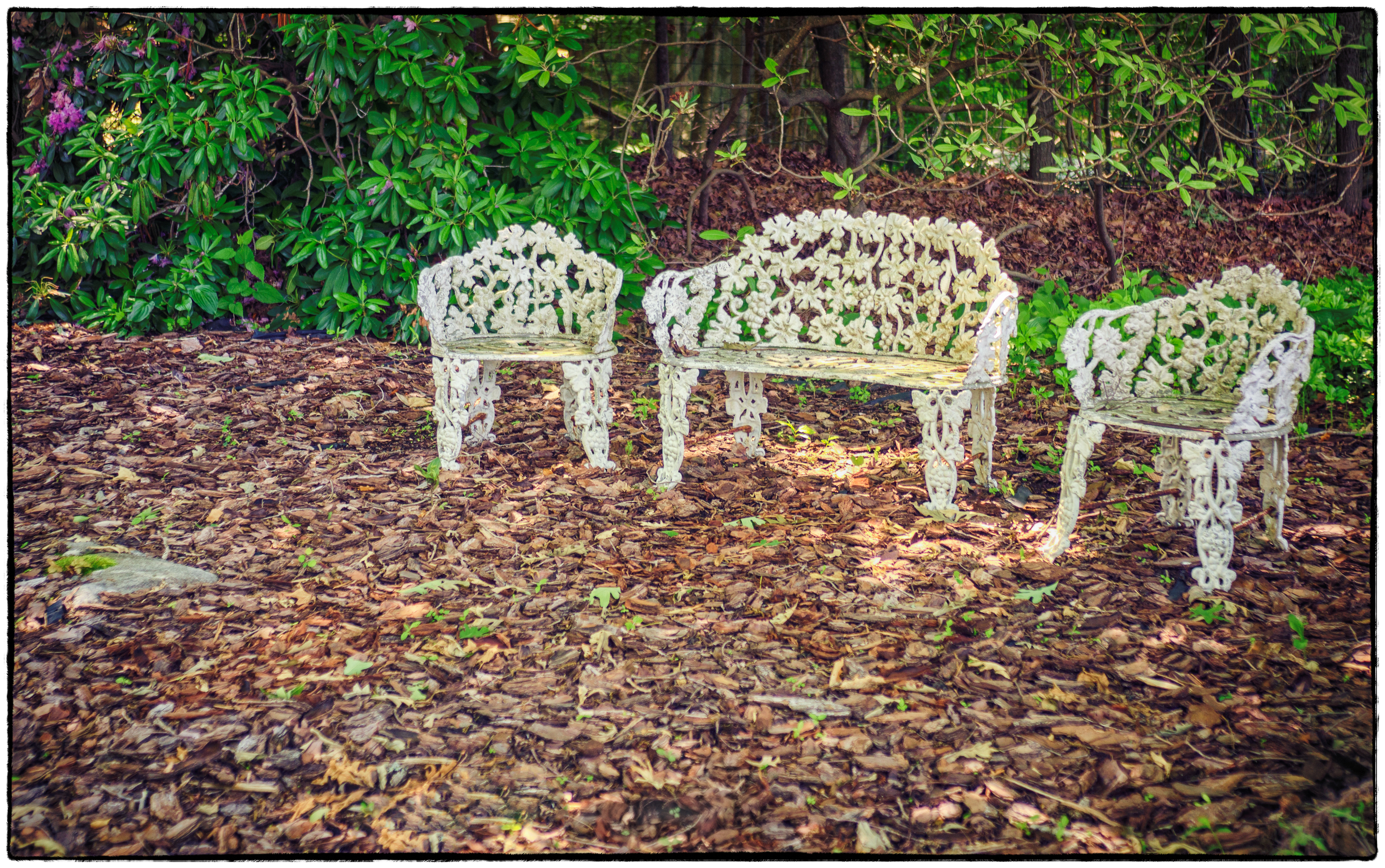
Three garden chairs

Our local garden club organizes a garden tour every year where we visit a number of gardens around the lake. During this particular tour I spotted these three chairs sitting in the shade. I liked the fallen leaves and the light coming through the leaves as well a the contrast between the earth tones of the leaves and the brighter greens and purples of the leaves and the blossoms. Although the picture was taken in June the leaves give the impression of Fall and it seemed to me that the chairs were waiting for the brighter, sunnier days to come.

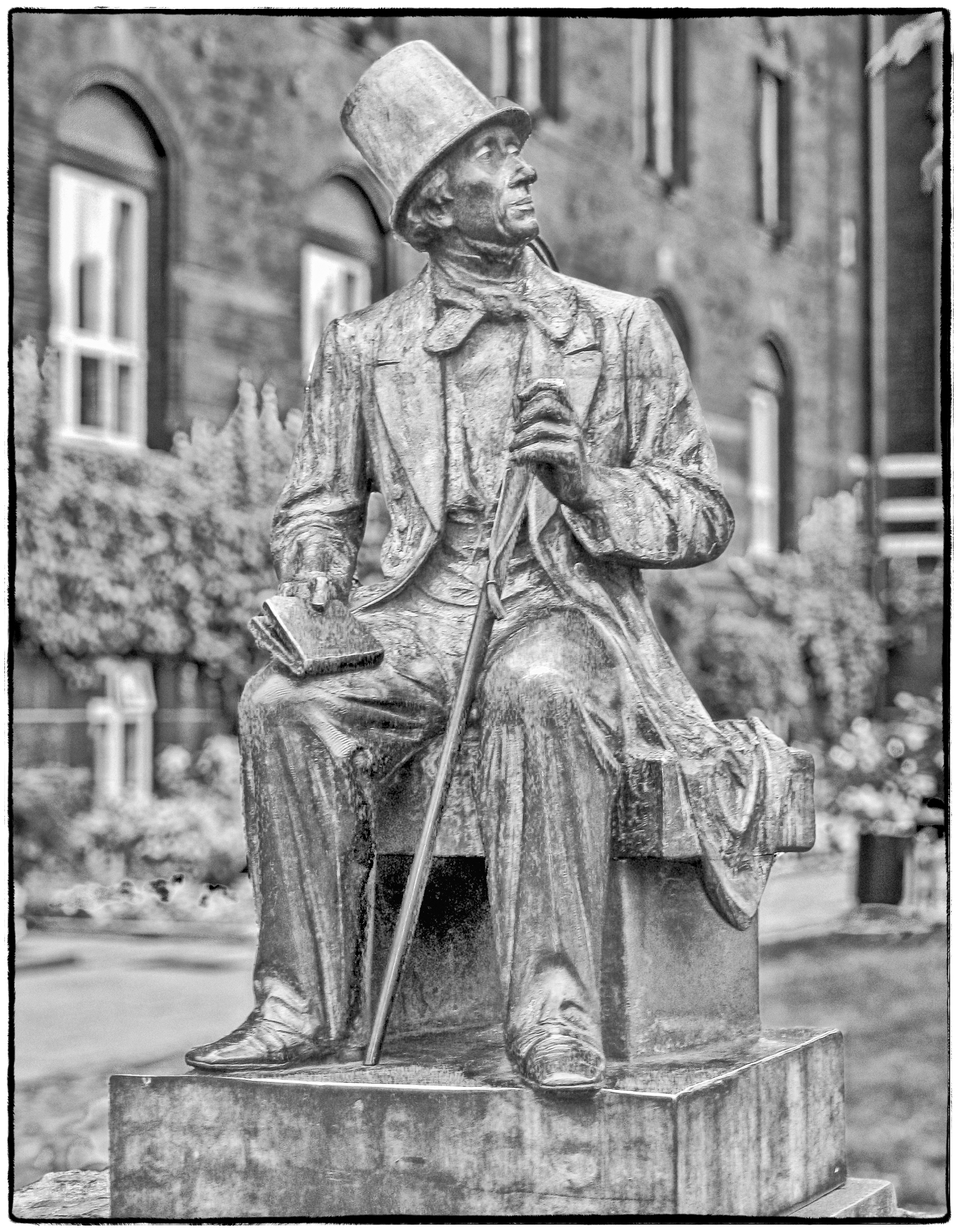
Hans Christian Andersen Statue, Copenhagen, Denmark

Hans Christian Andersen Statue in Rådhuspladsen (City Hall Square), Copenhagen, Denmark. Created by Henry Luckow Nielsen (1902-1992) in 1961. I haven’t been able to find much information about the sculptor.

This was taken back in 2005. Our elder daughter and her family lived in Copenhagen for several years and we went to visit them quite a lot. I was also travelling for business to Copenhagen at that time and was able to see them even more frequently.

I have lots of memories of Copenhagen – many of them good, some of them not so good. I have good memories of walking in the parks, visiting the museums, dinner (with lots of beer) in Nyhaven after a strenuous meeting, a performance of Tannhauser at the Opera, full family get togethers over Christmas and New Year. Not so pleasant memories all relate to Copenhagen in Winter. It’s frigid, dark in the middle of the afternoon and I always seemed to get sick whenever we went there in Winter.

The good memories far outweigh the bad though.

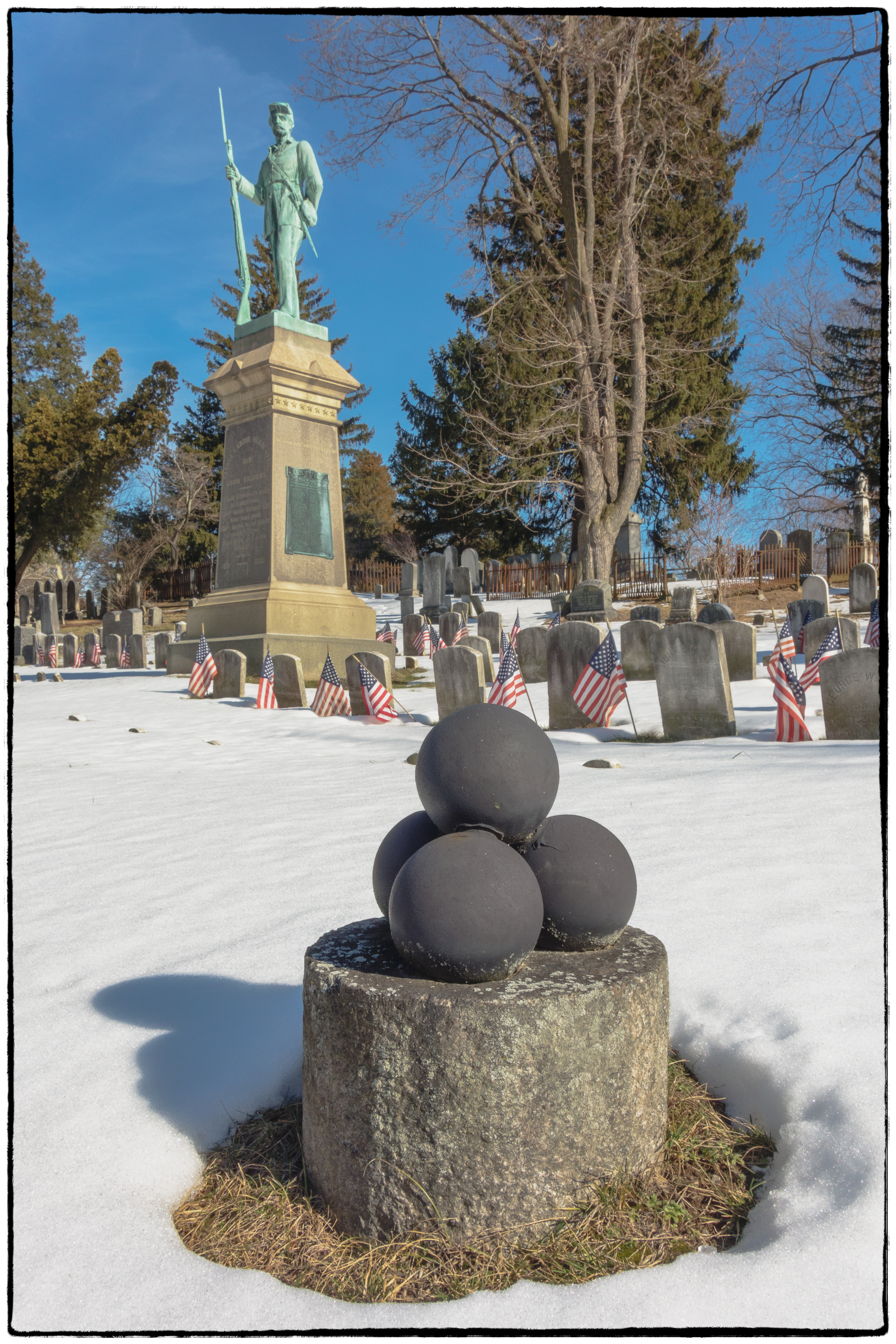
Civil War Monument, Sleepy Hollow Cemetery

According to a post on the CT Monuments Site (Civil War Monument, Sleepy Hollow, N.Y.)

The village of Sleepy Hollow, N.Y., honors local Civil War veterans with a granite-and-bronze monument in Sleepy Hollow Cemetery.

The monument, near southwestern corner of the cemetery, was dedicated in 1890 by the local GAR post. Inscriptions on the front (west) face include a Latin dedication, along with “Our Union Soldiers” and the following poem: “While Freedom’s name is understood, they shall delight the wise and good; They dared to set their country free and gave her laws equality 1861-1865”

The monument’s south, east and north faces feature bronze plaques honoring local veterans. The references to Greenburgh and Mount Pleasant reflect the fact that the Village of Sleepy Hollow lies within Mount Pleasant, which is just north of Greenburgh.

The monument is surrounded by a plot containing graves of Civil War veterans.

The infantry soldier was sculpted by Johnson Marchant Mundy, who was legally blind when he created the figure.

Museum of Modern Art offers free photography course

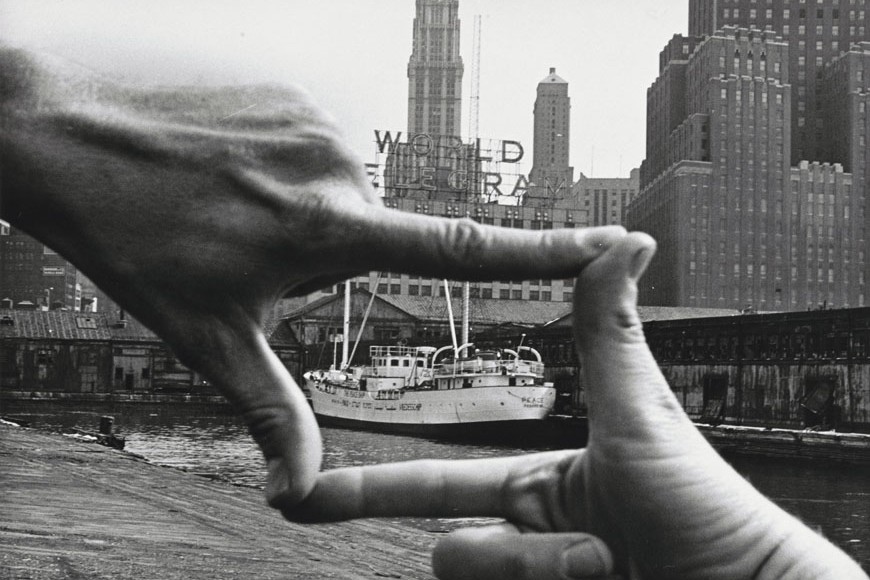
John Baldessari. Hands Framing New York Harbor from Pier 18. 1971. Photograph by Shunk-Kender, from the exhibition “Art on Camera: Photographs by Shunk-Kender, 1960–1971”, MoMA, May-October 2015

I registered, but haven’t yet tried the course. A few comments from someone who has can be found be found in What I Learned By Taking MoMA’s New Photography Course on Petapixel.

Continuing its remarkable activity in organizing open learning activities on creativity and arts, beginning February 10th, the Museum of Modern Art of New York starts an exciting new free online course focused on photography, running on the e-learning platform Coursera.The course, entitled Seeing Through Photographs, is led by Sarah Meister, curator of the MoMA department of photography, and is supported by Volkswagen of America.Open to a general audience and divided into 6 sessions, Seeing Through Photographs will provide a comprehensive view on the art of photography and “about what a photograph is and the many ways in which photography has been used throughout history and into the present day: as a means of personal artistic expression; a tool for science and exploration; a method for documenting people, places, and events; a way of telling stories and recording histories; and a mode of communication and critique in our increasingly visual culture”.

Source: Want to learn photography? MoMA launches free online course