Peekskill Riverwalk Park – Arc

Peekskill Riverwalk Park is not just a pleasant walk with impressive views of Peekskill Bay and the Hudson Highlands. A number of interesting sculptures are placed along the paths. The walker can break their progress for a while, pause and consider the artwork.

This is the first of a series of posts covering some of the artworks. More can be found at:

Peekskill Riverwalk Park – Sam Oitice Heroes Remembered 9/11
Peekskill Riverwalk Park – Jan Peeck’s Vine
Peekskill Riverwalk Park – Abraham Lincoln in Peekskill
Peekskill Riverwalk Park – The Golden Mean
Peekskill Riverwalk Park – Stargate on Hudson?

The piece above is called ARC and it’s by William Logan. A nearby sign describes it as follows

ARC
William Logan
Welded Aluminum and Steel

The form of this sculpture has been abstracted from river-going vessels and nautical moorings. Its center-of-gravity has been adjusted to give it buoyancy, enabling the sculpture to respond to the wind. Welded aluminum, steel chains and shackles reinforce the nautical vocabulary, while its form reflects Peekskill’s location on the river and the curvature of the surrounding hills. The support structure allows the “arc” to move with the breeze, tipping and feathering into the wind like a boat on a mooring, while the internal ballast gives it a gently-rolling movement. The sculpture inherently indicates the wind direction, and provides a highly visible landmark designating the bend in the river at Peekskill Bay.

2014

Mr. Logan has led an interesting life as explained in the biography on his website:

William Logan was trained as an architect at Princeton and Harvard University.

After working two years for Cambridge 7 Architects, he moved to Paris where he worked on the Centre Pompidou with the architects Richard Rogers and Renzo Piano. During this period he came into contact with the renowned structural engineer, Peter Rice, who invited him to work in London at Ove Arup and Partners in the Lightweight Structures Laboratory. This in turn led to working with the pioneering German engineer, Frei Otto, in tension structures.

While in London, William built a 38’ sailing trimaran on the fifth floor of a loft next to Tower Bridge which he later sailed in the English Channel and the Mediterranean. This experimental sailboat eventually crossed the Atlantic to the British West Indies. It also incubated an awareness of structure, wind and buoyancy.

In 1979, he was invited to return to New York City by Knoll Furniture who hired him as a design consultant and licensed a number of his designs for chairs, lighting and tables. It was during this period that he started specializing in the architectural field of building envelope design and has since collaborated with numerous well-known architecture firms including Cesar Pelli, Norman Foster, DSR, Shop, OMA, Renzo Piano and many others. Hand drawing is essential to this discipline and became a daily exercise which eventually spilled over into drawings and details for sculptures.

In 1986, he moved to Hastings-on-Hudson, a river town where the views of the Hudson Highlands became a constant background and the river beckoned for new sailing experiments. He was happy to oblige with designs ranging from 32’ to 16’ which regularly sailed the river.

n 2001, the boats started morphing into large scale outdoor kinetic sculptures which would come alive under the action of the wind. Other sculptures relied on the movement of the viewer around and through the pieces. The habit of hand drawing and the conventions associated with drawing led to graphic experiments in the landscape and the development of 2D sculptures.

In 2008, he and his wife, Holly Daly, purchased a property in Old Chatham NY which had open space suitable for large scale sculpture prototypes. This allowed him to experiment with structure and movement in a windy environment prior to committing to permanent materials.

Mr. Logan holds five patents on furniture design, building systems and sailing technology. He is also an avid cyclist, having bicycled across America in 2006, competed in local events and designed innovative bicycle frames. He is also a registered architect in the State of New York.
Peekskill Riverwalk Park – Views across Peekskill Bay to the Hudson Highlands

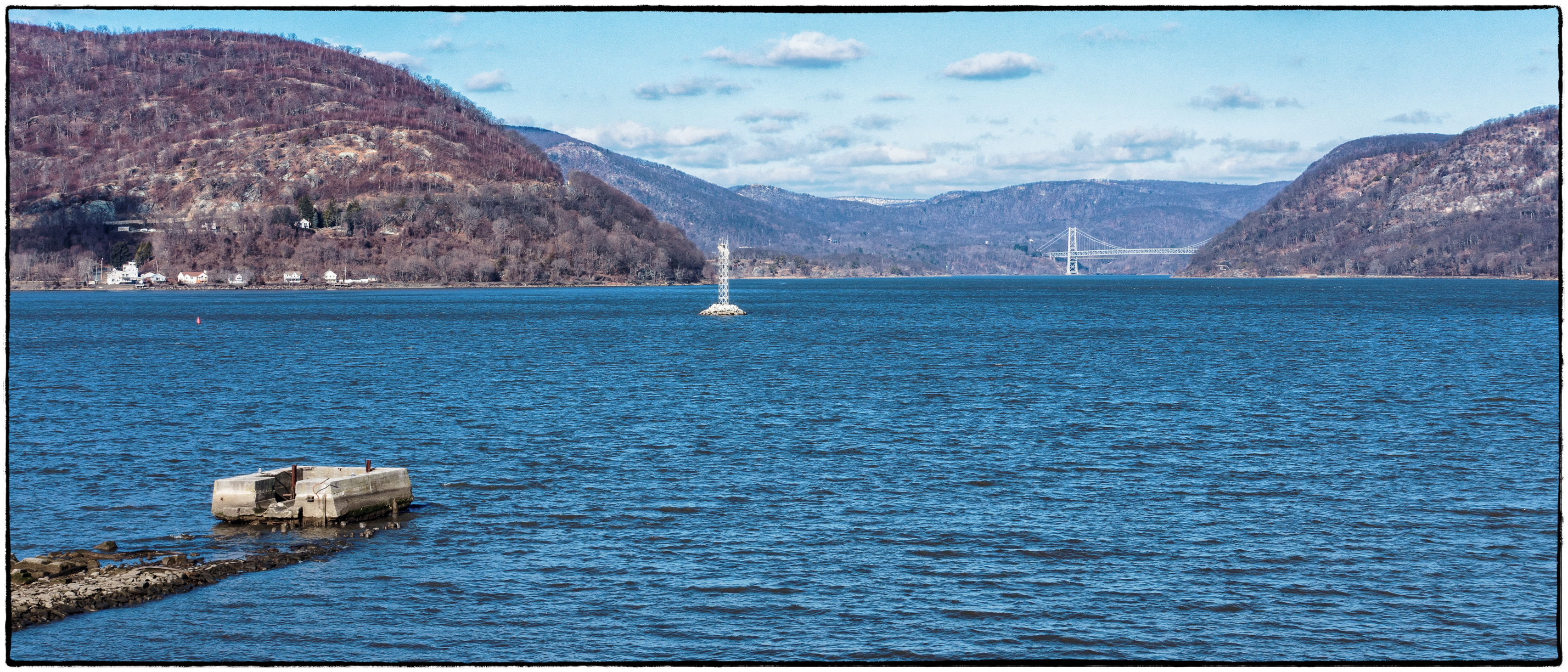
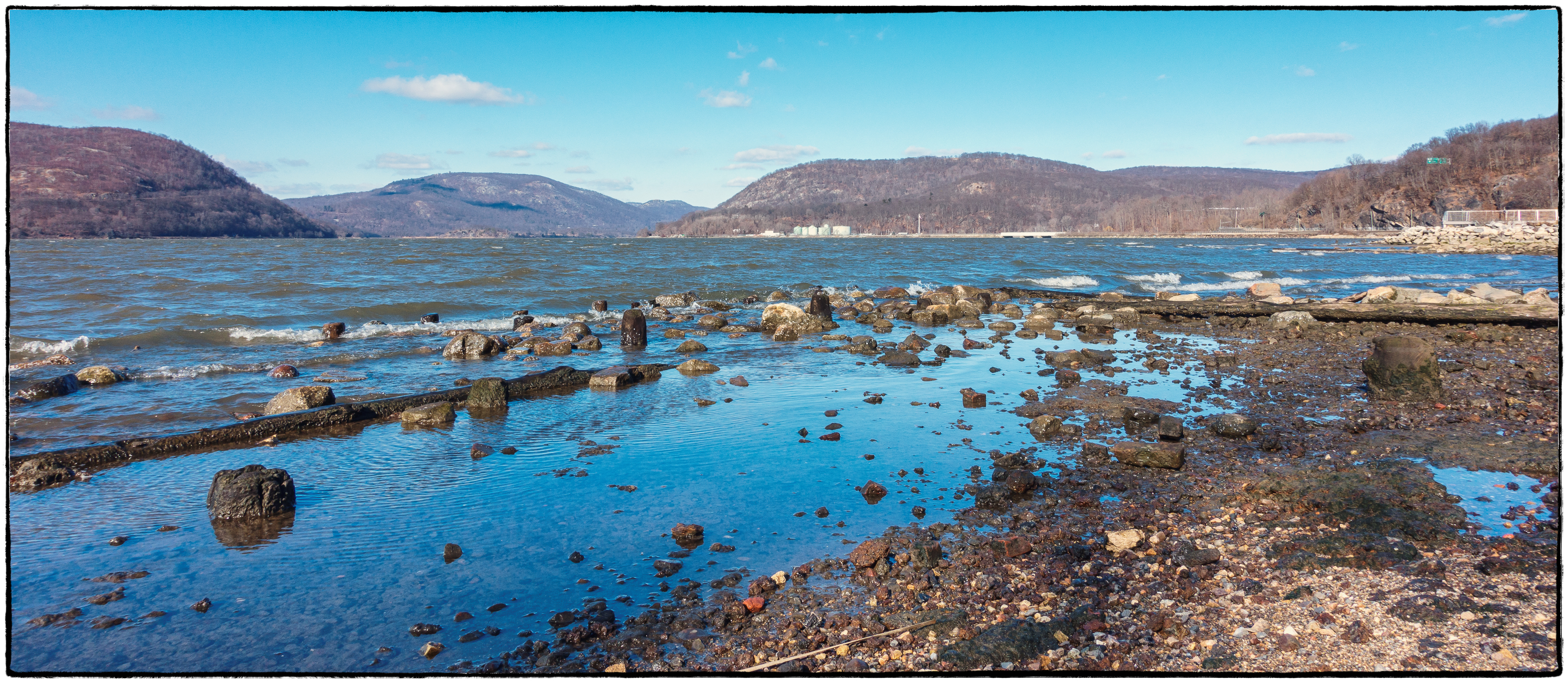
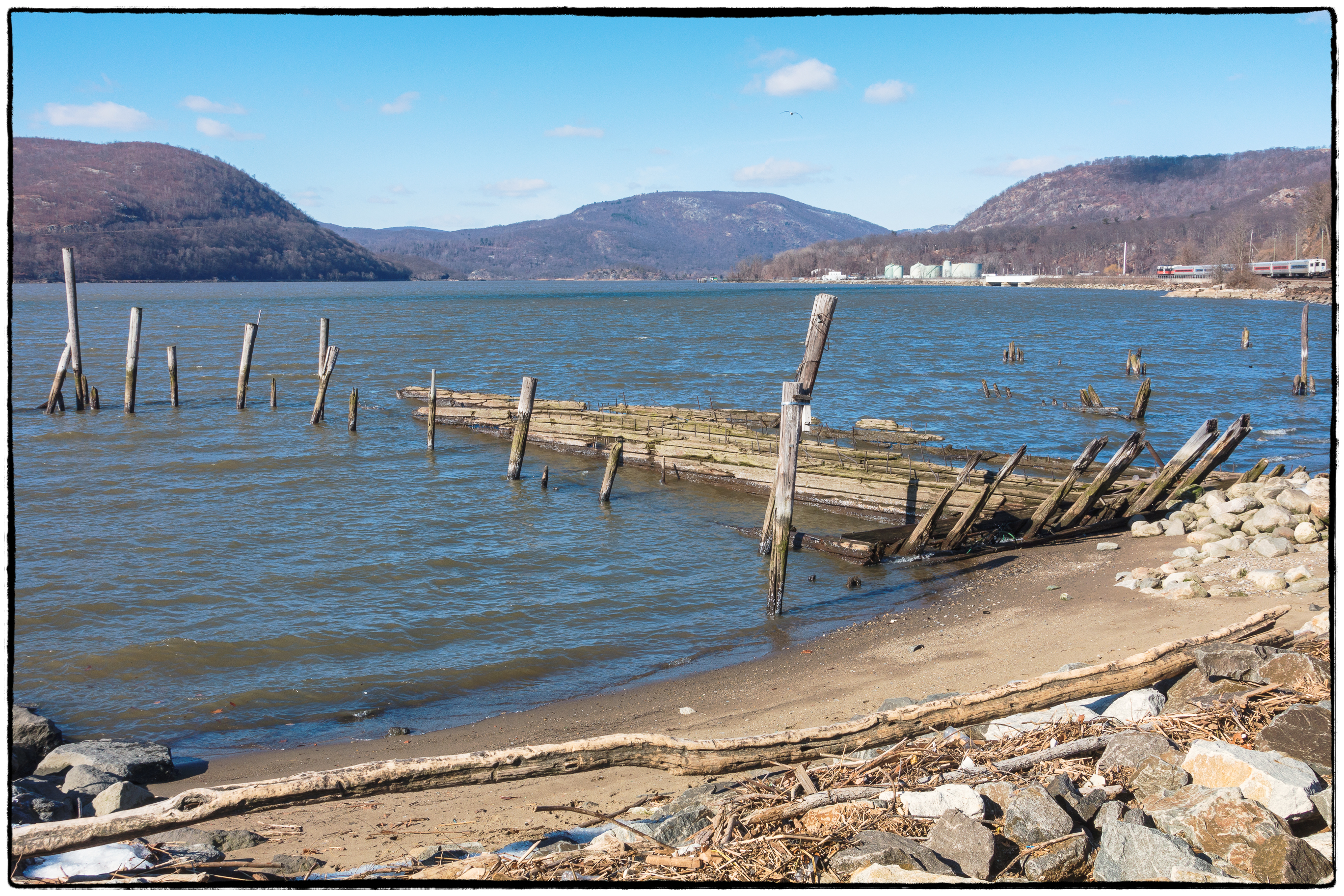
A couple of view of Peekskill Bay taken from the area directly in front of the railroad station looking North West.

Jones point (at the foot of the Dunderberg Mountain) is on the left, with Bear Mountain in the distance. On the east side of the river is the road up to Anthony’s Nose and the Bear Mountain Bridge.

A similar view to the one above, but with the remains of a pier and possibly a boat in the foreground. A Metro-North train passing on the right.

Peekskill Riverwalk Park – Views towards Mount Saint Gabriel/Fort Hill

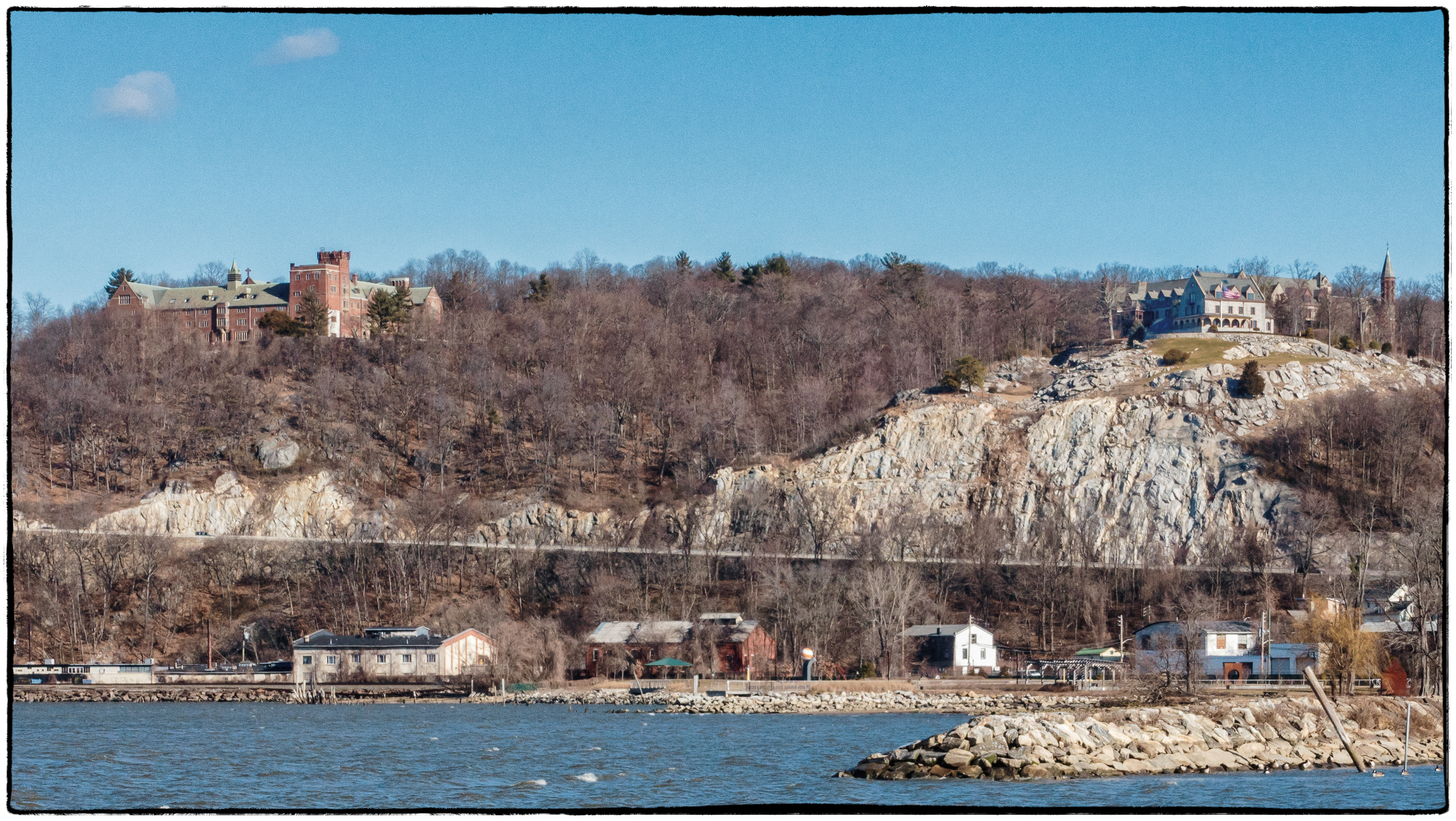
Taken from the Riverwalk looking back towards Route 9.

I’d often wondered what these two interesting structures on top of the cliffs are. A conveniently placed information board explains:

Several outstanding historic structures sit high above you on Fort Hill, overlooking Peekskill Bay. The castle-like structure on the left as the Saint Mary’s School for Girls, a beautiful building of brick and stone designed by Ralph Adams Cram. The open quadrangle in the centre of the structure was built in English Tudor-Gothic style, reminiscent of Cram’s masterpieces on the Princeton University campus.

Saint Mary’s was an all girl’s boarding school that catered to grades 8-12. Classes focused on college preparation in the arts and sciences, with a rigorous physical education curriculum. The school closed in 1977, and much of the land was purchased by the City of Peekskill. The site as used as the setting of the fictional TV series “Facts of Life” from 1979 to 1988 and is now the Chateau Rive Apartment complex.

The teachers at the shool, Episcopal Sisters of Saint Mary, arrived in Peekskill in 1872 and departed in the 1980s. Their chapel still stands nearby, with just the steeple visible behind the trees. This is the oldest building on the hill, designed by Church Architect Henry Congdon and built in 1890.

The large convent building, made of stone that was quarried on the hill, is joined to the chapel by a cloister and was built in 1905. The convent was the center of the Community of St. Mary, where the Sisters cared for their sick and infirm, trained their novices, prepared the Altar Bread, designed the Church vestments, and wrote in the Scriptorium.

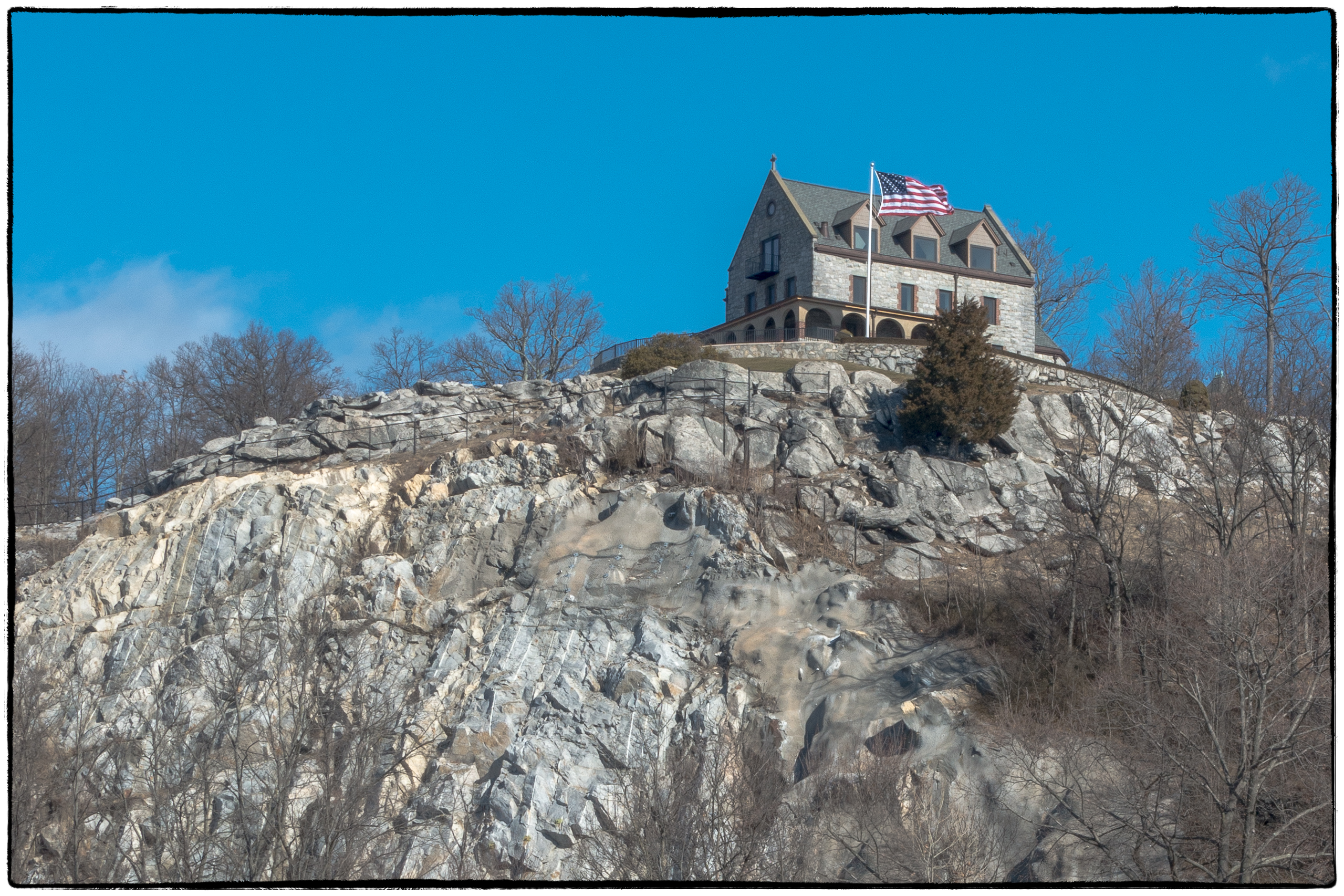
The nearby Priest’s House (above, and on the right in the first picture) the most visible building on Mount Saint Gabriel (Fort Hill) was constructed in 1908, and is now a private residence.

An article on the New York History Blog (Peekskill’s Historic Community of St Mary) is also worth a read.

Peekskill Riverwalk Park – The View from Travis Cove

I’ve posted about the Peekskill Riverwalk Park before:

Peekskill Riverwalk Park – Sam Oitice Heroes Remembered 9/11
Peekskill Riverwalk Park – Commemorative Bell
Peekskill Riverwalk Park – Jan Peeck’s Vine
Peekskill Riverwalk Park – Abraham Lincoln in Peekskill
Peekskill Riverwalk Park – The Peekskill Brewery
Peekskill Riverwalk Park – The Golden Mean
Peekskill Riverwalk Park – Stargate on Hudson?
Peekskill Riverwalk Park – A Local Legend

All of the above were taken around the Peekskill Railroad station. I hadn’t realized just how extensive the park is, however, until while taking the train into the city a while back I spotted paths along the river that I hadn’t seen before. So I decided to go for a walk with the dog and to take a few pictures at the same time. The first part of our walk took us down to Travis Cove.

What you see below you in Travis Cove is the foundation of the River Water Intake Shed and the remains of a water pipe that were used by the Fleischmann Distillery in the early 1900s. Water from the Hudson River flowed through this pipe, was cleared of debris at the Filtration Plant, and was stored in the Pump House, near where you are currently standing. The water was used to cool the massive Fleischmann plant and to fight fires at the complex. In 1918, a grain fire at the factory caused the only deaths of volunteer firefighters in the history of the Cortlandt Hook and Ladder Company.

The Fleischmann Company, once the largest manufacturer of yeast in the world, was founded in 1900 by Charles and Maximillian Fleischmann and James Gaff. During World War II, the factory’s laboratory developed packaged yeast and was recognized with five Army-Navy Production “E” Awards. At its height, the company’s huge 100 acre Charles Point facility had more than 160 buildings, consumed more than 5,000 bushels of grain per day, and used 22,500,000 gallons of water per month for the production of vinegar, yeast and spirits. Fleischemann Pier in nearby Charles Point Pier Park, originally known as Molasses Dock, was used to unload large ships carrying liquid molasses and other cargo to the distillery. The pier had an unusually long and narrow design to allow the docking of large ocean-going vessels.

In 1954, Fleischmann employed over 1,000 people and produced 5,000,000 ponds of yeast per month. By 1976,the high costs of operation in the Northeast resulted in 304 layoffs. Forty-two buildings were demolished and a portion of the land was sold. By 1985, the remaining vinegar plant was shut down and the last 6 acres of land were donated to the City of Peekskill. The Wheelabrator Resource Recovery Facility (on the hill behind you) now occupies a large portion of the original Fleischmann property.

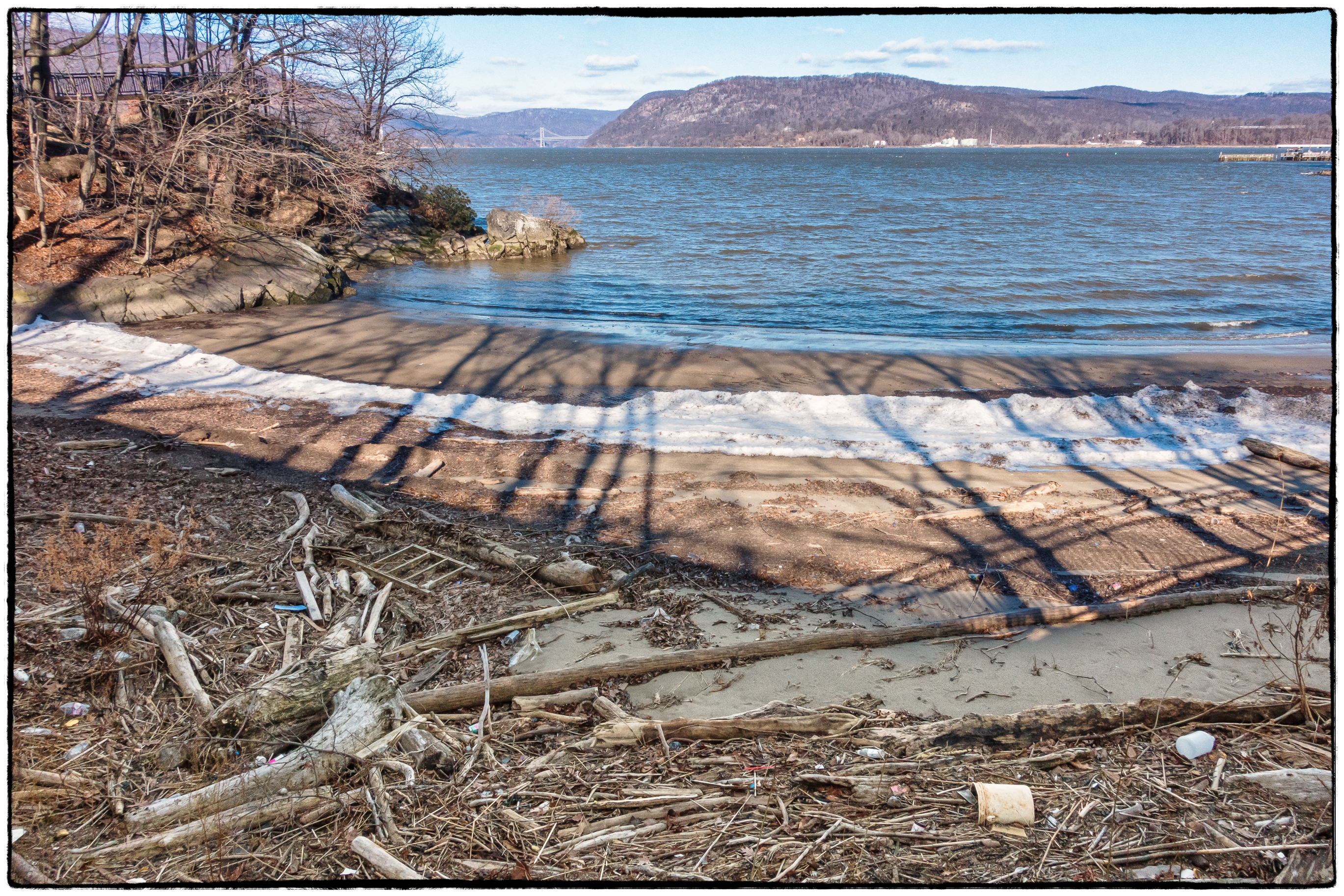
Driftwood on a beach. The observation deck with the information boards can be seen in the top left of the picture,

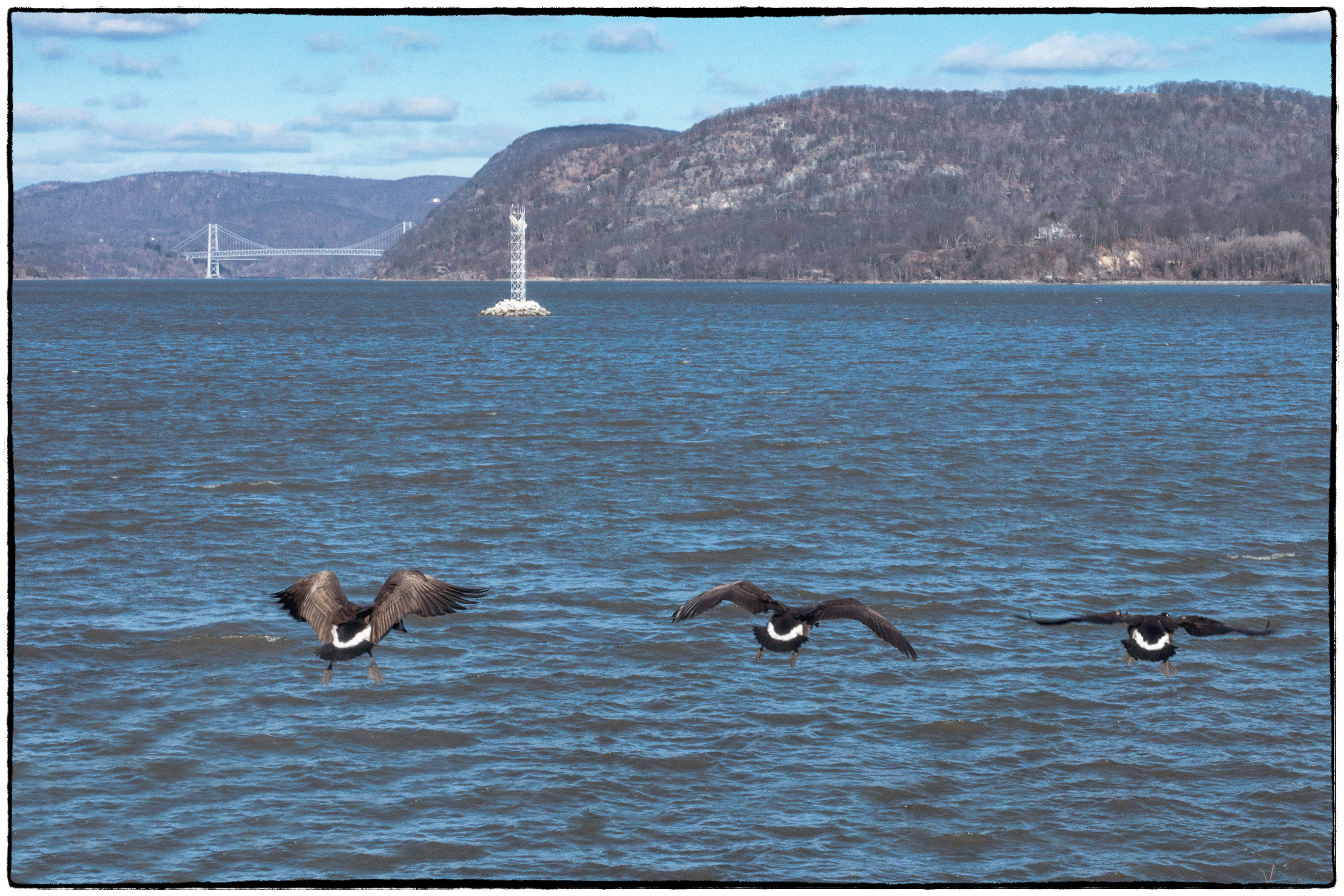
Departing Geese.

Amawalk Friends Meeting House

Back in December I went to Amawalk Hill Cemetery. Just down the hill was an interesting looking old building, but unfortunately I didn’t have time to go and take a look. So when I was thinking of a venue to go and try out one of my old film cameras (a Fuji GS645S) this came to mind.

According to Wikipedia:

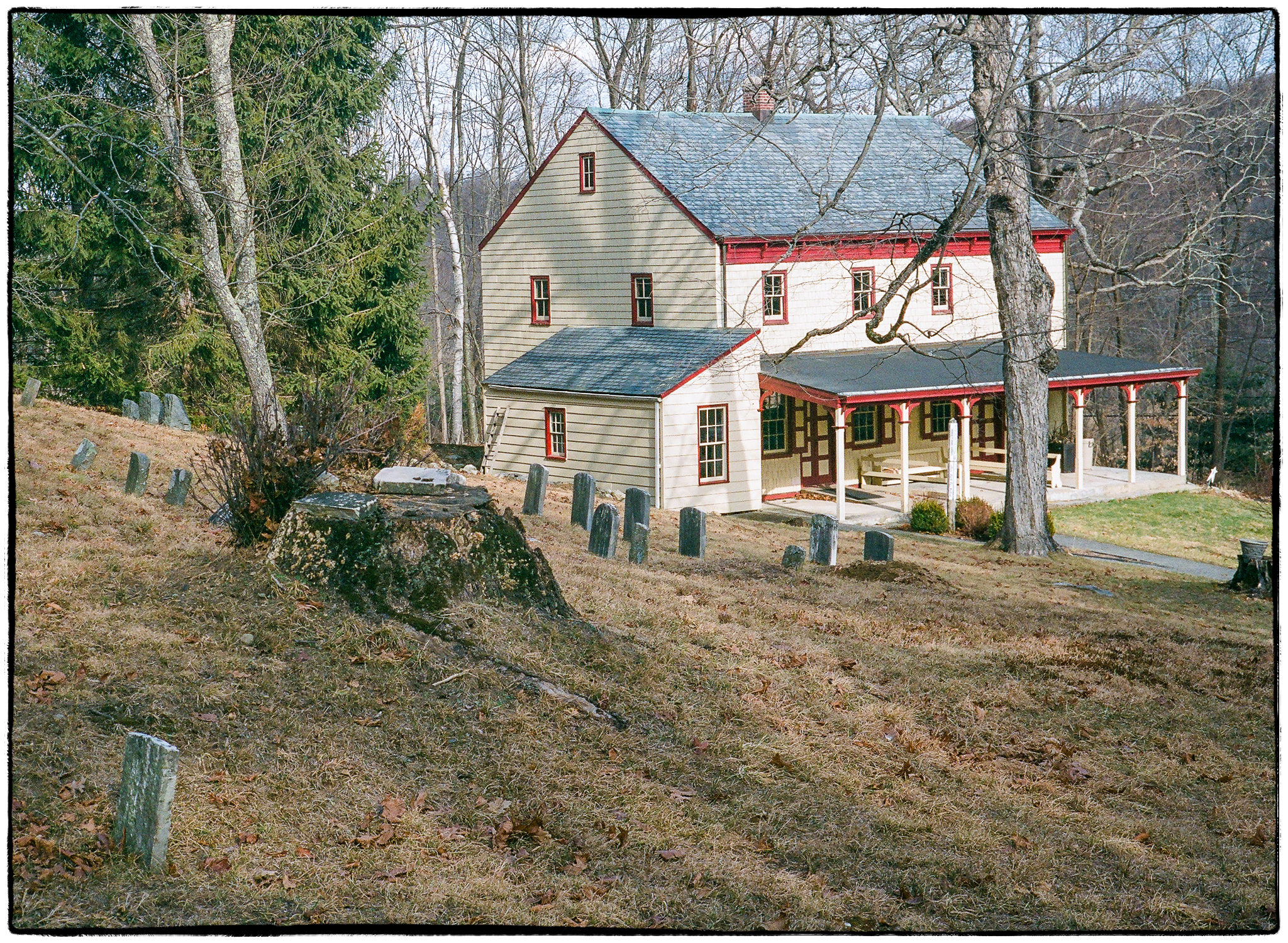
Amawalk Friends Meeting House is located on Quaker Church Road in Yorktown Heights, New York, United States. It is a timber frame structure built in the 1830s. In 1989 it and its adjoining cemetery were listed on the National Register of Historic Places.

Quakers had been active in north central Westchester County since the mid-18th century. The current meeting house was the third they built; fire destroyed both predecessors. Not only is it one of the most well-preserved and intact in the county, it is a rare surviving meeting house built by a Hicksite meeting during that schism in American Quakerism.

Architecturally the meeting house shows some signs of Greek Revival influence, also unusual for Quaker buildings. The addition of a porch later in the 19th century also brought in some Victorian touches, again unusual. Its interior was renovated and the building resided when meetings were revived after a brief period of dormancy. However, many of its original furnishings remain.

Taking up most of the property is the meeting’s cemetery, which contains many graves of its members from the earlier years, along with that of Robert Capa, the accomplished mid-century war photographer, and his brother Cornell, although neither were members of the meeting, much less Quakers. The headstones of those graves strongly reflect Quaker burial practices, and thus the cemetery is included in the listing as a contributing resource. An architecturally sympathetic First Day School building added when meetings resumed in the 1970s is non-contributing due to its newness.

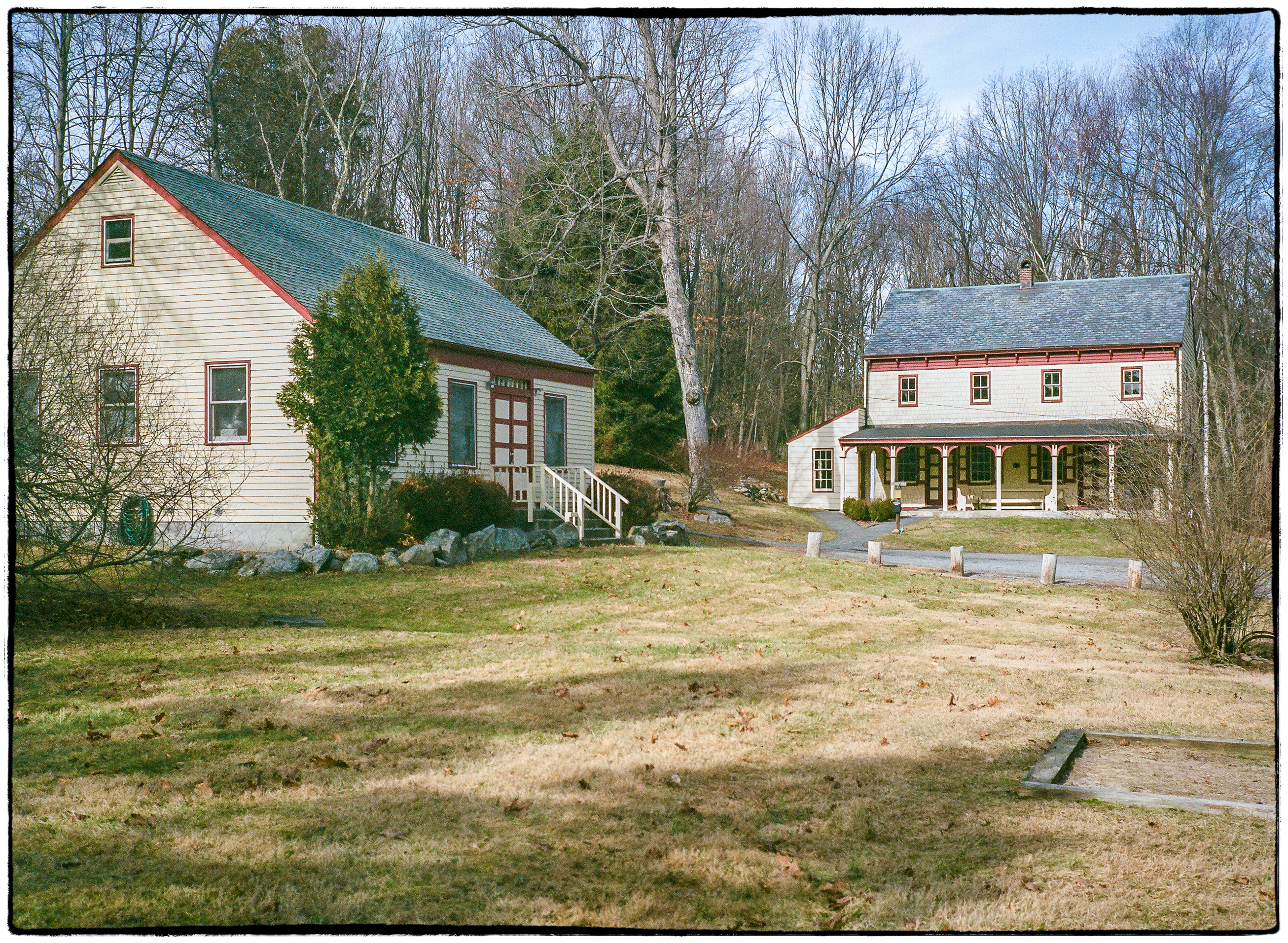
First Day School with Meeting House in the background.

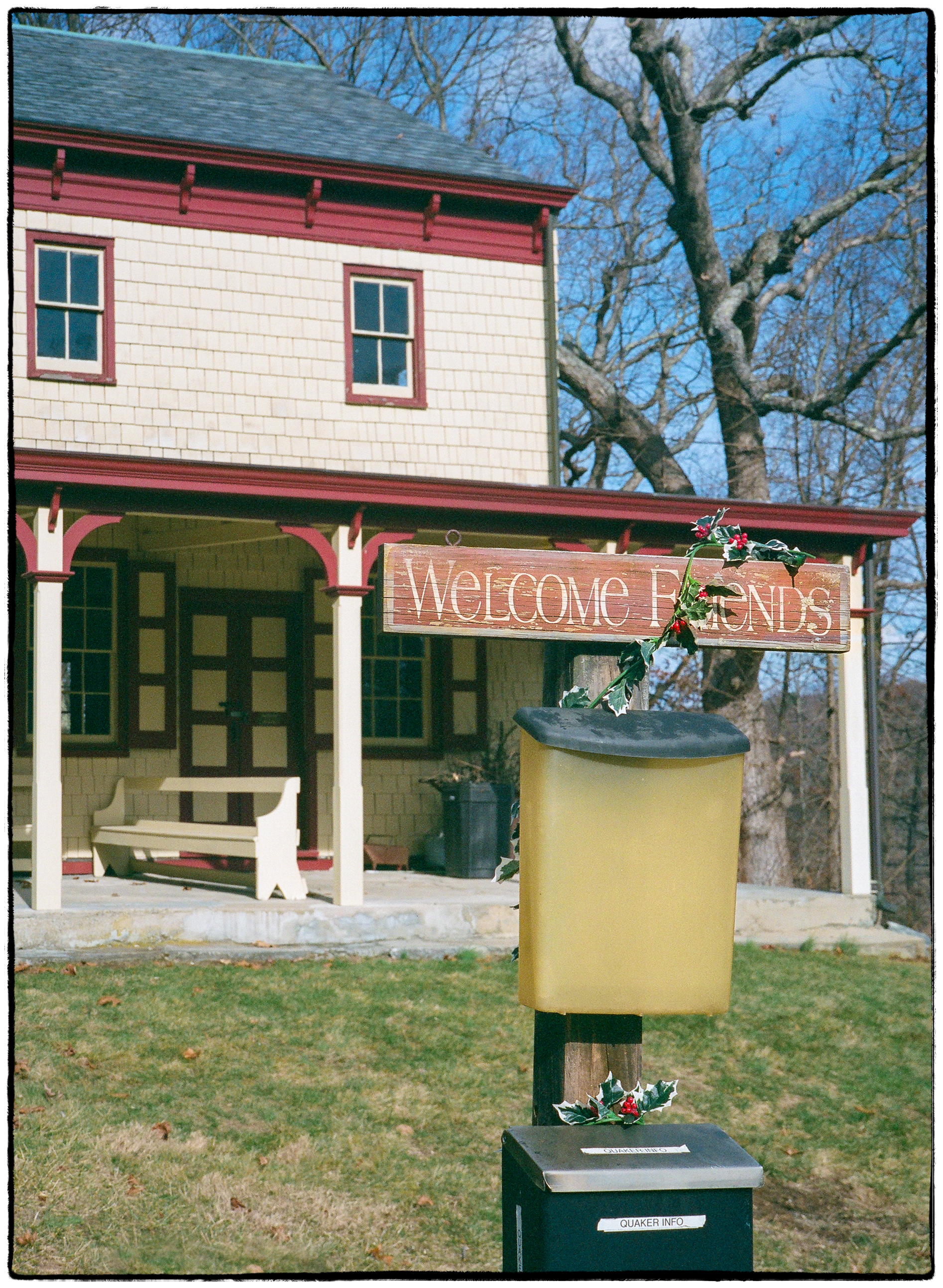
Welcome Friends.

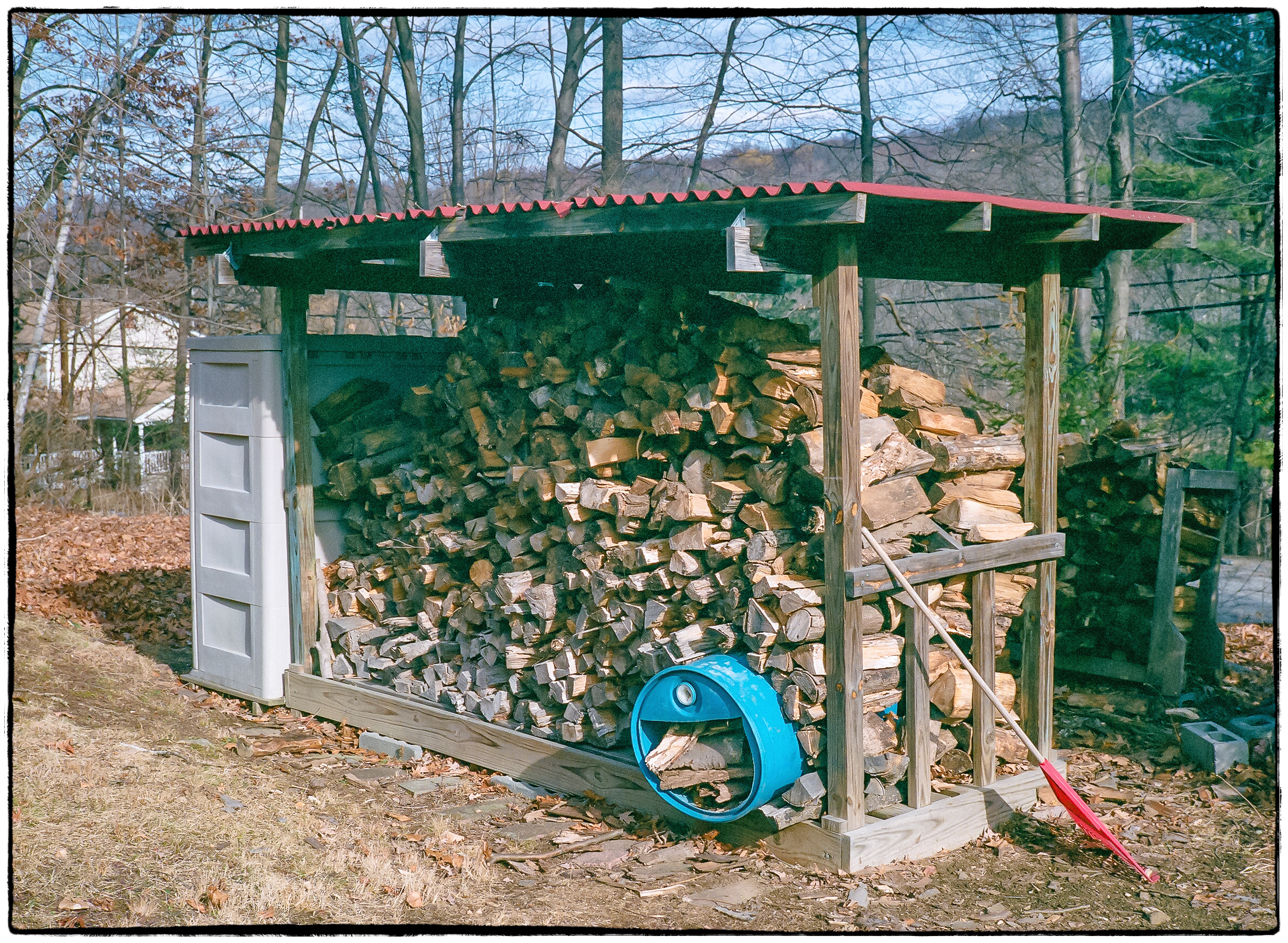
Woodpile.

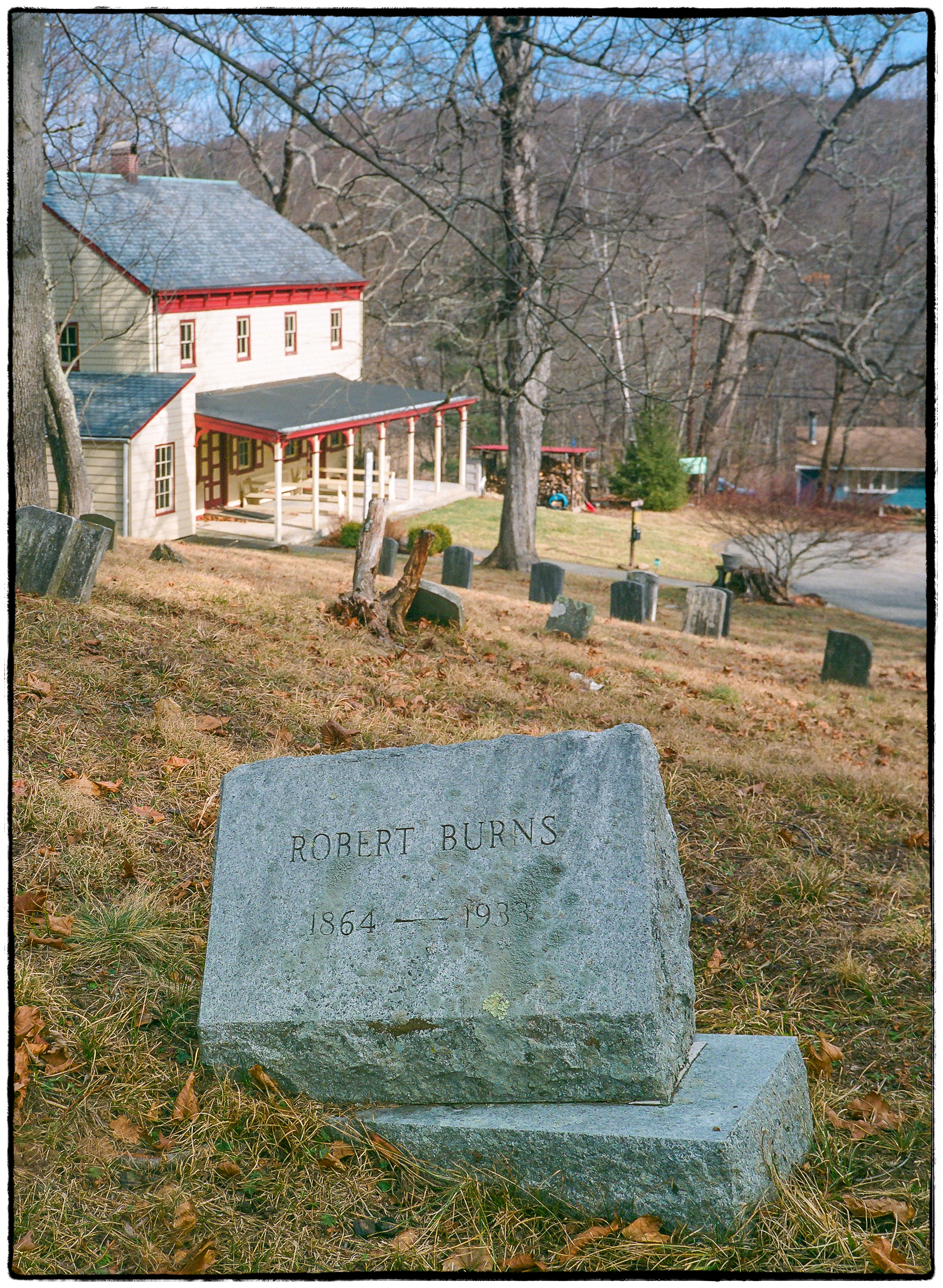
But certainly not THE Robert Burns!