Four Women on Hallowe’en

From time to time I look back on old photographs. Sometimes I see possibilities in them that I didn’t see before. Over time Lightroom has become more sophisticated and my Lightroom skills have improved. So occasionally I end up with a photograph, which I didn’t think much of at the time but which now seems to me to be much better.

This is a case in point. Even though it was taken 6 years ago I clearly remember taking it. I was walking from Grand Central Station to work and came across these three women on 44th Street between 2nd and 3rd Ave in New York City. I’m usually too shy to ask strangers to pose, but this was just too good to miss and as it turned out they were only too willing. The light behind them was quite bright and caused a certain amount of flare. You can still see it over the heads of the two women on the right, but it’s much less than on the original negative. I don’t find it too distracting.

Taken on Hallowe’en, 2011 with a Retina IIc and I’m guessing Kodak Gold 400.

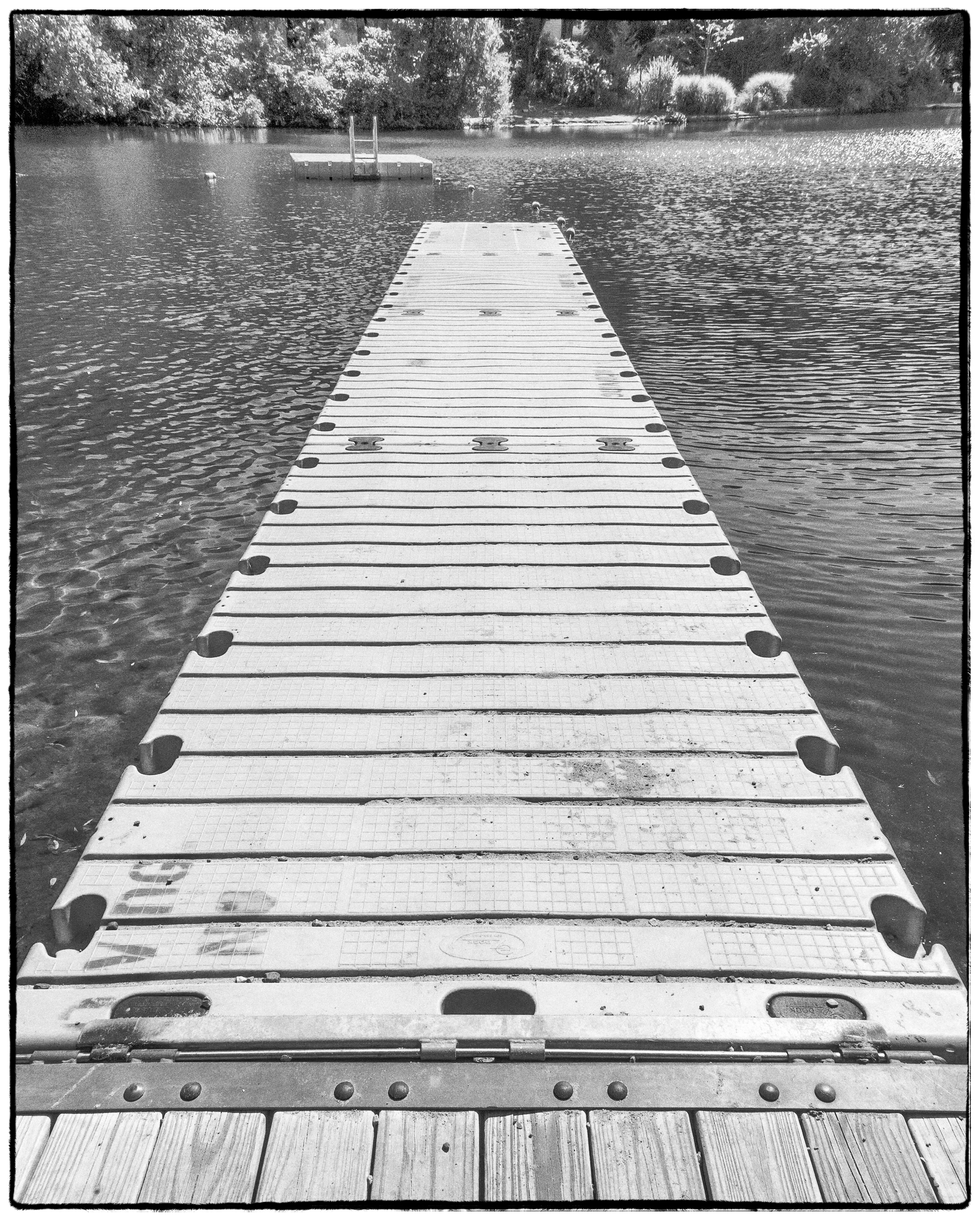
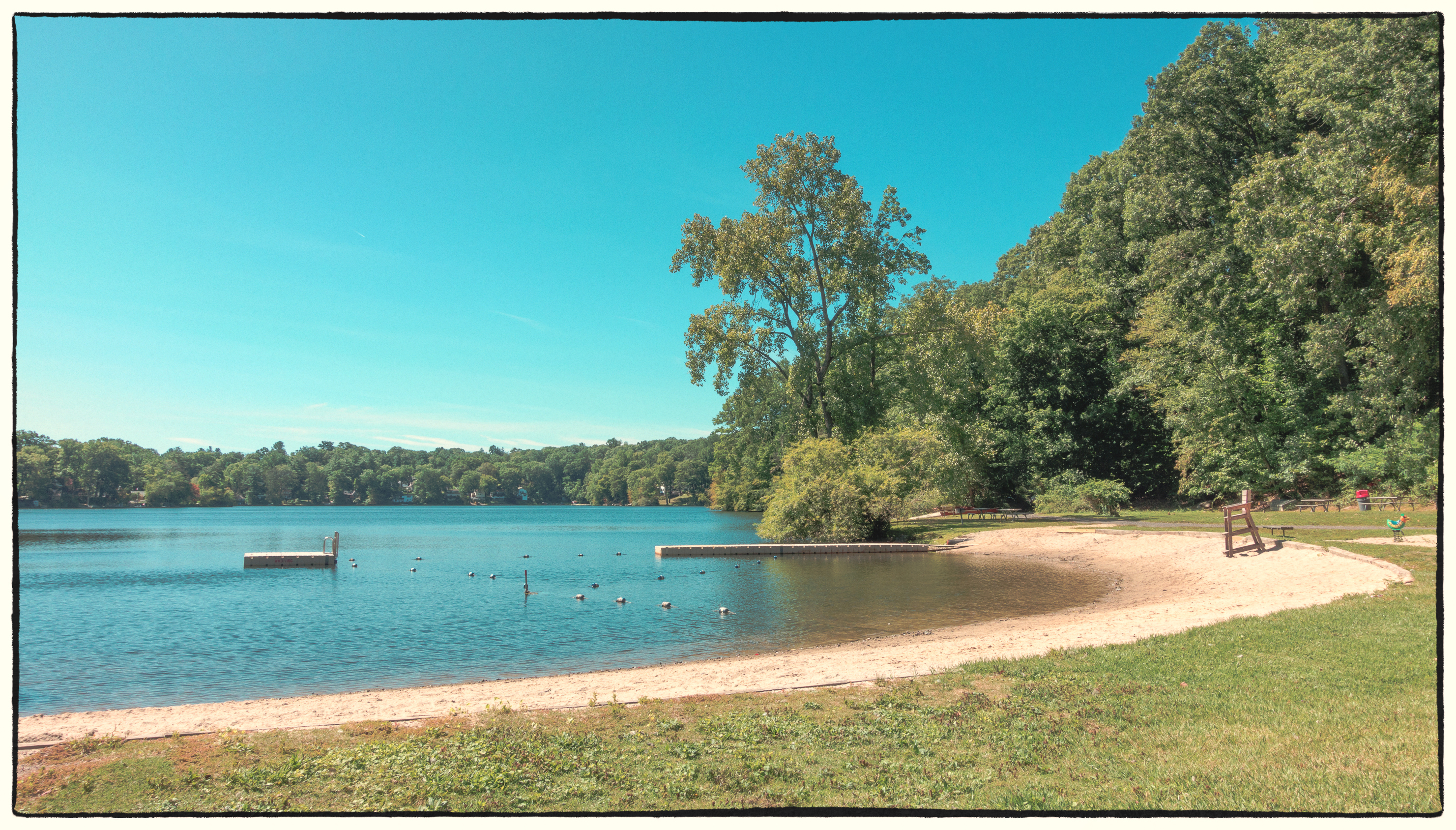
Lake Peekskill – North Beach

A few years ago when we were looking at areas we might move to we looked at Lake Peekskill. We weren’t too impressed at the time and moved on to look elsewhere. However, I found myself back there the other day and I suspect that we may have looked at the wrong part. Where I ended up was much nicer than where we had looked before.

I also came across this article: Historic Lake Peekskill (which also contains a number of interesting old photographs) on the Putnam Valley Historical Society website. I’ve included a few extracts below:

Lake Peekskill was once known as Cranberry Pond because of the uncultivated cranberries once growing in the marches there…The pond was small and full of greenery around the edges. Bathers and fishermen used the pond in its most natural state. The pond was beautifully set with hills and trees abounding. Around 1921 a developer by the name of McGolrick bought the property and soon Lake Peekskill was to be developed.

The McGolrick Realty Company offered free bus service for buyers to see the property available. A model home was built on Argyle Street near the corner of Central Drive. This building still stands…The Clubhouse built off of Pleasant Road at the top of the hill offered a fine, wide view to the east in the direction of the lake and to the hills of Shrub Oak. The Clubhouse is no longer standing but the foundation, steps up from the road and benches still remain. This, too, belongs to all property owners in Lake Peekskill but has come in need of repair and upkeep. The view from here was and still is outstanding.

The small lake filled with tree stumps was eventually enlarged. The water was lowered at the dam that was built near the bridge on Lake Drive and as many stumps were removed as possible before water was again let in from the natural springs feeding the lake. There was not enough water for the summer season so a pump was installed in the Hollowbrook and filled the remainder of the lake… Soon Lake Peekskill was bursting with summer residents.

There was railroad transportation from New York City to Peekskill. In the early days there was a trolley run to Oregon Corners. In time an all-day bus ran from the railroad station directly into Lake Peekskill. Monthly railroad tickets were available. Neighbors met on the train and passed the time playing cards, getting to know each other and discussing the future. Since taxes were reasonable, living in Lake Peekskill was an advantage despite some of the hardships.

The post office was a wooden shack on the edge of the lake next to where Carrara’s Beach now is. Mrs. Carrara, the postmistress, drove to Peekskill Post Office every morning to pick up the mail. When rural delivery started people put up their mailboxes on posts at the entrance to Lake Peekskill on Central Drive (now known as Morrissey Drive). The mailing address was R.F.D., Peekskill, New York. It remained so through the 1940’s.

Telephone service was not in existence except for the stone house on the lake built by Beat Keller a Swiss baker and his Austrian wife. In the 1940’s telephone service came into the lake area.

The Lake Peekskill Athletic Club was formed by the men of the Community. They held dances, had bingo parties and ran festivities at the beaches. On the Fourth of July they had a beauty contest for Miss Lake Peekskill along with swimming races in all categories. The highlight was when one swimmer caught the duck that was let free. It was very exciting for all. Fireworks were held in the evening over the lake. The beaches were pristine and well-kept by the Improvement District which also collected the garbage.

There was the stone house with restaurant, boating rental. Next door was Samuel’s Soda Fountain. Then Samuel’s Grocery with meat and then Diamonds Market which was open all year. Diamonds had a T.V. where all the neighbors could see the news, the fights popular then in the 1940’s, etc. Most people didn’t have their own television set yet like today. Everyone strolled down the mountain to the restaurant at Carrara’s but mostly to the Corner to meet friends, and the young teens their future spouses in many cases….Soon the Lake Peekskill Athletic Club started building their own Club House at the bottom of the hill on Central Drive across from Gragert’s Real Estate and Tydol Gas Station (built in 1938). This Athletic Building became an entertainment hall year round. Area bingo parties were held with Fred Ernst being the favorite caller because of his famous “sixity six”. Paul Le Favre and others enjoyed calling numbers as well.

The story of Lake Peekskill would not be complete without the mentioning of Pop Melnick’s Camp Pecoho. In the 1940’s it was a haven for families from May to October. Everything was there for family pleasure and relaxation. They had their own beach area near the bridge at Lake Peekskill. A portion of this now belongs to the Shore Club.

Peekskill became closer with the bus service available. More and more families had cars. The community stretched out as people were better able to travel.

What people do not see today that was there when Lake Peekskill started is the openness of the fields, the wild flowers, animals, and quiet. Children would sled down Central Drive without fear of cars. Ice skating on the lake was a family affair in the winter. The beaches in the summer had docks out a distance from the shore. The life guards kept a watchful eye on all. The matrons guarded the beach and bathhouses. Carrara’s had the largest bathhouse and next was North Beach. Singers Beach was most popular, however. Mr. North was constable and made sure that all beaches were clean. He walked the parking lot to pick up papers should he see them on the ground.

Boating in the 1940’s and 1950’s was popular. Rentals could be had behind the stone house along with the possibility to buy worms for fishing.

In winter one could hear the chains of the tires rattle down the road. Sand was the only skid prevention. Salt was not heard of yet. (Is the salt we use now a source of future problems for our lakes?) In summer one could hear the constant hum of people at the beaches enjoying the sun and water sports. When evening came the music from the Shore Club rang across the lake. A few silhouettes of boaters on the water could be seen in the moonlight.

The Lake was always a reflection of the seasons. Fall colors from the hills reflected in the water. Snow in the winter with patches cleared for ice staking was abundant. There was a time in the 1950’s when there was music for ice skating coming from the restaurant at Carrara’s. Mr. Martinsen skated every day at his advanced age with his arms folded behind his back. It made the beginners wonder if they could one day glide across the lake with his ease. When spring came the bare reflections of the trees gave way to buds and the light green colors of new leaves. As the season progressed blossoms of the early spring fruit trees reflected in the water. Summer was on the way. The air seemed to suddenly turn warm as the end of May arrived along with the summer residents. Lake Peekskill again opened its arms to all those who were seeking fun and pleasure with warm days and cool nights. From the early spring peepers song to the hollow tone of the bull frog, Lake Peekskill will be remembered by many as a place of peaceful existence.

Above – North Beach, Lake Peekskill taken with a Sony RX100 M3.

Interesting Article on the Dusseldorf School

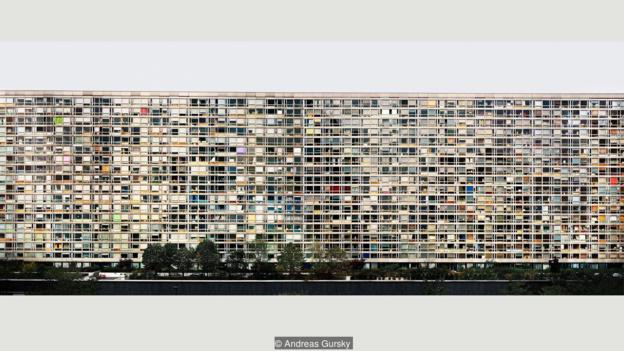
Andreas Gursky’s photograph of a Montparnasse tower block is a stunning mosaic of colour (Credit: Andreas Gursky)

Andreas Gursky’s photograph of a Montparnasse tower block is a stunning mosaic of colour (Credit: Andreas Gursky)

I just came across this article (The stunning photographs that are like paintings) on the BBC website. It deals ith the so-called “Dusseldorf School” and refers to an exhibition featuring their work at the Städel Museum in Frankfurt. In particular it draws attention to the influence of Bernd and Hilla Becher on the photographers (Andreas Gursky, Candida Höfer, Thomas Struth, Axel Hütte, Thomas Ruff, Jörg Sasse) belonging to the school.

At the heart of Engler’s exhibition is the following question: how important, as an influence upon this special generation, were their teachers in Düsseldorf, the German photographers Bernd and Hilla Becher? The answer, it transpires, is: extremely important. If you aren’t already familiar with the Bechers, then it’s time to become acquainted with two crucial figures in the history of photography.
Draconian and dispassionate.

It was 1976 when Bernd Becher (1931-2007), who had trained as a painter, was appointed professor of photography at the Academy of Art in Düsseldorf. His wife and artistic partner, Hilla (1934-2015), was never given a formal role at the institution, but she always worked closely with her husband, who often taught at home, and was an equally important influence upon his students until 1996, when Bernd left the faculty.

They had met as students, themselves, at Düsseldorf’s Kunstakademie in 1957, and began collaborating two years later, before getting married in 1961. During the 60s, they spent time in New York City, where they encountered avant-garde art, and mixed with Conceptual and Minimalist artists such as Carl Andre. “Their experience in New York totally changed the way they perceived photography,” Engler says.

A while back I went to an exhibition of Bernd and Hilla Becher at Dia, a nearby art museum. It featured a number of photographs of industrial buildings and structures and I quite liked them.

At first I didn’t much care much for the work of the other photographers, but it’s now starting to grow on me. I suspect that you really have to see the photographs in person to really “get” them. As the BBC article notes:

As an exhibition featuring their work at the Städel Museum in Frankfurt recently made plain, before the emergence of Gursky and his contemporaries, including Thomas Ruff and Thomas Struth, photography was typically seen as something small-scale and black-and-white. Its status as contemporary “art”, i.e. as work that could stand shoulder to shoulder with painting in museums and auction houses, was still a matter of debate.

During the 90s, though, curators and collectors started going wild for the sort of photography that Gursky and his peers were producing: massive, scintillating compositions, like Paris, Montparnasse, printed in full colour, and often presented, in the manner of serious paintings, in heavy wooden frames.

Just looking at tiny pictures on a computer/iphone/ipad just won’t do. Unfortunately, I’ve yet to find an opportunity to see them in their full glory.

Olympus Mju (Infinity Stylus) II Zoom 80 – Results

Here are some results from my July film camera (See: July Film Camera – Olympus Mju (Infinity Stylus) II Zoom 80).

I’d taken a some pictures (in Croton-on-Hudson and while walking to meet a friend in Ossining, NY). Then I went with my wife to Muscoot Farm to see a friends’ paintings – part of a water color exhibition being held there. I was getting close to the end of a 24 exposure roll so I decided to quickly finish it off so I could send it to be processed. I got up to 24 exposures, and then past. Fine, I thought, you usually get a few extra exposures. But then the the exposure counter kept on going. I glanced at the small window in the back of the camera and confirmed my suspicion that I had put in a 36 exposure roll (I have a number of very old rolls of Kodak Gold. I don’t know where they came from, but when I’m trying out a new camera I just grab one of them). As I’m never sure how well a “vintage” camera will work, I don’t usually spend too much time on getting a great shot. This time, however, I was definitely “snap happy”, just wanting to finish the roll and get it off. I suppose I was using the camera as intended: point shoot, point shoot, point shoot…So how did it all come out?

Not too bad as it turns out. Of the 36 exposures there were about 16 I liked. Of the remaining 20 I rejected 7 because I’d taken more than one picture of the same subject and I liked another better. The pictures were OK, but I liked others more. That left 13, 4 of which I rejected because of poor composition (i.e. my fault rather than the cameras); 5 because of blur (possibly because the camera had selected a slow shutter speed); and another 4 where the exposure was way off.

The camera is certainly capable of taking decent pictures. However, I did have some problems with focus/exposure. I’m not entirely sure which one it was because it seemed to happen most when I tried to focus on bright objects (e.g. a bright, white building in full sun, a white flower etc.). The resulting image came out very badly overexposed, to the extent that I couldn’t really determine whether it was in focus or not.

I also experienced the same problems as I’d had the Olympus Infinity Stylus and Olympus Infinity Stylus Epic: the inconvenience of having to turn off the flash every time I turned the camera on; the complete lack of any kind of information re shutter speed and aperture.

In addition this particular camera suffered from the light leak problem I mentioned in my earlier post. I’d had this in mind when I took the pictures and had composed somewhat less tightly than I usually do. This allowed me to crop out the leak on most of the exposures.

I felt that the lens was not as sharp as that on the Stylus and the the Stylus Epic, particularly at the long end of the zoom where it was soft.

On the plus side I was pleased with the one flash exposure I took.

I’m not likely to use cameras of this nature very much as I don’t like the lack of feedback on shutter speed/aperture. If I were to use one I would be more likely to use either the Stylus, or the Stylus Epic because of their better lens and the fact that the zoom isn’t all that helpful. And then there’s the light leak. That would be enough to prevent me from using the camera regularly. So all things considered it’s decent picture taker, but not for me.

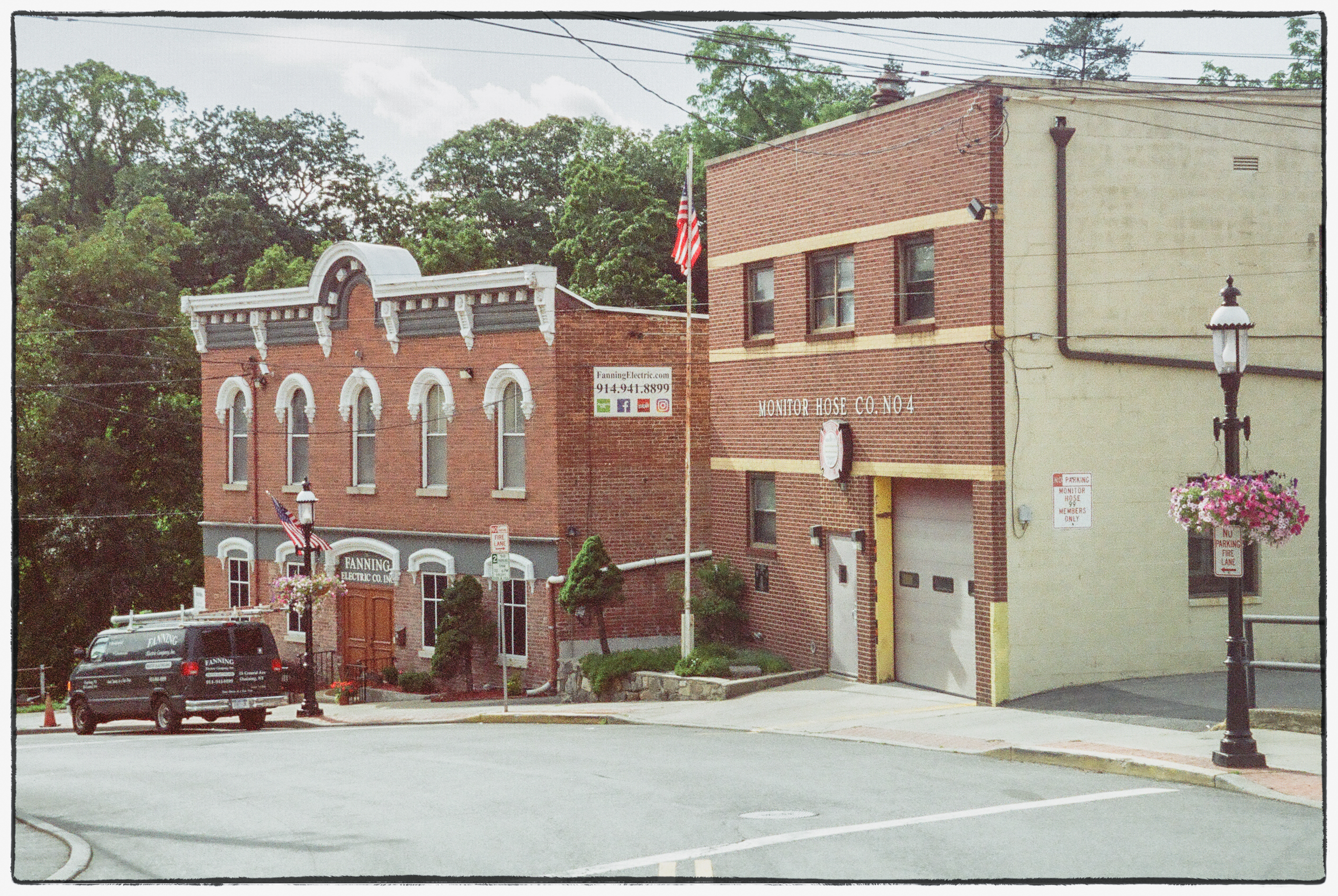
Above Ossining, NY Street Scene

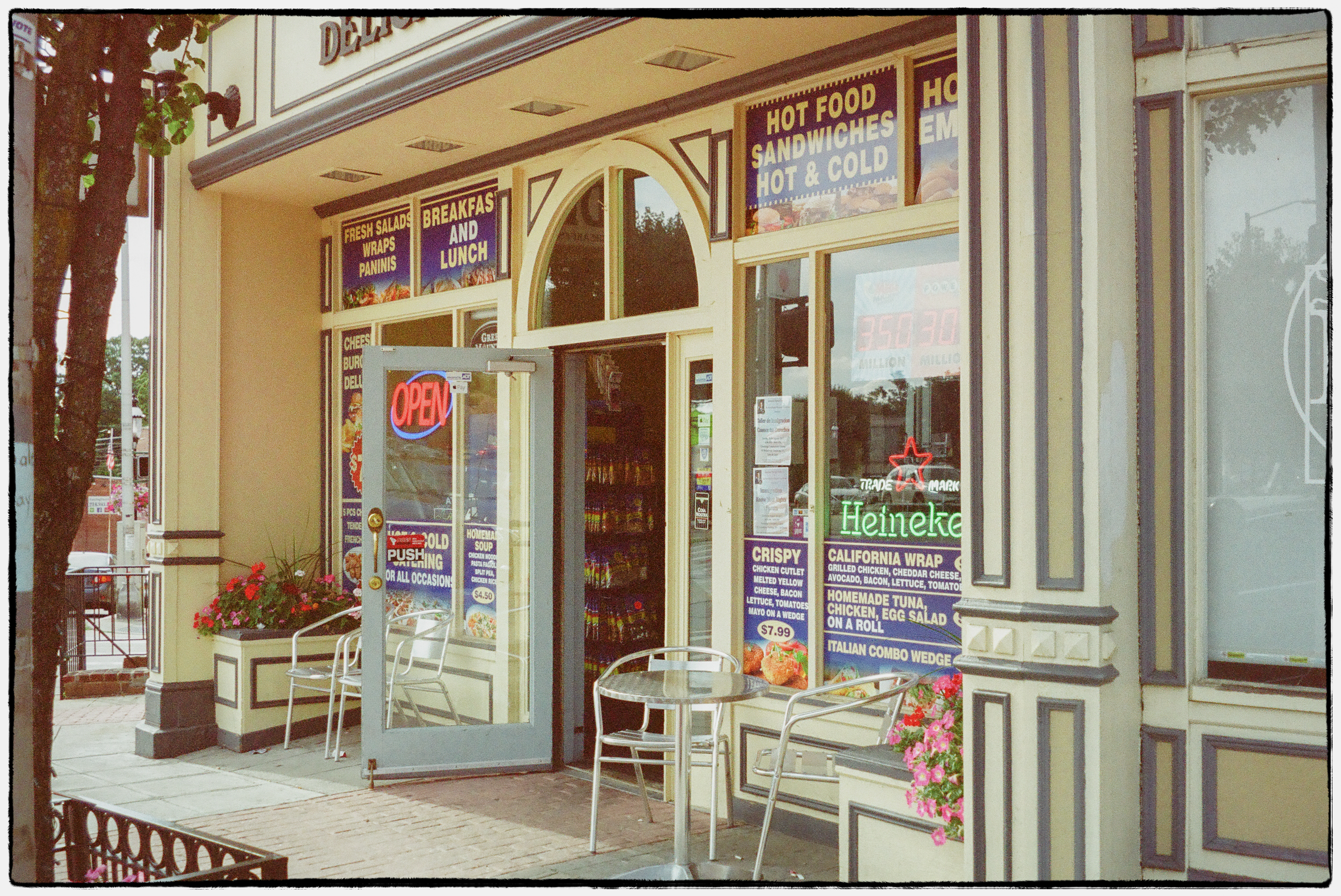
Ossining, NY Storefront.

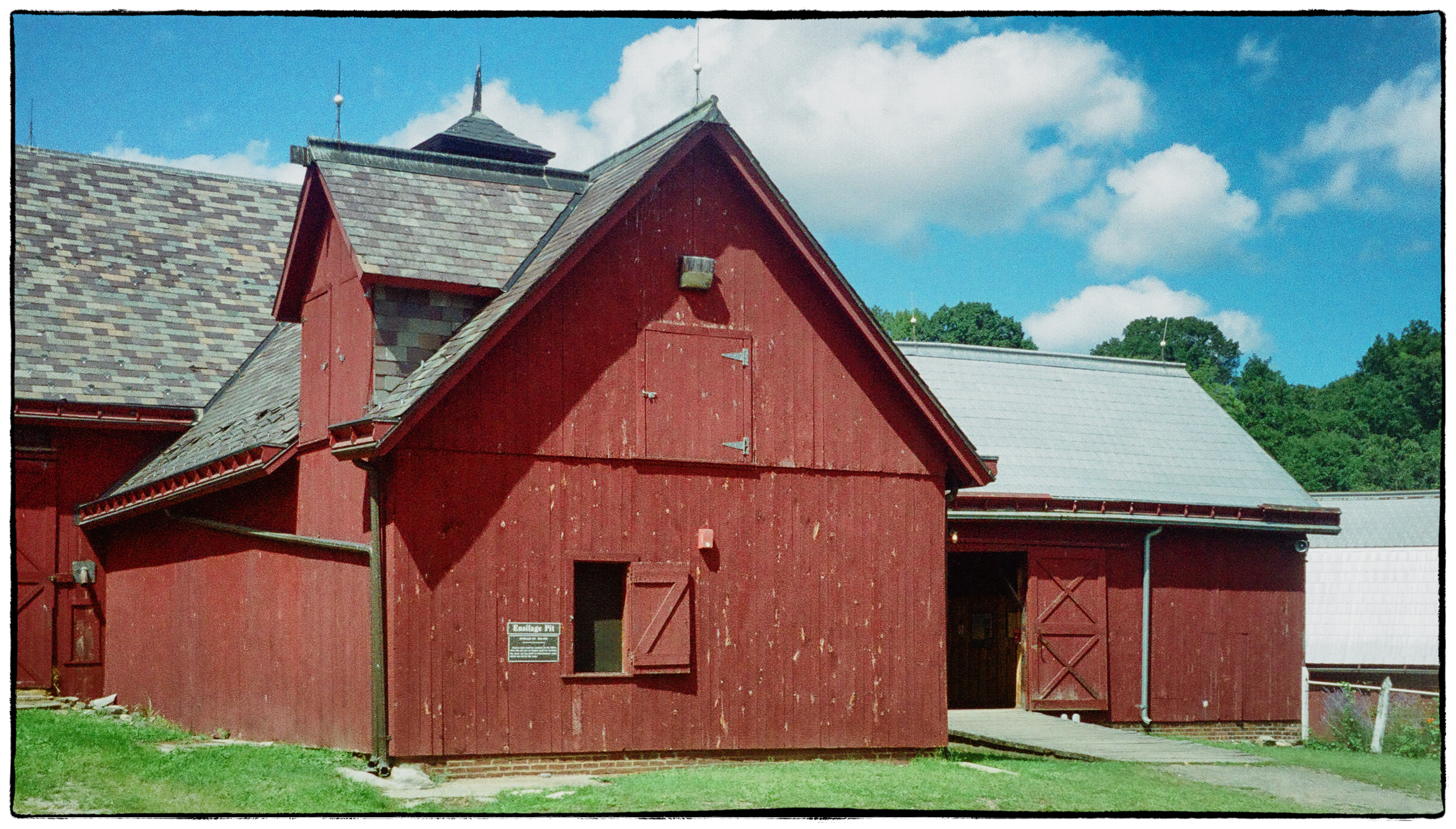
Muscoot Farm, Red Barn.

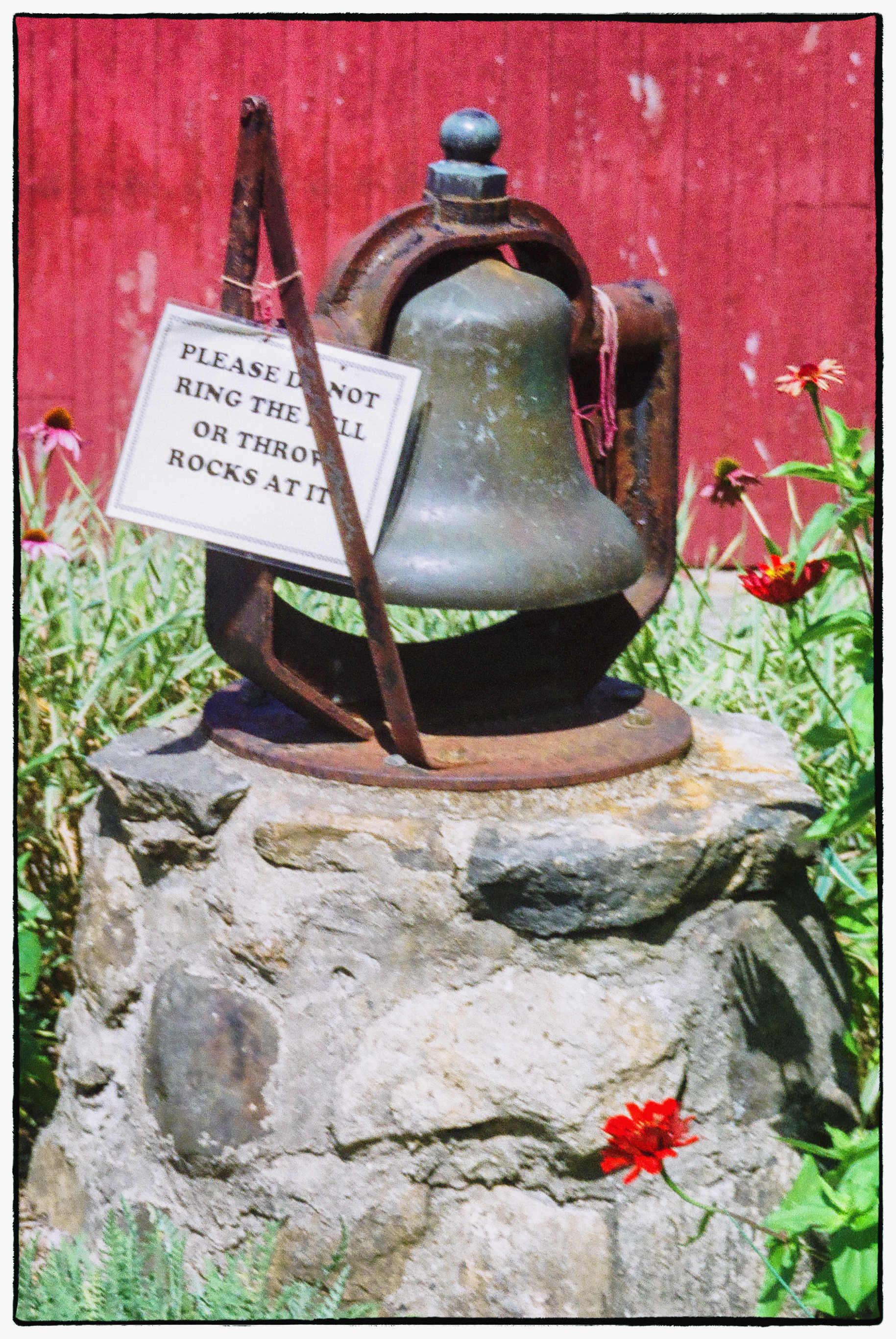
Muscoot Farm, Bell and Sign.

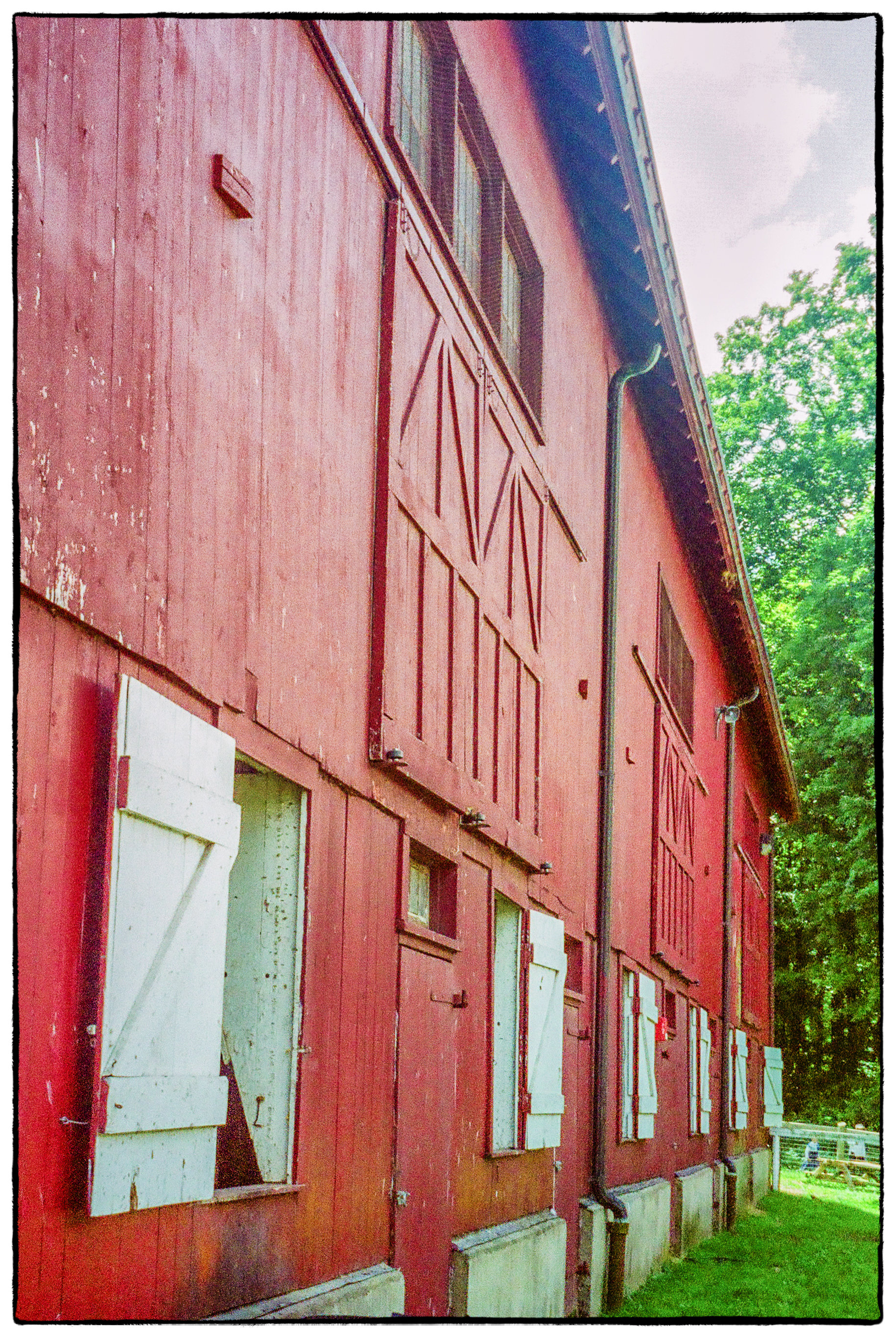
Muscoot Farm, Another Red Barn.

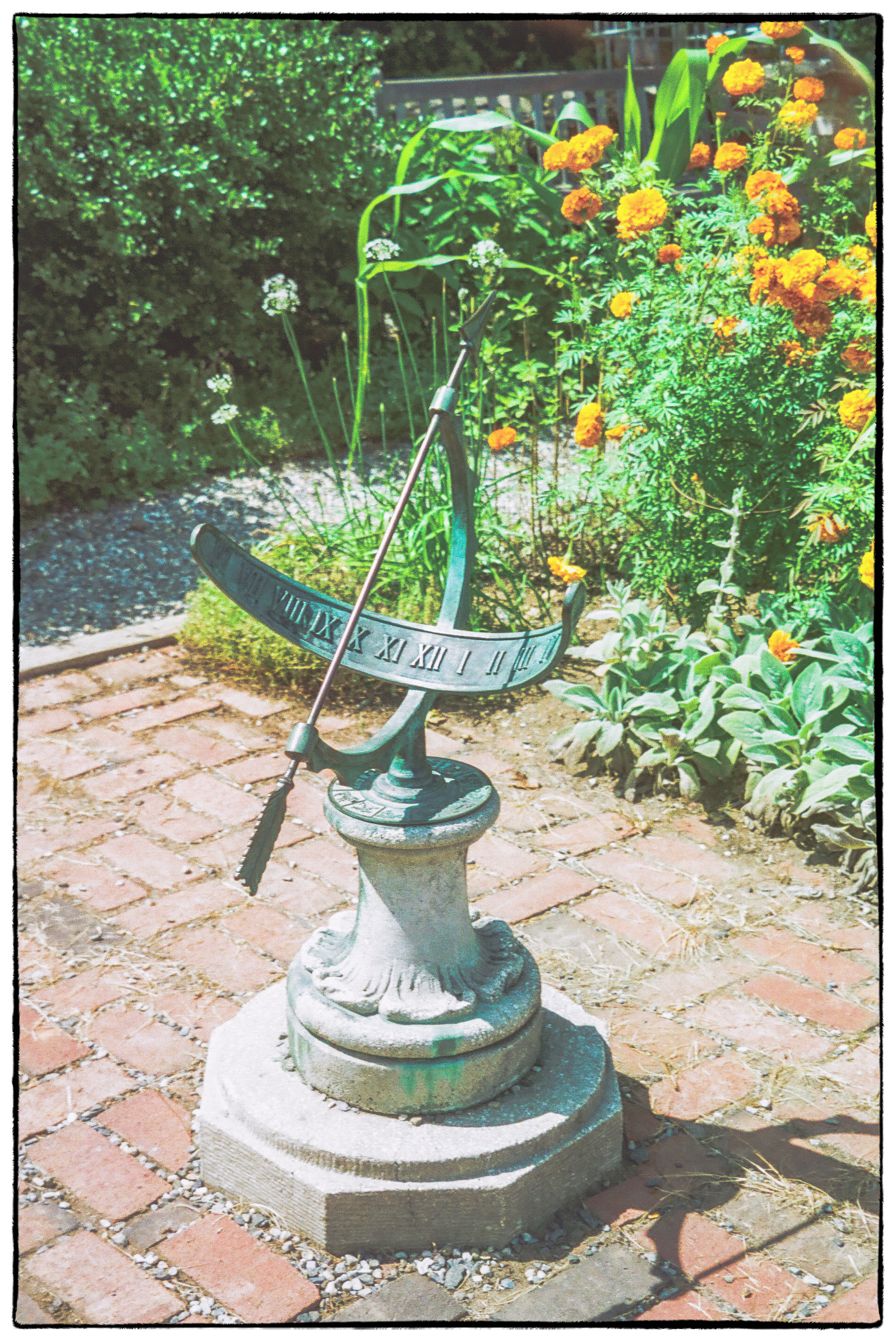
Muscoot Farm, Sundial.

For more pictures taken with this camera see: